

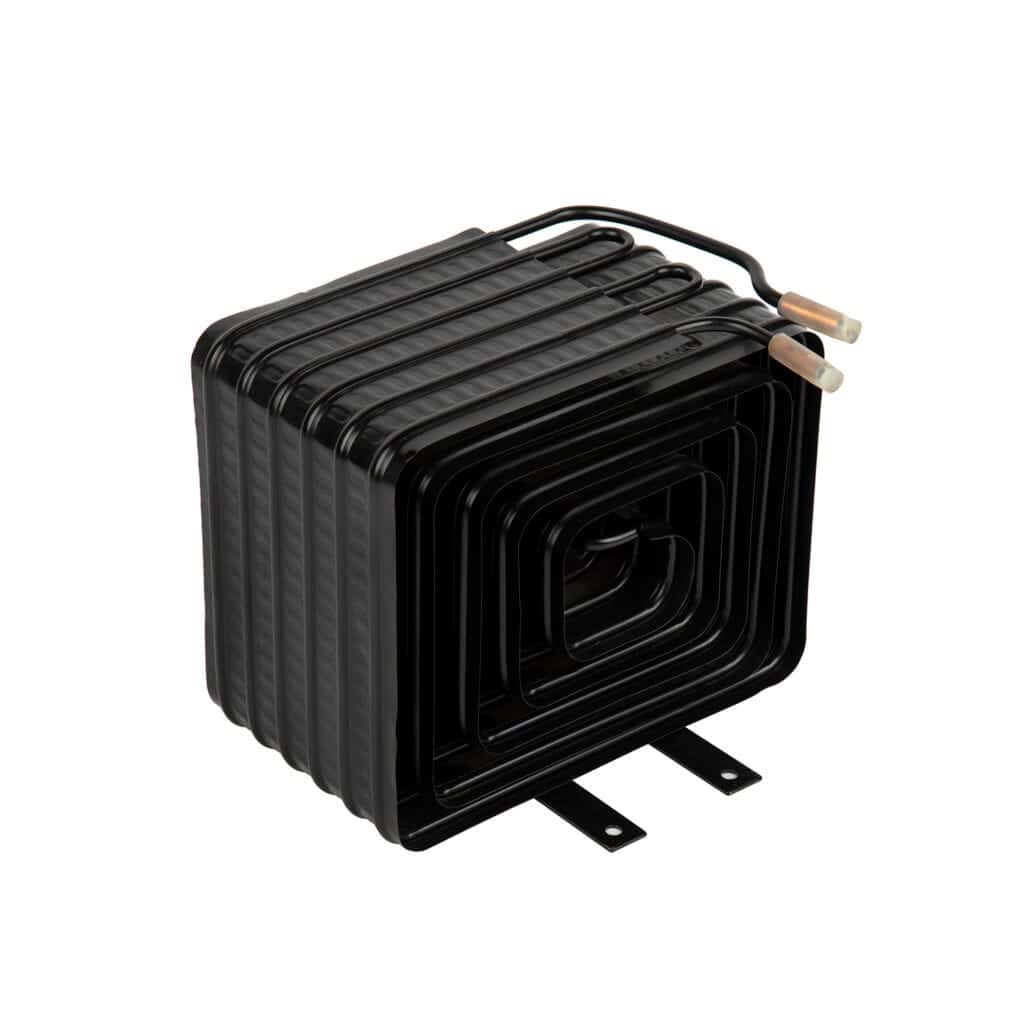
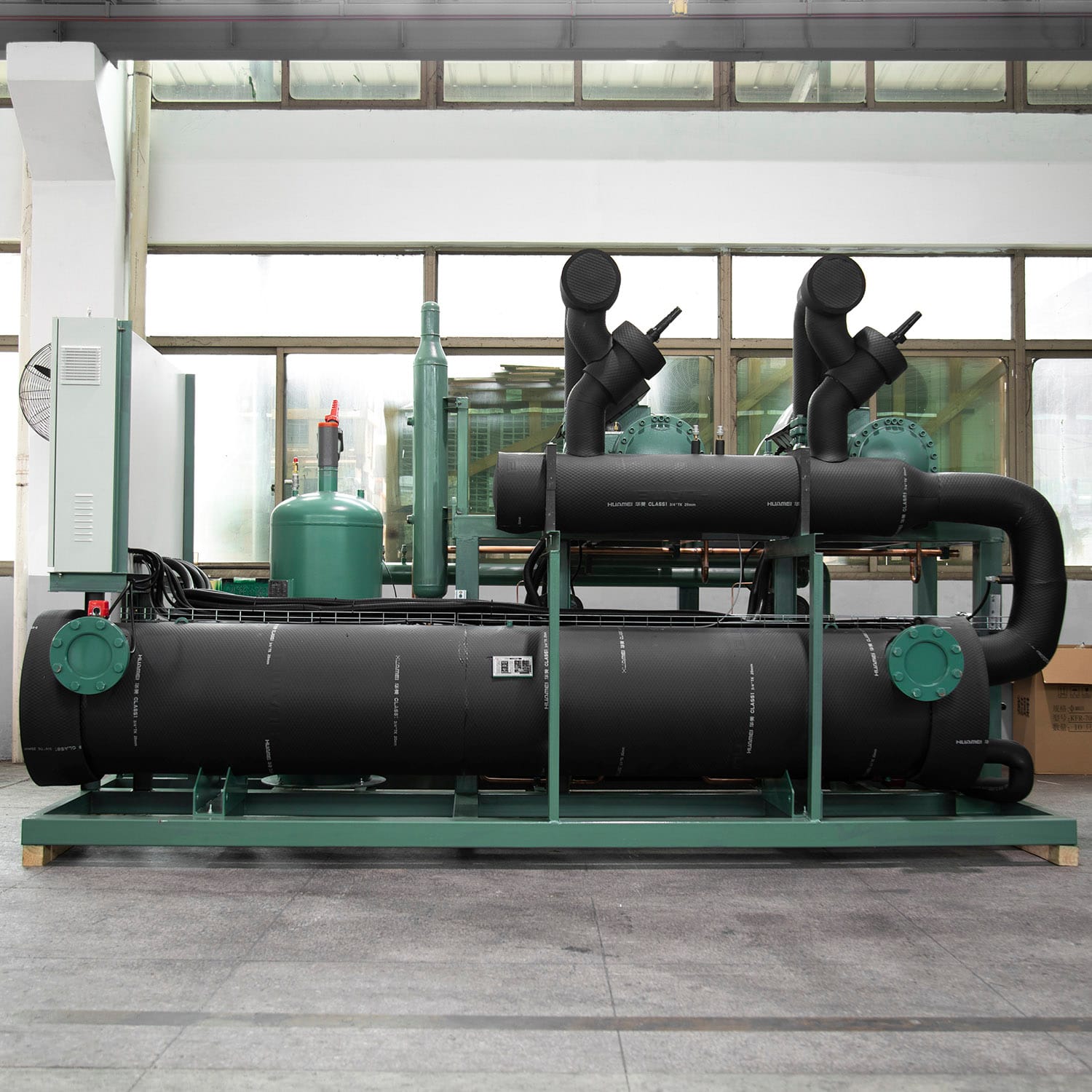
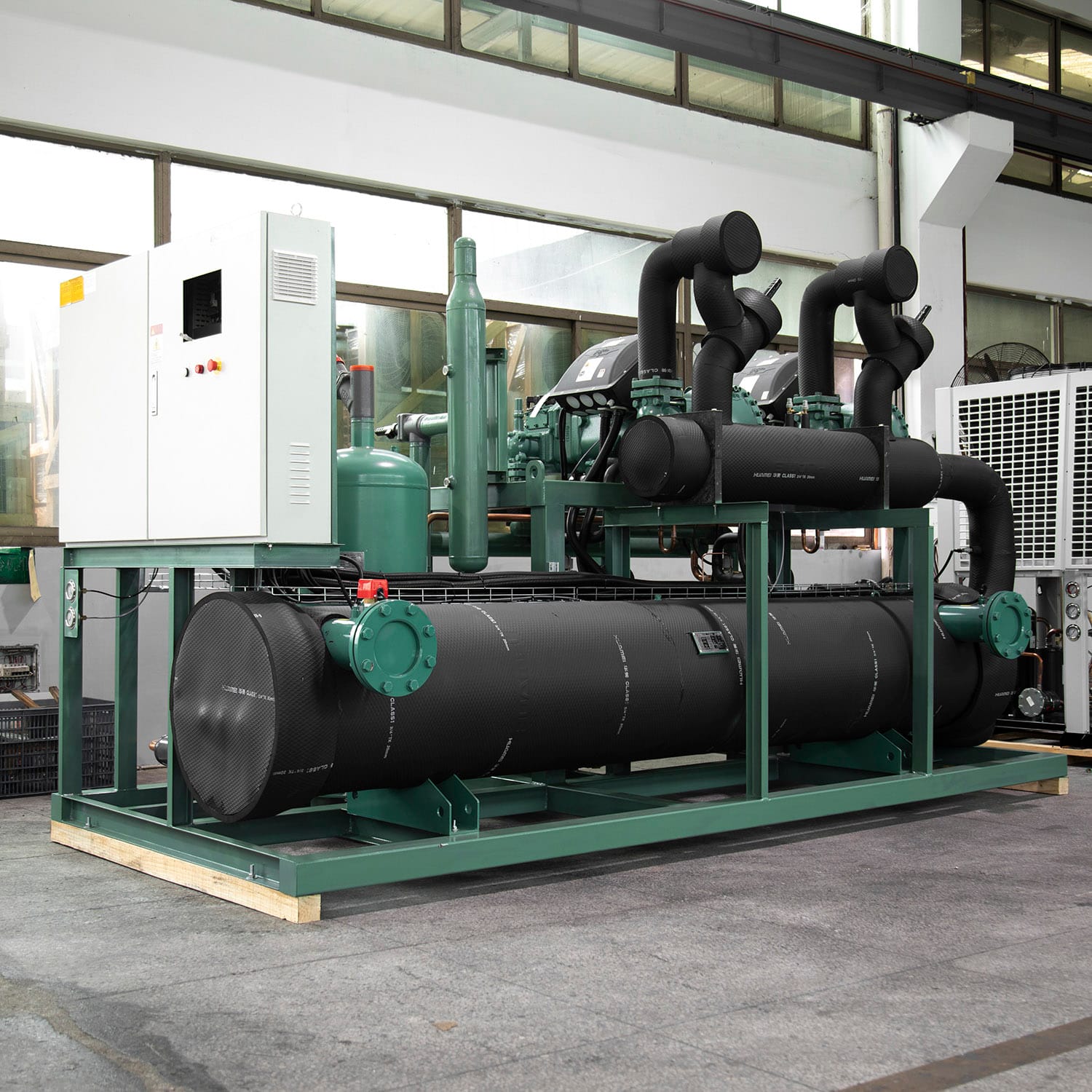
Industrial Refrigeration Compressor Rack for Cold Storage
مكثف تكييف الهواء لنظم التبريد الأصلية، مع مراجع أنابيب الألمنيوم والزينون المنشورة، مراجعة الرسومات أو العينة، إرشادات العملية ونقاط فحص طلب السعر.
تفاصيل المنتج
Industrial Refrigeration Compressor Rack for Cold Storage
توفر شركة دومي للتبريد هذا industrial refrigeration compressor rack for cold storage and centralized refrigeration systems for projects requiring multiple-compressor operation, automatic capacity control, and a customized refrigeration assembly.
The compressor rack can integrate multiple compressors, refrigerant piping, pressure vessels, oil management components, monitoring devices, electrical controls, and protection devices on a common structural frame according to the approved system design.
The control system monitors suction and discharge pressures and automatically adjusts compressor operation according to refrigeration demand. The documented control logic includes loading, holding, unloading, and emergency-stop zones to match system load, while condensing equipment can be controlled according to discharge pressure.
This product is intended for project-specific commercial and industrial refrigeration applications. Refrigeration capacity, refrigerant, compressor configuration, evaporating and condensing conditions, oil management, condenser type, electrical supply, controls, and site conditions should be confirmed before quotation and production.
نطاق المنتج ودور النظام
An industrial refrigeration compressor rack combines multiple compressors within a common refrigeration system.
Instead of relying on a single compressor to cover the complete operating range, the control system can adjust available compressor capacity as system demand changes. The operating manual supports multi-compressor configurations and provides individual compressor status monitoring, including disabled, fault, unloaded, and 25%, 50%, 75%, and 100% operating states.
Typical project applications may include:
- Commercial cold storage
- Chilled and frozen warehouses
- Freezer rooms
- Food and beverage storage
- Food processing refrigeration
- Cold-chain distribution centers
- تبريد السوبر ماركت
- Centralized refrigeration systems
- تبريد العمليات الصناعية
The number and model of compressors, refrigeration circuit, condenser, evaporators, pressure vessels, and control functions should be selected according to the individual project.
Typical system configuration
The following configuration is provided as a project reference. The actual scope should be confirmed through the approved refrigeration schematic, bill of materials, and electrical drawings.
| المكون | Project Configuration | Confirm Before Production |
|---|---|---|
| Compressors | Multiple compressors in parallel | Model, quantity, refrigerant, capacity, operating envelope |
| Compressor Capacity Control | Staged / project-specific control | Available load stages and compressor control method |
| Suction & Discharge Piping | Common refrigeration piping | Diameter, routing, pressure drop, insulation |
| Oil Management | Project-specific | Oil separation, return, cooling and level control |
| Pressure Vessels | According to system design | Function, volume, pressure and certification |
| Condensing Equipment | Project-specific | Air, evaporative or water-cooled configuration |
| Monitoring | Pressure and temperature monitoring | Sensor range, location and interface |
| Electrical Control | Integrated control system | Voltage, frequency, control sequence and communication |
| Protection Devices | Project-specific | Pressure, temperature, oil, overload and electrical protection |
| Structural Frame | Skid-mounted steel frame | Dimensions, lifting and installation requirements |
Not every listed function or component is included in every compressor rack. The operating manual specifically states that functions and parameter settings depend on the actual equipment configuration.
Automatic capacity control
The control system uses suction-pressure conditions to determine whether the refrigeration system is in the loading, holding, unloading, or emergency-stop zone.
When additional refrigeration capacity is required, the system can increase the capacity level of an operating compressor or start an available standby compressor. When demand decreases, compressor capacity can be reduced according to the configured unloading strategy, and compressors can subsequently be stopped as required.
Depending on the compressor model and approved configuration, compressor capacity stages and control methods should be set individually according to the refrigeration conditions and compressor application requirements.
This allows the compressor rack to respond to changing refrigeration loads rather than operating only at a single fixed system capacity.
Compressor rotation and operating-time balancing
For a multi-compressor refrigeration system, operating hours can be distributed among available compressors.
The documented control system automatically balances equipment operation according to cumulative running time. Special start/stop sequences can also be configured for applications where a different operating sequence is required.
The default compressor rotation mode uses accumulated operating time to help balance compressor operation over time.
The final rotation strategy should be configured according to compressor models, system capacity, and project requirements.
Condensing equipment control
The compressor rack control system can coordinate the operation of condensing equipment according to discharge pressure.
For configurations using multiple condenser fans or pumps, the controller can start and stop equipment in stages according to configured pressure limits. The system also supports operating-time balancing for multiple fans and pumps.
Depending on the project configuration, the control documentation supports evaporative and water-cooled condensation modes.
The actual condenser type and heat-rejection system must therefore be confirmed for each project rather than assumed from the compressor rack itself.
Oil management and compressor protection
Oil management is an important part of a multi-compressor refrigeration system.
Depending on the selected configuration, the control system can support:
- Return oil temperature monitoring
- Oil cooling control
- Oil bypass control
- Oil heating
- Oil shortage protection
- Oil pressure differential protection
- Oil level or oil flow monitoring
- Oil temperature alarm and shutdown
The operating manual describes oil-temperature-based control of oil bypass, oil cooling, and oil heating, together with shutdown protection when the return oil temperature exceeds the configured limit.
The required oil management arrangement should be determined according to the compressor type, refrigerant circuit, operating range, and compressor manufacturer’s requirements.
System monitoring and protection
The control system provides multiple monitoring and protection functions according to the installed configuration.
Documented protection functions include:
- Power over/under-voltage protection
- Phase-sequence protection
- High- and low-pressure protection
- Compressor oil deficiency protection
- Compressor overload protection
- Oil pressure differential protection
- Compressor running feedback protection
- Condenser fan or pump overload protection
- Oil cooler overload protection
- Excessive return oil temperature protection
- Suction and discharge pressure limit protection
- Cooling-water flow protection for applicable water-cooled systems
The specific protection functions included in an individual compressor rack depend on the equipment ordered and the agreed system configuration.
Operating data and alarm management
The control system provides operators with system status and operating information.
The interface can display real-time system pressure and temperature information together with individual equipment operating and alarm status.
Alarm records can include the date, time, and alarm category, allowing operators to review recent fault events.
The controller also provides pressure and temperature trend displays and historical operating data for system review.
How to specify an industrial refrigeration compressor rack
For a new cold storage or industrial refrigeration project, provide the following information for engineering review:
- Application: cold room, freezer warehouse, food processing, supermarket refrigeration, process cooling, or other application.
- Required refrigeration capacity: total design duty and expected minimum/maximum load.
- Temperature conditions: room temperature, evaporating temperature, condensing temperature, and ambient design temperature.
- Refrigerant: required refrigerant and applicable project requirements.
- Compressor requirements: preferred compressor model or brand, quantity, capacity control, and operating envelope where specified.
- Condensing system: air-cooled, evaporative, water-cooled, or other project configuration.
- Evaporators: quantity, capacity, operating temperature, defrost method, and installation conditions.
- Piping: system layout, piping distance, height difference, and connection requirements.
- مورد الكهرباء: voltage, frequency, phase, starting method, and control requirements.
- Installation: available space, equipment-room conditions, service access, piping direction, and transportation restrictions.
- الوثائق: inspection, testing, electrical drawings, refrigeration schematic, labels, and destination-market requirements.
OEM and customized refrigeration rack development
Domi Refrigeration supports OEM and customized industrial refrigeration compressor rack projects based on customer operating conditions and system requirements.
Project customization can include:
- Compressor quantity and configuration
- Compressor model selection
- Refrigeration capacity
- دائرة مادة التبريد
- Suction and discharge headers
- Oil management components
- Pressure vessels
- Condensing equipment control
- Refrigeration valves and accessories
- Electrical control system
- Monitoring and protection functions
- Structural frame dimensions
- Refrigerant connections
- Installation interfaces
Before production, the refrigeration schematic, electrical drawing, bill of materials, equipment layout, operating conditions, control logic, and inspection requirements should be approved for the individual project.
Manufacturing and project release
Depending on the approved configuration, production and assembly may include structural-frame fabrication, compressor installation, pressure-vessel mounting, refrigeration piping fabrication, valve and accessory installation, insulation, electrical wiring, testing, inspection, and packing.
The project quality plan should define applicable requirements for:
Component verification: compressors, vessels, valves, controls, sensors, and electrical components are checked against the approved bill of materials.
Mechanical assembly: equipment positions, piping, supports, service clearance, and structural dimensions are checked against the approved layout.
Refrigerant circuit: piping connections, valves, instruments, and refrigerant components are reviewed against the refrigeration schematic.
Electrical system: wiring, sensors, protection devices, and control functions are checked according to the approved electrical documentation.
Testing and inspection: applicable pressure, leakage, electrical, control, and functional checks are performed according to the agreed project requirements.
Test conditions and acceptance criteria should be specified for the individual project.
Replacement and system upgrade review
An industrial compressor rack should not be replaced based only on compressor horsepower or compressor quantity.
For replacement or system-upgrade projects, compare:
- مبرد
- Total refrigeration capacity
- Minimum and maximum load
- Compressor models and quantity
- Evaporating and condensing conditions
- Capacity-control method
- إدارة الزيت
- Suction and discharge piping
- Condensing equipment
- إمداد كهربائي
- Control strategy
- Protection requirements
- Equipment dimensions
- System connections
Existing refrigeration schematics, electrical drawings, equipment nameplates, photographs, and operating data should be provided whenever available.
الأسئلة الشائعة
What is an industrial refrigeration compressor rack?
An industrial refrigeration compressor rack combines multiple compressors and associated refrigeration and control components into a common assembly for centralized refrigeration applications.
Why use multiple compressors in parallel?
A parallel configuration allows available compressor capacity to be adjusted according to refrigeration demand. Depending on the approved compressor and control configuration, compressors can be started, stopped, loaded, or unloaded as system conditions change.
How does the system adjust refrigeration capacity?
The documented control system monitors suction pressure and uses loading, holding, unloading, and emergency-stop zones to determine compressor operation. Compressor loading stages and control methods depend on the compressor configuration.
Does the compressor rack include a condenser?
Not necessarily. The compressor rack can form part of a larger refrigeration system with separately selected condensing equipment. The controller can support condenser fans or pumps according to the project configuration.
Can different numbers of compressors be used?
The compressor quantity is project-specific. The control documentation supports multi-compressor operation, and individual compressor parameters can be configured according to the refrigeration system and compressor requirements.
Does the system provide automatic compressor rotation?
The documented control logic can balance compressor operating time based on accumulated running hours. Alternative start/stop sequences can also be configured for specific applications.
What protection functions are available?
Depending on the actual configuration, protection can cover high/low pressure, compressor overload, oil conditions, electrical supply, temperature, running feedback, condenser equipment, and other system conditions. The exact protection package should be confirmed for the individual project.
Can Domi customize the compressor rack?
Yes. Compressor configuration, piping, oil management, pressure vessels, controls, structural layout, and other project-specific requirements can be reviewed according to the customer’s refrigeration design and operating conditions.
What information is required for quotation?
Provide the application, required refrigeration capacity, refrigerant, evaporating and condensing conditions, compressor requirements, condenser and evaporator information, electrical supply, system drawings, installation conditions, and project quantity.
طلب عرض سعر مخصص
For an industrial refrigeration compressor rack, send Domi Refrigeration your refrigeration duty, refrigerant, evaporating and condensing conditions, compressor requirements, condenser and evaporator information, electrical supply, system drawings, installation requirements, and project quantity.
Domi can review the compressor configuration, refrigerant piping, oil management, pressure vessels, condensing equipment control, electrical system, protection functions, and structural layout according to the approved refrigeration project requirements.
احصل على معلومات المنتج لمشروعك
أرسل طراز المنتج، الرسومات، صور العينة، الكمية، أو متطلبات التطبيق. سيقوم فريقنا بمراجعة المعلومات ومساعدتك في تأكيد الخيارات المناسبة، البيانات الفنية، وتفاصيل العرض.