
Short answer: choose a plate heat exchanger only after you have fixed the heat duty, both fluid circuits, design pressure, temperature approach, allowable pressure drop, fouling risk, and service plan. Gasketed plate-and-frame units suit many liquid-to-liquid systems that need inspection or future capacity changes; brazed units suit compact, sealed packages; welded or semi-welded designs are considered when pressure, temperature, refrigerant, or fluid compatibility exceeds a gasketed unit’s practical range. The best quote is therefore a rated selection against your operating data, not a plate count copied from a catalog.
What a plate heat exchanger does in a real cooling loop
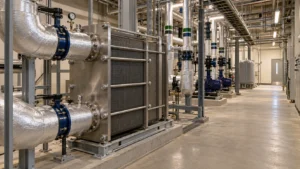
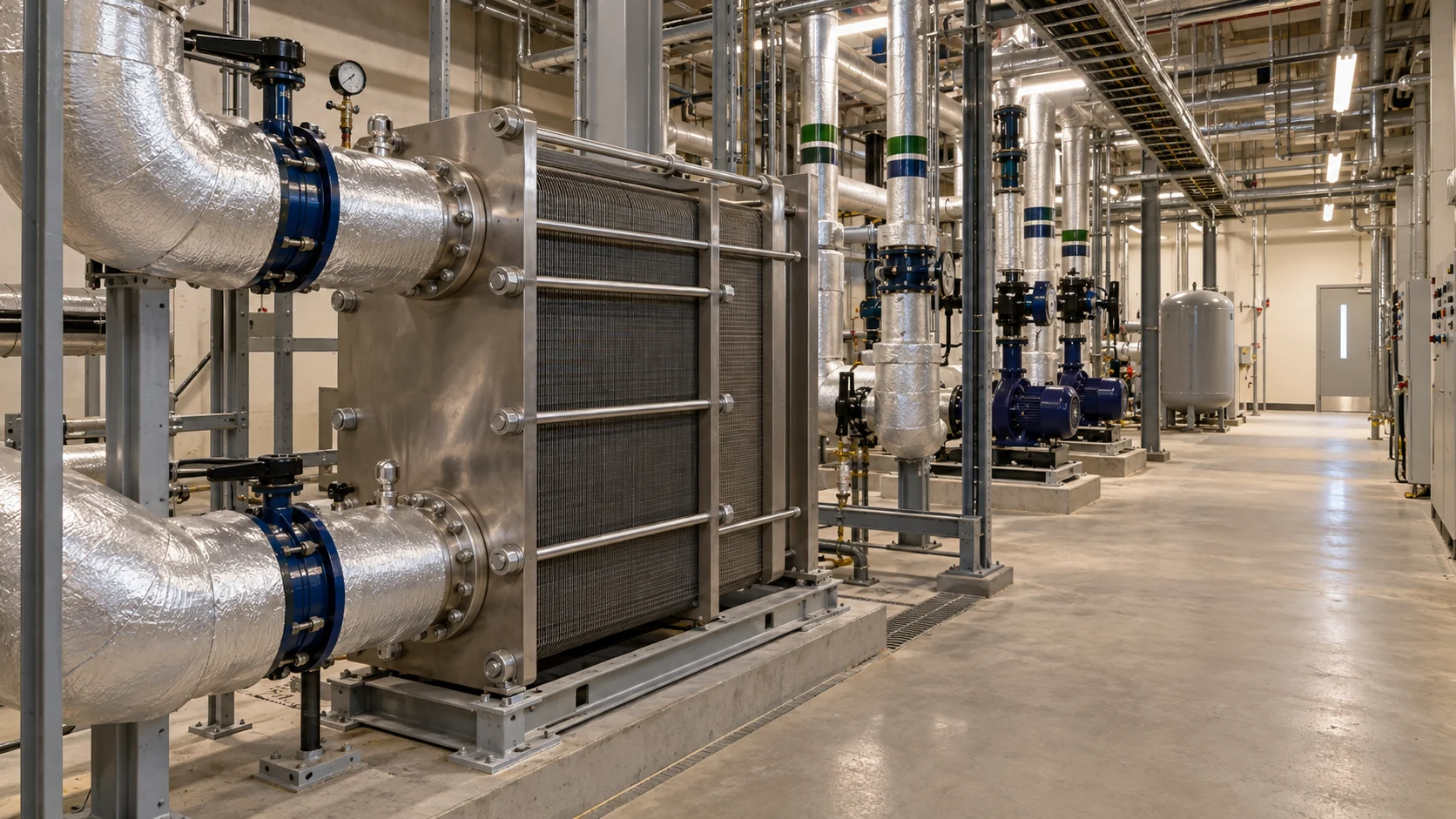
A plate heat exchanger transfers heat through a stack of thin, corrugated metal plates. One fluid travels through alternating channels while the other fluid travels through the channels beside them. The fluids remain separated, but the large wetted area and short conduction path let heat move with a small approach temperature.
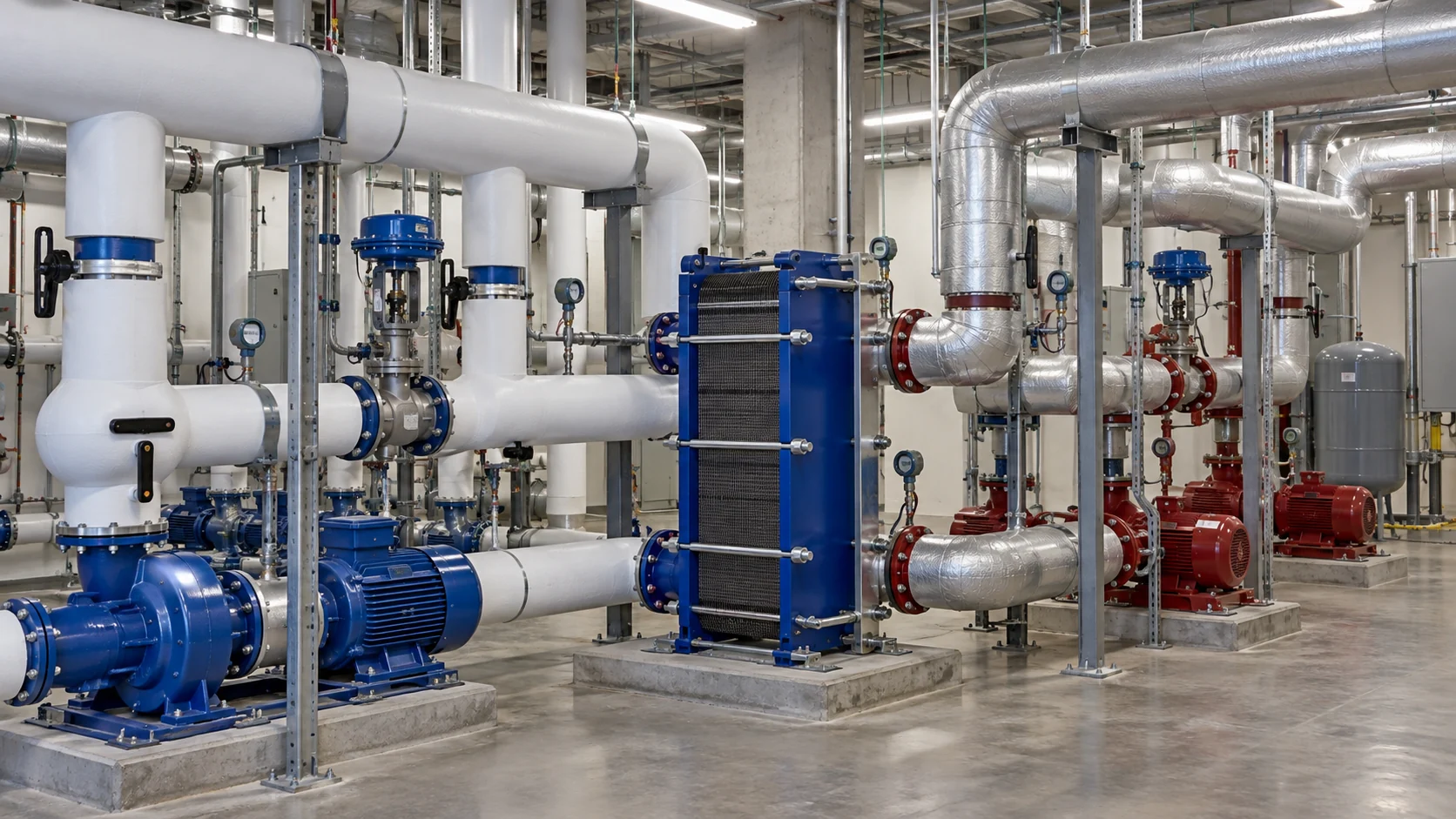
In a project, the plate heat exchanger is one component inside a controlled loop. Pumps set flow, valves control capacity, strainers protect channels, sensors confirm temperatures, and the chiller, cooling tower, dry cooler, or process load supplies the boundary conditions. A unit that looks efficient on a nameplate can still underperform if the pump cannot deliver design flow, the control valve hunts, or untreated water quickly fouls the channels.
El Alfa Laval plate heat exchanger portfolio groups common technologies into brazed, fusion-bonded, gasketed plate-and-frame, semi-welded, welded, and plate-and-fin families. That range is a useful reminder that “plate heat exchanger” describes a family of constructions, not one universal product.
Choose gasketed, brazed, welded, or plate-and-frame construction
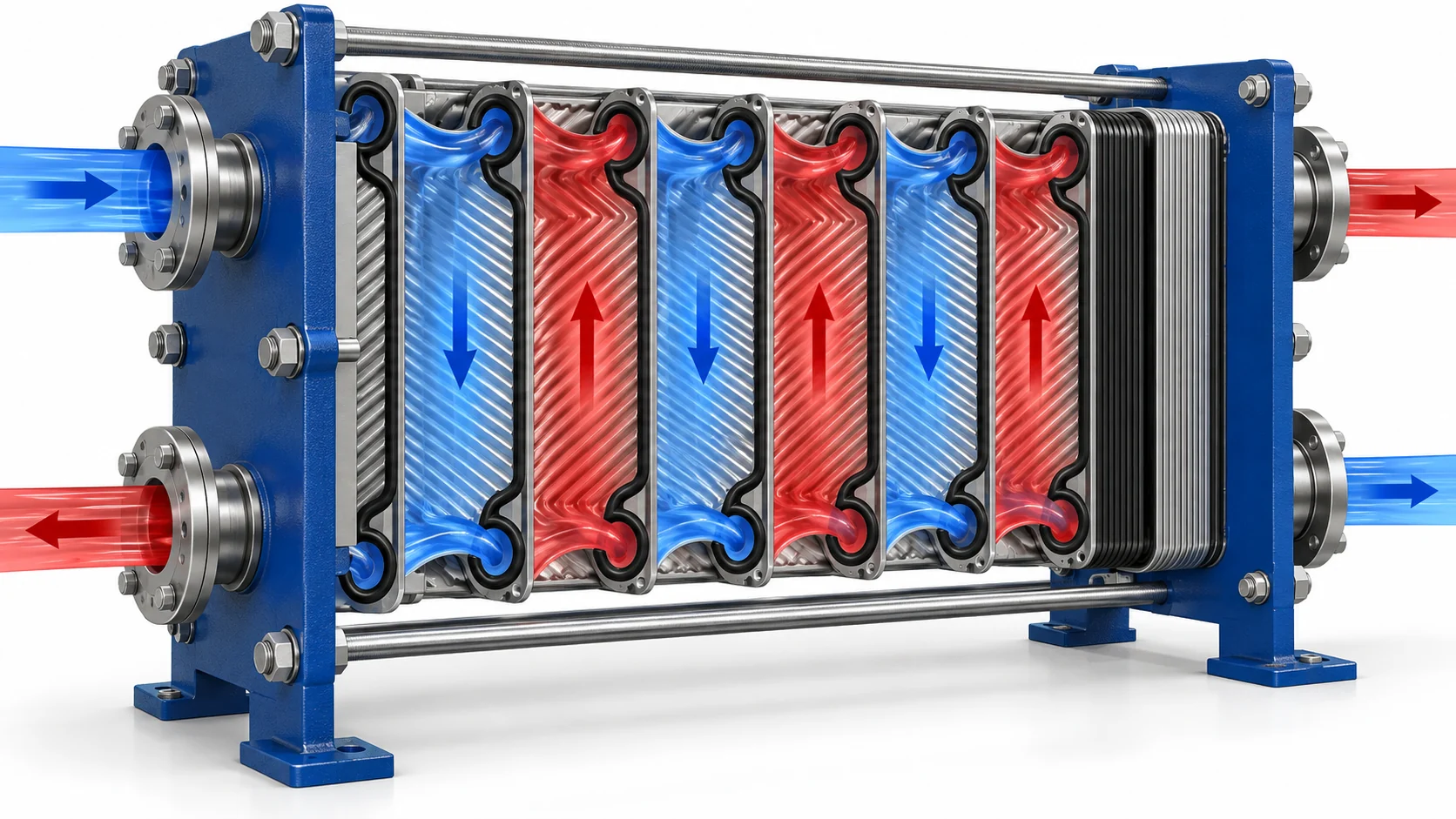
Start with the maintenance and fluid boundary, then confirm the thermal rating. Use the table below as a screening tool, not as a substitute for a manufacturer selection calculation.
| Construcción | Where it usually fits | Strengths | Questions to resolve before RFQ |
|---|---|---|---|
| Gasketed plate-and-frame | HVAC water or glycol loops, district energy, process water, hygienic services | Opens for inspection and cleaning; plate count can often be changed; broad connection choices | Are gasket elastomer, design pressure, and service clearance compatible with the fluid and site? |
| Placa soldada | Compact water-to-water, brine, heat pump, chiller, and refrigeration packages | Sealed and compact; low hold-up volume; no field gasket replacement | Can the fluid chemistry be brazed-compatible, and what is the replacement plan if the core is fouled or damaged? |
| Semi-welded or welded plate | Refrigerant duties, higher pressure or temperature, aggressive fluids, cyclic service | Welded plate pairs reduce gasket exposure on the critical side | What inspection, pressure code, relief protection, and repair route are required? |
| Plate-and-fin or plate-and-block | Gas-to-gas, gas-to-liquid, cryogenic, or highly compact duties | High surface-to-volume ratio and low pressure drop when correctly selected | Are gas-side distribution, vibration, thermal cycling, and cleaning access acceptable? |
El Danfoss brazed plate heat exchanger guide lists HVAC, chillers, heat pumps, refrigeration, heat recovery, and process cooling among typical applications. It also notes that plate material, brazing material, connection layout, corrugation, and plate quantity are selected from the application data. Treat those as engineering inputs rather than optional accessories.
Match flow arrangement to temperature approach and pressure drop
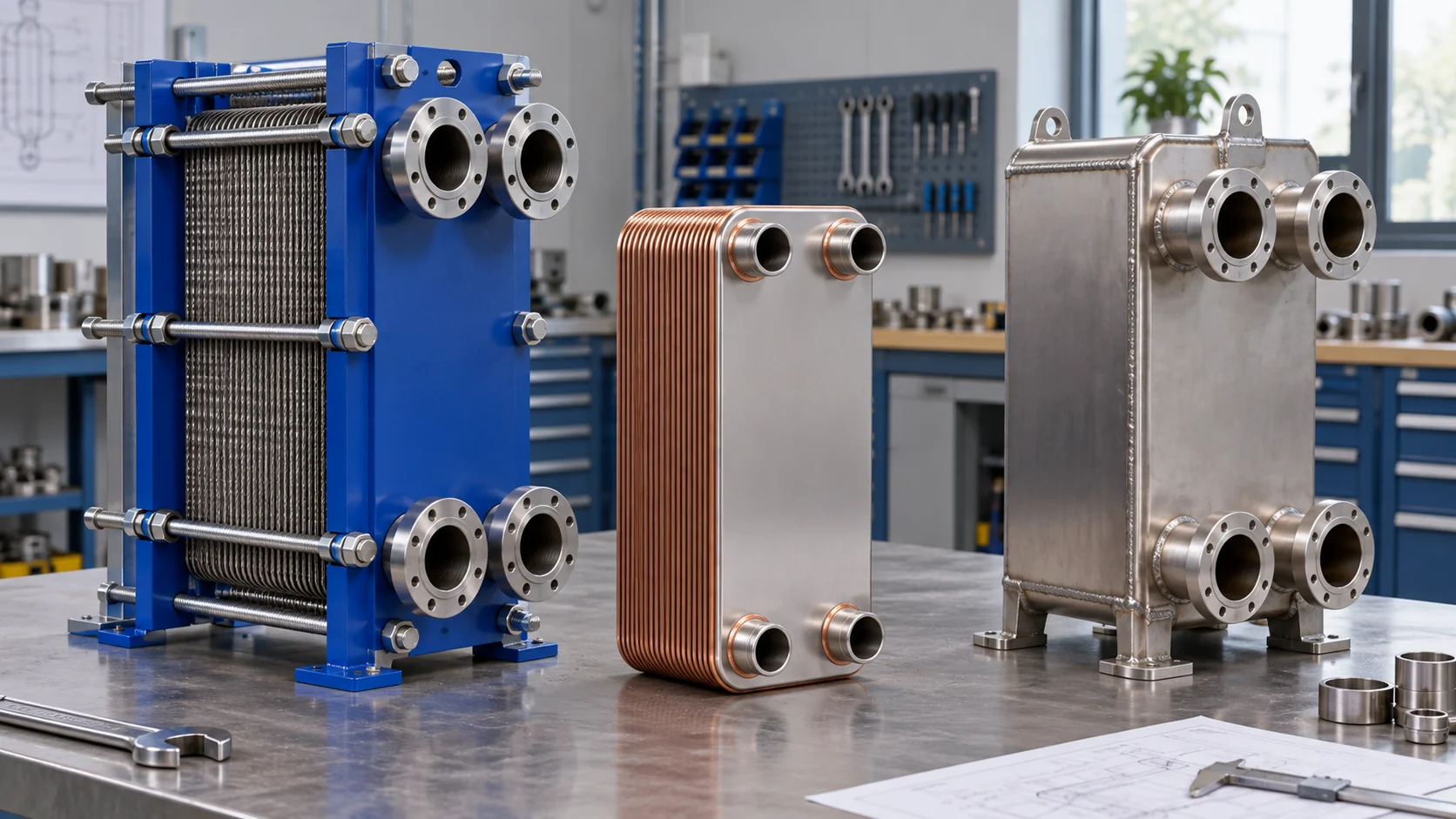
Counterflow is normally the first arrangement to evaluate because it can maintain a close temperature approach over the useful length of the plate pack. Parallel flow can be appropriate for a special temperature profile, while multi-pass arrangements can increase velocity or change connection positions. The trade is pressure drop: smaller channels or more passes may improve heat transfer but increase pump head.
Ask the supplier to show both sides of the rating. A useful selection sheet reports inlet and outlet temperatures, mass or volume flow, heat duty, calculated pressure drop, fouling allowance, and the selected number of plates or passes. If one side is refrigerant, request the phase-change condition, superheat or subcooling target, oil return assumptions, and allowable pressure drop in addition to the liquid-side data.
Set the duty before looking at plate count
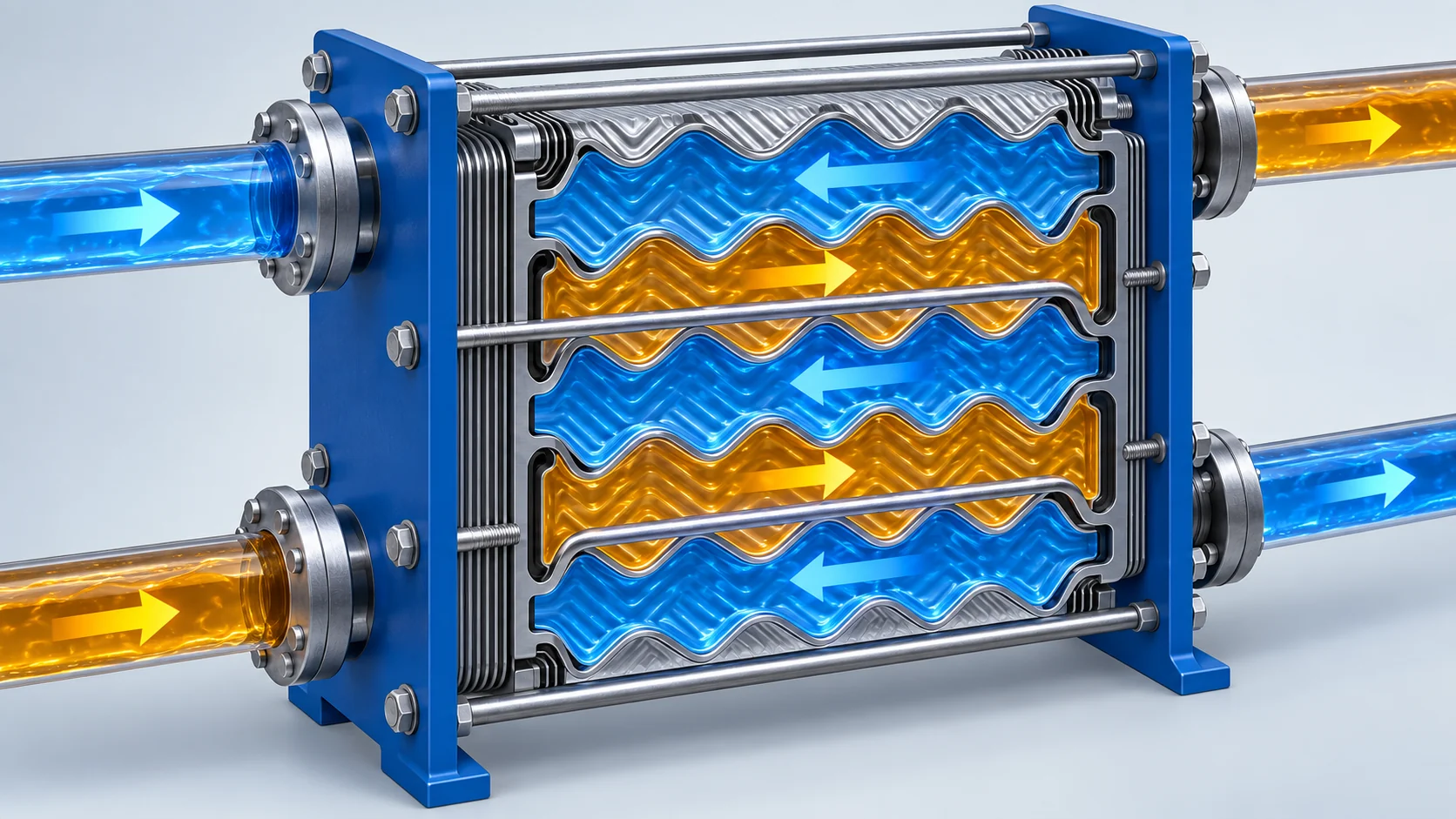
The first calculation is the heat balance. For a single-phase liquid side, a practical check is:
Q = m × cp × ΔT
dónde Q is heat transfer rate, m is mass flow, cp is specific heat, and ΔT is the fluid temperature change. The supplier then uses the heat-transfer coefficient, log mean temperature difference, plate geometry, and fouling allowance to determine the effective area. A plate count by itself says very little about the result because plate size, chevron angle, pass arrangement, and fluid properties also change the rating.
Capture the following boundary conditions for each operating case:
| Grupo de entrada | Minimum data to send | Why the selection depends on it |
|---|---|---|
| Carga térmica | Required capacity, normal and design load, inlet and outlet temperatures, turndown | Establishes area, approach temperature, and control range |
| Flow and hydraulics | Mass or volume flow, density, viscosity, allowable pressure drop, pump curve | Sets channel velocity, pass count, and pump energy |
| Fluid identity | Water, glycol, brine, refrigerant, oil, process liquid, concentration, contaminants | Drives heat capacity, material compatibility, phase behavior, and fouling risk |
| Mechanical boundary | Design and test pressure, design temperature, connections, orientation, seismic or vibration limits | Confirms frame, plate, braze, nozzle, gasket, and support requirements |
| Service case | Cleaning method, spare parts policy, access envelope, expected operating hours, redundancy | Determines gasketed versus sealed construction and lifecycle cost |
For a variable-load plant, provide at least normal, minimum, and peak cases. A unit selected only at peak load may operate with excessive bypass flow at low load. A unit selected only at a mild design point may miss freezing, approach, or pressure-drop limits during startup or hot weather.
Pick materials by fluid chemistry and cleaning plan
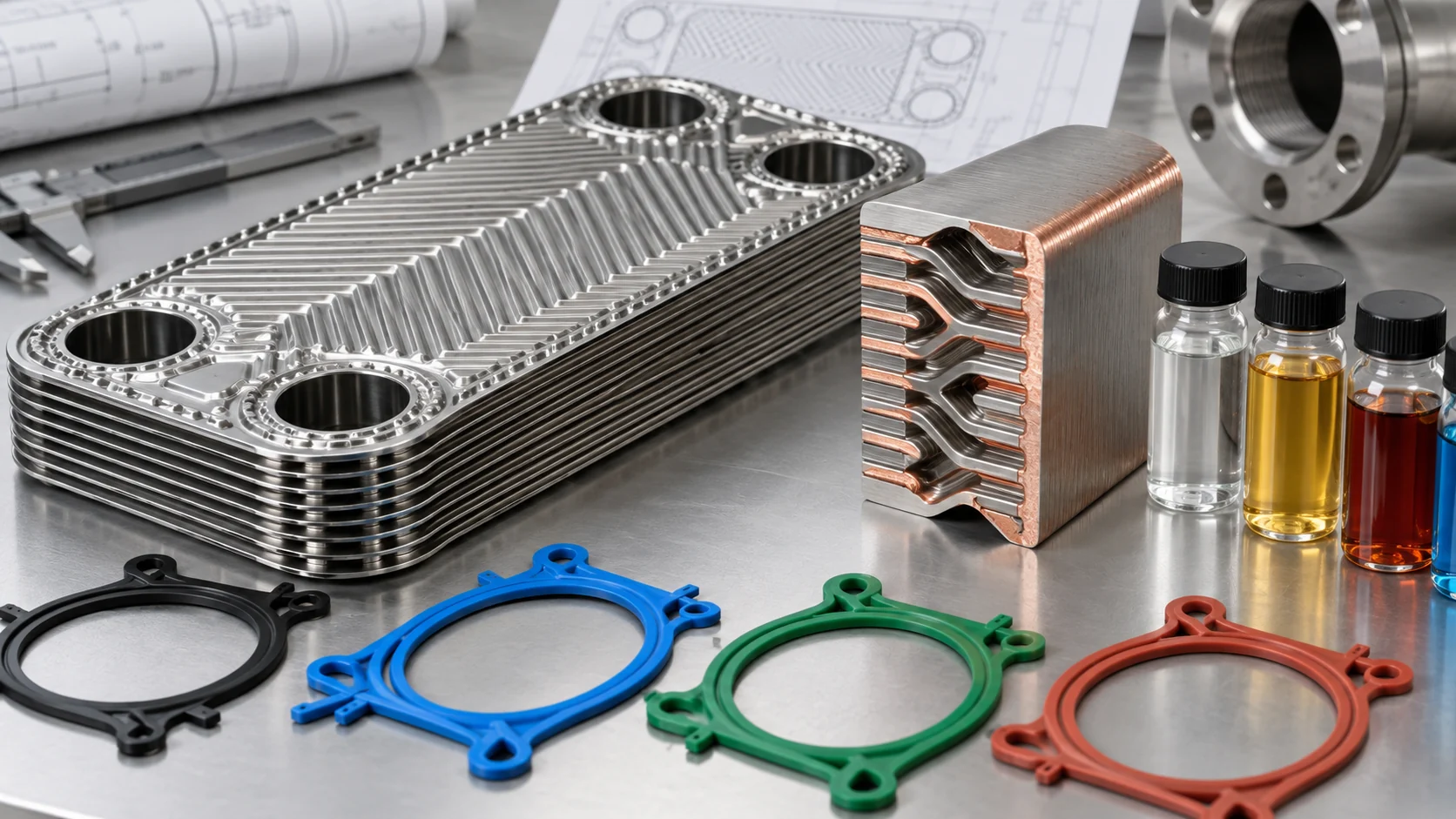
Stainless steel plates are common in water and glycol service, but “stainless” is not a complete materials specification. Chloride concentration, temperature, pH, dissolved solids, oxygen, and cleaning chemicals all affect corrosion risk. Copper brazing can be a good fit for many closed hydronic circuits, but the supplier should confirm compatibility with additives, refrigerant, and any oxygenated or contaminated fluid.
Specify the gasket compound and temperature range for a gasketed plate heat exchanger. EPDM, NBR, FKM, and specialty compounds have different compatibility windows. Also state whether cleaning is manual, chemical in place, or a combination. A chemical cleaning recipe that is safe for the plate may still shorten gasket life, and a gasket chosen for hot water may not suit oil or a refrigerant blend.
If the process fluid is corrosive, abrasive, hygienic, or regulated, ask for the exact plate alloy, weld or braze material, surface finish, elastomer, and certificates. Do not accept “industrial grade” as a substitute for a material callout.
Treat fouling as a design input, not a maintenance surprise
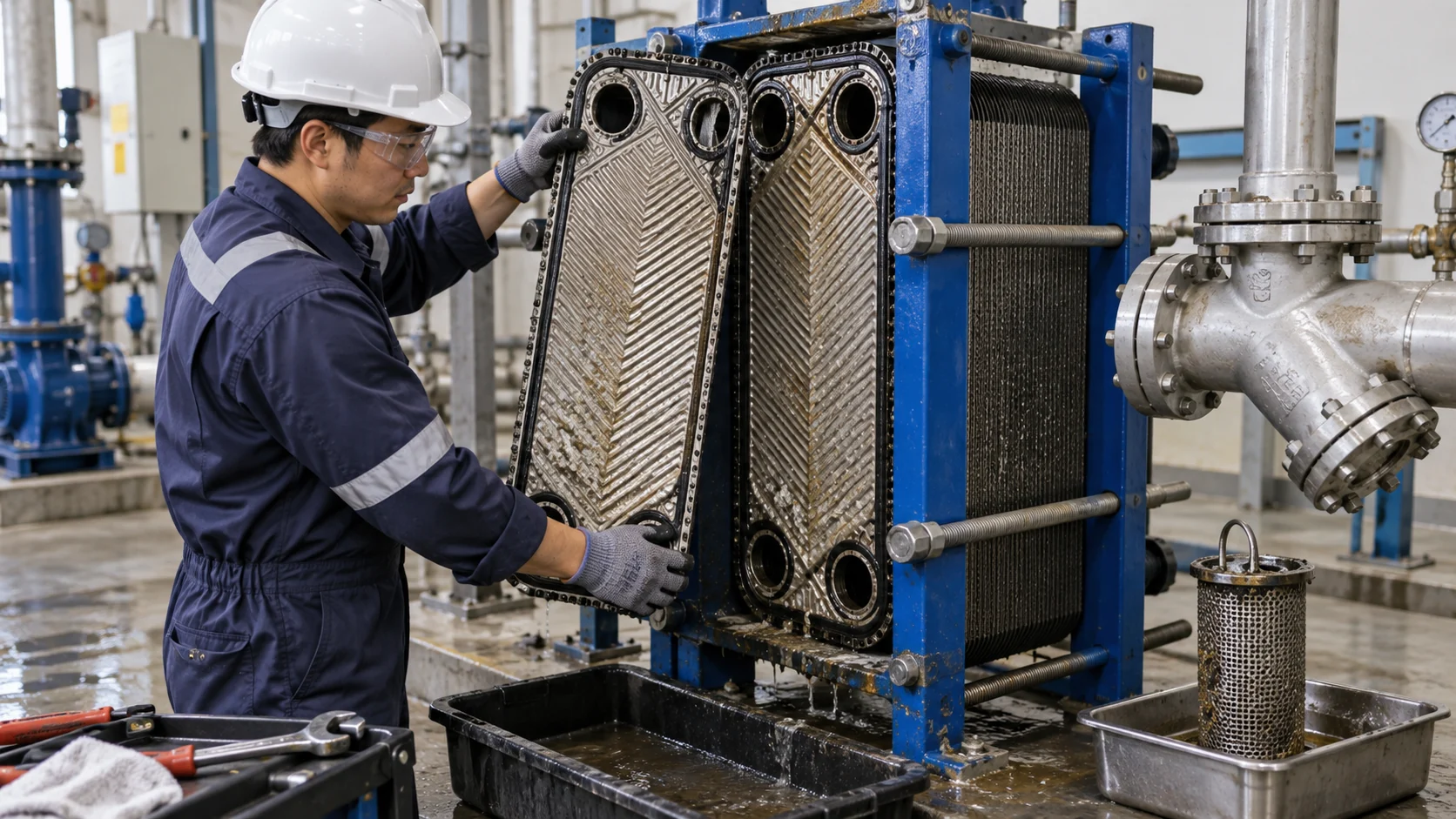
Fouling raises thermal resistance and pressure drop at the same time. It may come from scale, suspended solids, biological growth, oil, fibers, or reaction products. High velocity can reduce deposits in some services, but it cannot compensate for poor filtration or incompatible water treatment. Excessive velocity can instead cause erosion, vibration, or an unacceptable pump penalty.
| Fouling condition | Design response to discuss | Evidencia para solicitar |
|---|---|---|
| Clean closed-loop water or glycol | Confirm minimum flow, freeze margin, and inhibitor concentration | Fluid analysis and normal operating trend |
| Open cooling-tower water | Add strainer and side-stream or full-flow filtration; allow chemical cleaning | Water treatment plan, suspended solids, cycles of concentration |
| Process liquid with solids or fibers | Evaluate larger channels, removable plates, upstream filtration, and drainability | Particle size, concentration, viscosity, cleaning interval |
| Oil-bearing or sticky fluid | Check plate pattern, velocity, elastomer, and cleaning solvent | Oil type, temperature, viscosity curve, solvent compatibility |
| Refrigerant or phase-change duty | Confirm oil return, distributor design, dry-out risk, and allowable pressure drop | Refrigerant, mass flow, superheat or subcooling, compressor map |
Trend supply and return temperatures, flow, differential pressure, and valve position after commissioning. A rising approach temperature with a rising pressure drop is an early signal that the heat exchanger needs inspection or cleaning. Record the clean baseline so the maintenance team can act on measured change instead of a calendar guess.
Compare plate and shell-and-tube without using a slogan
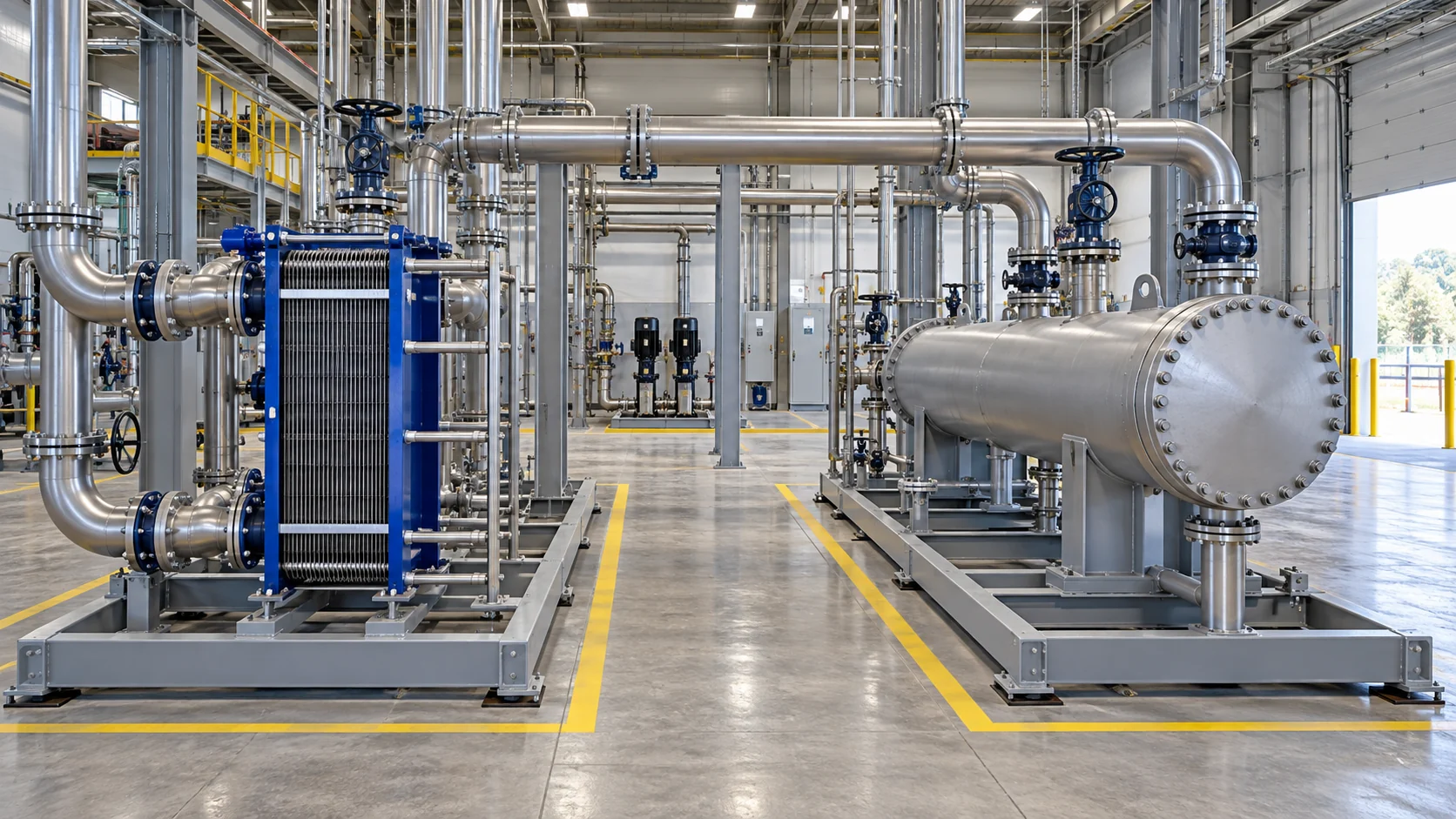
Plate units are often compact and efficient, but the right comparison is duty-specific. The existing shell-and-tube selection guide on Domi covers a different construction owner. Use it when the project needs robust tube-side cleaning, very high pressure on one side, or a familiar code and maintenance practice.
| Factor de decisión | Plate heat exchanger tendency | Shell-and-tube tendency | Revisión del comprador |
|---|---|---|---|
| Footprint | Often smaller for liquid-to-liquid duty | Usually larger for the same approach and duty | Compare complete service clearances, not core dimensions only |
| Close approach | Often favorable with true counterflow | May need more area or passes | Ask for both outlet temperatures at design flow |
| Limpieza | Gasketed frames can open; sealed units need a defined flush or replacement plan | Tube access depends on head and bundle arrangement | Match the cleaning method to the site team and chemistry |
| Capacity changes | Gasketed frames may accept added or removed plates within limits | Usually requires bundle or shell changes | State expected future load and spare capacity policy |
| Pressure and temperature | Construction and gasket limits vary widely | Often familiar for high-pressure or high-temperature services | Obtain code, test, relief, and fatigue details |
| Contaminated fluid | Needs channel and filtration review | Tube diameter may tolerate some solids better | Send solids data instead of assuming one technology wins |
Applications that fit HVAC and process cooling
In HVAC, a plate heat exchanger may isolate a building loop from a central plant, transfer heat between chilled water and glycol, or provide water-side economizer operation. The U.S. Department of Energy describes a common data-center arrangement in which a plate-and-frame heat exchanger can bypass a chiller and transfer cooling from a cooling-tower loop to the chilled-water loop when conditions permit. Read the DOE water-side economizing overview for the system-level context. The heat exchanger still needs a site-specific rating, filtration plan, controls sequence, and freeze protection.
For process cooling, the same equipment can separate a treated utility loop from a product or machine loop. Typical examples include laser cooling, hydraulic oil cooling, food and beverage utility skids, heat recovery, compressor cooling, and chiller evaporator or condenser service. Confirm whether the process side is open, hygienic, corrosive, or subject to a change in viscosity before choosing a compact sealed core.
If the project actually needs an air-side coil rather than a liquid-to-liquid plate unit, compare the requirement with Domi’s serpentines de enfriamiento comercial y serpentines de refrigeración industrial. Those are different heat-transfer interfaces and should not be interchanged in an RFQ.
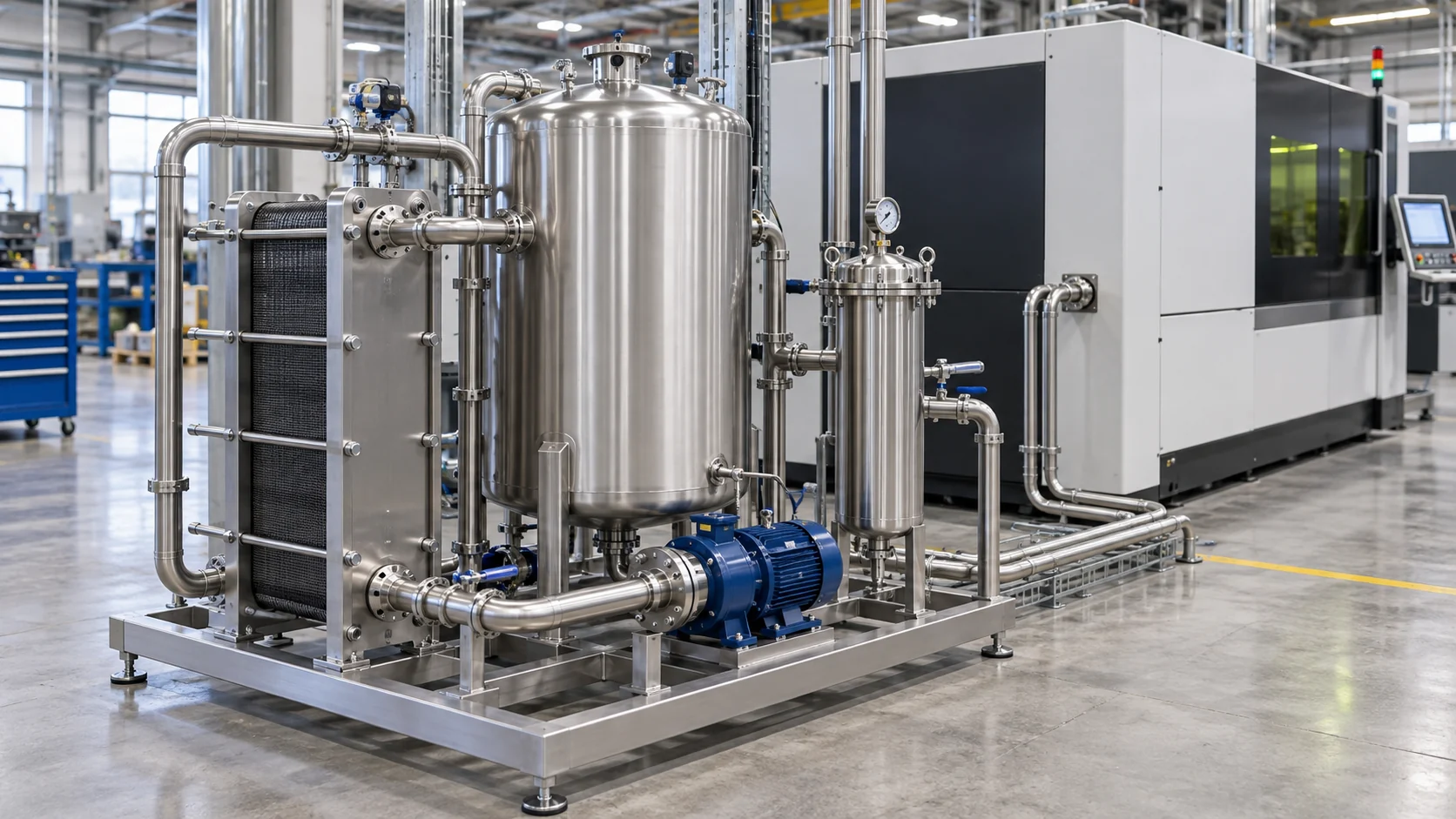
Controls, sensors, and installation interfaces
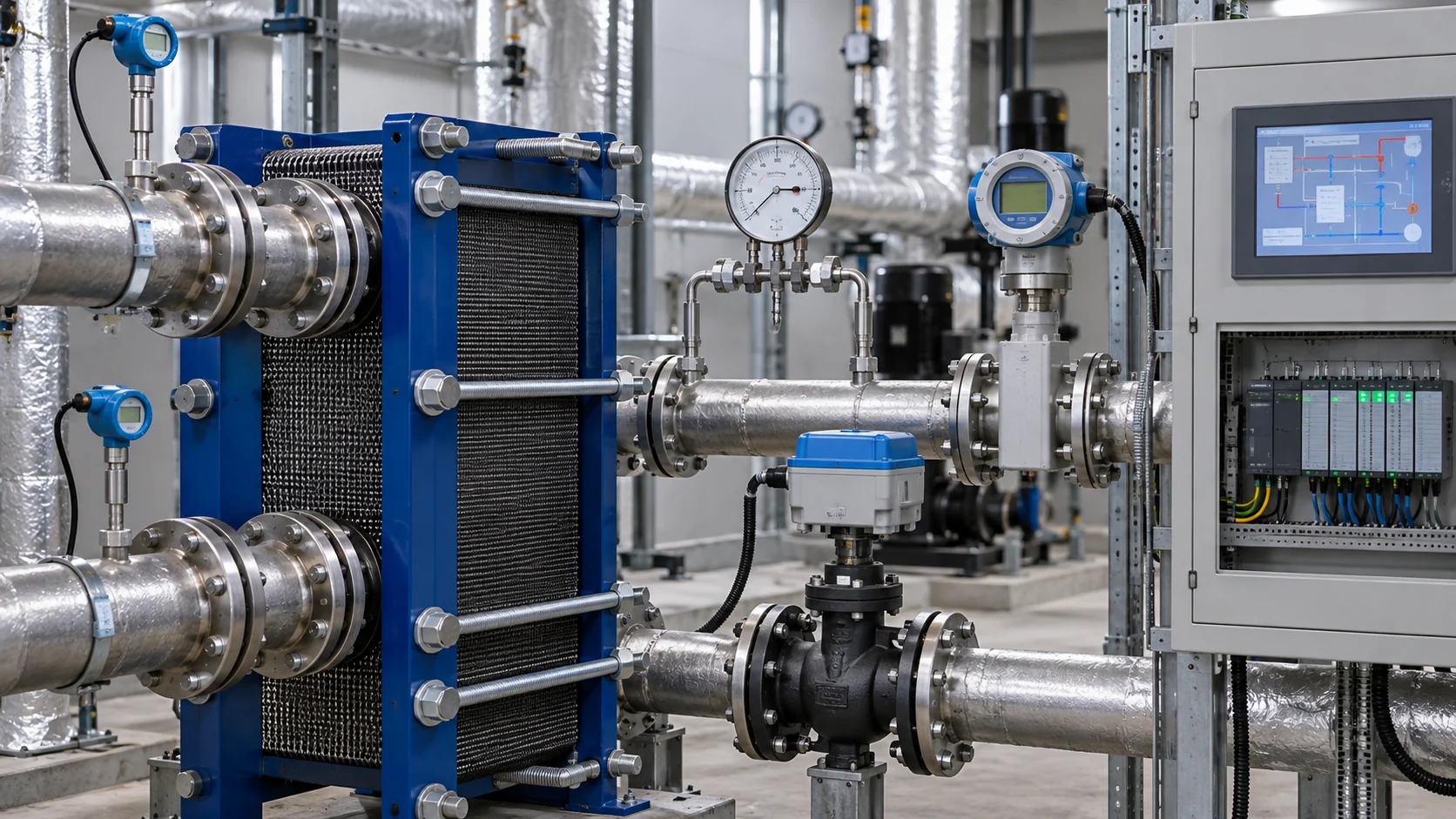
A plate heat exchanger works as part of a sequence, not as a standalone box. Include isolation valves on both circuits, a strainer or filter suited to the channel size, vents at high points, drains at low points, pressure and temperature test points, and enough clearance for the specified service method. Protect the unit from piping loads and provide supports that do not twist the frame or nozzles.
At minimum, trend entering and leaving temperatures on both sides and differential pressure across the heat exchanger. Use a flow switch or meter where loss of flow could freeze a liquid side or damage a compressor circuit. A modulating valve should control the intended leaving temperature without starving the minimum flow needed for stable heat transfer. If the unit is in a chiller or refrigeration package, coordinate the plate rating with the expansion device, compressor envelope, oil return path, and receiver volume.
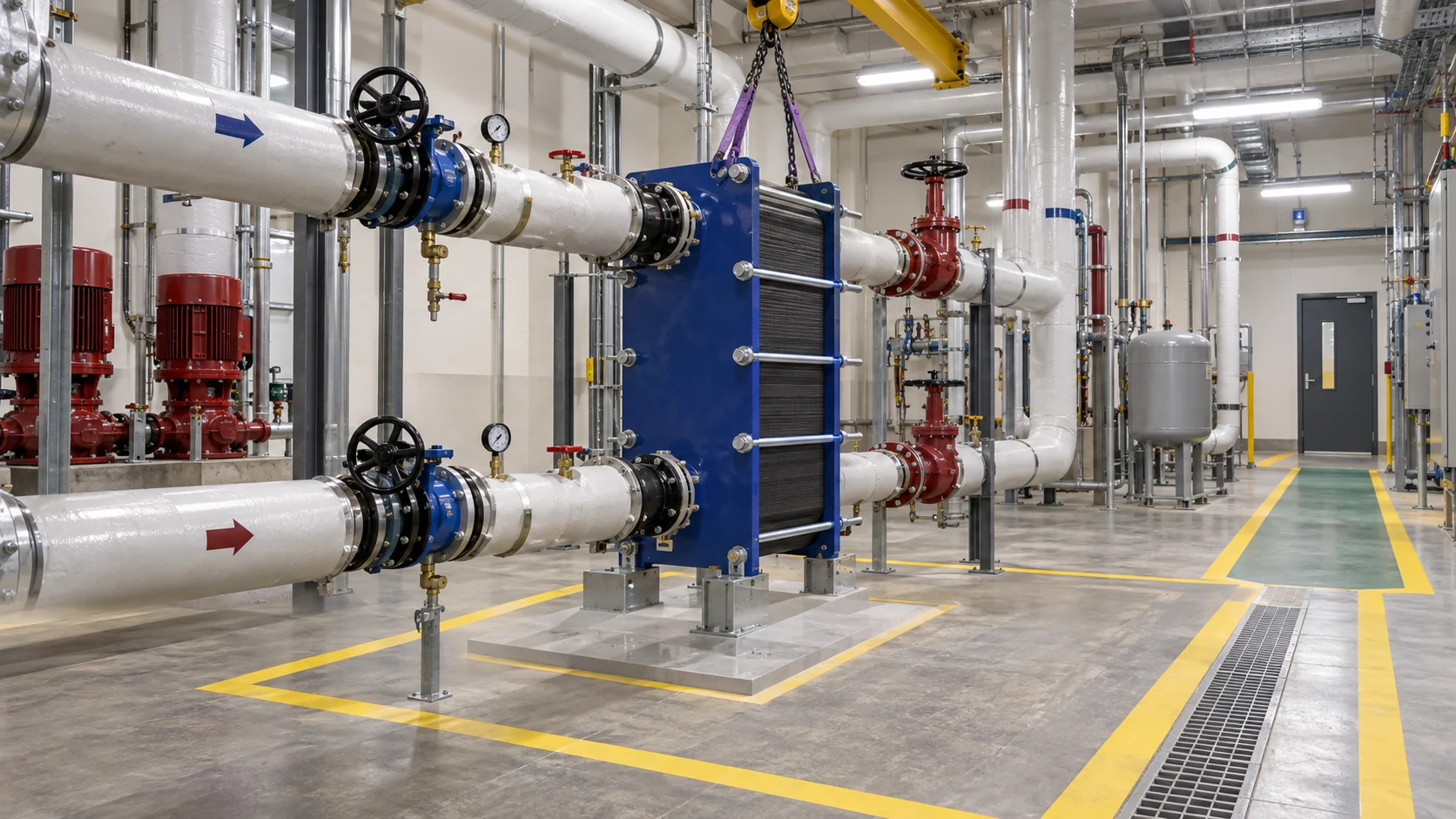
Leave a practical service envelope around the frame, nozzles, valves, and lifting path. A gasketed plate heat exchanger may need the plate pack to slide out farther than the skid width suggests. Include that removal distance, drain routing, overhead height, and isolation points in the layout review before the equipment is released.
What goes wrong when selection data is missing
Most avoidable failures start before fabrication. A supplier receives a nominal capacity but no minimum flow, a water temperature but no glycol concentration, or a refrigerant name but no phase-change condition. The quotation then uses hidden assumptions. Those assumptions become a low-flow freeze event, a noisy pump, a short-lived gasket, or a unit that cannot be cleaned in the installed location.
Ask the supplier to list assumptions on the selection sheet. Reject an offer that hides plate material, gasket compound, design pressure, test pressure, connection standard, or pressure-drop result. If the supplier cannot show a clean and fouled rating, you cannot set a defensible maintenance trigger or compare bids on total cost.
RFQ checklist for a plate heat exchanger
Send a single, controlled RFQ package. Include:
- Duty for normal, minimum, peak, and any startup or emergency case.
- Fluid name, concentration, phase, density, viscosity, specific heat, and known contaminants.
- Inlet and outlet temperatures for both circuits and the required temperature approach.
- Mass or volume flow and the maximum allowable pressure drop on each side.
- Design and test pressure, design temperature, relief set points, and applicable code.
- Plate, frame, weld, braze, gasket, and connection material requirements.
- Nozzle size, connection standard, orientation, footprint, height, weight, and service clearance.
- Strainer, filtration, water treatment, cleaning chemical, and drain or vent provisions.
- Control valve, sensor, flow switch, BAS or PLC interface, and alarm expectations.
- Quantity, redundancy, spare parts, documentation, inspection, packaging, and delivery location.

How Domi can review the surrounding heat-transfer package
Domi Refrigeration works with custom coils, heat exchangers, thermal engineering, prototyping, and testing. For a plate heat exchanger request, the practical starting point is a review of the duty, interfaces, drawings, and quality requirements. Domi can help identify whether the requirement belongs to a liquid-to-liquid plate unit, an air-side coil, a shell-and-tube construction, or a custom heat-transfer core. Complete plate-exchanger package supply is confirmed per project and is not assumed by this article.
For an engineering review, use the que corresponde a la página de fabricación de intercambiadores de calor personalizados and send the duty sheet, fluid data, connection sketch, and service constraints. If a prototype or replacement is involved, include the original drawing, nameplate, photos, and measured operating data. Domi’s laboratorio de pruebas y la documentación de calidad pages explain the evidence to request before release.
Preguntas frecuentes
How does a plate heat exchanger work?
A stack of corrugated plates creates alternating channels for two fluids. Gaskets, brazing, or welds keep the streams separate while heat conducts through the plates. Counterflow routing normally allows a close temperature approach, but the achieved result depends on flow, fluid properties, plate geometry, fouling allowance, and pressure drop.
What is the difference between gasketed and brazed plate heat exchangers?
A gasketed plate-and-frame heat exchanger can be opened for inspection, gasket replacement, and, within design limits, plate changes. A brazed plate heat exchanger is permanently sealed, usually smaller, and often selected for packaged water, brine, heat pump, chiller, or refrigeration duties. The choice depends on fluid chemistry, pressure and temperature, cleaning access, and the replacement plan.
What are the disadvantages of a plate heat exchanger?
Potential disadvantages include narrow passages that are sensitive to solids, gasket or braze compatibility limits, pressure-drop sensitivity, and limited field repair for sealed cores. These are manageable when filtration, materials, flow, cleaning, and service clearance are specified together. A plate unit is not automatically the best choice for every dirty, high-pressure, or high-temperature duty.
How do you size a plate heat exchanger?
Start with heat duty, fluid properties, inlet and outlet temperatures, flow, allowable pressure drop, design pressure, design temperature, and fouling allowance for every operating case. The manufacturer then selects plate area, channel pattern, passes, and connections and returns a rated result. Do not size from nominal capacity or plate count alone.
Can a plate heat exchanger be used for HVAC chilled water?
Yes. Plate heat exchangers are used for chilled-water isolation, glycol interfaces, heat recovery, and water-side economizer arrangements. Confirm approach temperature, flow, freeze protection, water treatment, filtration, control-valve sequence, and the pressure rating of both circuits before release.
What information should I include in an RFQ?
Include the duty cases, fluids and concentrations, temperatures, flow, pressure-drop limits, design and test pressure, materials, connections, installation envelope, cleaning plan, controls, documentation, inspection, quantity, redundancy, and delivery requirements. Attach a piping sketch and the original drawing or nameplate when replacing an existing unit.
Before you request pricing
A defensible plate heat exchanger decision can be reduced to four checks: the heat balance closes, the selected construction matches the fluid and service plan, the pressure drop fits the pump and controls, and the RFQ records every assumption that affects safety or lifecycle cost. Once those checks are visible, competing quotes can be compared on rated performance and evidence instead of a low initial price.
Send Your Duty Data for a Plate Heat Exchanger Review: Solicite una cotización personalizada, Envíe su dibujo para revisión, o Confirm Lead Time and Sample Options.