
Short answer: select an HVAC system from the building or process load, heating and cooling temperatures, outdoor-air requirement, humidity, air quality, site climate, available utilities, maintenance access, controls, noise limits, redundancy, and life-cycle cost. An HVAC system is a coordinated arrangement of air-handling, heat-transfer, heat-rejection, distribution, ventilation, and control equipment. It is not a single chiller or coil. For a dependable quote, send the operating envelope and installation constraints together, then compare the complete system boundary.
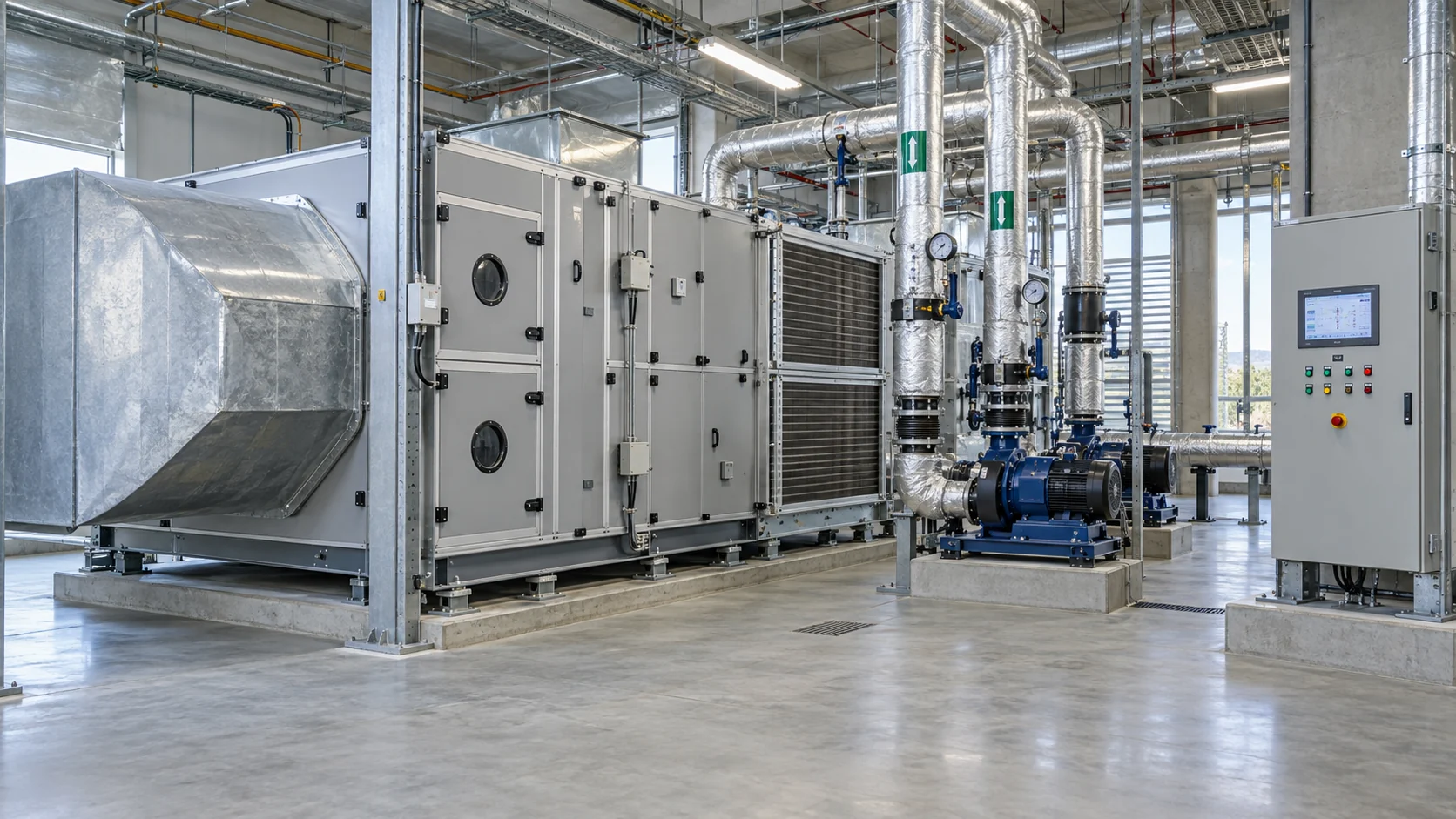
What an HVAC system includes
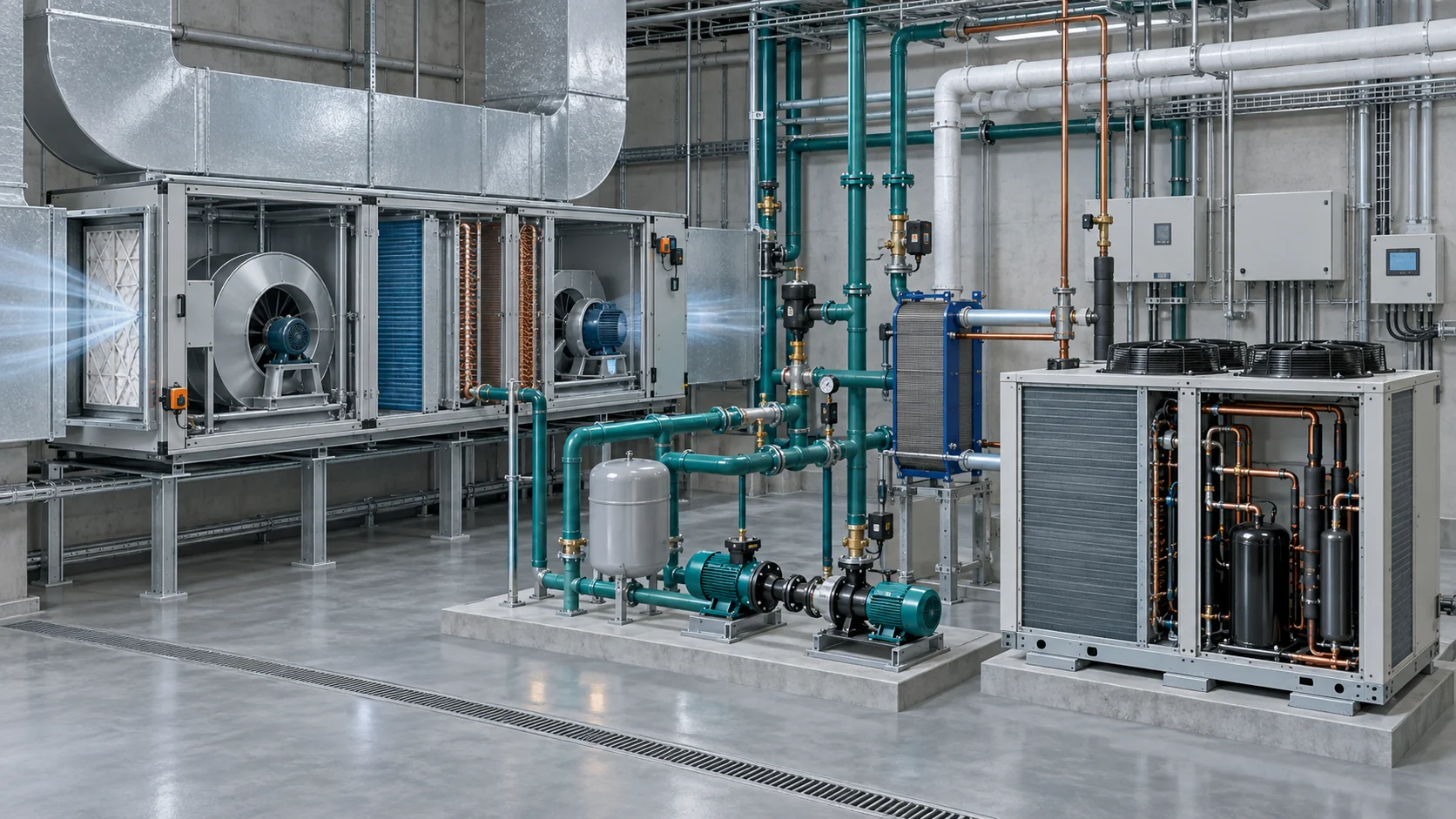
An HVAC system maintains the indoor or process environment by moving air, transferring heat, introducing outdoor air, removing moisture, and controlling temperature. A commercial project may combine an air handling unit (AHU), supply and return fans, filters, heating and cooling coils, dampers, ducts, pumps, chillers, heat pumps, boilers, cooling towers, valves, sensors, and a building automation system (BAS). An industrial project may add process exhaust, make-up air, cleanable coils, corrosion protection, glycol loops, refrigeration circuits, or a dedicated heat-rejection package.
The correct boundary is the path from the load to the final heat sink or heat source. A coil with the right catalog capacity can still fail when the air volume, entering-air temperature, fluid concentration, pressure drop, fouling, or control sequence is different from the rating condition. Likewise, a correctly sized chiller cannot deliver comfort if the airside distribution, valves, sensors, or balancing are wrong.
الدليل ASHRAE HVAC system analysis and selection guidance frames selection around functional requirements, design intent, sustainability, constructability, commissioning, operation, and maintenance. That approach is useful for a buyer because it keeps the quotation focused on a verifiable duty instead of an unsupported brand or nominal tonnage.
| HVAC system layer | الوظيفة الرئيسية | Data to confirm before quotation | Typical risk when isolated |
|---|---|---|---|
| Load and space | Defines the heat, moisture, ventilation, and process duty | Area, occupancy, equipment heat, schedules, design temperatures, humidity and peak events | A nameplate or floor-area estimate misses solar, infiltration, process peaks, or start-up |
| Airside equipment | Conditions and distributes air | Supply airflow, external static pressure, filter class, coil face velocity, sound and access | A fan or coil may meet capacity while creating excessive noise, pressure drop, or poor air distribution |
| Hydronic or refrigerant loop | Moves heating or cooling between the plant and terminal equipment | Fluid, concentration, supply/return temperatures, flow, pressure, pipe route and freeze limit | Correct capacity is unavailable if the pump, valve, circuiting, or refrigerant path cannot deliver flow |
| Heat rejection or heat source | Rejects or supplies heat | Ambient dry-bulb/wet-bulb, water quality, utility capacity, fuel or electrical limits and clearances | Summer derating, fouling, water treatment, or utility constraints can reduce real output |
| التحكم والحماية | Keeps the system inside its operating envelope | Sensors, setpoints, alarms, interlocks, sequence, BAS protocol and fail-safe state | Short cycling, freeze risk, hunting valves, bad ventilation, and hidden faults increase operating cost |
Start with the load and operating envelope
Before comparing HVAC system types, split the usual operating demand from the peak, pull-down, recovery, and simultaneous heating or cooling case. A warehouse office, food-retail store, laboratory, production room, or data-heavy space often spends long periods below design duty and then experiences a short event that determines equipment size. Record both the normal operating point and the design extreme so the supplier can discuss staging, storage, redundancy, and turndown rather than simply applying an oversized factor.
Collect the heat-source temperature, allowable room or product swing, supply and return temperatures, relative humidity or dew point, outdoor-air rate, internal gains, operating schedule, start-up time, and recovery target. For a replacement, include measured airflow, fan speed, pressure drop, valve position, fouling condition, control alarms, and the reason the previous system was removed. These details help distinguish a capacity problem from an airflow, control, water-flow, or maintenance problem.
| مدخلات طلب عرض السعر | What to send | Why it changes the HVAC system decision |
|---|---|---|
| Cooling and heating duty | Average and peak kW or tons, sensible/latent split, batch duration, pull-down, recovery and redundancy target | Determines equipment capacity, staging, heat exchanger size, and whether thermal storage or a backup path is justified |
| Air and moisture target | Supply-air temperature, room temperature, humidity/dew point, outdoor-air rate, filtration and pressurization | Separates comfort conditioning from process, ventilation, dehumidification, or clean-air duties |
| Fluid or refrigerant | Water, glycol, brine, refrigerant, concentration, chemistry, inlet/outlet temperature and pressure | Changes material choice, viscosity, pump head, freeze protection, circuiting and pressure-drop limits |
| Site and utilities | Local dry-bulb/wet-bulb design points, altitude, water temperature/quality, power, fuel, sound, footprint and service clearances | Sets heat-rejection performance and may eliminate a water-cooled, tower, packaged, or rooftop option |
| Operating pattern | Hours, seasonality, occupancy, production changeover, maintenance window, emergency mode and future expansion | Guides turndown, modular staging, controls, spare capacity, access and total service-life cost |

Do not quote only the mild-day condition. A system that reaches setpoint on a cool day may not hold it at the design-day outdoor temperature, during a production surge, after filter loading, or when a condenser coil is dirty. The U.S. Department of Energy guidance on HVAC sizing and quality installation also highlights oversizing, improper charging, leaky ducts, and control quality as causes of lost efficiency and comfort.
Compare the main HVAC system architectures
Packaged and rooftop air systems
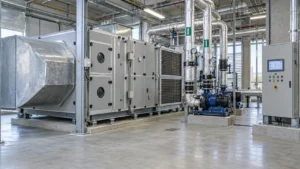
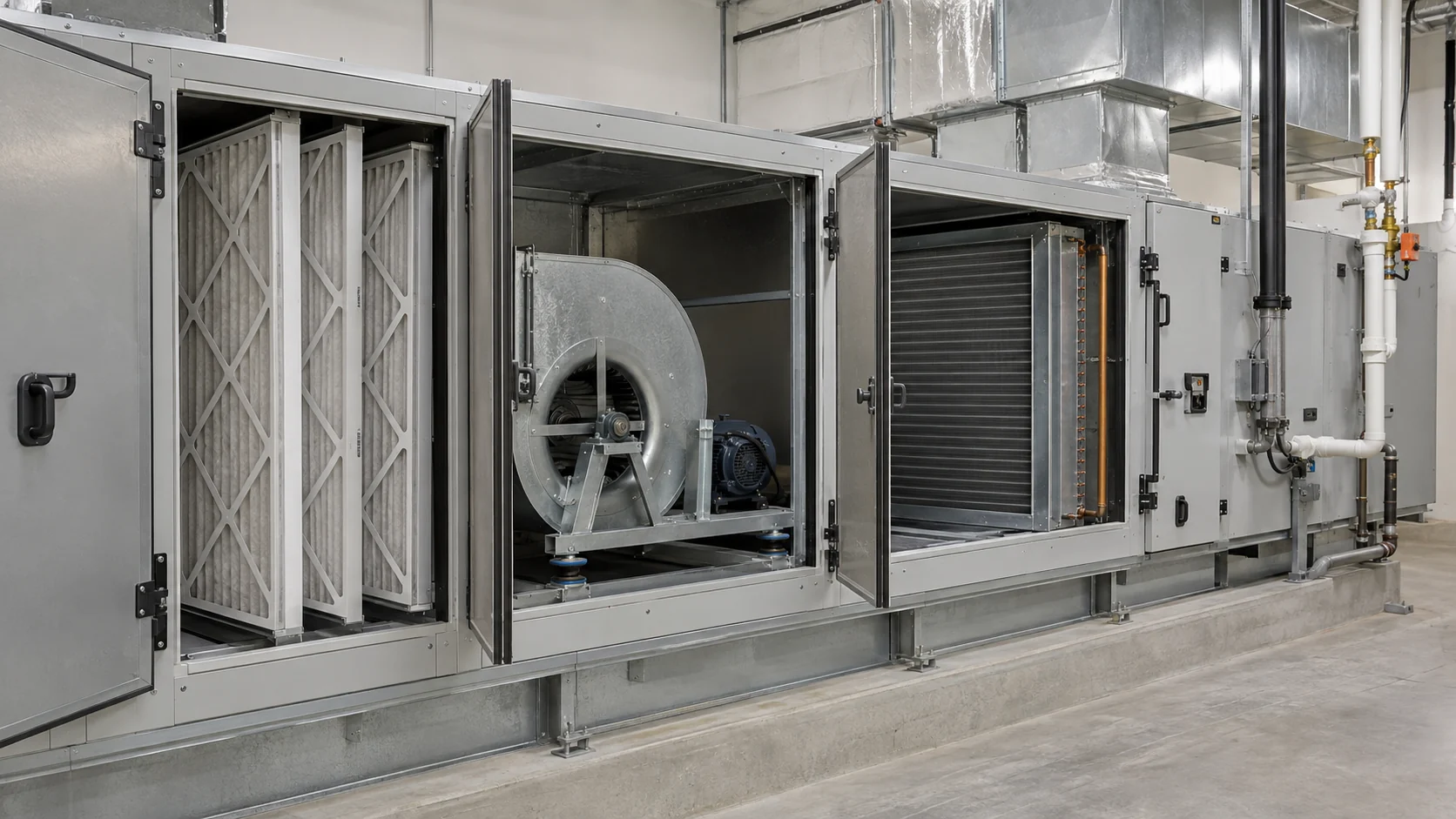
Packaged rooftop units and dedicated air systems place much of the fan, coil, compressor, and control package together. They can simplify installation for smaller commercial buildings and offer a clear replacement boundary. Review roof structure, crane access, weather exposure, outdoor-air dampers, economizer operation, service clearance, condensate routing, sound, and winter start-up. The AHU or rooftop unit still needs the correct coil, filter, fan, and control selection for the actual airflow and external static pressure.
Air-cooled central systems
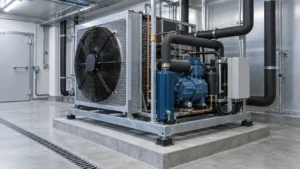
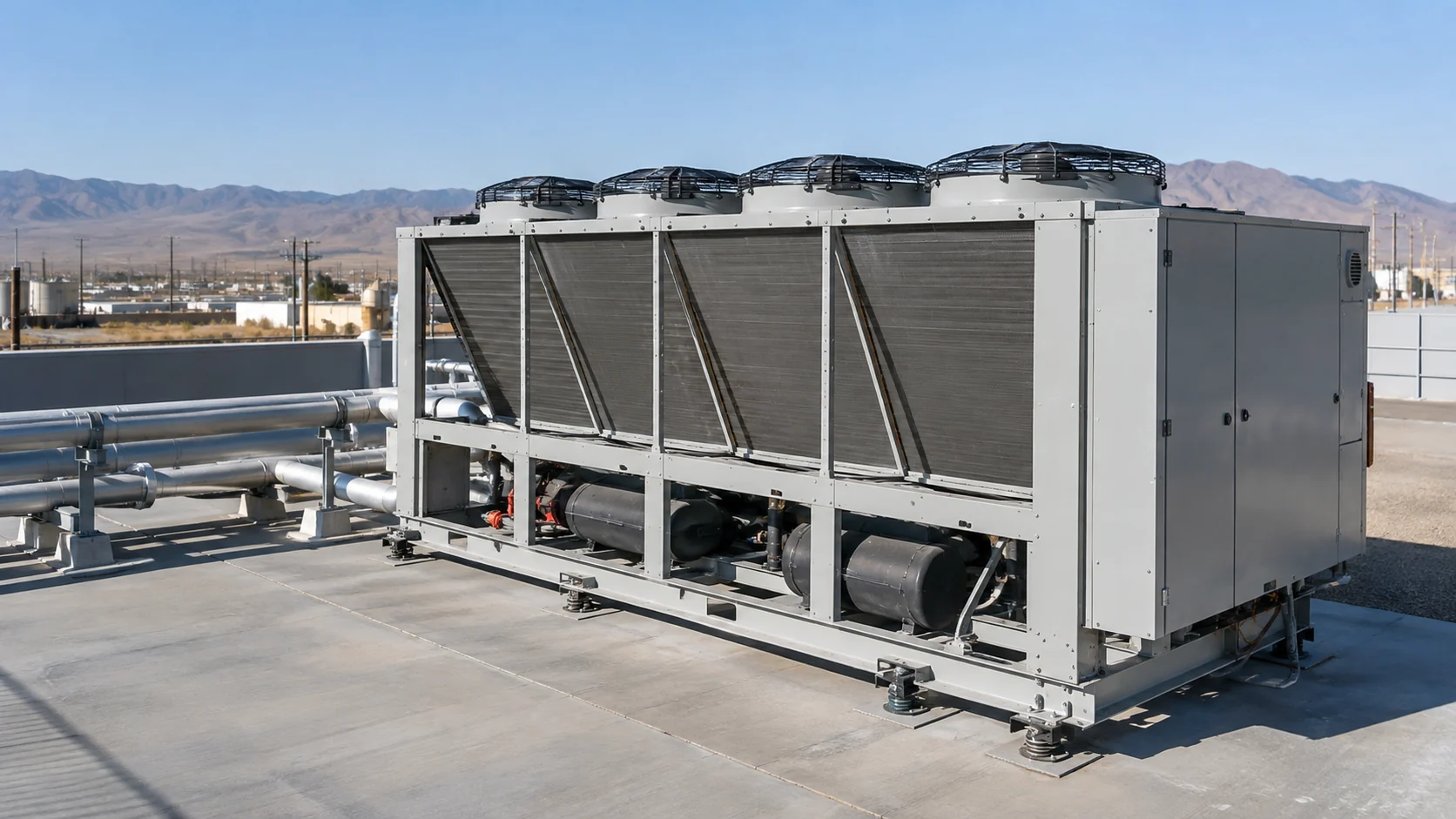
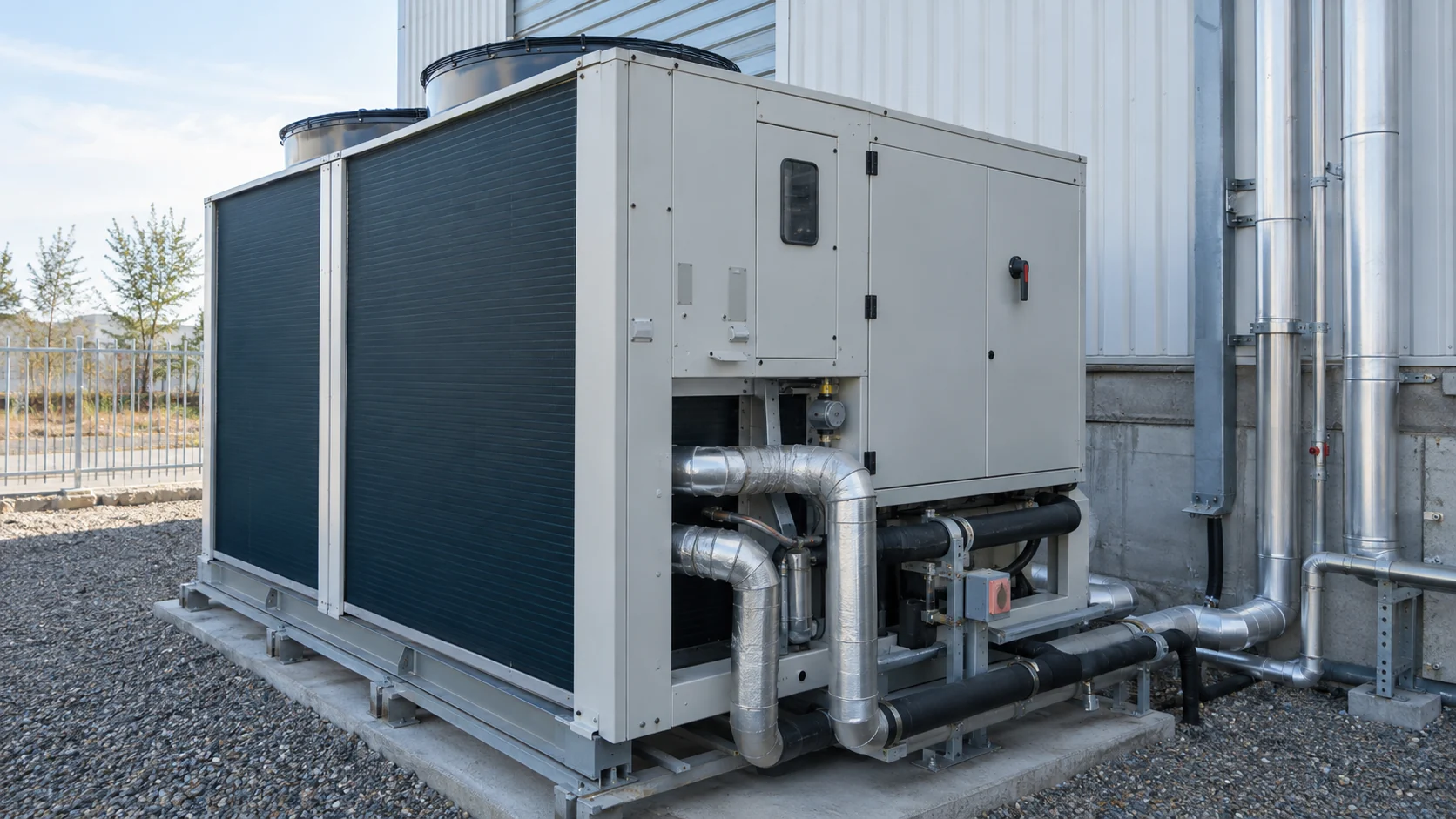
Air-cooled chillers, condensers, and heat pumps send condenser heat into the atmosphere through finned coils and fans. They are useful where water treatment, tower blowdown, or make-up water is undesirable. The design then depends strongly on the local outdoor-air temperature, and the coils require clean airflow. High ambient, recirculation, dust, corrosion, fan sound, and winter control can dominate the total service-life cost.
Specify entering-air temperature, altitude, air speed across the coil face, fan control, sound limit, corrosion exposure, snow or rain protection, discharge clearance, and the expected cleaning method. Multiple circuits or modular units may improve turndown and service continuity, but they also add valves, sensors, and control points.
Water-cooled and hydronic systems
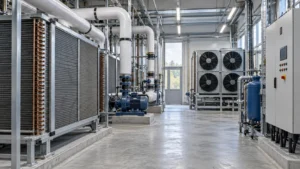
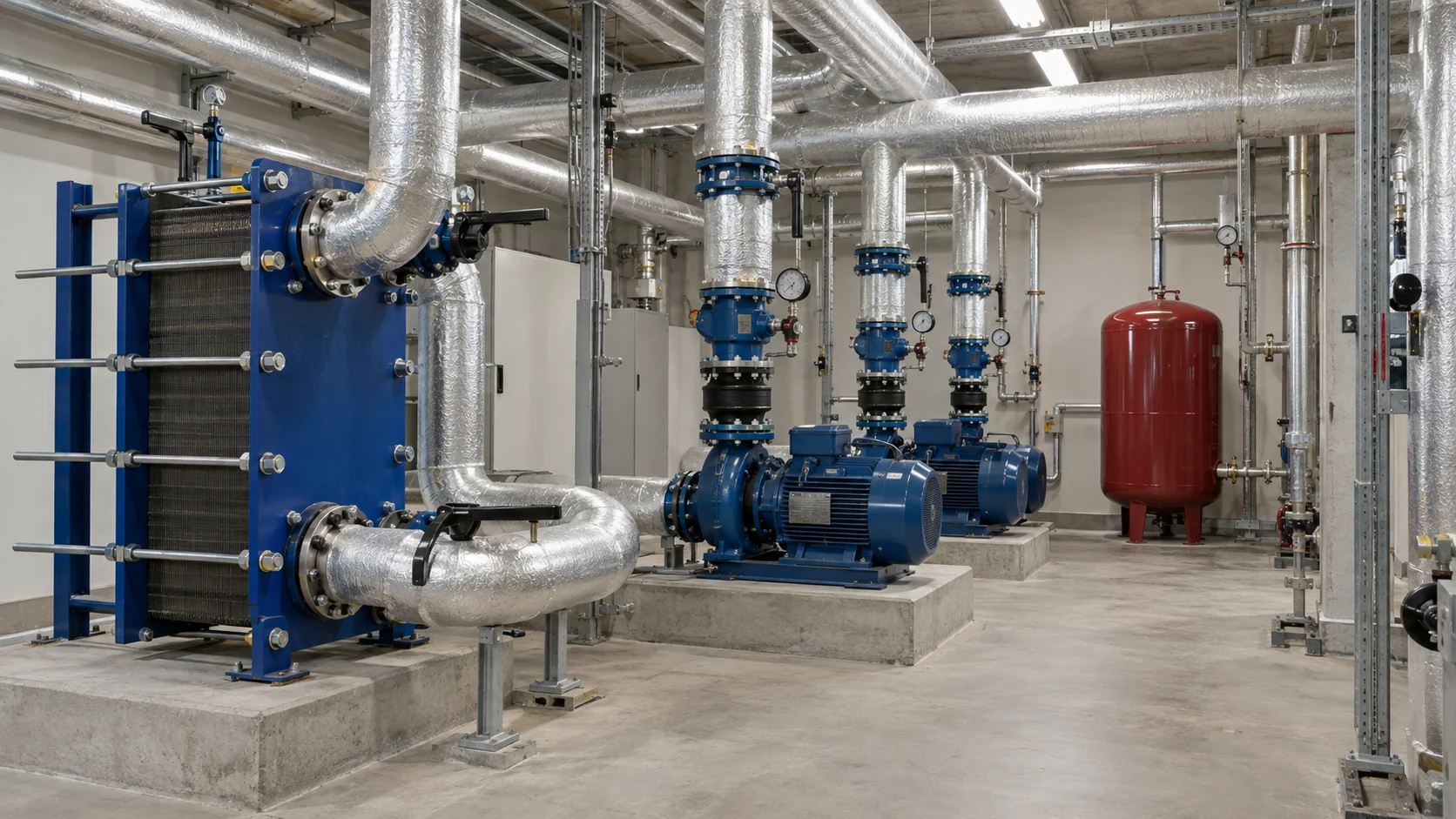
Water-cooled systems transfer heat through a chilled-water, hot-water, condenser-water, or glycol loop. They can provide stable distribution over a large facility and make it easier to separate the plant from terminal equipment. The plant must also manage pumps, expansion volume, air removal, water chemistry, filtration, freeze protection, relief devices, tower or dry-cooler operation, and cleaning.
Define supply and return temperatures, design flow, allowable pressure drop, water conductivity or hardness, glycol concentration, filtration, chemical treatment, expansion volume, pipe insulation, drain and vent points, and the maintenance method. A plate heat exchanger or custom coil can be a strong fit, but its material and connection design must match fluid chemistry and the required inspection or cleaning procedure.
Heat-pump, VRF, and reversible systems
Heat pumps can provide heating and cooling from a shared refrigerant circuit or a hydronic loop. Variable refrigerant flow (VRF) and reversible packaged systems can serve multiple zones, but the selection must address outdoor design temperature, defrost, oil return, refrigerant piping length, branch controllers, simultaneous heating and cooling, condensate, service access, and the required control interface. For a project with a substantial ventilation or humidity load, a dedicated outdoor-air system may need to work alongside the heat pump rather than asking the terminal unit to do every job.
Industrial and hybrid systems
Industrial HVAC often combines process cooling, comfort zones, exhaust or make-up air, cleanable coils, heat recovery, and a separate refrigeration or glycol loop. A hybrid arrangement can use an air-cooled heat-rejection path for dry weather and a water or adiabatic assist during peak conditions. It can also combine a central plant with packaged units so a critical process is isolated from office comfort loads.
Document which loads are mission-critical, which can be shed, and which need independent temperature or pressure control. State redundancy as a duty requirement, such as N+1 pumps, staged modules, or a backup coil, instead of a vague high-reliability claim.
Match coils, filters, and heat exchangers to the duty
Coil selection is a system decision. Confirm face area, rows, fin spacing, tube or microchannel construction, circuiting, entering and leaving conditions, pressure drop, drain-pan geometry, freeze protection, corrosion exposure, cleaning access, and connection position. The صفحة قدرات الهندسة في دومى describes requirement review, heat-transfer calculation, CFD discussion, material selection, drawing review, sample development, testing documentation, and export packaging support for custom heat exchanger projects.
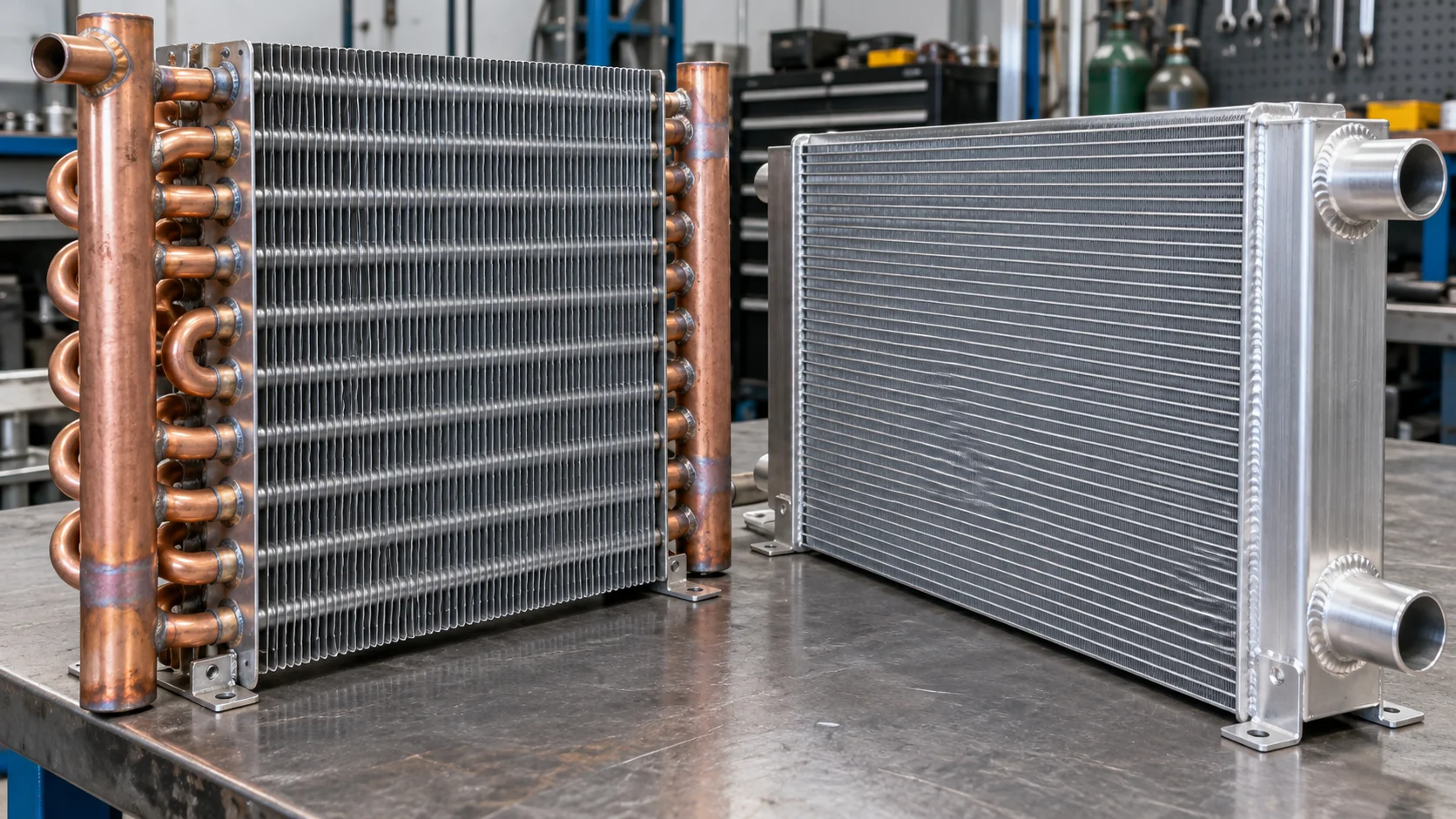
For a humid airside coil, include condensate management, slope, pan material, drain trap, re-entrainment protection, and a cleaning path. For a process or glycol coil, include fluid chemistry, concentration, viscosity, allowable pressure drop, design pressure, freeze risk, and the consequences of a leak. Compare copper, aluminum, stainless steel, coated surfaces, and hybrid constructions against the actual environment, rather than selecting from a generic material preference.
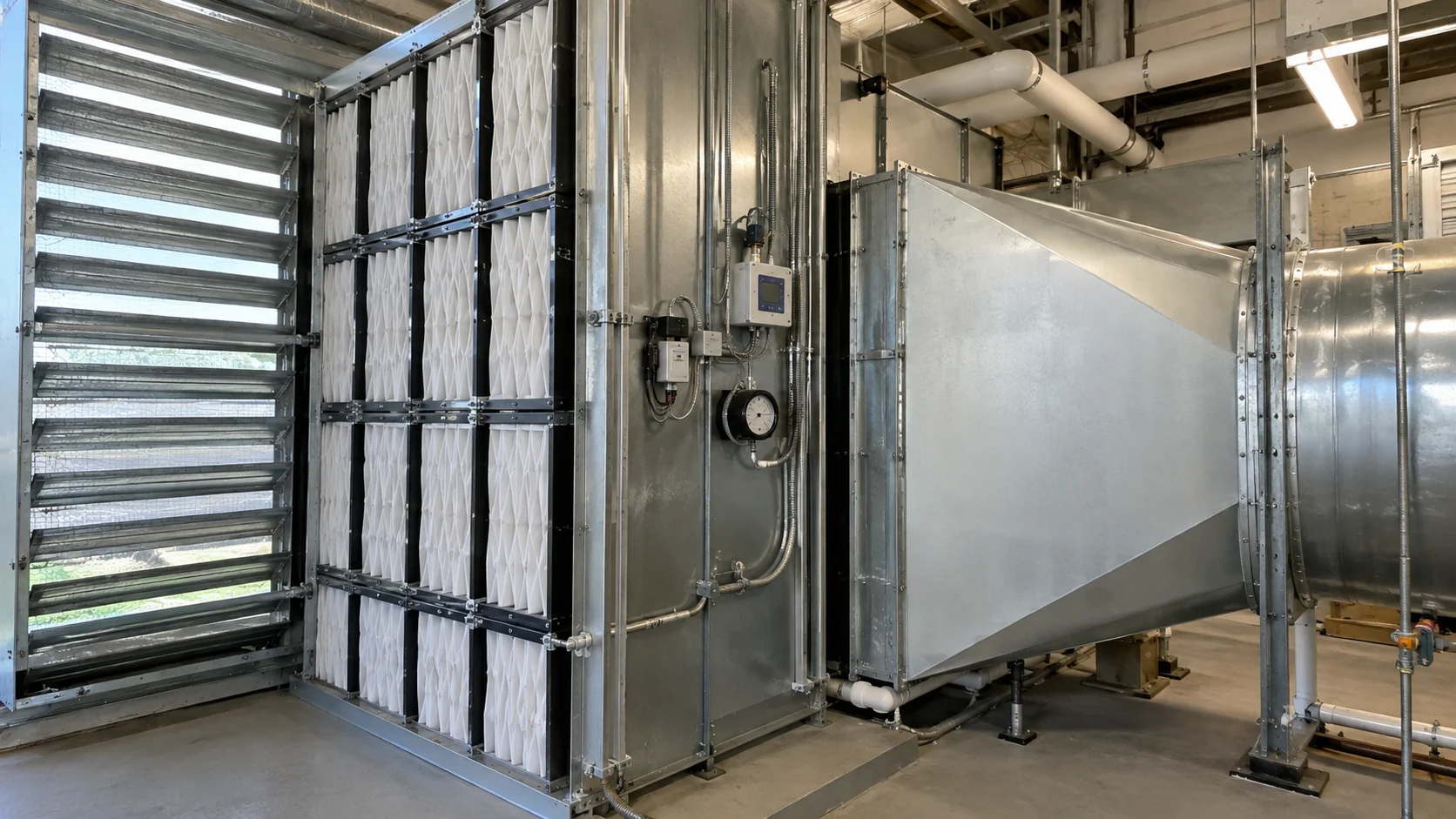
Filtration and outdoor-air design are equally important. Filter class affects pressure drop, fan energy, maintenance frequency, and indoor-air quality. Outdoor-air dampers, louvers, heat recovery, demand-controlled ventilation, and pressure relationships should be sized with the same operating schedule used for the load calculation. Do not hide the filter change-out pressure or maintenance access inside a “standard AHU” allowance.
Design controls, commissioning, and maintainability together
Controls should be selected with the equipment and sequence, not added after the mechanical package is priced. Define sensor locations, setpoints, reset schedules, staging logic, fan and pump speed control, freeze and high-pressure protection, alarm priorities, occupancy schedules, ventilation logic, and the BAS protocol. The DOE building-controls overview notes that high-performance controls can materially reduce HVAC energy use, but the result depends on implementation, sensing, interoperability, and ongoing verification.
| Control or commissioning item | سؤال المشتري | الأدلة المطلوب طلبها |
|---|---|---|
| Temperature and humidity sensing | Where are sensors installed, and are they representative of the controlled zone or process? | Sensor schedule, locations, calibration method and trend sample |
| Flow and pressure control | How will valves, fans and pumps respond to partial load or a blocked filter? | Control sequence, design flow, minimum flow, static-pressure reset and alarm limits |
| Staging and redundancy | Which module starts first, and what happens after a fault or communication loss? | Lead-lag logic, fail-safe state, N+1 or standby definition and restart sequence |
| Ventilation and IAQ | How is outdoor air maintained when occupancy changes? | Damper sequence, CO2 or occupancy strategy, filter pressure limit and commissioning test |
| التحقق | How will capacity, airflow, pressure drop and temperature stability be demonstrated? | Start-up checklist, balancing record, test conditions, trend logs and punch-list closeout |
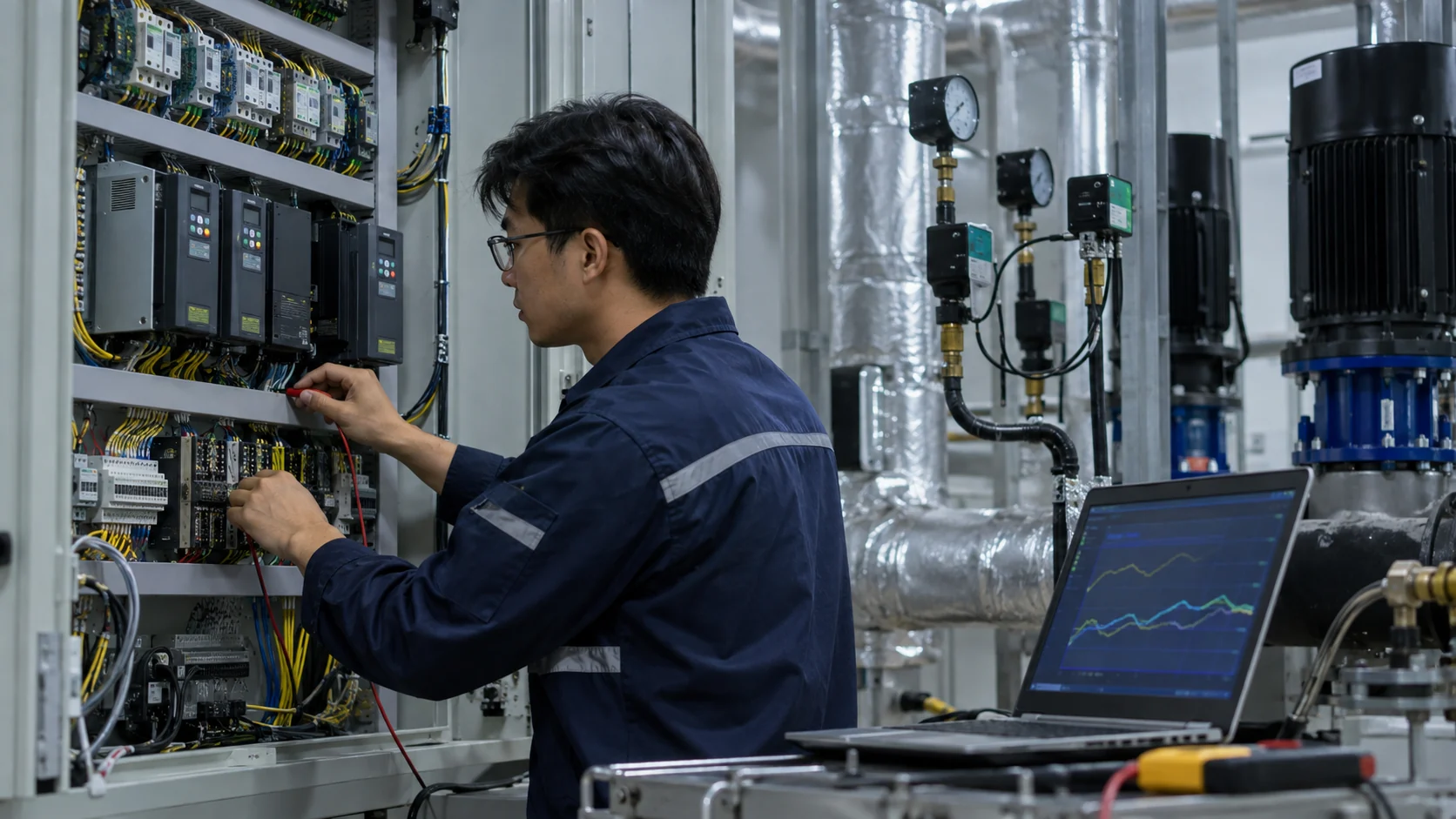
Commissioning should prove the installed system at representative operating points. Check airflow and water flow, entering and leaving temperatures, pressure drop, fan and pump speed, control response, alarm behavior, condensate drainage, defrost or freeze protection, and the handover documentation. The ENERGY STAR operation and maintenance guidance emphasizes that schedules and control settings can drift after a special event; preventive maintenance should include operational settings, not only filter replacement.
Map the system to the application and service plan
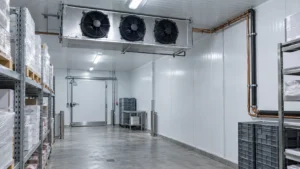
Application changes the weighting of every decision. An office or school may prioritize ventilation, comfort, sound, zoning, and seasonal efficiency. Food retail may need stable case temperatures, humidity control, defrost coordination, cleaning access, and service continuity. A process room may prioritize temperature stability, pressure relationships, corrosion resistance, recovery time, and an independent emergency mode. A warehouse or cold-chain facility may need infiltration control, low-temperature coil design, door events, defrost, and robust condensate handling.
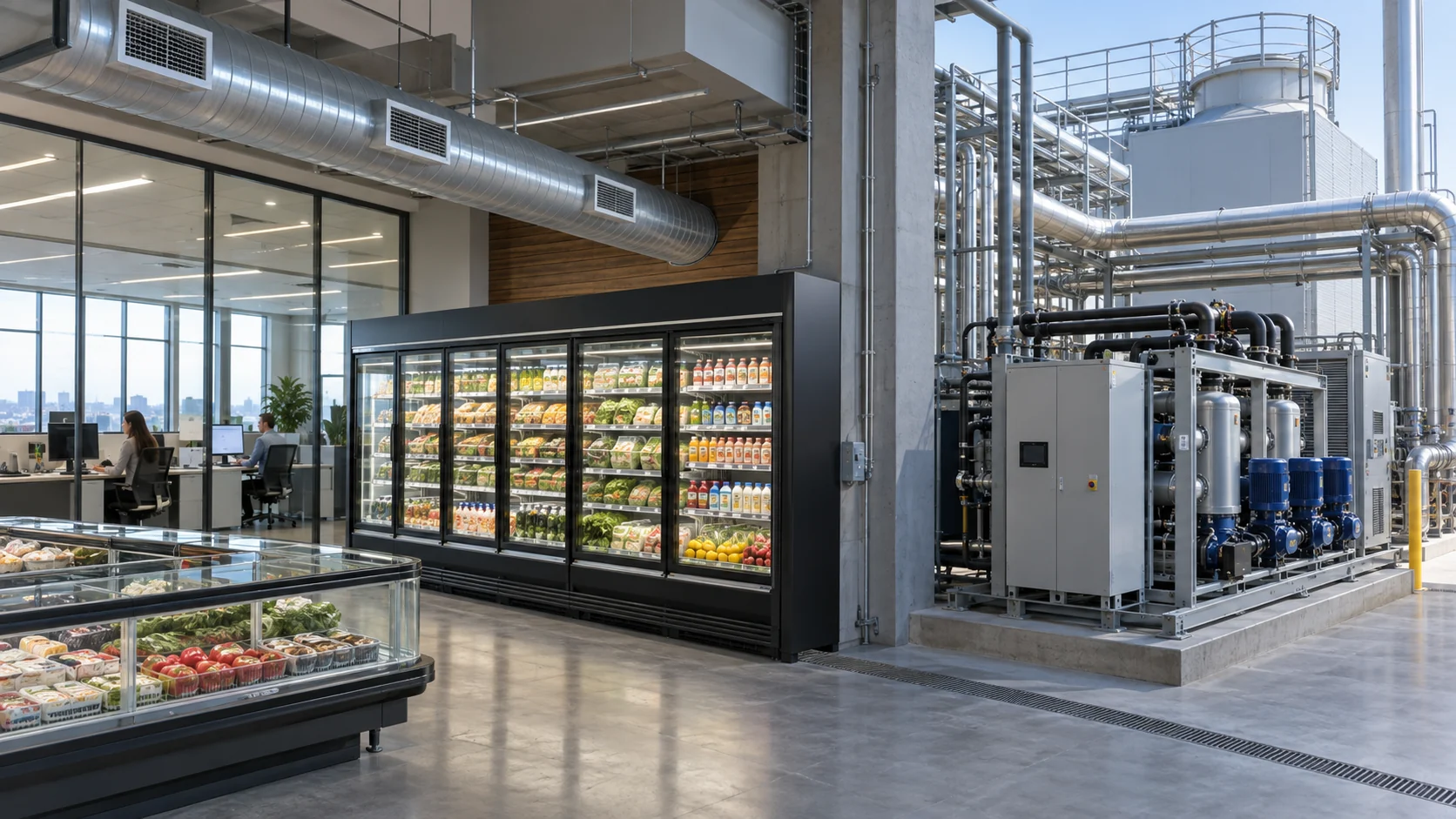
Build the maintenance plan before approving the equipment. Identify coil and filter access, lifting points, drain and vent locations, tube or header inspection, leak testing, pump seal replacement, fan or motor service, controls backup, spare parts, cleaning chemicals, and lockout procedures. A compact system that cannot be safely cleaned or isolated can cost more over its life than a slightly larger system with clear access.

Prepare an RFQ that suppliers can actually price
An HVAC system RFQ should let an engineer reproduce the duty and identify exclusions. Send a marked-up layout or drawing, load schedule, design conditions, equipment schedule, control narrative, utility information, quality requirements, and delivery location. If the design is not final, label assumptions and ask the supplier to list the data that must be confirmed before a sample or production release.
| قسم طلب عرض السعر | المعلومات الأساسية | Useful supplier response |
|---|---|---|
| التطبيق والحمل | Building or process, capacity, sensible/latent split, temperatures, humidity, airflow, fluid/refrigerant and schedule | Selected architecture, duty point, assumptions, capacity margin and turndown |
| الملاءمة الميكانيكية | Overall envelope, connection positions, service clearances, mounting, weight, insulation, drainage and lifting | GA drawing, coil or heat-exchanger schedule, connection drawing and installation notes |
| المواد والبيئة | Copper/aluminum/stainless or coating preference, corrosion exposure, water chemistry, cleaning and pressure | Material list, surface treatment, design pressure, corrosion notes and inspection points |
| Controls and validation | Sensors, BAS protocol, alarms, sequence, test conditions, balancing and documentation | I/O list, control sequence, commissioning checklist and test-report format |
| Commercial and logistics | Quantity, sample need, target date, packaging, destination, Incoterms, spare parts and repeat-order plan | Lead-time assumptions, packaging method, quotation validity, exclusions and after-sales scope |

For custom coils, condensers, evaporators, heat exchangers, or air-handler assemblies, include the drawing or an old sample photograph whenever possible. Domi’s engineering and custom fabrication resources can be used to start a requirement review; a buyer can also send an equipment type, capacity target, working medium, temperature range, flow data, installation space, quantity, and destination country through the quote request page.
الأسئلة الشائعة
What is the best HVAC system for a commercial building?
There is no universal best HVAC system. Choose between packaged, central hydronic, air-cooled, water-cooled, heat-pump, VRF, or hybrid architectures from the building size, zoning, climate, ventilation and humidity load, available utilities, service capability, sound limit, redundancy, and life-cycle cost. The best option is the one that meets the design envelope with a clear commissioning and maintenance path.
How do I size an HVAC system for an industrial space?
Start with a documented heat and moisture balance rather than floor area alone. Record process equipment, people, lighting, solar and envelope loads, infiltration, exhaust or make-up air, operating schedule, peak and recovery cases, supply and return temperatures, airflow, humidity, and required redundancy. Then verify coil, fan, pump, heat-rejection, and control selections at the actual design condition.
What is the difference between an air-cooled and water-cooled HVAC system?
An air-cooled package sends condenser heat to the atmosphere through a finned coil and fan. A water-cooled package moves heat into a water or glycol loop before it reaches a tower, dry cooler, or another heat sink. Air-cooled systems usually reduce water-treatment requirements; water-cooled systems may provide a lower approach or a more compact central plant, but they add pumps, water chemistry, maintenance, and utility decisions.
When should a project use a custom HVAC coil?
Consider a custom coil when the standard catalog envelope does not match the required airflow, capacity, fluid, refrigerant, pressure drop, face area, connection position, corrosion environment, sound target, or available space. Send the duty conditions, drawing, installation constraints, material preference, and inspection or testing requirements so the supplier can review thermal performance and manufacturability together.
What HVAC controls should be included in an RFQ?
Include sensor locations, temperature and humidity setpoints, outdoor-air and ventilation logic, fan and pump modulation, valve control, staging, reset schedules, freeze and high-pressure protection, alarms, communication protocol, fail-safe state, and commissioning tests. Ask for an I/O list, control sequence, trend sample, start-up checklist, and clear responsibility for BAS integration.
What information should I send to an HVAC equipment manufacturer?
Send the application, cooling and heating duty, design temperatures, airflow or fluid flow, working medium, pressure limits, site ambient, water quality, dimensions, connection positions, materials, corrosion or cleaning conditions, controls, quantity, sample need, delivery location, and required documentation. A drawing, 3D model, old sample photograph, or measured replacement data can shorten the engineering review.
مقالات ذات صلة
Send the equipment schedule, drawing, duty conditions, or old sample photo to request a custom HVAC or heat-exchanger quote.