

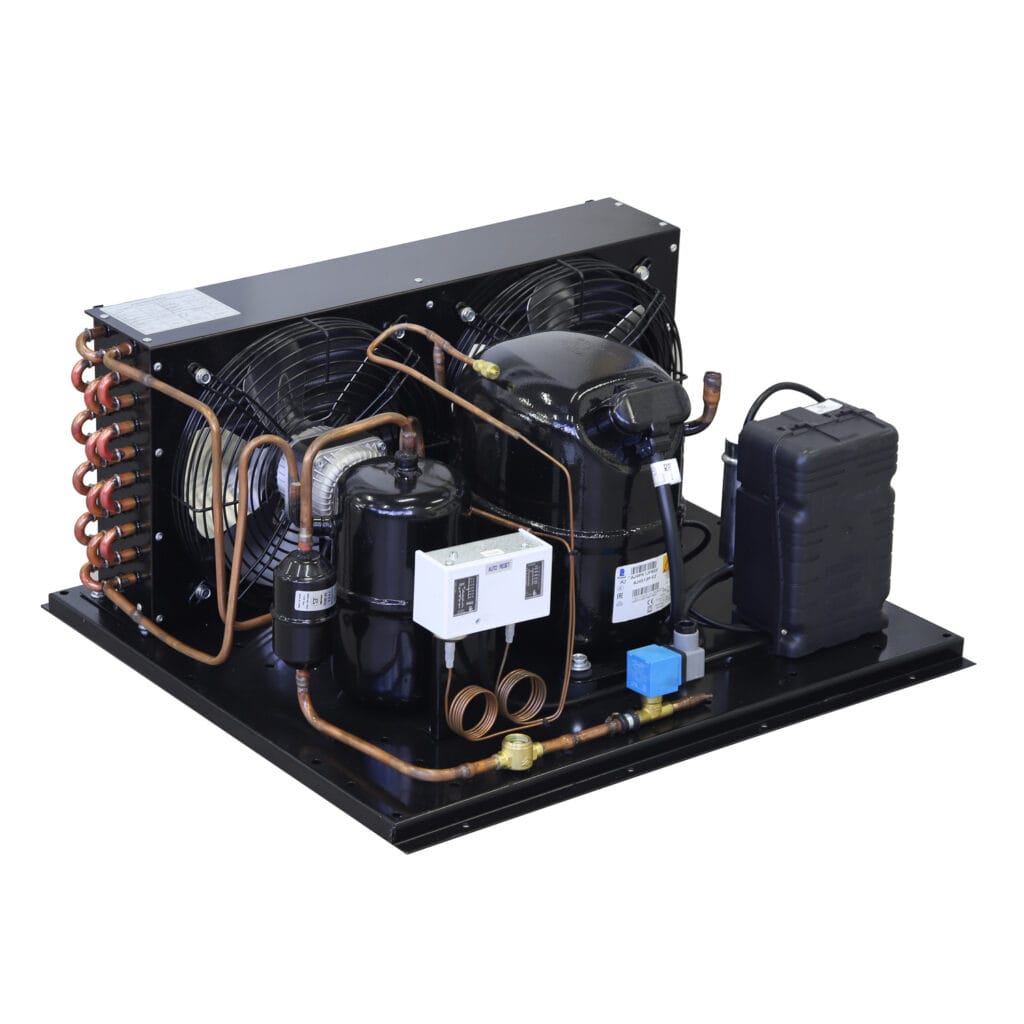
IP54 EC Fan Motor
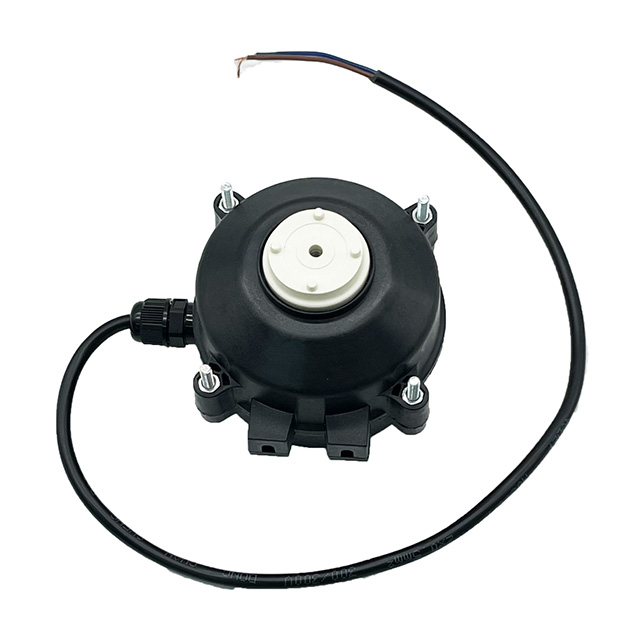
EC shaded pole freezer fan motor for refrigeration cabinets, with listed 7108, 7112 and 7120 options. Confirm AC/DC voltage, 500-2300 r/min speed range, output, dimensions, rotation, wiring, testing and order requirements from the drawing or sample.
Product Details
Domi Refrigeration supplies an EC shaded pole freezer fan motor for OEM freezer and refrigeration cabinet airflow assemblies. The published options on this page cover model families 7108, 7112, and 7120, with listed AC and DC24 variants, speed ranges, output capacity, ambient-temperature range, and dimensional references.
For a replacement or new-equipment program, the product name is only the starting point. Voltage, frequency, rotation, speed control, shaft, mounting pattern, fan interface, wiring, operating environment, and inspection limits should be matched to the approved drawing or sample before a batch order is released.
What this EC freezer fan motor is for
This motor is intended for fan assemblies that circulate air through a freezer cabinet, evaporator compartment, or other refrigeration enclosure. It can be evaluated for OEM design-in, replacement motor projects, and distributor programs where the buyer needs a repeatable component specification rather than a generic motor description.
- Freezer and refrigeration cabinet fan assemblies
- Evaporator-side air circulation applications
- Replacement projects where the existing motor and installation can be measured
- OEM programs that require defined electrical, mechanical, and packaging inputs
This is an airflow drive component, not a pressure-bearing refrigerant part. The relevant application checks are electrical compatibility, airflow duty, mechanical fit, moisture or defrost-water exposure, ambient temperature, and installation orientation.
Published motor options and technical data
The table below keeps the current product data visible in a procurement-friendly format. Values are the listed nominal data for the 7108, 7112, and 7120 options; confirm the final model, tolerance, and test condition against the drawing or approved sample.
| Type | Features | Voltage | Frequency | Speed | Output capacity | Perm. ambient temperature | Dimension a | Dimension b |
|---|---|---|---|---|---|---|---|---|
| 7108 | Standard CW & CCW; 2 speeds | AC115 or 230 | 50/60 Hz | 500-2300 r/min | 5 W | -30°C to 50°C | 83 | 43.5 |
| 7108 | Standard CW & CCW; 2 speeds | AC100-240 | 50/60 Hz | 500-2300 r/min | 5 W | -30°C to 50°C | 74 | 43.5 |
| 7112 | Standard CW & CCW; 2 speeds | AC115 or 230 | 50/60 Hz | 500-2300 r/min | 15 W | -30°C to 50°C | 87 | 43.5 |
| 7112 | Vari-speed | DC24 | — | 500-2300 r/min | 15 W | -30°C to 50°C | 87 | 43.5 |
| 7112 | Standard CW & CCW; 2 speeds | AC100-240 | 50/60 Hz | 500-2300 r/min | 15 W | -30°C to 50°C | 78 | 43.5 |
| 7120 | Standard CW & CCW; 2 speeds | AC115 or 230 | 50/60 Hz | 500-2300 r/min | 22 W | -30°C to 50°C | 95 | 43.5 |
The frequency field is not listed for the DC24 7112 row. Treat that blank as a confirmation point for the controller, wiring, and speed-command method; do not infer a frequency requirement for a DC input from the AC rows.
How to select the correct variant
- Start with the power supply. Match the equipment supply to the listed AC115 or 230, AC100-240, or DC24 option. Confirm nominal voltage, allowable tolerance, frequency, connector, lead length, and polarity or control wiring where applicable.
- Confirm the airflow duty. A 5 W, 15 W, or 22 W entry is not by itself an airflow curve. Provide the fan blade, shroud, evaporator resistance, target airflow, and operating point when the project requires airflow validation.
- Check speed and rotation. The listed rows show 500-2300 r/min and may use standard CW & CCW, two-speed, or vari-speed configurations. Confirm which direction and speed command the cabinet controller requires.
- Match the mechanical envelope. Compare body size, shaft length and diameter, mounting holes, dimension a, dimension b, lead exit, and installation orientation with the old motor or drawing.
- Check the fan interface. Record blade bore, hub, guard, bracket, and clearance. A motor with a similar outside size can still be unsuitable if the shaft or blade interface is different.
- Define the environment. The current table lists -30°C to 50°C as the permissible ambient-temperature range. Confirm the actual cabinet temperature, humidity, condensation, defrost-water exposure, vibration, and duty cycle for the selected model.
- Agree the release documents. Decide whether the order needs a drawing, sample approval record, inspection report, label, carton specification, or other buyer-controlled document before production.
Mounting and airflow compatibility
The motor drives the fan, but system airflow depends on the complete assembly. Blade diameter and pitch, shroud clearance, guard geometry, evaporator frost load, cabinet pressure drop, rotation, and speed control all affect the result. For this reason, a motor should not be selected by wattage or product name alone.
If the project also needs a fan blade, compare the motor shaft and blade hub together. Domi’s high-efficiency fan blade page can be used as a related component reference, but the blade, guard, and motor combination still needs project-specific fit confirmation.
EC and shaded-pole terminology
The product name identifies this EC/ECM freezer-fan motor family, while the technical table distinguishes the listed AC and DC24 configurations. EC, ECM, conventional shaded-pole, and DC-input motor descriptions should not be treated as interchangeable without checking the electrical architecture and controller interface.
For comparison, review the general electronically commutated motor page and the shaded pole fan motor page. These pages describe related product entities; they do not replace the fit and test review for this freezer fan motor.
Inspection and release checks
For sample approval, define the inspection method and acceptance limits before the production order. A practical release checklist can include:
- Electrical continuity, input wiring, and insulation requirements
- Start-up behavior, rotation direction, and CW/CCW identification
- Speed and current under the agreed voltage, load, and control condition
- Noise and vibration observations with the specified blade or fixture
- Shaft runout, mounting dimensions, connector or lead position, and clearance
- Run-in or balance checks where the equipment program requires them
- Individual protection, carton quantity, labels, and packaging damage risk
Final test conditions, sampling level, tolerances, and acceptance limits are project inputs and should be confirmed with the buyer and supplier before release.
OEM, replacement, and procurement inputs
For a useful quotation review, send the information that determines fit and production scope:
- Existing motor sample, nameplate, or dimensioned drawing
- Supply voltage, frequency, controller type, speed range, and rotation
- Body dimensions, shaft dimensions, mounting pattern, blade interface, and lead details
- Freezer or cabinet application, ambient range, humidity, defrost condition, and duty cycle
- Required output or airflow target and the fan blade or shroud used in the assembly
- Sample quantity, annual or batch quantity, packaging, labeling, and destination market
- Required inspection records, drawing approval, and documentation format
MOQ and lead time depend on the selected motor model, winding and wiring setup, sample status, order cycle, and packaging requirements. Confirm these items after the technical scope is clear rather than relying on a generic catalog estimate.
For background on the engineering and production path, see Domi’s engineering capabilities, manufacturing process, testing resources, and quality and certifications pages. Use the pages as capability references; model-specific compliance and test documents should be requested for the selected variant.
When this motor is not a direct replacement
A similar fan motor can fail a replacement review even when the body looks close. Do not approve a substitution until the following items agree:
- Voltage, frequency, current, and control interface
- Speed range, rotation, output, and actual airflow duty
- Shaft, mounting, blade, guard, shroud, and clearance dimensions
- Ambient temperature, condensation, defrost exposure, vibration, and duty cycle
- Inspection limits, labeling, packaging, and required documentation
Using the wrong variant can cause a no-start condition, incorrect airflow direction, controller incompatibility, installation rework, excess noise, or a cabinet performance problem. The fastest route is usually to submit the old motor and a dimensioned installation photo for review.
FAQ
What motor types are listed on this page?
The published table lists 7108, 7112, and 7120 options. The 7108 and 7120 rows shown are AC configurations, while 7112 includes AC configurations and one DC24 vari-speed row.
Is this freezer fan motor AC or DC?
Both types are represented in the published data: AC115 or 230, AC100-240, and DC24. Confirm the exact voltage, frequency, connector, and control method for the selected row before ordering.
What speed range is shown?
The listed rows show 500-2300 r/min. The actual operating point, speed command, and acceptance condition still need to be defined for the cabinet and controller.
Does the motor have a refrigerant or pressure rating?
No pressure rating should be assumed for this motor because it is not a pressure-bearing refrigerant component. Confirm electrical, mechanical, thermal, humidity, and defrost-water conditions instead.
Can Domi check the fit from a sample?
A sample motor, nameplate, dimension sheet, and installation photo provide the most useful starting point for a fit review. The approved drawing or sample—not the product title alone—should control the final selection.
Can this EC motor replace any conventional shaded-pole motor?
No. Replacement requires agreement on power supply, control interface, rotation, speed, shaft, mounting, fan interface, environmental conditions, and test limits. A similar name or size is not enough to establish interchangeability.
What dimensions should be included in an RFQ?
Include body size, shaft diameter and length, mounting-hole pattern, dimension a, dimension b, lead position, connector, blade bore, guard or bracket details, and available clearances.
What does the blank frequency field mean for the DC24 row?
The current table does not list a frequency for the DC24 7112 vari-speed row. Ask for the controller, wiring, speed-command, and acceptance details instead of inferring an AC frequency requirement.
How are MOQ and lead time confirmed?
They depend on the chosen model, winding and wiring setup, sample approval, order quantity, production cycle, and packaging. Send those inputs with the drawing or sample so they can be confirmed with the quotation.
Related product and engineering resources
For adjacent component research, see the AC shaded pole square fan motor, shaded pole motor, and cold-room evaporator fan selection guide. Keep this page as the topic owner for the EC shaded pole freezer fan motor and use those pages for related product or application context.
Request a custom quote
Send the motor nameplate, voltage and frequency, speed and rotation, shaft and mounting dimensions, fan or shroud details, application temperature, quantity, and delivery requirements for a focused review.
Related Products
Get Product Information for Your Project
Send the product model, drawings, sample photos, quantity, or application requirements. Our team will review the information and help confirm suitable options, technical data, and quotation details.