

cURL Too many subrequests by single Worker invocation. To configure this limit, refer to https://developers.cloudflare.com/workers/wrangler/configuration/#limits
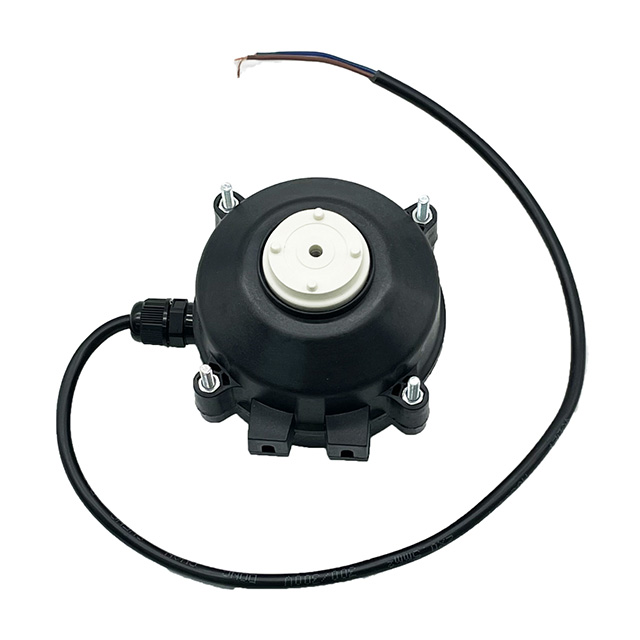
Domi supplies electronically commutated motors for OEM refrigeration fan assemblies. ECM references include two-speed and variable-speed options, AC and DC configurations, and model-specific dimensions. Confirm voltage, control method, rotation, mounting, testing, MOQ and lead time.
Product Details
Domi Refrigeration supplies electronically commutated motors (ECM motors) for OEM refrigeration fan assemblies and equipment programs that need an electronically controlled motor, defined mechanical fit and repeatable electrical performance. The current product reference includes standard two-speed and variable-speed configurations, AC and DC voltage options, clockwise and counter-clockwise rotation references, and model-specific dimensions.
nn
ECM selection should be made from the complete electrical and mechanical interface. Before approving a sample, confirm the motor voltage, frequency, control method, rotation, speed range, output, shaft, mounting pattern, connector, fan accessory and operating temperature. An ECM motor should not be treated as an automatic replacement solely because the housing or output appears similar.
nn
Electronically commutated motor for OEM refrigeration systems
n
An electronically commutated motor uses an electronic control system to manage commutation rather than relying on a conventional fixed AC motor arrangement. In a refrigeration fan assembly, the controller, motor, blade, guard, mounting points and airflow path work as one system. The correct ECM configuration depends on the equipment’s required airflow, speed, control signal, electrical supply and installation envelope.
nn
The current page identifies this product as an ECM series motor and shows references for refrigeration OEM buyers. It does not provide a universal efficiency curve, sound result, control protocol or certification for every model. Those details should be matched to the exact model, application and approved technical documents before a performance or compliance claim is made.
nn
Where an ECM motor fits
n
This motor is relevant to OEM refrigeration programs and fan assemblies that require controlled airflow or more than one operating speed. Typical project contexts include:
n
- n
- Refrigeration cabinet airflow: fan assemblies where the motor, blade, guard and cabinet clearance must be checked together.
- Evaporator or condenser fan applications: air movement around a refrigeration heat-transfer section, subject to the required airflow and system resistance.
- Two-speed equipment: installations that need separate operating points and a defined switching or controller arrangement.
- Variable-speed equipment: systems where the motor, control board, command method and operating limits are approved as a matched set.
- OEM replacement programs: existing products specified by nameplate, drawing, control-board reference, physical sample or measured installation data.
n
n
n
n
n
nn
For a conventional fan-motor comparison, review the shaded pole fan motor. For a square-housing AC motor fit, compare the AC shaded pole square fan motor. The EC shaded pole freezer fan motor is a separate freezer-fan reference and should not be merged with this general ECM page.
nn
ECM motor control and interface options
n
The current technical table shows standard clockwise and counter-clockwise operation with two-speed features for several rows, and a variable-speed DC24 row for model 7112. “Variable speed” describes a configuration that still requires a defined control interface. Confirm the command signal, controller arrangement, minimum and maximum speed, ramp behavior, wiring, connector and fault response before treating a motor as a direct control replacement.
nn
For an AC configuration, confirm the available voltage and frequency at the destination equipment. For a DC24 configuration, confirm the power supply, polarity, controller output and protection requirements. Wiring color, connector pinout and control-board compatibility should come from the approved drawing or model document, not from a similar-looking motor.
nn
Published ECM technical reference
n
The following table reorganizes the current public technical table into a buyer-readable format. Values are transcribed from the page. The current table labels the last two dimensions as a cURL Too many subrequests by single Worker invocation. To configure this limit, refer to https://developers.cloudflare.com/workers/wrangler/configuration/#limits b, but it does not show their units or drawing definition; confirm those dimensions from the model drawing.
nn
nnn
| Model | Features | Voltage | Frequency | Speed | Output | Permitted ambient | a | b |
|---|---|---|---|---|---|---|---|---|
| 7108 | Standard CW & CCW; 2 speeds | AC 115 or 230 V | 50/60 Hz | 500–2300 r/min | 5 W | −30°C to +50°C | 83 | 43.5 |
| 7108 | Standard CW & CCW; 2 speeds | AC 100–240 V | 50/60 Hz | 500–2300 r/min | 5 W | −30°C to +50°C | 74 | 43.5 |
| 7112 | Standard CW & CCW; 2 speeds | AC 115 or 230 V | 50/60 Hz | 500–2300 r/min | 15 W | −30°C to +50°C | 87 | 43.5 |
| 7112 | Variable speed | DC 24 V | Not listed in current table | 500–2300 r/min | 15 W | −30°C to +50°C | 87 | 43.5 |
| 7112 | Standard CW & CCW; 2 speeds | AC 100–240 V | 50/60 Hz | 500–2300 r/min | 15 W | −30°C to +50°C | 78 | 43.5 |
| 7120 | Standard CW & CCW; 2 speeds | AC 115 or 230 V | 50/60 Hz | 500–2300 r/min | 22 W | −30°C to +50°C | 95 | 43.5 |
n
nn
Use the table as a preliminary model reference only. Confirm the exact model code, voltage row, control feature, dimensions and drawing revision before a purchase order or replacement release. If a dimension is critical to the fan guard, blade hub or cabinet wall, request the applicable drawing rather than relying on the table labels alone.
nn
How to select the correct ECM motor
n
Provide the following information during an RFQ or sample review:
n
- n
- Electrical supply: voltage, frequency, phase or DC supply, allowable tolerance and current limit.
- Control requirement: fixed speed, two-speed switching, variable-speed command, control-board model and connector or pinout information.
- Motor output and speed: target operating speed, output requirement, start behavior and the required operating points.
- Rotation: clockwise, counter-clockwise or reversible operation, checked from the defined viewing direction.
- Mechanical fit: body dimensions, shaft diameter and projection, mounting-hole spacing, bracket, connector position and service clearance.
- Fan assembly: blade diameter, hub, pitch, guard, grille, airflow direction and clearance to the evaporator, condenser or cabinet wall.
- Environment: ambient temperature, humidity, condensation, dust, cleaning conditions, duty cycle and installation orientation.
- Documentation: drawing, wiring diagram, controller specification, inspection report, performance test or change-control record.
n
n
n
n
n
n
n
n
nn
A nameplate photograph is useful, but it may not show the controller interface or mounting geometry. Add a ruler-marked photo, control-board photo and installation view when the original drawing is unavailable.
nn
Efficiency, energy saving and thermal claims
n
ECM technology can be evaluated for energy use, controllability and motor heating, but a percentage result is meaningful only when the baseline motor, speed, load, airflow, voltage, duration and measurement method are defined. Earlier source wording included a broad energy-saving statement; without an applicable test report, model scope and comparison baseline, it should not be used as a blanket product claim.
nn
For an OEM comparison, request the operating-point data for the exact ECM model and the reference motor it is replacing. Record airflow, pressure or system resistance, speed, input power, output, ambient condition and test duration. If the motor is installed behind a blade and guard, test the complete assembly where that is the buyer’s actual use condition. Energy performance is not proven by the ECM name alone.
nn
Housing, protection and compatibility boundaries
n
Earlier source wording includes housing, safety, protection and controller-design claims. These are material and compliance-sensitive details. They should be confirmed against the exact model drawing, declaration, test record or certification before publication as product-wide facts. This expanded content therefore treats housing material, safety class, IP rating and controller-chamber construction as model-specific confirmation items.
nn
Do not assume that every ECM row has the same enclosure, connector, shaft, controller or environmental protection. Confirm whether the selected model is suitable for moisture, dust, condensation, cleaning chemicals, low temperature and continuous operation in the target refrigeration cabinet.
nn
Testing and release checks
n
Define the acceptance criteria before a sample is approved or a repeat batch is released. Depending on the model and buyer specification, the inspection plan may include:
n
- n
- model code, nameplate, voltage and frequency or DC supply check;
- controller response, connector, wiring and speed-command check;
- start-up, rotation direction, current draw and speed at the agreed operating point;
- body dimensions, mounting points, shaft, blade fit and guard clearance;
- airflow, pressure, noise, vibration or temperature measurement when a limit is specified;
- housing, label, lead protection and packaging inspection;
- inspection record and change-control review for repeat OEM orders.
n
n
n
n
n
n
n
nn
For the available supplier review path, see the engineering capabilities, testing laboratory, manufacturing process cURL Too many subrequests by single Worker invocation. To configure this limit, refer to https://developers.cloudflare.com/workers/wrangler/configuration/#limits quality documentation scope. These pages describe the information path; model-specific results and certifications still require confirmation for the quotation.
nn
Sample matching, MOQ, lead time and packaging
n
For a replacement or new OEM program, send the ECM nameplate, motor sample, fan assembly photo, control-board reference, target quantity and destination market. Include the reason for replacement, such as availability, energy review, speed control, noise, mounting or electrical change. This helps separate a true ECM replacement from a motor that only has a similar output or body size.
nn
MOQ depends on the selected driver configuration, model, quantity and production arrangement. Lead time depends on electrical matching, sample approval, tooling or configuration status, order quantity and inspection requirements. Confirm individual protection, carton arrangement, labels and export packaging for the motor and fan accessories before release.
nn
FAQ
n
What is an electronically commutated motor?
n
An electronically commutated motor uses electronic control for commutation and is commonly specified with a controller or defined electrical interface. For this page, the relevant selection is an ECM motor for an OEM refrigeration fan assembly, so the motor, controller, fan and mounting conditions must be checked together.
nn
Is an ECM motor a direct replacement for a YZF motor?
n
Not automatically. The current source mentions similar external structures and shared fan accessories, but direct replacement still requires confirmation of voltage, controller, connector, speed, rotation, shaft, mounting, fan clearance and operating temperature for the exact model.
nn
What voltage options are listed for the ECM series?
n
The published table lists AC 115 or 230 V, AC 100–240 V and one DC 24 V variable-speed row. AC rows show 50/60 Hz. Confirm the exact model, control feature and nameplate before connecting the motor to equipment.
nn
What is the difference between two-speed and variable-speed ECM control?
n
The table identifies two-speed and variable-speed configurations, but it does not publish a complete control protocol. Confirm the control signal, wiring, command range, speed limits and controller compatibility before selecting a variable-speed row.
nn
How should ECM energy performance be evaluated?
n
Compare the exact ECM model with a defined reference motor at the same load, speed, airflow or pressure condition, voltage, ambient condition and test duration. Request the test method and measured result before using an energy-saving percentage in a specification.
nn
What do dimensions a and b mean?
n
The current table lists values for dimensions a and b, but it does not show their units or drawing orientation. Request the model drawing and confirm which body, mounting or shaft dimensions the labels represent before using them for fit-up.
nn
Can you match the ECM motor from a sample or photo?
n
Yes. Provide the nameplate, motor sample, control-board photo, connector, mounting pattern, shaft, fan blade and installation dimensions. A measured drawing is preferred when the replacement must fit an existing cabinet without changing the fan assembly.
nn
Which housing and protection details apply to each model?
n
Do not assume that one housing material, safety class or IP rating applies to every row. Confirm the exact model’s housing, protection, safety and controller documentation for the destination market.
nn
How are MOQ and lead time confirmed?
n
Send the model or sample, voltage, control method, target quantity, sample timing, inspection requirements and packaging needs. The quotation team can then confirm the project-specific MOQ, lead time and sample path.
nn
Request an ECM motor quote
n
Send the ECM model, voltage and frequency, control method, target speed, output, rotation, motor dimensions, mounting pattern, shaft, connector, fan accessory, ambient condition and estimated quantity. Add the drawing, nameplate or control-board photo when available.
nn
Request a custom quote for an ECM sample or OEM replacement review. Domi can use the supplied information to identify the closest published row, flag missing interface data and define the next step for technical confirmation, inspection and repeat-order supply.
nrn
Get Product Information for Your Project
Send the product model, drawings, sample photos, quantity, or application requirements. Our team will review the information and help confirm suitable options, technical data, and quotation details.