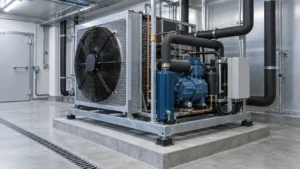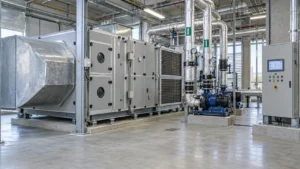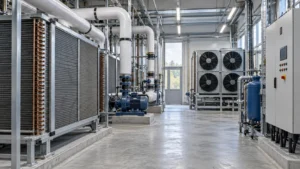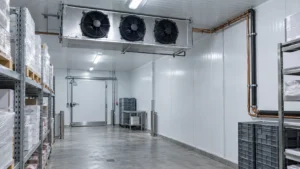

Short answer: select a cooling system from the heat load, target supply and return temperatures, process fluid, ambient or wet-bulb condition, water availability and quality, heat-rejection route, turndown, controls, maintenance access, and required uptime. A cooling system is a connected thermal loop, not a single chiller, coil, fan, or tower. The fastest way to get a dependable quotation is to send the duty conditions and site constraints together, then compare the complete heat exchanger, pump or fan, controls, and service scope.
What a cooling system must accomplish
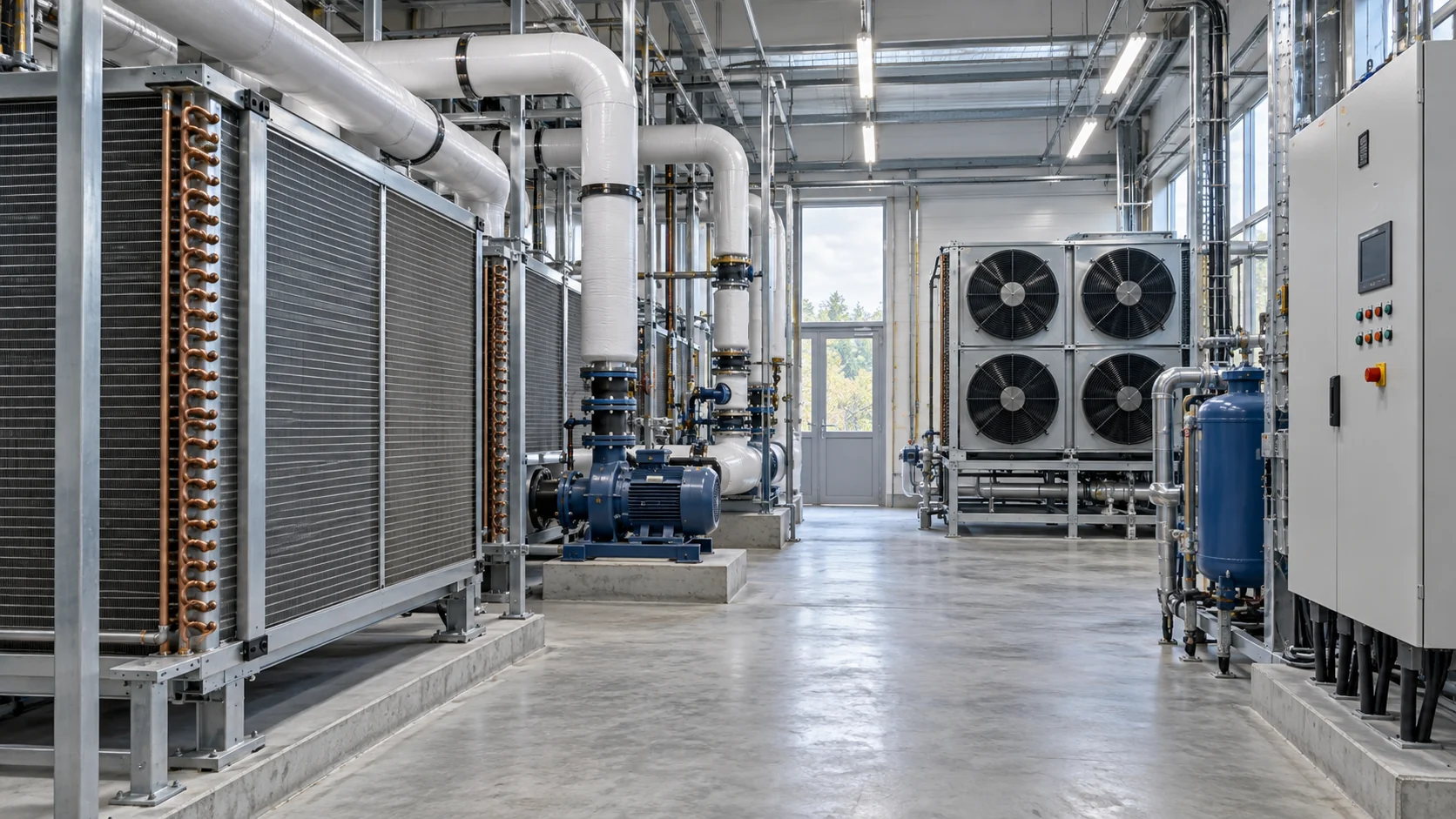
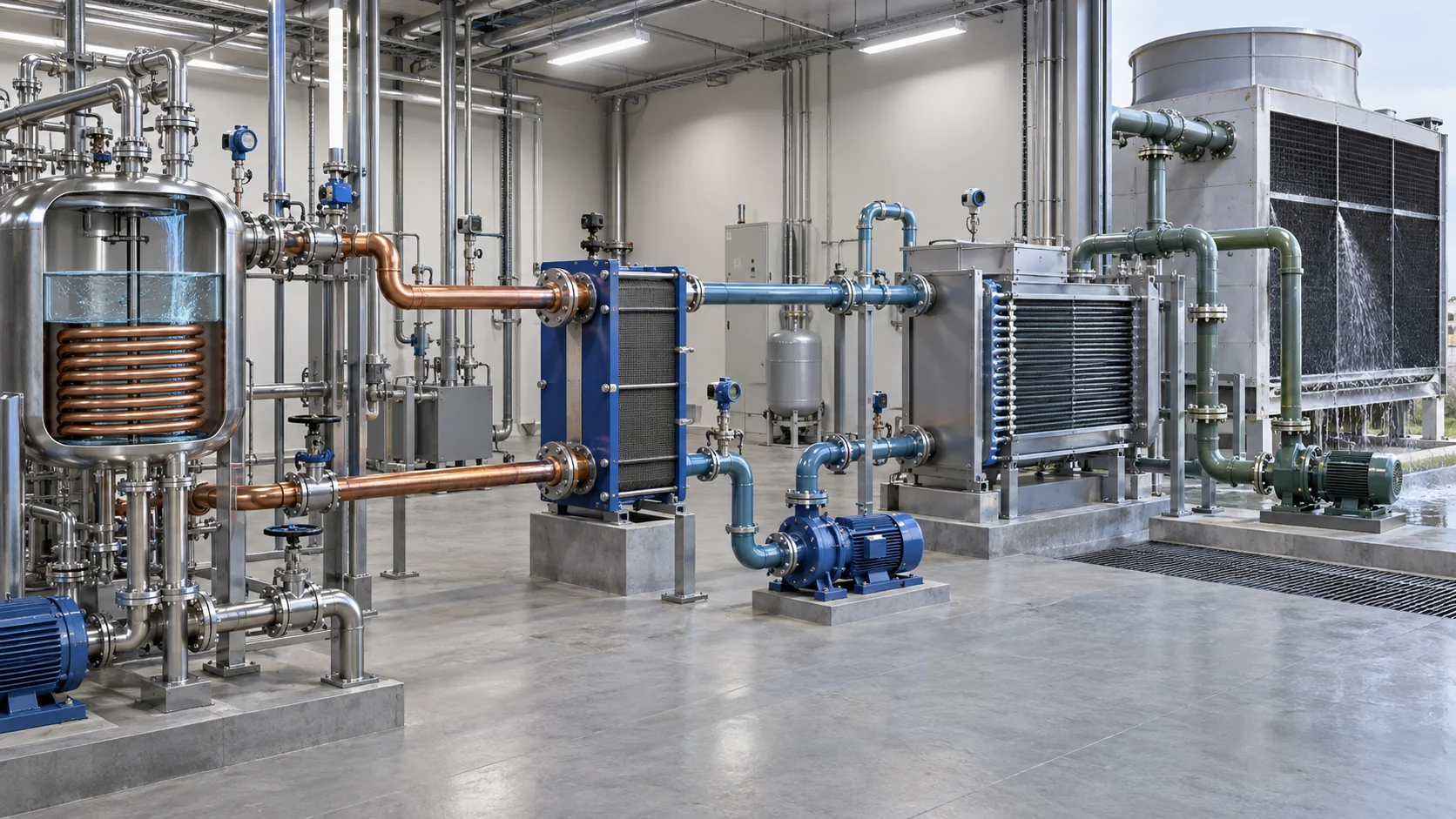
A cooling system removes heat from a product, process fluid, occupied space, cold room, or machine and rejects that heat to air, water, ground, or another useful load. Depending on the application, the loop may use a finned heat exchanger, cooling tower, chiller, refrigeration circuit, plate heat exchanger, pump skid, fan, valve, and controller. The correct boundary is the full operating loop from the heat source to the final heat sink.
For industrial and commercial buyers, the selection question is usually a decision between competing constraints:
- The process may need a stable temperature while the load changes quickly.
- The site may have limited water, poor water quality, high ambient temperature, or noise limits.
- A lower first cost may create higher fan, pump, water-treatment, cleaning, or downtime costs.
- A compact heat exchanger may be harder to clean or may lose capacity when fouling or frost grows.
- A highly efficient design may require more controls, sensors, commissioning time, or maintenance skill.
Le ASHRAE industrial air-conditioning guidance treats cooling as a system decision that can include refrigeration equipment, evaporative coolers, ventilation air, air-handling equipment, filtration, and heat rejection. That is a useful boundary for a project specification: specify the duty and the interaction between components, not a brand or nominal tonnage alone.
| Cooling-system element | Mission principale | Données à confirmer par l’acheteur | Risk when it is selected in isolation |
|---|---|---|---|
| Heat source or process load | Generates the heat that must be removed | Product, machine, room, fluid, operating cycle, peak and average load | A nameplate load misses start-up, batch, door, solar, or production peaks |
| Heat exchanger or evaporator | Transfers heat between the process and cooling medium | Capacity, entering/leaving temperatures, approach, fluid, pressure, materials, fouling | A coil can meet a catalog rating but fail at the actual fluid, airflow, or fouling condition |
| Heat-rejection equipment | Sends rejected heat to ambient air or water | Dry-bulb/wet-bulb, water temperature, altitude, airflow, sound, discharge limits | Condenser or tower capacity falls when site conditions are warmer or dirtier than the rating point |
| Pumps, fans, valves, and piping | Moves the cooling medium and controls flow | Flow, head, pressure drop, control range, pipe size, insulation, drain and vent points | The heat exchanger is sized correctly but the loop cannot deliver the required flow |
| Commandes et protections | Keeps the process within limits and protects equipment | Sensors, setpoints, alarms, interlocks, turndown, communications, fail-safe state | The system cycles, freezes, runs dry, or hides a loss of capacity until production is affected |
Start with the load and operating envelope
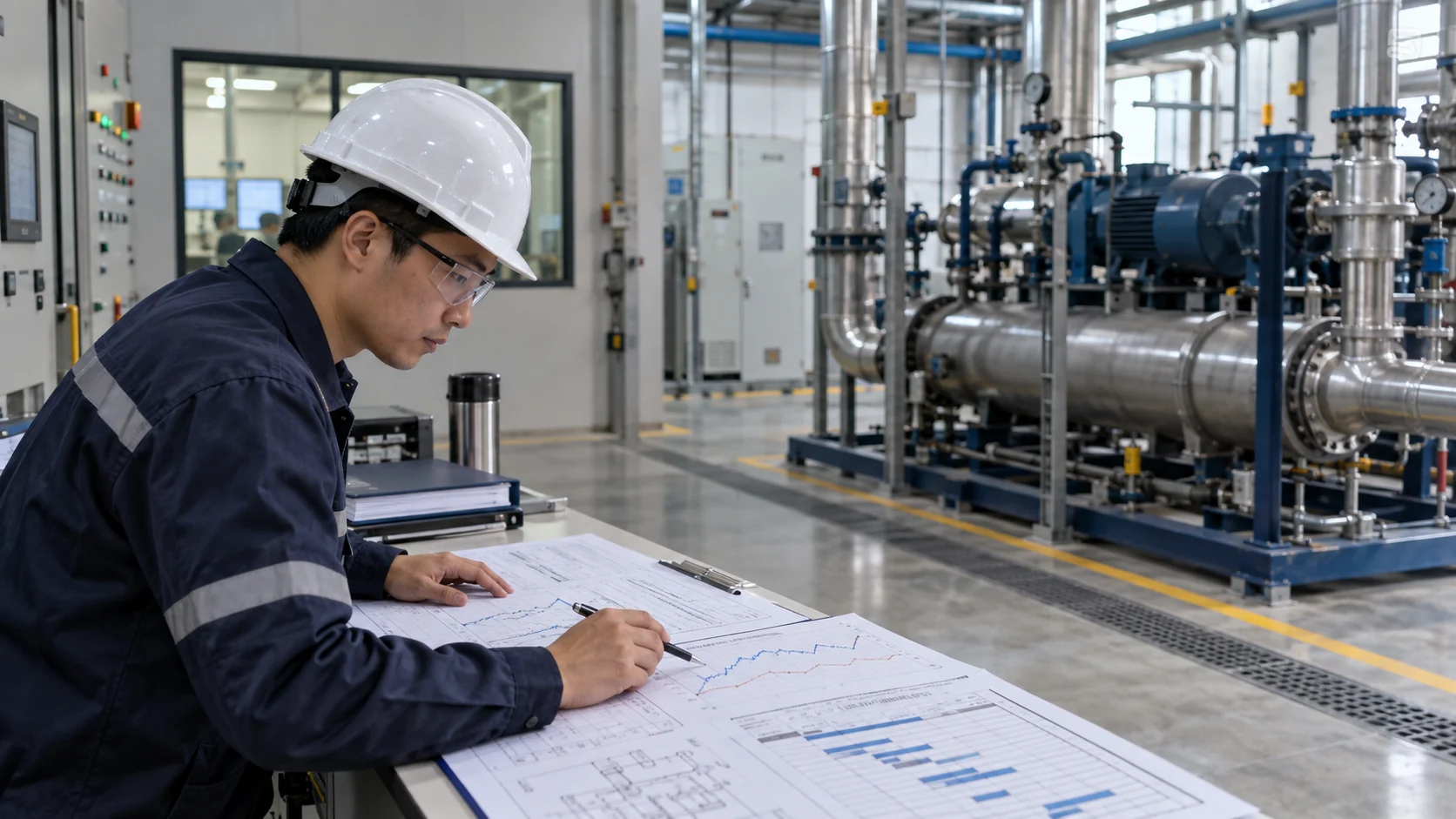
The first calculation is the heat that must be removed over time. Separate the steady load from the peak or pull-down case. A molding machine, data room, food process, cold store, or test rig may run at partial load for most of the day and then create a short, high-temperature event. Record both cases so the supplier can discuss capacity, storage, staging, or redundancy instead of applying an unsupported oversize factor.
Collect the heat-source temperature, allowable swing, fluid flow, inlet and outlet temperature, specific heat or product data, operating schedule, start-up time, production cycle, and required recovery time. Add room transmission, doors, lighting, motors, people, pumps, fan heat, solar gain, defrost, cleaning, and any simultaneous heating load. If the project is a replacement, add measured supply and return temperatures, pressure drop, flow, fan or pump speed, fouling condition, and the reason the previous unit was removed.
| Load and site input | What to send in the RFQ | Why it changes the cooling-system decision |
|---|---|---|
| Heat duty | Average kW or tons, peak duty, batch duration, start-up, pull-down, and recovery target | Determines equipment capacity, staging, thermal storage, and compressor or fan turndown |
| Temperature envelope | Required supply/return temperatures, allowable swing, approach, freeze limit, and product limit | Separates air cooling, cooling water, chilled water, and refrigeration duties |
| Moyen de refroidissement | Water, glycol, refrigerant, air, brine, or product fluid; concentration and chemistry | Changes material selection, viscosity, pump head, corrosion risk, and pressure drop |
| Site condition | Ambient dry-bulb, wet-bulb, altitude, humidity, water temperature, water availability, sound and space | Sets heat-rejection capacity and may eliminate a tower, dry cooler, or air-cooled option |
| Operating pattern | Hours, load profile, seasonal change, redundancy, maintenance window, and emergency mode | Guides modular staging, controls, standby capacity, and service access |
Use the actual design condition in the quotation. A cooling system that reaches the target temperature on a mild day may not maintain it at the summer design ambient, during a production surge, or after a filter, fin, nozzle, or heat-transfer surface becomes dirty. The IPIECA cooling-systems reference recommends a systems approach that includes pumps, motors, fans, nozzles, flow rates, temperatures, pressure drop, water chemistry, and operating practices. It also notes that loads vary with environmental conditions and process requirements.
Compare air-cooled, water-cooled, evaporative, and refrigeration options
Air-cooled systems
Air-cooled systems reject heat through a finned coil, fan, and ambient air. They are attractive when water is scarce, water treatment is undesirable, or the installation must be simple to operate. The trade-off is that capacity and efficiency follow the outdoor dry-bulb temperature, and the coil needs clean airflow. High ambient, recirculation, dust, noise, and fan power can dominate the life-cycle result.
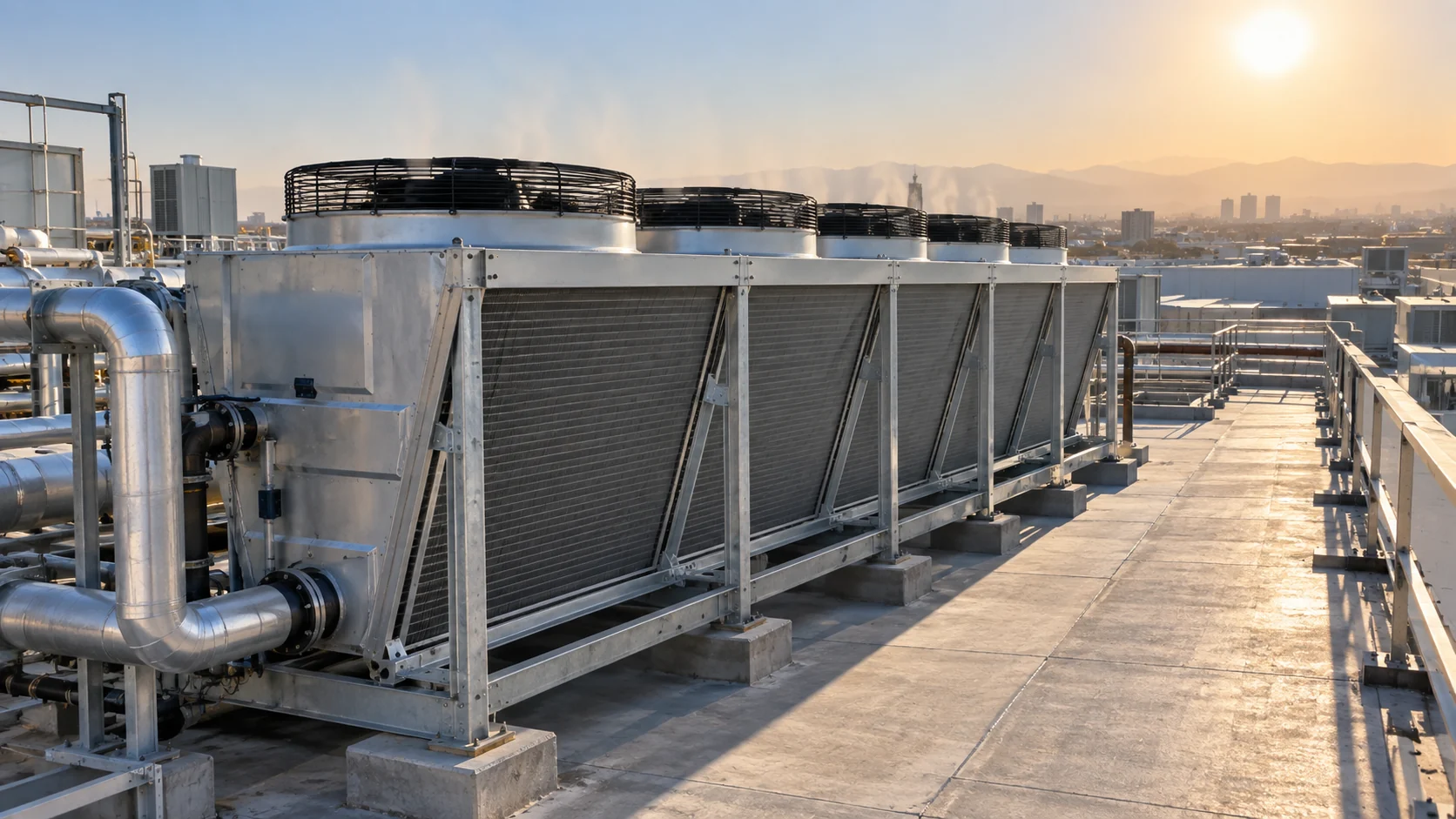
Specify entering-air temperature, altitude, fouling exposure, coil face velocity, fan control, sound limit, winter operation, corrosion environment, and clearances around the discharge. Use a larger face or multiple circuits when a low pressure drop, quiet operation, or partial-load turndown matters more than the smallest footprint.
Water-cooled systems
Water-cooled systems transfer heat to a cooling-water loop, cooling tower, dry cooler, or another heat sink. Water can provide a lower approach temperature than air in many sites, but the plant must manage pumps, water chemistry, make-up, blowdown, treatment, scaling, corrosion, biological control, and discharge requirements. A water-cooled selection is therefore a utility and maintenance decision as much as a heat-transfer decision.
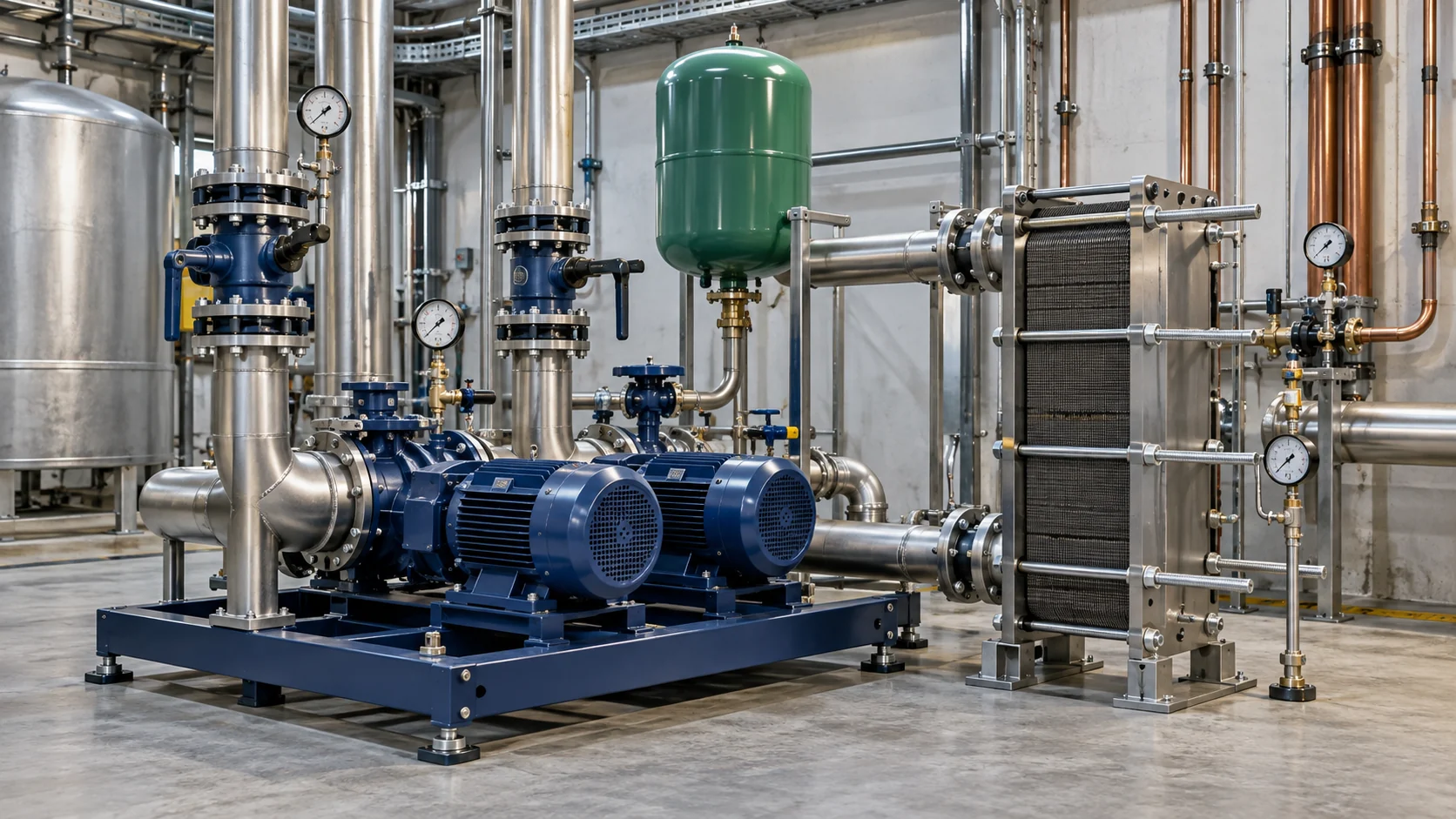
Define water temperature, flow, conductivity, hardness, suspended solids, glycol concentration, filtration, chemical program, and allowable pressure drop. If the water source is open or once-through, confirm local discharge and intake rules with the responsible engineer. If the loop is closed, specify expansion volume, air removal, freeze protection, relief devices, and a method to sample and clean the circuit.
Evaporative and adiabatic systems
Evaporative or adiabatic systems use water evaporation to lower the effective inlet-air temperature or cool a circulating fluid. They can reduce fan power or improve hot-weather performance, but they add water consumption, drift, treatment, biological-control, freeze-protection, and maintenance obligations. A dry cooler, evaporative condenser, or hybrid unit may be more appropriate than a fully wet tower when water use or discharge is tightly constrained.
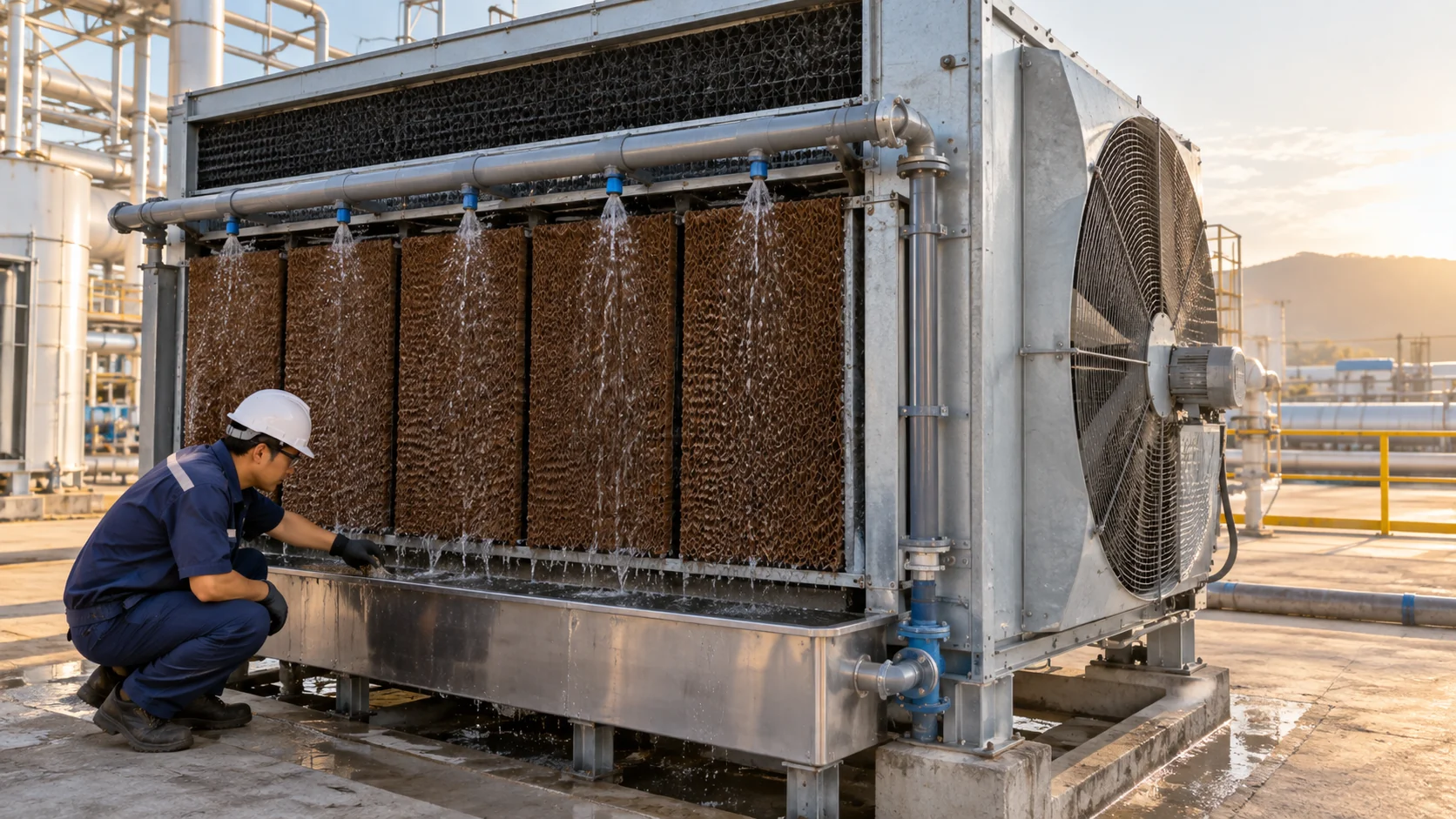
Le Johnson Controls industrial cooling overview describes air-cooled, water-cooled, and evaporative paths as different ways to remove process heat. For an RFQ, state whether water is allowed to contact air, the permitted water source, treatment responsibility, winter drain-down, and the target condition when the adiabatic stage is disabled.
Refrigeration and chilled-fluid systems
Use a refrigeration or chilled-fluid loop when the process must operate below ambient or needs a tightly controlled supply temperature. Refrigeration adds a compressor, evaporator, condenser, expansion device, refrigerant controls, pressure protection, and a heat-rejection path. It can reach temperatures that a dry cooler or ordinary cooling-water loop cannot, but it brings refrigerant safety, leak, service, electrical, and regulatory requirements.
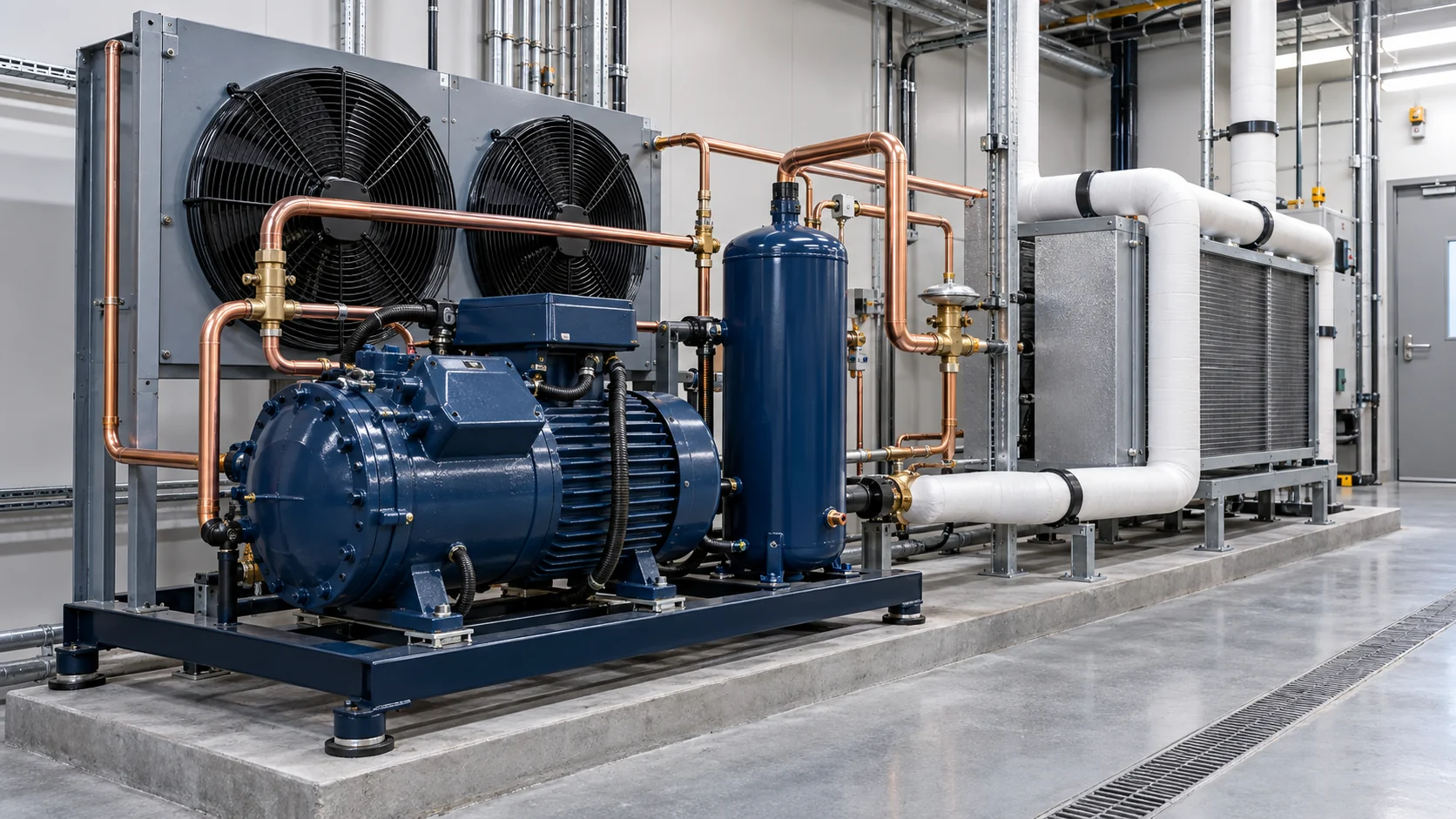
For low-temperature or food applications, treat the evaporator, defrost, insulation, drain, fan, door or process interface, and condensing unit as one design. For process cooling, state the fluid, minimum temperature, allowable concentration, flow stability, and whether a secondary loop is preferred to keep refrigerant outside the production area.
| System route | Strong fit | Main constraint | RFQ decision question |
|---|---|---|---|
| Dry air-cooled | Water-limited site, moderate temperature, simple outdoor installation | Hot ambient raises condensing temperature; fins need cleaning | What capacity and fan power remain at the summer design dry-bulb? |
| Closed water-cooled | Stable process load, available water loop, lower approach required | Treatment, pumps, leaks, scaling, and water quality | Who owns water chemistry, filtration, blowdown, and cleaning? |
| Evaporative or adiabatic | Hot climate or high heat rejection where water is available | Water use, drift, treatment, winterization, and hygiene | What is the performance when the wet stage is off or water is restricted? |
| Refrigeration or chilled fluid | Below-ambient process, cold storage, tight temperature control | Refrigerant safety, controls, defrost, leak checks, and service | What refrigerant, secondary fluid, pressure, and recovery case must be met? |
| Hybrid or staged | Variable load, water or energy limits, resilience requirement | More valves, sensors, sequence logic, and commissioning | What operating mode changes at low load, high ambient, or utility failure? |
Match the heat exchanger and fluid circuit
Heat exchangers convert the selected cooling route into useful capacity. A fin-and-tube coil, microchannel coil, plate heat exchanger, shell-and-tube bundle, evaporator, condenser, or air cooler must be rated at the actual fluid, temperatures, flow, pressure, fouling factor, and material combination. “Same size” is not a thermal specification.
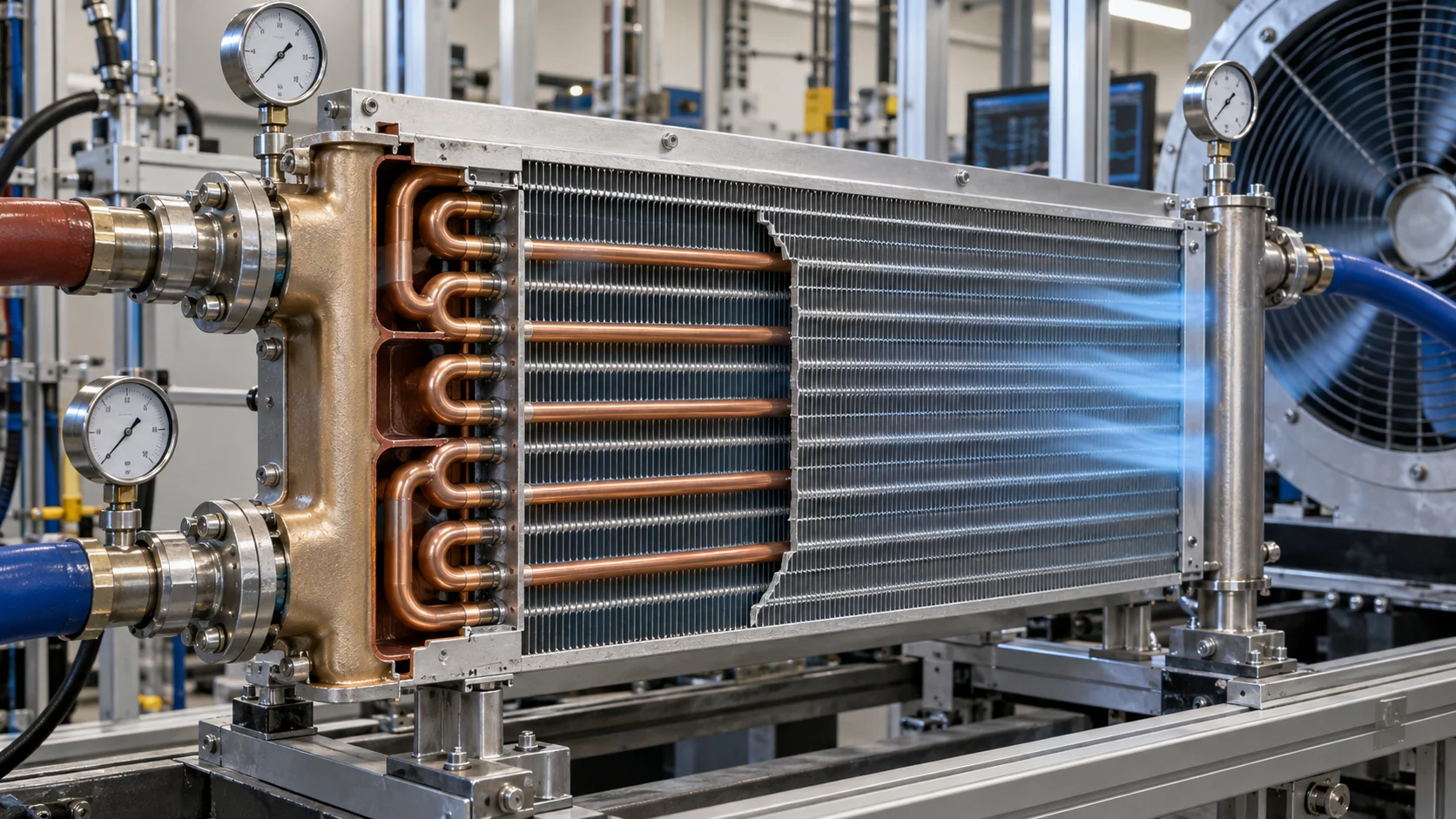
Ask the supplier to state the duty point and the assumptions behind it: entering and leaving temperatures, mass flow, dry-bulb or wet-bulb condition, approach, fluid properties, fouling allowance, face velocity, airside pressure drop, waterside pressure drop, and altitude. For a replacement, confirm connection positions, tube diameter, circuiting, fin material, coating, header volume, drainability, and service clearances.
La page des commercial cooling coil range covers commercial equipment such as display cases, beverage coolers, prep tables, and walk-in systems, while the batteries de réfrigération industrielle de Domi is positioned for heavier-duty cold storage and process cooling. These are relevant conversion paths when the cooling system needs a custom condenser, evaporator, or industrial heat exchanger rather than a generic catalog part.
Specify controls, sensors, and part-load behavior
A system that is efficient only at full load is not necessarily efficient over a production year. Define how fans, pumps, compressors, valves, and cooling stages respond to load. Variable-speed drives, staged compressors, bypass valves, three-way valves, electronic expansion valves, and thermal storage can all change the control problem and the service requirement.
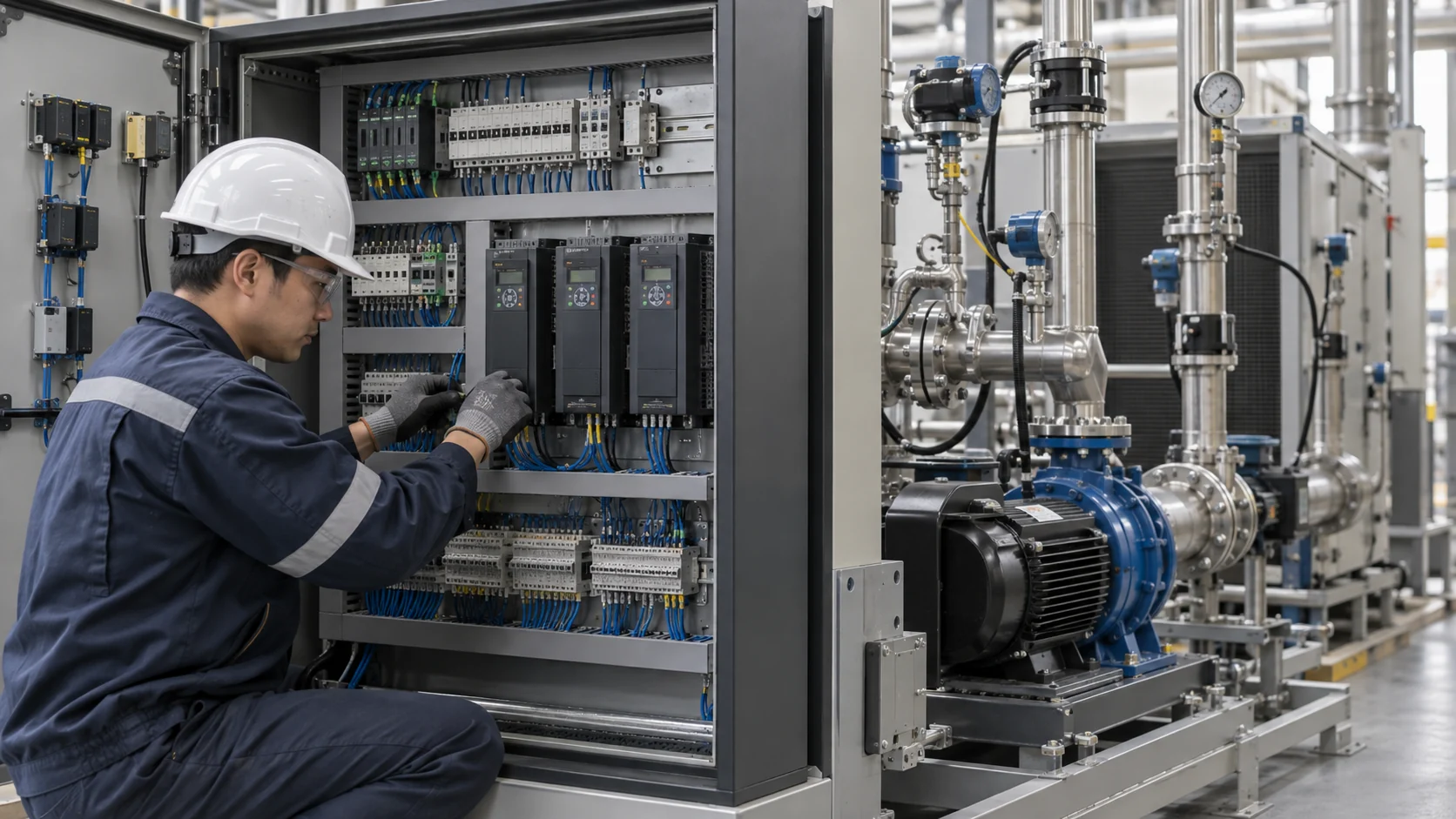
At minimum, identify supply and return temperature sensors, flow or differential-pressure sensors, ambient or wet-bulb input, high and low pressure protection, freeze protection, pump or fan proof, water-level or conductivity alarms where relevant, emergency stop, lead-lag rotation, and the fail-safe state of every valve. State the control range, minimum stable load, restart behavior, alarm delay, and communication protocol.
Keep the sequence of operation in the RFQ. Two suppliers can quote the same nominal capacity but include very different sensors, bypasses, controllers, commissioning, and documentation. The lower first price is not comparable if it omits the control points needed to protect the process.
Fit the system to the application
Commercial and food-retail equipment
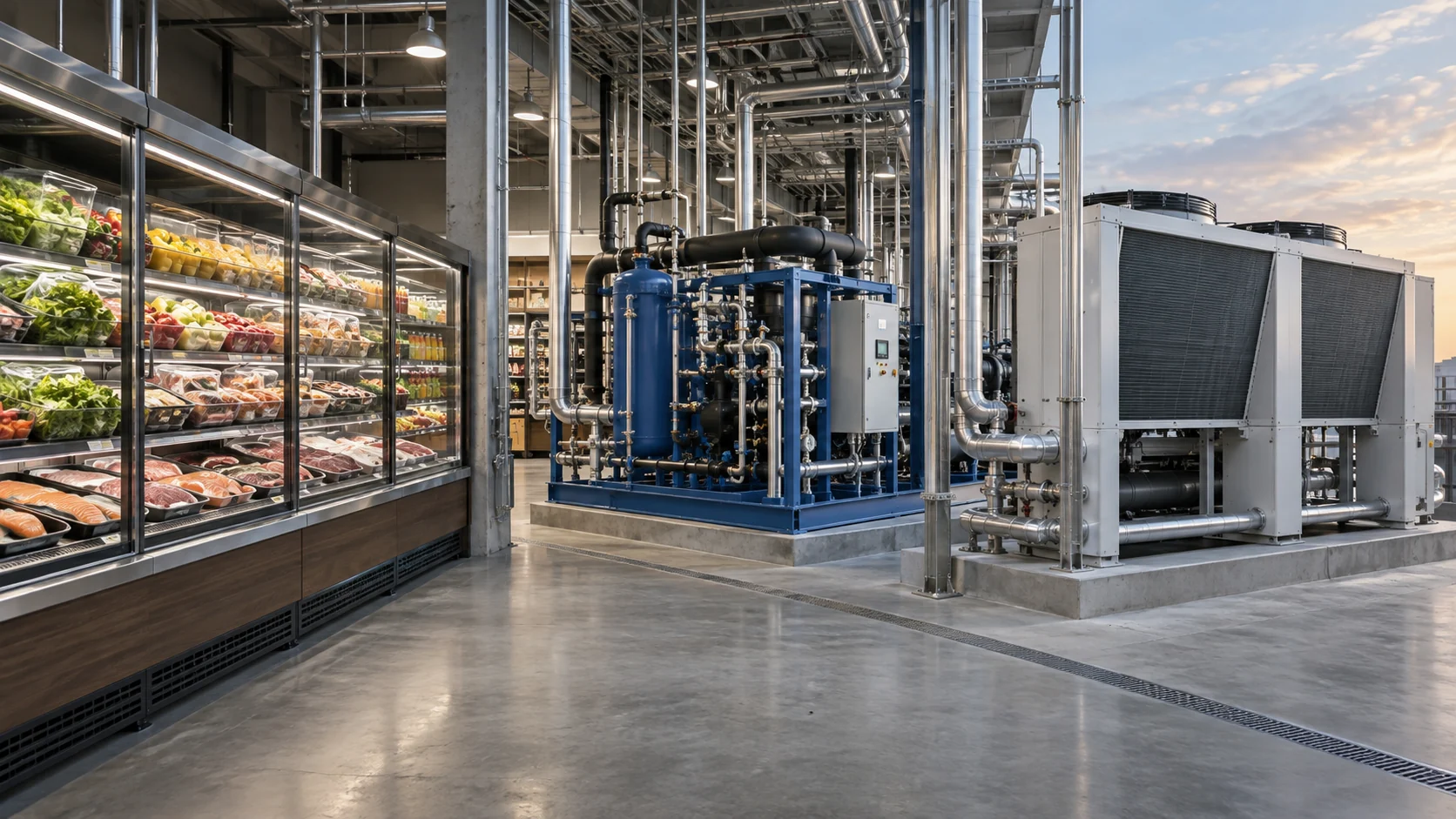
Commercial refrigeration and food-retail systems prioritize repeated door openings, cleanability, corrosion resistance, compact service access, and recovery after loading. Coil selection should include frost or condensate behavior, drain routing, fan noise, defrost, and the actual kitchen or store ambient. Domi’s commercial refrigeration solution route can be used as the conversion destination when the project moves from a general cooling-system question to a specific coil or equipment program.
Industrial and process cooling
Process systems prioritize temperature stability, uptime, fluid compatibility, response to load changes, and safe maintenance. A closed secondary loop may isolate the process from refrigerant, while a dry cooler or cooling tower may reject heat outside the production area. Confirm whether the process can tolerate a temperature excursion, what happens during a pump trip, and how the system restarts after power or water loss.
HVAC, heat pumps, and high-bay spaces
HVAC and heat-pump applications add air distribution, humidity, filtration, occupancy, and seasonal change. A coil must meet airside pressure-drop and face-velocity limits as well as the water or refrigerant duty. The Domi HVAC and heat-pump solution page is the relevant bridge for microchannel and fin-and-tube heat exchangers used in air-conditioning and heat-pump equipment.
Plan maintenance, water quality, and inspection
Maintenance is part of the cooling-system selection, not a post-installation task. Air-side coils need access for cleaning and fin inspection. Water loops need filtration, sampling, chemical control, venting, drains, and scale or corrosion checks. Evaporative equipment needs nozzle, fill, basin, drift-eliminator, and biological-control work. Refrigeration systems need leak checks, pressure protection, oil management, defrost or drain inspection, and safe recovery procedures.
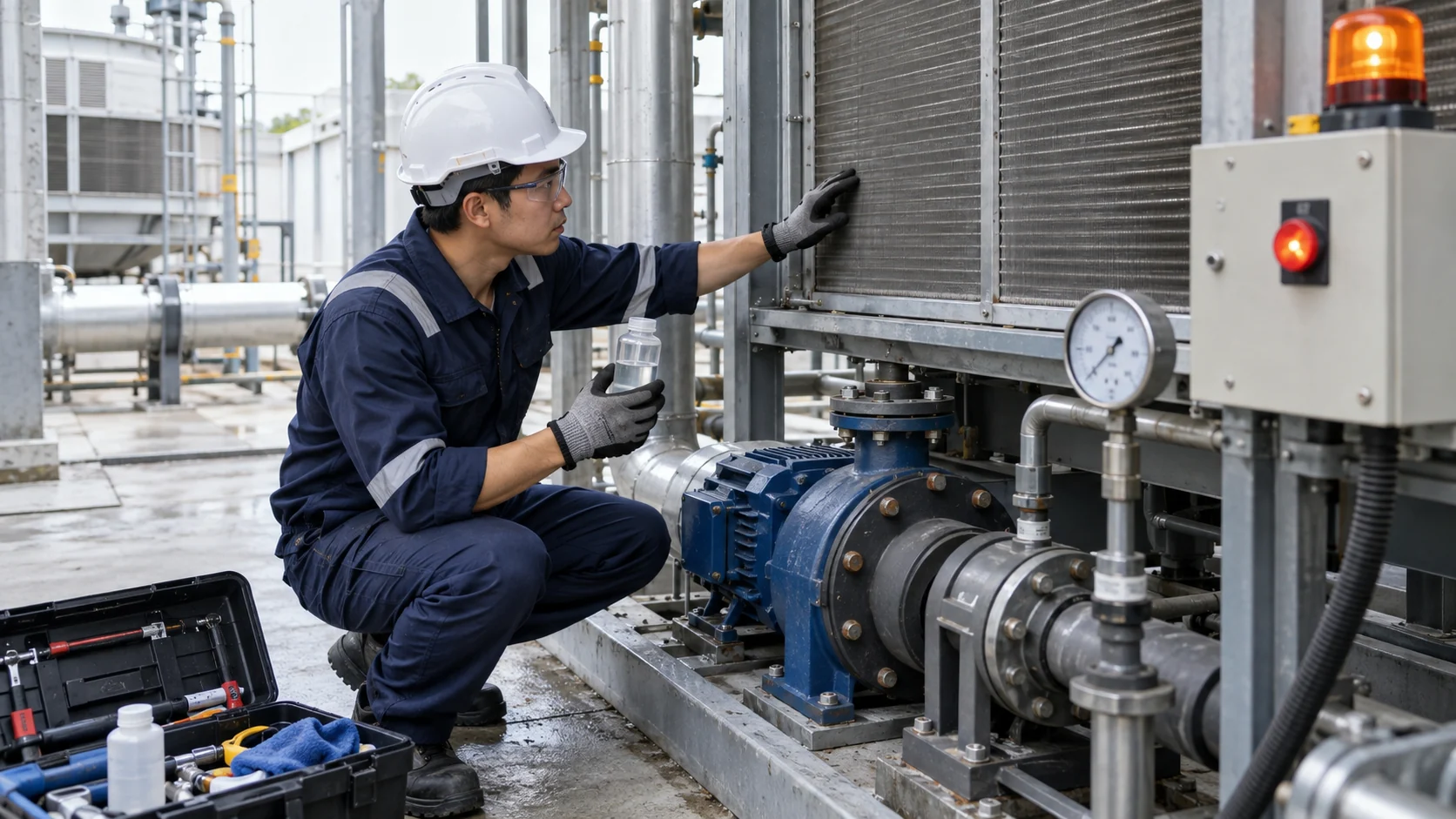
Ask for the maintenance envelope: pull space for coils, lifting points, access doors, filter sizes, drain cleanouts, isolation valves, sample ports, test connections, and a safe electrical or refrigerant isolation method. Define the evidence required after commissioning, such as measured flow, supply/return temperatures, pressure drop, alarm test, leak check, or water-quality baseline.
Build an RFQ that suppliers can quote consistently
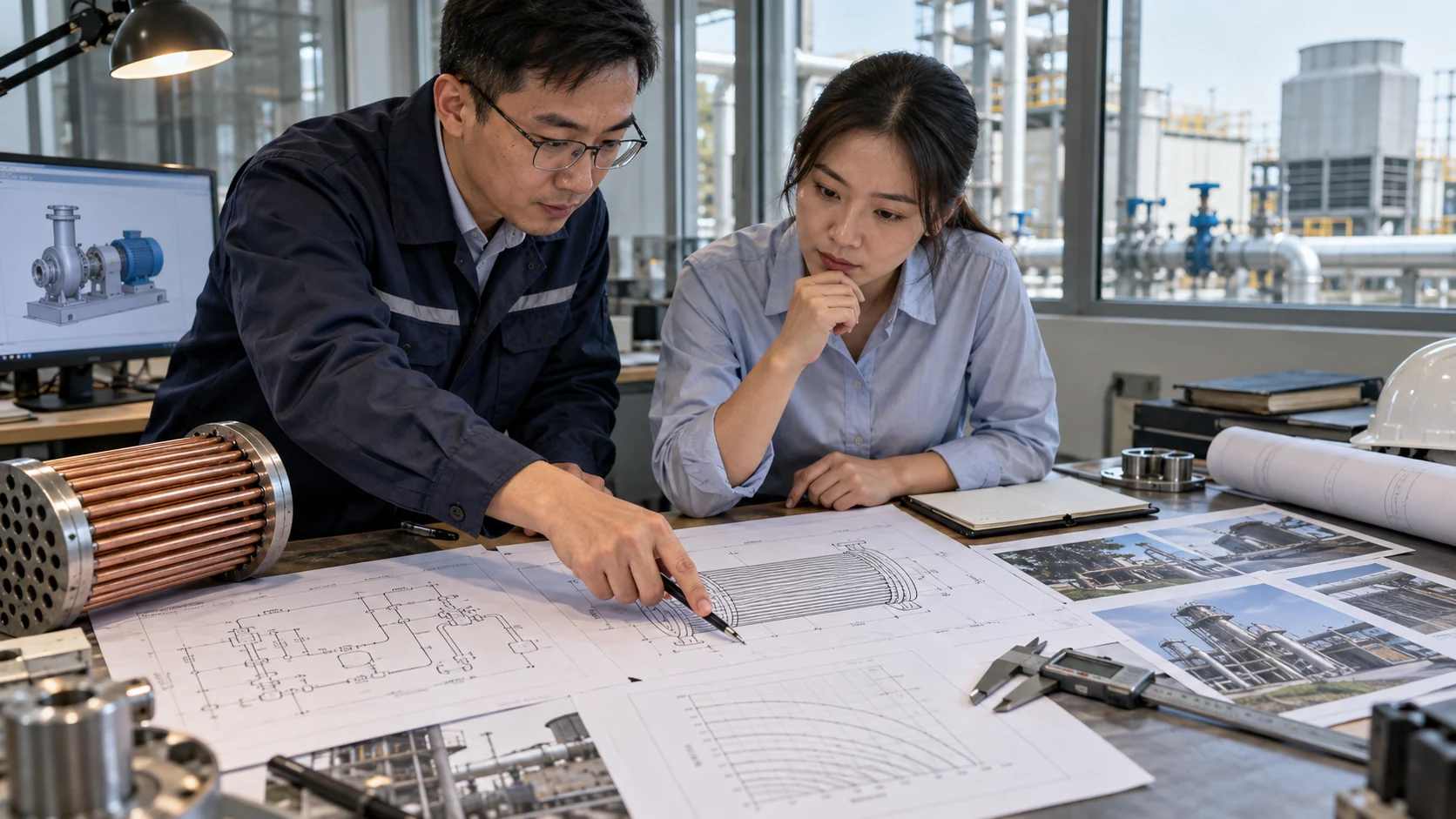
Send one controlled data package to each supplier. Mark fixed values, preferred values, and values open to engineering proposal. Include a layout or old equipment photographs for replacement work. Domi’s capacités d’ingénierie page is a useful path for drawing review, thermal calculations, circuiting, airflow analysis, and CFD discussions; it does not replace the project’s signed duty specification.
| Élément du dossier de demande de devis | Informations minimales à fournir | Réponse du fournisseur à la demande |
|---|---|---|
| Application et charge | Heat source, product or process, average and peak load, schedule, recovery, redundancy | Rated capacity at the stated duty and a clear list of assumptions |
| Temperatures and fluids | Supply/return, ambient or wet-bulb, fluid type, concentration, chemistry, freeze limit | Thermal selection, approach, flow, pressure drop, and material compatibility |
| Rejet de chaleur | Air, water, evaporative, hybrid, site space, sound, water availability and discharge limits | Heat-rejection capacity at design condition, fan/pump power, and operating modes |
| Coil or exchanger construction | Dimensions, connections, circuiting, tubes/fins/plates, coating, pressure, fouling, cleanability | Drawing, revision, materials, test points, drainability, and service clearances |
| Controls and safety | Sensors, setpoints, turndown, interlocks, alarms, communications, emergency mode | Sequence of operation, control panel scope, commissioning, and fail-safe behavior |
| Quality and delivery | Inspection, leak/pressure or thermal tests, documents, packaging, quantity, destination, timing | Inspection plan, test records, packaging method, lead-time assumptions, and exclusions |
Use testing and quality evidence to reduce approval risk
The most useful proof is tied to the buyer’s decision. A thermal-performance discussion supports capacity selection; airflow or pressure-drop data supports fan and pump selection; corrosion testing supports a coastal or washdown environment; pressure and leak checks support a refrigerant or liquid circuit; a drawing revision supports fit-up and repeatability.
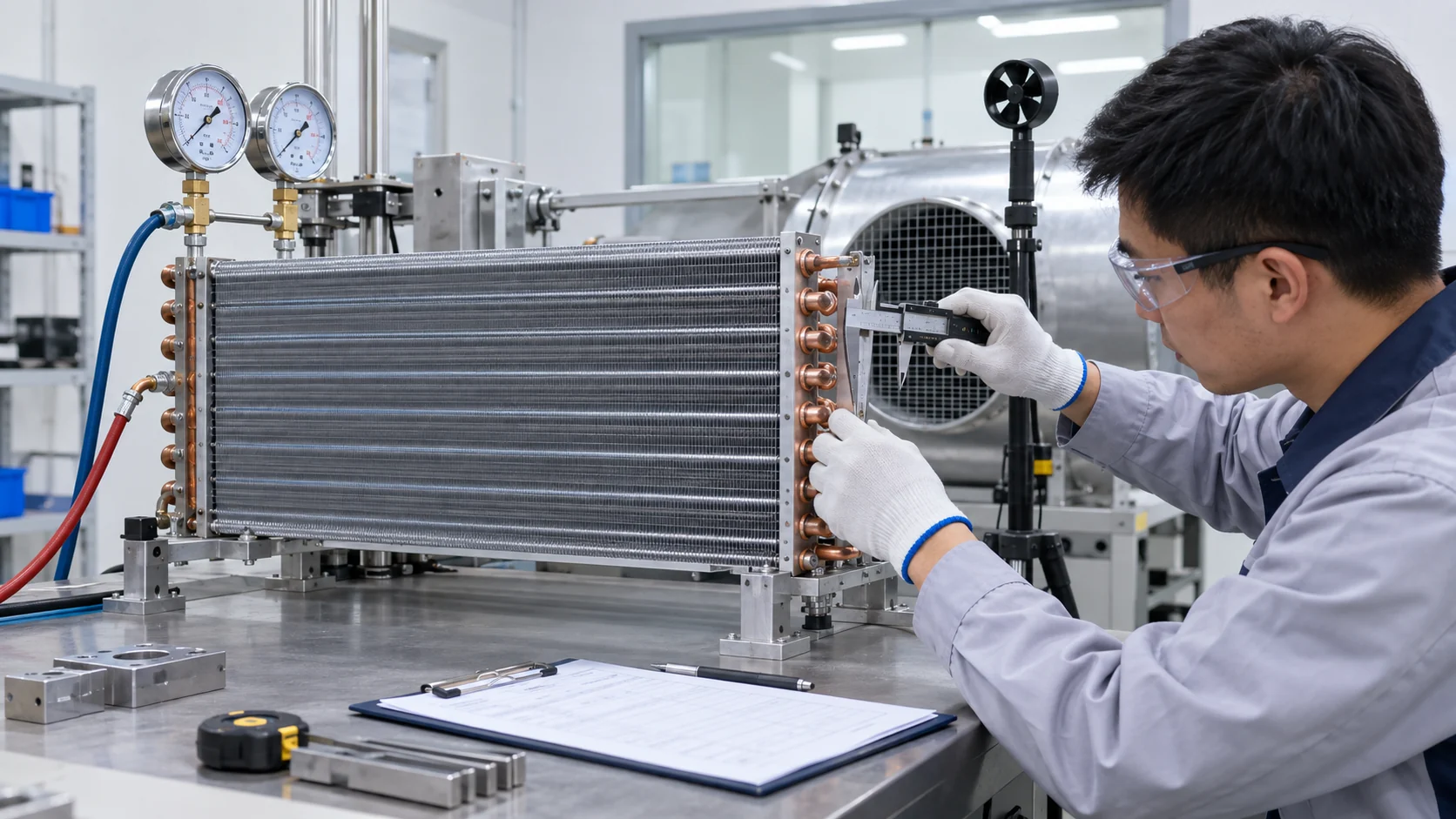
La page des laboratoire d’essais describes airflow, thermal performance, pressure, corrosion, leak, and durability validation discussions for heat exchangers and refrigeration coils. Its quality-certification information is a starting point for supplier-document and traceability questions. Ask the project engineer to define which tests, standards, sample sizes, acceptance limits, and records are required; do not treat a general capability statement as a project-specific certificate.
When to request a custom cooling-coil review
Request a custom review when the coil must fit a non-standard opening, the existing part is obsolete, the refrigerant or secondary fluid is changing, the site has an unusual pressure or corrosion condition, the fan or pump budget is tight, or the process cannot tolerate a temperature excursion. Custom design is valuable when the buyer can provide enough information to check duty, material, pressure, circuiting, airflow, fluid chemistry, drainability, and service.
A useful first message includes the cooling medium, target temperatures, flow, heat load, ambient or wet-bulb condition, pressure, dimensions, connection positions, material preference, corrosion or hygiene exposure, quantity, destination, and required documentation. For a project review, contact Domi for a custom cooling-coil discussion.
The fastest path to a defensible cooling-system decision
- Define the heat source, load profile, temperature envelope, and recovery requirement.
- Choose the cooling medium and heat-rejection route from site water, air, ambient, noise, and maintenance constraints.
- Match the heat exchanger, pump or fan, controls, protection, and service envelope as one system.
- Send a consistent RFQ package with drawings, duty conditions, test requirements, packaging, and delivery assumptions.
- Compare the quoted operating point, part-load behavior, maintenance scope, documentation, and project risks instead of looking only at nominal capacity or purchase price.
Articles associés
Questions fréquemment posées
What is a cooling system?
A cooling system is the complete loop that removes heat from a process, product, room, or machine and rejects it to air, water, ground, or another useful load. It can include a coil or heat exchanger, pump or fan, chiller or refrigeration circuit, valves, controls, sensors, piping, insulation, and heat-rejection equipment.
How do I choose between an air-cooled and water-cooled system?
Start with the required temperature, ambient or wet-bulb condition, water availability and quality, sound limit, maintenance capability, and life-cycle cost. Air-cooled systems avoid water treatment but may lose capacity in hot ambient conditions. Water-cooled systems can provide a lower approach but need pumps, water management, treatment, and leak or scale control.
What information should I send for an industrial cooling-system quote?
Send the average and peak heat load, supply and return temperatures, flow, fluid and concentration, design ambient or wet-bulb, heat-rejection route, pressure, dimensions, fouling or corrosion exposure, controls, redundancy, inspection, packaging, quantity, destination, and required delivery date. A drawing or old equipment photos are valuable for replacement work.
When should a process use refrigeration or chilled water?
Use refrigeration or chilled water when the process must operate below ambient or needs a controlled supply temperature that ordinary air or cooling water cannot achieve. Confirm the refrigerant or secondary fluid, freeze limit, pressure, leak and safety requirements, heat-rejection condition, and service responsibility before choosing the circuit.
How do heat exchanger and coil specifications affect system performance?
Capacity depends on the actual fluid, entering and leaving temperatures, flow, approach, pressure drop, face velocity, fouling, materials, and circuiting. A nominal size or catalog capacity is not enough. Request the duty assumptions, drawing, connections, materials, test points, and service clearances so the part can be checked in the complete loop.
Can Domi review a custom cooling coil or heat exchanger?
Yes. A project review can start with a drawing, sample, dimensions, duty conditions, cooling medium, design pressure, airflow or flow rate, materials, corrosion or hygiene exposure, quantity, and documentation needs. Domi’s engineering, testing, custom fabrication, and contact pages provide the relevant inquiry routes; final performance and compliance remain subject to the project specification and agreed tests.