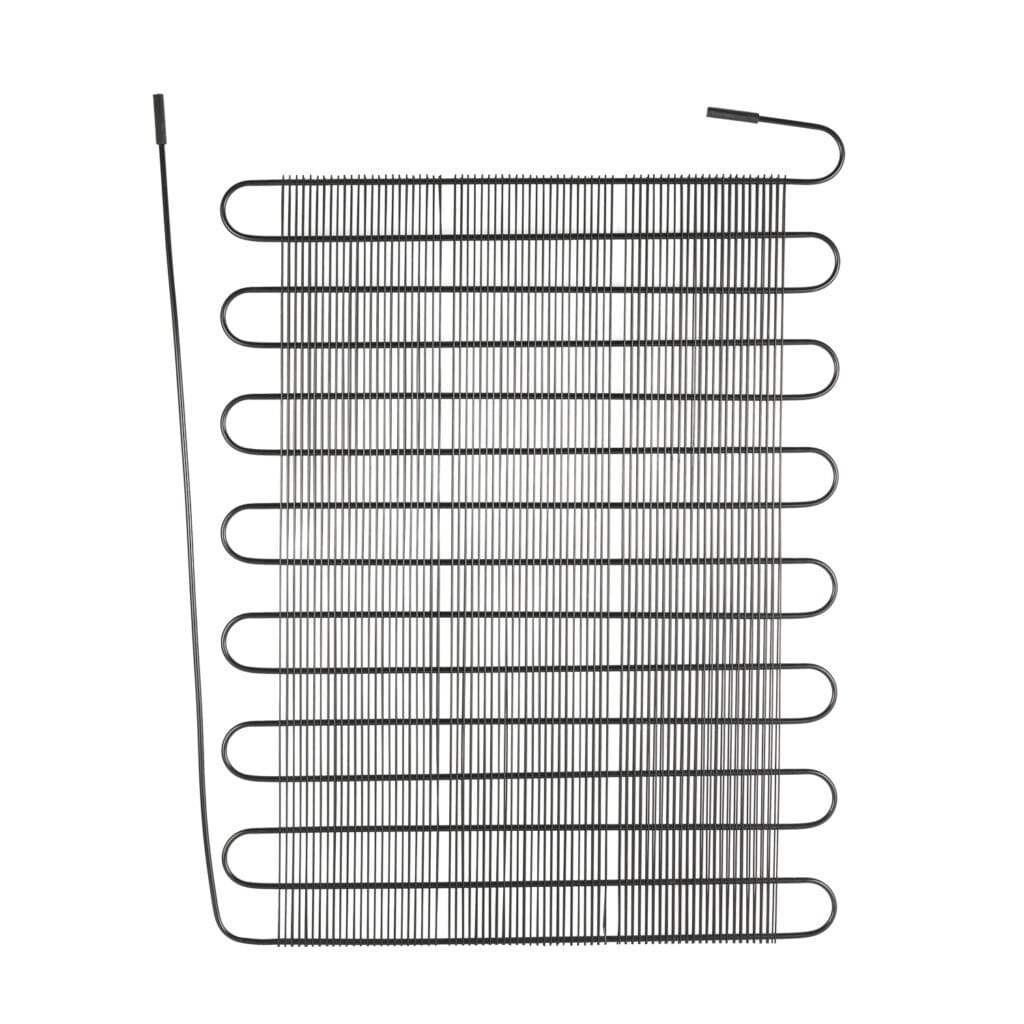
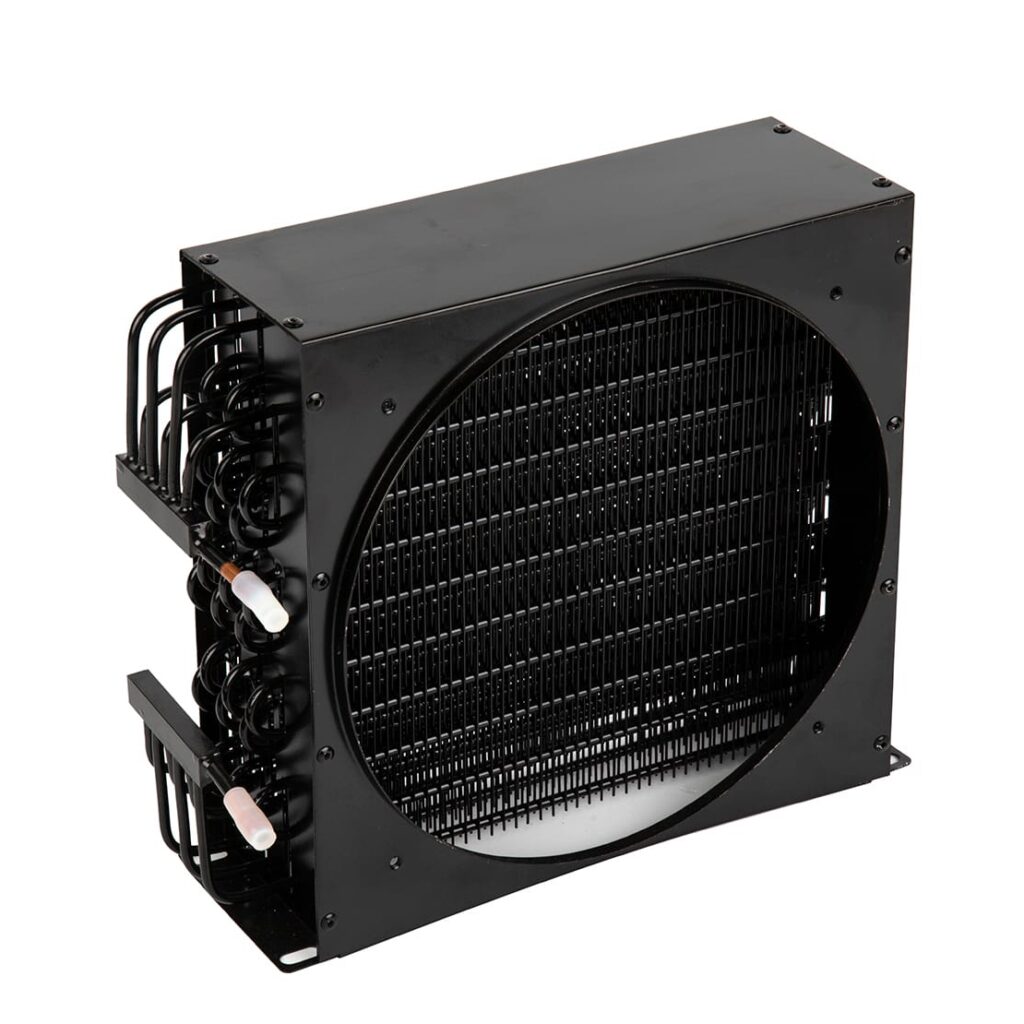
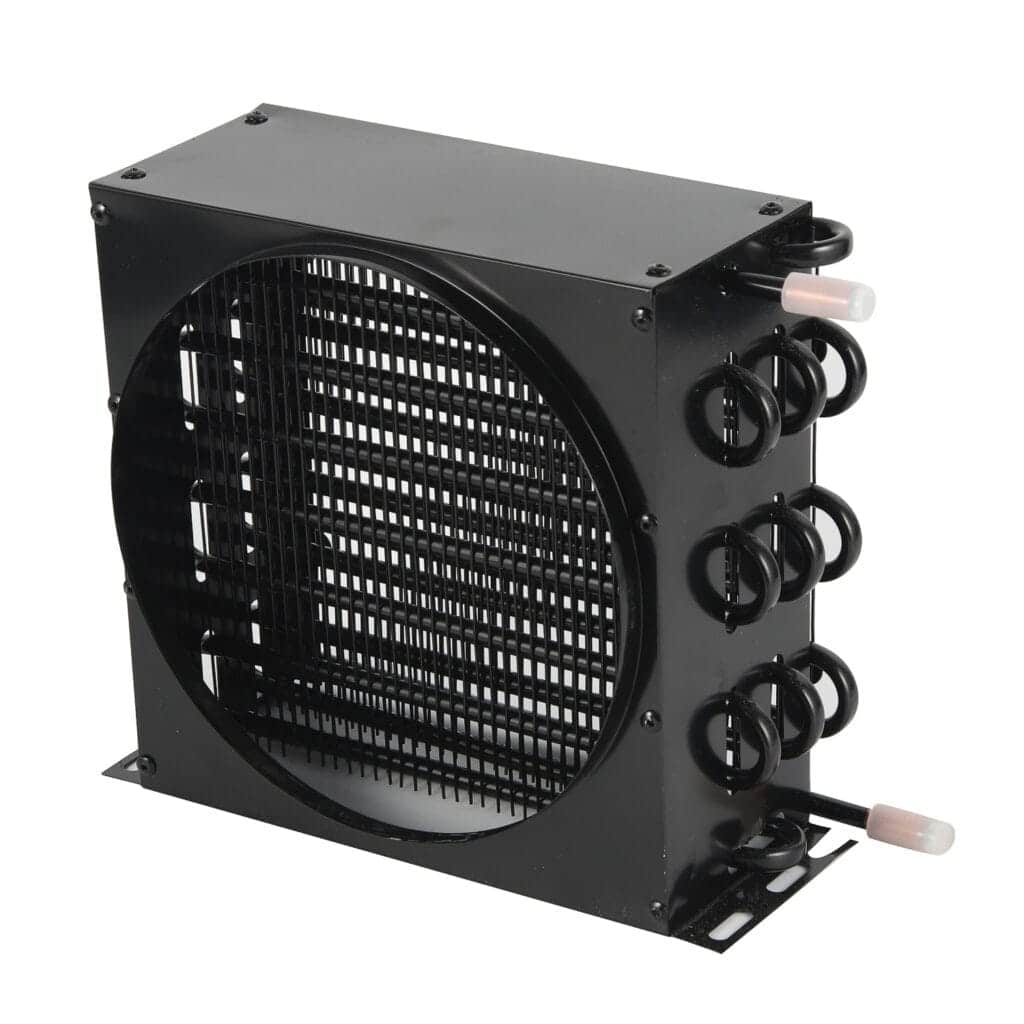
Envelope and tube routing
Vérifier : Provide length, width, height, bends, layer arrangement, fixing points and clearances
Considérer : Confirms fit in the appliance or cabinet.

Custom wire tube condensers for refrigerators, freezers, display cabinets and other refrigeration equipment.
Wire tube condensers are compact heat-rejection components used in refrigeration equipment where tube routing, support and available envelope must work together. This category is intended for buyers evaluating the wire tube direction for refrigerators, freezers, display cabinets and related equipment. The key RFQ inputs are the condenser envelope, tube arrangement, support or plate detail, coating or material requirement, mounting, connection positions, airflow path and existing-part reference. Confirm the final construction from an approved drawing or sample.
Affichage de tous les 1 résultats

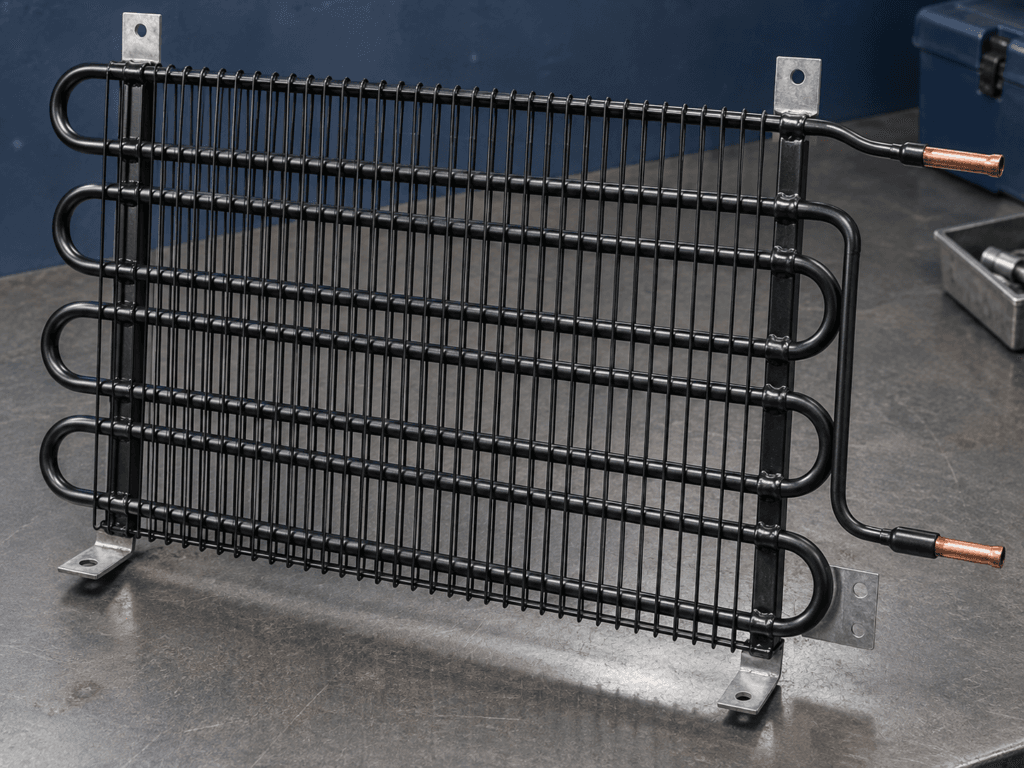
Wire tube condensers use a tube-and-wire construction that must be reviewed together with the available cabinet space and airflow path. Confirm wire layout, tube material, dimensions, mounting points, connections and the intended system duty from the drawing or sample.

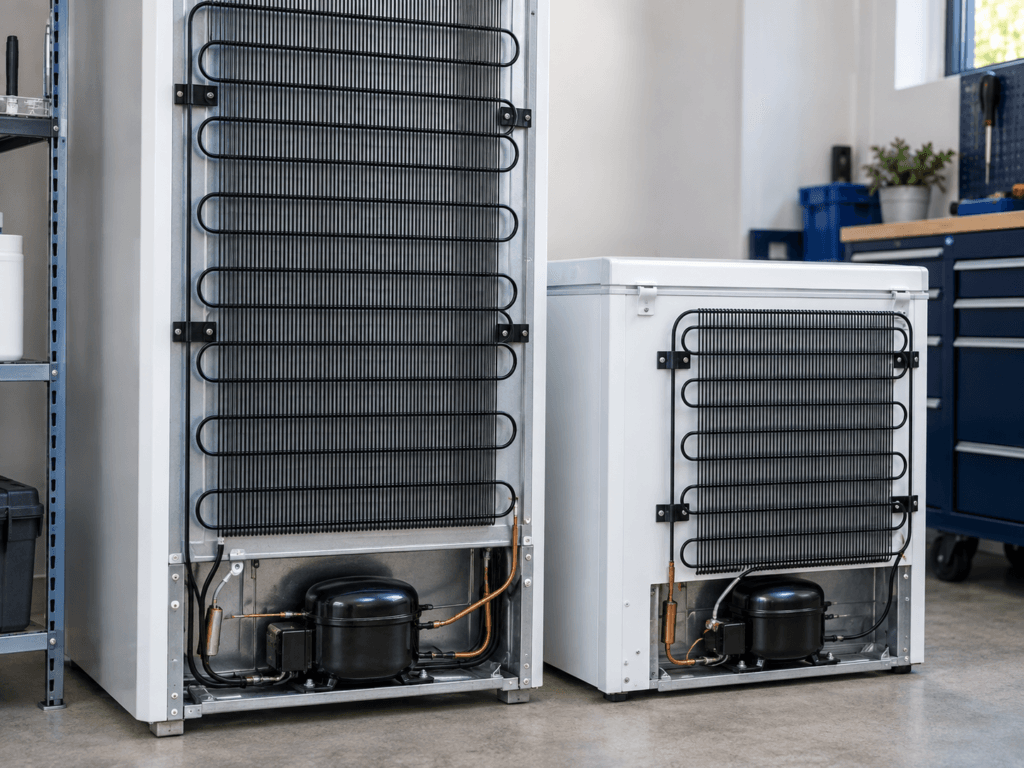
Wire tube condensers are often integrated into refrigerators, freezers and compact refrigeration equipment where packaging matters. The application view helps check clearance, contact with surrounding parts, airflow and service access before finalizing the replacement or OEM configuration.
Vérifier : Provide length, width, height, bends, layer arrangement, fixing points and clearances
Considérer : Confirms fit in the appliance or cabinet.

Vérifier : Share application, ambient condition, ventilation, fan arrangement and duty information if known
Considérer : Helps review the condenser within the complete airflow path.
Vérifier : State known tube, wire, plate, coating, port and mounting requirements
Considérer : Prevents assumptions about construction and interface.
The category identifies a wire tube condenser family; confirm tube material, wire or plate support, coating, layer arrangement and mounting from approved data.
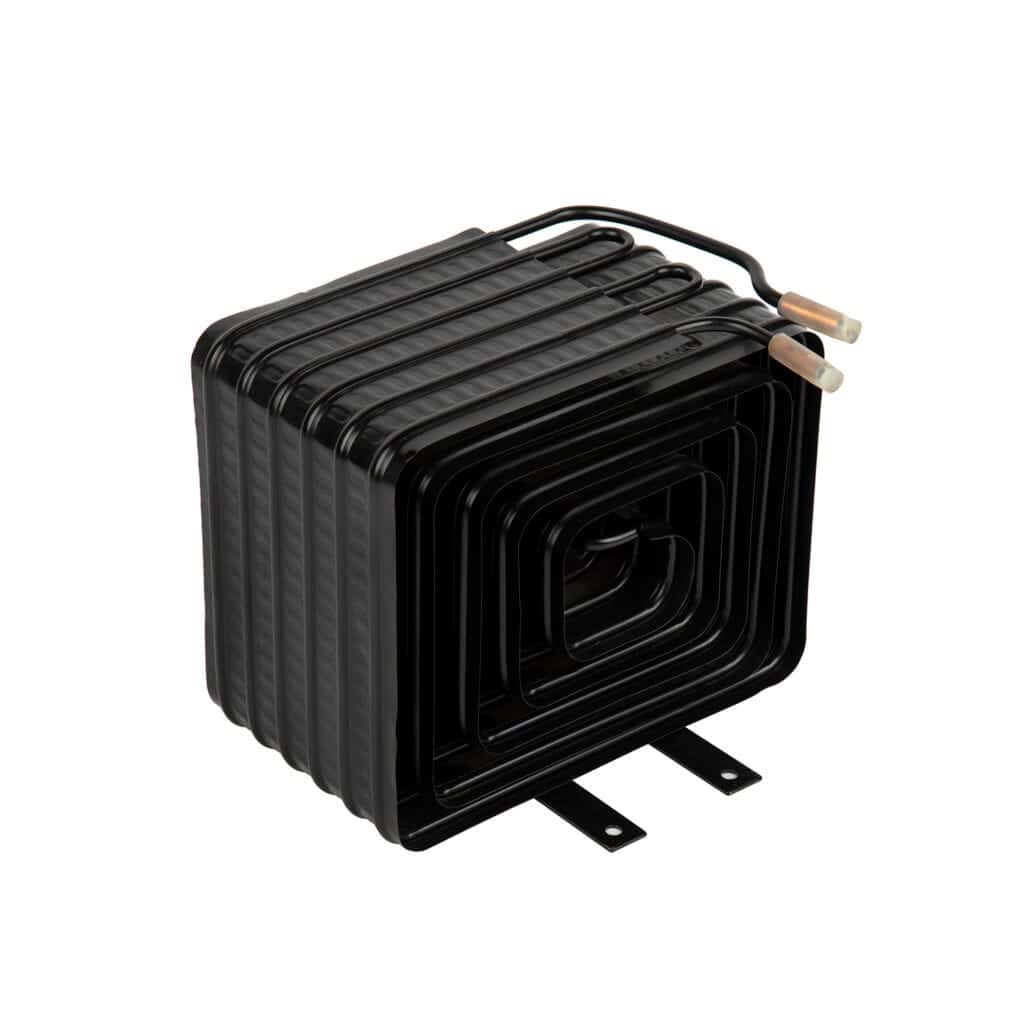
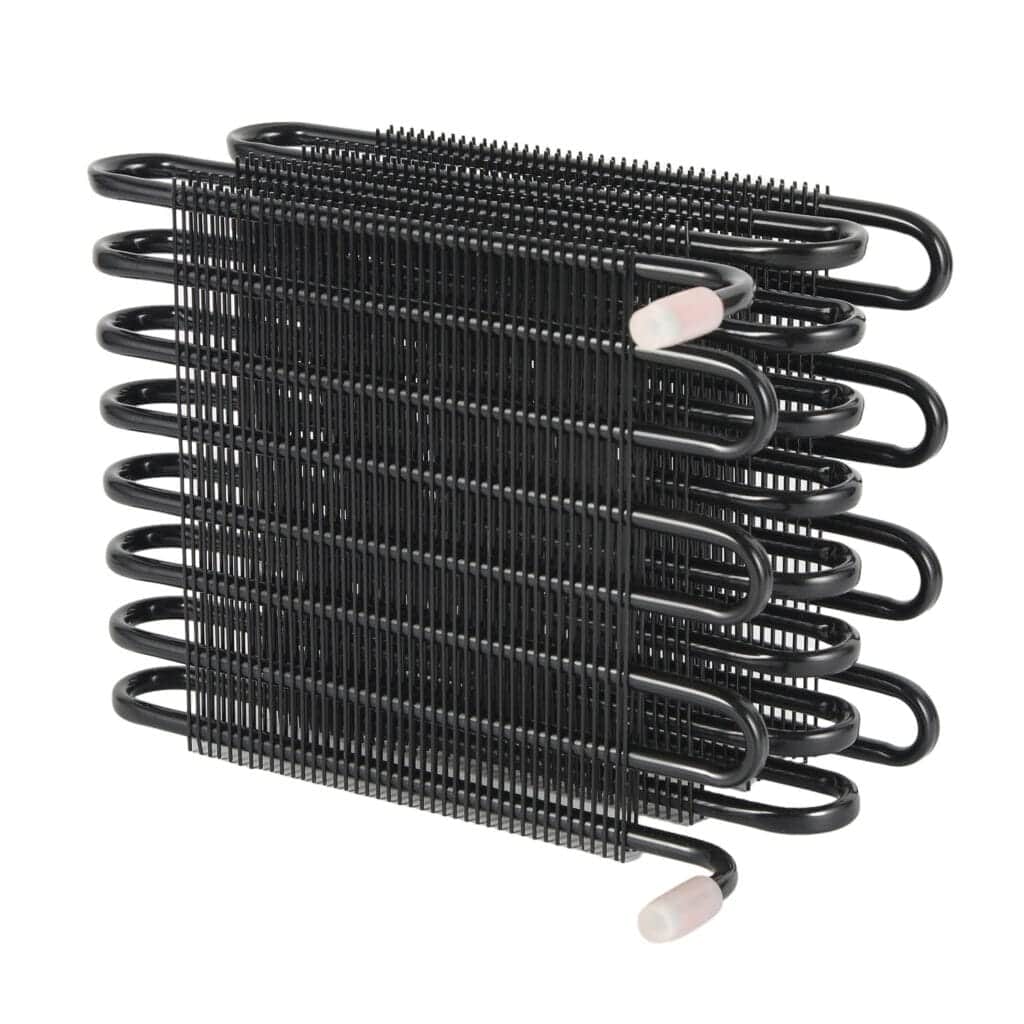
Single-layer, multilayer or sheet-metal arrangements change the envelope and support interface
Pourquoi c'est important : Match the exact drawing or sample.
Confirm tube size, bends, port orientation, fixing points and airflow position before release.
Review tube routing, wire spacing, frame or plate arrangement, envelope and connection position
Pourquoi c'est important : Send a drawing or sample reference when the replacement must fit an existing cabinet.
| Paramètre | Informations à fournir | Pourquoi c'est important |
|---|---|---|
| Application | Refrigerator, freezer, display cabinet, cold storage or other equipment | Establishes the use context. |
| Tube arrangement | Single-layer, multilayer, plate, sheet-metal or other known construction | Identifies the required family and packaging. |
| Encombrement et montage | Overall dimensions, bends, supports, fixing points and clearances | Confirms fit. |
| Material and finish | Tube, wire, plate, coating or corrosion-environment requirement | Prevents unverified material assumptions. |
| Connections and duty | Tube or port details, airflow, ambient and duty information if known | Supports system-interface review. |
Wire tube condensers can be arranged around compact cabinet constraints
Confirmer : Provide cabinet space, layer arrangement, mounting and ventilation details.
The condenser must fit the appliance heat-rejection path and service arrangement
Confirmer : Confirm target condition, airflow, mounting and the existing part.
Tube routing and support details affect packaging and access
Confirmer : Send envelope, bends, connections, fan arrangement and quantity.
Match tube, wire, plate, sheet-metal, layer and coating details to the approved drawing or sample.
Confirm bends, supports, fixing points, port positions and clearances.
State required dimensional, connection, leak or finish checks and confirm the applicable records with the quotation.
Send photos, dimensions, part reference and drawing revision
Pourquoi c'est important : Enables a traceable comparison.
State single-layer, multilayer, plate, sheet-metal or other known arrangement
Pourquoi c'est important : Helps identify the correct construction.
Provide bends, tube or port positions, mounting, fan arrangement and clearances
Pourquoi c'est important : Confirms system and installation fit.
Share quantity, coating or material requirements and inspection needs
Pourquoi c'est important : Prend en charge les détails du devis.
No. Confirm envelope, support, airflow, connections, mounting, material and the approved drawing.
Send the old part, clear photos, overall dimensions, bends, supports, tube positions, mounting and appliance application.
Yes, if it is known or shown on the drawing; otherwise send a sample or marked photo for review.
Not necessarily. Compare the available space, heat-rejection context, mounting and approved construction.
Send the drawing or sample, application, quantity and connection requirements for review.
Use it to prepare material, geometry, connection and inspection inputs.
Use it to organize heat rejection, airflow and RFQ questions.
Use it when a wire tube part is being matched for an OEM program.
Une demande de prix claire aide l'équipe à examiner la bonne catégorie, la construction et l'interface. Utilisez la liste de contrôle ci-dessous comme point de départ pratique, puis fournissez les détails spécifiques à la catégorie indiqués ci-dessus.
Indiquez l'équipement, la condition cible, l'environnement ambiant et le service attendu.
Partagez les dimensions, les points de fixation, les raccordements, la direction du flux d'air et les dégagements de service.
Pour les ventilateurs et les moteurs, incluez la tension, la fréquence, le signal de commande, la rotation et le câblage.
Joignez l'ancienne pièce, le dessin ou l'échantillon et indiquez la quantité, la révision et les besoins en documentation.
Partagez votre application, vos dessins et vos exigences de fonctionnement afin que notre équipe puisse examiner les détails de votre projet.