

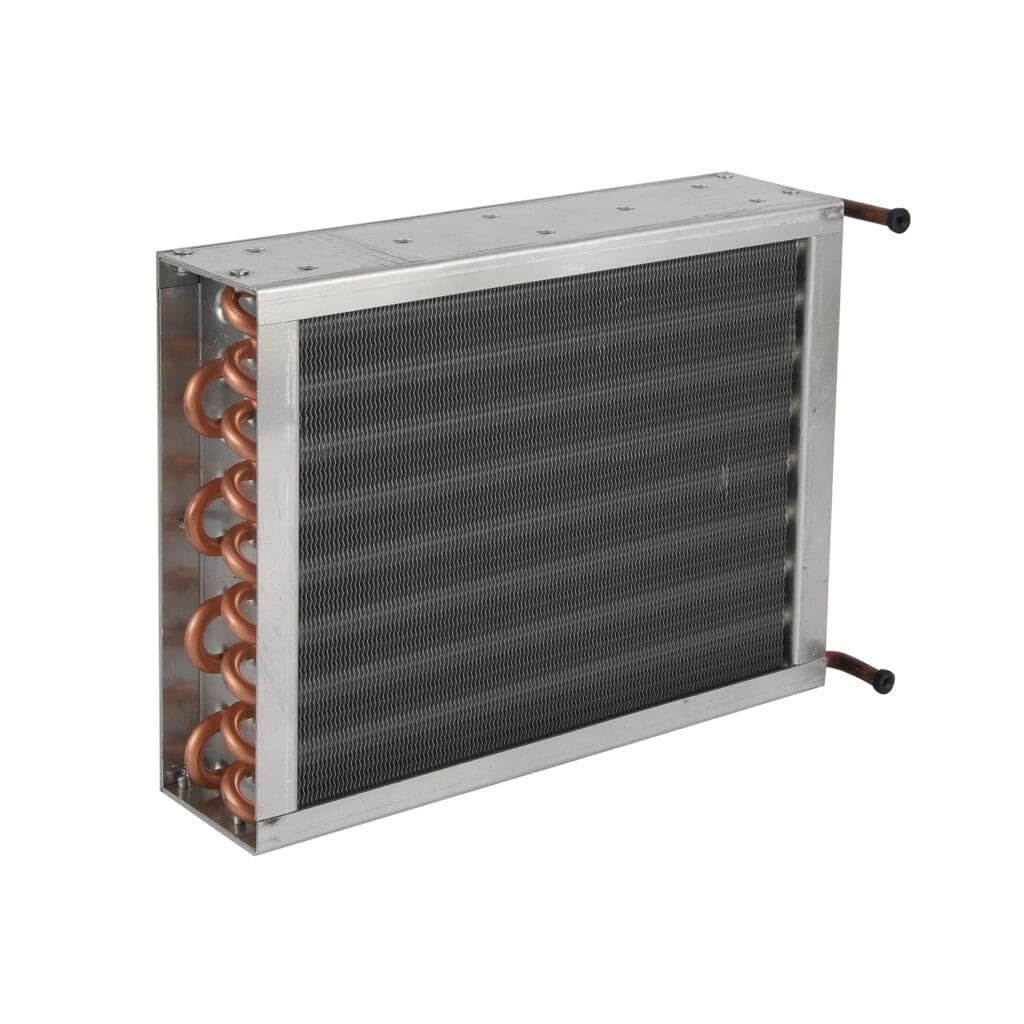
Wire Tube Condenser (single layer)
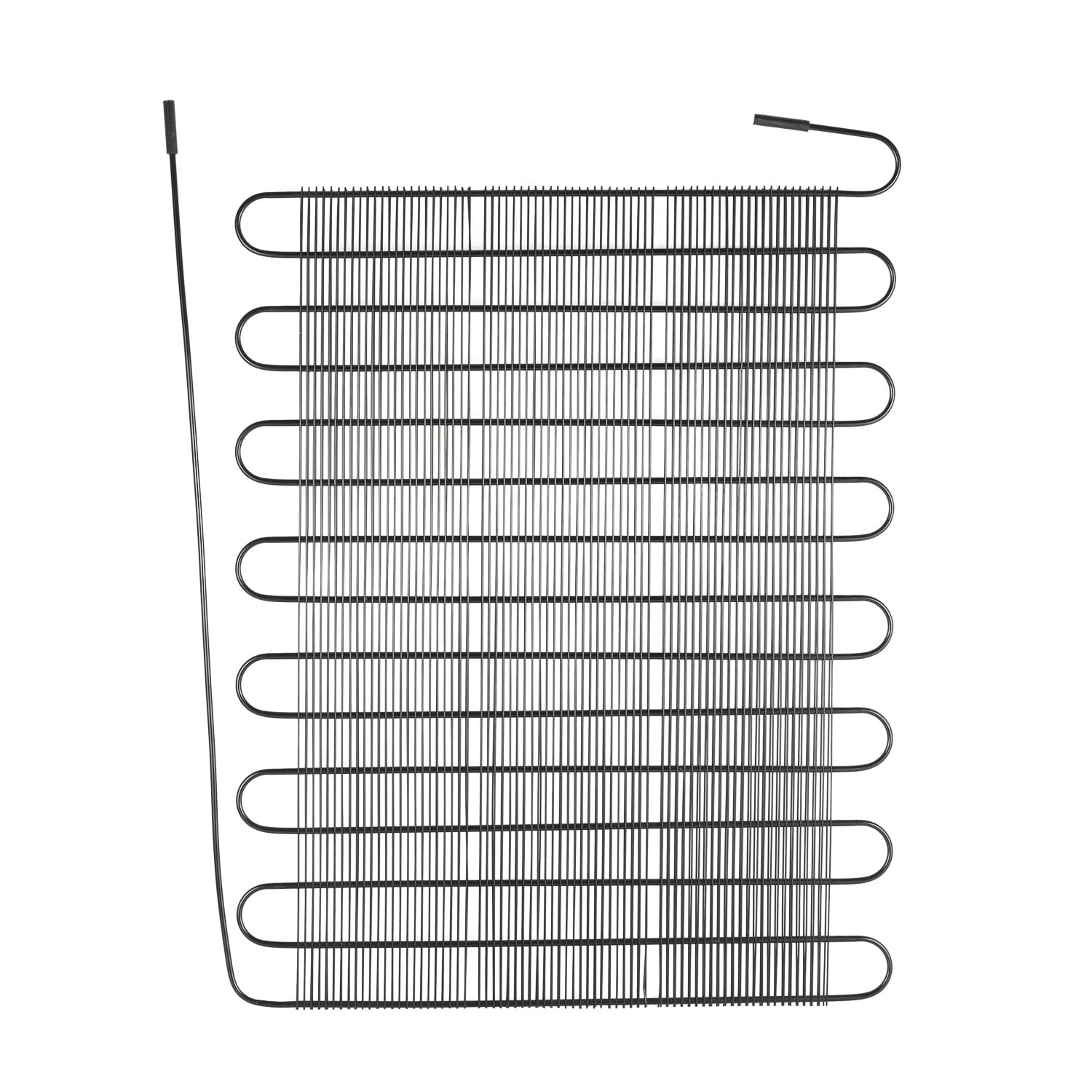
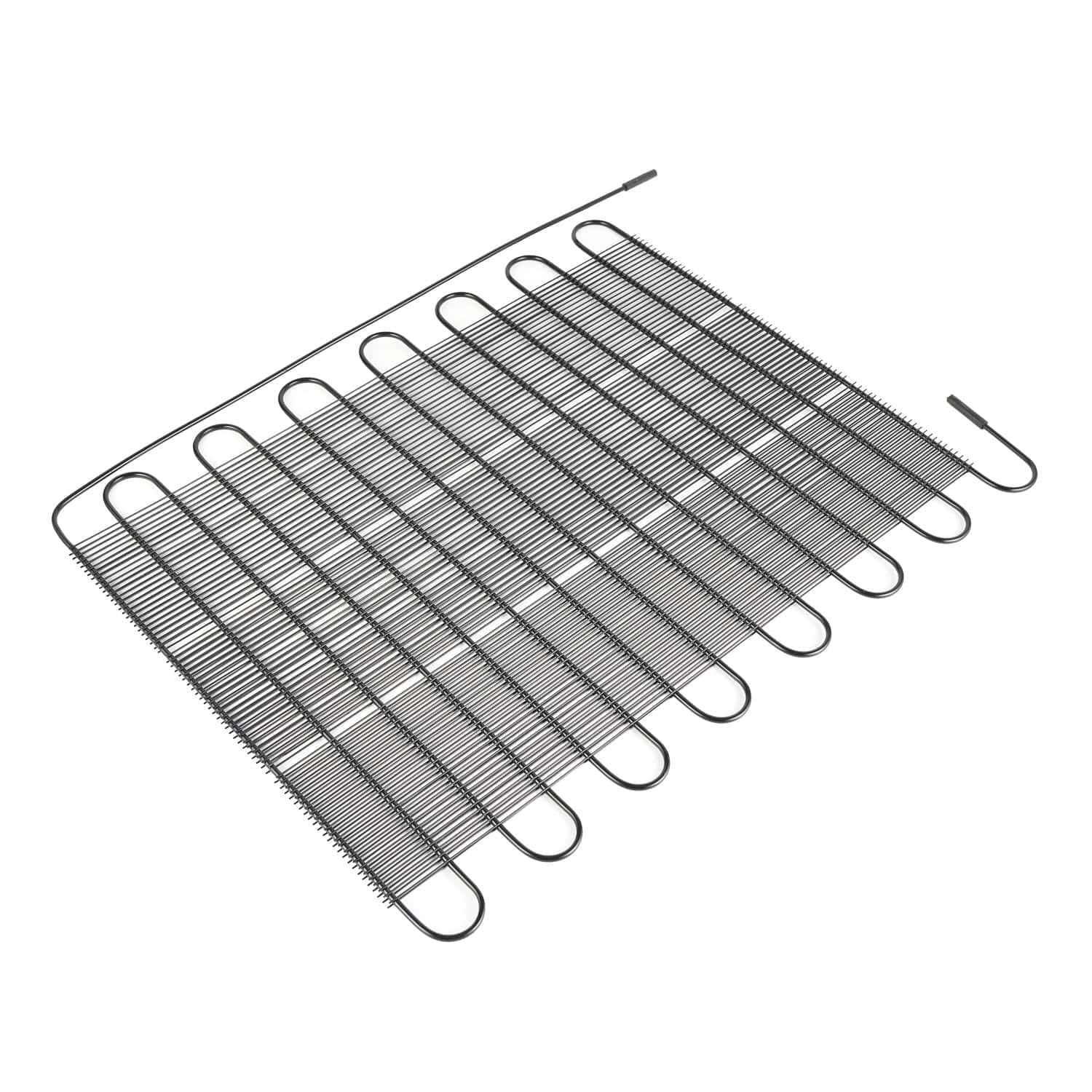
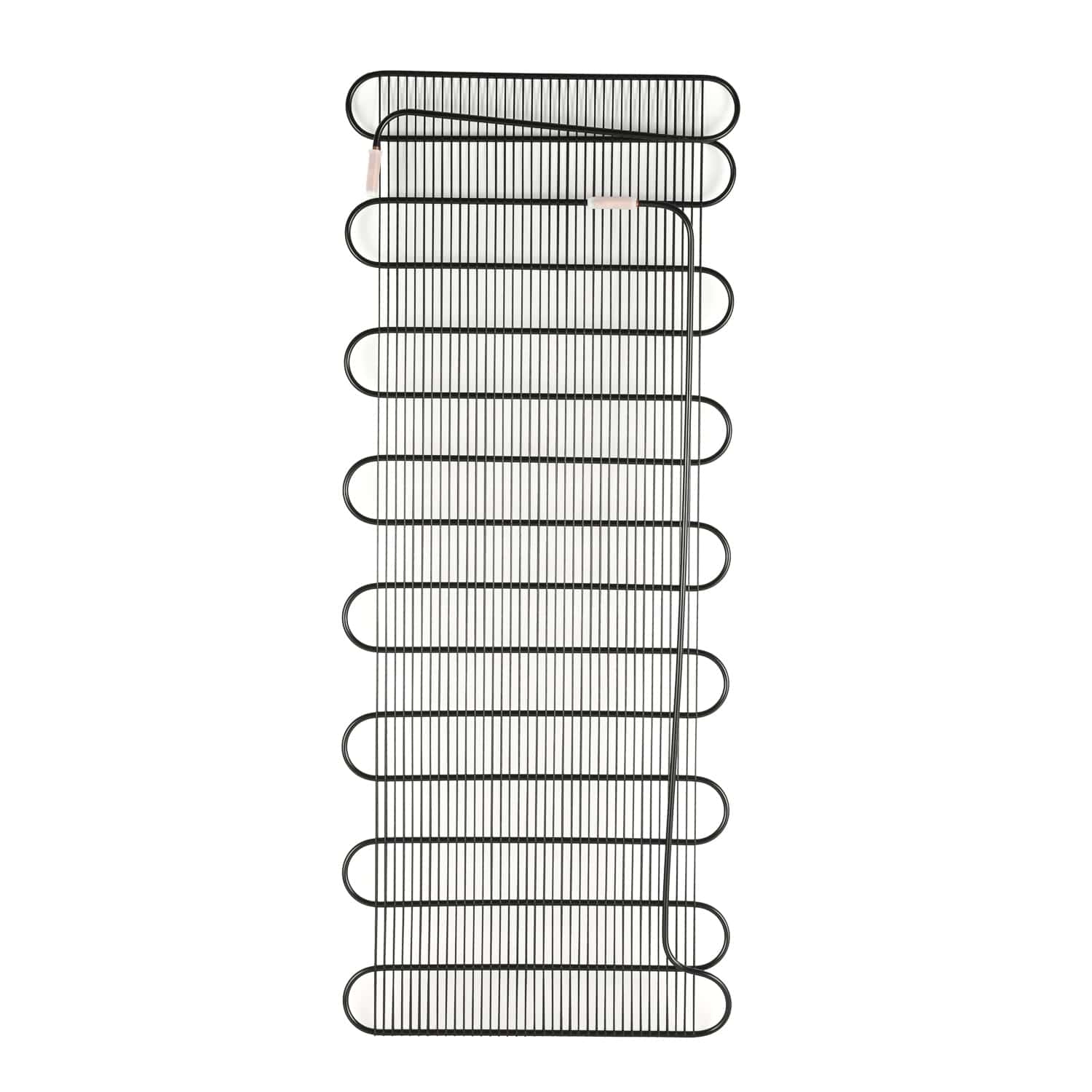
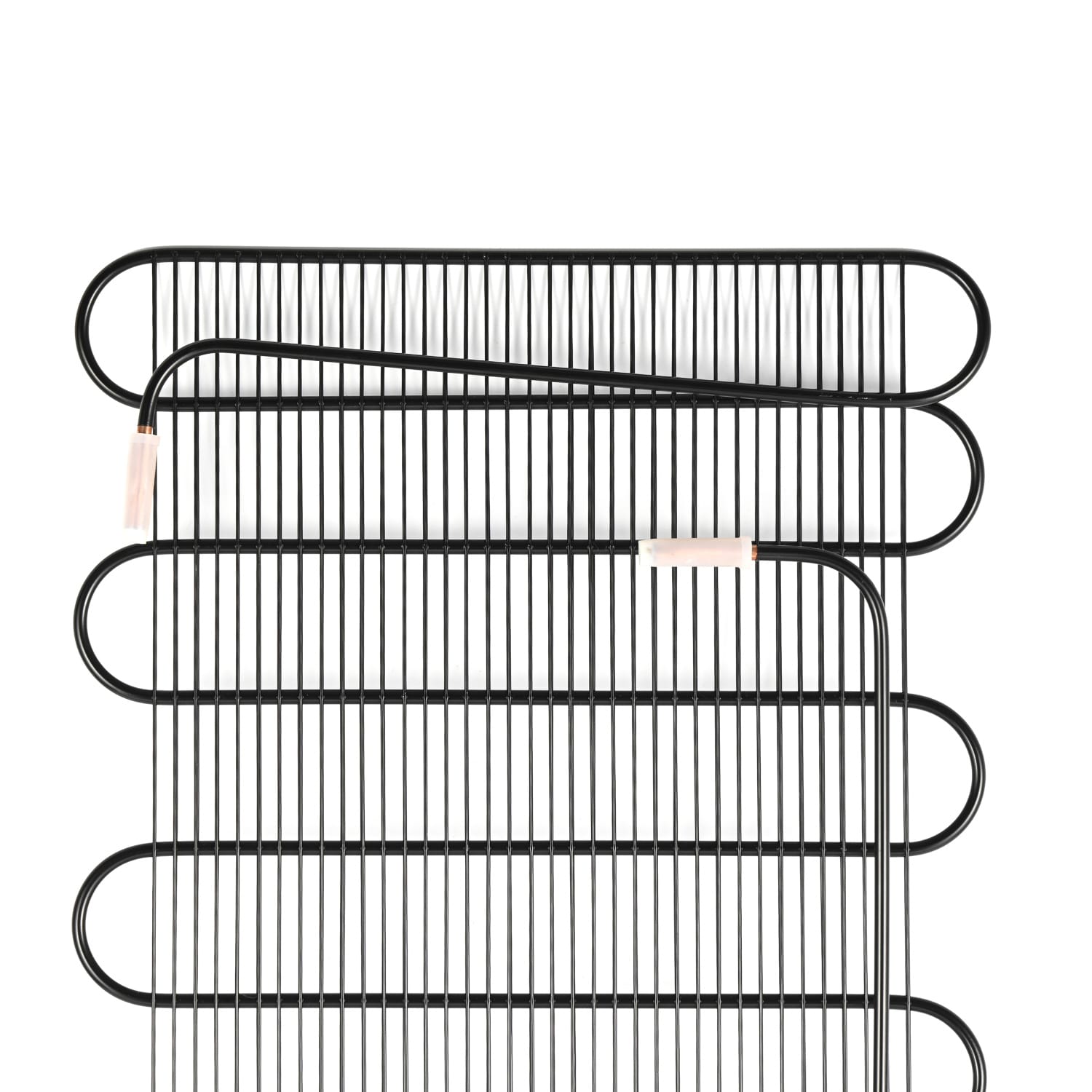

Single-layer wire tube condenser for refrigerator and freezer OEM programs. Review steel tube, wire pitch, coating, model references, testing and drawing-based customization.
Product Details
A single-layer wire tube condenser is a practical heat-rejection component for refrigerator and freezer programs where the condenser must fit a defined cabinet space. This product uses a wire-on-tube construction: a steel tube is supported by welded steel wire, with brackets or a plate used where the approved assembly requires them. The arrangement can be developed for the back of a cabinet, the bottom of a unit, or another defined installation position.
Domi Refrigeration supplies this wire tube condenser reference for OEM engineers, appliance manufacturers, replacement-part buyers, and refrigeration distributors who need to review construction, dimensions, coating, cleanliness, testing, and production fit before placing a repeat order. The published models and material ranges below are reference information. The approved drawing, sample, refrigerant circuit, compressor duty, test method, and customer specification govern the final product.
Product scope and application boundary
This single-layer wire tube condenser is intended for refrigerator and freezer projects that use a separate condenser to reject heat from the refrigeration circuit. The wire-on-tube layout can help a buyer work within a narrow cabinet envelope while retaining defined tube support and airflow paths. It may be evaluated for single-door refrigerators, compact freezers, household appliance programs, and replacement condenser projects when the connection points and heat-load requirements match.
Where this product can fit
- Back-mounted condenser assemblies that need a relatively flat wire-on-tube arrangement.
- Bottom-mounted assemblies that use a bent or spiral form to follow the base of a refrigerator or freezer.
- Projects that use a tube wrapped on or integrated with a plate as part of the approved condenser construction.
- OEM and replacement programs that can provide a drawing, sample, cabinet photograph, or existing part for fit review.
What is not determined by the product name
“Single layer” describes the published construction reference; it does not by itself define cooling capacity, pressure rating, refrigerant approval, noise, energy performance, or universal interchangeability. Do not select a condenser from compressor horsepower alone. Confirm the refrigerant or medium, circuit length, tube size, condenser surface area, ambient condition, airflow, pressure limits, connection location, mounting method, and required test condition for the target appliance.
Published construction reference
The associated Domi product reference identifies the following materials and thickness ranges. These values are useful during early sourcing and drawing review, but they should be checked against the current project drawing before tooling, sample approval, or mass production.
| Part or feature | Published reference | Buyer confirmation point |
|---|---|---|
| Condenser tube | Rolling welded steel tube, Ø4.76–Ø8 × 0.71 mm reference | Confirm outside diameter, wall thickness, tube grade, circuit length, and connection ends. |
| Supporting wire | Low-carbon steel wire, Ø1.2–Ø1.6 mm reference | Confirm wire diameter, spacing, weld points, and required support stiffness. |
| Bracket | SPCC steel plate, T=0.6–2.0 mm reference | Confirm bracket profile, mounting holes, bend angle, and cabinet interfaces. |
| Plate | SPCC steel plate, T=0.6–0.8 mm reference | Confirm plate size, flatness, forming, and any clearance from insulation or panels. |
| Wire pitch | Published technical standard: ≥5 mm | Confirm the effective pitch and local clearances on the final drawing. |
The material and dimension ranges above are not a substitute for a material certificate, refrigerant approval, or product test report. If a regulated market, appliance standard, or customer quality plan applies, list it with the drawing and request the corresponding evidence before release.
Structure options and installation position
Wire-on-tube condensers are formed around the available cabinet space rather than around a single universal outline. The source reference identifies three construction directions:
- Flat type: a wire-on-tube condenser positioned at the rear of a refrigerator or freezer.
- Bent or spiral type: a formed wire-on-tube condenser positioned at the bottom of the appliance.
- Wrapped tube on plate: a tube arrangement embedded or wrapped on a plate where the approved design needs a plate-supported surface.
For fit review, provide the available width, height, depth, bend radius, mounting points, tube entry and exit direction, suction-tube requirement, and the minimum clearance from the cabinet, insulation, fan, compressor, and service area. A simple cabinet photograph with a ruler can help identify the physical boundary, but the released drawing remains the controlling document.
Published model and dimensional reference
The table below preserves the current product reference for early model comparison. The “length” and “wire length” columns are published millimetre references. The width field is retained in the source format because it represents an assembly reference of 480*450*430 rather than a single dimension. Confirm the meaning, tolerances, unit system, tube routing, and connection details for the model you intend to order.
| Model reference | Length (mm) | Published width / assembly reference (mm) | U-bends | Rows | Wire qty. (480, 450/30) | Wire length (mm) |
|---|---|---|---|---|---|---|
| 1/3 HP | 1150 | 480*450*430 | 12 | 24 | 126 / 108 | 1157 |
| 1/4 HP | 1050 | 480*450*430 | 11 | 22 | 126 / 108 | 1057 |
| 1/5 HP | 950 | 480*450*430 | 10 | 20 | 126 / 108 | 957 |
| 1/6 HP | 850 | 480*450*430 | 9 | 18 | 126 / 108 | 857 |
| 1/7 HP | 750 | 480*450*430 | 8 | 16 | 126 / 108 | 757 |
| 1/8 HP | 650 | 480*450*430 | 7 | 14 | 126 / 108 | 657 |
| 1/9 HP | 550 | 480*450*430 | 6 | 12 | 126 / 108 | 557 |
| 1/10 HP | 450 | 480*450*430 | 5 | 10 | 126 / 108 | 457 |
| 1/12 HP | 350 | 480*450*430 | 4 | 8 | 126 / 108 | 357 |
These model labels should be treated as a selection aid, not as a guaranteed compressor-matching chart. Before order confirmation, ask for the current model drawing and confirm whether the listed horsepower is a source classification, a compressor reference, or another project convention.
Internal cleanliness and electrophoresis coating references
The associated source describes internal-cleanliness references for R134a and CFC cooling-system context, and it also describes a cathodic electrophoresis coating reference. These are source references from the associated product information, not a blanket approval for every current refrigerant or market. Confirm the current refrigerant, legal requirements, appliance standard, test method, and customer acceptance limits before using them in a specification.
| Item | Published reference | Release note |
|---|---|---|
| Residual moisture | ≤5 mg/100 cm³ | Confirm sampling, laboratory method, and current customer limit. |
| Residual impurity | ≤10 mg/100 cm³ | Confirm the definition of impurity and the inspection method. |
| Residual mineral oil | ≤100 mg/100 cm³ | Confirm lubricant type, sampling location, and current circuit requirement. |
| Residual paraffin | ≤3 mg/m² | Confirm the applicable surface-area calculation and test method. |
| Largest single impurity | ≤0.5 mm | Confirm visual or dimensional inspection method and acceptance criteria. |
| Coating characteristic | Published reference | Confirmation needed |
|---|---|---|
| Coating type | Cathodic electrophoresis coating | Confirm coating chemistry, colour, approved supplier, and application area. |
| Thickness | 15–20 μm | Confirm measurement points, tolerance, and report format. |
| Hardness | ≥2H | Confirm the test standard and sample preparation. |
| Adhesion | ≥ two grade | Confirm the grading standard and acceptance wording for the project. |
| Flexibility | Around R=3D, bend 180°, with no crack or fall-off stated | Confirm mandrel or bend method and the meaning of D for the selected tube. |
| Salt spray | GB2423 cathodic electrophoresis reference ≥72 h | Confirm the exact test clause, panel preparation, and customer requirement. |
For current projects, do not convert these references into a certificate claim without the corresponding test record. If the buyer needs a coating report, cleanliness report, material certificate, or corrosion test, list it in the RFQ so the document package can be reviewed before shipment.
Manufacturing and release process
The published process sequence gives buyers a useful checklist for production review:
- Tube bending according to the approved circuit and outline.
- Wire welding to establish the support grid and required pitch.
- Bracket fixing where the assembly uses a bracket or support plate.
- Suction-tube welding or connection work as shown on the drawing.
- Folding or bending to the final assembly shape.
- Leakage testing of the finished circuit.
- Cleaning to the agreed internal-cleanliness requirement.
- Coating, followed by inspection of coverage and appearance.
- Final inspection, identification, and protective packing.
For a repeat program, keep the approved drawing, sample, inspection points, coating requirement, leakage-test condition, and packaging instruction together. A change in wire pitch, bracket position, tube routing, coating, or connection length can affect cabinet fit or assembly work even when the product name remains unchanged.
How to select a wire tube condenser for an OEM project
Send the following information when requesting a quotation or replacement review. It allows the technical team to separate a dimensional match from a true refrigeration-system match.
- Appliance type and installation position: rear, bottom, side, or another location.
- Refrigerant or working medium, compressor duty, target operating condition, and applicable safety requirements.
- Overall envelope, tube diameter, circuit length, bend radius, wire diameter, wire pitch, and connection locations.
- Mounting holes, brackets, plate details, clearance from insulation, and access for assembly or service.
- Coating type, colour, thickness, corrosion requirement, and any appearance standard.
- Leakage-test pressure or method, cleanliness limit, inspection plan, and required records.
- Sample quantity, annual or order quantity, packaging method, label information, and delivery destination.
If the existing condenser is being replaced, include photographs of both sides, a measured outline, tube-end details, the appliance model, and the original part number. The replacement should not be approved from a photograph alone; verify the circuit and test requirements with the appliance owner.
Compatibility and common selection risks
A condenser can be the correct shape and still be unsuitable for the refrigeration system. The most common review risks are choosing by horsepower only, treating a source model table as a universal standard, assuming that a coating reference applies to every environment, or changing the refrigerant without rechecking pressure, lubricant, cleanliness, and safety requirements.
For a replacement project, also check whether the original assembly used a flat rear layout, a bottom spiral layout, or a plate-supported layout. Confirm that the new wire tube condenser leaves enough clearance for airflow, compressor service, cabinet panels, insulation, and electrical components. If the buyer requires a different outline, tube size, bracket, coating, or packaging method, request a drawing-based review instead of modifying the published table informally.
Wire tube condenser FAQ
What is a wire-on-tube condenser?
A wire-on-tube condenser uses a steel refrigeration tube supported by welded wire. The wire helps establish the heat-rejection surface and the assembly shape. Brackets or plates can be added when the approved cabinet design requires extra support or a defined mounting interface.
What does single layer mean on this product?
Here, single layer describes the published wire-tube construction reference. It does not define a universal cooling capacity or guarantee that every single-layer model can replace another model. Confirm the refrigeration duty, circuit, dimensions, and test conditions for the target appliance.
Where can a single-layer wire tube condenser be installed?
The associated reference describes flat rear installation, bent or spiral bottom installation, and a tube-on-plate direction. The correct arrangement depends on the cabinet envelope, airflow, connection routing, mounting points, and the appliance owner’s drawing.
What materials are referenced?
The published reference lists a rolling welded steel tube, low-carbon steel wire, an SPCC bracket, and an SPCC steel plate. The listed diameter and thickness ranges are starting references. Confirm grade, tolerance, forming, and documentation for the final order.
What wire pitch is referenced?
The associated technical reference states a wire pitch of at least 5 mm. The effective pitch, weld pattern, local clearance, and tolerance still need to be shown on and checked against the approved drawing.
Can Domi review a drawing or sample?
Yes. Send the drawing, sample details, cabinet photograph, or existing condenser information through the quotation request. Include the refrigerant, working condition, dimensions, connections, coating, cleanliness, testing, quantity, and packaging requirements so the review is not limited to visual fit.
Are the model dimensions and horsepower labels fixed?
The table is a published model reference, not a universal interchangeability chart. Confirm the current drawing, unit conventions, compressor reference, circuit length, connection details, and inspection criteria before production.
What are the MOQ and lead time?
MOQ, tooling, sample timing, production lead time, packaging, and document requirements depend on the approved design and order volume. Request a project-specific quotation after the drawing or sample review; no fixed MOQ or lead-time promise is made on this page.
Request a drawing-based quotation
For a single-layer wire tube condenser quotation, send your drawing or sample information and ask the technical team to confirm construction, dimensions, refrigerant compatibility, pressure and leakage-test requirements, coating, cleanliness, packaging, MOQ, and lead time. You can also review Domi’s engineering capabilities, manufacturing process, testing references, and quality documentation before sending the request.
For related product comparison, see the wire tube condenser multilayer cURL Too many subrequests by single Worker invocation. To configure this limit, refer to https://developers.cloudflare.com/workers/wrangler/configuration/#limits tube-on-plate condenser pages. Buyers evaluating a broader refrigeration coil program can also read the refrigeration condenser coils guide, beverage cooler condenser coil selection guide, and residential refrigeration coils overview.
Request a Custom Quote with your drawing, sample, or replacement details. If this is a replacement HVAC or refrigeration coil inquiry, include the original model, application, operating condition, and required delivery date so the correct product family can be reviewed.
Related Products
Get Product Information for Your Project
Send the product model, drawings, sample photos, quantity, or application requirements. Our team will review the information and help confirm suitable options, technical data, and quotation details.