Duty and operating environment
Vérifier : Provide target condition, ambient range, refrigerant or working fluid if known and expected load
Considérer : Establishes the basis for reviewing heat rejection and airflow.


Heavy-duty refrigeration and process-cooling components for industrial applications.
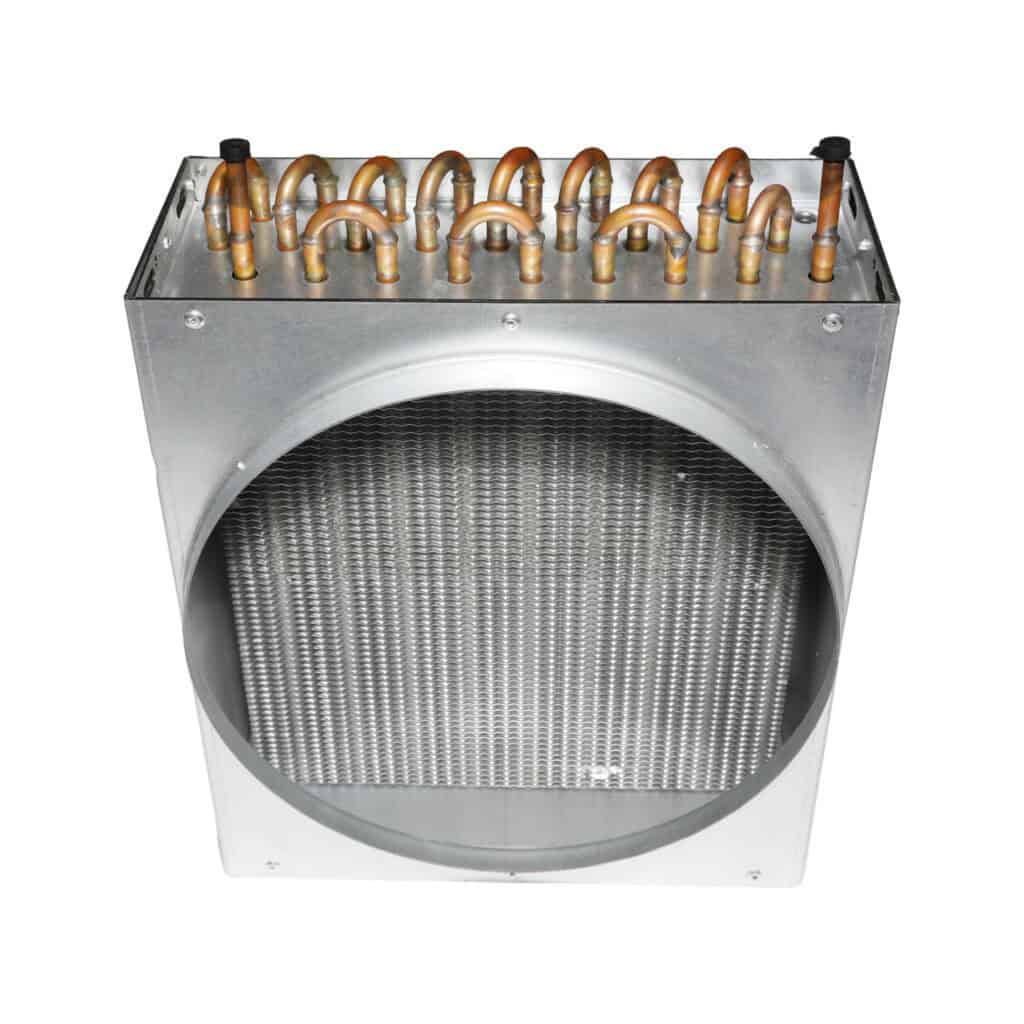
Industrial refrigeration covers components used in larger cooling, process-cooling and heavy-duty refrigeration applications. Domi's current published industrial range includes condenser examples and an axial fan product. Industrial selection should begin with the duty and operating environment, then move to heat rejection, airflow, envelope, connections, electrical supply and service access. Share the system drawing or an existing-part reference when possible so the requested component can be reviewed against the complete installation rather than matched by title alone.
Affichage de tous les 1 résultats
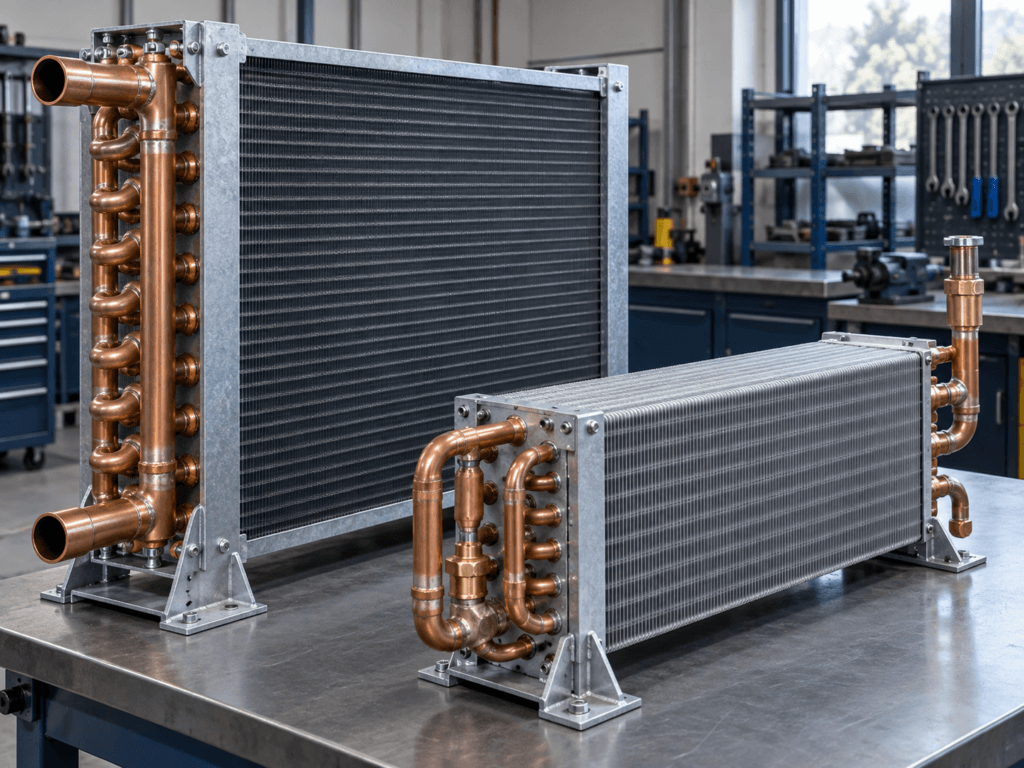
Industrial refrigeration assemblies are usually selected around duty, operating environment and service access rather than appearance alone. Review the visible structure as a starting point and confirm the specified materials, dimensions, connections, mounting method and maintenance clearances with the equipment drawing.

Industrial applications can involve process cooling, cold storage or equipment exposed to demanding ambient conditions. Use the application view to identify the installation role, then provide design conditions, operating hours, airflow or fluid requirements and service constraints for technical review.
Vérifier : Provide target condition, ambient range, refrigerant or working fluid if known and expected load
Considérer : Establishes the basis for reviewing heat rejection and airflow.
Vérifier : Share overall dimensions, fixing points, clearance, airflow direction and connection positions
Considérer : Prevents a large assembly from being quoted without checking the installation.
Vérifier : Confirm supply, frequency, motor or fan control, protection requirements and wiring arrangement
Considérer : Helps align the fan or condenser with the site system.
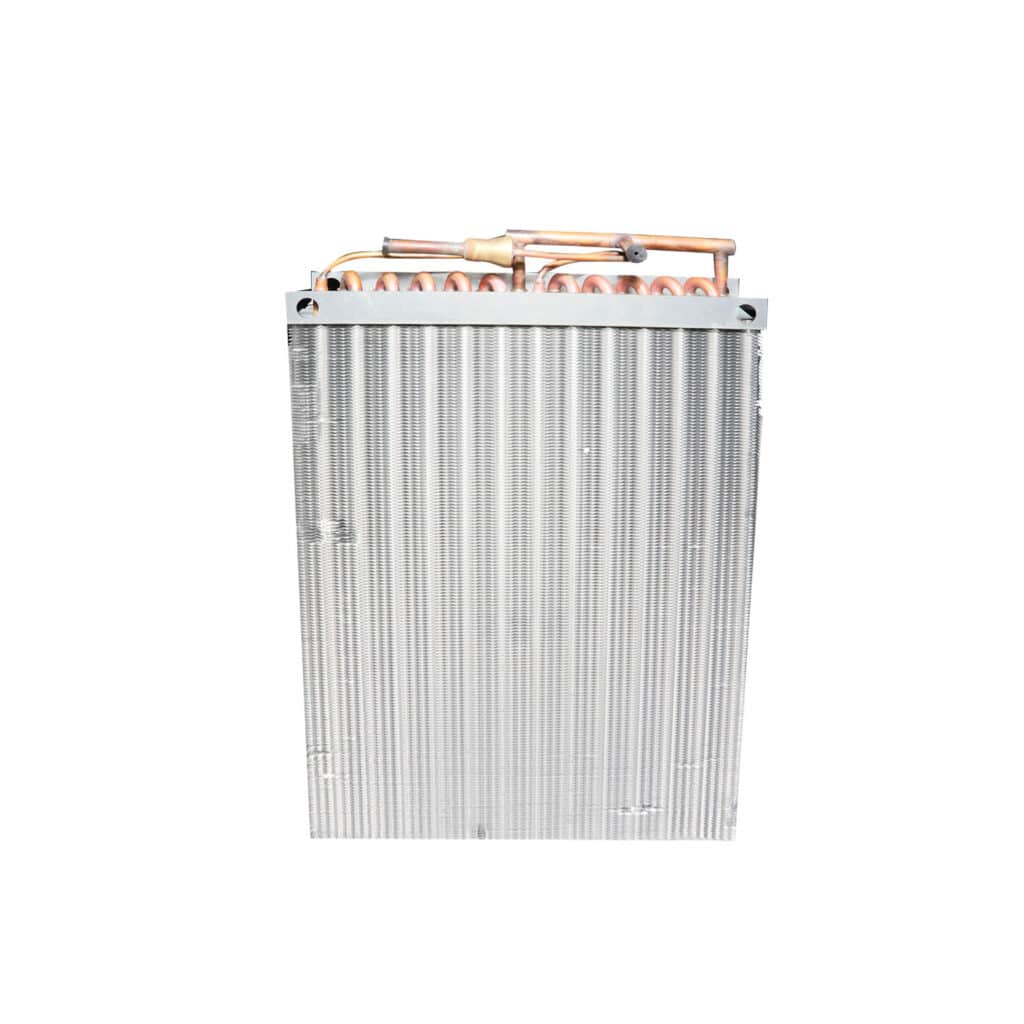
Industrial condenser selection depends on the heat-transfer construction, connection layout, airflow path and operating condition stated in the RFQ.
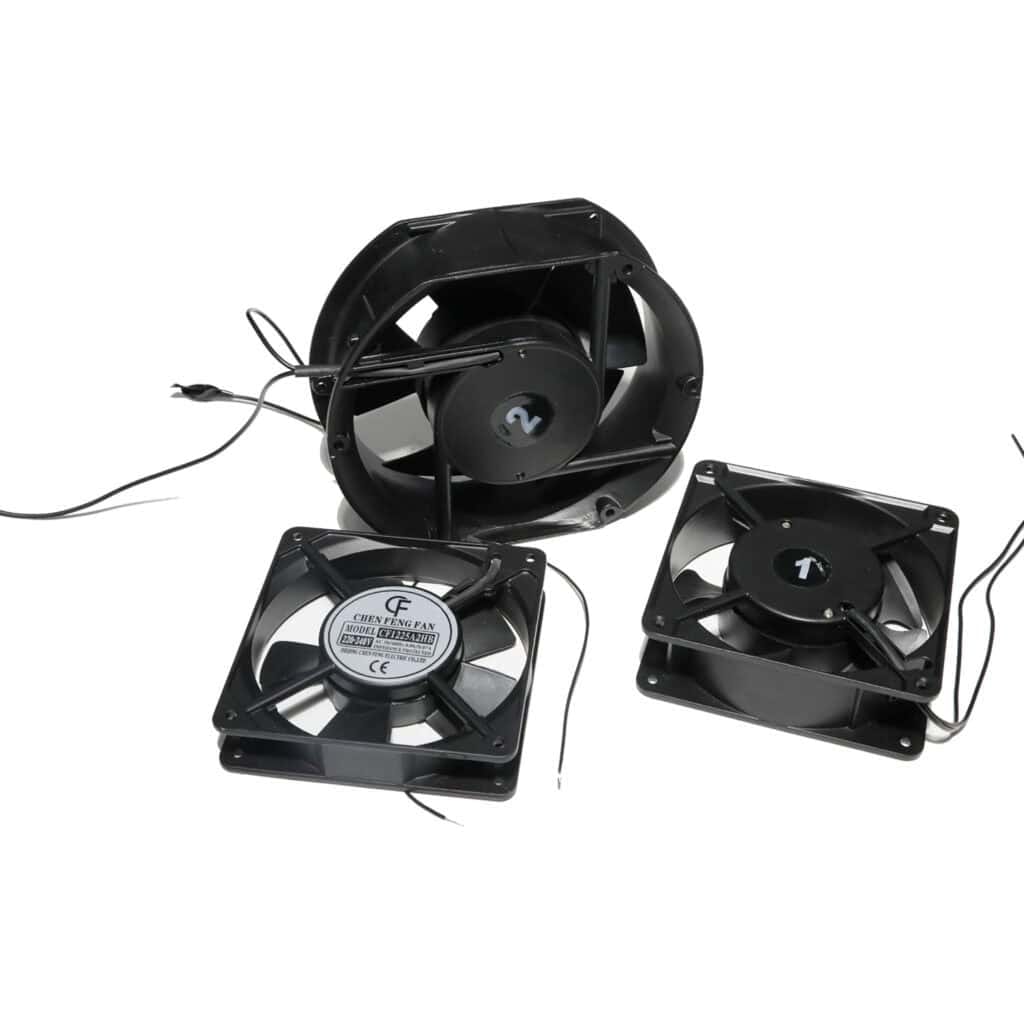
The published industrial range includes an axial fan product; confirm fan geometry, motor input, mounting and airflow requirement from current product data.
Review the condenser, fan, electrical and service interfaces together when the part is intended for a larger industrial assembly.
| Paramètre | Informations à fournir | Pourquoi c'est important |
|---|---|---|
| Service du système | Cooling duty, target condition, ambient range and expected operating cycle | Defines the technical review context. |
| Working fluid information | Refrigerant or fluid type, pressure information if available and connection role | Helps check the heat-transfer and interface assumptions. |
| Airflow and heat rejection | Airflow direction, fan duty, heat-rejection requirement and surrounding clearance | Supports coil and fan matching. |
| Interface mécanique | Envelope, mounting points, tube or port sizes and service access | Confirme la faisabilité de l'installation. |
| Electrical information | Voltage, frequency, control method and protection requirements | Supports motor and assembly review. |
Components are selected around a defined duty, operating cycle and service environment
Confirmer : Provide duty, ambient condition, working fluid and drawing information.
Condenser and fan arrangements must fit the room or plant layout and maintenance plan
Confirmer : Confirm mounting, airflow, access and temperature requirements.
Larger systems require the component interfaces to be reviewed as an integrated assembly
Confirmer : Send the system drawing, connection schedule and quantity.
Provide process or cold-storage duty, operating environment, required envelope, airflow or fluid conditions, connections and service access
Confirmer : Prevents capacity or construction assumptions from being made from the category name.
Confirm the approved drawing, revision and interface schedule before production release.
Ask which material, dimensional and connection checks apply to the quoted configuration.
Agree the applicable test items, operating checks and acceptance criteria before order release.
Provide cooling duty, operating condition, ambient range and working-fluid information
Pourquoi c'est important : Gives the quotation a defined technical basis.
Send drawings, envelope, mounting points, connection schedule and service clearances
Pourquoi c'est important : Enables fit and interface review.
Provide airflow requirement, voltage, frequency, control method and wiring information
Pourquoi c'est important : Helps review the fan or motor assembly.
State quantity, drawing revision, inspection requirements and delivery window for confirmation
Pourquoi c'est important : Supports quotation planning without assuming unverified commercial terms.
Start with the system duty, operating condition, ambient environment, working-fluid information if known and the existing drawing or part reference.
Airflow is important, but mounting, pressure requirement, fan geometry, motor input and electrical interface also need to be checked.
Provide the existing part number, drawings or photos, dimensions, connections, electrical information, operating condition and quantity.
No. Published product context helps identify the family; final suitability should be confirmed against project conditions and approved data.
Send the application and drawings so the required structure, connections and inspection information can be discussed before quotation.
Use it to organize large-system condenser duty and RFQ inputs.
Use it when the industrial project includes evaporator-side selection.
Use it to review condenser airflow, capacity context and quotation information.
Une demande de prix claire aide l'équipe à examiner la bonne catégorie, la construction et l'interface. Utilisez la liste de contrôle ci-dessous comme point de départ pratique, puis fournissez les détails spécifiques à la catégorie indiqués ci-dessus.
Indiquez l'équipement, la condition cible, l'environnement ambiant et le service attendu.
Partagez les dimensions, les points de fixation, les raccordements, la direction du flux d'air et les dégagements de service.
Pour les ventilateurs et les moteurs, incluez la tension, la fréquence, le signal de commande, la rotation et le câblage.
Joignez l'ancienne pièce, le dessin ou l'échantillon et indiquez la quantité, la révision et les besoins en documentation.
Partagez votre application, vos dessins et vos exigences de fonctionnement afin que notre équipe puisse examiner les détails de votre projet.