

cURL Too many subrequests by single Worker invocation. To configure this limit, refer to https://developers.cloudflare.com/workers/wrangler/configuration/#limits
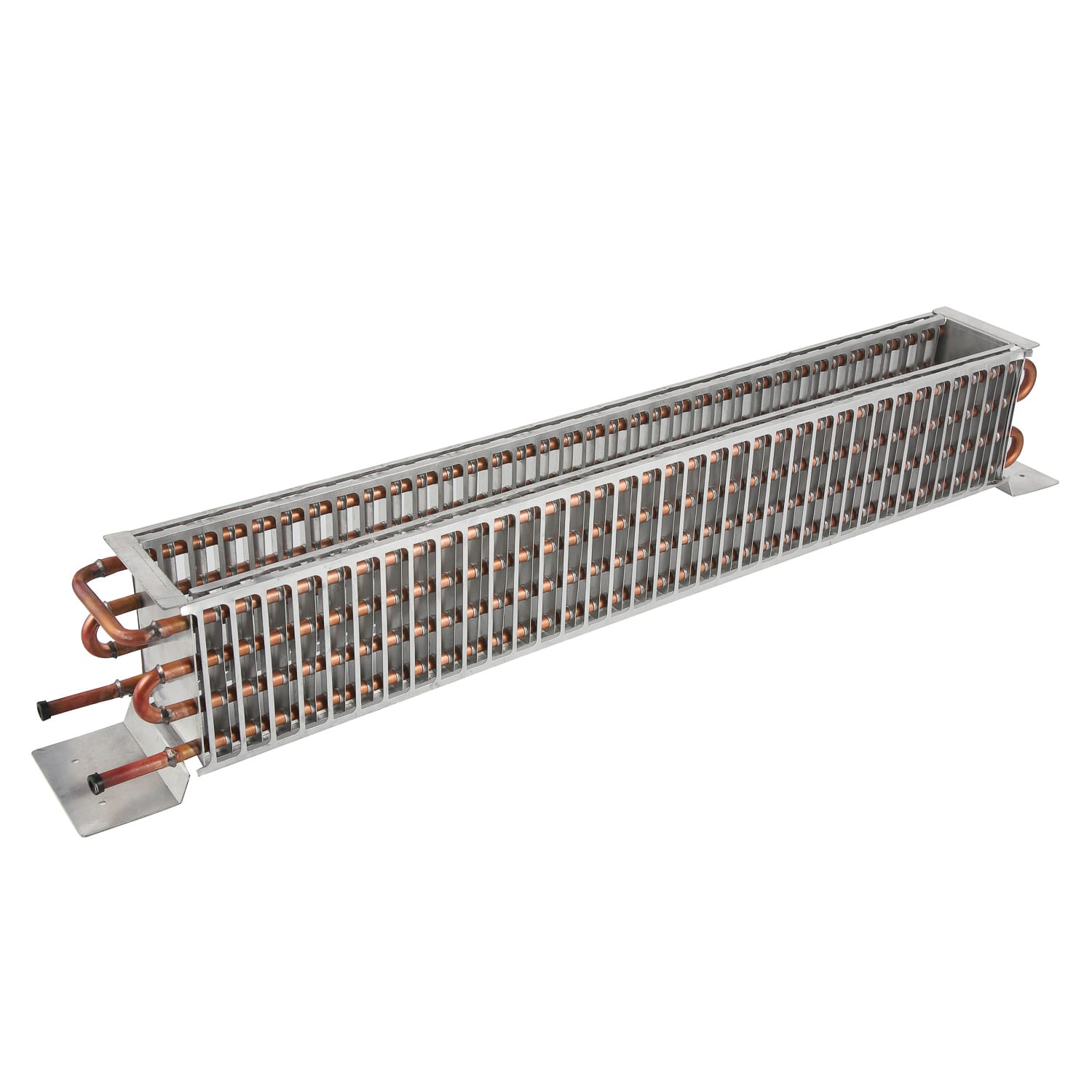
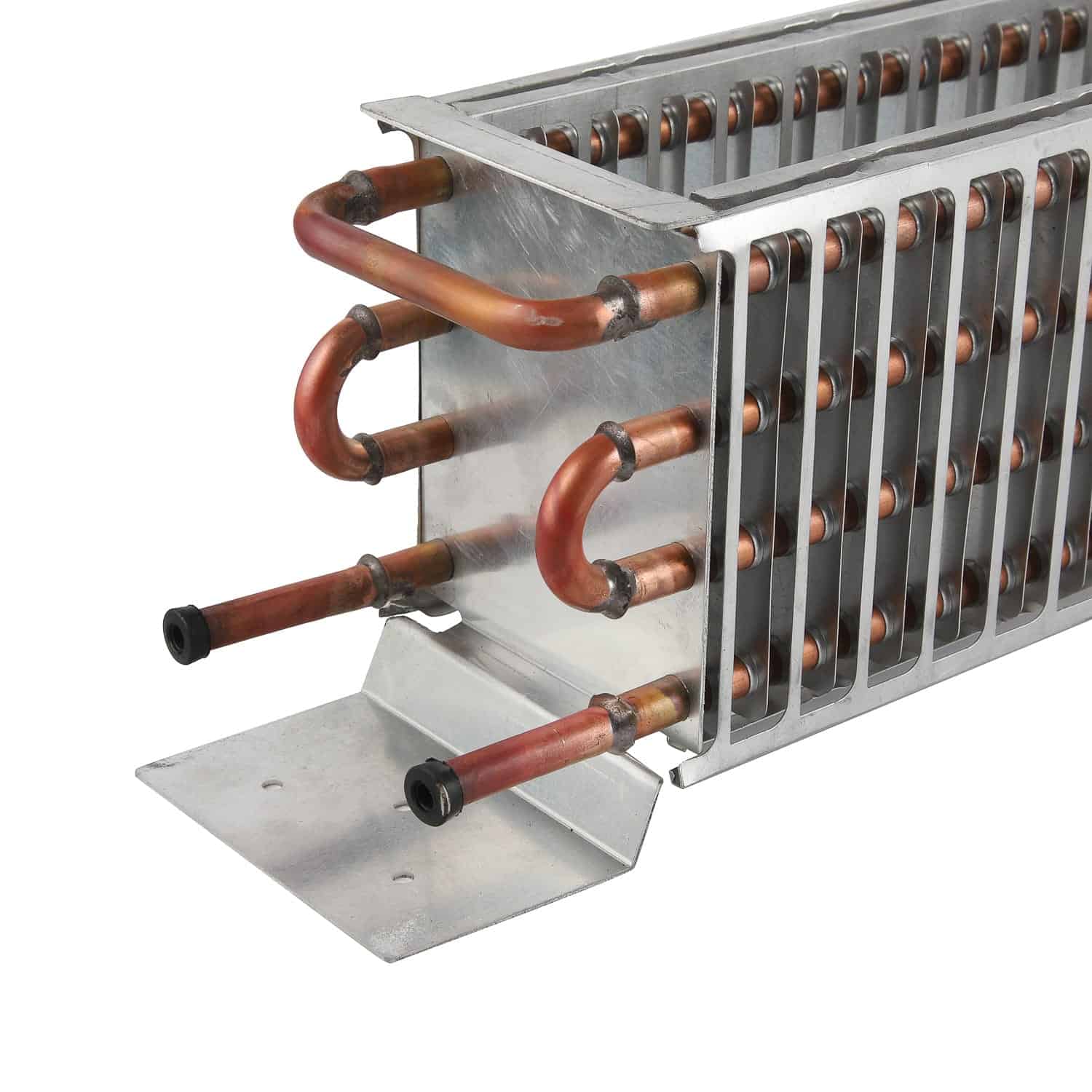
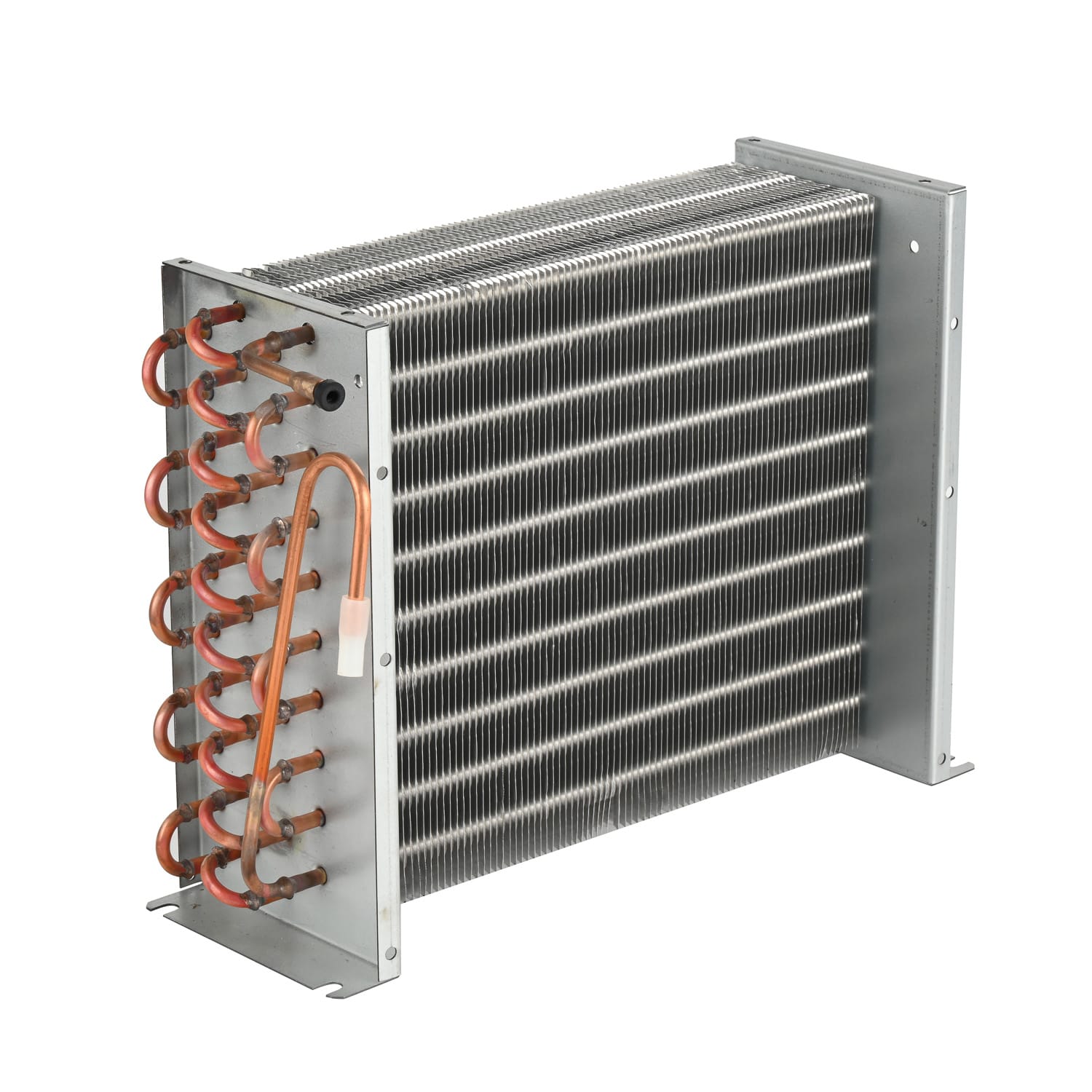
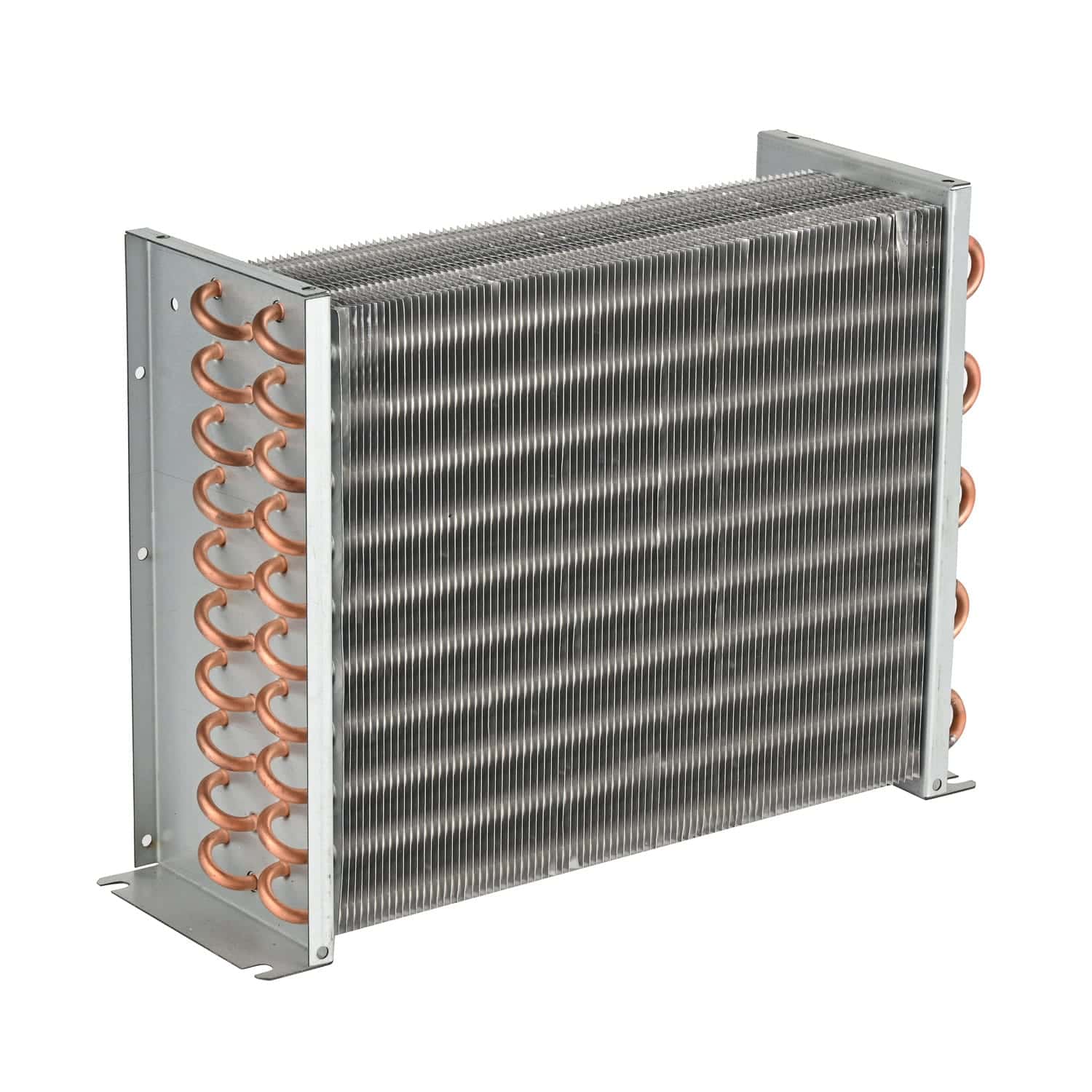
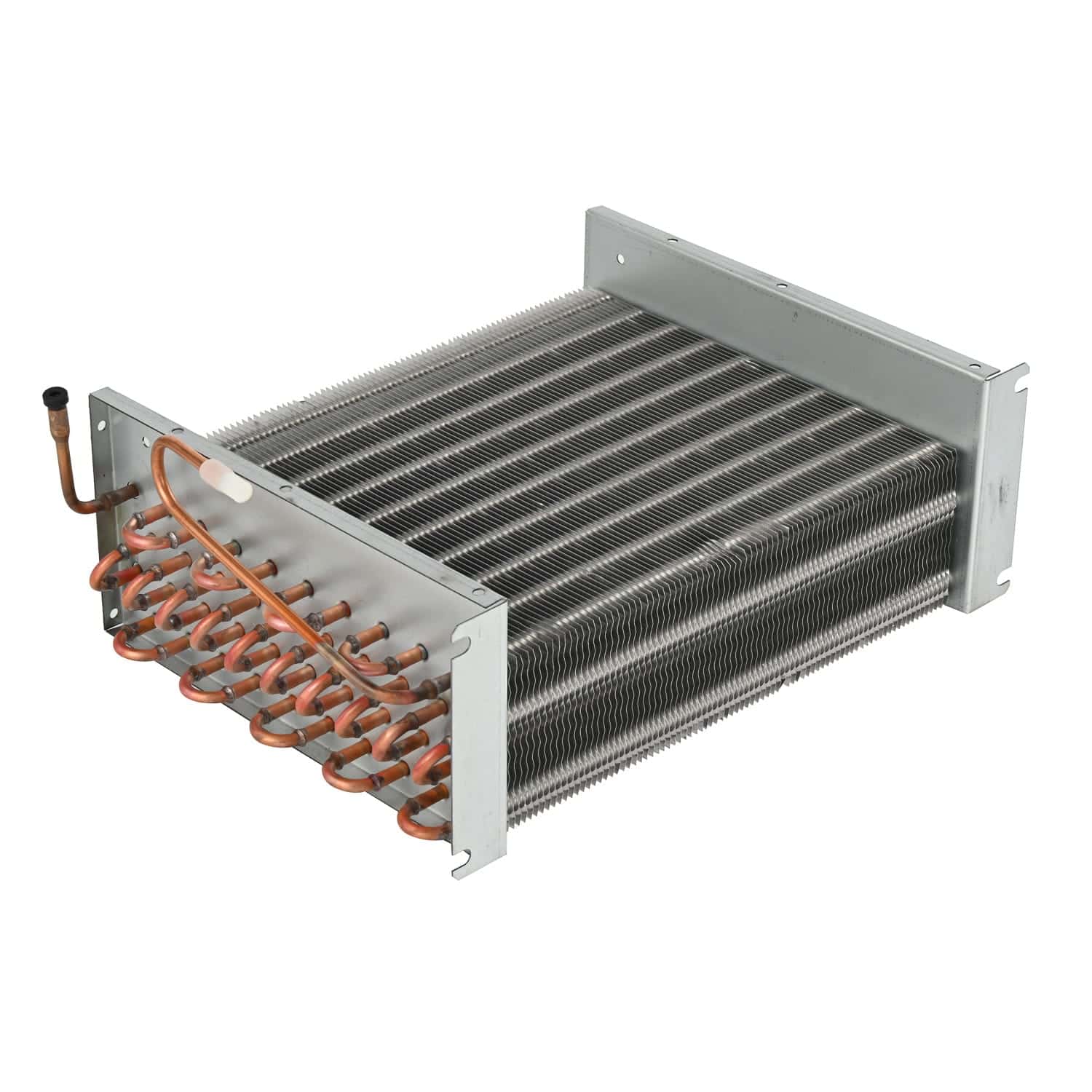
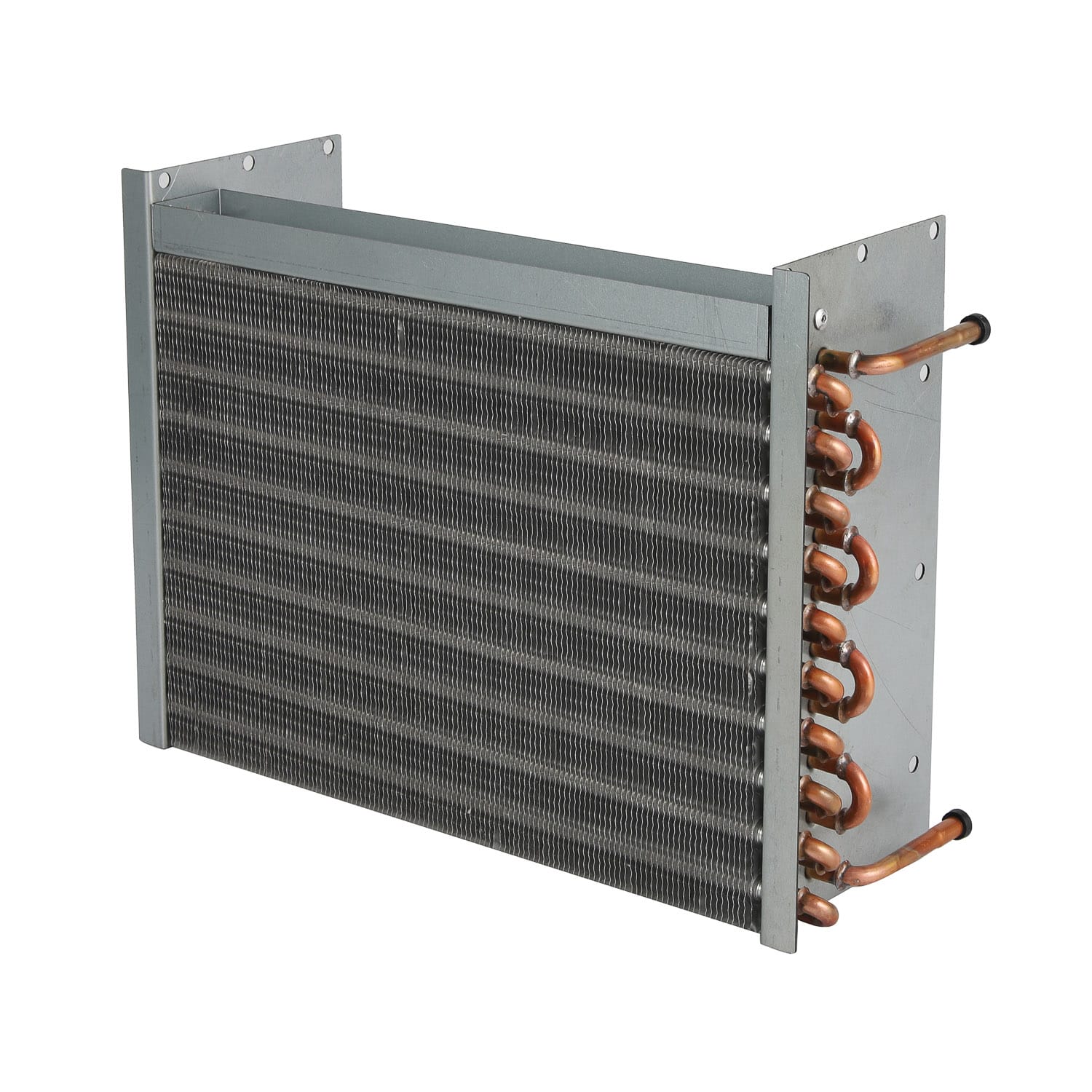
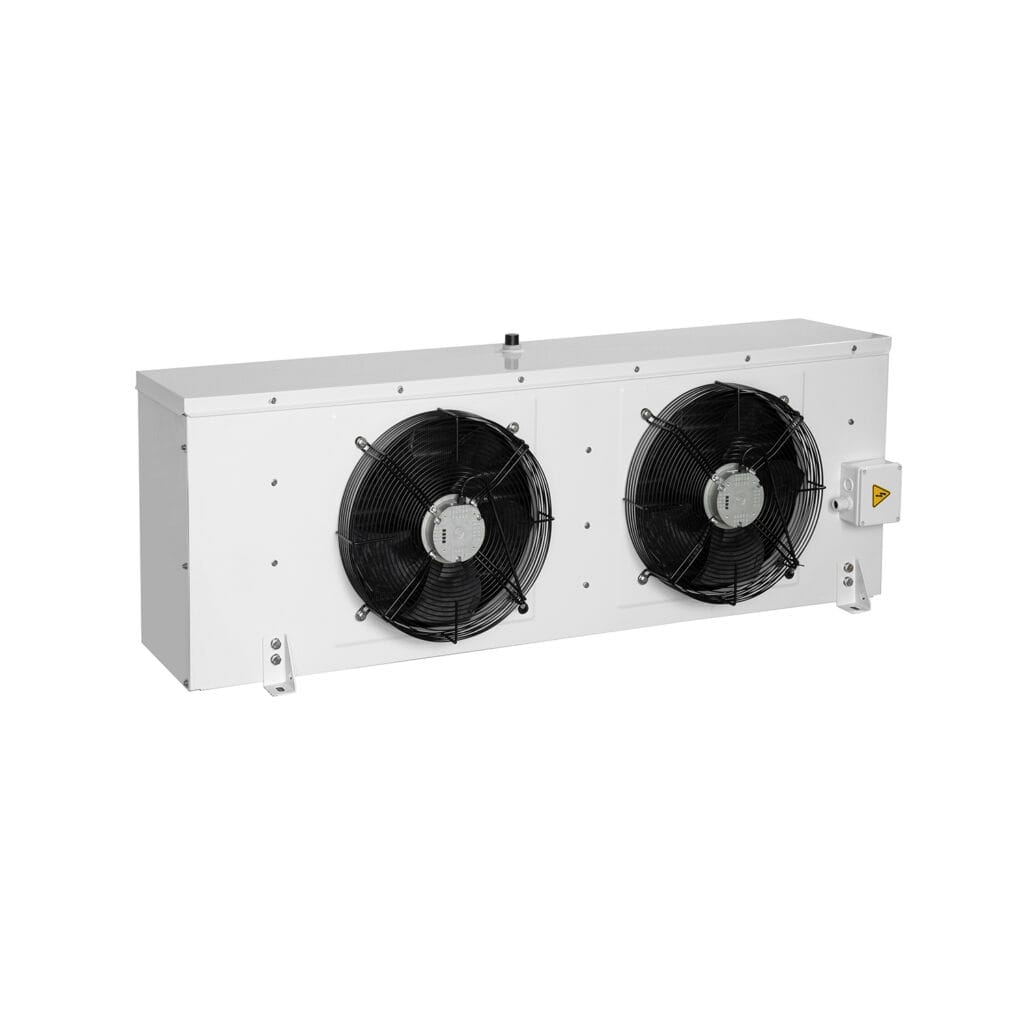
Copper tube aluminum fin condenser evaporator for OEM coil programs. Confirm the circuit role, material, capacity, dimensions, refrigerant, pressure, testing, MOQ and lead time from the approved drawing or sample.
Product Details
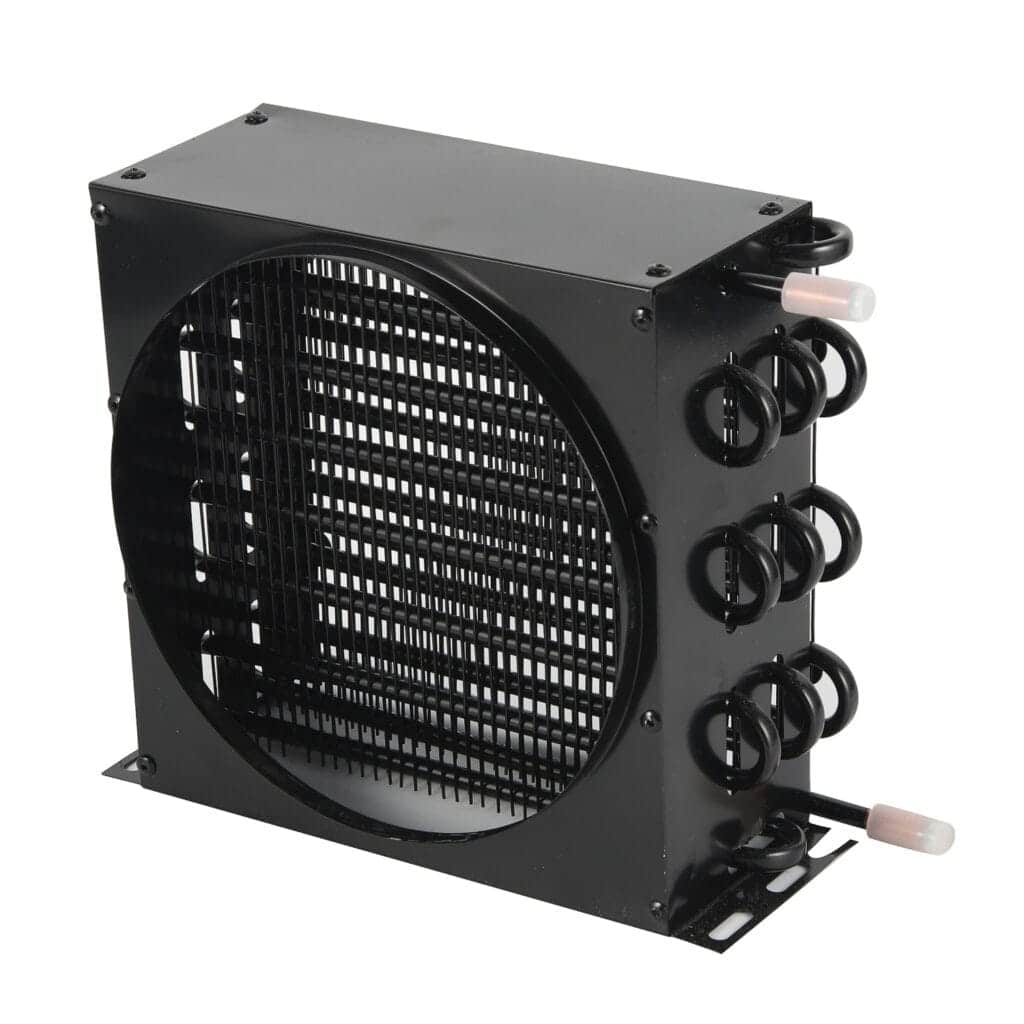
Domi Refrigeration lists this copper tube aluminum fin condenser evaporator for OEM buyers who need a fin-and-tube heat-exchanger component matched to a drawing, sample, or defined system duty. The product title combines the terms condenser and evaporator; the purchasing specification must identify the actual circuit role, refrigerant side, air side, operating conditions, and installation envelope.
This is a component listing, not a complete air conditioner, refrigerator, freezer, or condensing unit. Before quotation, send the existing coil, cabinet drawing, nameplate, connection photograph, or dimensioned layout. That lets the technical review confirm the model, materials, circuiting, connections, fan arrangement, pressure basis, and required documents.
Material record to confirm: the legacy Domi excerpt states 99.9% TP2 copper tube, while the linked first-party AC condenser reference lists aluminum tube, bare aluminum fin, and aluminum side plate. These records are not treated as interchangeable. Confirm the approved model drawing and material list before releasing a purchase order.
What this condenser evaporator listing means
A condenser rejects heat from a refrigerant circuit to air or another heat-rejection medium. An evaporator absorbs heat on the other side of a refrigeration cycle. A product title may group related coil formats, but a coil should not be selected as both a condenser and an evaporator without checking the refrigerant circuit, temperatures, pressure, material compatibility, airflow, and test requirements.
Component supply versus complete equipment
This page describes a coil or condenser-side heat-exchanger component. It does not confirm a compressor, fan motor, controls, expansion device, refrigerant charge, water loop, enclosure, electrical package, or complete system performance. If the inquiry is for a complete unit, state the required equipment scope separately. If it is for a replacement coil, provide the original part number and connection details.
Listed application and project fit
The linked first-party reference lists refrigerator and freezer equipment. The URL and existing page language also use AC condenser terminology, so the actual application must be confirmed rather than inferred from the product name. Potential project contexts include refrigerator and freezer OEM programs, compact air-side cooling equipment, replacement condenser assemblies, and other fin-and-tube coil projects where the approved design supports the selected materials and duty.
- State whether the coil operates as a condenser or an evaporator.
- Provide the equipment type, refrigerant or heat-transfer medium, design ambient, and operating temperature range.
- Confirm whether the requirement is a coil only, a coil with frame and supports, or a complete condenser assembly.
- Use the approved drawing and test plan as the controlling specification when the page title, source table, and legacy excerpt differ.
Materials and construction details
A fin-and-tube heat exchanger normally combines tubes, air-side fins, side plates or supports, connections, and a joining process. The current target page carries a copper-tube/aluminum-fin product name, but its linked AC condenser reference lists aluminum tube, bare aluminum fin, and aluminum side plate. The exact material combination is therefore a buyer-confirmation field, not a universal claim for every model.
Tube-side information to specify
Confirm the tube material and alloy, outside diameter, wall thickness, tolerance, bend radius, circuiting, headers, inlet and outlet position, connection type, joining method, operating pressure, test pressure, and cleanliness requirement. For a replacement, include photographs of both connection ends, the nameplate, the mounting points, and any tube or model marking.
Fin and support information to specify
Confirm the fin material, fin thickness, pitch, pattern, louver or plain-fin geometry, face area, row count, coil depth, side plates, brackets, drain or service details, coating, and corrosion environment. Outdoor exposure, coastal air, humidity, wash-down, dust, and restricted service clearance can change the required construction and documentation.
Joining and handling
The linked reference lists tube bending, fin punching, tube expanding, degreasing, welding and assembly, leakage testing, drying, inspection, and packing. Ask which steps apply to the selected material combination, how joints are made, which dimensions are controlled, and what release records accompany the shipment.
Published information versus project confirmation
The table below separates information visible in the current listing from items that must be confirmed for a quotation. This prevents a catalog reference from being treated as a universal performance certificate.
| Item | Published or listed information | Buyer confirmation |
|---|---|---|
| Product identity | Copper Tube Aluminium Fin Condenser Evaporator. | Confirm whether the order is for a condenser coil, evaporator coil, condenser assembly, or another heat-exchanger format. |
| Tube and fin materials | Legacy excerpt states TP2 copper tube; linked AC condenser reference lists aluminum tube, bare aluminum fin, and aluminum side plate. | Approve the model drawing, alloy, wall thickness, fin specification, side plate, joining method, and any coating. |
| Application | Linked reference lists refrigerator and freezer equipment; the page also uses AC condenser language. | State the equipment, condenser or evaporator role, refrigerant or medium, design ambient, operating temperature, and airflow. |
| Reference model range | Current page shows CD-2 through CD-180 rows with capacity, area, fan, connection, overall, and installation fields. | Confirm model revision, units, test conditions, fan selection, tolerances, connection orientation, and installation clearance. |
| Capacity | Capacity values are shown in the reference model table in kW. | Confirm the capacity test point, refrigerant, condensing or evaporating temperature, ambient, airflow, and acceptance method. |
| Refrigerant and pressure | No fixed refrigerant list or universal working-pressure value is published for every model. | Provide refrigerant or medium, oil compatibility, operating pressure, test pressure, hold time, safety requirements, and material compatibility. |
| Testing and cleanliness | The reference lists leakage testing, drying, inspection, packing, and tube cleanliness wording. | Confirm test method, pressure, hold time, leak limit, cleanliness method, dimensional checkpoints, and report format. |
| MOQ and lead time | No fixed commercial value is published on this page. | Confirm quantity, drawing status, tooling, material availability, packaging, destination, certification needs, and requested delivery date. |
CD model reference table
The following values are transcribed and cleaned from the current Domi product listing. They are useful for initial model comparison, but the listing does not state a complete set of rating conditions, model revision, tolerances, or acceptance test details. Use the approved drawing and quotation for final selection.
| Model | Capacity (kW) | Area (m²) | Fan input (W) | Fan diameter (mm) | Voltage (V) | Air (m³/h) | Inlet (mm) | Outlet (mm) | Overall A×B×C (mm) | Install D (mm) | Install E (mm) |
|---|---|---|---|---|---|---|---|---|---|---|---|
| CD-2 | 0.6 | 2 | 1×35 | 200 | 410 | 220 | Ø10 | Ø10 | 320×100×230 | 270 | 65 |
| CD-3.4 | 1 | 3.4 | 1×35 | 200 | 410 | 220 | Ø12 | Ø12 | 320×100×230 | 270 | 65 |
| CD-4.4 | 1.3 | 4.4 | 1×60 | 250 | 750 | 220 | Ø12 | Ø12 | 370×100×280 | 325 | 65 |
| CD-5.4 | 1.6 | 5.4 | 1×75 | 300 | 1350 | 220 | Ø12 | Ø12 | 440×100×330 | 392 | 65 |
| CD-7 | 2 | 7 | 1×90 | 300 | 1350 | 220 | Ø12 | Ø12 | 440×135×330 | 390 | 90 |
| CD-8.4 | 2.3 | 8.4 | 1×150 | 350 | 3100 | 380 | Ø16 | Ø12 | 500×130×430 | 455 | 95 |
| CD-11.5 | 3.5 | 11.5 | 1×150 | 350 | 3100 | 380 | Ø16 | Ø12 | 480×180×430 | 430 | 145 |
| CD-15 | 4.4 | 15 | 1×150 | 350 | 3100 | 380 | Ø16 | Ø12 | 550×180×480 | 490 | 145 |
| CD-18 | 5.2 | 18 | 1×180 | 400 | 4500 | 380 | Ø19 | Ø12 | 590×180×530 | 530 | 140 |
| CD-22 | 6.4 | 22 | 1×180 | 400 | 4500 | 380 | Ø19 | Ø12 | 590×180×530 | 530 | 140 |
| CD-25 | 8.1 | 25 | 1×180 | 400 | 4500 | 380 | Ø19 | Ø16 | 750×180×680 | 660 | 150 |
| CD-21 | 6.1 | 21 | 2×90 | 300 | 2700 | 220 | Ø16 | Ø12 | 840×180×430 | 790 | 140 |
| CD-28 | 8.2 | 28 | 2×150 | 350 | 6200 | 380 | Ø19 | Ø16 | 900×180×430 | 840 | 145 |
| CD-33 | 11.2 | 33 | 2×150 | 350 | 6200 | 380 | Ø19 | Ø16 | 900×200×480 | 840 | 130 |
| CD-36 | 12.6 | 36 | 2×180 | 400 | 9000 | 380 | Ø16 | Ø12 | 1015×180×580 | 950 | 150 |
| CD-43 | 14.8 | 43 | 2×180 | 400 | 9000 | 380 | Ø16 | Ø12 | 1015×180×680 | 950 | 150 |
| CD-48 | 17.5 | 48 | 2×180 | 400 | 9000 | 380 | Ø16 | Ø12 | 1250×200×630 | 1172 | 120 |
| CD-55 | 19.2 | 55 | 2×180 | 400 | 9000 | 380 | Ø22 | Ø12 | 1250×200×730 | 1172 | 140 |
| CD-70 | 20.5 | 70 | 4×150 | 350 | 12400 | 380 | Ø22 | Ø16 | 1250×200×830 | 1172 | 120 |
| CD-80 | 24.4 | 80 | 4×150 | 350 | 12400 | 380 | Ø28 | Ø16 | 1250×200×930 | 1172 | 120 |
| CD-100 | 29.6 | 100 | 4×180 | 400 | 18000 | 380 | Ø28 | Ø16 | 1250×200×1130 | 1172 | 120 |
| CD-130 | 38.2 | 130 | 4×180 | 400 | 18000 | 380 | Ø28 | Ø22 | 1250×200×1330 | 1172 | 120 |
| CD-150 | 47.2 | 150 | 4×180 | 400 | 18000 | 380 | Ø28 | Ø22 | 1250×200×1330 | 1240 | 200 |
| CD-180 | 54 | 180 | 4×180 | 400 | 18000 | 380 | Ø28 | Ø22 | 1250×270×1330 | 1240 | 200 |
How to select the right AC condenser coil
Search terms such as AC condenser, air conditioning condenser, and air cooled condenser can describe automotive parts, residential outdoor units, commercial equipment, or an OEM coil. Confirming the system boundary early prevents a catalog match from being used in the wrong application.
Refrigerant-side inputs
- Refrigerant or heat-transfer medium and oil compatibility.
- Inlet and outlet states, mass flow if available, condensing or evaporating temperature, and superheat or subcooling basis.
- Working pressure, test pressure, hold time, leak limit, and applicable safety requirements.
- Tube material, wall thickness, circuiting, headers, connection size, and joining method.
Air-side and installation inputs
- Design ambient, airflow, fan quantity, fan position, voltage, sound limit, and allowable pressure drop.
- Face width, height, depth, row count, fin pitch, airflow direction, service clearance, and mounting points.
- Outdoor exposure, coastal or corrosive atmosphere, dust loading, wash-down conditions, and requested surface treatment.
- Packaging orientation and protection required for fins, connections, headers, brackets, and lifting points.
Drawing and sample-based customization
The linked first-party reference states that the product can be designed and produced according to drawings, samples, and client requirements. A revision-controlled drawing is the preferred starting point because it fixes the coil envelope, materials, circuiting, connections, supports, tolerances, and inspection notes in one document.
For replacement coil inquiries
- Send the original model, nameplate, compressor or unit information, and a clear photo of the full coil.
- Measure face width, height, depth, connection outside diameters, center distances, and mounting-hole locations.
- Record the refrigerant, operating conditions, fan data, airflow direction, and the reason for replacement.
- Identify any corrosion, fin damage, leakage, fouling, or clearance issue that the revised coil must address.
For new OEM projects
- Provide the approved duty point, design ambient, refrigerant, pressure class, airflow, and acceptance test.
- Define the material combination, fin pitch, row count, circuiting, connections, brackets, coating, and documentation.
- State sample quantity, annual volume, target delivery date, packing method, and destination market.
- Confirm whether the coil is a condenser, evaporator, or a family of variants that needs separate model drawings.
Manufacturing, inspection, and release
The reference process includes tube bending, fin punching, tube expanding, degreasing, welding and assembly, leakage testing, drying, inspection, and packing. For a project order, ask the supplier to map each operation to the approved material combination and drawing revision.
Useful release records
- Incoming material and alloy records, where required by the project.
- Dimensional inspection for face size, tube pattern, connections, mounting points, and installation envelope.
- Visual joint inspection and leak-test results with pressure, hold time, and acceptance limit.
- Drying, cleanliness, packing, and identification records for repeat-order traceability.
The linked reference shows residual-moisture limits by internal-volume band, residual impurity of ≤100 mg/100 cm³, and biggest single impurity of ≤2 mg. The displayed volume bands include both 101–200 cm³ and 101–400 cm³. Confirm the intended banding, test method, units, and acceptance basis before using this information in a purchase specification.
Related Domi condenser and evaporator resources
Use the product role and material requirement to choose the closest comparison page. Domi’s Air Conditioning Condenser cURL Too many subrequests by single Worker invocation. To configure this limit, refer to https://developers.cloudflare.com/workers/wrangler/configuration/#limits Air Cooled Chiller Condenser are separate listings. For refrigeration applications, compare the Industrial Refrigeration Condenser, cURL Too many subrequests by single Worker invocation. To configure this limit, refer to https://developers.cloudflare.com/workers/wrangler/configuration/#limits, and cURL Too many subrequests by single Worker invocation. To configure this limit, refer to https://developers.cloudflare.com/workers/wrangler/configuration/#limits.
For project preparation, review Condenser vs Evaporator Coil, the OEM Condenser Coil Specification Checklist, Commercial Cooling Coils, cURL Too many subrequests by single Worker invocation. To configure this limit, refer to https://developers.cloudflare.com/workers/wrangler/configuration/#limits, cURL Too many subrequests by single Worker invocation. To configure this limit, refer to https://developers.cloudflare.com/workers/wrangler/configuration/#limits, cURL Too many subrequests by single Worker invocation. To configure this limit, refer to https://developers.cloudflare.com/workers/wrangler/configuration/#limits, cURL Too many subrequests by single Worker invocation. To configure this limit, refer to https://developers.cloudflare.com/workers/wrangler/configuration/#limits, and cURL Too many subrequests by single Worker invocation. To configure this limit, refer to https://developers.cloudflare.com/workers/wrangler/configuration/#limits.
FAQ about the copper tube aluminum fin condenser evaporator
What is a copper tube aluminum fin condenser evaporator?
It is the product name used for a fin-and-tube heat-exchanger listing. The project must still identify whether the component operates as a condenser or an evaporator and must confirm the material, duty, pressure, connections, and installation requirements.
Is the tube copper or aluminum?
The target page’s legacy excerpt states TP2 copper tube, while the linked first-party AC condenser reference lists aluminum tube, bare aluminum fin, and aluminum side plate. Treat this as an unresolved material conflict. The approved drawing, material list, and quotation must control the order.
Is this a complete AC condenser unit?
No. This page describes a coil or heat-exchanger component. Confirm separately whether the inquiry needs a coil, a framed condenser assembly, a fan package, or a complete condensing system.
What models are listed?
The current reference table shows CD-2 through CD-180 rows. The table includes capacity, area, fan fields, connections, overall dimensions, and installation dimensions. Confirm model revision, units, rating conditions, and drawing details before selecting a row for production.
Can the published capacity be used as a guaranteed rating?
No. The capacity column is a product-listing reference. A valid comparison requires refrigerant, condensing or evaporating temperature, design ambient, airflow, fan selection, fouling assumption, and the agreed test point.
Which refrigerants are supported?
No universal refrigerant list is published for every model on this page. Provide the refrigerant or medium, oil, operating temperatures, working pressure, test pressure, and material-compatibility requirements for engineering confirmation.
Can Domi build a custom size?
The linked reference states that production can be based on drawings, samples, and client requirements. Send the drawing or sample information so the coil envelope, materials, circuiting, connections, supports, and inspection plan can be reviewed together.
How are testing and cleanliness confirmed?
The reference lists leakage testing, drying, inspection, and packing, together with tube cleanliness wording. Confirm the actual test pressure, hold time, leak limit, cleanliness method, acceptance criteria, and report format for the selected model.
How are MOQ and lead time confirmed?
MOQ and lead time depend on model, material, geometry, drawing approval, quantity, tooling, packaging, destination, and documentation. Request current terms with the drawing, sample, quantity, and requested delivery window.
Request a copper tube aluminum fin condenser quotation
Send the approved drawing, old coil, sample photographs, or cabinet layout together with the application role, refrigerant, design ambient, airflow, pressure class, material requirement, connections, quantity, inspection records, cleanliness basis, and packing instructions.
Request a custom quote or send your condenser or evaporator drawing for review. Domi can then confirm the suitable model, material record, geometry, test scope, MOQ, lead time, and commercial terms.
Reference note: the product title, CD model table, process wording, refrigerator/freezer application, and cleanliness wording are based on the current Domi listing and its linked first-party reference. The legacy excerpt and source material table conflict on tube material. Capacity conditions, refrigerant, pressure, fan performance, noise, coating, certification, MOQ, lead time, and final test conditions require project or business confirmation.
Related Products
Get Product Information for Your Project
Send the product model, drawings, sample photos, quantity, or application requirements. Our team will review the information and help confirm suitable options, technical data, and quotation details.