

Industrial Refrigeration Condenser
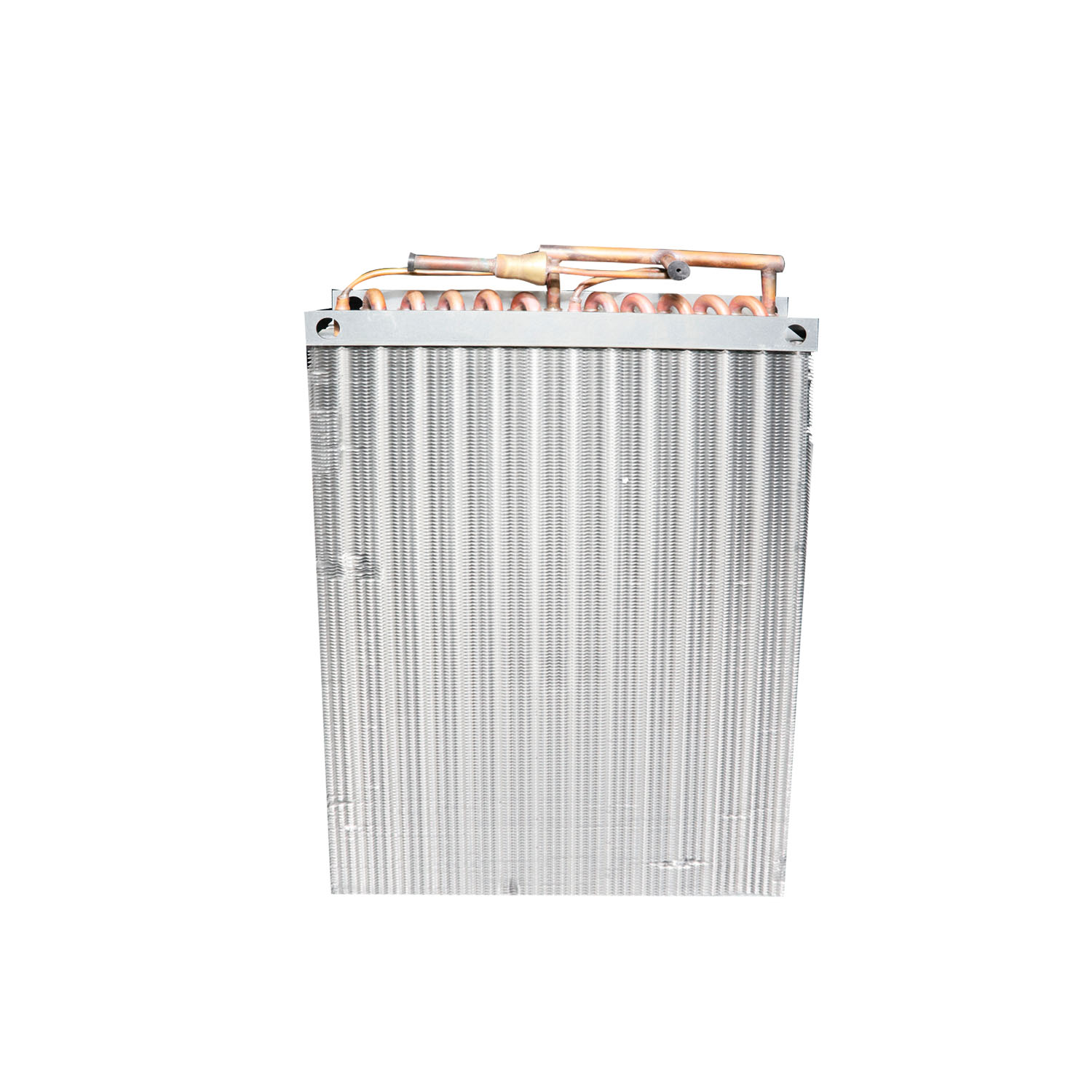
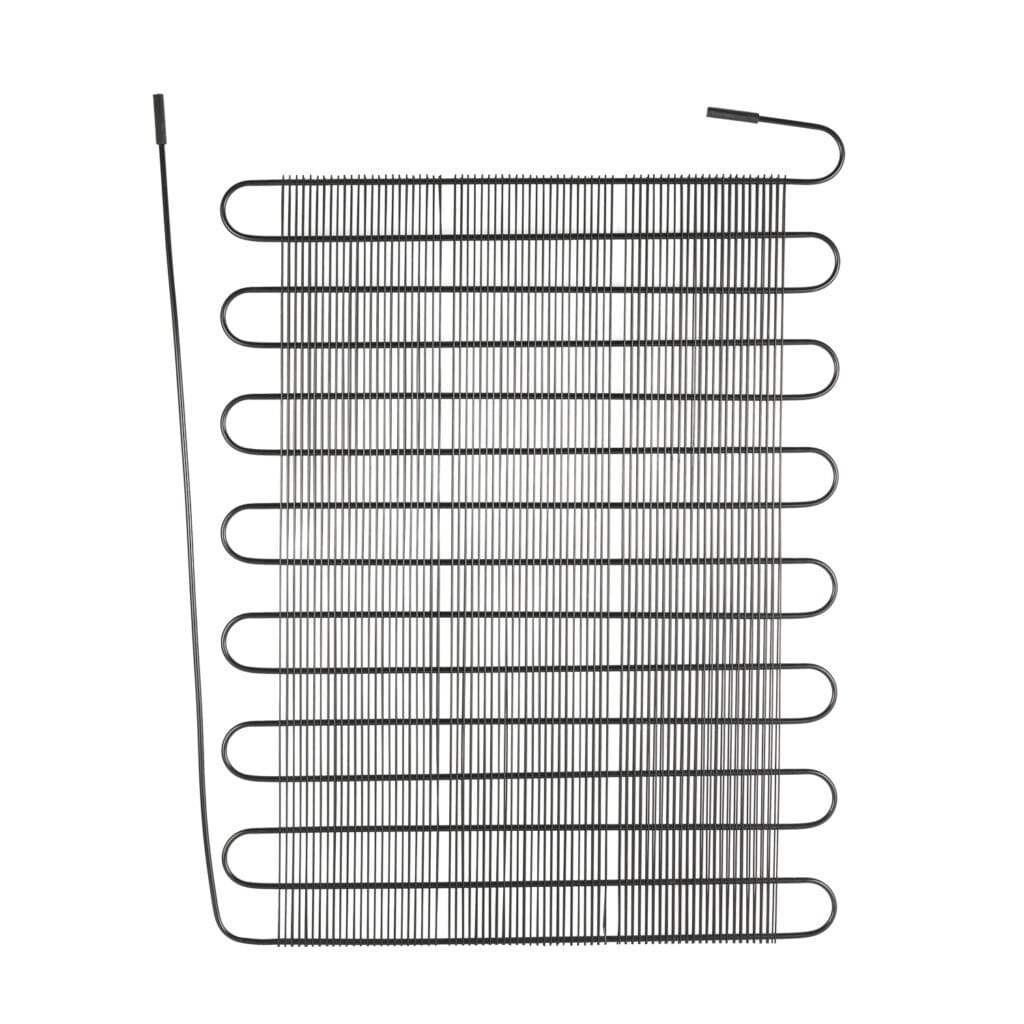
Industrial refrigeration condenser for refrigerator and freezer cooling systems. Aluminum tube, bare aluminum fin, layout options, testing and drawing-based customization.
Product Details
Domi Refrigeration lists this industrial refrigeration condenser as a fin-type heat-exchange component for refrigerator and freezer cooling systems. It is intended for buyers who need a defined tube, fin, side-plate, layout, and connection package rather than an off-the-shelf part selected from a title alone.
For a new build, replacement, or repeat order, send the approved drawing, an old sample, or a clear cabinet sketch. Domi can review the required face size, tube arrangement, expansion style, connection position, mounting dimensions, quantity, and packing requirements before quotation.
Important specification check: the linked first-party reference page uses the wording “Fin Type Evaporator (Aluminum Tube)” and places the item under Evaporator, while this Domi catalog page is titled Industrial Refrigeration Condenser. Confirm the required condenser or evaporator duty, refrigerant side, and final drawing revision with the engineering team before releasing a purchase order.
Industrial refrigeration condenser at a glance
- Catalog listing: Industrial Refrigeration Condenser.
- Reference application: refrigerator and freezer cooling systems.
- Tube: aluminum tube, Ø8.0 × 0.7–1.0 mm.
- Fin: bare aluminum fin, nominal thickness T=0.15–0.25 mm.
- Side plate: aluminum plate, T=0.8–1.5 mm.
- Layout options in the supplier reference: diagonal-inserting, pull-expanding, and press-expanding styles.
- Process reference: tube bending, fin punching, tube expanding, degreasing, welding and assembly, leakage testing, drying, inspection, and packing.
- Engineering basis: drawing, sample, and buyer requirements determine the final configuration.
Where this condenser fits in a refrigeration project
The Domi page is categorized under industrial refrigeration, while the associated product reference identifies refrigerator and freezer cooling systems as the application. This makes the page relevant to equipment builders, refrigeration replacement buyers, and procurement teams comparing a fin-type coil against other condenser constructions.
The component should be selected as part of the complete refrigeration design. Cooling duty, refrigerant or secondary medium, operating temperatures, ambient conditions, airflow, fan selection, connections, installation clearance, and service access all affect the final heat-exchanger package. None of these values should be inferred from the product name alone.
Typical buyer use cases
- Replacing a damaged or corroded fin-type coil when the original sample is available.
- Developing a refrigerator or freezer platform around a defined cabinet footprint.
- Reviewing an industrial refrigeration condenser supplier for drawing-based production.
- Reordering a proven configuration with the same tube, fin, connection, and packing requirements.
- Comparing the industrial refrigeration condenser with single-layer wire tube condensers, multilayer wire tube condensers, or a tube-on-plate condenser.
Materials and construction
The product reference identifies aluminum for the tube, fin, and side plate. The tube is listed as Ø8.0 × 0.7–1.0 mm; the bare aluminum fin is listed at T=0.15–0.25 mm; and the aluminum side plate is listed at T=0.8–1.5 mm. These are reference ranges, not a substitute for the approved drawing or a project-specific material confirmation.
Aluminum tube
The aluminum tube forms the internal flow path and is processed to match the specified coil layout. Tube diameter, wall thickness, bend geometry, expansion method, connection location, and internal cleanliness should be confirmed together because changing one item can affect assembly and system fit.
Bare aluminum fin and side plate
The bare aluminum fin provides the extended surface used by the coil design, while the side plate supports the assembly and helps define the installation envelope. Fin pitch, fin pattern, plate shape, mounting points, and edge protection should be taken from the drawing or sample. The source does not publish a universal coating, corrosion class, or outdoor exposure rating, so those requirements must be added to the quotation request if needed.
Technical layout and expansion styles
The first-party reference lists three technical standards or layout families:
| Layout or process style | Reference notation | Buyer confirmation |
|---|---|---|
| Diagonal-inserting style | 50 × 19.05 × N; 60 × 19.05 × N, N≥4 | Confirm tube arrangement, pitch, row quantity, and the meaning of N on the approved drawing. |
| Pull-expanding style | 60 × 28; 52 × 28 | Confirm the relevant spacing and expansion sequence for the required coil. |
| Press-expanding style | 50.8 × 203.2 | Confirm the complete section dimensions and the connection layout before release. |
The notation is reproduced from the supplier reference. It should be treated as a design starting point, not as a complete dimensional drawing. Domi should confirm the final tube pitch, fin pitch, row count, bend radius, header or connection arrangement, and mounting details against the buyer’s document.
Reference model range shown on the Domi page
The current Domi product page shows the following model data for preliminary comparison. The listed capacity and area values are reference values only; the page does not state the refrigerant, rating temperatures, ambient condition, pressure class, test method, or fan operating point behind the table. Use the table to identify a starting model, then request a project-specific confirmation.
| Model | Capacity (kW) | Area (m²) | Fan configuration | Airflow (m³/h) | Overall size (A×B×C, mm) |
|---|---|---|---|---|---|
| CD-2 | 0.6 | 2 | 1×35 | 220 | 320×100×230 |
| CD-3.4 | 1 | 3.4 | 1×35 | 220 | 320×100×230 |
| CD-4.4 | 1.3 | 4.4 | 1×60 | 220 | 370×100×280 |
| CD-5.4 | 1.6 | 5.4 | 1×75 | 220 | 440×100×330 |
| CD-7 | 2 | 7 | 1×90 | 220 | 440×135×330 |
| CD-8.4 | 2.3 | 8.4 | 1×150 | 380 | 500×130×430 |
| CD-11.5 | 3.5 | 11.5 | 1×150 | 380 | 480×180×430 |
| CD-15 | 4.4 | 15 | 1×150 | 380 | 550×180×480 |
| CD-18 | 5.2 | 18 | 1×180 | 380 | 590×180×530 |
| CD-22 | 6.4 | 22 | 1×180 | 380 | 590×180×530 |
| CD-25 | 8.1 | 25 | 1×180 | 380 | 750×180×680 |
| CD-21 | 6.1 | 21 | 2×90 | 220 | 840×180×430 |
| CD-28 | 8.2 | 28 | 2×150 | 380 | 900×180×430 |
| CD-33 | 11.2 | 33 | 2×150 | 380 | 900×200×480 |
| CD-36 | 12.6 | 36 | 2×180 | 380 | 1015×180×580 |
| CD-43 | 14.8 | 43 | 2×180 | 380 | 1015×180×680 |
| CD-48 | 17.5 | 48 | 2×180 | 380 | 1250×200×630 |
| CD-55 | 19.2 | 55 | 2×180 | 380 | 1250×200×730 |
| CD-70 | 20.5 | 70 | 4×150 | 380 | 1250×200×830 |
| CD-80 | 24.4 | 80 | 4×150 | 380 | 1250×200×930 |
| CD-100 | 29.6 | 100 | 4×180 | 380 | 1250×200×1130 |
| CD-130 | 38.2 | 130 | 4×180 | 380 | 1250×200×1330 |
| CD-150 | 47.2 | 150 | 4×180 | 380 | 1250×200×1330 |
| CD-180 | 54 | 180 | 4×180 | 380 | 1250×270×1330 |
Fan, connection, and installation reference
| Model | Fan input (W) | Fan diameter (mm) | Voltage (V) | Inlet | Outlet | D (mm) | E (mm) |
|---|---|---|---|---|---|---|---|
| CD-2 | 1×35 | 200 | 410 | Ø10 | Ø10 | 270 | 65 |
| CD-3.4 | 1×35 | 200 | 410 | Ø12 | Ø12 | 270 | 65 |
| CD-4.4 | 1×60 | 250 | 750 | Ø12 | Ø12 | 325 | 65 |
| CD-5.4 | 1×75 | 300 | 1350 | Ø12 | Ø12 | 392 | 65 |
| CD-7 | 1×90 | 300 | 1350 | Ø12 | Ø12 | 390 | 90 |
| CD-8.4 | 1×150 | 350 | 3100 | Ø16 | Ø12 | 455 | 95 |
| CD-11.5 | 1×150 | 350 | 3100 | Ø16 | Ø12 | 430 | 145 |
| CD-15 | 1×150 | 350 | 3100 | Ø16 | Ø12 | 490 | 145 |
| CD-18 | 1×180 | 400 | 4500 | Ø19 | Ø12 | 530 | 140 |
| CD-22 | 1×180 | 400 | 4500 | Ø19 | Ø12 | 530 | 140 |
| CD-25 | 1×180 | 400 | 4500 | Ø19 | Ø16 | 660 | 150 |
| CD-21 | 2×90 | 300 | 2700 | Ø16 | Ø12 | 790 | 140 |
| CD-28 | 2×150 | 350 | 6200 | Ø19 | Ø16 | 840 | 145 |
| CD-33 | 2×150 | 350 | 6200 | Ø19 | Ø16 | 840 | 130 |
| CD-36 | 2×180 | 400 | 9000 | Ø16 | Ø12 | 950 | 150 |
| CD-43 | 2×180 | 400 | 9000 | Ø16 | Ø12 | 950 | 150 |
| CD-48 | 2×180 | 400 | 9000 | Ø16 | Ø12 | 1172 | 120 |
| CD-55 | 2×180 | 400 | 9000 | Ø22 | Ø12 | 1172 | 140 |
| CD-70 | 4×150 | 350 | 12400 | Ø22 | Ø16 | 1172 | 120 |
| CD-80 | 4×150 | 350 | 12400 | Ø28 | Ø16 | 1172 | 120 |
| CD-100 | 4×180 | 400 | 18000 | Ø28 | Ø16 | 1172 | 120 |
| CD-130 | 4×180 | 400 | 18000 | Ø28 | Ø22 | 1172 | 120 |
| CD-150 | 4×180 | 400 | 18000 | Ø28 | Ø22 | 1240 | 200 |
| CD-180 | 4×180 | 400 | 18000 | Ø28 | Ø22 | 1240 | 200 |
Table limitation: the model tables are retained as the current page’s reference data. Confirm whether the listed capacity, area, fan, voltage, airflow, connection, and installation values apply to the exact refrigerant and test conditions in your project. Domi should issue the final selection against the approved drawing and operating conditions.
Manufacturing and assembly process
The supplier reference lists a production sequence that includes tube bending, fin punching, tube expanding, degreasing, welding and assembling, leakage testing, drying, inspection, and packing. Each step addresses a different buyer concern: geometry, fin formation, tube-to-fin contact, surface cleanliness, joint integrity, internal moisture, release inspection, and transport protection.
Process points to confirm before quotation
- Tube and fin dimensions, pitch, and expansion style.
- Connection diameter, position, and any required header or outlet detail.
- Joint and welding requirements for the intended working medium.
- Leakage-test method, test pressure, acceptance criteria, and record format.
- Drying and internal-cleanliness requirements before the coil is sealed or shipped.
- Protection for fins, side plates, corners, and connections during packing and transit.
Internal cleanliness and release checks
The product reference provides internal-volume categories and cleanliness limits. The values below are reproduced as a procurement reference; the quotation should confirm the measurement method and acceptance record for the final product.
| Internal volume reference | Residual moisture | Residual impurity | Biggest single impurity |
|---|---|---|---|
| ≤100 cm³ | ≤10 mg | ≤100 mg/100 cm³ | ≤2 mg |
| 101–200 cm³ | ≤20 mg | ≤100 mg/100 cm³ | ≤2 mg |
| 101–400 cm³ | ≤25 mg | ≤100 mg/100 cm³ | ≤2 mg |
| 401–800 cm³ | ≤30 mg | ≤100 mg/100 cm³ | ≤2 mg |
The source presents overlapping-looking volume labels, so the buyer should ask Domi to confirm the correct category for the selected coil and correct any typographical ambiguity in the approved specification. This is a documentation check, not an assumption that all volume ranges share the same test configuration.
How to select the right industrial condenser coil
When comparing an industrial refrigeration condenser supplier, provide enough information for the coil to be reviewed as a system component rather than as a generic catalog item.
- Define the duty: state whether the component is required as a condenser, evaporator, or another heat-exchanger position. Resolve the catalog/reference naming difference first.
- Provide operating conditions: include refrigerant or medium, design temperatures, ambient conditions, working pressure, test pressure, and required safety or regulatory conditions.
- Confirm the cabinet envelope: provide overall A×B×C dimensions, D/E installation dimensions, clearance, mounting holes, lifting or service access, and connection orientation.
- Confirm the thermal and airflow target: provide required capacity, fin area basis, fan input, voltage, diameter, airflow, and the test condition used for the rating.
- Confirm materials and finish: identify tube, fin, side plate, corrosion exposure, coating or bare-metal requirement, and any cleaning or packaging constraints.
- Confirm quantity and logistics: provide sample quantity, forecast quantity, packaging format, destination, and whether a test report or inspection record is required.
Drawing, sample, and customization support
The source reference states that the product can be designed and produced according to drawings, samples, and client requirements. A useful inquiry package normally includes the existing part number, a marked-up sample photo, a dimensional drawing, connection details, application, quantity, and the required delivery or packing format.
For a replacement, include photos of the complete assembly and the connection ends. For a new project, include the cabinet interface and the thermal design conditions. Domi can then review whether the listed aluminum tube, fin, side-plate, expansion style, and reference model range are appropriate for the project.
FAQ about the industrial refrigeration condenser
What is this industrial refrigeration condenser used for?
The supplier reference identifies refrigerator and freezer cooling systems as the application. The Domi catalog page places the product in its industrial refrigeration category. The final duty and system position should be confirmed from the buyer’s drawing.
What materials are listed for the product?
The reference lists an aluminum tube at Ø8.0 × 0.7–1.0 mm, a bare aluminum fin at T=0.15–0.25 mm, and an aluminum side plate at T=0.8–1.5 mm. Project-specific changes must be approved in writing.
Can this condenser coil be made from a drawing or sample?
Yes. The supplier reference states that design and production can follow drawings, samples, and customer requirements. Send the document or sample details for an engineering review before quotation.
Which tube layout options are available?
The reference lists diagonal-inserting, pull-expanding, and press-expanding styles. The exact tube pitch, row count, expansion method, and connections must be confirmed against the drawing.
Are the capacity and airflow values guaranteed?
No. The model tables are preliminary reference data on the current Domi page. Rating conditions such as refrigerant, temperatures, ambient, pressure, fan operating point, and test method are not stated in the table and must be confirmed for the quotation.
How is leakage and internal cleanliness checked?
The listed process includes leakage testing, drying, and inspection. The reference also gives residual moisture and impurity limits by internal-volume category. Ask for the applicable method, test point, acceptance criteria, and record format.
Why does one reference call this an evaporator?
The linked first-party reference page uses the wording “Fin Type Evaporator (Aluminum Tube)” and appears under the Evaporator category, while this Domi page is titled Industrial Refrigeration Condenser. Confirm the required heat-exchanger duty and final drawing revision before purchase.
How are MOQ and lead time confirmed?
MOQ and lead time depend on the selected model, material, engineering review, quantity, and packaging requirements. Send the quantity target and project documents to the sales team for a current quotation response.
Related refrigeration components and engineering resources
Compare this page with Domi’s single-layer wire tube condenser, multilayer wire tube condenser, tube-on-plate condenser, and air-conditioning condenser. For project support, review the custom coil fabrication, engineering capabilities, manufacturing process, testing lab, and quality and certification information pages. The industrial refrigeration category provides additional product context.
Request a project-specific quotation
To request an industrial refrigeration condenser review, send the approved drawing or sample information together with the required duty, refrigerant or medium, operating and test pressure, design temperatures, quantity, fan data, connection details, and packing requirements.
Request a custom quote or send your drawing for review. Domi can then confirm the suitable reference model, material range, layout, testing scope, MOQ, lead time, and final commercial terms.
Reference note: product material, process, layout, application, and cleanliness values are based on the first-party Domicool reference linked to this product. Capacity and dimensional model tables are retained from the current Domi product page and require project-condition confirmation.
Get Product Information for Your Project
Send the product model, drawings, sample photos, quantity, or application requirements. Our team will review the information and help confirm suitable options, technical data, and quotation details.