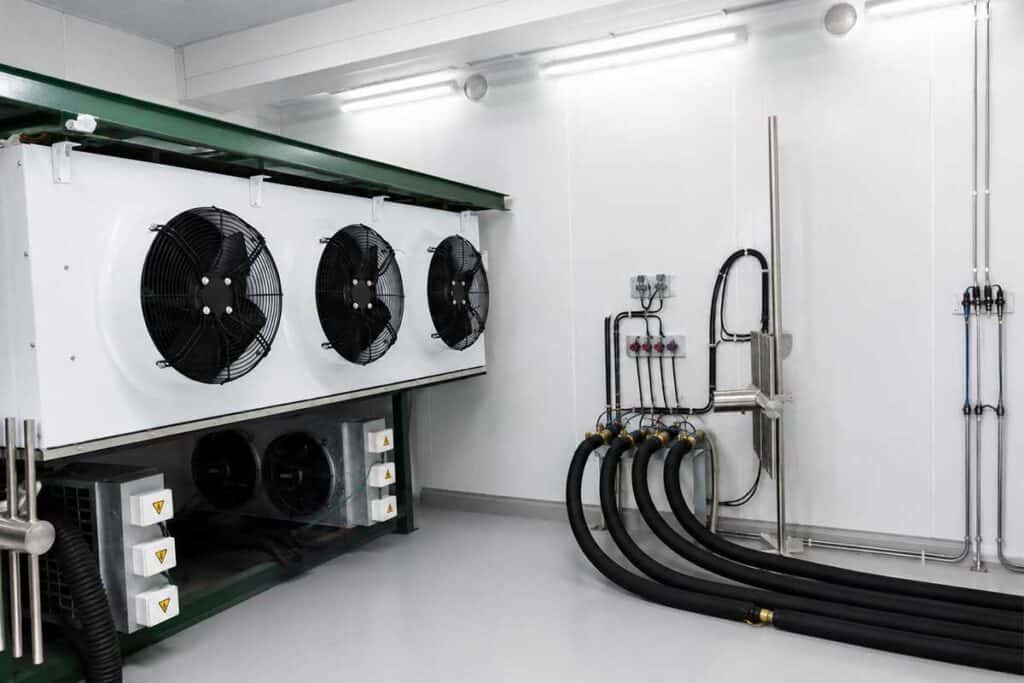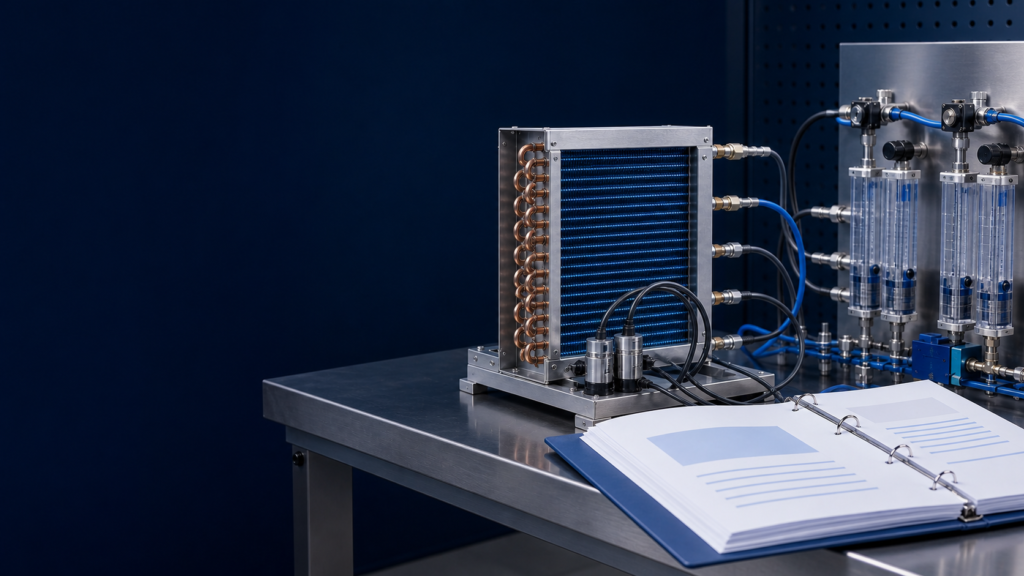

HEAT EXCHANGER TESTING LABORATORY

Testing and Validation Support for Heat Exchangers and Refrigeration Coils

Domi Refrigeration supports heat exchanger, refrigeration coil, HVAC coil and thermal component validation through project-specific testing discussion, airflow review, corrosion resistance evaluation, pressure safety review, leak testing, performance documentation and sample approval support.
In-house validation, wind tunnel, 10,000-hour salt spray, burst test, exact pressure values and certified laboratory claims are [REQUIRES CLIENT VERIFICATION].
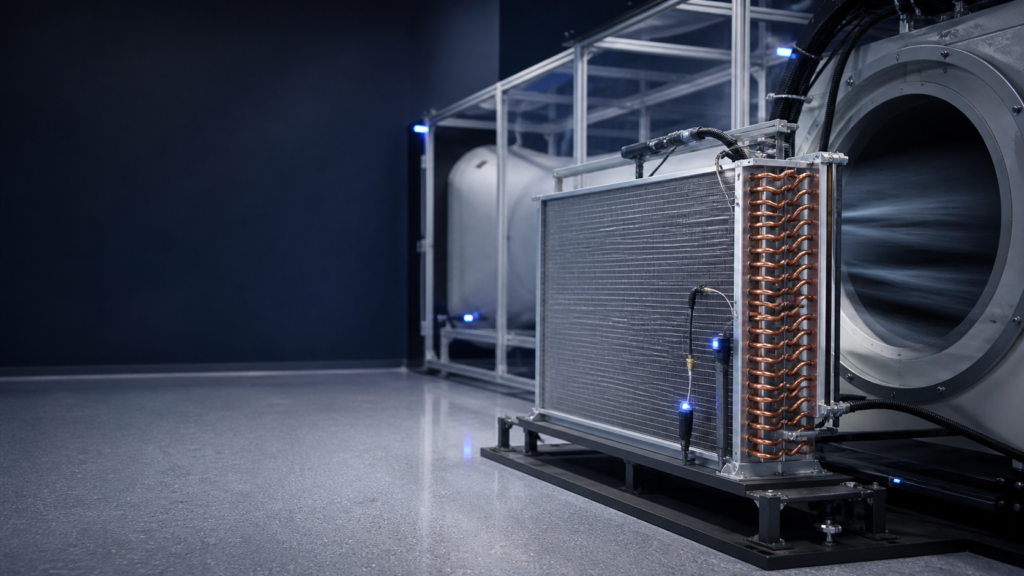
Wind tunnel testing setup for HVAC coil airflow performance
[PLACEHOLDER – REAL TESTING LAB PHOTO OR DATA REQUIRED]

SAMPLE APPROVAL RISK

Testing Data Helps Buyers Approve Samples with Confidence

For custom heat exchangers and refrigeration coils, buyers need more than appearance inspection. They need validation data that supports heat transfer performance, airflow behavior, corrosion resistance, leakage control, pressure safety and long-term application reliability.

Unverified Thermal Performance

Problem: A coil may look correct but still fail to meet cooling or heating capacity targets.
Solution: Thermal performance testing and engineering review can help buyers compare design expectations with measured or project-specific validation data.

Airflow and Pressure Drop Uncertainty

Problem: Uneven airflow or excessive pressure drop can reduce heat exchanger performance in HVAC and refrigeration systems.
Solution: Wind tunnel testing or airflow analysis can help review air-side performance, flow distribution and coil resistance.

Corrosion Risk in Harsh Environments

Problem: Commercial kitchens, coastal areas, industrial environments and humid cold rooms may accelerate corrosion.
Solution: Salt spray testing and material review can support coating or material selection for corrosion-sensitive applications.

Pressure and Safety Concerns

Problem: Heat exchangers used in refrigeration, CO2, industrial cooling or liquid cooling projects may face pressure-related risks.
Solution: Pressure testing, burst testing discussion and project-specific validation help reduce safety and reliability risks.

TESTING CAPABILITY

Validation Support for Performance, Durability and Safety

Thermal Performance Testing

Supports review of heat transfer capacity, temperature change, operating condition and sample approval data.

Buyer value: Helps confirm whether a coil or heat exchanger meets project performance expectations.

Wind Tunnel Testing

Supports airflow, pressure drop and air-side performance review for coils, condensers and evaporators.

Buyer value: Helps optimize HVAC, refrigeration and air-cooled heat exchanger applications.
Status: [REQUIRES CLIENT VERIFICATION]

Salt Spray Testing

Supports corrosion resistance review for coatings, fins, tubes and exposed metal surfaces.

Buyer value: Helps buyers evaluate suitability for humid, coastal or cleaning-intensive environments.
Status: [REQUIRES CLIENT VERIFICATION]

Burst / Pressure Testing

Supports pressure safety review for heat exchanger structures, joints, tubes or pressure-bearing assemblies.
Buyer value: Helps reduce pressure-related product risk before approval.
Status: [REQUIRES CLIENT VERIFICATION]
Wind tunnel testing setup for HVAC coil airflow performance
[PLACEHOLDER – REAL WIND TUNNEL DATA REQUIRED]

AIRFLOW VALIDATION

Wind Tunnel Testing for Airflow and Coil Performance

Wind tunnel testing can help evaluate airflow resistance, air-side heat transfer behavior, pressure drop and performance differences between coil designs. This is especially useful for HVAC coils, evaporator coils, condenser coils, heat pump coils and air-cooled heat exchangers.

Wind Tunnel Data Preview

[PLACEHOLDER – REAL WIND TUNNEL DATA REQUIRED]

Airflow Distribution

Review whether airflow passes evenly through the coil face area and whether structural changes affect air-side performance.

Pressure Drop Review

Measure or evaluate resistance across the coil to support fan selection and system design.

Performance Comparison

Compare different fin spacing, tube layouts, coil sizes or airflow directions before sample approval.

CORROSION REVIEW

Salt Spray Testing for Corrosion Resistance Review
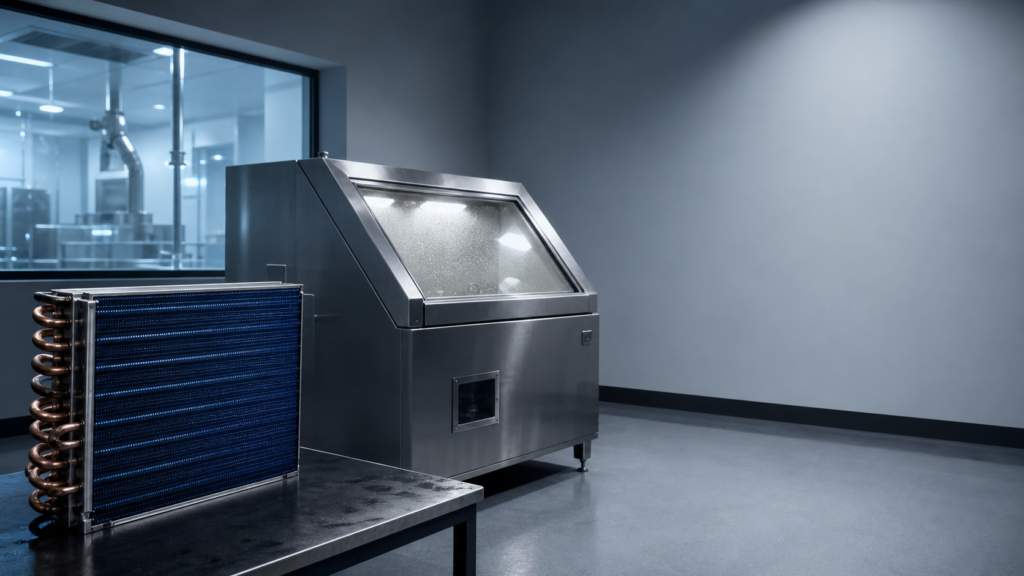
Salt spray testing can help evaluate corrosion resistance for coated coils, aluminum fins, copper tubes, stainless steel components or exposed metal surfaces. It is useful for commercial refrigeration, coastal HVAC, industrial refrigeration and humid operating environments.
Salt spray testing duration and test standard should be confirmed according to project requirements. [REQUIRES CLIENT VERIFICATION – 10,000-HOUR SALT SPRAY CLAIM]
Salt spray testing chamber for corrosion resistance review
[PLACEHOLDER – REAL SALT SPRAY TEST REPORT REQUIRED]

Coated Condenser Coils

Useful for anti-corrosion coating and epoxy coated condenser coil evaluation.

Aluminum Fin Protection

Supports review of fin corrosion resistance in humid or coastal environments.

Stainless Steel Components

Helps evaluate corrosion-conscious material selection for industrial or food-related applications.

Application Environment Review

Testing requirements should match humidity, salt exposure, cleaning chemicals and operating conditions.

PRESSURE SAFETY

Burst Testing for Pressure Safety Review

Burst testing can be used to evaluate pressure-bearing performance, structural safety margins and failure behavior for selected heat exchanger or refrigeration component designs. It is especially relevant when buyers have pressure, refrigerant, CO2, industrial refrigeration or liquid cooling safety requirements.

Burst Test Video Placeholder

[PLACEHOLDER – BURST TEST VIDEO REQUIRED]
Burst pressure testing for heat exchanger safety validation
Burst pressure values, real videos and test standard names are not published until verified.

Sample Preparation

Prepare the test sample according to product structure, connection method and project requirement.

Pressure Increase

Increase pressure under controlled conditions according to the agreed test plan.

Failure or Limit Observation

Observe deformation, leakage, joint condition or failure behavior during pressure evaluation.

Test Record

Document pressure condition, sample status, observation result and project-specific notes.
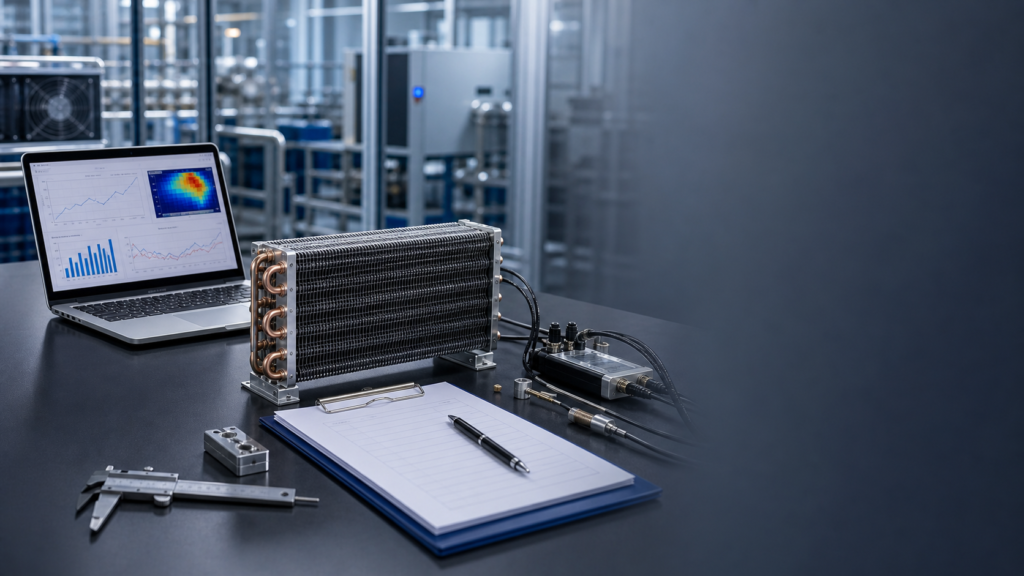
Thermal performance testing report sample for heat exchanger projects
Thermal performance testing report template for custom heat exchanger projects
[PLACEHOLDER – THERMAL PERFORMANCE REPORT SAMPLE REQUIRED]

REPORT SAMPLE

Thermal Performance Testing Report Sample

Real downloadable reports are not created unless verified PDF files exist. This editable section shows what buyers usually need to confirm before sample approval.
Status: [PLACEHOLDER – THERMAL PERFORMANCE REPORT SAMPLE REQUIRED]

RELIABILITY TESTING

Leak Testing and Pressure Testing for Product Reliability

Helium Leak Testing

Can support high-sensitivity leak detection for selected refrigeration coils and heat exchanger components where required.

Status: [REQUIRES CLIENT VERIFICATION]

Pressure Holding Test

Can help review whether the product holds pressure under agreed test conditions.

Water Immersion or Bubble Test

May be used for certain components to identify visible leakage points.

Project-Specific Test Plan

Testing method should be selected according to product type, refrigerant, pressure, application and buyer specification.

TESTING WORKFLOW

From Sample Submission to Validation Report

01

Test Requirement Review

Review product type, application, working medium, test goal, pressure, temperature and buyer standard.

02

Test Method Selection

Confirm whether thermal performance, wind tunnel, salt spray, burst, pressure or leakage testing is required.

03

Sample Preparation

Prepare test samples, connection points, fixtures, sensors or test conditions according to product structure.

04

Test Execution

Run the agreed test under controlled or project-specific conditions.

05

Data Recording

Record temperature, pressure, airflow, flow rate, pressure drop, leakage result, corrosion result or performance data.

06

Report and Engineering Review

Prepare test summary, observations and next-step recommendations for sample approval or design improvement.

TEST PLAN INPUT

What Data Helps Us Prepare a Testing Plan?

Complete test input helps the engineering team select the right validation method and avoid publishing unsupported claims before sample review.

INTERNAL PATHS

Related Testing, Quality and Engineering Paths

engineering capabilities

Related path for buyers reviewing engineering capabilities.

manufacturing process

Related path for buyers reviewing manufacturing process.

quality certifications

Related path for buyers reviewing quality certifications.

custom coil fabrication

Related path for buyers reviewing custom coil fabrication.

HVAC and heat pump solutions

Related path for buyers reviewing HVAC and heat pump solutions.

commercial refrigeration solutions

Related path for buyers reviewing commercial refrigeration solutions.

industrial refrigeration solutions

Related path for buyers reviewing industrial refrigeration solutions.

liquid cooling solutions

Related path for buyers reviewing liquid cooling solutions.

contact Domi testing team

Related path for buyers reviewing contact Domi testing team.
Thermal performance testing report sample for heat exchanger projects

B2B VALIDATION

Why Validation Matters Before Bulk Production

Testing validation is a practical risk-control step for custom coil and heat exchanger sourcing. It helps buyers connect engineering assumptions, sample performance and manufacturing quality before bulk production.

FAQ

Heat Exchanger Testing Laboratory FAQ

A heat exchanger testing laboratory may review thermal performance, airflow behavior, pressure drop, leakage, corrosion resistance, pressure safety and sample validation data depending on the product and project requirements.
Wind tunnel testing support should be confirmed according to available equipment, project data and sample requirements. If available, it can help evaluate airflow, pressure drop and air-side heat transfer performance.
Salt spray testing is used to evaluate corrosion resistance of materials, coatings or metal surfaces under controlled salt fog conditions. Test duration and standard should match the project requirement.
A 10,000-hour salt spray claim must be verified with real test documentation before publication or quotation. Buyers should request available reports or confirm project-specific testing requirements.
Burst testing evaluates how a pressure-bearing component behaves under increasing pressure. It may help review structural safety margin, deformation or failure behavior for selected heat exchanger projects.
If a real burst test video is available for the product or process, Domi can share it subject to project approval. If not available, a specific test plan may need to be discussed.
Please provide product type, drawing, working medium, inlet and outlet temperature, airflow or liquid flow rate, pressure conditions, capacity target and required report format.
Testing reports can support sample approval by documenting test conditions, measured data, observations and engineering review notes. Final acceptance depends on buyer requirements.
Domi can review leak testing requirements based on product structure, refrigerant, pressure and customer specifications. The testing method should be confirmed before production.
Testing location depends on available equipment, product type and project requirements. Some tests may be performed in-house, while others may require third-party laboratory support.

VALIDATION REQUEST

Need Testing Data for Your Heat Exchanger or Refrigeration Coil Project?

Send your drawing, sample photo, working medium, capacity target, pressure requirement, airflow or flow data and testing standard. Domi Refrigeration can help review the suitable validation plan for your heat exchanger, HVAC coil, refrigeration coil or thermal component project.

Send a Testing Requirement

Existing Fluent Forms inquiry form reused with the native Elementor Shortcode widget.
REQUEST A QUOTE
Scroll to Top