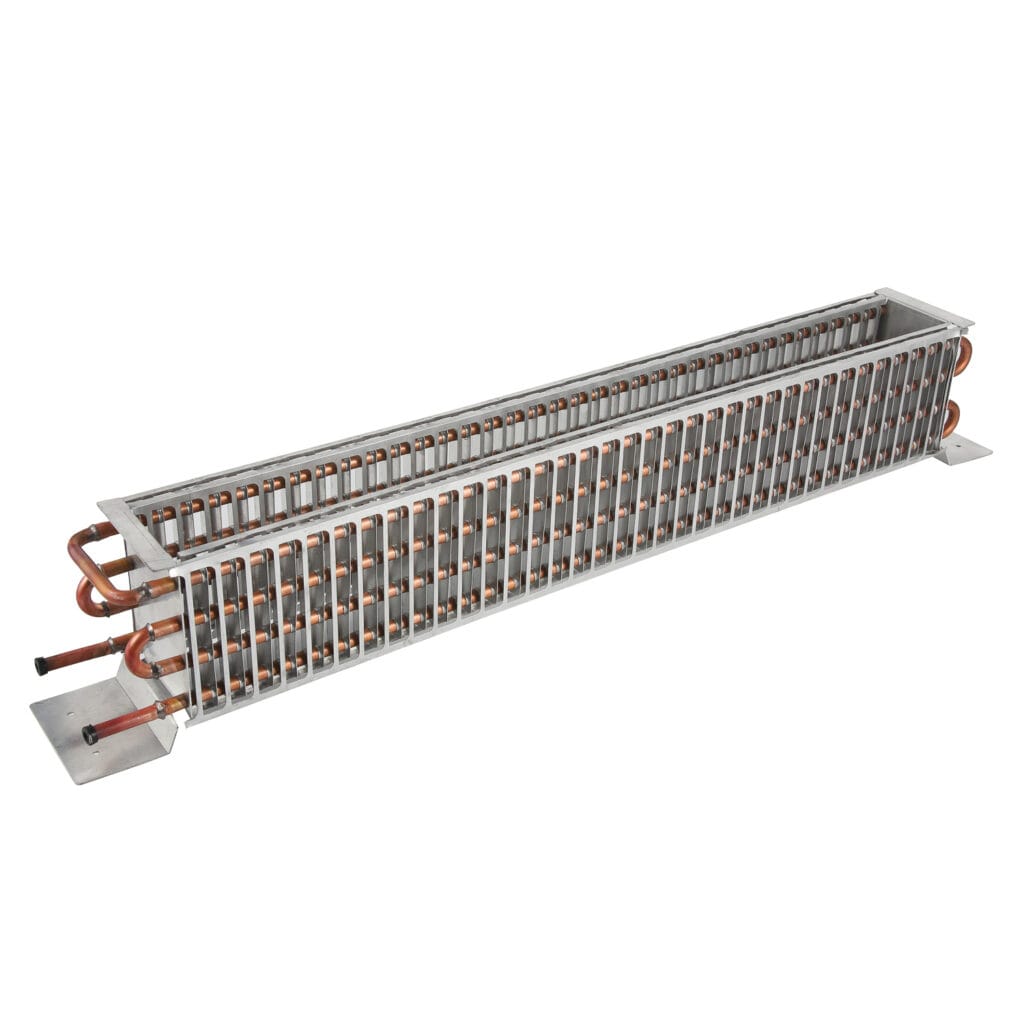
Target condition and duty
Check: Provide application, target temperature, operating cycle and load information if known
Consider: Establishes the heat-transfer review context.


Custom copper tube evaporators for efficient and reliable refrigeration heat exchange.
Copper tube evaporators are evaluated through the tube assembly, airflow, target condition, mounting and defrost context. This category is intended for refrigerator, freezer, display cabinet, cold-room and other refrigeration buyers who need a tube-based evaporator review. Provide the target temperature, application, available envelope, tube or port arrangement, fan or airflow path, drain and defrost information, plus the old part or drawing when matching a replacement. The final configuration should be confirmed against the complete installation.
Showing the single result
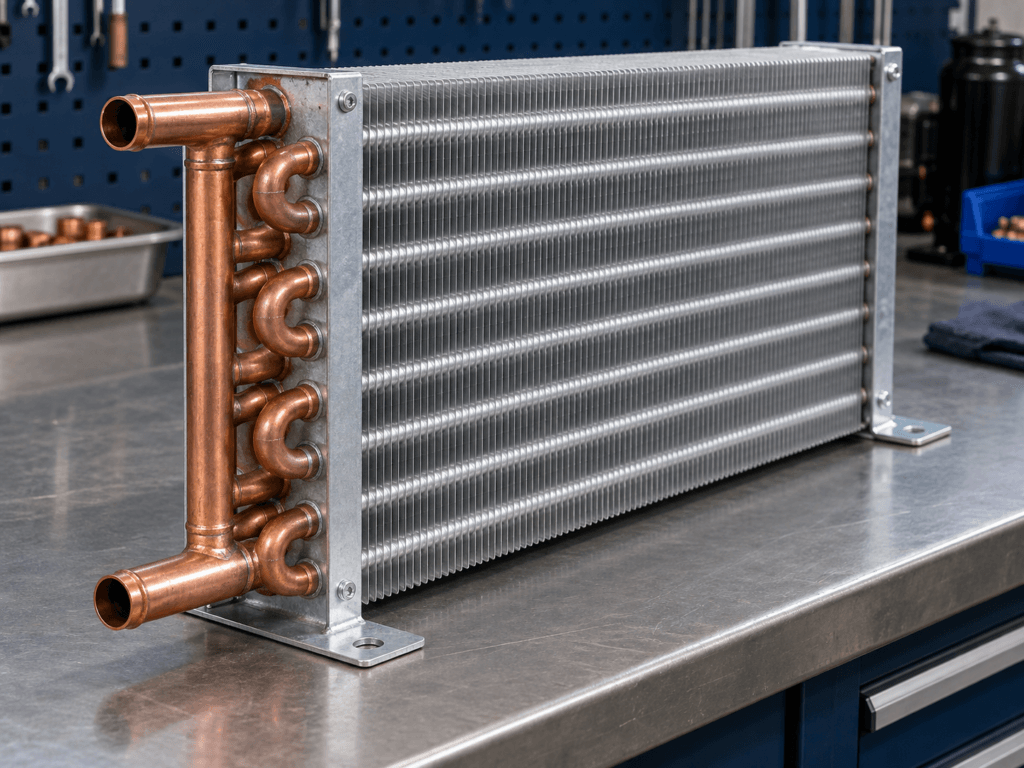
This view shows the copper tube heat-exchange structure and the connection layout that influence fit and serviceability. Confirm tube arrangement, coil dimensions, mounting, target temperature, circuit requirements and drain or defrost provisions with the drawing.
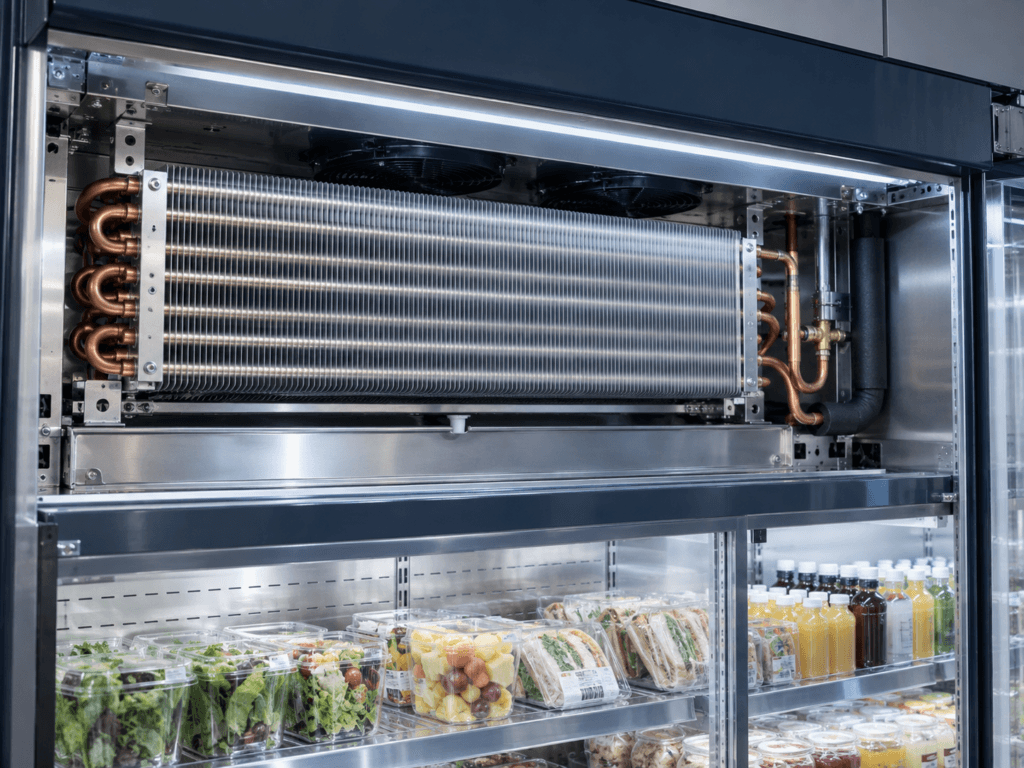
Copper tube evaporators may be installed in cabinets, display equipment or other refrigerated enclosures. The application view helps buyers check available volume, airflow, product clearance, drain routing and service access before choosing a configuration.
Check: Provide application, target temperature, operating cycle and load information if known
Consider: Establishes the heat-transfer review context.
Check: Share tube size, fin or frame details, air direction, fan arrangement and available space
Consider: Helps review the evaporator as an air-side assembly.
Check: Confirm fixing points, orientation, clearance, drain and defrost method
Consider: Prevents installation and service conflicts.
The category identifies a copper tube evaporator family; confirm tube size, fin or frame arrangement, material combination and connections from approved data.
Review the coil with fan, airflow direction, mounting, drain and service clearance.
State the frost environment and defrost method so the drawing and maintenance requirements can be checked for the actual application.
| Parameter | Information to provide | Why it matters |
|---|---|---|
| Application and target condition | Refrigerator, freezer, display cabinet, cold room or other use; target temperature if known | Defines the operating context. |
| Tube and fin construction | Tube size, fin or frame arrangement, material and coating if known | Helps identify the required construction. |
| Envelope and mounting | Dimensions, fixing points, orientation, clearance and drain | Confirms physical fit and service access. |
| Airflow and defrost | Fan arrangement, air direction, frost condition and defrost method | Supports operating and maintenance review. |
| Connections | Tube or port size, orientation and working-fluid information if known | Confirms system interface. |
| Choice area | What changes | Confirm before choosing |
|---|---|---|
| Copper tube evaporator | Tube, fin or frame, connections and airflow define the assembly | Confirm target condition, mounting, defrost and envelope. |
| Panel or roll bond evaporator | Panel shape, channels and ports define a different installation interface | Confirm geometry, ports, mounting, target condition and service method. |
| Replacement decision | Tube material or panel label alone does not establish compatibility | Compare approved drawing, airflow, defrost, connections and space. |
The tube coil must fit the cabinet airflow and defrost arrangement
Confirm: Provide dimensions, target condition, mounting and drain details.
Air distribution and service access are constrained by the case layout
Confirm: Share cabinet drawing, fan arrangement and operating condition.
Coil, fan, drain and defrost must be reviewed with room duty
Confirm: Provide room data, air direction, defrost and connection information.
Match tube, fin, port, mounting and drain details to the approved reference.
Confirm tube, fin, frame, coating, envelope and fixing points for the selected configuration.
Agree leak, dimensional, airflow, defrost or other required inspection items before release.
State refrigerator, freezer, display or cold-room use and target temperature
Why it matters: Establishes the selection basis.
Send dimensions, mounting, orientation, drain, ports and photos
Why it matters: Enables fit review.
Provide fan arrangement, air direction, frost condition and defrost method
Why it matters: Supports operating review.
Share quantity, drawing revision and inspection requirements
Why it matters: Supports a traceable quotation.
Send the old part or drawing, dimensions, tube and port positions, mounting points, airflow, target condition, defrost and quantity.
Not automatically. Compare geometry, ports, mounting, target condition, airflow, defrost and service requirements.
Yes, if the evaporator is forced-air. Fan geometry, air direction and available clearance affect the assembly review.
Confirm tube, fin, frame, coating and connection details for the exact configuration and environment.
Approve the drawing or sample and agree the applicable dimensional, leak, airflow or defrost checks.
Use it to organize dimensions, connections, sample matching and OEM quote inputs.
Use it to review evaporator design and quotation fields for commercial equipment.
Use it for cold-storage and process-cooling selection questions.
A clear RFQ helps the team review the right category, construction and interface. Use the checklist below as a practical starting point, then provide the category-specific details shown above.
State the equipment, target condition, ambient environment and expected duty.
Share dimensions, mounting points, connections, airflow direction and service clearances.
For fans and motors, include voltage, frequency, control signal, rotation and wiring.
Attach the old part, drawing or sample and state quantity, revision and documentation needs.
Share your application, drawings and operating requirements so our team can review the details of your project.