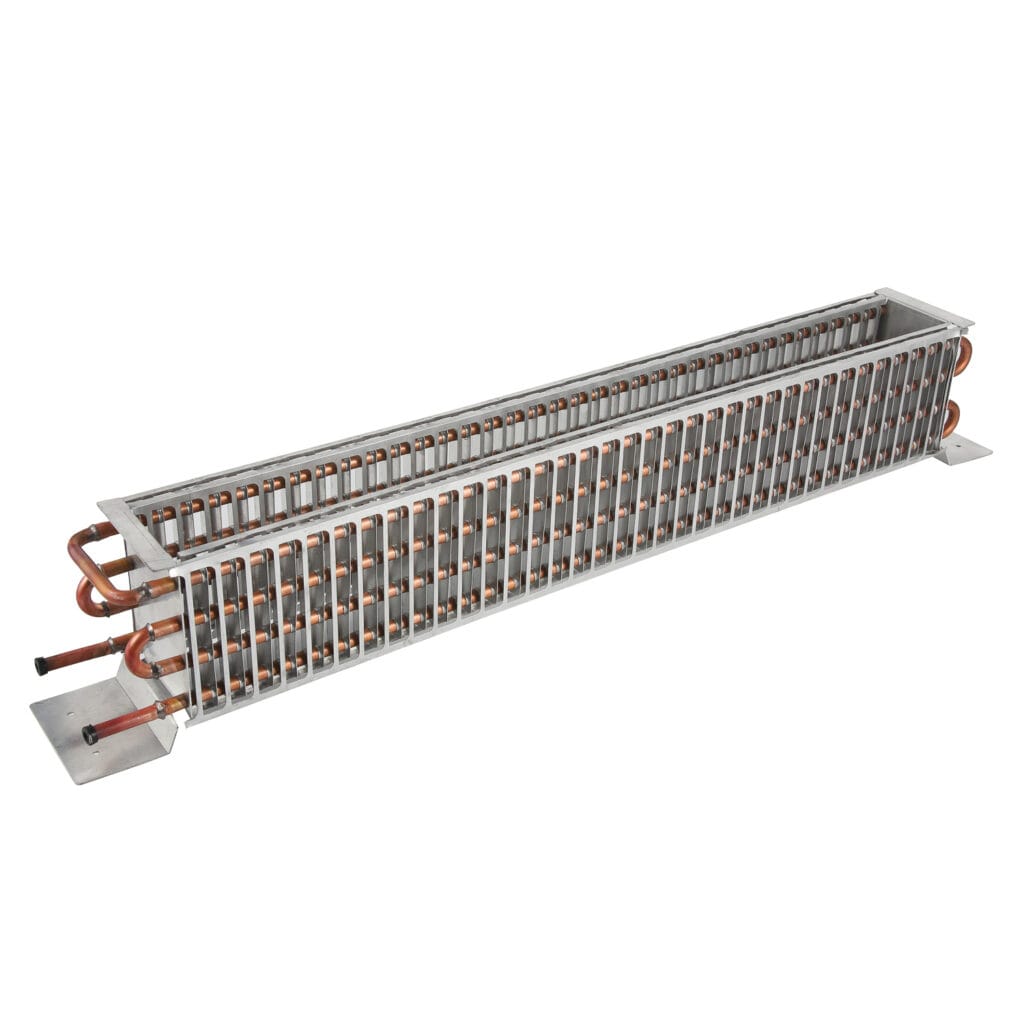
Target temperature and duty
Check: Provide room or cabinet condition, target temperature, operating cycle and load information if available
Consider: Establishes the basis for reviewing the heat-transfer arrangement.


Custom evaporators for refrigerators, freezers, display cabinets, cold rooms and commercial refrigeration applications.
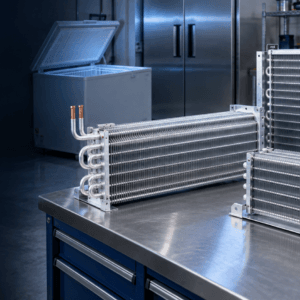
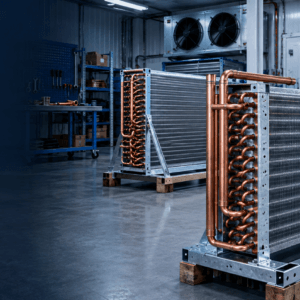
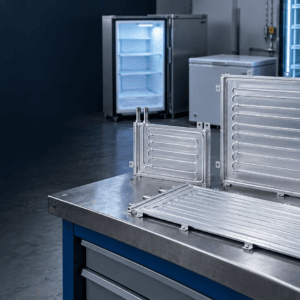
Evaporators absorb heat from the refrigerated space or process and should be reviewed with the target temperature, airflow, installation method and defrost conditions in view. Domi's evaporator families include copper tube, aluminum tube and aluminum roll bond directions. Use the child categories to orient the product type, then provide the available envelope, mounting, tube or port arrangement, airflow path, drain or defrost context and existing drawing when requesting a quotation.
Showing all 2 results
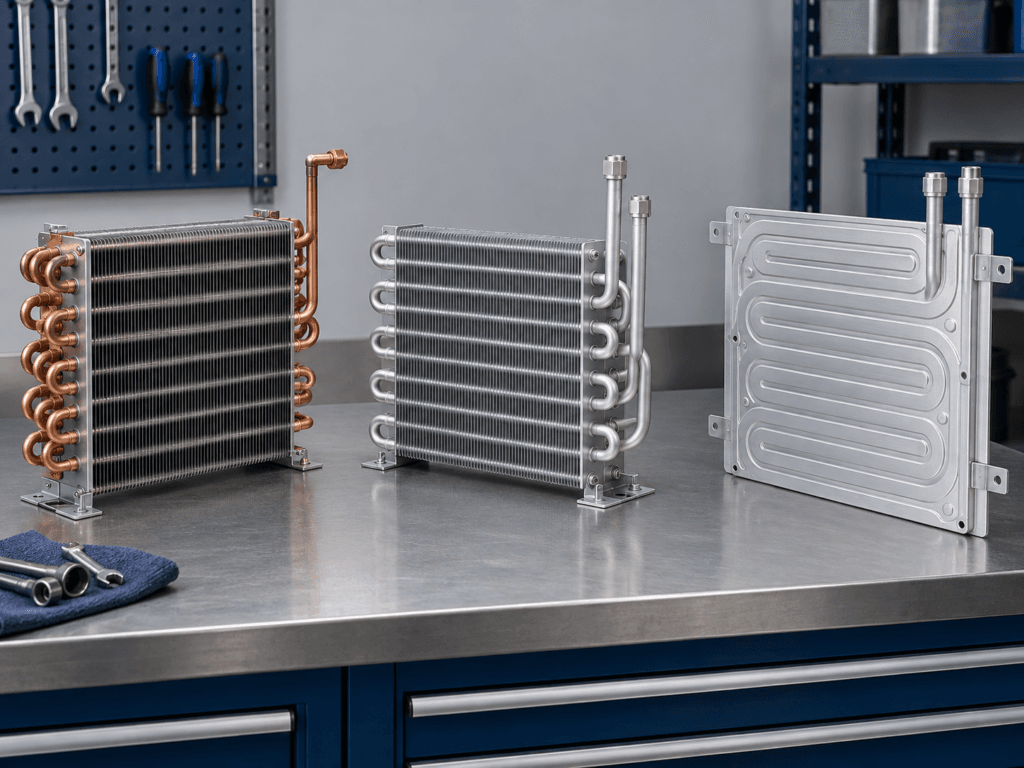
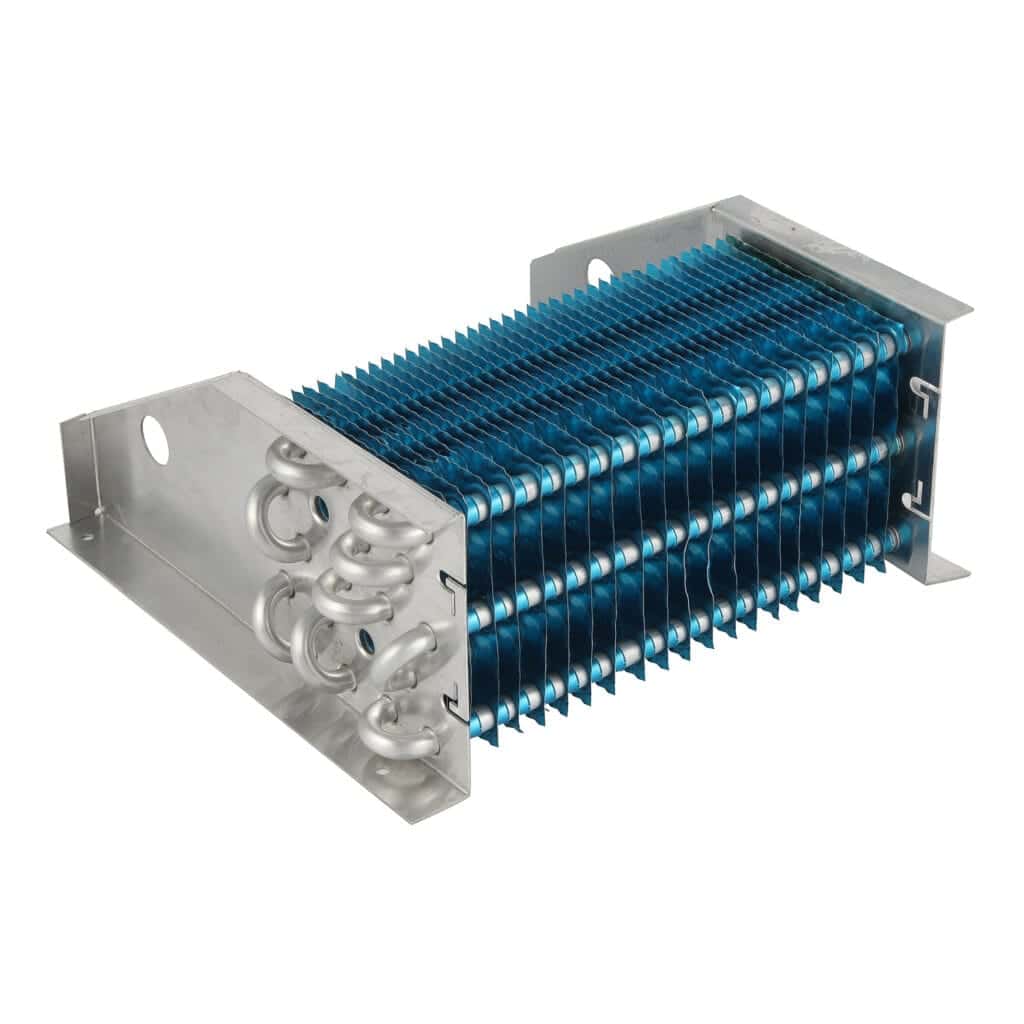
The product view focuses on the heat-exchange surface, tube or plate arrangement and connection direction. Before selecting an evaporator, confirm the target temperature range, installation envelope, airflow conditions, drain or defrost provision and the required interfaces.
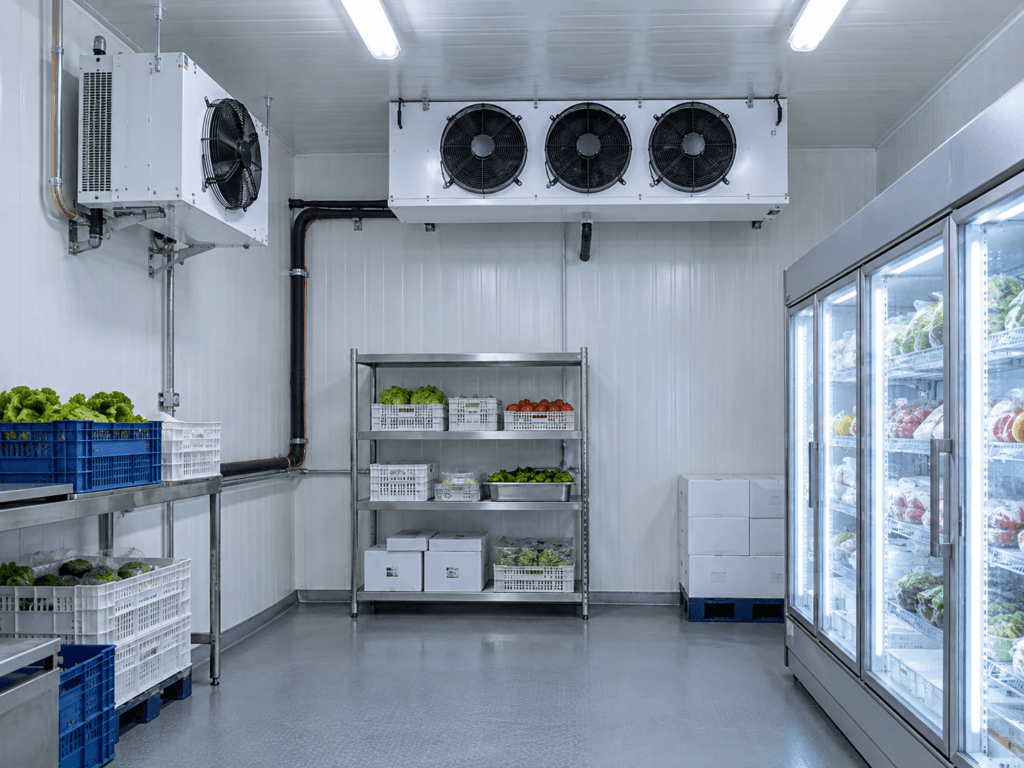
Evaporators are installed inside or alongside refrigerated equipment where available space and temperature control shape the design. Use the application view to review placement, fan or air path, product clearance and service access, then provide the actual operating conditions for review.
Check: Provide room or cabinet condition, target temperature, operating cycle and load information if available
Consider: Establishes the basis for reviewing the heat-transfer arrangement.
Check: Share mounting position, envelope, air direction, clearance and drain arrangement
Consider: Confirms that the evaporator can be installed and serviced correctly.
Check: State defrost method, frost environment, humidity or working-fluid information if known
Consider: Helps identify the details that need to be confirmed in the quotation.
Check: Provide target temperature, equipment type, airflow, mounting envelope, defrost arrangement, drain route and connections
Consider: Sets the basis for reviewing the complete evaporator interface.
Review the linked copper tube family for tube and fin or frame arrangements. Confirm material combination, tube size, connections and mounting from approved data.
Review the linked aluminum tube family and confirm tube, fin, coating, connection and corrosion-environment requirements before release.
Review the linked aluminum roll bond family for panel and channel geometry. Confirm shape, ports, mounting and the required defrost or service arrangement.
| Parameter | Information to provide | Why it matters |
|---|---|---|
| Application and target condition | Refrigerator, freezer, display cabinet, cold room or process equipment; target temperature if known | Defines the operating context. |
| Construction direction | Copper tube, aluminum tube, roll bond or other known arrangement | Helps identify the appropriate family and drawing. |
| Envelope and mounting | Overall dimensions, fixing points, orientation, clearance and drain position | Confirms physical fit and service access. |
| Airflow and defrost | Air direction, fan arrangement, frost condition and defrost method | Supports airflow and maintenance review. |
| Connections | Tube or port size, orientation and working-fluid information if known | Confirms the system interface. |
| Choice area | What changes | Confirm before choosing |
|---|---|---|
| Copper tube evaporator | Tube-based construction is reviewed through tube, fin or frame, connection and mounting details | Confirm target condition, tube size, airflow, defrost and envelope. |
| Aluminum tube evaporator | Aluminum tube and related material details must be checked with the application environment | Confirm material combination, corrosion environment, connection and defrost. |
| Roll bond evaporator | Panel channel geometry and ports define the installation interface | Confirm panel shape, mounting, ports, target condition and service method. |
Compact evaporators must fit the cabinet, airflow and defrost arrangement
Confirm: Provide cabinet dimensions, target condition, drain and mounting information.
The evaporator must align with air distribution, available depth and service access
Confirm: Share cabinet layout, airflow direction and operating condition.
Room size, air throw, frost environment and defrost affect the selection review
Confirm: Provide room data, target temperature, fan arrangement and defrost method.
Provide freezer dimensions, target temperature, defrost method, airflow direction, mounting space, drain arrangement and connections
Confirm: Helps assess the actual installation.
Match the quoted evaporator construction, dimensions, ports and mounting to the approved reference.
Confirm tube, aluminum, fin, panel, coating and connection details that apply to the selected family.
Agree the applicable leak, dimensional, airflow, defrost or other project-specific inspection items before release.
State refrigerator, freezer, display cabinet, cold room or process use and target temperature
Why it matters: Establishes the review basis.
Send dimensions, fixing points, orientation, clearance, drain and photos
Why it matters: Enables fit and installation review.
Provide fan arrangement, air direction, frost condition and defrost method
Why it matters: Helps assess the operating interface.
Share tube or port details, working-fluid information if known, quantity and drawing revision
Why it matters: Supports an accurate quotation.
Send the existing drawing or part reference together with operating conditions, installation limits and quantity
Why it matters: Helps compare a configuration rather than a name alone.
Compare drawing support, material and connection information against the application
Why it matters: Keep the selection tied to the approved configuration.
Start with the target condition, application, available envelope, airflow arrangement, mounting and defrost requirements.
Compare the required geometry, ports, mounting, target condition, airflow or service method and the approved drawing; do not infer suitability from material name alone.
Provide the old part or drawing, dimensions, ports, mounting points, drain details, target condition and quantity.
Not by category name alone. Confirm the complete operating condition, frost and defrost requirements with the technical review.
Send the application, drawing or sample and required interfaces so the configuration can be discussed before quotation.
An evaporator coil is the heat-transfer component that absorbs heat from the refrigerated space or product side of a system. Matching still depends on target condition, airflow, defrost, dimensions, mounting and connections.
Use it to organize coil, airflow, defrost and RFQ inputs.
Use it for cold-storage and process-cooling selection questions.
Use it when frost, airflow and fin arrangement need closer review.
Use it to confirm the evaporator's role in the refrigeration circuit.
A clear RFQ helps the team review the right category, construction and interface. Use the checklist below as a practical starting point, then provide the category-specific details shown above.
State the equipment, target condition, ambient environment and expected duty.
Share dimensions, mounting points, connections, airflow direction and service clearances.
For fans and motors, include voltage, frequency, control signal, rotation and wiring.
Attach the old part, drawing or sample and state quantity, revision and documentation needs.
Share your application, drawings and operating requirements so our team can review the details of your project.