Electrical supply and control
Check: Provide voltage, frequency, phase, connector, control signal and speed requirement
Consider: Confirms the electrical interface and operating method.

Refrigeration fan motors for refrigerators, freezers, condensers, evaporators and commercial cooling equipment.
Motors in refrigeration equipment are selected together with the fan, heat-transfer assembly, electrical supply and control method. This category groups shaded pole, external rotor and EC directions so buyers can separate motor technology from mechanical construction and installation. Provide the supply, frequency, speed or control requirement, fan geometry, load, mounting, shaft or hub interface and available space. For a replacement, include the old motor label, wiring and clear dimensional photos before choosing a substitute.
Showing all 7 results

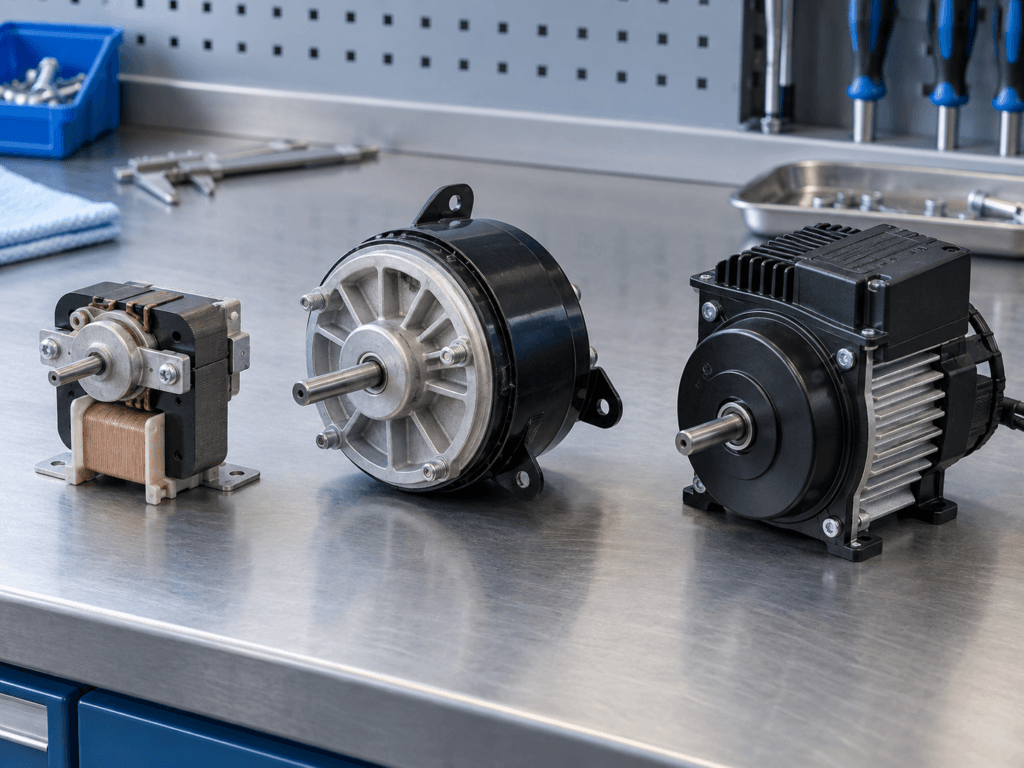
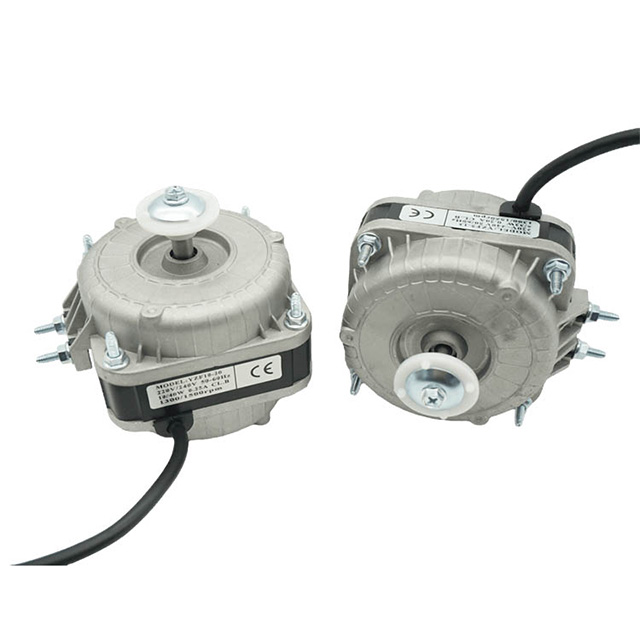
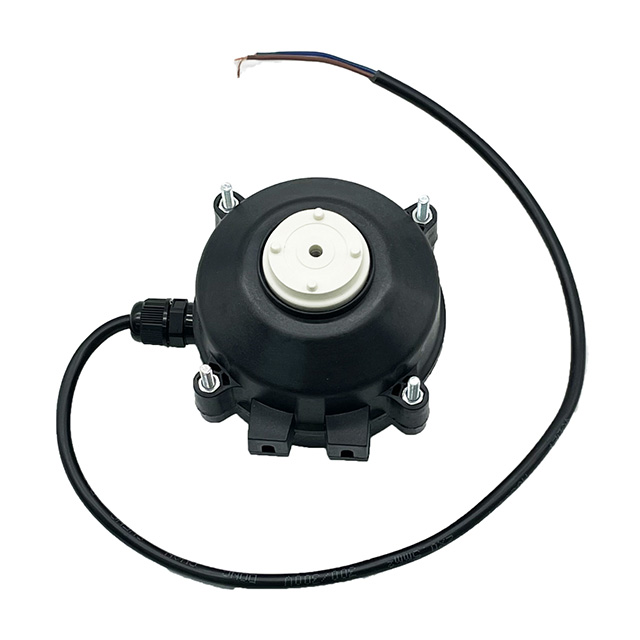
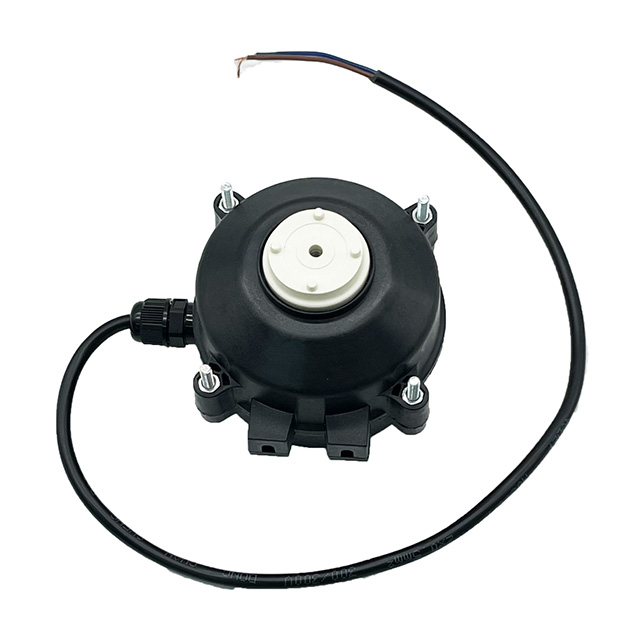
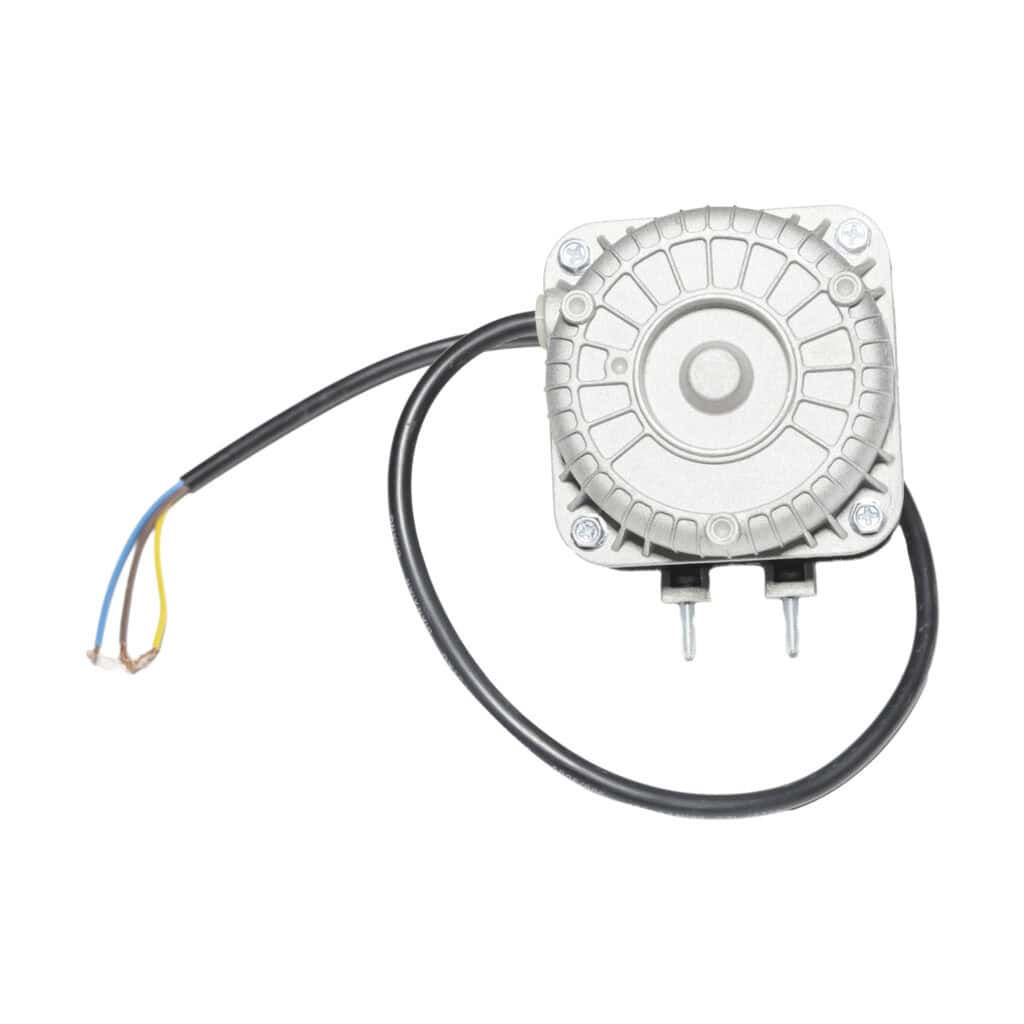
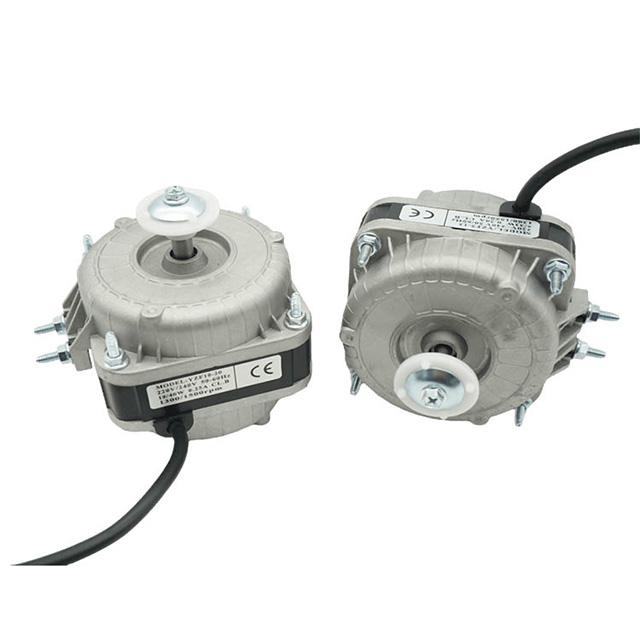
The motor view highlights the housing, shaft, mounting and electrical interface that determine whether a fan motor can be integrated into the assembly. Confirm voltage, frequency, speed, rotation, load, shaft details, mounting pattern and control method before requesting a quotation.

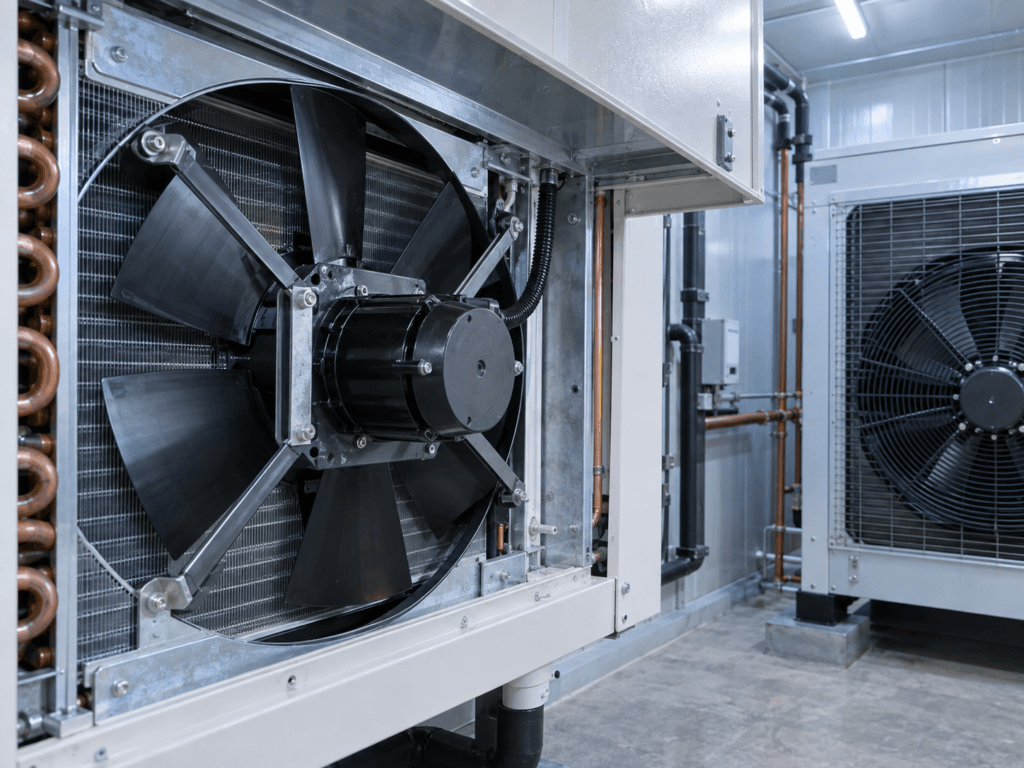
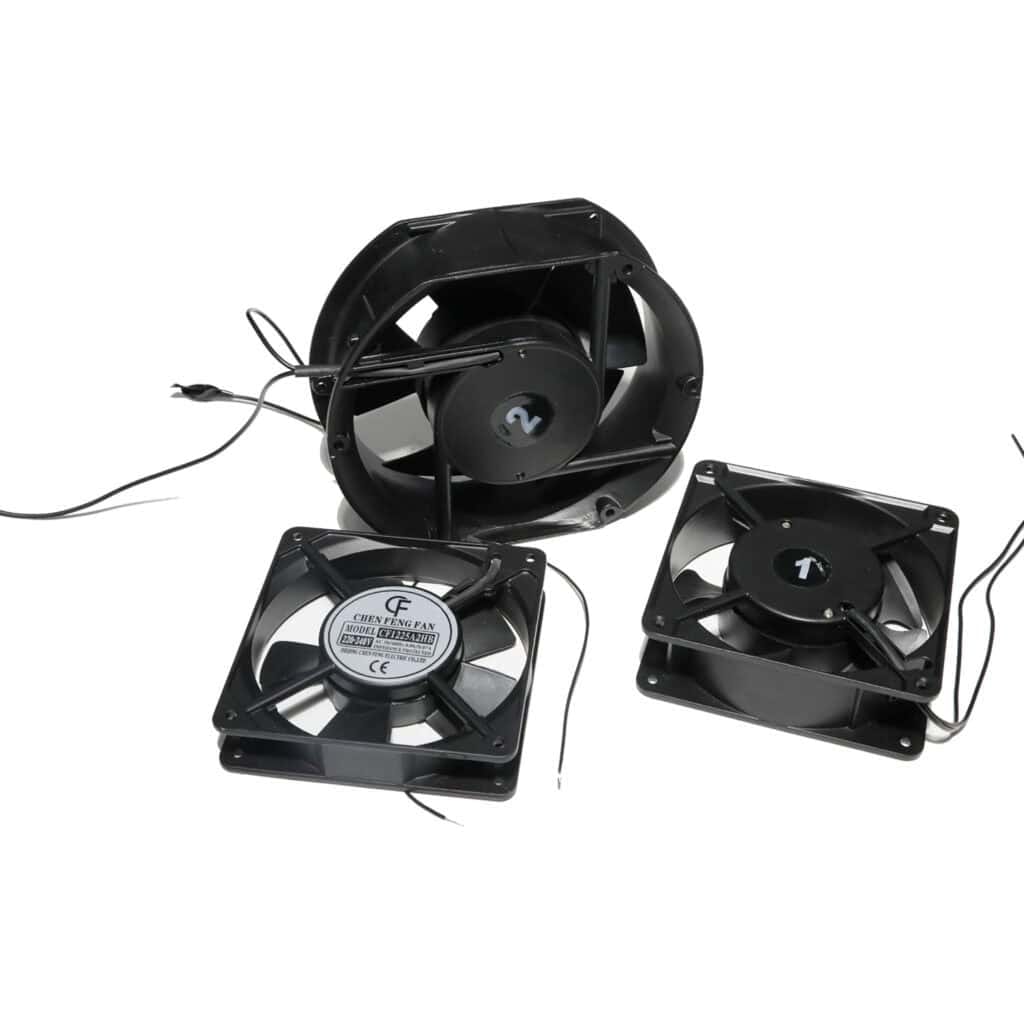
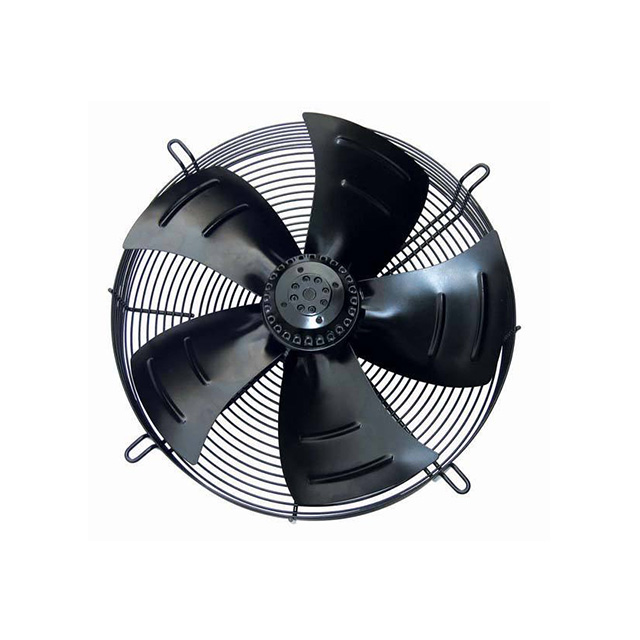
Refrigeration fan motors operate as part of condenser, evaporator or air-cooler assemblies. The application view helps identify the fan position and duty; buyers should provide the existing motor label, fan data, wiring requirements and available installation space for replacement review.
Check: Provide voltage, frequency, phase, connector, control signal and speed requirement
Consider: Confirms the electrical interface and operating method.

Check: Share fan diameter or geometry, airflow or pressure requirement, duty cycle and operating environment
Consider: Helps review the motor with the actual fan assembly.
Check: Provide fixing points, shaft or hub details, rotation, envelope and service clearance
Consider: Prevents a motor from being selected without checking fit.
Check: Confirm supply, frequency, control method, speed, fan diameter or wheel, airflow or pressure requirement, rotation, mounting arrangement and existing motor reference
Consider: A fan motor should be reviewed with the fan assembly.
Review the linked family for compact fan-motor applications. Confirm supply, frequency, winding or lead details, mounting, rotation and fan load from current data.
External rotor describes a motor construction direction; confirm the exact fan, mounting, electrical and control configuration for the application.
EC describes electronically commutated motor technology. It may overlap with a mechanical construction such as external rotor, so confirm the complete product architecture rather than treating the labels as mutually exclusive.
| Parameter | Information to provide | Why it matters |
|---|---|---|
| Supply | Voltage, frequency, phase, connector and lead information | Confirms electrical compatibility. |
| Control and speed | Fixed speed, speed control, signal type and required rotation | Helps distinguish motor and control requirements. |
| Fan and load | Fan diameter or geometry, airflow or pressure requirement and duty cycle | Reviews the motor with the real load. |
| Mechanical interface | Mounting, shaft or hub, rotation, envelope and clearances | Confirms physical fit. |
| Application environment | Refrigerator, freezer, evaporator, condenser, air cooler or HVAC use; temperature or moisture context | Identifies environmental and installation questions. |
| Choice area | What changes | Confirm before choosing |
|---|---|---|
| Shaded pole motor | A compact motor direction commonly reviewed for fixed fan applications | Confirm supply, frequency, rotation, mounting and fan load from product data. |
| External rotor motor | A mechanical rotor construction that affects the motor and fan arrangement | Confirm the fan geometry, mounting, electrical input and available space. |
| EC motor | Electronically commutated motor technology with its own control and supply requirements | Confirm input, control signal, speed range, mounting and compatibility; EC and external rotor are not necessarily opposite choices. |
Motor selection must match fan geometry, airflow, target condition and mounting
Confirm: Provide fan details, supply, speed, defrost context and clearance.
Heat-rejection airflow and ambient environment affect the review
Confirm: Share condenser layout, fan load, supply and operating environment.
Motors are evaluated as part of the coil, fan and control assembly
Confirm: Send the air path, required duty, mounting and wiring information.
Match voltage, frequency, connector, lead, control and rotation data to the approved reference.
Confirm mounting, shaft or hub, fan geometry, envelope and clearance.
Agree the applicable running, rotation, noise, temperature-rise or other project-specific checks before release; do not assume unconfirmed values.
Send nameplate, product link, photos, drawing and wiring details
Why it matters: Provides a traceable starting point.
State voltage, frequency, phase, connector, control signal and speed
Why it matters: Supports compatibility review.
Provide fan geometry, shaft or hub, fixing points, rotation, envelope and clearances
Why it matters: Enables assembly fit review.
Share application, duty cycle, environment, quantity and required documentation
Why it matters: Helps prepare a realistic quotation.
No. Confirm frequency, control, speed, rotation, mounting, shaft or hub, fan load, envelope and operating environment as well.
No. External rotor describes a mechanical construction while EC describes motor technology; they can overlap in one product.
Provide the old motor reference, supply, wiring, mounting, fan geometry, rotation, target condition and defrost context.
Compare the electrical and control interface, speed requirement, mounting, fan load and application environment.
Yes. Send the coil, fan, mounting and control details so the assembly interface can be checked.
Use it to organize fan duty, motor and RFQ inputs.
Use it to review fan, coil, airflow and controls together.
Use it to connect motor and fan selection with room coverage.
Use the published product page as a starting reference, then confirm current technical data.
A clear RFQ helps the team review the right category, construction and interface. Use the checklist below as a practical starting point, then provide the category-specific details shown above.
State the equipment, target condition, ambient environment and expected duty.
Share dimensions, mounting points, connections, airflow direction and service clearances.
For fans and motors, include voltage, frequency, control signal, rotation and wiring.
Attach the old part, drawing or sample and state quantity, revision and documentation needs.
Share your application, drawings and operating requirements so our team can review the details of your project.