

Testing and Validation Support for Heat Exchangers and Refrigeration Coils
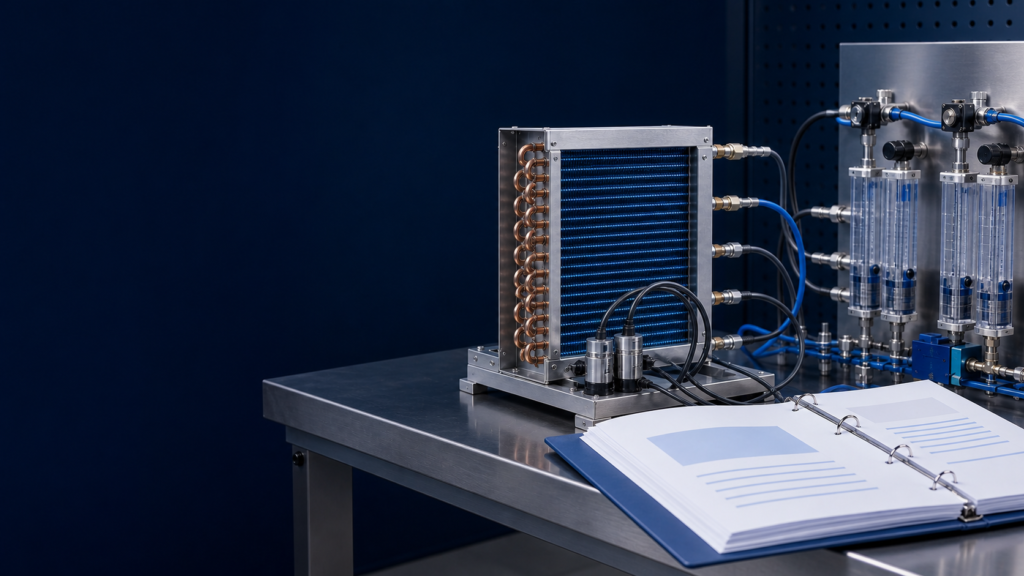
Domi Refrigeration supports heat exchanger, refrigeration coil, HVAC coil and thermal component validation through project-specific testing discussion, airflow review, corrosion resistance evaluation, pressure safety review, leak testing, performance documentation and sample approval support.
For OEM buyers, Domi can review heat exchanger performance testing, heat transfer testing, and corrosion resistance testing requirements. The team can also align pressure testing heat exchanger components with product validation testing and performance verification testing before sample approval.
- Wind tunnel and airflow performance review
- Salt spray corrosion testing discussion
- Burst and pressure safety testing review
- Thermal performance report support
SAMPLE APPROVAL RISK
Testing Data Helps Buyers Approve Samples with Confidence
Unverified Thermal Performance
Airflow and Pressure Drop Uncertainty
Corrosion Risk in Harsh Environments
Pressure and Safety Concerns
TESTING CAPABILITY
Validation Support for Performance, Durability and Safety
Thermal Performance Testing
Supports review of heat transfer capacity, temperature change, operating condition and sample approval data.
Wind Tunnel Testing
Supports airflow, pressure drop and air-side performance review for coils, condensers and evaporators.
Salt Spray Testing
Supports corrosion resistance review for coatings, fins, tubes and exposed metal surfaces.
Burst / Pressure Testing
Supports pressure safety review for heat exchanger structures, joints, tubes or pressure-bearing assemblies.
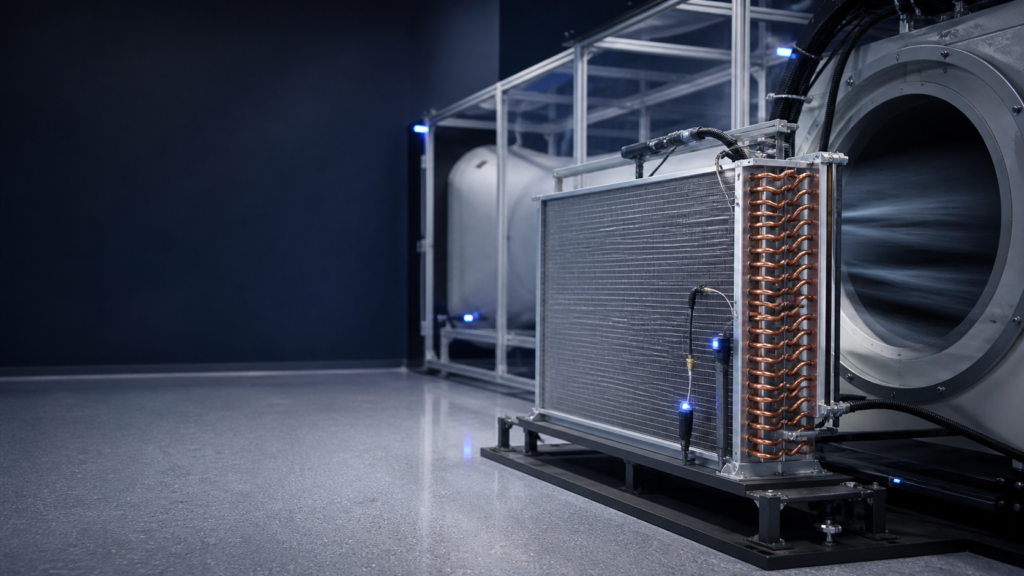
AIRFLOW VALIDATION
Wind Tunnel Testing for Airflow and Coil Performance
Wind Tunnel Data Preview
- Test sample
- Airflow rate
- Face velocity
- Inlet air temperature
- Outlet air temperature
- Pressure drop
- Capacity estimate
- Test date
- Report status
Airflow Distribution
Review whether airflow passes evenly through the coil face area and whether structural changes affect air-side performance.
Pressure Drop Review
Measure or evaluate resistance across the coil to support fan selection and system design.
Performance Comparison
Compare different fin spacing, tube layouts, coil sizes or airflow directions before sample approval.
CORROSION REVIEW
Salt Spray Testing for Corrosion Resistance Review
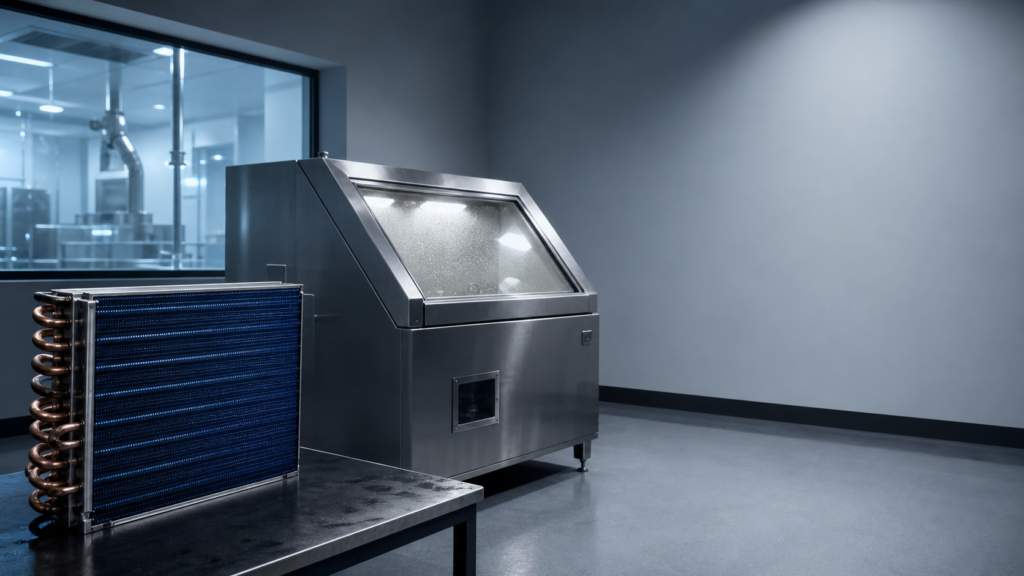
Coated Condenser Coils
Useful for anti-corrosion coating and epoxy coated condenser coil evaluation.
Aluminum Fin Protection
Supports review of fin corrosion resistance in humid or coastal environments.
Stainless Steel Components
Helps evaluate corrosion-conscious material selection for industrial or food-related applications.
Application Environment Review
Testing requirements should match humidity, salt exposure, cleaning chemicals and operating conditions.
PRESSURE SAFETY
Burst Testing for Pressure Safety Review
Pressure Test Procedure
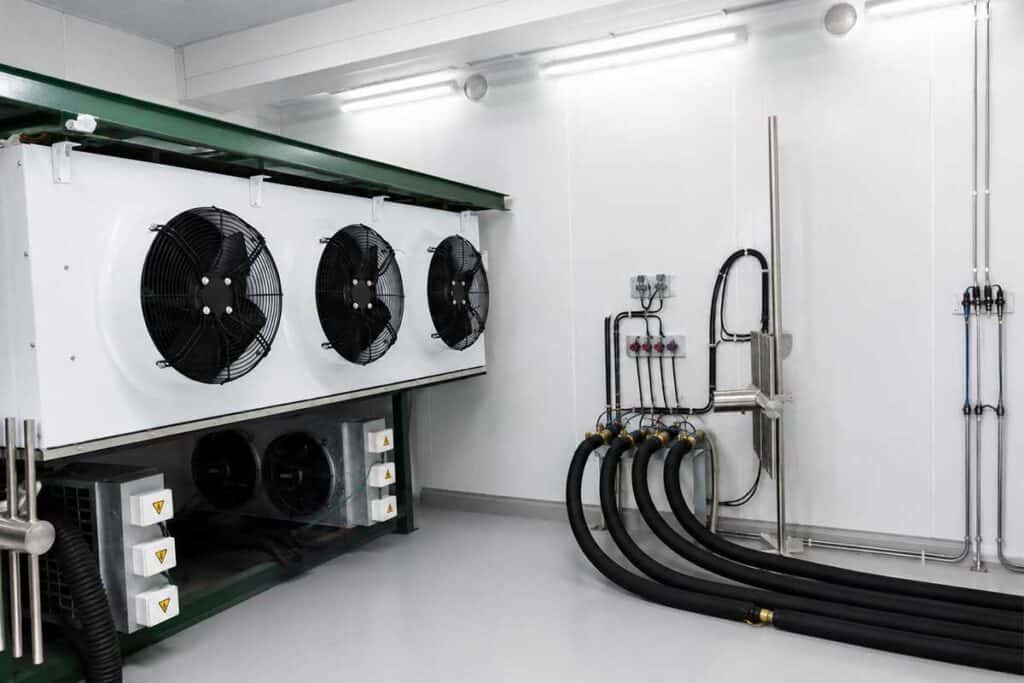
Sample Preparation
Prepare the test sample according to product structure, connection method and project requirement.
Pressure Increase
Increase pressure under controlled conditions according to the agreed test plan.
Failure or Limit Observation
Observe deformation, leakage, joint condition or failure behavior during pressure evaluation.
Test Record
Document pressure condition, sample status, observation result and project-specific notes.
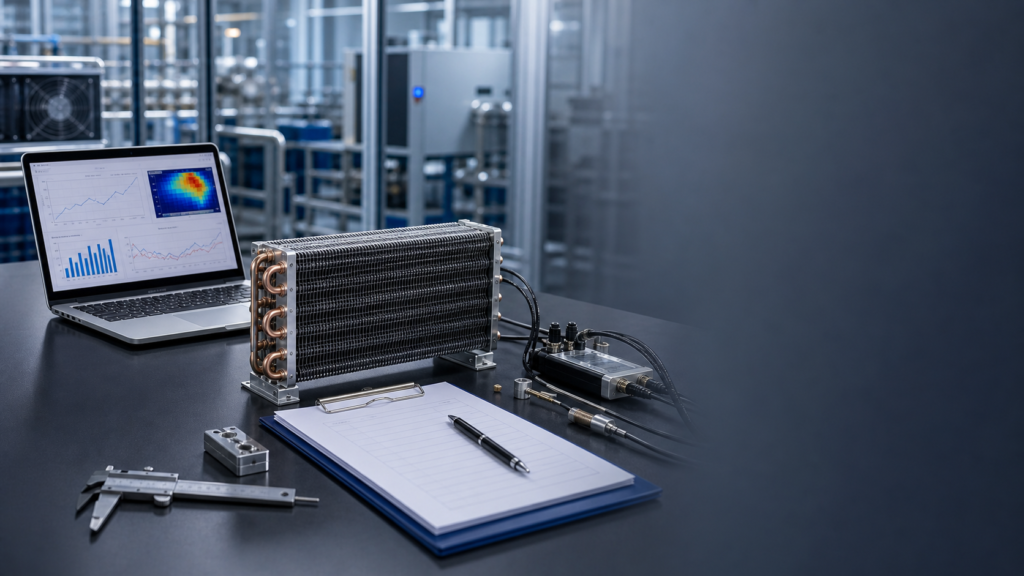
REPORT SAMPLE
Thermal Performance Testing Report Sample
Available report types and records depend on completed tests and project scope. Buyers can confirm document requirements before sample approval.
- Product model
- Sample dimensions
- Working medium or refrigerant
- Inlet temperature
- Outlet temperature
- Ambient temperature
- Flow rate
- Airflow rate
- Pressure drop
- Capacity result
- Test condition
- Test equipment
- Test date
- Inspector or reviewer
- Conclusion
RELIABILITY TESTING
Leak Testing and Pressure Testing for Product Reliability
Nitrogen leakage test
Can support high-sensitivity leak detection for selected refrigeration coils and heat exchanger components where required.
Pressure Holding Test
Can help review whether the product holds pressure under agreed test conditions.
Water Immersion or Bubble Test
May be used for certain components to identify visible leakage points.
Project-Specific Test Plan
Testing method should be selected according to product type, refrigerant, pressure, application and buyer specification.
TESTING WORKFLOW
From Sample Submission to Validation Report
01
Test Requirement Review
02
Test Method Selection
03
Sample Preparation
04
Test Execution
05
Data Recording
06
Report and Engineering Review
TEST PLAN INPUT
What Data Helps Us Prepare a Testing Plan?
- Product type
- Application
- Drawing or 3D model
- Sample photo
- Working medium or refrigerant
- Cooling or heating capacity
- Operating pressure
- Burst pressure requirement
- Inlet and outlet temperature
- Airflow or fluid flow rate
- Pressure drop limit
- Corrosion environment
- Coating requirement
- Target test standard
- Required test report format
- Sample quantity
- Destination country
- Project timeline
- Buyer approval requirement
B2B VALIDATION
Why Validation Matters Before Bulk Production
- Helps reduce sample approval risk
- Supports performance verification before mass production
- Helps compare design alternatives
- Supports corrosion and durability review
- Helps identify pressure or leakage risks
- Supports customer documentation needs
- Improves buyer confidence in custom projects
- Helps connect engineering design with manufacturing quality
FAQ
Heat Exchanger Testing Laboratory FAQ
VALIDATION REQUEST
Need Testing Data for Your Heat Exchanger or Refrigeration Coil Project?
Send a Testing Requirement
Send the product type, operating condition, target standard and required test records for validation review.