
Room condition and target temperature
Check: Provide room use, target temperature, humidity or frost context and operating cycle
Consider: Helps determine the airflow and defrost questions that require review.


Commercial and industrial refrigeration air coolers designed for cold rooms, freezers and temperature-controlled storage.
Air coolers move air across a refrigeration heat-transfer surface to control temperature in rooms, freezers, display cabinets and other storage equipment. This category is organized around the installation and air-distribution problem: room condition, target temperature, required air throw, mounting, clearance, drain and defrost. Review the direct child category for the available mounting direction, then send the room or cabinet layout and existing unit details so the airflow and service interfaces can be checked.
Showing all 4 results
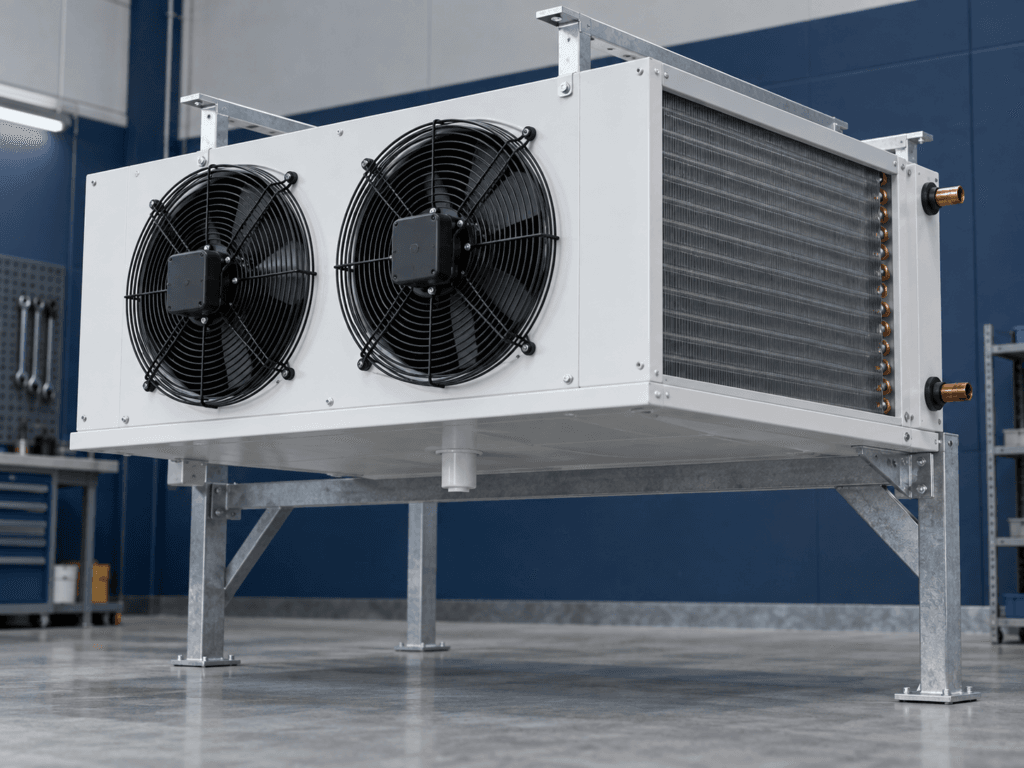
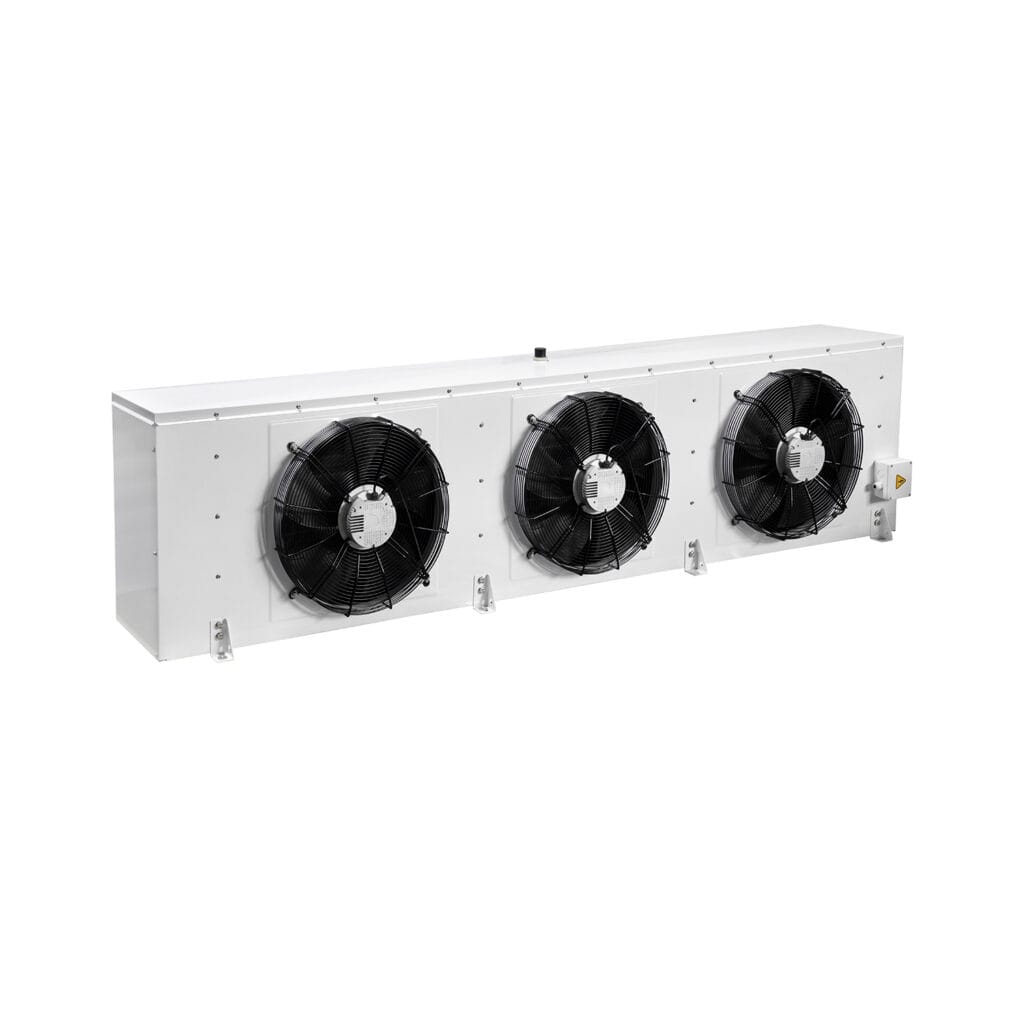
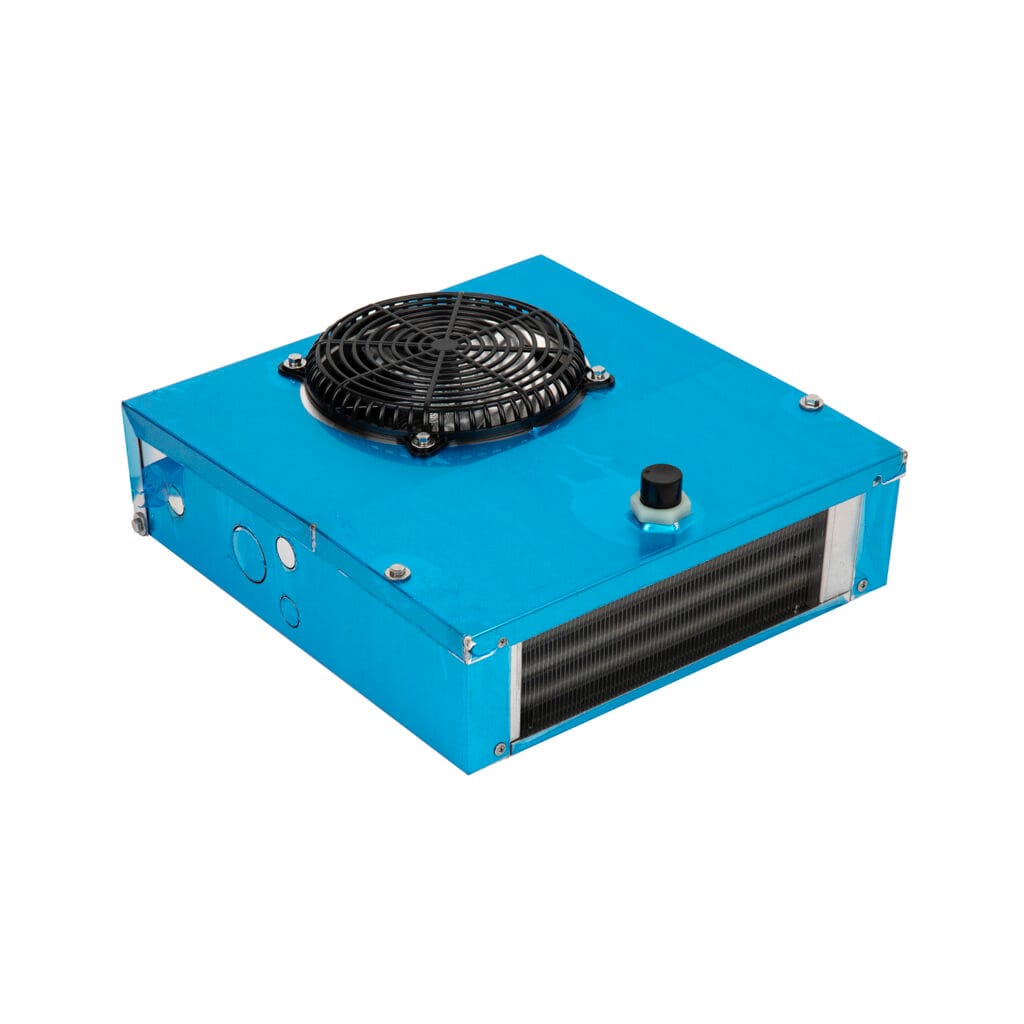
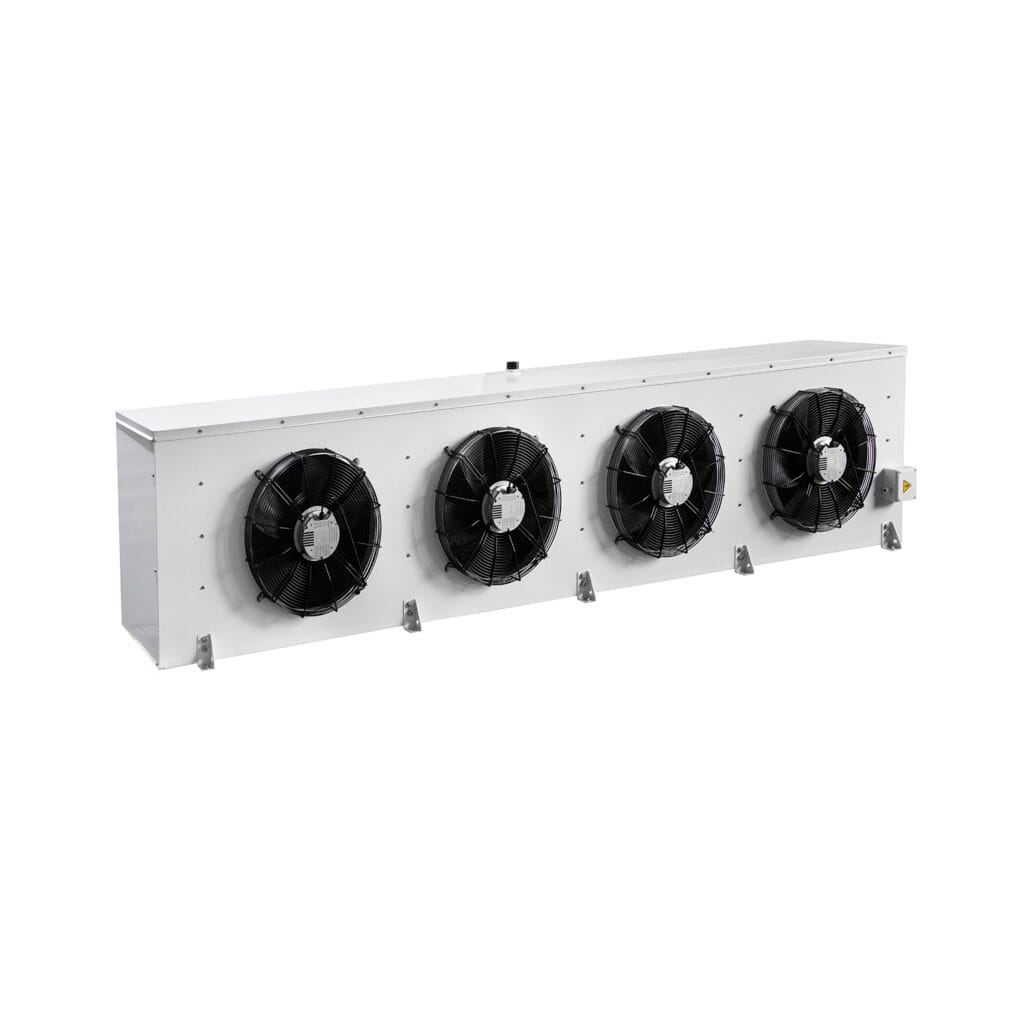
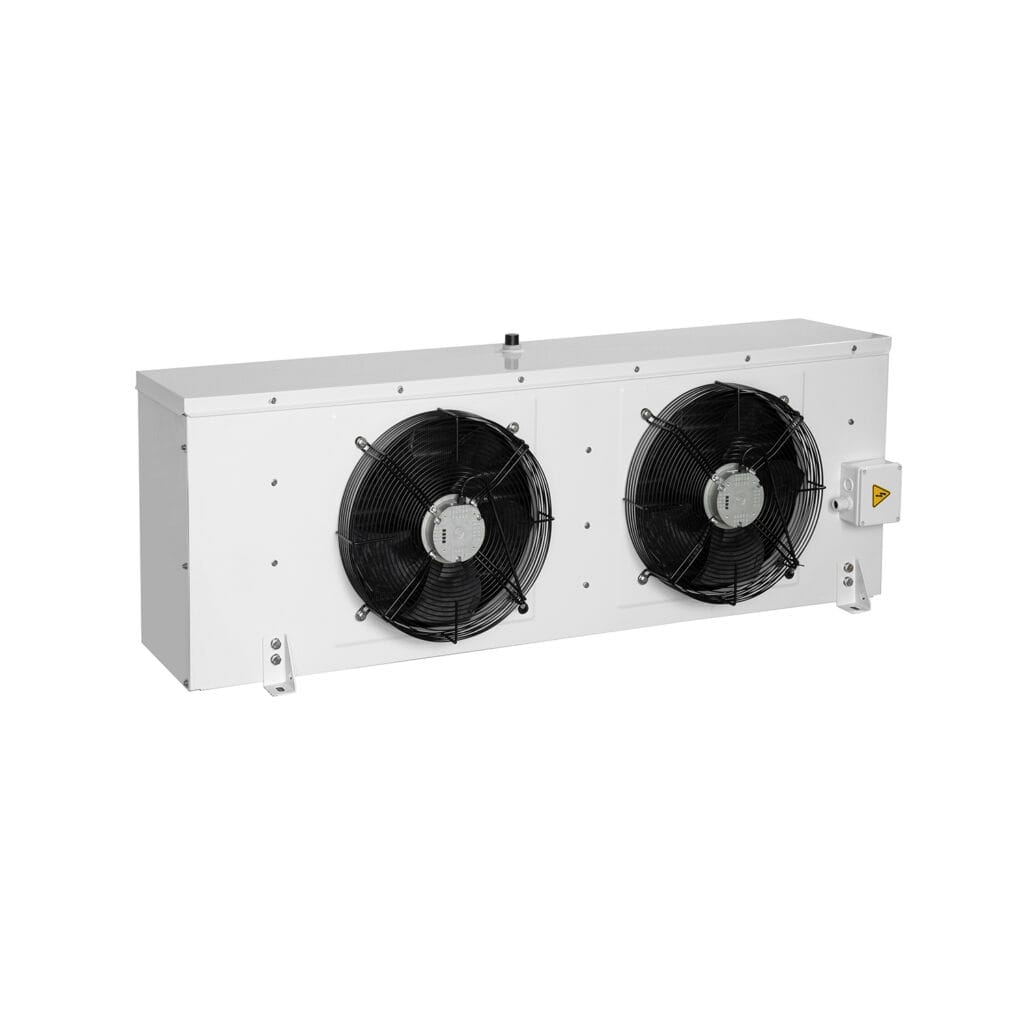
This view focuses on the air cooler housing, fan arrangement, coil face, drain provision and mounting points. Confirm room dimensions, target temperature, airflow direction, defrost method, power supply and available service clearance against the project requirements.

Air coolers circulate conditioned air in cold rooms, freezers and temperature-controlled storage areas. Use the application view to review ceiling or wall position, air throw, product clearance, drainage and access for cleaning and maintenance.
Check: Provide room use, target temperature, humidity or frost context and operating cycle
Consider: Helps determine the airflow and defrost questions that require review.
Check: Share room dimensions, air direction, required air throw, fan arrangement and obstructions
Consider: Prevents an air cooler from being chosen without checking coverage.
Check: Confirm ceiling or other mounting, clearances, drain route, defrost arrangement and maintenance access
Consider: Supports practical installation review.
Review the linked child category for ceiling installation context. Confirm envelope, fixing points, air direction, drain and service clearance.
An air cooler is reviewed through its coil or heat-transfer surface, fan or motor arrangement, casing, airflow and drain interface.
Confirm the frost environment, defrost method, access panels, drainage and cleaning requirements before release.
| Parameter | Information to provide | Why it matters |
|---|---|---|
| Room or cabinet application | Cold room, freezer, display cabinet or other equipment | Defines the installation context. |
| Target condition | Target temperature, humidity or frost condition and operating cycle | Supports airflow and defrost review. |
| Airflow requirement | Room dimensions, air direction, air throw, fan arrangement and obstructions | Helps review coverage and placement. |
| Mounting and clearance | Ceiling or other mounting, fixing points, envelope and service space | Confirms installation feasibility. |
| Drain and defrost | Drain route, defrost method and maintenance access | Prevents installation and service conflicts. |
Air coolers distribute air across the room while the coil, fan, drain and defrost interfaces must fit the room
Confirm: Provide room dimensions, target temperature, mounting and drain information.
Lower-temperature use requires closer review of frost, defrost, airflow and access
Confirm: Confirm operating condition, defrost method and service clearance.
Compact layouts make airflow direction, depth and access important
Confirm: Share cabinet layout, fan arrangement, target condition and available space.
Include the operating environment, airflow direction, available clearance, room dimensions and target condition
Confirm: Helps review air distribution and installation constraints.
Confirm the approved envelope, mounting, air direction, drain and connection details.
Ask which coil, casing, fan, motor and dimensional checks apply to the quoted configuration.
Agree the applicable airflow, electrical, defrost, drainage or other project-specific checks before release.
Provide application, dimensions, target temperature, humidity or frost context and operating cycle
Why it matters: Establishes the air-distribution review.
Send air direction, required throw, fixing points, envelope, clearance and obstructions
Why it matters: Enables installation and coverage review.
State drain route, defrost method and maintenance access
Why it matters: Prevents service conflicts.
Share quantity, layout, photos, drawing revision and inspection needs
Why it matters: Supports a traceable quotation.
Provide room or cabinet layout, target temperature, required air throw, mounting envelope, drain route, defrost method and service access
Why it matters: Establishes the installation requirements.
Provide room length, width and height, target temperature, application, airflow direction, obstructions, mounting location and defrost context.
Compare ceiling or other mounting options against the room layout, clearance, drain path, service access and airflow direction.
Yes. Frost and defrost conditions, drainage, air throw and maintenance access should be confirmed for the actual operating condition.
Send the old unit reference, dimensions, mounting, fan or motor details, drain and clear photos for a structured comparison.
Confirm the approved drawing, air direction, mounting, drain, electrical and applicable functional inspection items.
Use it to organize coil, airflow, defrost and RFQ inputs.
Use it to structure room coverage, fan layout and air-throw questions.
Use it when cold-storage airflow and pre-cooling conditions need review.
Use it to connect target temperature with refrigeration and coil inputs.
A clear RFQ helps the team review the right category, construction and interface. Use the checklist below as a practical starting point, then provide the category-specific details shown above.
State the equipment, target condition, ambient environment and expected duty.
Share dimensions, mounting points, connections, airflow direction and service clearances.
For fans and motors, include voltage, frequency, control signal, rotation and wiring.
Attach the old part, drawing or sample and state quantity, revision and documentation needs.
Share your application, drawings and operating requirements so our team can review the details of your project.