

Your Custom Coil - From Drawing or Sample to Validated Production
Upload your drawing, old sample photo or parameter sheet. Domi Refrigeration can review custom condenser coils, evaporator coils, fin-tube coils, microchannel heat exchangers and non-standard thermal components for refrigeration, HVAC, heat pump, industrial cooling and liquid cooling projects.
For OEM buyers, Domi can review custom coil design requirements and respond as a custom coil manufacturer before quotation and first-sample approval.
CONVERSION PATH
Start the Custom Review with What You Have
5-Step Workflow
From requirement review to sample validation and bulk production.
Upload Any Starting Point
Drawings, sample photos, old coils, CAD files or parameter sheets.
No MOQ for First Sample
Start with one sample for evaluation before bulk production.
24-Hour Technical Response
Engineering review response for qualified custom projects.
NON-STANDARD BUYER PAIN POINTS
Standard Coils Do Not Always Fit Custom Equipment
I only have an old sample.
Send old coil photos, dimensions and connection positions. Domi can review replacement feasibility.
My equipment space is limited.
Custom tube routing, fin size, coil dimensions and connection direction can be reviewed according to the installation space.
My project has special materials.
Copper, aluminum, stainless steel, coated structures and hybrid materials can be discussed based on corrosion, weight, cost and heat transfer requirements.
I need a sample before committing to bulk order.
Sample development can help verify dimensions, fit-up, appearance and project-specific performance before production.
CUSTOM DEVELOPMENT TIMELINE
5-Step Custom Coil Development Timeline
STEP 1
Upload Drawing, Sample or Parameter Sheet
STEP 2
Engineering Review and Feasibility Check
Timeline: Within 24 hours
STEP 3
Quotation and Technical Confirmation
STEP 4
First Sample Fabrication
STEP 5
Validation and Production Preparation
UPLOAD ENTRANCE
Upload Your Drawing, Sample Photo or Parameter Sheet
- PDF drawings
- DWG / DXF files
- STEP / STP / 3D files
- JPG / PNG sample photos
- Excel parameter sheets
- Existing product photos
- Old coil photos

If the customer does not meet these conditions, they can also check the styles on our brochure and choose to use our ready-made molds and styles.
Start Your Custom Coil Review
FIRST SAMPLE SUPPORT
Start with a First Sample Before Bulk Production
Lower Project Entry Barrier
Start with a sample review instead of committing to a large production order immediately.
Validate Fit-Up First
Check dimensions, connection position, installation space and appearance before bulk production.
Reduce Procurement Risk
Confirm the sample before arranging repeated production or long-term OEM supply.
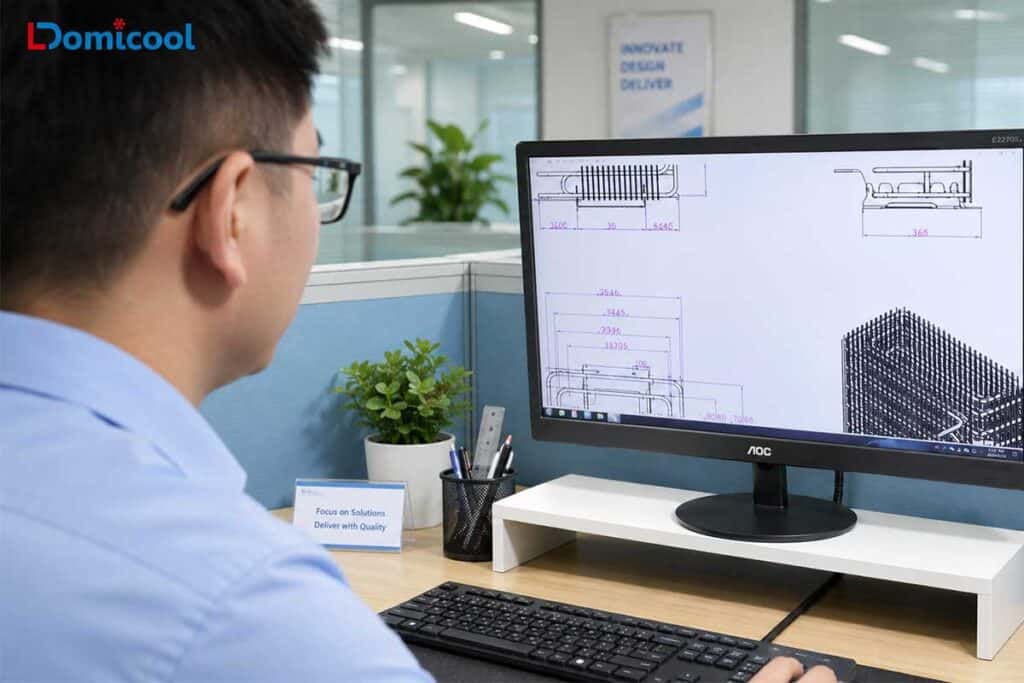
TECHNICAL RESPONSE
24-Hour Technical Response for Custom Coil Projects
Structure Feasibility
Review coil shape, tube route, fin size and installation limits.
Material Suggestion
Review copper, aluminum, stainless steel, coated or hybrid material options.
Missing Data List
Tell buyers what information is still needed before quotation or sample.
Next-Step Recommendation
Recommend whether to proceed with quotation, sample, drawing confirmation or further engineering review.
CUSTOM OPTIONS
Custom Options for Non-Standard Coils and Heat Exchangers
Coil Diameter and Dimensions
Length, width, height, thickness, tube diameter and installation space.
Fin Size and Fin Pitch
Fin height, fin spacing, fin material, fin thickness and airflow resistance.
Tube Route and Circuit Design
Tube path, circuit layout, bending structure, connection direction and refrigerant path.
Material Selection
Copper, aluminum, stainless steel, steel wire, coated or hybrid structures.
Product Type
Condenser, evaporator, fin-tube coil, microchannel heat exchanger or custom coil assembly.
Working Medium
Refrigerant, water, glycol, coolant, oil or other project-specific fluids.
Surface Treatment
Anti-corrosion coating, epoxy coating, hydrophilic treatment or other project-based options.
Packaging Method
Carton, pallet, crate, protective frame or custom export packaging.
CUSTOM PRODUCT TYPES
Custom Coil and Heat Exchanger Types We Can Fabricate
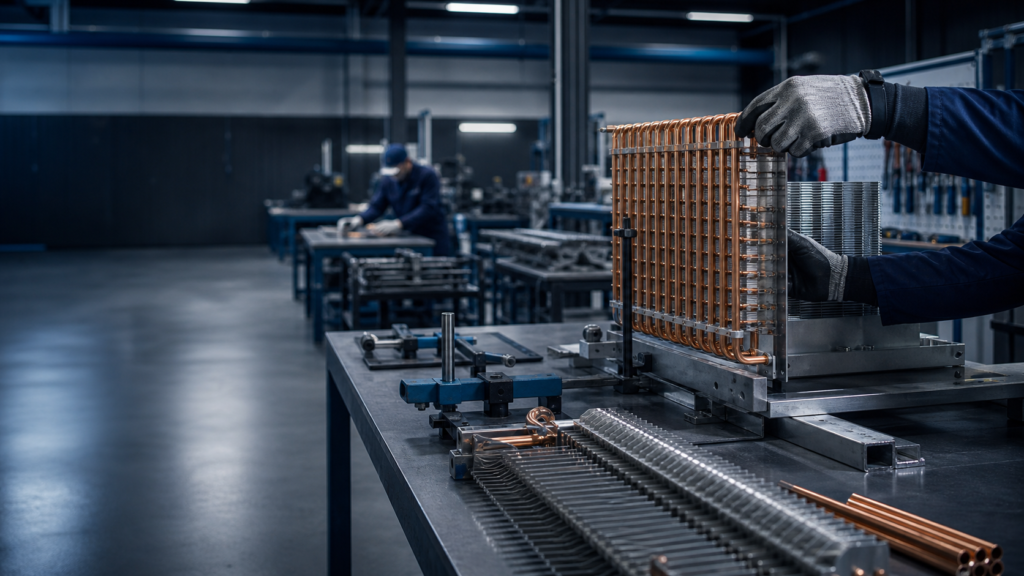
Custom Condenser Coil
Custom Evaporator Coil
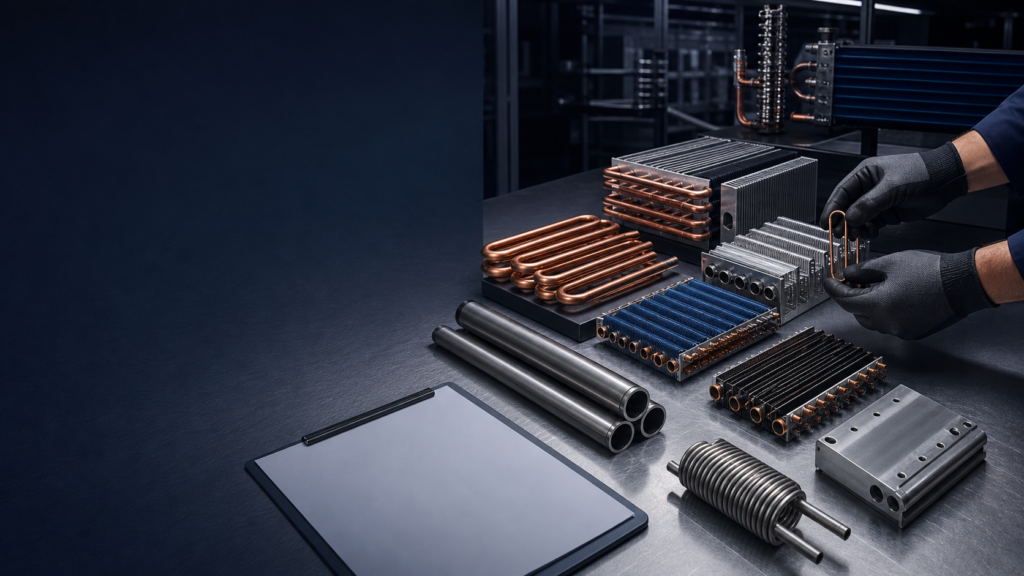
Custom Fin-Tube Coil
Custom Microchannel Heat Exchanger
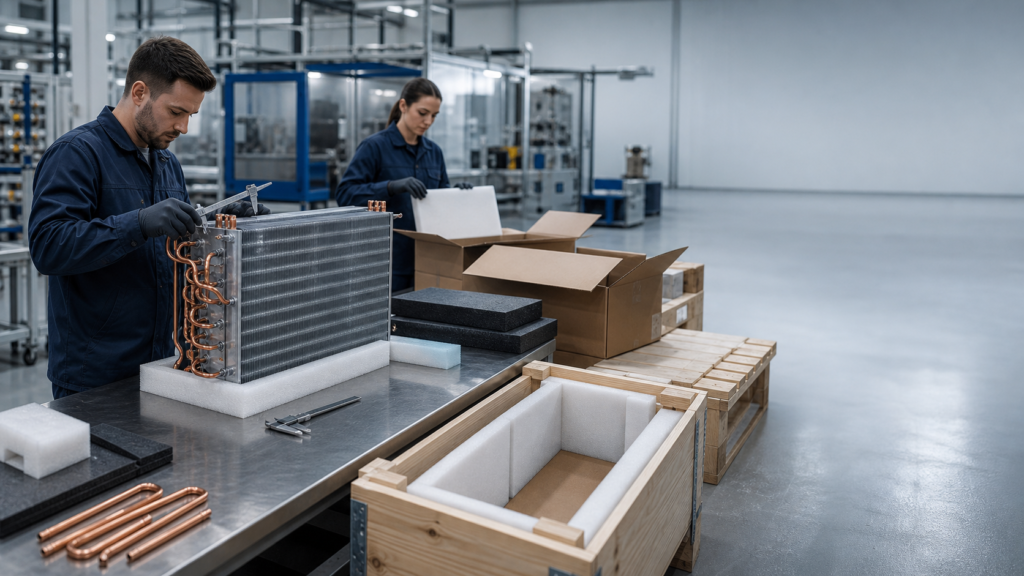
Custom Commercial Refrigeration Coil
Custom Industrial Refrigeration Coil
Custom Liquid Cooling Heat Exchanger
Replacement Coil Fabrication
RFQ CHECKLIST
What to Send for a Faster Custom Coil Quote
Basic Project Information
- Application
- Equipment type
- Product type
- Quantity
- Destination country
- Delivery schedule
Drawing or Sample Information
- 2D drawing
- 3D file
- Old sample photo
- Main dimensions
- Connection position
- Installation space
Technical Parameters
- Tube diameter
- Fin size
- Fin pitch
- Tube material
- Fin material
- Working medium or refrigerant
- Operating pressure
- Cooling or heating capacity
- Airflow or liquid flow rate
- Pressure drop limit
Production and Packaging
- Sample requirement
- Testing requirement
- Surface treatment
- Packaging requirement
- Labeling requirement
- Export transport condition
REPEATABLE PRODUCTION
From Custom Requirement to Repeatable Production
Step 1: Requirement Intake
Collect drawings, samples, parameters, application information and buyer expectations.
Step 2: Engineering Review
Review structure, thermal needs, material, pressure, airflow, installation and manufacturing feasibility.
Step 3: Quotation and Technical Confirmation
Confirm scope, sample cost, material, timeline, testing requirement and packaging plan.
Step 4: Sample Fabrication
Produce first sample according to confirmed drawing, sample or parameter sheet.
Step 5: Sample Validation
Check fit-up, appearance, dimension, leakage, thermal requirement or buyer-specific approval points.
Step 6: Bulk Production Preparation
Confirm tooling, inspection checklist, packaging method, production batch and delivery schedule.
Step 7: Repeat Order Support
Maintain drawing version, production notes and packaging requirements for future repeated orders.
LOWER-RISK START
A Lower-Risk Way to Start a Custom Coil Project
Upload Before Quotation
Buyers can send drawings or photos first before committing to sample or production.
Sample Before Bulk Order
The first sample helps validate dimensions and structure before larger purchase decisions.
Engineering Feedback First
Technical review helps identify missing data and feasibility issues early.
Export Packaging Planning
Packaging is reviewed before shipment to reduce deformation, fin damage and transport risk.
FAQ
Custom Coil Fabrication FAQ
CUSTOM COIL RFQ
Upload Your Drawing, Sample or Parameter Sheet Today
Start with what you have: a drawing, old coil photo, rough dimension, 3D file or parameter sheet. Domi Refrigeration can review your custom heat exchanger or coil project and recommend the next step for sample development and production.
Send Your Custom Coil Requirement
Upload your drawing or sample photo and include material, dimensions, operating conditions, quantity and testing requirements.