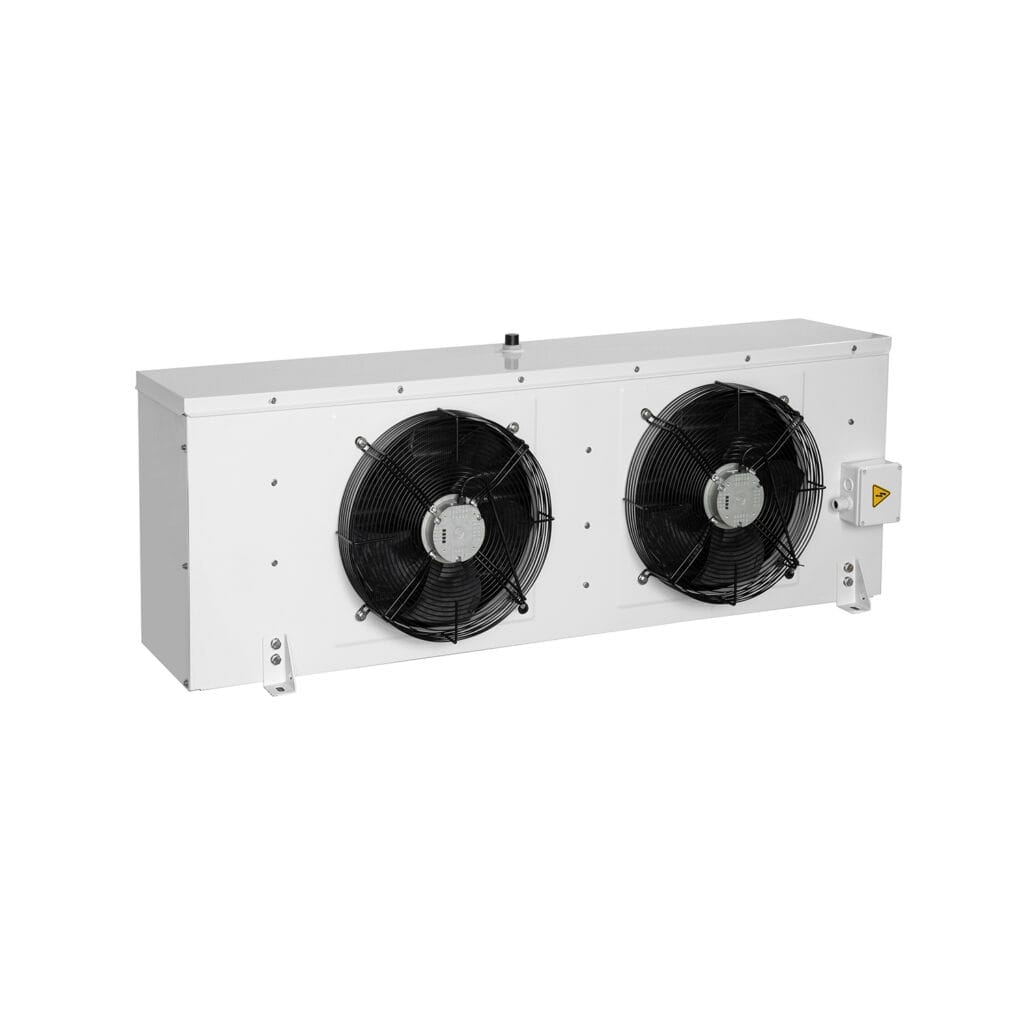
Required duty and operating condition
Check: Provide equipment type, target temperature, ambient condition, refrigerant or working fluid if known, and expected load
Consider: Prevents a component from being selected only by appearance.


Commercial refrigeration covers component choices for display cases, air-conditioning-related equipment and cold-storage systems. Domi's current published commercial range includes fin-type evaporator and condenser examples plus EC and shaded pole motor examples. For a useful match, provide the equipment type, target temperature or duty, available envelope, airflow or heat-rejection requirement, connection details, motor power supply where relevant, and the drawing or existing-part reference. Final suitability depends on system conditions and installation constraints, not the category name alone.
Showing 13–13 of 13 results
This view places the refrigeration component in a commercial equipment context, where cabinet dimensions, service access and connection layout often guide the selection. Use the visible assembly as a reference, then confirm the required component type, envelope, materials, mounting points and interfaces from the project drawing.

Commercial installations may combine display cases, freezers, cold rooms and other food-service equipment. The application view helps buyers review airflow, ambient exposure, cleaning access and the relationship between the heat exchanger, fan and refrigeration circuit before requesting a quotation.
Check: Provide equipment type, target temperature, ambient condition, refrigerant or working fluid if known, and expected load
Consider: Prevents a component from being selected only by appearance.
Check: Share overall dimensions, mounting points, airflow direction, tube or port size and orientation
Consider: Confirms installation fit and service access.
Check: For fan or motor products, confirm supply, speed or control and fan geometry; for coils, confirm the airflow path and heat-transfer side
Consider: Helps align the component with the rest of the assembly.
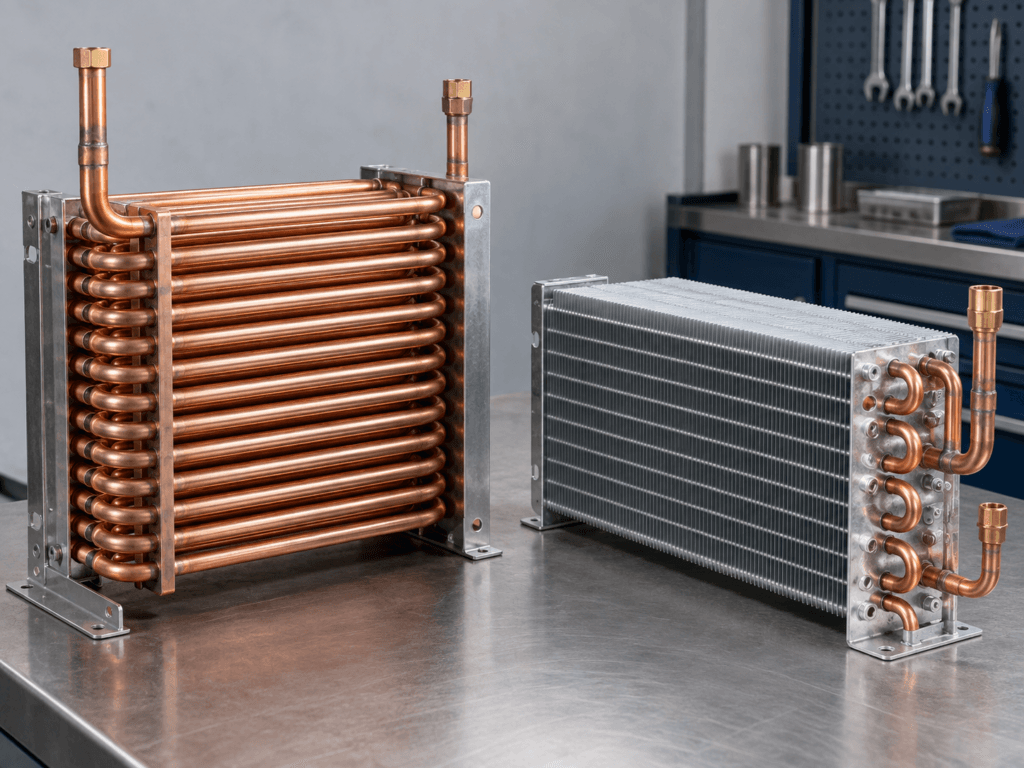
Published products include fin-type evaporator and condenser examples; confirm tube, fin and frame construction from the drawing or sample before release.
Published products include EC and shaded pole motor examples; select by electrical input, speed or control, mounting and fan load.
Confirm the component's air path, tube or port layout and service clearance as part of the complete refrigeration assembly.
| Parameter | Information to provide | Why it matters |
|---|---|---|
| Target application | Display case, cold storage, air-conditioning equipment or other commercial equipment | Defines duty and installation context. |
| Operating condition | Target temperature, ambient condition, refrigerant or working fluid if known | Supports a meaningful technical review. |
| Envelope and mounting | Overall dimensions, fixing points, airflow direction and service clearance | Prevents fit and access issues. |
| Connections | Tube or port size, orientation and connection method | Confirms the system interface. |
| Quantity and documentation | Forecast quantity, drawing revision, sample or existing part reference | Supports quotation and revision control. |
| Choice area | What changes | Confirm before choosing |
|---|---|---|
| Fin-type evaporator vs fin-type condenser | An evaporator absorbs heat on the low side while a condenser rejects heat on the high side | Confirm system role, duty, airflow and connections. |
| EC motor vs shaded pole motor | Different motor and control approaches may be used for fan assemblies | Confirm voltage, control signal, mounting, fan geometry and load. |
| Coil layout options | Tube, fin, frame and connection arrangements change the installation interface | Compare the approved drawing, available envelope and service access. |
Components are selected around cabinet depth, airflow path and service access
Confirm: Share cabinet layout, temperature target and existing component reference.
Coil, fan and motor choices depend on room condition, airflow and defrost arrangement
Confirm: Confirm room temperature, air throw, mounting and defrost method.
Condenser and evaporator interfaces must match the complete refrigeration circuit
Confirm: Provide duty, connections, dimensions and system information.
Review cabinet or room duty, target condition, ambient environment, airflow, mounting arrangement and connection details
Confirm: Keeps the component selection tied to the commercial installation.
Confirm cabinet or room duty, target condition, airflow, mounting, defrost and connections
Confirm: Supports comparison of the correct evaporator family.
Confirm the approved drawing or physical reference before production release.
Ask which material, dimensions and inspection records apply to the quoted part.
For motors and assemblies, confirm the test items and acceptance criteria with the quotation.
State the required category, model or replacement reference
Why it matters: Lets the team start with the correct product family.
Provide equipment, target temperature, ambient condition and duty information
Why it matters: Avoids a visual-only match.
Send a drawing, photos, mounting details, tube or port details and wiring information
Why it matters: Enables fit and connection review.
Share estimated quantity and required delivery window for confirmation
Why it matters: Allows a realistic quotation review.
A photo is a useful starting point, but include dimensions, connections, operating conditions and the existing part or drawing when possible.
Send the old part number if available, overall dimensions, mounting points, tube or wiring details, application and quantity.
No. The archive shows the current published product and category context; final suitability should be confirmed against drawings and operating requirements.
Send the application, required interfaces and drawings so the technical details can be reviewed before quotation.
Compare supply, speed or control method, mounting, fan geometry and required load; these are not interchangeable based on name alone.
Use this guide to organize capacity, face velocity and pressure-drop inputs.
Use it to review condenser duty, airflow and quotation information.
Use it to review coil, fan, airflow and control interfaces together.
A clear RFQ helps the team review the right category, construction and interface. Use the checklist below as a practical starting point, then provide the category-specific details shown above.
State the equipment, target condition, ambient environment and expected duty.
Share dimensions, mounting points, connections, airflow direction and service clearances.
For fans and motors, include voltage, frequency, control signal, rotation and wiring.
Attach the old part, drawing or sample and state quantity, revision and documentation needs.
Share your application, drawings and operating requirements so our team can review the details of your project.