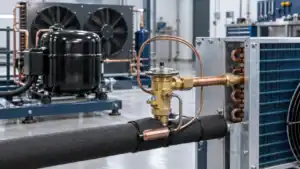

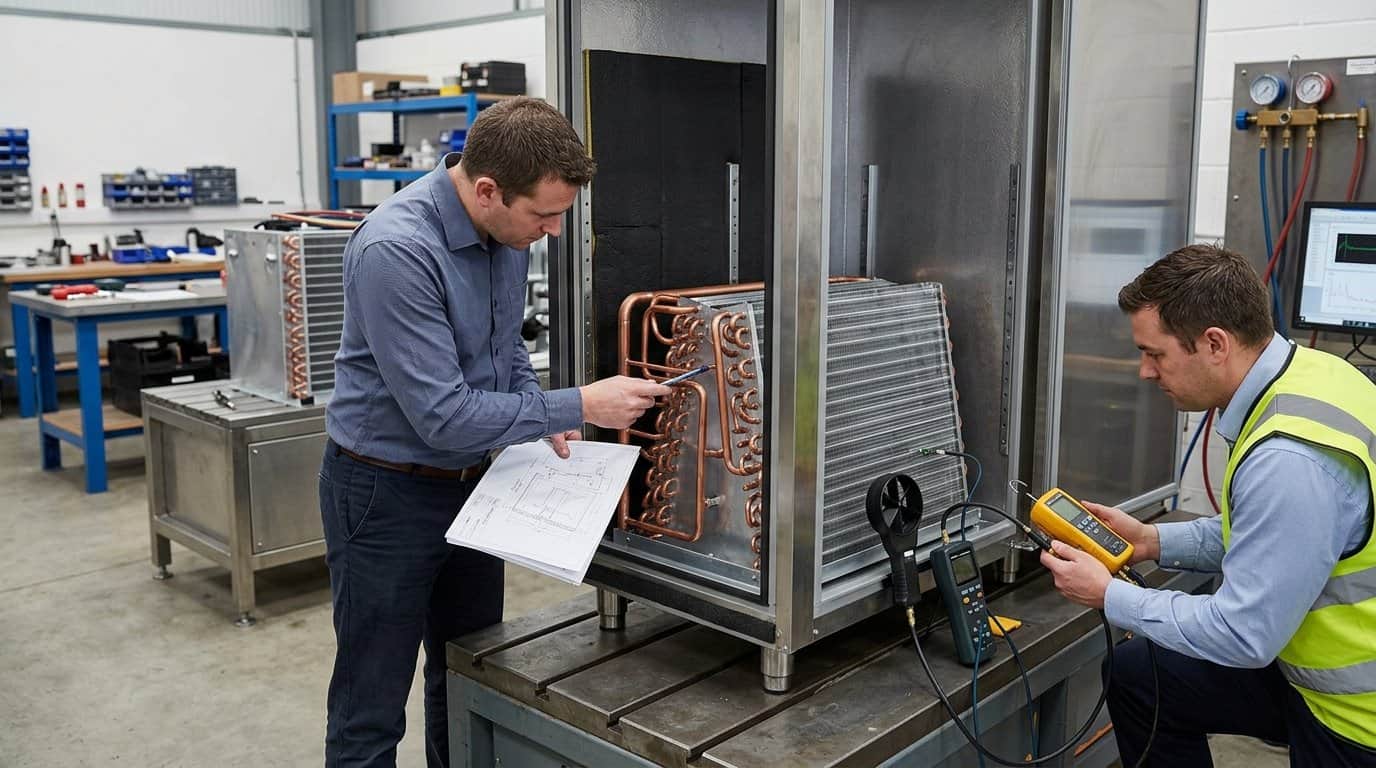
Replacement HVAC coils should be matched to the original equipment duty and interfaces, not only to a model number or outside dimension. A reliable replacement review checks the coil role, working medium, air conditions, airflow, pressure drops, face and depth dimensions, rows, fin spacing, circuiting, connections, mounting, drain path, environment, and drawing revision.
Ordering replacement HVAC coils becomes difficult when the old part is damaged, the nameplate is incomplete, or the original design is no longer available. A cabinet may have been modified in the field. A fan may have been changed. The equipment may now run a different refrigerant, airflow, or control sequence. A replacement that appears to fit can still produce the wrong capacity, pressure drop, condensate behavior, or service result.
This guide is for commercial HVAC service teams, OEM replacement programs, contractors, distributors, facility engineers, and procurement buyers. It describes a practical way to collect information and compare a replacement quotation. It does not promise that any generic replacement will work in a specific unit. The responsible engineer must verify the system, refrigerant, pressure, safety, code, and installation requirements.
The phrase replacement HVAC coils can refer to several different jobs. A buyer may want an exact fit for a damaged evaporator. A manufacturer may need a direct-fit replacement family for older models. A project engineer may want a redesigned coil that reduces corrosion or fixes an airflow problem. Label the goal before requesting a price. Fit-only, duty-match, and design-improvement projects need different levels of review.
What counts as a replacement HVAC coil
A replacement HVAC coil is a new coil intended to take the place of an existing component. The replacement may copy the original construction, match the original duty with a different construction, or correct a known design problem. These are not interchangeable promises.
Fit replacement
A fit replacement follows the existing opening, mounting, connections, airflow direction, drain, and service path. It is useful when the equipment and duty remain unchanged and the original design is understood. Even a fit replacement needs a drawing or controlled measurement record. A model number alone may not capture a field modification, a special connection, or an old revision.
Duty replacement
A duty replacement is rated to meet defined cooling or heating conditions. It may use a different tube, fin, row, or circuit arrangement while preserving the cabinet interface. The rating must show the conditions used. If airflow, refrigerant, fluid temperature, humidity, or pressure-drop limits differ from the old unit, the buyer should not describe the result as an exact copy.
Design-improvement replacement
A design-improvement replacement changes something on purpose. It may use a wider fin spacing for cleaning, a material change for a corrosive environment, a different connection position, a redesigned circuit, or a new drain arrangement. The buyer should record the reason for the change and identify any cabinet, fan, control, piping, or maintenance effect.
| Replacement goal | What stays the same | What may change | Approval question |
|---|---|---|---|
| Fit replacement | Opening, mounting, connections, airflow direction | Internal construction may be copied or verified | Does the replacement fit without field modification? |
| Duty replacement | Equipment function and stated rating point | Rows, fins, circuiting, or materials may change | Does the new rating use comparable conditions? |
| Design improvement | Application and required duty | Corrosion protection, service access, drainage, or geometry | What system changes must be approved with the coil? |
The supplier needs to know which goal applies. If the goal is not clear, the quotation should list the assumption. That small sentence can prevent a later disagreement about whether the part was promised as a direct fit or only as a similar heat-transfer component.
Collect the old-part record before measuring
Start with the equipment record. Capture the manufacturer, model, serial or asset number, application, installation location, service history, refrigerant or fluid, fan, controls, and known failure mode. A clean picture of the nameplate and the complete coil assembly can be more useful than a cropped close-up of a damaged fin.
Record whether the coil is an evaporator, condenser, chilled-water coil, hot-water coil, steam coil, or heat-pump coil. If the unit changes mode, record each mode. Replacement HVAC coils can look similar across roles, but their headers, circuits, pressure limits, and rating conditions can be different.
Ask the service team what changed before the failure. Was a refrigerant charge adjusted? Was the fan replaced? Was a filter or grille added? Did the unit move to a coastal or wash-down environment? Did the drain start carrying water? Those details may point to a system problem that a new coil alone will not solve.
Measurements should be traceable. Put a date, instrument, and person on the sketch. Photograph the tape or caliper position for unusual dimensions. Record whether the measurement is over the fin pack, over the frame, or between mounting faces. Write down the direction from the air inlet side so the connection orientation is not reversed later.
Measure the mechanical interface
The mechanical interface includes more than width and height. Measure face width, face height, overall depth, fin-pack depth, row count if visible, tube or connection location, header projection, casing flange, brackets, mounting holes, drain pan, drain outlet, insulation clearance, and removal path.
For replacement HVAC coils, the removal path can be the hidden constraint. A coil may fit the installed opening but cannot be inserted through the service door. A header may clear the cabinet in one direction but hit a frame when the coil is rotated. Include the path used to remove the old component and identify any panel or frame that is normally left in place.
Connection details deserve a separate drawing. Show connection diameter, side, centerline, projection, orientation, brazed or threaded interface, distributor, valve, capillary, sensor pocket, and nearby supports. Include the drain outlet and the slope or orientation required to carry condensate away. A connection that is off by a small amount can force a pipe change and turn a simple replacement into a site modification.
Use a consistent measurement convention. For example, state whether width is viewed in the airflow direction or from the service side. Mark top, bottom, left, and right. Note whether fins are bent and whether the frame is distorted. The supplier can then separate original design dimensions from damage dimensions.
Match thermal duty and operating conditions
The old capacity number is a starting point, not a complete design basis. Find the conditions used to create it. Check entering air temperature, leaving air temperature, humidity, airflow, refrigerant or fluid, evaporating or condensing condition, superheat or subcooling, water or glycol concentration, and pressure-drop limits.
If no original rating is available, gather field measurements and equipment information. Mark which values are measured, which come from a nameplate, and which are estimates. A supplier can work with incomplete data, but the result should be labeled as a screening or budgetary review until the missing inputs are closed.
For an evaporator, note frost or condensation. A freezer coil may operate under a different surface condition from an air-conditioning coil. Frost changes effective airflow and heat transfer. A drain pan, heater, defrost cycle, or drain line can be part of the replacement decision.
For a condenser, note outdoor design temperature, fan airflow, heat rejection duty, noise, fouling, and corrosion. A condenser replacement that meets a laboratory condition may not meet the site condition if the ambient temperature or fan setting is different.
For a hydronic coil, record water or glycol flow and pressure drop. If the fan or pump has little margin, a coil with higher pressure drop may create a field performance problem even if its nominal capacity is higher. Replacement HVAC coils should be evaluated as part of the air and fluid system.
| Duty area | Minimum comparison data | What to confirm with the supplier |
|---|---|---|
| Air side | Airflow, entering and leaving temperature, humidity, face area | Capacity basis, face velocity, air-side pressure drop, condensation or frost |
| Refrigerant side | Refrigerant, evaporating or condensing condition, superheat or subcooling | Circuiting, distributor, connection, pressure drop, design pressure |
| Hydronic side | Fluid type, concentration, flow, entering and leaving temperature | Fluid-side pressure drop, connection, design pressure, drain and venting |
| Equipment | Fan, filter, cabinet, controls, operating schedule | Available airflow, control range, noise, service access, mode changes |
| Field condition | Dust, salt, chemicals, moisture, wash-down, frost | Material, fin spacing, coating, cleaning, drainage, inspection |
The comparison should show whether the proposed replacement meets the original target, a revised target, or only a physical fit. These labels are different. A buyer should not approve a capacity claim that is based on a condition the equipment cannot provide.
Check the material and surface condition
The original material may have been chosen for cost, availability, corrosion resistance, manufacturing method, or a particular refrigerant or fluid. Do not change it casually. Copper tubes with aluminum fins, aluminum tubes, coated fins, stainless components, and other combinations can each have a place, but the choice must fit the environment and the production process.
Corrosion evidence can identify the required change. Look for pitting, galvanic attack, fin loss, tube leaks, coating failure, blocked drains, chemical residue, or damage caused by cleaning. If the coil failed because water or salt stayed on the surface, replacing the same construction without correcting drainage or cleaning may repeat the failure.
Coating questions should be specific. Ask which surfaces are treated, how edges and joints are handled, what preparation is used, what test evidence is available, and how the field team will clean or repair the part. If a particular coating, certification, test, or life claim has not been confirmed, use REQUIRES BUSINESS INPUT in the RFQ.
Fin spacing is also a service decision. Tight fins can support a compact design but may hold more dirt or frost. Wider fins can be easier to clean and may help frost clearance, but they may require more face area or depth. The replacement should be judged against the site’s maintenance method, not only the old fin count.
Compare circuiting, headers, and connections
Circuiting controls how refrigerant or fluid travels through the coil. A different number of circuits can change pressure drop, distribution, velocity, oil return, and temperature uniformity. Headers and distributors also affect how the coil connects to the rest of the equipment.
Do not assume the same number of rows means the same circuit. Ask for a circuit drawing or an equivalent description. Verify inlet and outlet positions, distributor type, header volume, connection size, and the relationship to valves, sensors, and supports. For hydronic replacement HVAC coils, check whether the arrangement is same-end, opposite-end, or another specified layout.
If the replacement is for a heat pump, review both heating and cooling modes. A coil that works in one mode may need different circuiting, drain, control, or frost considerations in the other. A replacement quote should identify whether both modes were rated or whether one mode remains open.
Plan the RFQ and drawing review
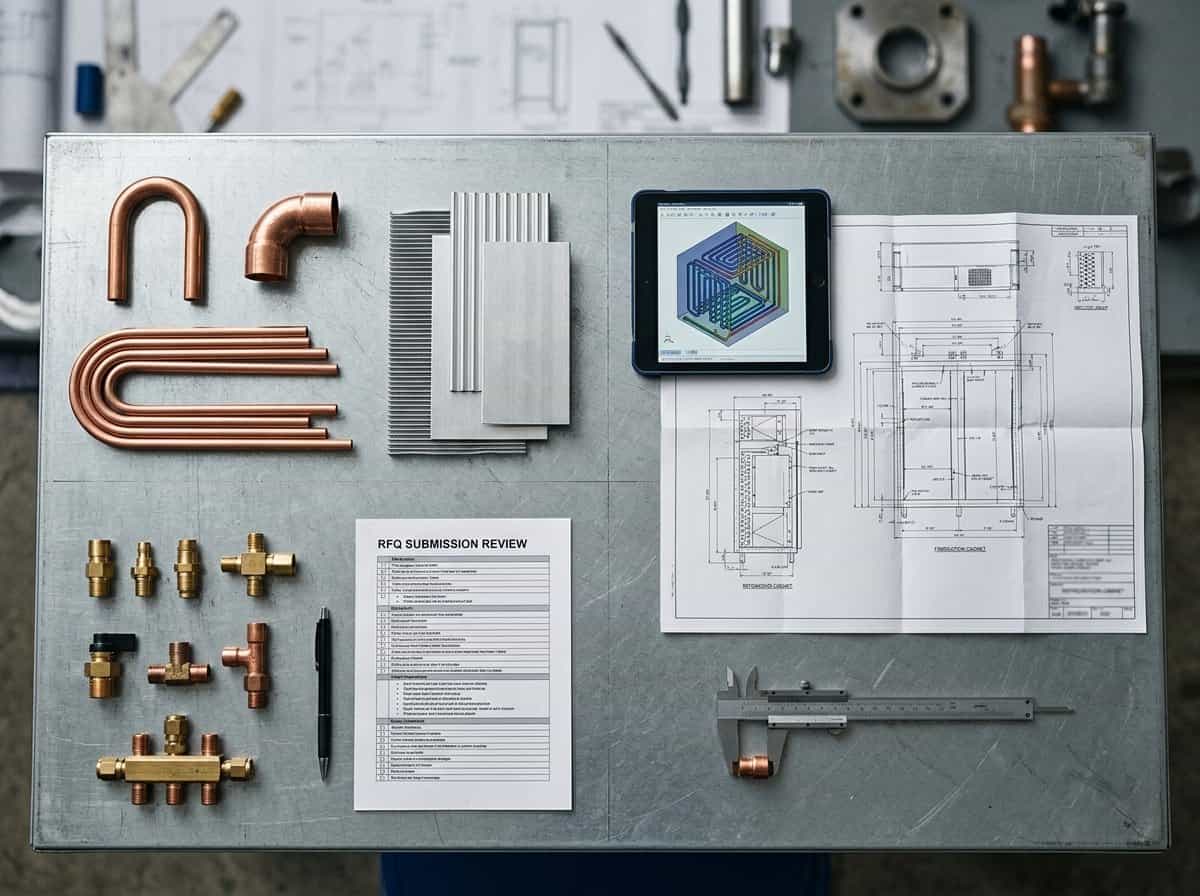
A clear RFQ saves time on both sides. Put the target outcome on the first page. Attach the equipment drawing, old-part photographs, dimensioned sketch, operating conditions, quantity, and destination. Then list the required supplier deliverables.
For a replacement HVAC coils program, request a drawing with revision, material callouts, tube and fin information, connections, mounting, drain, inspection points, and packing orientation. Request a rating sheet with the conditions and assumptions. If a sample is required, state the sample quantity, inspection method, and approval owner.
The quote should separate recurring part cost from tooling, prototype, testing, packaging, and one-time engineering where those items apply. Do not insert a lead time, MOQ, certification, or test result into the public article unless the business has confirmed it for the particular project. The correct phrase for an unknown value is REQUIRES BUSINESS INPUT.
| RFQ stage | Documents or evidence | Decision to record |
|---|---|---|
| Identification | Nameplate, photos, measurements, service history | Is the component and replacement goal clear? |
| Engineering review | Rating basis, proposed construction, drawing, open points | Does the replacement meet the fit and duty requirements? |
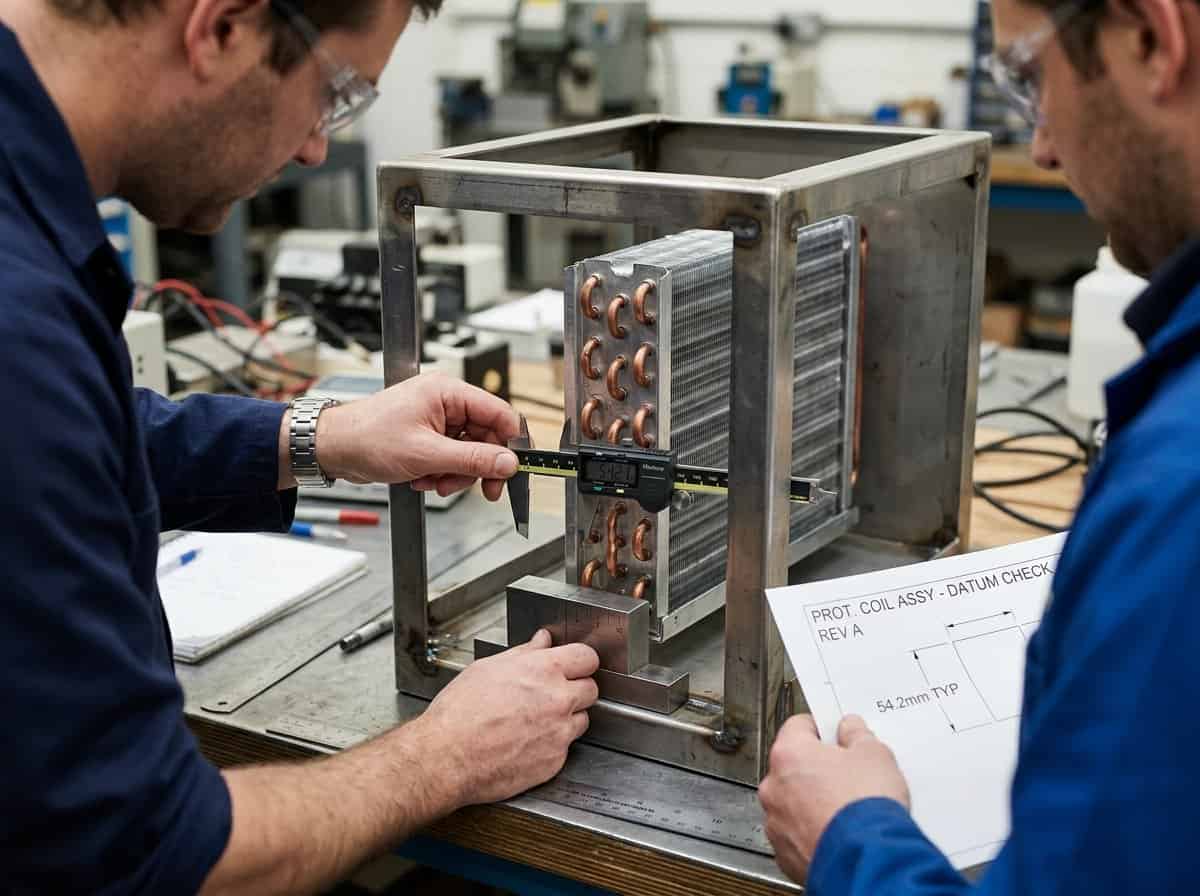
| Sample approval | Sample dimensions, interface check, agreed tests, photos | Does the sample represent the production revision? |
| Production release | Final drawing, inspection plan, packaging, change process | Can procurement order the correct revision repeatedly? |
| Field installation | Fit record, connection check, startup observations | Did installation and operating conditions match the assumptions? |
Validate the replacement before the first production order
Validation should match the risk. A simple fit replacement may need dimension, connection, leak, and installation checks. A redesigned coil may need thermal rating, airflow, pressure drop, condensate, corrosion, or mode testing. The responsible engineer should define acceptance criteria before the sample is made.
The AHRI 410 performance rating standard may be relevant to some forced-circulation air-cooling and air-heating coils, but it has a defined scope. It should not be used as a blanket statement for every refrigeration, microchannel, frosting, bare-tube, or direct-expansion condition. The ASHRAE standards and guidelines resource can help locate broader references.
For a refrigerant replacement, include the pressure and safety review required by the project. The EPA Section 608 requirements are a useful public reference for refrigerant management obligations in the United States. The article cannot certify a particular coil or site. That confirmation belongs in the engineering and compliance record.
Keep the old and new drawing together. Record the measurement method, instrument, date, test conditions, sample identification, nonconformities, and approval decision. If a change is requested after approval, issue a new revision and repeat the affected checks. A replacement program becomes much easier to manage when the original approval basis is not lost.
Common reasons replacement projects fail
The first reason is incomplete identification. The buyer supplies a model number but no physical measurements, connection sketch, or service history. The supplier quotes a common variant. It looks close, but the field team discovers a different frame or connection.
The second reason is hidden system change. A fan, refrigerant, filter, control valve, or cabinet was changed after the original unit was installed. The old coil was designed around a condition that no longer exists. A new part that copies the old geometry may copy the old problem.
The third reason is a rating mismatch. The original and proposed capacity values use different airflow, humidity, fluid temperature, or refrigerant conditions. The buyer compares the numbers without comparing the basis.
The fourth reason is ignoring drainage and service. Condensation, frost, or cleaning access can matter as much as nominal capacity. A coil that fits the opening may still carry water, block the drain, or become impossible to remove.
The fifth reason is uncontrolled drawing change. A supplier changes a fin, tube, header, coating, or connection to solve an issue, but the purchase order still points to the old revision. The production part then cannot be compared with the approved sample.
Replacement HVAC coils checklist
Use this checklist before asking for a quote:
- Identify the equipment, application, asset, manufacturer, model, and service location.
- State whether the goal is fit replacement, duty match, or design improvement.
- Identify the coil role and working medium.
- Provide dimensions over the fin pack and frame, including depth and rows when known.
- Show connection size, side, orientation, centerline, projection, distributor, and nearby obstructions.
- Mark airflow direction, mounting, frame, drain pan, drain outlet, insulation, and removal path.
- Provide airflow, air temperature, humidity, operating schedule, fluid flow, refrigerant condition, and pressure limits.
- Describe corrosion, dust, chemicals, wash-down, frost, condensation, cleaning method, and failure pattern.
- Attach nameplate photos, old-part photos, dimensioned sketches, drawings, and service records.
- Request the proposed construction, rating sheet, drawing revision, inspection plan, sample path, packaging, and change-control terms.
- Mark any missing capacity, certification, coating, MOQ, lead-time, or test information as
REQUIRES BUSINESS INPUT.
Working with Domi on a replacement request
Domi’s commercial cooling coils page is a useful starting point for commercial cooling components. A replacement request should include the old coil information and the system conditions described above. If the buyer has only photographs, send them together with the equipment model and a short explanation of what must be preserved.
The custom coil fabrication page can support a drawing-led discussion when the original part is no longer available or when the buyer wants a new design. The rapid prototyping page provides a route for projects that need sample or prototype discussion. The exact prototype process, material, testing, MOQ, timing, and commercial scope must be confirmed for the project.
When a coil is being replaced because of corrosion or leakage, include the failure area. A close-up of the damaged tube or fin, residue, drain, frame, and nearby components helps the engineering review. If the replacement is part of a repeat OEM program, include the model family and all known variants instead of sending only one sample.
The most useful supplier response will tell you what is known, what is assumed, what is proposed, and what still needs approval. That structure helps procurement compare replacement HVAC coils without turning a preliminary fit check into an unverified performance promise.
Build a repeat-order record
A single replacement is easier than a replacement program. When several equipment models use related coils, create a controlled family record. List the common design features, model-specific dimensions, connection variants, fan conditions, medium, operating modes, and approved drawings. Give each variant a clear identifier that does not depend only on a supplier’s internal name.
The family record should also capture why each variant exists. One version may serve a narrow cabinet. Another may use a different connection side because of a field layout. A third may use wider fin spacing for a particular environment. If those differences are not written down, a buyer can select the most familiar part number and miss the important boundary.
For every repeat order, verify drawing revision, material, quantity, packaging, label, and destination. Ask how the supplier controls changes to tube, fin, header, coating, brazing, inspection, and packaging. A substitution may be reasonable, but it should not appear in the shipment without review. The drawing revision control guide provides a related internal link for this discipline.
Keep a record of nonconforming parts and field feedback. If a coil fits but produces carryover, vibration, high pressure drop, or an unexpected corrosion pattern, update the replacement program instead of repeating the same drawing. A repeat-order file is not just a purchasing list. It is the link between design, service, quality, and the next quotation.
Separate the measurements that matter most
When time is limited, prioritize measurements that can change the quote. Connection centerlines, face dimensions, depth, frame, mounting, airflow direction, drain outlet, and removal path usually matter more than a general photograph. Record the tube or header location before the old coil is discarded. Once the part is gone, a small interface detail may be difficult to recover.
Thermal measurements also deserve a source label. A nameplate may show a nominal capacity, but a field technician may measure a different airflow or temperature. A service record may show a refrigerant pressure that was taken during a fault rather than a stable design point. Keep these records separate. The supplier can decide which values are usable for a rating.
If the old coil has failed, document the failure pattern before cleaning or scrapping it. Mark tube leaks, fin loss, blocked channels, bent frames, oil traces, corrosion, drain residue, vibration marks, or ice. The pattern may indicate a system issue. A replacement HVAC coils order that copies the old geometry without addressing the failure cause can create another service call.
The same logic applies to improvements. If the buyer wants a new fin pitch, material, coating, circuit, or connection, write the reason and the expected trade-off. Then request a revised rating and drawing. Improvement should be traceable, not hidden inside a part that still carries the old number.
What a useful replacement quotation contains
A useful quotation starts with a clear part description. It should say whether the part is a condenser, evaporator, chilled-water coil, hot-water coil, steam coil, heat-pump coil, or another component. It should identify the equipment family, drawing reference, proposed construction, medium, rating point, and interfaces. The phrase replacement HVAC coils should not be the only description in the quotation.
The quotation should also show the assumptions. If airflow came from a catalog fan, say so. If the old capacity was used as a target, identify its source. If the connection size was estimated from a photograph, mark it open. If the material or coating is pending customer approval, keep it pending. A clear assumption list makes the next engineering conversation shorter.
Ask for an open-point list with an owner for each item. The buyer may need to confirm the equipment drawing. The supplier may need a refrigerant condition. The quality team may need an inspection method. The service team may need a drain or access measurement. Do not let those items disappear into an email thread.
The commercial part of the quotation should separate one-time and recurring scope when appropriate. Tooling, prototype, sample testing, packaging, inspection, production, and freight may be handled differently. The exact terms are project specific. If MOQ, lead time, certificate, test, or packaging is not confirmed, mark it REQUIRES BUSINESS INPUT.
Before approval, compare the quotation with the old-part record and the proposed drawing. Check every connection, mounting point, drain, fan interface, material, revision, and rating condition. A price comparison without this check can select the wrong part quickly. The review may take a little longer, but it protects the first shipment and the next repeat order.
Plan the first replacement shipment
The first shipment should be treated as a controlled release, even when the replacement HVAC coils look like a simple copy of an old part. Confirm the approved drawing, quantity, labels, packaging, destination, and inspection record before production is released. If the order contains several variants, separate them physically and in the paperwork. A shared family name is not enough when the connection side, circuiting, frame, or fin spacing changes.
Ask the supplier to identify the reference used for each replacement HVAC coils line item. It may be a customer drawing, a sample, a measured old part, or a supplier proposal. The reference should include the revision and any open assumption. This makes receiving inspection more practical because the quality team can compare the delivered part with the same information that procurement approved.
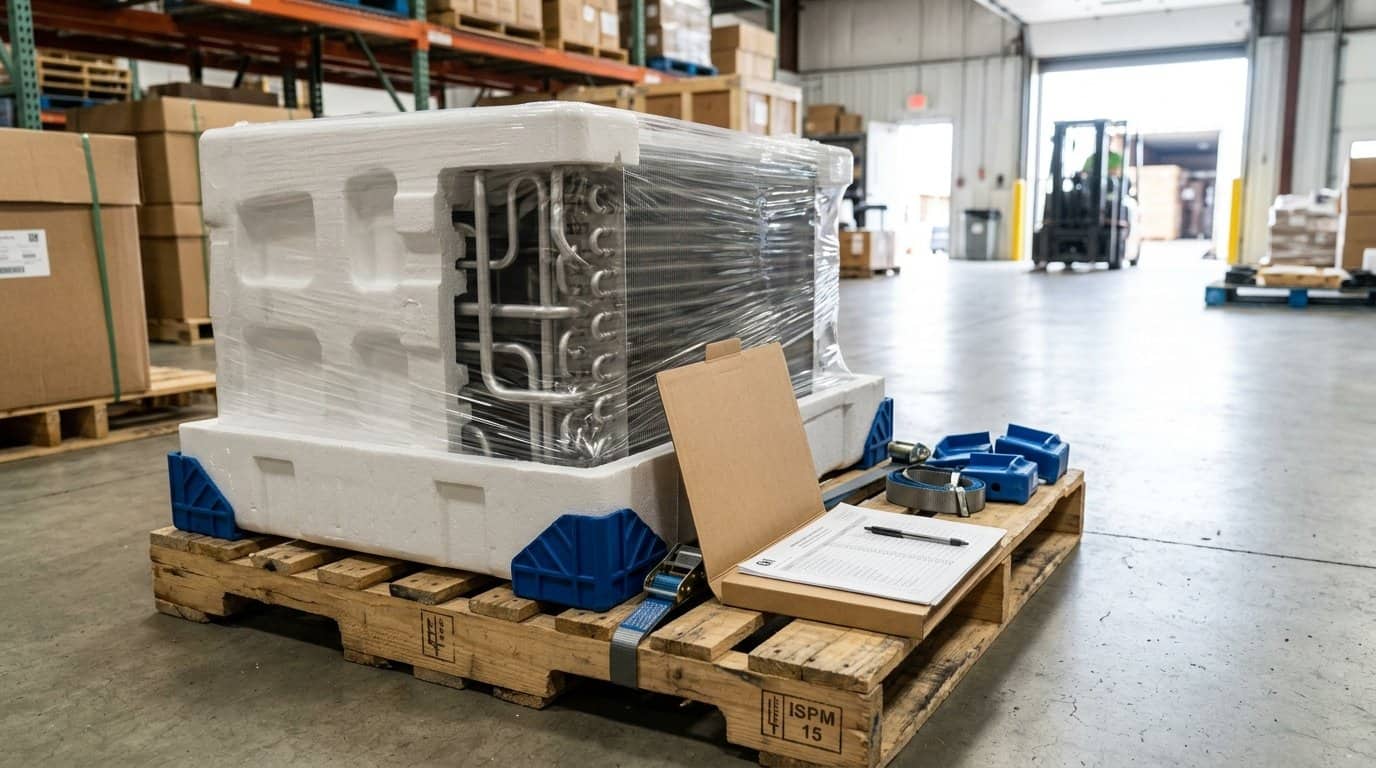
Packaging is part of the replacement plan. Coils can be damaged by impact, moisture, stacking, fork contact, or loose movement inside a crate. State the protection needed for fins, headers, connections, frame, coating, and drain fittings. If the part must remain upright or if lifting points are important, show that information on the packing instruction. The final packaging method, marking, and freight terms remain project-specific and must be confirmed.
Receiving inspection should focus on the interfaces that were most difficult to recover. Check face dimensions, depth, connection position, mounting holes, drain location, frame squareness, fin damage, labels, and visible joints. A dimensional check does not replace a pressure or leak test when that test is required. It is an early gate that can identify a wrong variant before the part is installed.
For repeat purchases, keep a small approval packet with the purchase order, drawing, rating sheet, inspection plan, sample record, and change history. When a future buyer searches for replacement HVAC coils, the packet should answer which version is approved and why. This reduces reliance on memory and prevents an old email attachment from becoming an uncontrolled specification.
If a first article reveals a problem, record the correction as a revision rather than changing the purchase description informally. A revised tube arrangement, coating, support, drain, or connection can affect fit and performance. The supplier should state the change, the reason, and the verification required. The buyer can then decide whether the change applies only to one equipment model or to the full family.
The most efficient replacement HVAC coils process is not the shortest email. It is the process that lets engineering, procurement, quality, service, and the supplier work from one controlled description. That is especially important when a part will be reordered across several markets or equipment configurations.
Replacement HVAC coils FAQ
How do I identify replacement HVAC coils?
Start with the equipment nameplate, old-part photographs, measured dimensions, connection sketch, airflow direction, medium, and service history. Add the intended replacement goal. A model number can help, but it should not be the only identification record.
Can a replacement coil match the outside dimensions but use different materials?
It can, but the change should be reviewed. Materials affect heat transfer, pressure, corrosion, joint design, cleaning, and production. The supplier should show the proposed construction and rating basis, and the buyer should approve any change against the environment and equipment duty.
Do replacement HVAC coils need the original capacity rating?
They need a defined duty target. The target may be the original rating, a revised rating, or a design improvement. Compare the air, fluid, refrigerant, airflow, pressure-drop, and humidity conditions behind the result instead of comparing a capacity number by itself.
Can a supplier make a replacement from an old coil?
An old coil can provide useful dimensions, materials, connections, and failure evidence. The supplier may still need equipment duty, operating conditions, medium, airflow, pressure limits, quantity, and destination. If the old coil is distorted, separate original dimensions from damage dimensions.
Should I repair or replace a damaged HVAC coil?
The decision depends on the damage, age, construction, access, duty, service environment, and availability of a controlled replacement. A leak or fin problem may also signal corrosion, vibration, drainage, or cleaning issues that should be corrected before selecting the next part.
What should a replacement coil drawing show?
It should show the revision, overall and fin-pack dimensions, rows, fin spacing, tube or header arrangement, connections, mounting, airflow direction, drain details, materials, coating if applicable, inspection points, and any open assumptions. The exact drawing content depends on the project.
How do I compare two replacement HVAC coils quotations?
Compare the goal, duty conditions, construction, dimensions, connections, pressure drops, materials, inspection, sample basis, packaging, and change-control terms. If the quotes use different rating conditions, ask for a common basis before comparing price or capacity.
Can Domi review a replacement coil from a photograph?
A photograph is a useful first step, but it rarely proves fit or duty. Add measurements, equipment information, connection details, medium, airflow, operating conditions, quantity, and destination. Domi can then identify missing information for the project discussion.