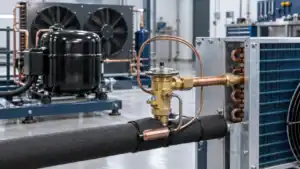

A custom coil RFQ checklist turns thermal, geometry, quality, and delivery requirements into a supplier-ready package.
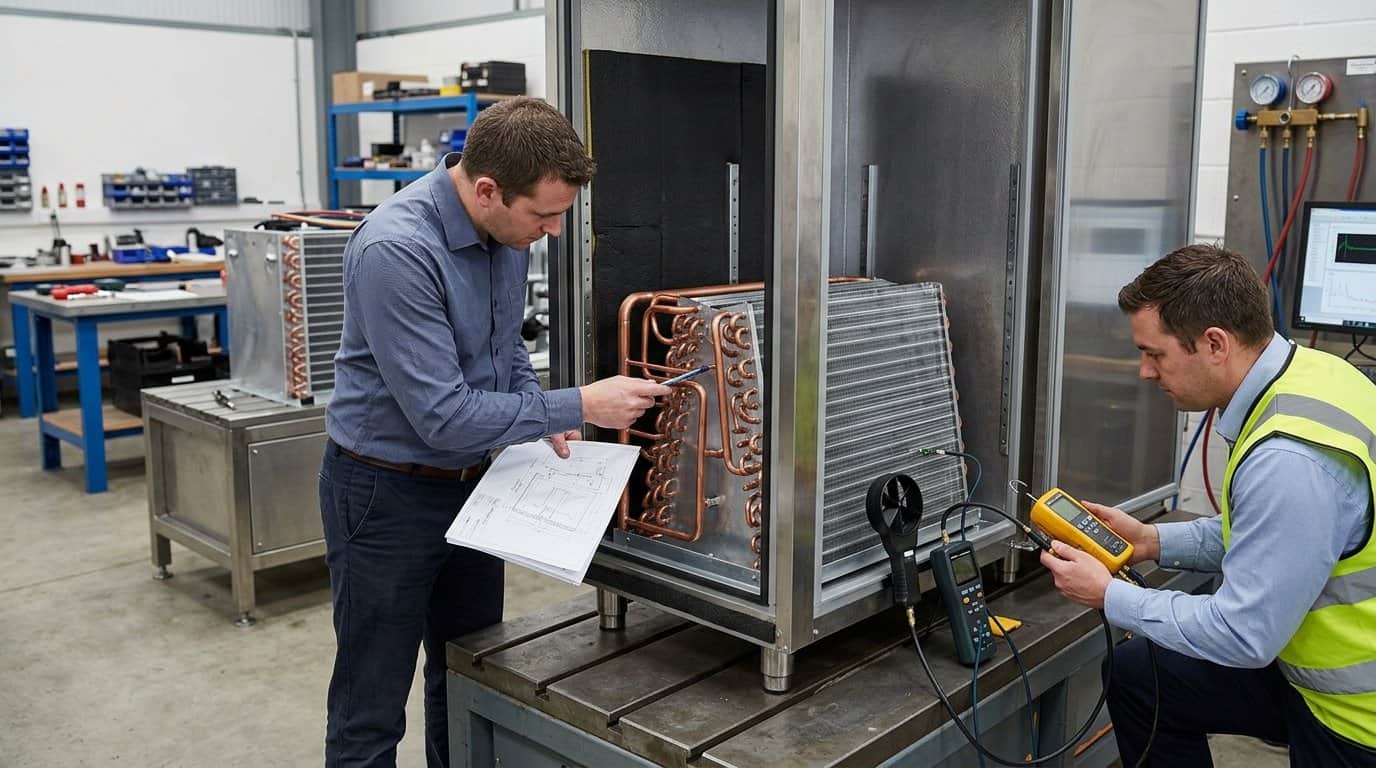
An RFQ for a refrigerator or freezer coil often starts with a drawing and a sentence such as “Please quote this coil.” That is enough to start a conversation, but it is rarely enough to produce a comparable quotation. A supplier still needs to know which operating conditions the drawing assumes, whether the part is a condenser or evaporator, how many variants are involved, and what evidence will be required before production approval.
This custom coil RFQ checklist is written for appliance engineers, sourcing managers, distributors, and OEM program owners. It is not a request for one fixed supplier template. Different projects use different formats. The purpose is to make the technical package complete enough that a supplier can review it without filling gaps with assumptions.
The checklist also helps the buyer. A clear RFQ creates comparable offers, exposes missing requirements early, and reduces the risk of approving a sample that cannot be built economically at repeat volume. If you are still defining the application, start with Domi’s OEM refrigerator and freezer coil solutions and use this article to prepare the information that should accompany an inquiry.
What a custom coil RFQ checklist must accomplish
A good custom coil RFQ checklist connects the product application to a manufacturable coil, a measurable acceptance plan, and a realistic commercial request. It should answer four questions before a supplier prices the part.
- What duty must the coil perform in the customer’s system?
- What geometry, material, and connection details define the part?
- What quantity, quality, packaging, and schedule assumptions apply?
- Which items are fixed requirements and which items may be proposed by the supplier?
The last question matters more than it seems. If the buyer asks for a specific tube diameter, fin pitch, header arrangement, or coating without explaining the reason, the supplier may treat that detail as non-negotiable even when a different option would improve cost or lead time. If the drawing is only a starting point, label it as such. If a dimension protects cabinet fit, mark it as critical.
The AHRI 410 coil performance standard is useful as a reference for certain forced-circulation air-cooling and air-heating coils, but its scope excludes some refrigeration coil types, including several microchannel, bare-tube, frosting, and direct-expansion configurations. A custom coil RFQ checklist should therefore state the required rating method instead of assuming that one standard covers every appliance coil.
Separate the requirement into four files
The fastest RFQ reviews usually have four layers:
- Application brief: appliance type, cabinet role, operating conditions, and target duty.
- Part definition: drawing, 3D model, connection layout, materials, finishes, and tolerances.
- Validation plan: inspection points, leak test, pressure test, performance test, and sample approval rules.
- Commercial brief: annual demand, order pattern, packaging, delivery location, and requested quote basis.
Do not hide all four layers in a single PDF. A supplier should be able to find the duty conditions without searching through a packaging specification, and a buyer should be able to revise the annual volume without changing the part drawing.
Distinguish required data from preferred data
Mark each item as one of the following:
| Label | Meaning | Example |
|---|---|---|
| Required | The part or quotation cannot be approved without it | Refrigerant, cabinet envelope, connection locations |
| Critical | A change needs engineering approval | Mounting hole position, tube-to-tube clearance |
| Preferred | A supplier may propose an equivalent | Fin material, header process, packaging insert |
| For quotation | Needed to compare cost but not printed on the part | Annual volume, shipment split, tooling basis |
This simple classification prevents a common failure mode. Buyers sometimes send a preferred material as if it were a critical design constraint, then reject a lower-cost alternative without realizing that the alternative would have met the thermal and corrosion requirements.

Product and operating data to include
The thermal duty section should tell a supplier what the coil must do inside the appliance, not only what the part looks like. A drawing can show dimensions. It cannot, by itself, tell a supplier whether the design must operate during pull-down, steady-state storage, defrost recovery, or a high-ambient test.
Identify the appliance and coil position
Start with a plain description:
- Upright refrigerator, chest freezer, undercounter unit, display case, ice machine, or another platform.
- Condenser, evaporator, subcooler, suction line heat exchanger, or another coil role.
- Cabinet model, platform family, or product generation.
- New design, replacement part, cost-down revision, or multi-SKU family.
- Indoor, outdoor, back-of-cabinet, wraparound, roll-bond, fin-and-tube, tube-on-sheet, or another installation arrangement.
The phrase “refrigeration coil” is not specific enough for a quotation. An evaporator in a freezer may see frosting and defrost cycles that do not apply to a refrigerator evaporator. A condenser mounted behind a cabinet may have a different airflow path from a coil in a forced-air condenser compartment. Include a simple application sketch if the coil is difficult to understand from the drawing.
State operating conditions and load basis
The RFQ should list the conditions used to determine the requested capacity. Include the units, test method, and whether a value is measured, calculated, or estimated.
| Input | What to provide | Why it affects the RFQ |
|---|---|---|
| Refrigerant | Refrigerant designation and blend details | Changes pressure, temperature glide, material compatibility, and test requirements |
| Evaporating or condensing condition | Saturated temperature or pressure, plus superheat or subcooling where relevant | Defines the thermal operating point |
| Air side | Inlet temperature, outlet target, airflow or face velocity, humidity if important | Determines heat transfer and frosting or condensation behavior |
| Capacity | Required duty, tolerance, and rating point | Gives the supplier a measurable performance target |
| Ambient condition | Design ambient, high ambient, and any pull-down case | Prevents a quotation based only on nominal room conditions |
| Defrost | Method, temperature, duration, and repeat cycle | Affects materials, drainage, clearances, and validation |
If you do not have a final capacity value, say so. Provide the best available load estimate and ask the supplier to quote a design review as a separate line item. A false precision, such as a capacity with three decimal places copied from an early simulation, can be more confusing than an honest range.
The ASHRAE refrigeration resources page explains the relationship between Standard 34 refrigerant designation and safety classification and Standard 15 requirements for refrigeration system safety. Use that framework to make refrigerant and safety assumptions visible in the RFQ. A coil supplier still needs the system-specific conditions, but the buyer should not leave refrigerant identity as an informal note in an email.
Add the test condition, not just the target number
Capacity without a test condition is not a usable acceptance criterion. State the air inlet temperature, airflow, refrigerant condition, and stabilization rule, or reference the internal test procedure that contains them. For a frosting evaporator, state how frost is created and how the result is recorded. For a condenser, state whether the fan curve and cabinet airflow path are part of the test.
This is one of the most useful parts of a custom coil RFQ checklist because it lets suppliers identify a mismatch before they quote. A supplier may be able to meet the requested capacity at one airflow but not within the appliance fan envelope. That is a design conversation, not a purchasing error, and it is much cheaper to have it before a sample is built.
Geometry, material, and connection information
The part definition should make the coil physically buildable. It should also make it possible to compare quotations from suppliers that use different manufacturing routes.
Drawing and 3D model package
Send the native CAD file when a supplier needs to check fit, but do not rely on the CAD file alone. Include a controlled PDF drawing and identify the revision in the file name, title block, and RFQ cover sheet.
The drawing package should show:
- Overall length, width, height, and the maximum installed envelope.
- Tube or plate arrangement, row count, circuiting, and fin pitch where applicable.
- Header, manifold, inlet, outlet, and connection orientation.
- Mounting tabs, brackets, clips, drains, collars, and protective features.
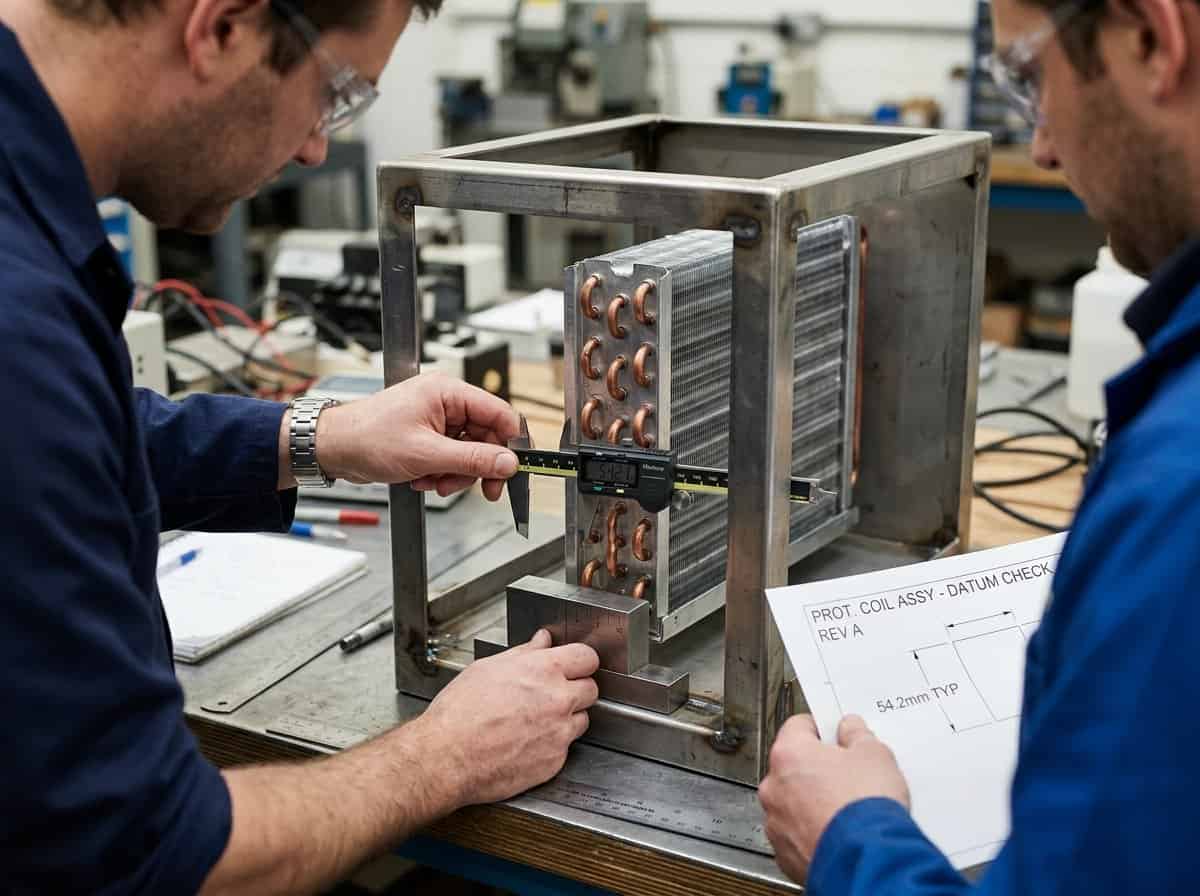
- Datum scheme, critical dimensions, tolerances, and inspection points.
- Keep-out zones for fans, insulation, cabinet panels, wiring, and service access.
- Surface finish, coating, plating, corrosion protection, and cleanliness requirements.
- Weld, braze, solder, or mechanical joint notes, including any restricted processes.
If the current drawing is not fully dimensioned, add a marked-up image showing which dimensions the supplier may optimize and which dimensions cannot move. A supplier should never have to guess whether a 2 mm change will cause a cabinet collision.
Material and finish decisions
List the material family and the reason behind it. Copper, aluminum, coated aluminum, stainless steel, and mixed-material constructions may all be technically viable in different locations, but the decision depends on refrigerant, water exposure, salt, cleaning chemicals, galvanic contact, forming method, and cost.
The EPA refrigerant safety guidance notes that refrigerants can present toxicity, flammability, asphyxiation, and physical hazards. That does not mean every coil needs the same material or pressure test. It does mean the RFQ should identify the refrigerant, safety classification, and handling assumptions so the supplier can review the design against the intended system.
For coatings, include the required test or acceptance method rather than only saying “anti-corrosion.” State where the coating may be applied, whether it may change heat transfer, how tube ends must remain clean, and whether a visual standard exists. If the buyer has no validated coating specification, ask the supplier to propose one and price the option separately.
Connections and joining
Connection details deserve their own page in the package. Include tube size, wall thickness if fixed, end treatment, connection type, orientation, insertion depth, and the joint process expected in the appliance factory.
Clarify whether the supplier must provide:
- Open tube ends for in-house brazing.
- Flared, swaged, expanded, or formed connections.
- Factory-brazed fittings or headers.
- Pressure-tested assemblies.
- Cleaned and capped ends.
- A leak-test certificate for each lot or only a retained record.
These details affect both quote comparability and packaging. A coil with capped, tested connections is not the same commercial item as an open, untested coil even if the heat-transfer core is identical.
Quantity, MOQ, and delivery assumptions
The commercial part of a custom coil RFQ checklist should separate sample demand, pilot demand, annual volume, and order-line volume. Suppliers use those numbers for different decisions.
Use a volume ladder
Provide a volume ladder rather than one optimistic annual number.
| Volume line | Example question | Supplier decision it supports |
|---|---|---|
| Engineering samples | How many pieces are needed for fit and bench testing? | Prototype labor, material purchasing, and sample scheduling |
| Pilot run | How many pieces are needed for a controlled appliance build? | Fixture, process repeatability, and first-lot inspection |
| Monthly demand | What is the expected release quantity? | Capacity planning and shipment cadence |
| Annual demand | What is the realistic first-year range? | Pricing bands, material planning, and tooling recovery |
| SKU mix | Which variants share a process or material? | Changeover time and consolidated buying |
Do not ask, “What is your MOQ?” as if it were a single permanent number. Ask what minimum order makes sense for each stage, then ask how MOQ changes with material purchase, tooling, SKU mix, packaging, and forecast visibility. The right answer may be one sample, a small pilot, or a scheduled blanket order. It depends on the program.
Explain the cost basis you want quoted
Tell the supplier whether you want unit price, tooling as a separate charge, sample price, pilot price, recurring price, freight, packaging, and taxes listed separately. Request a clear validity period, but do not assume the quoted material price will remain fixed if the order is delayed.
For a cost-down program, ask for a base quote and a value-engineering option. That option might change tube size, fin spacing, circuiting, bracket construction, coating, or packaging. It should not be silently substituted into the base offer.
Add schedule milestones
The schedule should show more than a final delivery date. Include:
- Technical review complete.
- Drawing comments returned.
- Design freeze for sample.
- Sample fabrication and inspection.
- Fit-up or performance test.
- Corrective action and revision approval.
- Pilot production.
- Repeat production release.
This sequence gives the supplier a way to identify the real lead-time risk. If the appliance test lab has a fixed slot, say so. If the material is imported or the project uses a special coating, put that dependency in the RFQ instead of treating it as a surprise after the purchase order.
Quality, inspection, packaging, and compliance
Quality requirements need to be measurable and connected to the part. Generic language such as “highest quality” is not an acceptance criterion.
Define inspection points
Use a quality plan that identifies the characteristic, method, sample size, and record. For example, overall dimensions may require a first-article report, connection orientation may require 100 percent visual confirmation, and pressure integrity may require a test record for every unit or lot.
Possible inspection items include:
- Dimensions and mounting location.
- Tube, fin, header, and bracket material.
- Joint appearance and braze coverage.
- Internal cleanliness and capped ends.
- Leak, pressure, or vacuum test result.
- Flow restriction or pressure-drop result where applicable.
- Thermal performance at the agreed rating point.
- Coating coverage and surface condition.
- Packaging damage after transport simulation or incoming inspection.
The ISO 9001 quality management overview describes documented information, process control, measurement, and improvement as parts of a quality management system. An RFQ does not need to demand an ISO certificate if it is not a customer requirement, but it should make the expected records and responsibility clear.
Packaging and export details
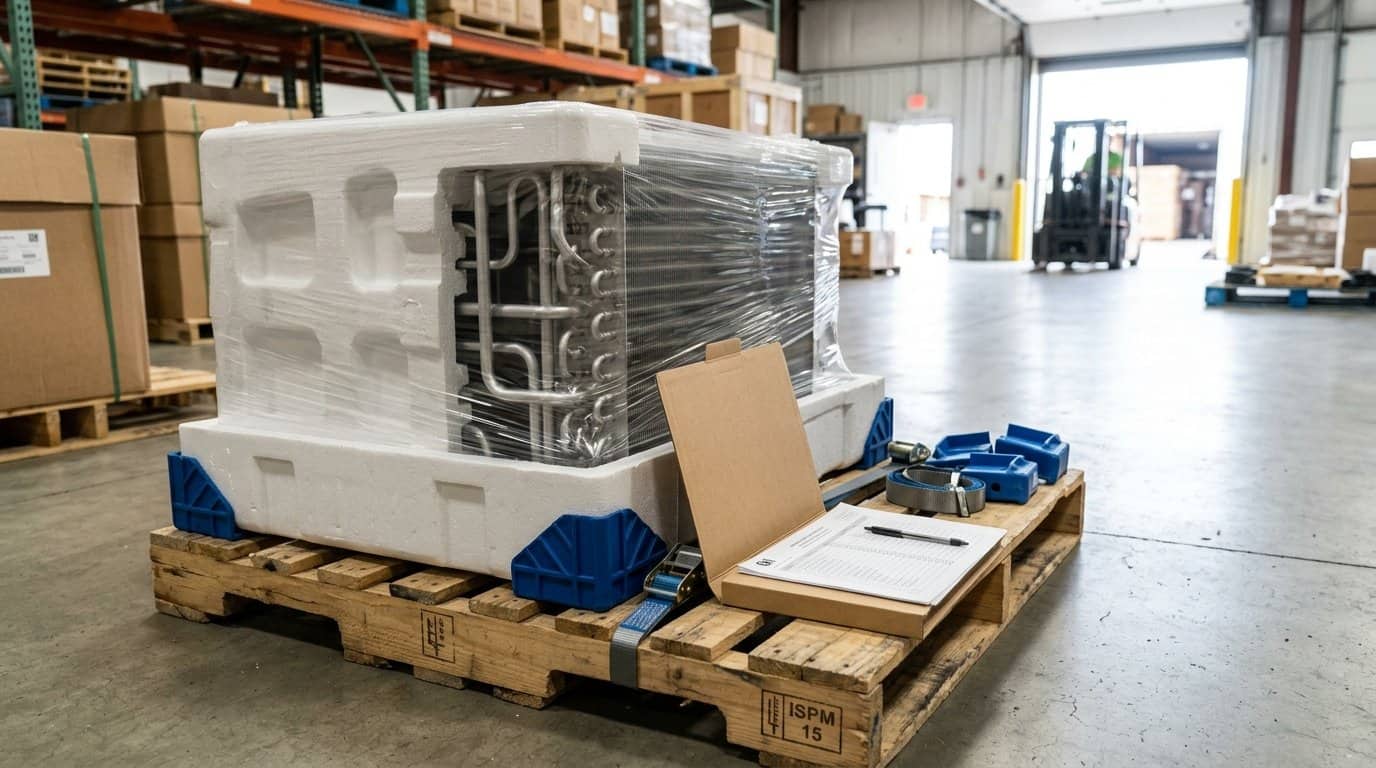
State whether the coil ships as a single part, a nested stack, a kit, or an assembly with fittings. Include orientation, corrosion protection during storage, edge protection, pallet limits, carton markings, barcodes, and maximum package weight.
For export programs, list the destination, delivery term if already known, required commercial documents, and whether wood packaging must meet a particular treatment rule. Packaging can change the landed cost more than a small unit-price adjustment, especially when fins are exposed and the part needs a custom divider.
Keep compliance claims bounded
Do not copy a broad certification claim into the RFQ unless the supplier can verify it. Ask for the actual certificate, test report, material certificate, or process record that applies to the part. If the requirement is still open, write “supplier to propose and confirm” instead of inventing a standard.
How to send the RFQ without creating a second interpretation
The best custom coil RFQ checklist is not only a list. It is a controlled handoff.
Build the RFQ cover sheet
Put these items on page one:
- RFQ number and issue date.
- Part number and drawing revision.
- Coil role and appliance platform.
- Refrigerant and primary rating point.
- Sample, pilot, and recurring quantities.
- Required quotation date.
- Main contact for technical questions.
- List of attached files and their revisions.
Then create a response matrix. The supplier can answer “confirmed,” “exception,” or “alternative proposed” against each important requirement. This format prevents a supplier from replying with one general sentence that leaves five key questions unanswered.
Use a clarification log
Keep an open-issue log during quotation. Each question should have an owner, date, answer, and resulting document revision. If a clarification changes a dimension, circuit, material, or test point, issue a new revision rather than leaving the answer buried in email.
This is where ASME Y14.35 revision guidance is useful as a reference. The standard defines practices for revising engineering product definition datasets and associated documents and for identifying and recording changes. A small OEM team does not need to reproduce the whole standard to benefit from the basic discipline.
Ask for exceptions in writing
If a supplier cannot meet a requirement, ask for the exception before the quotation is accepted. The exception should state the affected requirement, proposed alternative, reason, impact on performance or cost, and the approval needed.
An exception is not automatically a problem. An undocumented exception is. A supplier may have a stronger forming route or a better way to protect the coil during shipment, but the buyer needs to know what changed before the sample reaches the appliance line.
A buyer-side review before release
Run the custom coil RFQ checklist internally before sending it to a supplier. This review takes less time than correcting a quote based on the wrong duty or an obsolete drawing. Ask one person from engineering, sourcing, quality, and operations to read the same package and write down the question each person would ask first.
Engineering review questions
Engineering should confirm that the requested capacity is tied to a defined operating point and that the drawing matches the appliance envelope. The reviewer should also check that the connection orientation, drain path, airflow direction, and service clearances appear in the package. A coil can pass a bench performance test and still fail fit-up because the RFQ never showed the cabinet panel or insulation thickness.
The engineering review should flag assumptions rather than quietly resolving them. If the air volume is still a target, identify it as a target. If the refrigerant choice may change, ask whether the quotation should include an option. A custom coil RFQ checklist is most useful when it exposes uncertainty while the cost of changing the design is still low.
Sourcing review questions
Sourcing should check that the supplier can respond on the same commercial basis. Is the quantity an annual forecast, an order quantity, or a maximum? Does the quote need delivery to a port, a factory, or a distribution center? Are tooling, sample charges, packaging, freight, taxes, and payment terms separated?
Ask sourcing to compare two numbers that are often confused: the expected annual volume and the largest release quantity. A supplier may price a program attractively at 12,000 pieces per year but need to schedule material and labor differently if the buyer releases all 12,000 at once. The RFQ should describe the release pattern.
Quality and operations review questions
Quality should identify which characteristics need a report and which can be checked at incoming inspection. Operations should verify that the proposed packaging can be opened, counted, stored, and moved without fin damage or missing fittings. The packaging discussion belongs in the RFQ because it changes the delivered part, not just the carton.
Use a simple response scorecard:
| Review question | Acceptable response | Warning sign |
|---|---|---|
| Does the quote reference the correct drawing revision? | Part number and revision are repeated | Quote says only “per drawing” |
| Is the rating point clear? | Conditions and test method are listed | Capacity is quoted with no test basis |
| Are exceptions visible? | Deviations are listed by requirement | Alternative is hidden in a note |
| Are samples and pilot units separated? | Quantity and timing are separate lines | One price is given for every stage |
| Are records defined? | Inspection and test documents are named | “Certificate available” with no scope |
Practical failure modes this checklist prevents
Several RFQs look complete until the supplier tries to price them. The following failure modes recur across custom refrigerator coil projects.
The drawing has a shape but no duty
The supplier can make the part, but cannot tell whether the heat-transfer area is sufficient. The quote becomes a fabrication price rather than a performance proposal. Add the load basis and test condition.
The duty has a number but no airflow
Capacity depends on the air side. Add airflow, fan curve, face velocity, or a defined test setup. If the airflow is still under development, ask for a sensitivity note instead of pretending the point is final.
The RFQ asks for a unit price before the variant list is stable
The supplier prices one part, then the project adds four SKU variants with different brackets and connections. Provide a family table and ask for both per-SKU price and a consolidated program price.
Quality language is broad but the sample approval is narrow
“No leaks” may be understood as a pressure test, a vacuum decay test, or a final assembly check. State the method and acceptance limit. The method is part of the requirement.
The latest drawing is not obvious
A PDF in one email, a CAD file in another, and a sample label with no revision create three possible truths. Name files consistently, keep a revision table, and require the supplier to quote the exact issue received.
FAQ: custom coil RFQ checklist questions
What should be sent first in a custom coil RFQ?
Send the application brief, current controlled drawing, refrigerant, rating point, quantity ladder, and required validation method first. Those files let a supplier identify the main technical and commercial gaps before preparing a detailed quote. Bottom line: start with the system duty and controlled part definition, not only a product photo.
Is a 2D drawing enough to quote a custom refrigerator coil?
A complete 2D drawing may be enough for an initial quote, but a 3D model or cabinet envelope is safer when fit and service clearance matter. The drawing must still contain datums, tolerances, connection details, and critical zones. Bottom line: use the 2D drawing as the controlled definition and add 3D data when the installation is complex.
What refrigerant information belongs in the RFQ?
List the refrigerant designation, operating pressure or temperature range, expected superheat or subcooling, safety classification assumptions, and any material or cleaning constraints. Refrigerant identity affects testing and system safety, so it should not be left to an informal email. Bottom line: name the refrigerant and the operating point together.
How many samples should an OEM request?
The sample quantity should match the tests that will be run. One part may support a dimensional check, while fit-up, performance testing, destructive inspection, and a retained sample may require more. Bottom line: calculate samples from the validation plan instead of choosing a round number.
How should MOQ appear in a coil RFQ?
Show engineering, pilot, monthly, annual, and SKU-mix quantities separately. Ask the supplier to explain how material buying, tooling, setup, packaging, and forecast visibility change the minimum practical order. Bottom line: MOQ is a program condition, not just a factory number.
Should tooling be included in the unit price?
Ask for tooling as a separate line unless the commercial agreement requires amortization. Separate pricing makes it easier to compare a one-time fixture or forming tool with the recurring unit price. Bottom line: keep non-recurring and recurring costs visible.
What quality documents should accompany the first article?
Request the agreed dimensional report, material or coating evidence, leak or pressure test record, performance result when required, and a signed deviation list. The exact package depends on the project. Bottom line: define the first-article record before the sample is built.
How do I prevent a supplier from quoting the wrong drawing revision?
Put the drawing revision in the RFQ cover sheet, file name, title block, and purchase documentation. Ask the supplier to repeat the revision in the quotation and clarification log. Bottom line: make revision confirmation a required response field.
Send a quote package that can survive engineering review
A useful custom coil RFQ checklist does more than make the email longer. It gives engineering, sourcing, quality, and the supplier one shared version of the requirement. When information is missing, label the gap and ask for a proposal. When a dimension is fixed, mark it as critical. When a process is still open, ask for an option with a clear cost and validation impact.
If the project needs an engineering review, connect the RFQ to Domi’s custom coil fabrication support and heat exchanger testing laboratory. Send the controlled drawing, operating conditions, quantity ladder, and the questions that are still open. That gives the technical team something concrete to review and gives procurement a cleaner basis for comparing the response.
How the buyer should review the supplier response
The best response to a custom coil RFQ checklist separates confirmed requirements, supplier assumptions, and proposed alternatives. That separation lets a buyer compare two quotations without treating a lower number as a better technical answer.
Separate confirmed facts from proposed options
Read the response line by line and mark each item as confirmed, assumed, or proposed. A confirmed item may be the cabinet envelope, connection location, refrigerant, or required inspection record. An assumed item may be an airflow value that was not included in the RFQ. A proposed item may be a different circuiting pattern, fin pitch, bracket, or packaging method. Ask the supplier to show the cost and validation effect of each proposal. Do not let an option become part of the production drawing until engineering has accepted it.
Check the first sample against the same package
When a sample arrives, use the RFQ revision, quotation revision, sample label, and inspection sheet together. Confirm the sample identity before measuring it. Then check the dimensions that affect cabinet fit, connections, airflow direction, drainage, and service clearance. If the sample uses a substitute material or a temporary bracket, record that fact on the approval sheet. A sample can be useful for fit review while still being unsuitable for thermal approval or production release. Keeping those decisions separate prevents a quick visual approval from becoming an unintended purchase authorization.
Keep the commercial answer tied to the technical revision
The quotation should state the quantity basis, sample price, pilot price, repeat-production price, tooling treatment, packaging assumption, and validity period. It should also identify the drawing revision and any open technical question. If the buyer changes the cabinet or forecast after the quotation, ask for a revised response instead of editing the old file by email. This creates one commercial record that sourcing, quality, and engineering can all trace back to the same requirement. The small amount of discipline at the RFQ stage is usually less work than reconciling a sample, invoice, and production part that were all based on different assumptions.