
Short answer: choose a refrigeration panel by defining the equipment boundary, incoming power, motor loads, compressor and evaporator I/O, defrost method, safety circuits, enclosure environment, communications, service access, test records and documentation. A refrigeration panel may be a starter and protection enclosure, a PLC or controller panel, an evaporator panel, or a complete controls package. These are not interchangeable scopes. Put the boundary and duty point in the RFQ before comparing brands or prices.
What a refrigeration panel includes
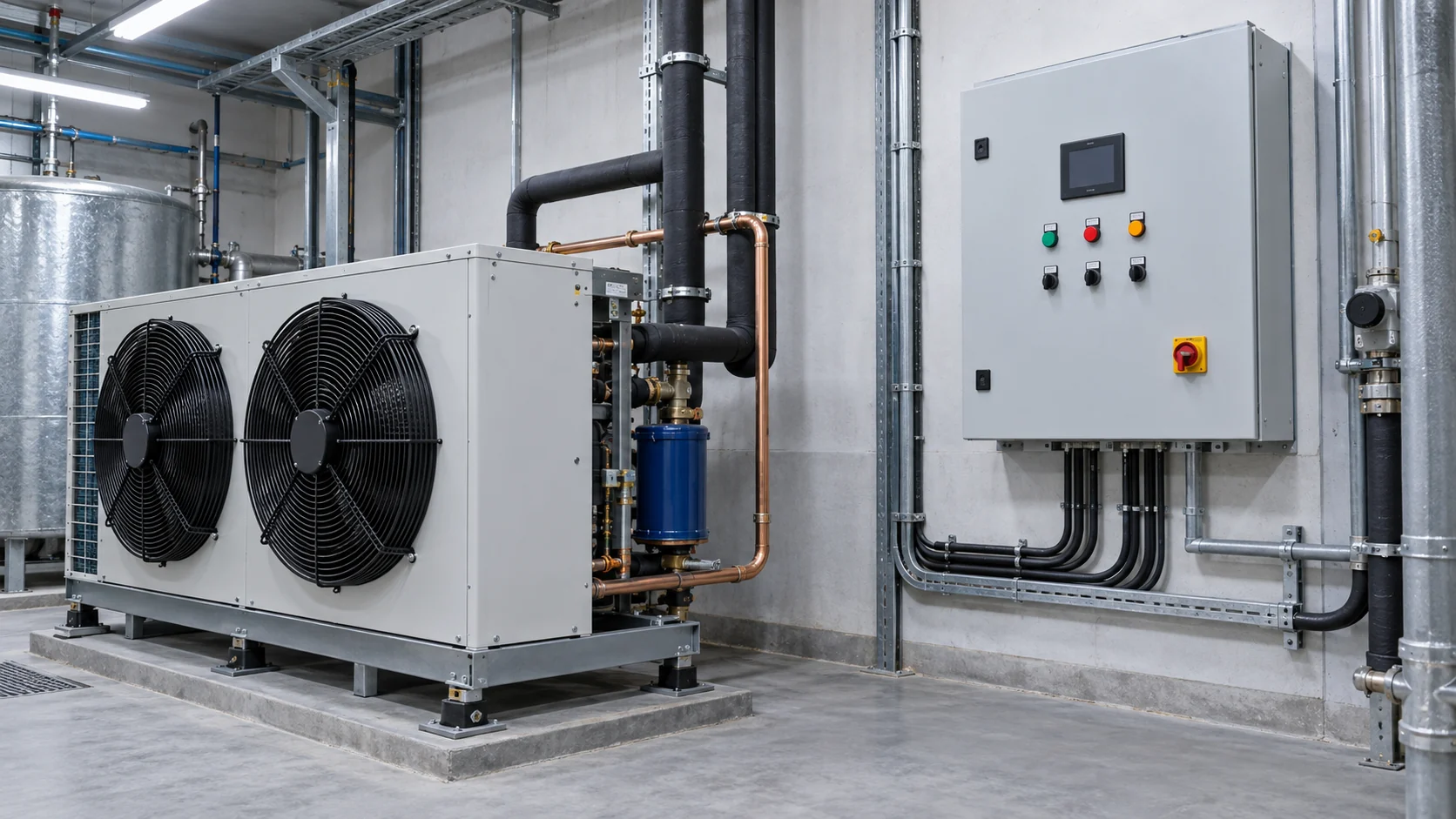
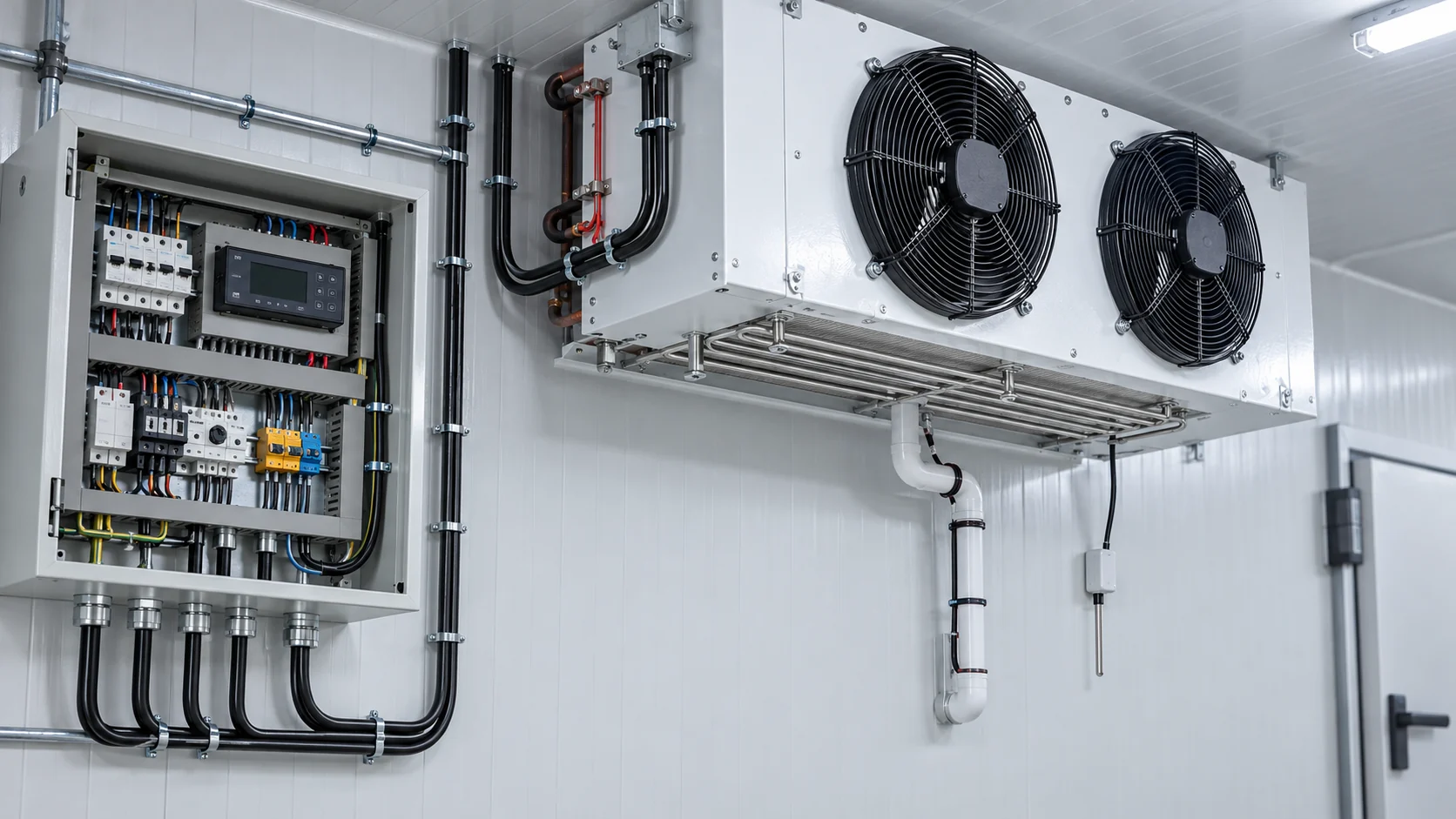
A refrigeration panel is the electrical and control interface between a refrigeration system and its operators. Depending on the project, it can distribute power, protect motors, switch compressors and fans, read temperature and pressure sensors, operate expansion or solenoid valves, control defrost, announce alarms, and exchange data with a supervisory system. The enclosure may sit beside a condensing unit, above a walk-in evaporator, in a machine room, or inside an OEM cabinet.
The phrase is broader than refrigeration controller. A controller is usually the logic device and its firmware. A panel is the engineered assembly around that logic: enclosure, disconnect, protective devices, contactors or drives, terminal blocks, relays, wiring, grounding, labels and service provisions. A complete refrigeration unit adds the thermodynamic circuit, heat exchangers, fans, compressor, piping and mechanical frame. State which of these scopes is included in every inquiry.
The UK Energy Technology List describes refrigeration system controls as devices that monitor conditions such as temperature, pressure and flow, then control compressors, evaporators, condensers, electronic expansion valves, defrost, alarms and fan speed. That functional description is a useful checklist, but it does not define the exact hardware or certification for your installation. Review the ETL refrigeration system controls guidance and then write your own I/O and compliance requirements.
| Purchase boundary | Typical contents | Buyer must state | Scope mistake to avoid |
|---|---|---|---|
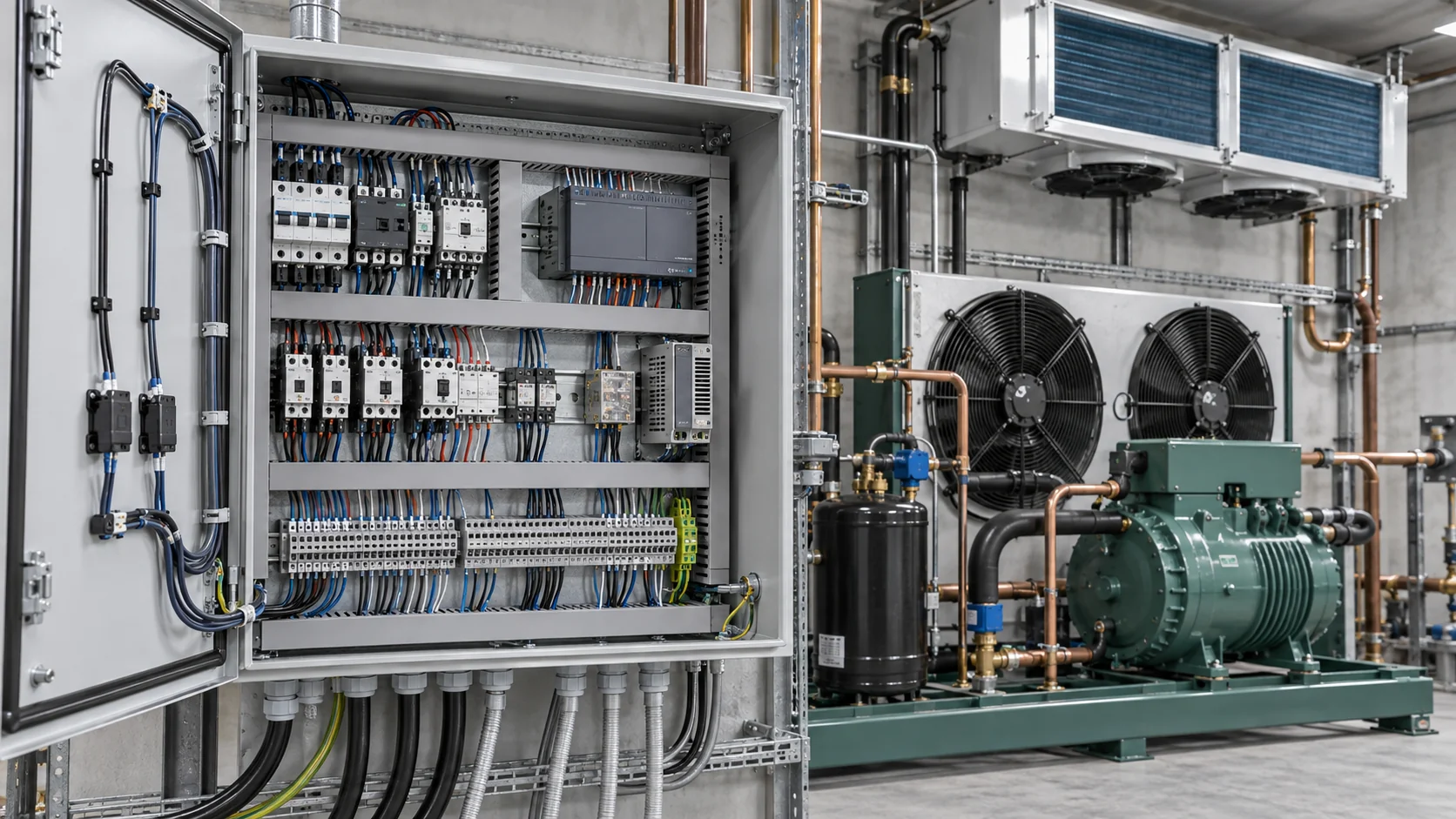
| Starter and protection panel | Disconnect, breakers, fuses, contactors, overloads, terminals and ground bar | Supply, motor data, short-circuit rating, enclosure and local code | Assuming it contains temperature logic or remote monitoring |
| Refrigeration controls panel | Controller or PLC, sensors, relays, actuators, alarms and HMI interface | Control sequence, sensor types, defrost, alarm actions and communications | Treating a controller model as a complete panel design |
| Evaporator panel | Fan and defrost switching, room sensors, valves and local service isolation | Number of evaporators, defrost method, heater load, drainage and room conditions | Omitting heater inrush or fan restart requirements |
| Integrated OEM panel | Power, controls, wiring, HMI, documentation and machine interface | Full machine I/O, utility limits, testing, drawings and handover files | Comparing only cabinet size or component brands |
Define the refrigeration panel boundary before selecting hardware
Start with a one-page boundary drawing. Show where utility power enters, where the panel stops, which field devices are supplied by others, and which loads are part of the quotation. Mark compressor, condenser fan, evaporator fan, crankcase heater, oil pump, liquid solenoid, electronic expansion valve, defrost heater, drain heater, lights, door switch, leak detector and emergency stop as included or excluded.
Ask whether the panel is dedicated to one compressor, a tandem or rack, one evaporator, several evaporators, or a process skid. A rack panel may sequence compressors and unloaders, share pressure transducers, rotate lead units, and stage condenser fans. An evaporator panel may concentrate on room temperature, defrost and fan delay. A retrofit panel may need to reuse existing motors and field wiring. The logic and protection architecture are different even if the enclosure looks similar.
Use Domi’s refrigeration controller reference as an adjacent component reference, not as a substitute for the panel scope. If you are buying a complete unit, compare the panel with the compressor, coils and installation boundary in the refrigeration unit selection guide. Keeping these owners separate prevents a control-panel article from absorbing a complete-unit query.
Size power, protection and motor loads
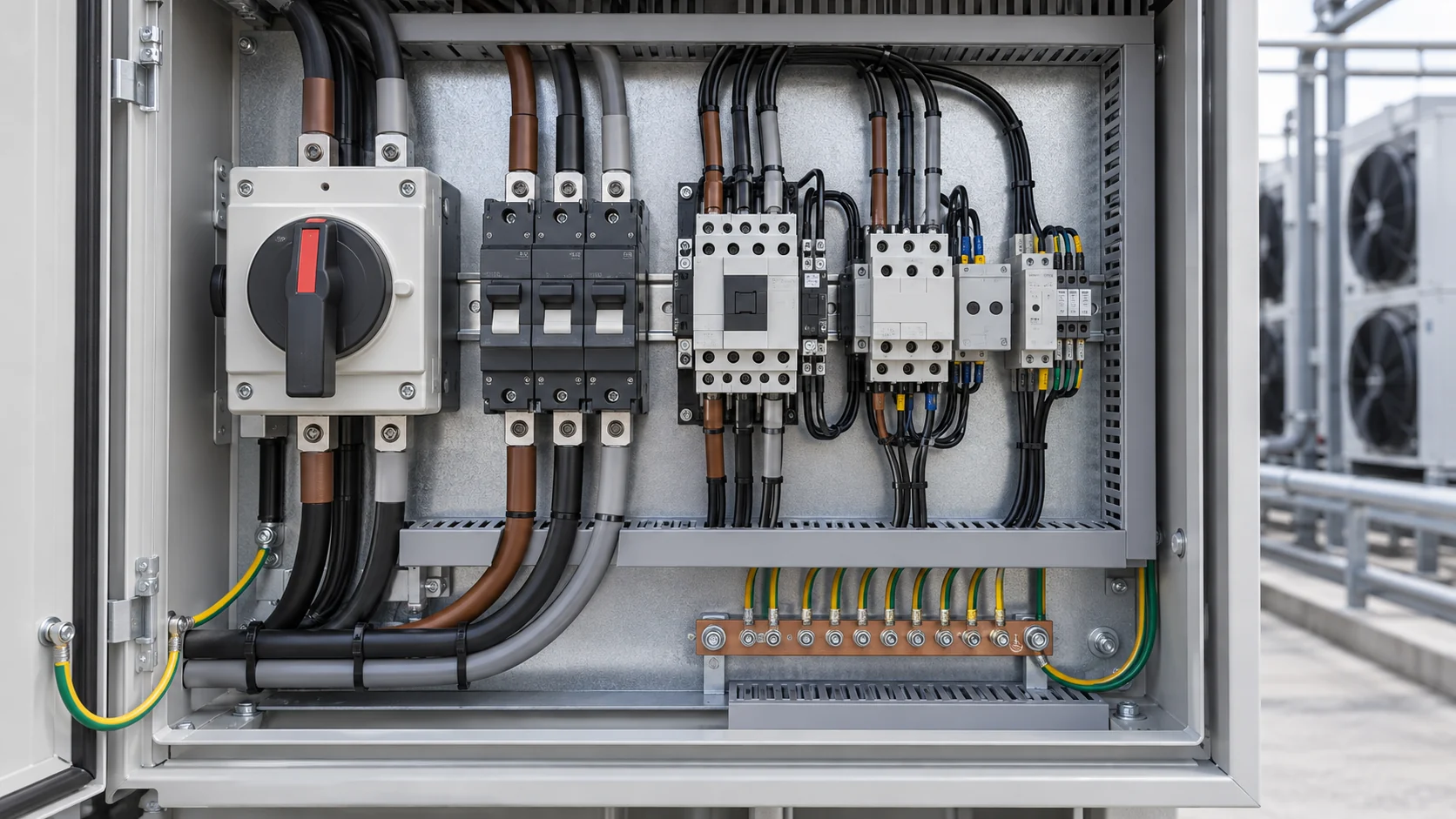
The panel designer needs more than nominal horsepower. Provide voltage, phase, frequency, full-load current, locked-rotor current, starting method, duty cycle, ambient temperature, motor quantity and required fault protection. List the compressor, condenser fans, evaporator fans, pumps, heaters and auxiliary loads individually. A small enclosure can still need substantial busbar, ventilation and short-circuit coordination when several motors start together.
Decide whether each motor uses a contactor, soft starter, variable-frequency drive or an approved electronic starter. Confirm whether the panel supplies the drive or only provides an enable and safety chain. Specify overload reset behavior, phase loss protection, high discharge pressure cutout, low suction pressure cutout, oil protection, crankcase heater logic and restart delay. These details affect both the bill of materials and the commissioning test.
| Electrical input for the RFQ | Why it changes the panel | Evidence to request |
|---|---|---|
| Supply voltage, phase and frequency | Sets disconnect, protective device and control transformer selection | Single-line diagram and nameplate schedule |
| Motor FLA, LRA and starting method | Sets contactor, overload, drive or soft-starter sizing | Motor data sheets and start-current assumptions |
| Fault level and local code | Influences interrupt rating, SCCR or equivalent coordination | Protection calculation or compliance statement |
| Heater and fan loads | Changes contactor duty, inrush, defrost sequence and enclosure heat | Load list with simultaneous operation cases |
| Ambient and installation altitude | Affects derating, ventilation, cable glands and enclosure rating | Site conditions and enclosure selection notes |
| Service isolation requirements | Determines disconnect locations and lockout provisions | Marked layout and maintenance procedure |
Do not hide spare capacity inside a vague percentage. State which terminals, relay outputs, breaker ways, panel space and communication ports are reserved. A buyer can then price an expansion without redesigning the entire enclosure.
Map compressor, evaporator, condenser, EEV and defrost I/O
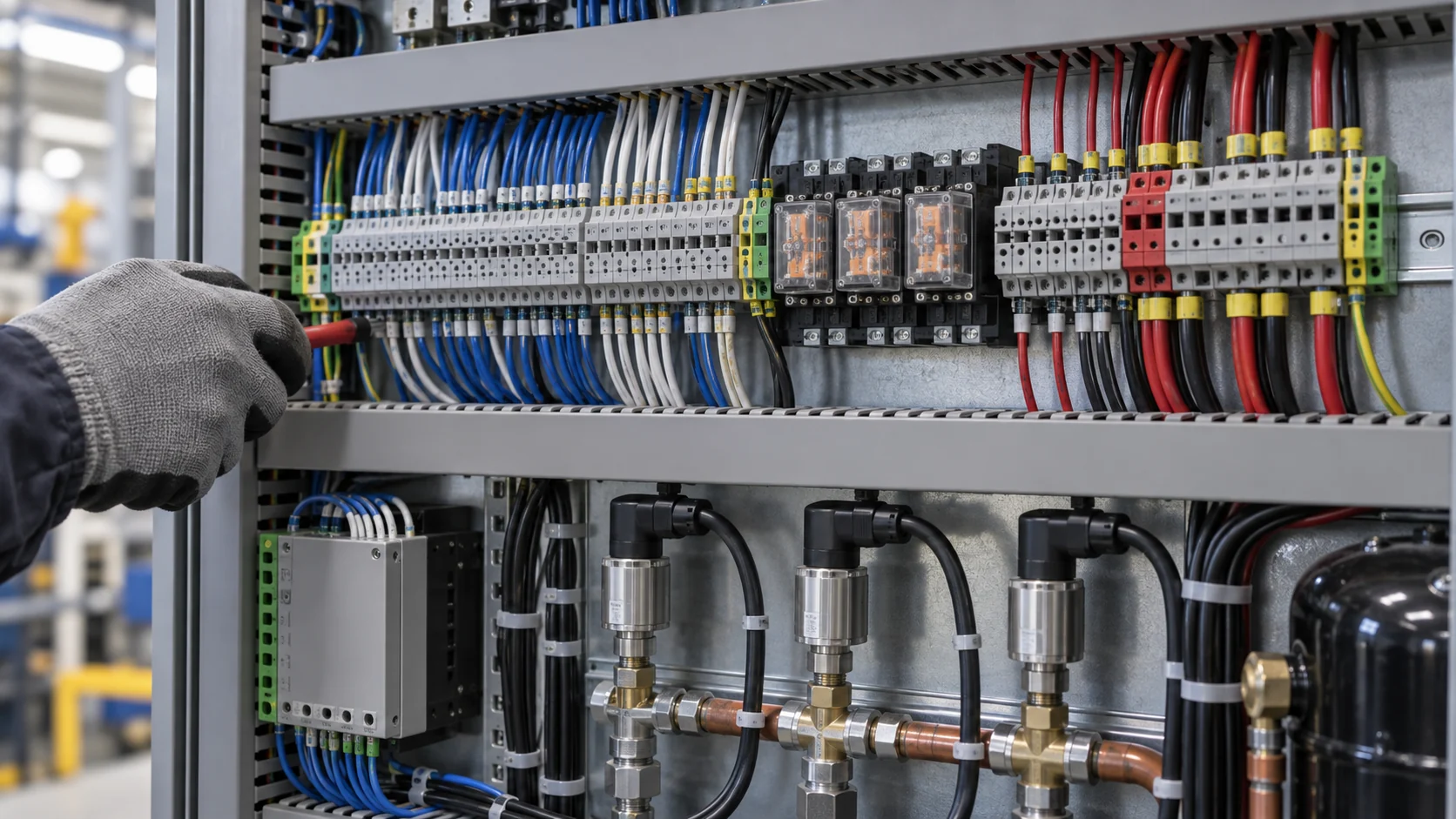
Create an I/O schedule before selecting the controller or PLC. Separate safety inputs, analog measurements, digital status inputs, digital outputs and analog outputs. Identify signal range, cable type, sensor location, normal state, alarm state and action on failure. For a pressure transducer, record the pressure range and refrigerant service. For a temperature sensor, record the probe type, accuracy expectation, cable length and installation point.
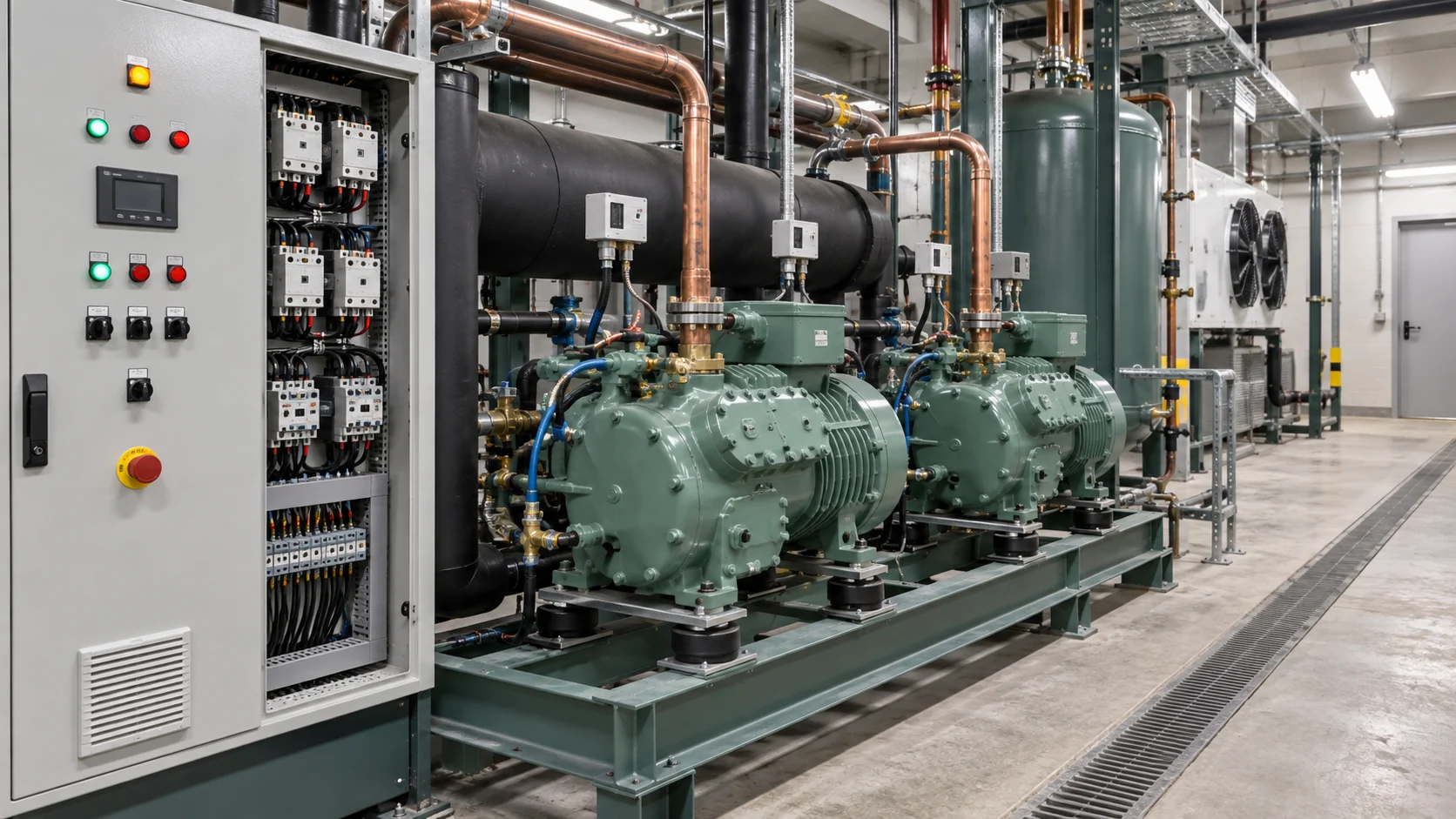
Compressor control commonly includes run command, proof of operation, high-pressure and low-pressure safeties, oil or differential pressure, discharge temperature, crankcase heater, capacity step or unloaders, and anti-short-cycle timing. Condenser control may use pressure or temperature feedback to stage fans, vary speed or operate a water valve. Evaporator control can include room and coil sensors, fan delay, door switch, liquid solenoid, hot gas or electric defrost, drain heater and termination logic. EEV control requires a compatible driver, valve model, pressure and temperature inputs, and a defined fallback when the signal is lost.
| Function | Typical signals | Questions that prevent rework |
|---|---|---|
| Compressor | Run, proof, pressure safeties, discharge temperature, oil, unloaders | Is the compressor single, tandem, rack or variable speed? |
| Condenser | Fan run, pressure sensor, fan speed, water valve or pump | What is the minimum ambient and head-pressure strategy? |
| Evaporator | Room and coil temperature, fan, solenoid, door switch | How many evaporators share the panel and defrost schedule? |
| Defrost | Heater or hot-gas valve, termination sensor, drain heater, fan delay | What is the fail-safe state if termination is not reached? |
| Expansion device | EEV driver, suction pressure, superheat temperature | Who supplies the valve and commissioning parameters? |
| Safety and alarm | Emergency stop, leak detector, high pressure, low temperature, common alarm | Which trips latch, which auto-reset, and who receives the alarm? |
The Danfoss evaporator panel range illustrates why application details matter. Its industrial panels can be configured for multiple evaporators, several defrost methods and network communication across refrigerant families. Treat that as an example of the scope to ask about, not as a universal specification for every panel.
Choose enclosure, environment and service access
Select the enclosure after the heat and contamination loads are known. Indoor machine rooms, washdown areas, outdoor roofs, cold rooms, food plants and hazardous process zones can require different material, gasket, cooling, corrosion resistance and ingress protection. Stainless steel may be appropriate for frequent washdown, while a coated steel cabinet may suit a dry plant room. The selected rating must match the actual installation and local rules.
Leave room for cable bend radius, gland plates, heat dissipation, terminal access and safe isolation. Put high-voltage power and low-voltage signal wiring in a deliberate layout. Separate AC and DC pathways where required, label both ends of every conductor, and provide a drawing pocket or digital document location. A panel that is technically complete but impossible to service will increase downtime and commissioning cost.
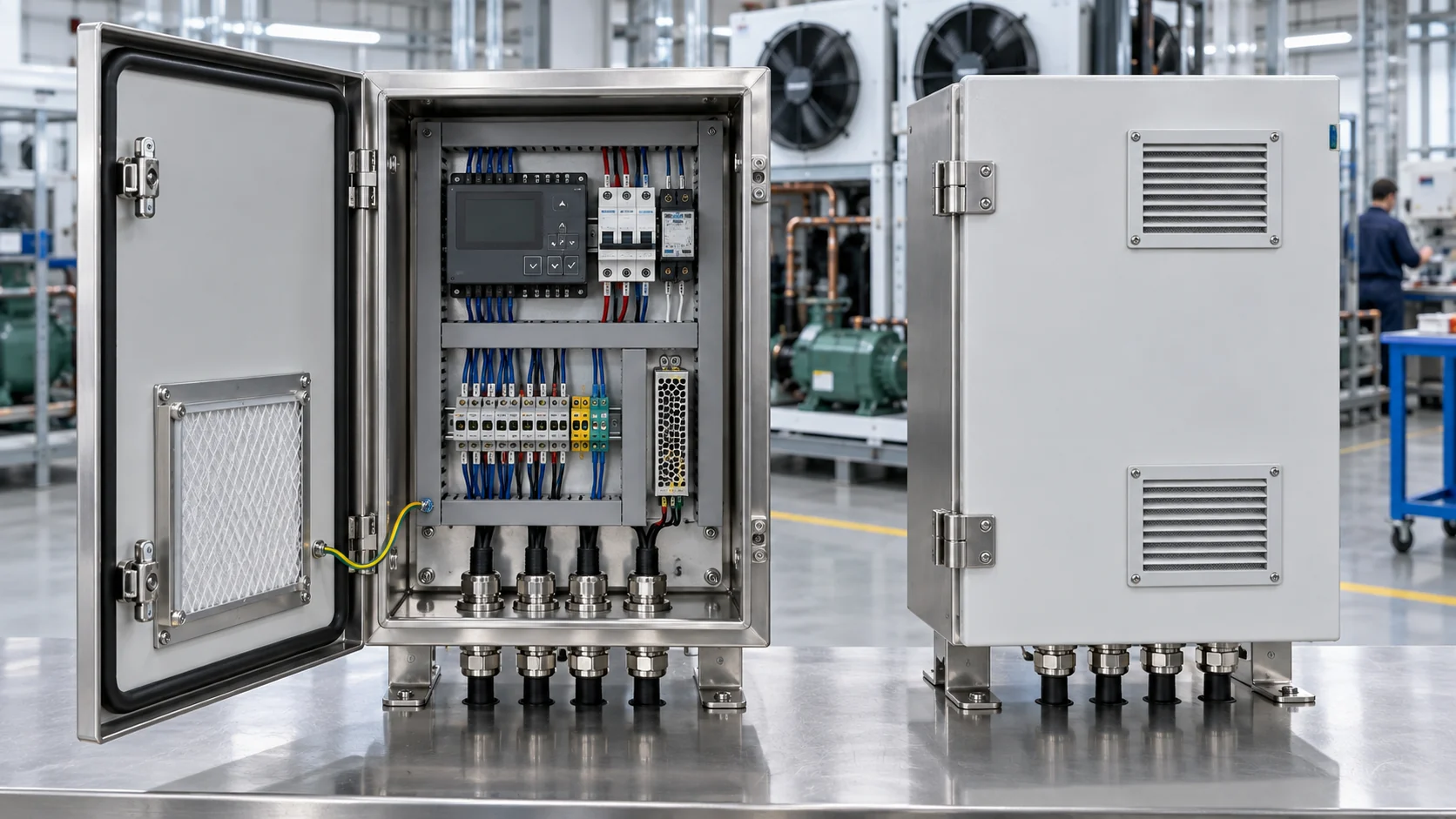
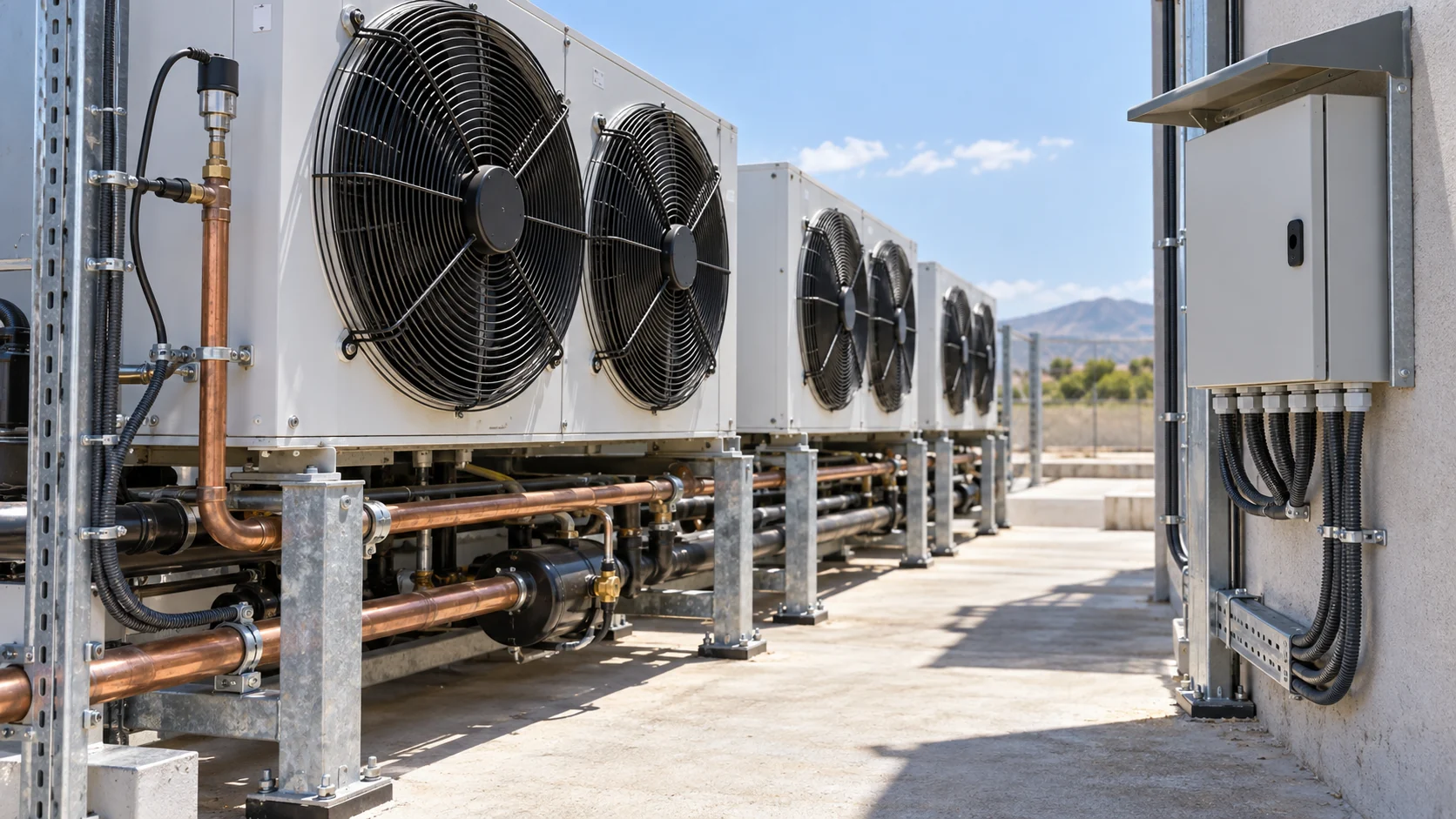
For an outdoor panel, state solar loading, minimum and maximum ambient, heater or anti-condensation needs, UV exposure and drainage. For a cold-room panel, state whether the electronics stay outside the low-temperature space and how the field cable penetrations are sealed. For a food application, identify washdown chemicals and cleaning practice before choosing paint, seals and hardware.
Plan HMI, communications, alarms and data
Decide which values an operator must see locally and which belong in a building management system, SCADA or cloud gateway. A small panel may need status lamps and a remote enable only. A multi-compressor system may need an HMI with suction pressure, discharge pressure, superheat, temperatures, defrost status, alarm history, runtime and manual service controls.
Name the protocol and physical layer, not just the word network. Confirm Modbus RTU, Modbus TCP, Ethernet/IP or another required interface, along with address allocation, cable shielding, termination, data map and cybersecurity ownership. Danfoss documents panel communication options such as Modbus RTU, Modbus TCP and Ethernet/IP for relevant evaporator applications. The FRICK control panel overview also shows why diagnostics, sequencing and retrofit needs should be discussed with the system boundary.
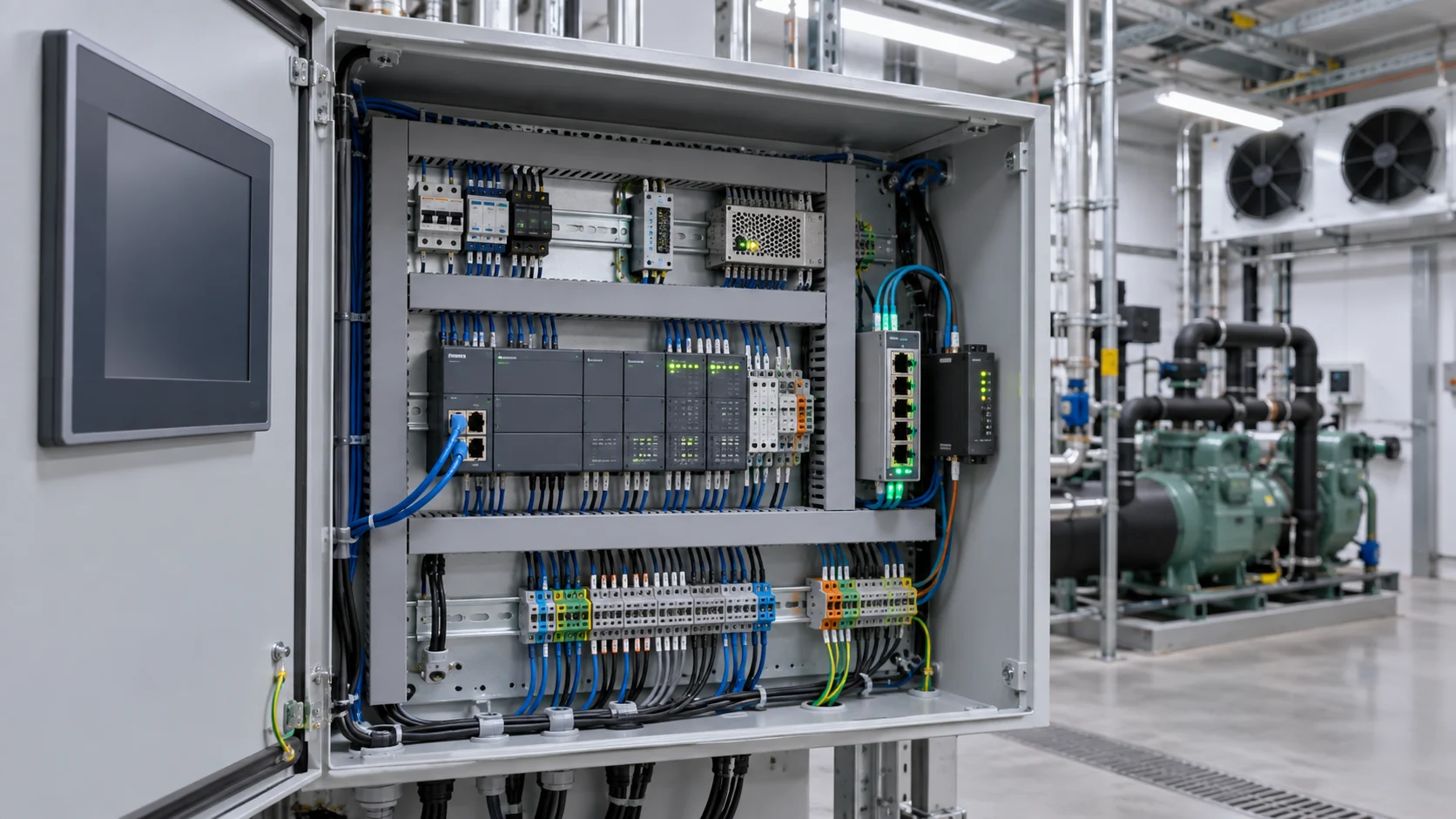
Alarm design deserves a written matrix. For every alarm, show trigger, delay, latching behavior, local indication, remote notification and safe output state. Include sensor failure, communication loss, high discharge pressure, low suction pressure, high room temperature, low room temperature, door open, defrost timeout and emergency stop where relevant. Avoid a single common alarm that gives the operator no path to diagnosis.
Compare commercial and industrial applications
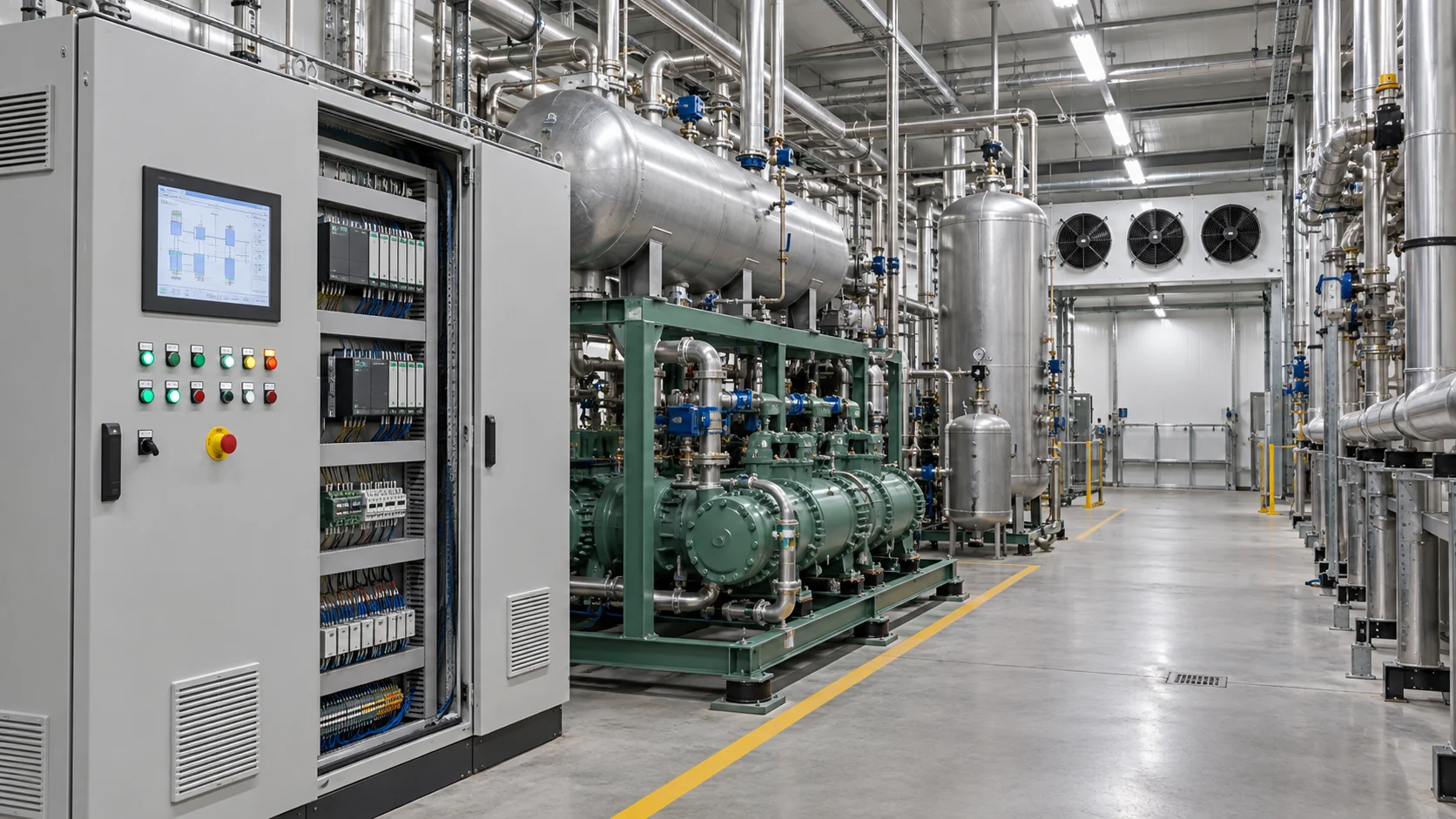
Commercial projects often prioritize compact installation, straightforward service and repeatable cold-room or display-case control. Industrial projects may add compressor sequencing, large defrost loads, redundant sensors, process interlocks, multiple suction groups, leak detection, remote I/O and more formal documentation. The panel should follow the risk and operating sequence of the application rather than the label commercial or industrial.
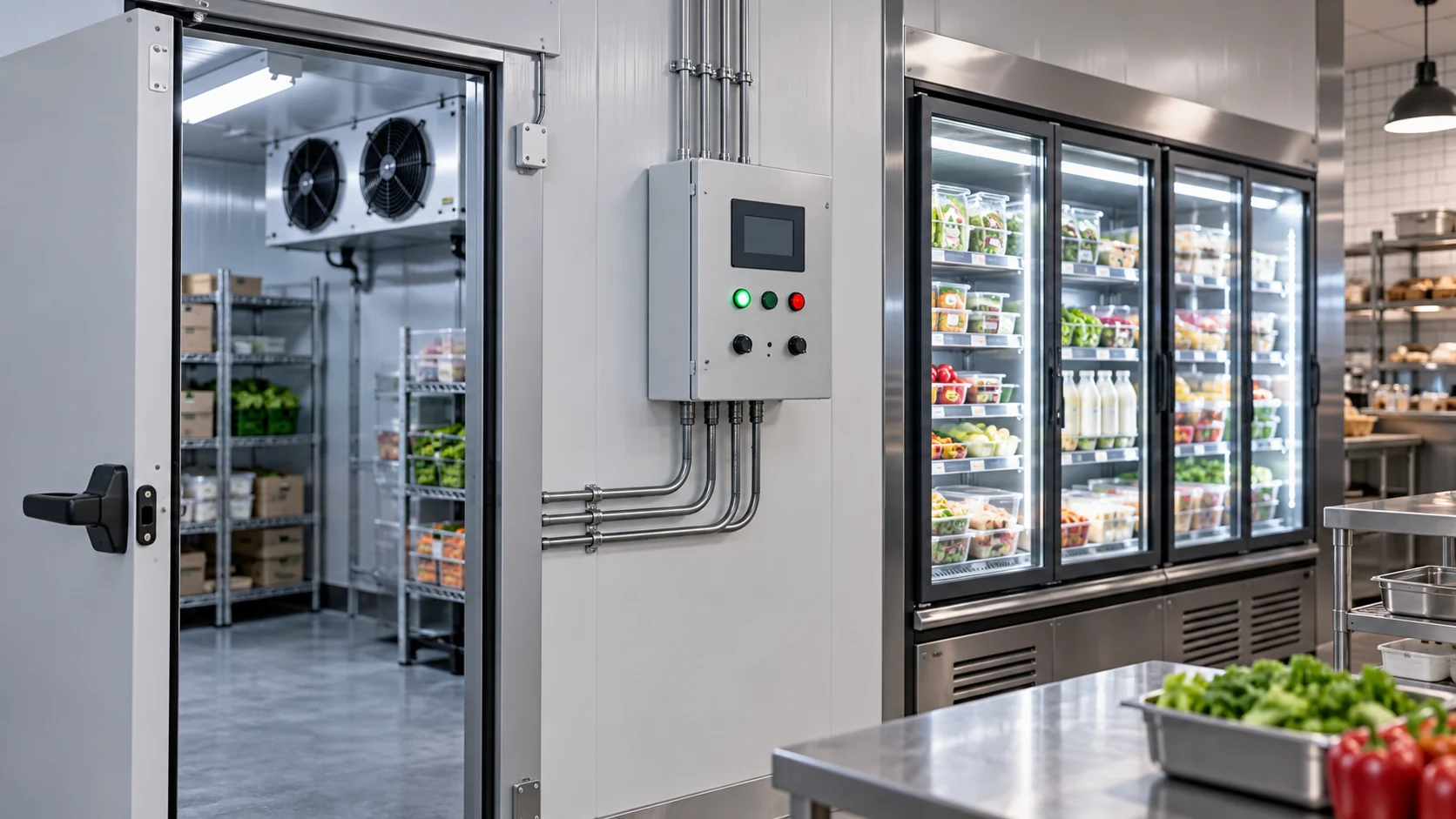
The U.S. Department of Energy describes commercial refrigeration equipment as equipment that stores or displays perishable goods and may use self-contained or remote condensing arrangements. ENERGY STAR’s commercial refrigerator and freezer guidance adds useful context about equipment categories and efficiency considerations. Use these references to frame the application, then provide your actual temperatures, loads and installation limits to the panel supplier.
For a walk-in cold room, ask for room temperature, evaporator fans, defrost, door and lighting checks. For retail display equipment, add compact service access, multiple case alarms and energy settings. For a compressor rack, require staging, lead-lag rotation, pressure control and failover evidence. Food or process plants need washdown-compatible construction, interlocks, traceable drawings and safe isolation. Ammonia or carbon-dioxide systems require refrigerant-specific sensors, leak response, pressure protection and trained service. Match the acceptance evidence to the risk of the application.
Prepare an OEM or retrofit RFQ
An effective RFQ lets a supplier price engineering work as well as components. Include a site or machine description, one-line diagram, control narrative, I/O list, motor schedule, sensor schedule, refrigerant, design pressures, temperatures, enclosure location, utility supply, communication protocol, required drawings, test method, packaging, quantity, target lead time and spare-parts expectation.
For a retrofit, add photographs, existing panel dimensions, terminal references, field-cable lengths, available short-circuit information, and the reason for replacement. State which existing devices must remain. Ask the supplier to identify deviations rather than silently substituting a different controller or protection arrangement.

| RFQ item | Minimum information | What the quote should return |
|---|---|---|
| Refrigeration duty | Refrigerant, suction and condensing conditions, room or process profile | Rated operating points and exclusions |
| Panel scope | Included loads, field devices, enclosure, HMI, network and spares | Boundary drawing and itemized bill of materials |
| Electrical design | Supply, motor data, fault level, cable entry and local rules | Single-line, protection details and terminal schedule |
| Controls sequence | Start, stop, defrost, safeties, alarms, manual modes and restart rules | Functional description and I/O list |
| Verification | FAT or shop test, sensor simulation, insulation or continuity checks | Test procedure, results and punch-list process |
| Delivery | Quantity, packaging, drawings, software backup, training and support | Lead time, documentation index and warranty terms |
Ask for drawings in an editable or reviewable format, a final terminal schedule, component manuals, software backup where applicable, parameter list, spare fuse and relay recommendations, and a clear list of buyer-supplied items. Domi’s engineering capabilities and testing lab pages are useful starting points for discussing custom engineering and verification. Confirm the exact panel capability, test scope, MOQ and lead time in writing before placing a purchase order.
Commission and document the panel
Commissioning should prove both electrical safety and refrigeration behavior. Check enclosure condition, labels, conductor torque, grounding, protective-device settings, insulation or continuity requirements, sensor calibration, input polarity, output action, emergency stop, pressure safeties, defrost termination, fan delay, alarm routing and communication values. Simulate abnormal conditions safely and record the result instead of relying on a green power lamp.
Use a signed point-to-point checklist that matches the final I/O schedule. Record controller firmware or configuration revision, setpoints, sensor serial numbers where relevant, measured currents, pressure readings, temperature response, alarm timestamps and outstanding punch-list items. Keep the as-built single-line, wiring diagrams, panel layout, parameter backup and spare-parts list with the machine documentation.

After handover, plan inspection intervals for terminals, filters, fans, enclosure seals, sensor drift, condensate or washdown damage, and alarm history. A serviceable panel is easier to troubleshoot when every wire, alarm and software setting has an owner and a revision record.
Frequently asked questions
Is a refrigeration panel the same as a refrigeration controller?
No. A controller is the logic device, while a panel is the engineered enclosure and electrical assembly around the controller. A panel may also contain disconnects, breakers, contactors, drives, relays, terminal blocks, safety circuits, HMI connections and communications. Confirm whether a quotation includes only the controller or the complete panel.
What information should I send for a refrigeration panel quote?
Send the refrigeration duty, refrigerant, temperatures, supply voltage, compressor and fan motor data, defrost method, sensor list, alarm sequence, enclosure location, communication protocol, drawings, quantity and required delivery documents. For a retrofit, add panel photos, dimensions, existing terminal references and the field devices that must remain.
Can one panel control several evaporators?
Often yes, but the answer depends on the number of evaporators, fan and heater loads, sensor count, defrost schedules, valve drivers, cable distances and required isolation. State whether each evaporator needs independent temperature control, defrost, alarm and service isolation. The panel supplier should return a clear I/O schedule and load calculation.
Should an electronic expansion valve be included in the panel scope?
Only when the valve, driver, pressure and temperature inputs, control sequence and commissioning responsibility are explicitly included. A controller may support an electronic expansion valve without the panel supplier providing the valve or the field installation. Put the valve model, driver, sensor ranges and fallback behavior in the RFQ.
What tests should a refrigeration panel supplier provide?
Request a documented point-to-point check, protective-device and grounding review, sensor simulation, output and interlock test, defrost test, alarm test, communication check and review of drawings. Add insulation or continuity checks and functional pressure or temperature tests when required by the project. Agree the test record format before production.
How do I compare two refrigeration panel quotations?
Compare the same boundary, load list, control sequence, enclosure environment, communication requirements, documentation, testing, spare parts, lead time and exclusions. A lower price may omit drives, field sensors, drawings, software backup, FAT or commissioning. Ask each supplier to mark deviations against your I/O schedule and single-line diagram.