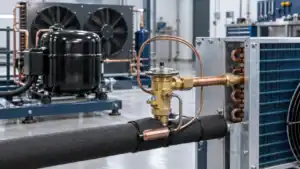

Hydrophilic aluminum fins change how condensate spreads and drains on a wet evaporator surface, but the right fin and coating system still depends on the air conditions, fin spacing, material, corrosion environment, cleaning method, and supplier test evidence.
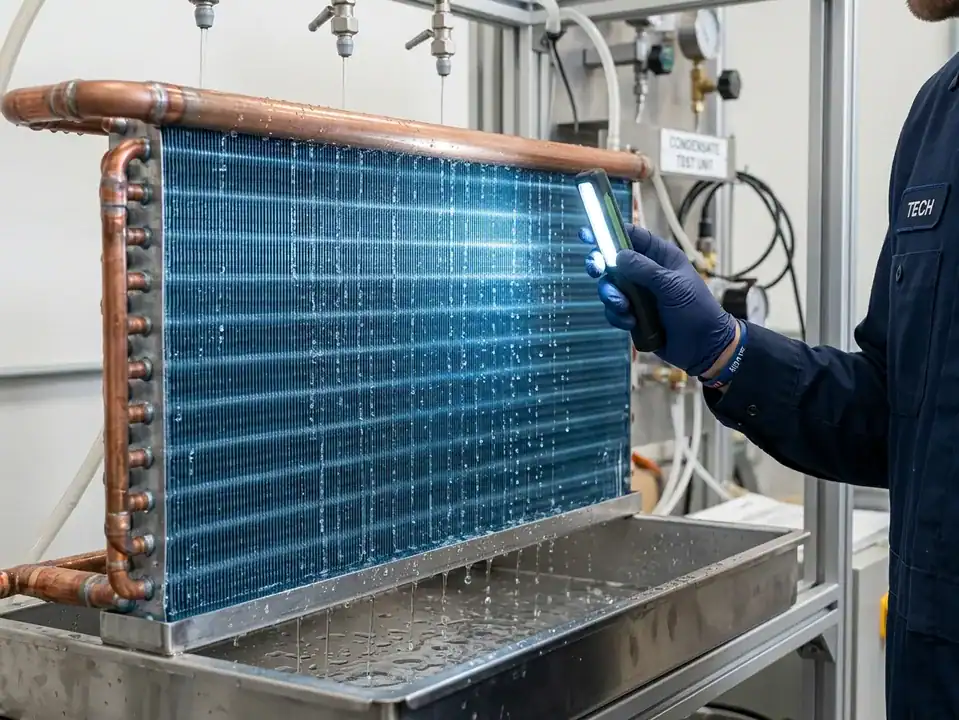
The phrase hydrophilic aluminum fin usually appears when an HVAC or heat pump engineer is trying to manage water on a wet coil. A hydrophilic surface can encourage condensed water to spread and move toward the drain path rather than remaining as isolated droplets. That can be useful, but it is not a stand-alone guarantee of coil performance. The surface treatment has to work with the aluminum substrate, fin geometry, airflow, humidity, drain pan, coating process, cleaning method, and corrosion environment.
This guide explains how to evaluate hydrophilic aluminum fins for evaporator and air-handling applications. It is written for OEM engineers, procurement managers, coil designers, and buyers who need a defensible RFQ rather than a generic claim that a fin is “water friendly.” For the broader design context, start with Domi’s HVAC and heat pump heat exchanger solutions, then state the wet-coil conditions and validation target when requesting a quote.
What is a hydrophilic aluminum fin?
An aluminum fin is a thin heat-transfer surface assembled around tubes or another coil construction. A hydrophilic treatment changes the surface’s interaction with water. In a wet evaporator, water vapor from the air can condense on the fin. The resulting droplets may spread, bridge, or drain differently depending on the surface chemistry, roughness, temperature, airflow, fin spacing, and amount of water present.
“Hydrophilic” describes a surface behavior, not one universal product formulation. The coating chemistry, pretreatment, thickness, curing, adhesion, and substrate all matter. Two products can both be described as hydrophilic and still have different wetting behavior, corrosion performance, cleaning compatibility, thermal resistance, and production limits.
The hydrophilic aluminum foil technical overview is a useful background source for the material category and common application language. It should not be used as evidence that every coating or finished coil has the same performance. Ask the supplier for the actual material and surface-treatment specification.
Hydrophilic does not mean waterproof or permanently corrosion-proof
A hydrophilic surface may support water spreading, but it does not automatically stop corrosion, prevent all microbial growth, or eliminate cleaning. The coating can be scratched, contaminated, aged, or damaged during forming and assembly. The aluminum substrate can still be exposed at edges, cuts, joints, holes, or damaged areas. The drain pan and surrounding cabinet can still create standing water.
The procurement specification should therefore separate these questions:
- How does the surface handle condensate?
- What is the coating or treatment system?
- What corrosion environment is expected?
- What cleaning chemicals are allowed?
- What test method supports the stated result?
- What happens at edges, bends, holes, and formed areas?
- How is the treatment checked during production?
How hydrophilic fins affect condensate drainage
The goal of a wet evaporator surface is not simply to make every droplet move as fast as possible. The coil must collect and transport condensate without excessive carryover, bridging, blockage, or re-entrainment into the airstream. Surface behavior interacts with fin spacing and air velocity.
Droplet formation and spreading
On a surface with less wetting, condensate can form separate droplets. The droplets may grow, combine, or be carried by the airflow if the local velocity and geometry allow it. A hydrophilic treatment can change the contact angle and encourage a more continuous water film or a different spreading pattern. The practical effect depends on the amount of water, surface temperature, airflow, and the orientation of the fin.
Drainage path and gravity
Water must still have a path to the pan and away from the equipment. A surface treatment cannot overcome a level coil, blocked drain, incorrect slope, poor pan design, or an installation that holds water at the bottom row. Review the coil orientation, fin direction, drain pan, end plates, headers, and cabinet interfaces as one assembly.
Air-side pressure drop and carryover
Fin spacing, louver shape, face velocity, and wet-surface behavior can influence pressure drop and water carryover. A coating is not a reason to ignore airflow. Test or calculate the coil at the expected wet conditions and identify what is known versus estimated.
Hydrophilic coating vs bare aluminum and other treatments
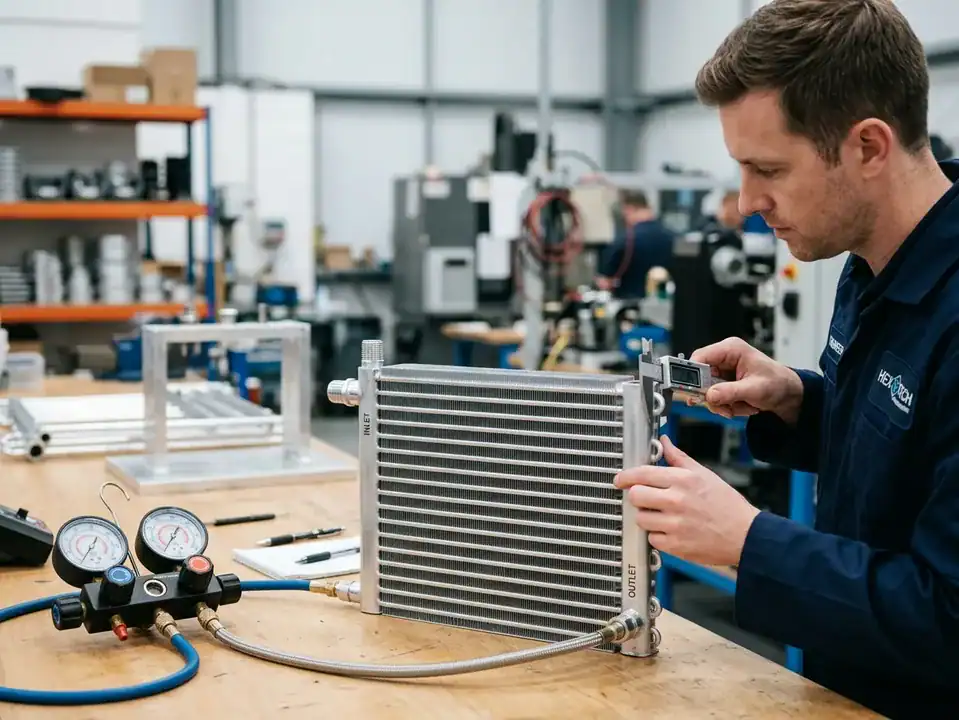
The correct comparison is not “coated equals good, bare equals bad.” It is a decision between surface systems for a specific environment and service plan.
| Surface option | Potential reason to consider it | Questions that remain open |
|---|---|---|
| Bare aluminum | Simple construction, known forming route, lower process complexity | How will wetting, corrosion, cleaning, and edge exposure be managed? |
| Hydrophilic treatment | Condensate spreading and wet-coil water management objective | What chemistry, adhesion, wetting data, and cleaning limits apply? |
| Corrosion-protection coating | Environmental exposure or material-protection objective | Does the coating change thermal resistance, drainage, or service method? |
| Combined or specialized coating | Multiple performance requirements in one environment | Is the complete system tested on the actual substrate and formed part? |
| Material or geometry change | The risk is better handled through substrate, fin spacing, or drainage | Does the change affect cost, availability, forming, and validation? |
Ask the supplier to explain the primary design objective. If the project needs both condensate management and corrosion protection, verify that the selected surface system addresses both rather than assuming one label covers both.
Surface treatment and finished-coil performance are different claims
A material supplier may report a surface property on flat foil. The finished coil has formed fins, tube contact, cut edges, headers, brazing, cleaning, handling, and packaging. The buyer should ask whether the evidence applies to the actual assembled part and the intended production process.
The Selfacecoat technical data sheet illustrates why coating discussions should use a defined product and test basis. A product data sheet can describe a specific coating system, but it does not automatically validate a different substrate, thickness, forming process, or HVAC coil.
How fin spacing and airflow change the result
Fin spacing and dirt loading
Tight fins increase surface density but can be more sensitive to dust, fibers, frost, and cleaning damage. Wider fins can improve access and reduce blockage risk but may need more face area or rows to reach the target duty. The right spacing depends on the air quality, wet operation, cleaning schedule, and allowable pressure drop.
For a commercial or industrial unit, ask who will clean the coil and how often. For a residential heat pump, ask how the outdoor coil will be exposed to debris, frost, and seasonal moisture. A hydrophilic treatment does not remove the need for a maintenance plan.
Face velocity and water movement
Higher face velocity can increase the risk of droplets being carried past the fin and drain pan, particularly at a wet rating point. Lower face velocity may help water management but can require a larger face or change the cabinet. Review the fan, filter, louver, and coil together.
Fins, tubes, and contact
The fin must transfer heat through its contact with the tube or other core element. The coating and treatment process should not be evaluated only on a flat coupon if forming, fin insertion, brazing, cleaning, or handling could change the surface. Ask how the supplier checks appearance, coverage, adhesion, and damage after assembly.
Questions to ask about coating and aluminum foil
Use this list when a supplier proposes a hydrophilic aluminum fin system:
| Question | Why it matters |
|---|---|
| What aluminum alloy or foil grade is used? | Substrate affects forming, strength, supply, and corrosion behavior |
| What is the treatment or coating system? | “Hydrophilic” alone does not identify the product |
| Is the treatment applied before or after forming? | The process can affect coverage and damage at bends or edges |
| What adhesion or durability evidence is available? | Shows whether the surface survives handling and service conditions |
| What wetting or drainage test was used? | Defines the meaning of the performance claim |
| What cleaning chemicals are allowed? | Some chemicals can stain, strip, or damage a coating |
| Is corrosion testing available for the actual assembly? | A flat foil result may not represent a finished coil |
| How is coating consistency checked in production? | Supports batch and lot control |
| Does the surface change pressure drop or thermal selection assumptions? | Prevents a material change from becoming an unreviewed design change |
| What are the storage and packaging limits? | Protects the surface before installation |
The answer should include documents, test conditions, and limitations. A supplier who cannot identify the test method may still offer a useful material, but the buyer should treat the benefit as unverified until the project creates its own evidence.
Hydrophilic fin selection for OEM evaporator coils
Indoor air-conditioning and air-handling coils
Indoor evaporators often see humid air, repeated wet/dry cycles, filters, cleaning, and a controlled drain pan. The buyer should provide entering air conditions, airflow range, wet operating time, fan arrangement, drain orientation, cleaning method, and service access. The surface selection must work with the installation geometry.
Heat pump outdoor coils
Outdoor coils can see rain, dust, salt, frost, defrost water, and changing airflow. A hydrophilic surface may be relevant to water handling, but the project also needs to consider freezing, drainage, coating durability, corrosion, and defrost control. The supplier should not promise that a hydrophilic surface will prevent frost or eliminate defrost problems.
Commercial and industrial equipment
Commercial and industrial systems may have longer duty cycles, more aggressive cleaning, or exposure to process contaminants. Identify the chemical environment, wash-down practice, maintenance interval, and required documentation. If the coil is part of a food, medical, or controlled production area, the equipment owner must confirm the applicable material and hygiene requirements.
Manufacturing and quality checks before approval
The coating or treatment is only one step in the part’s manufacturing route. A practical quality plan may include:
- Incoming foil or fin-stock identification.
- Surface condition and appearance check.
- Forming or louver inspection.
- Coating coverage, adhesion, or other project-defined checks.
- Fin-to-tube assembly and damage review.
- Brazing, cleaning, and joint inspection.
- Finished dimensions and fin spacing.
- Leak or pressure checks where applicable.
- Sample wetting, drainage, or corrosion tests if required.
- Packaging and storage protection.
Do not call a surface “validated” because it passed an unrelated flat-sheet test. Record the sample construction, treatment lot, exposure, test method, and acceptance rule. If the test is not done, label it as not yet verified.
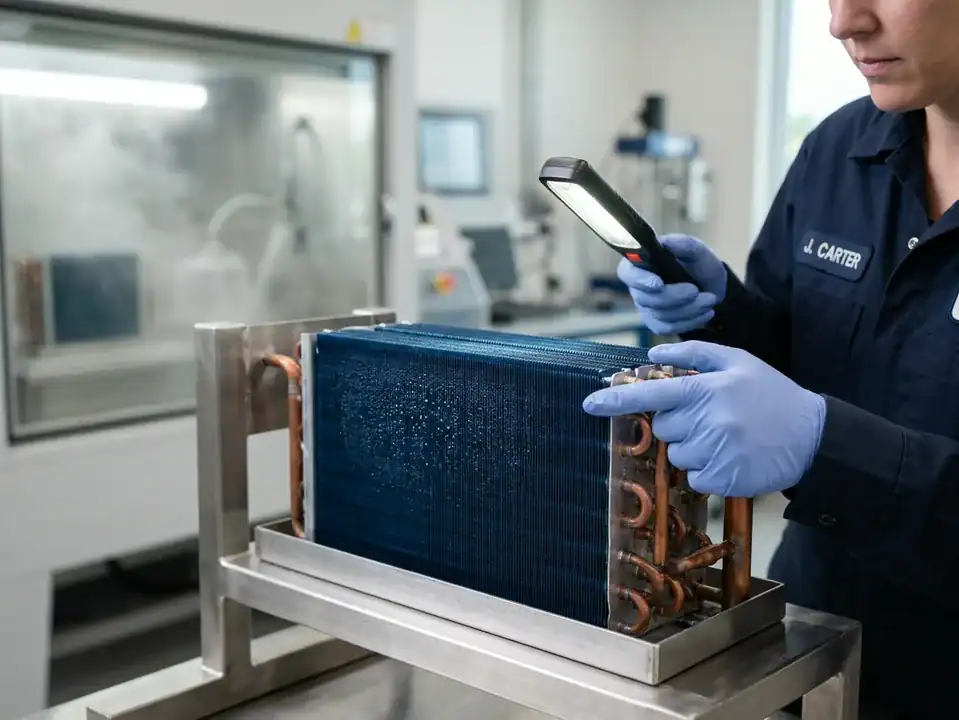
A hydrophilic aluminum fin RFQ template
Send the following information when requesting a quote:
| RFQ section | Information to provide |
|---|---|
| Application | Evaporator, air handler, heat pump, or other equipment |
| Air conditions | Flow, entering temperature, humidity, leaving target, pressure-drop limit |
| Coil geometry | Face, depth, rows, fin spacing, tube or port arrangement, connections |
| Surface requirement | Hydrophilic objective, corrosion environment, cleaning, appearance |
| Material | Aluminum grade/foil preference, tubes, headers, brackets, fasteners |
| Drainage | Coil orientation, pan, slope, drain side, defrost water if applicable |
| Validation | Wetting, drainage, thermal, pressure drop, corrosion, adhesion, or other tests |
| Program | Samples, pilot, annual quantity, SKU mix, packaging, delivery |
Ask the supplier to return a marked-up specification that distinguishes confirmed values from recommendations. If the buyer has no coating preference, describe the environment and ask for two options with the trade-offs and evidence.
Common mistakes when specifying hydrophilic fins
Treating the word hydrophilic as a performance guarantee
The word identifies an intended surface behavior, not a complete coil result. Ask what is measured and on which substrate.
Ignoring the drain pan and installation angle
Water can still pool or freeze if the pan, slope, end plates, or drain is wrong. Review the finished assembly and installation.
Choosing a coating without the cleaning plan
A surface that performs in a clean lab may not survive an aggressive field chemical. State the cleaning product, concentration, temperature, and frequency when known.
Using a flat-foil data sheet for a formed coil claim
Forming, cutting, insertion, handling, and assembly can expose or damage the surface. Validate the actual part.
Promising a fixed thermal improvement
Surface wetting can influence water behavior, but capacity and efficiency depend on the complete coil and system. Do not publish a fixed gain without a defined test.
Forgetting edges and mixed metals
Cut edges, tube contact, headers, brackets, screws, and the drain pan can be more important to field corrosion than the center of a flat fin. Include the entire assembly in the environment review.
How Domi can support the fin and coil selection
Send the application, air conditions, drawing, material preferences, environment, cleaning method, and quantity plan to Domi. The custom coil fabrication page is the right route for a drawing-based inquiry. Use engineering capabilities for design questions and testing lab support for the validation scope that the project actually requires.
If the requirement is a replacement, include the old coil, photographs, drain arrangement, service history, and any known corrosion or water-carryover problem. If the requirement is a new OEM product, include the target operating range and how the coil will be cleaned and maintained. Use the contact page to send the specification and request a technical review.
How to evaluate a hydrophilic surface in a wet-coil test
A wet-coil evaluation should match the question the OEM is trying to answer. If the goal is condensate spreading, the test should observe water behavior on the intended surface and geometry. If the goal is reduced carryover, the test should include the airflow and water loading that can cause droplets to leave the coil. If the goal is corrosion protection, the exposure and evaluation should represent the environment rather than only the wetting property.
Define the sample
Record the aluminum grade, fin thickness, louver or plain-fin geometry, spacing, coating or treatment, tube material, assembly method, edge condition, and surface preparation. A flat coupon may be useful for screening, but a formed fin or finished coil may be required for a release decision. State whether the sample is new, cleaned, formed, assembled, or repaired.
Define the wet condition
Record air temperature, humidity, airflow, coil surface temperature or fluid condition, water load, orientation, and run time. A visual photograph is helpful, but the team should also record drainage time, carryover observation, pressure drop, and any pooling or bridging that matters to the application.
Define the acceptance rule
Avoid saying “good drainage” without a measurable or observable definition. The rule might concern the absence of visible pooling in a specified area, a water-carryover limit, a drainage time, a pressure-drop range, or a coating appearance and adhesion condition. The correct rule depends on the product and should be agreed before the test.
Repeat after handling or cleaning
If the coil will be washed, brushed, or handled in production, repeat the relevant check after that exposure. The purpose is not to manufacture a perfect laboratory result. It is to understand whether the surface behavior remains useful after the actions the part will experience.
Production and sourcing considerations
The best lab surface is not automatically the best OEM surface if it cannot be supplied consistently or formed without damage. Ask how the material is purchased, how lots are identified, what lead time applies, and what happens if the preferred foil or treatment is unavailable.
Pre-coated fin stock versus finished-coil treatment
Pre-coated fin stock can provide a controlled material route before forming, but the supplier should explain how cutting, louvering, forming, tube insertion, brazing, cleaning, and handling affect the surface. Treating the finished coil can reach some areas differently but may introduce masking, cure, or access questions. The correct process depends on the construction and equipment.
Drawing and specification language
Do not write only “hydrophilic aluminum fin” on the drawing. Add the material, surface-treatment identifier, supplier or approved alternative, appearance requirement, critical dimensions, handling, cleaning, and test or document requirement. If the coating is an optional recommendation, keep it in the engineering note until the project approves the actual system.
Change control
Define which changes need review: aluminum grade, fin thickness, treatment chemistry, coating lot or supplier, curing condition, fin spacing, tube material, joining process, cleaning chemistry, and packaging. A visually similar coating from a different supplier should not be treated as automatically equivalent.
Cost trade-offs
Material cost is only one line. Include forming yield, scrap, coating minimums, special inspection, packaging, cleaning, sample testing, corrosion requirements, and production lead time. A lower-cost fin can become more expensive if it creates carryover, corrosion, cleaning, or field-service problems.
A decision record for selecting hydrophilic aluminum fins
Keep a short record that answers:
- What water-management problem is the surface intended to address?
- What operating condition creates that problem?
- Which alternative surfaces or geometry changes were considered?
- What evidence supports the selected treatment on the actual construction?
- What cleaning, storage, and service limitations apply?
- What changes require a new sample or validation?
This record helps future purchasing teams avoid substituting a different fin treatment because the names appear similar. It also gives service and quality teams a clear reason for the selected material.
When hydrophilic fins are not the first answer
Sometimes the water problem is caused by the system around the fin. Before selecting a surface treatment, check whether the air velocity is too high, the coil is not level, the drain pan is undersized, the filter is bypassing dirt, the fan creates an uneven approach flow, or the equipment is being operated outside its intended humidity range. A surface change may improve one symptom while leaving the root problem in place.
Consider a geometry or control change when:
- Water is pooling at a known low point.
- The drain pan or outlet is blocked or incorrectly sloped.
- The face velocity is causing carryover.
- The fin spacing is unsuitable for the dirt or frost load.
- The coil is cycling rapidly between wet and dry conditions.
- The cleaning method is damaging the existing surface.
- The installation does not provide access for inspection.
The project may still choose hydrophilic aluminum fins after those checks, but the decision will be better founded. In some applications, a wider fin, improved pan, changed airflow, or revised control is more effective than a new surface.
Compare the alternatives honestly
Use the same test conditions and cost boundary when comparing a hydrophilic fin with bare aluminum, another coating, or a geometry change. Include thermal performance, wet pressure drop, drainage, corrosion, cleaning, supply, and service. If an alternative has not been tested, mark it as a concept rather than presenting a false winner.
Give procurement a clear acceptance point
The purchase order should identify the approved surface-treatment description, the drawing revision, the required documents, and the sample or inspection evidence. If the supplier may use an approved alternative, list the acceptable material and process explicitly. This prevents a later batch from being accepted only because the fin looks similar while its wetting, cleaning, or corrosion behavior has not been reviewed.
Keep the customer-facing claim narrow
A useful product description can say that the fin is selected for condensate-management or wet-coil requirements under stated conditions. It should not promise that every HVAC system will drain faster, run more efficiently, or resist every chemical. Narrow claims are easier for engineering, sales, procurement, and service teams to support consistently.
That discipline also protects the buyer. A clear claim tells the maintenance team what the surface was designed to do and tells quality which evidence must be retained. It avoids replacing a measured requirement with a marketing adjective.
When the evidence is limited, use a neutral statement such as “surface option to be confirmed against the stated wet-coil conditions.” That keeps the purchase decision open without weakening the technical requirement.
This wording is especially useful when a sample is being reviewed before the coating supplier and final treatment are frozen.
It keeps the article useful without turning an untested material option into a product promise.
The buyer can then make the final selection after the supplier has matched the surface to the coil geometry and wet operating conditions.
That matching step is what turns a material description into a usable OEM specification.
The same principle applies to replacement work. A replacement fin that appears identical may have a different surface treatment, edge condition, or cleaning limit. Record the material and treatment identifier with the part number, and ask the supplier to confirm the finish on the sample before the service team receives a larger batch. That small step prevents a wet-coil drainage problem from being reintroduced through an untracked substitution.
During the sample review, look at the places a field technician will actually touch. Check the face, corners, edges, bottom row, headers, drain pan, mounting points, and any area where a brush or spray nozzle could contact the fin. Ask whether the approved cleaning method changes after the surface has been formed or assembled. A material can be acceptable on the center of a flat coupon and still need a different handling instruction on a finished coil.
That is also why the quotation should identify whether the surface is supplied as treated fin stock or applied to the finished assembly. The two routes can differ in minimum order, lead time, inspection, repair, and the parts of the coil that are covered. Ask the supplier to identify the route in the sample and production specification.
That detail affects both cost planning and the quality checks used at receiving.
For the coil rating and documentation side of the project, the AHRI standards resources and ASHRAE standards and guidelines provide useful reference points. The actual wetting, drainage, and coating evidence still needs to represent the selected fin and finished coil.
The AHRI 410 performance-rating scope is another useful reference when the project defines a forced-circulation air-coil rating. It does not replace the wet-coil test or surface-treatment specification.
Frequently asked questions
What does hydrophilic mean on an HVAC coil fin?
It describes a surface intended to interact with water in a more spreading or wetting-oriented way than a less-wetting surface. The actual result depends on the coating or treatment, substrate, surface condition, airflow, temperature, fin spacing, and orientation.
Do hydrophilic fins stop corrosion?
Not automatically. Some surface systems may also provide corrosion protection, but that is a separate claim requiring its own material and test evidence. Ask about the actual environment and the test basis.
Are hydrophilic fins only used on evaporator coils?
They are most often discussed for wet evaporator or air-handling surfaces, but the correct use depends on the equipment and surface objective. A condenser or outdoor coil can have different water, dirt, frost, and corrosion requirements.
Can hydrophilic coating prevent water carryover?
It may influence water spreading, but carryover depends on face velocity, fin spacing, airflow distribution, condensate rate, coil orientation, and drain design. Verify the complete assembly at the relevant conditions.
Does hydrophilic coating reduce HVAC coil capacity?
The answer depends on the treatment, thickness, surface, geometry, and operating condition. Do not assume a universal penalty or gain. Request the selection basis and test data for the actual coil.
How should a coated coil be cleaned?
Follow the coating and equipment supplier’s instructions. The permitted chemical, concentration, temperature, pressure, and brush or spray method should be defined before maintenance. Avoid assuming that a generic coil cleaner is compatible.
What information is needed to quote hydrophilic aluminum fins?
Provide the application, airflow, entering conditions, humidity, geometry, fin spacing, material, surface objective, corrosion environment, cleaning method, validation needs, quantity, and packaging. A drawing or old sample helps identify the assembly details.
Can Domi supply a complete coil with hydrophilic fins?
Send the drawing and operating data so Domi can confirm the feasible material and treatment route for the application. The final option depends on the coil construction, environment, quantity, and the evidence required by the OEM.
Related articles
- Microchannel vs Fin-Tube Coils for HVAC Systems
- How to Size a Custom HVAC Coil
- R32 vs R410A HVAC Coil Design
- Heat Pump Outdoor Coil Frosting and Defrost Design
- HVAC Coil Corrosion Protection Options
- What Is a Heat Exchanger? Types, Uses and How It Works
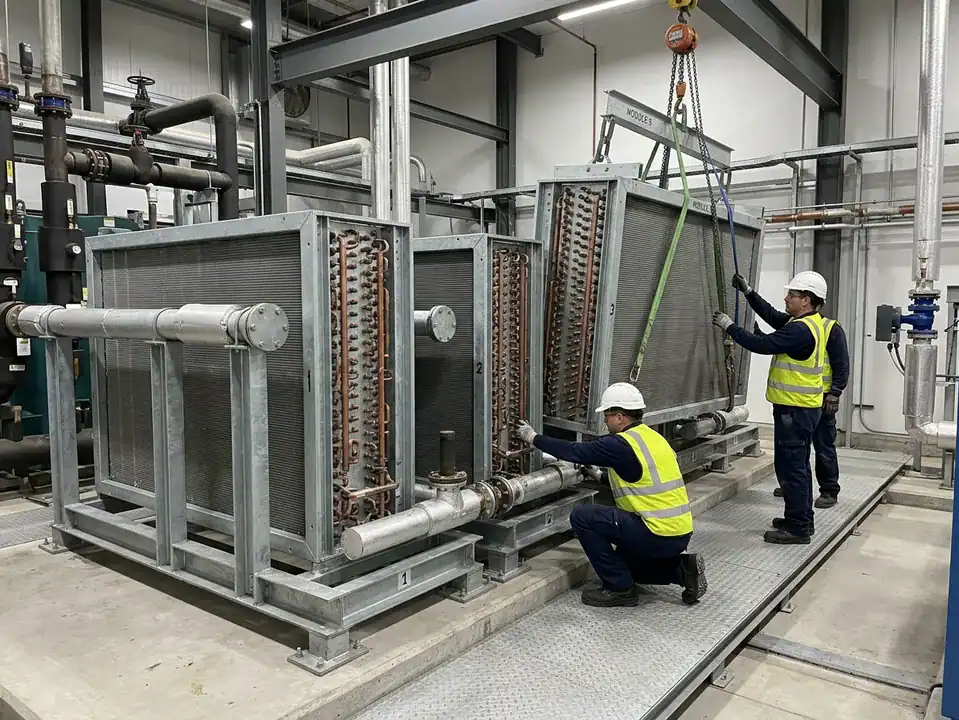
Final takeaway
Selecting a hydrophilic aluminum fin is a surface-and-system decision. The treatment may help manage condensate on a wet evaporator, but the final result depends on fin geometry, airflow, drain design, substrate, coating process, corrosion environment, cleaning, and validation. Specify the intended behavior and evidence instead of buying a label.
Send Domi the coil drawing, wet operating conditions, material and surface requirements, cleaning plan, and sample target. A clear RFQ lets the supplier compare a hydrophilic option with other materials or treatments and identify what still needs to be verified before production.