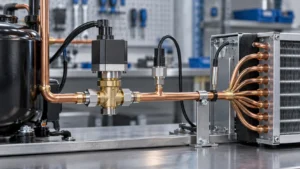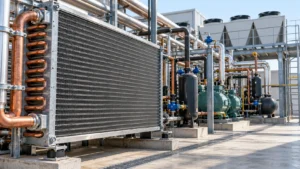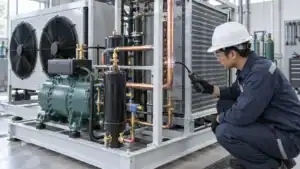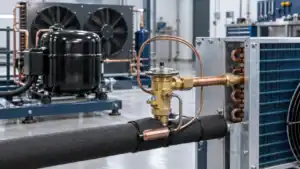

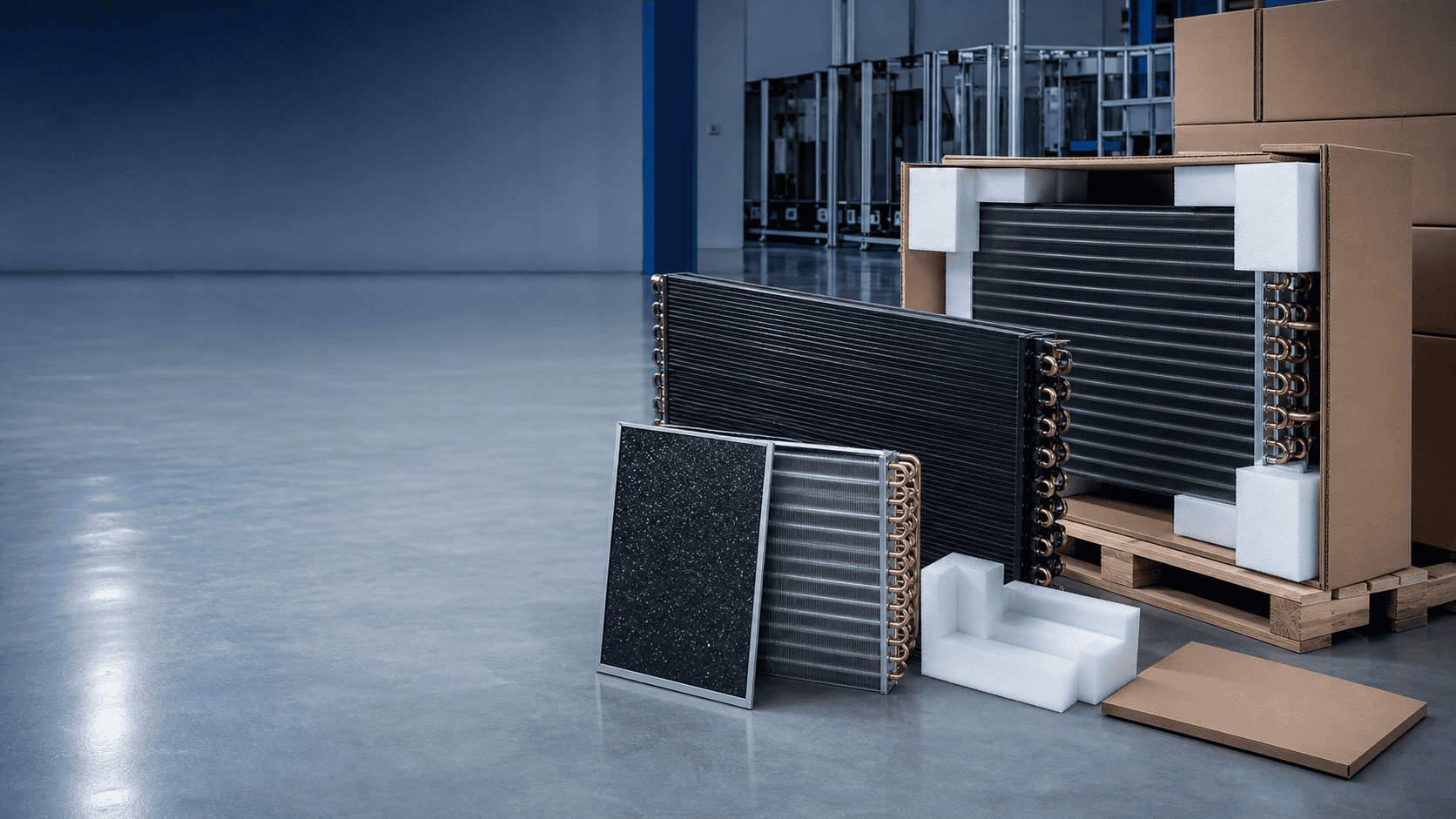
Replacing a refrigeration coil or heat exchanger is often urgent, but a rushed replacement can create a second failure if the original duty or failure mode is not understood. A supplier needs enough information to reproduce the fit and confirm that the replacement is suitable for the operating conditions.
This guide covers industrial refrigeration coils, finned heat exchangers, tube assemblies and custom replacement parts. It does not provide a universal repair decision; pressure, refrigerant and site safety must be assessed by the responsible engineer or qualified service professional.
When an industrial replacement is justified
Replacement may be considered when a coil has a confirmed leak, severe corrosion, deformation, blocked passages, repeated repair history, unavailable original part or a changed system requirement. The reason matters because the replacement scope may differ.
| Situation | Evidence to collect | Replacement question |
|---|---|---|
| Leak or pressure loss | Leak location, test result, photos and service history | Can the cause be removed, or is the assembly compromised? |
| Corrosion | Surface photos, fluid or environment, coating history | Is a different material or protection needed? |
| Poor performance | Operating readings, airflow or flow, frost and temperature | Is the old design undersized or operating outside its basis? |
| Mechanical damage | Bent fins, damaged headers, vibration marks, mounting condition | Can the part be repaired, or must the geometry be remade? |
| Obsolete part | Original drawing, sample, nameplate and application data | Which dimensions are fixed and which need engineering confirmation? |
Do not treat “same as old” as a complete technical requirement. The old part may have been modified in the field or may have failed because the system condition changed.
The four evidence sources for replacement
Drawing and revision
Send the latest drawing and clearly identify the revision. Include dimensions, datums, tolerances, connections, circuiting, materials, coating, mounting, insulation, drain details and inspection notes. If the supplier sees multiple revisions, ask for a short revision reconciliation before quotation.
Nameplate and operating record
The nameplate may identify model, capacity, refrigerant or manufacturer. It rarely contains every engineering input. Add operating temperatures, pressures, flow, airflow, room or process condition, defrost cycle and the actual reason for replacement.
Sample and measurements
A physical sample helps confirm tube pattern, headers, brackets, connection orientation and fit. Measure from controlled datums and record uncertainty. Photograph the part before disassembly when the installed orientation may be lost.
Field photographs and failure evidence
Photographs can reveal blocked airflow, corrosion, vibration, frost, oil staining, damaged supports or installation constraints. Include a scale and a view of the connection area. Photos are supporting evidence, not a substitute for the drawing or rating data.
Dimensions that commonly cause fit-up problems
Buyers should provide more than length, width and depth. The replacement review should include:
- Coil face, depth, row count and tube pattern.
- Header or manifold position, size and orientation.
- Inlet and outlet connection type, centerline, height and projection.
- Mounting holes, brackets, supports, rails and service clearances.
- Drain pan, drain outlet, heater, sensor and access details.
- Fan, guard, casing or shroud interface where supplied as an assembly.
- Tube-end condition, caps, plugs and protection for transport.
The most important dimension is often a datum between the connection and the mounting face. Ask the supplier to mark the critical fit dimensions on the approval drawing rather than relying on a general statement that the part is “equivalent.”

Duty, pressure and material matching
Thermal duty
Confirm the actual capacity or heat-rejection requirement and the rating condition. For an air coil, include entering air temperature, humidity, airflow and allowable pressure drop. For a liquid coil, include fluid type, concentration, flow and inlet/outlet condition. For a refrigerant heat exchanger, include evaporating or condensing condition and the control range.
Pressure and refrigerant
Provide operating and design pressure, test pressure where specified, vacuum exposure, refrigerant and any safety or code requirement. Ammonia and CO2 projects should receive a separate pressure and material review; appliance-coil assumptions should not be carried over automatically.
Material and corrosion
Specify tube, fin, header, frame and coating requirements. State the environment, cleaning chemistry, water quality, salt or humidity exposure and expected service method. If the old part corroded, ask the supplier to identify possible material or environment changes instead of simply copying it.
Replacement quotation checklist
Use a single checklist for every supplier so the prices remain comparable.
| Quote section | What to require |
|---|---|
| Scope | Coil only, assembly, fan, casing, controls, drain or mounting parts |
| Technical basis | Duty, operating condition, refrigerant or fluid, pressure and pressure drop |
| Mechanical fit | Drawing revision, datums, dimensions, connections and tolerances |
| Quality | Dimensional report, pressure or leak test, material or coating records |
| Samples | Quantity, approval route, test condition and sample credit policy if applicable |
| Commercial | MOQ, quantity ladder, lead time, packaging, delivery basis and quote validity |
| Change control | Impact of drawing revision on tooling, materials, price and schedule |
Ask the supplier to mark open assumptions. A clear “to be confirmed” is safer than a hidden assumption in the price.
Inspection and first-article release
Before production release, agree what will be measured and what will be tested. A dimensional report should identify the critical datums and connection locations. A pressure or leak test should state method, condition and acceptance result. If a thermal performance test is required, define the air, fluid or refrigerant condition and the report format.
Inspection scope depends on the project. Do not claim a particular certification, test result or tolerance unless it has been confirmed for the part. The practical goal is a release package that lets engineering, quality and installation teams approve the same item.
Packaging and installation handoff
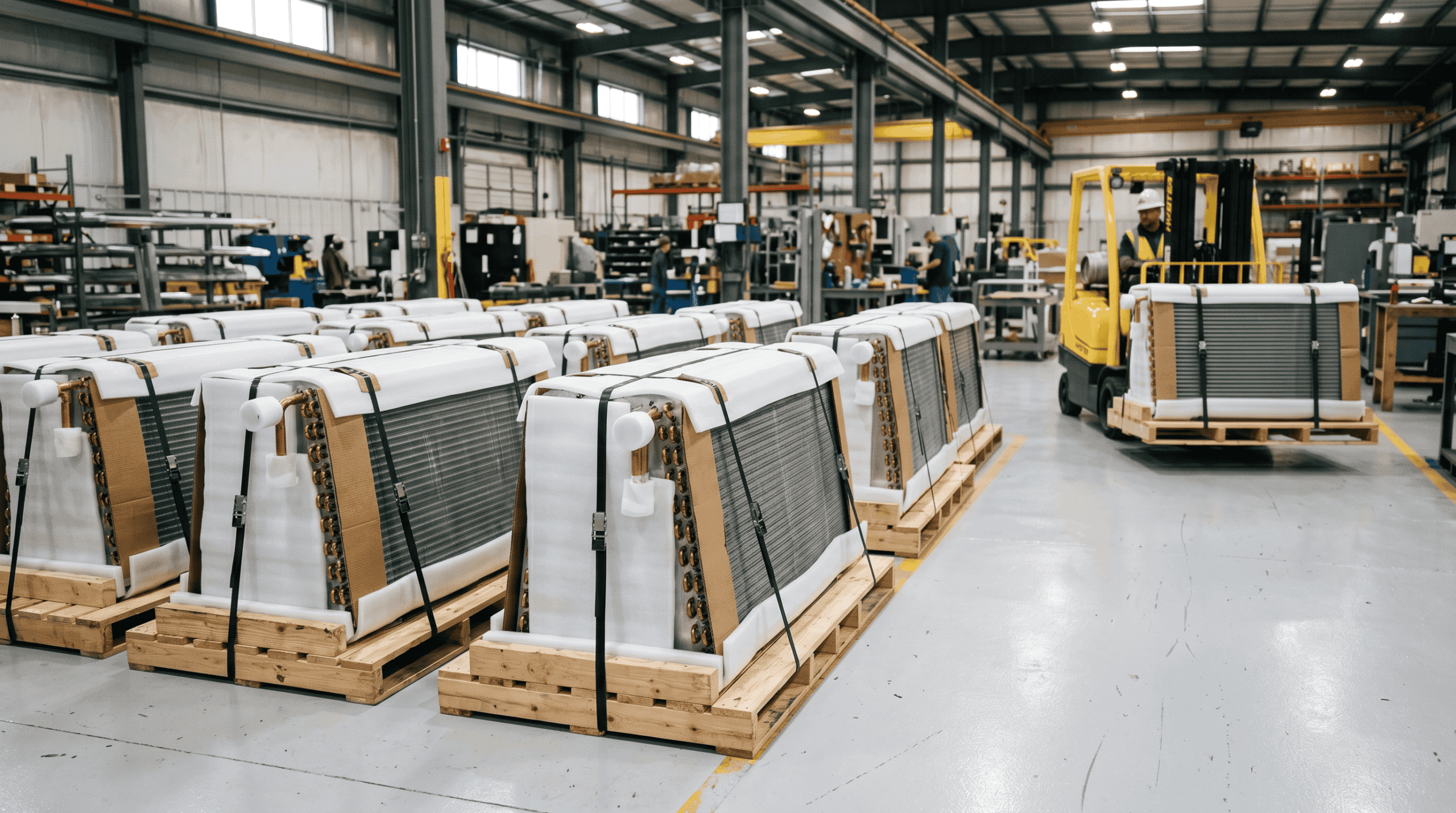
Replacement coils are vulnerable at fins, headers, tube ends and brackets. Define protective caps, separators, crate or pallet, moisture protection, lifting points and receiving inspection. If the part will be stored before installation, include storage requirements in the handoff.
Send the installation team the approved drawing, connection orientation, lifting information and inspection points. This helps prevent a good replacement from being damaged or installed in a way that repeats the original problem.
FAQ: industrial heat exchanger replacement
Can a supplier replace a heat exchanger from photographs only?
Photographs can start a review, but they rarely define duty, pressure, material and tolerances. Add a drawing, nameplate, measurements and operating data before approving a replacement.
Is matching the outside dimensions enough?
No. Circuiting, tube pattern, connections, material, pressure, airflow or fluid flow and thermal duty can change even when the outside size is the same.
What should be included in a replacement drawing?
Include critical dimensions, datums, tolerances, connections, circuiting, materials, mounting, drain or defrost details, inspection notes and the drawing revision.
How do I identify the cause of a failed coil?
Collect leak location, corrosion pattern, vibration marks, airflow or flow readings, frost, cleaning history and operating records. A qualified engineer or service professional should interpret the evidence.
Can the replacement use a different material?
Possibly, but the change needs review for heat transfer, pressure, refrigerant or fluid compatibility, corrosion, joining and approval requirements. Do not treat it as a simple substitution.
What is the first step for an obsolete part?
Secure the current sample, measurements, photos, operating condition, nameplate and any old drawings. Ask for a dimensional and application review before requesting a final price.
Related Articles
- Industrial refrigeration evaporator selection guide
- Industrial refrigeration condenser-coil selection guide
- Tube bundle heat exchanger engineering guide
- Shell-and-tube heat exchanger selection guide
- Drawing revision control for OEM refrigeration coils
- Custom coil fabrication
Request a replacement review
Send the drawing revision, sample photographs, measured dimensions, duty, refrigerant or fluid, pressure, quantity and failure evidence. Domi can then identify the information still needed and prepare a replacement or custom-fabrication review.