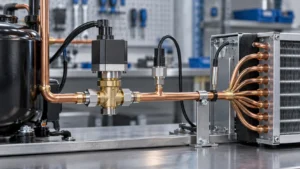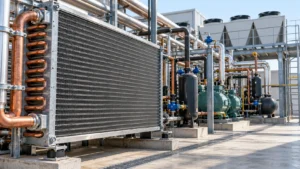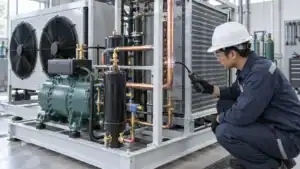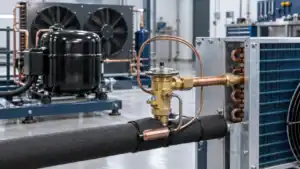

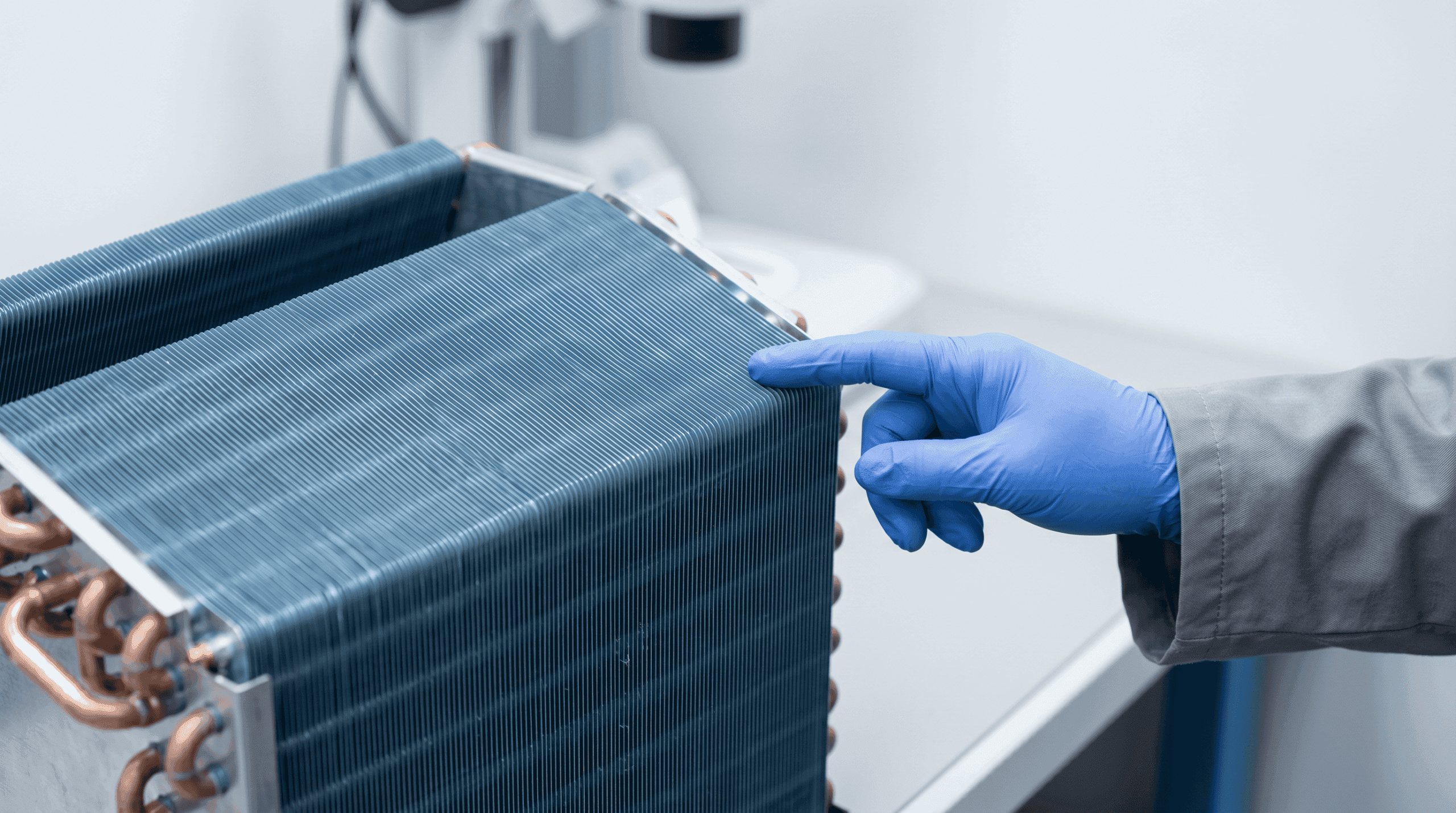
Industrial condenser coils are not selected by physical size alone. Two assemblies with the same face dimensions can have different heat-rejection capacity, pressure drop, refrigerant distribution, fin spacing, corrosion resistance and service life. Buyers should compare the rating basis and the construction details together.
This guide focuses on large-capacity refrigeration, process cooling and custom replacement projects. It is separate from a residential condenser maintenance article because the procurement questions are different: drawings, refrigerant, operating pressure, heat rejection, materials, access, packaging and inspection all affect the final decision.
What condenser coils do in an industrial system
The condenser removes heat from the high-side refrigerant after compression. Depending on the system, heat may be rejected through an air-cooled coil, a water-cooled heat exchanger, an evaporative arrangement or a shell-and-tube assembly. The correct architecture depends on the available heat sink, ambient or water condition, operating profile and maintenance plan.
| Condenser type | Heat sink | Main buyer checks |
|---|---|---|
| Air-cooled finned coil | Outdoor or facility air | Ambient design point, airflow, fan duty, fin spacing and corrosion |
| Water-cooled heat exchanger | Cooling water or fluid loop | Water quality, flow, fouling, pressure, cleaning and approach |
| Shell-and-tube condenser | Water or process fluid | Pass arrangement, tube material, design pressure and service access |
| Custom modular assembly | Air, water or combined arrangement | Envelope, piping, controls, lifting, transport and commissioning |
The quotation should state which components are included. A bare coil, a coil with headers, and a complete condenser module are different scopes.
Heat-rejection inputs that control selection
Start the RFQ with a rating schedule rather than “one industrial condenser coil.” The supplier needs:
- Refrigerant and operating or design pressure.
- Condensing temperature or condensing pressure at the design point.
- Total heat-rejection duty and compressor operating profile.
- Entering air temperature, humidity and altitude for an air-cooled design.
- Entering water temperature, flow, quality and allowable pressure drop for a water-cooled design.
- Maximum ambient, seasonal range and required turndown.
- Fan airflow or fan-interface requirements.
- Maximum dimensions, connections, supports, service clearance and lifting points.
- Corrosion exposure, cleaning method, coating or material preference.
- Inspection, leak test, pressure test and documentation requirements.
If the system has multiple operating modes, provide the duty at each mode. A coil that satisfies one peak condition may not provide the expected control range at part load without the correct fan, water flow or valve strategy.
Air-cooled condenser-coil construction
Tube and fin choices
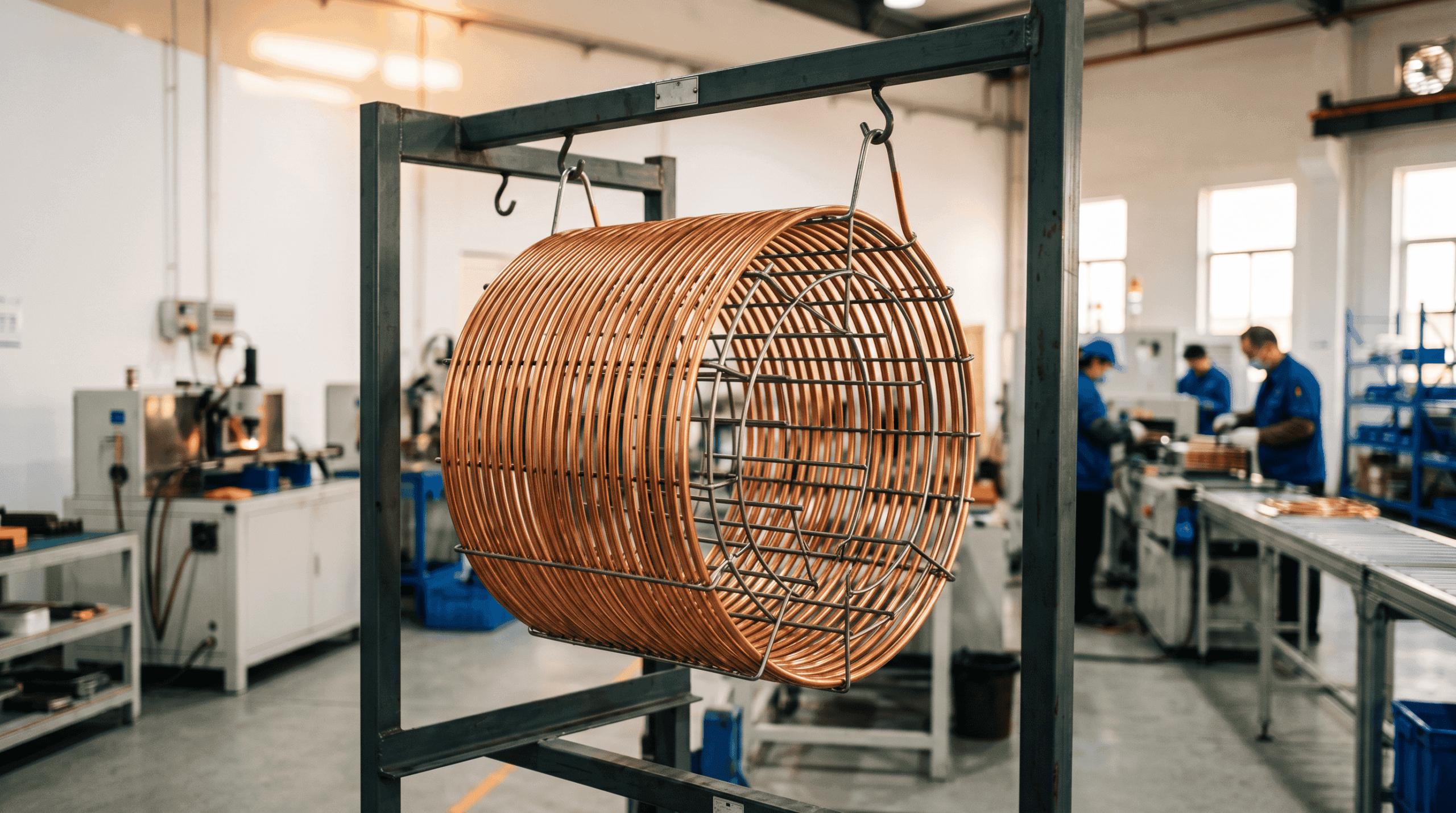
Tube material, diameter, wall thickness, fin alloy, fin spacing and header design affect heat transfer, pressure capability, corrosion resistance and manufacturing effort. A tighter fin pitch can add surface area but can increase air-side pressure drop and make cleaning more difficult. Wider spacing can help dirty or corrosive environments but may require a larger coil.
Coating is also a system decision. Confirm the environment, cleaning chemistry, salt or humidity exposure, masking of joints and the required acceptance test. “Anti-corrosion” without an environment and test basis is not a complete specification.
Circuiting and refrigerant distribution
Circuiting controls pressure drop, refrigerant distribution, subcooling behavior and header work. It should be reviewed with the compressor, receiver, piping and control arrangement. A replacement coil should not be approved only because the inlet and outlet appear to be in the same location.
Fan and airflow interface
An air-cooled coil is part of an airflow system. Check fan diameter, airflow, static pressure, guard, motor, direction, service access and sound constraints. When Domi supplies only the coil, the buyer should define the fan interface and the rating condition used for the coil quotation.
Water-cooled and shell-and-tube options
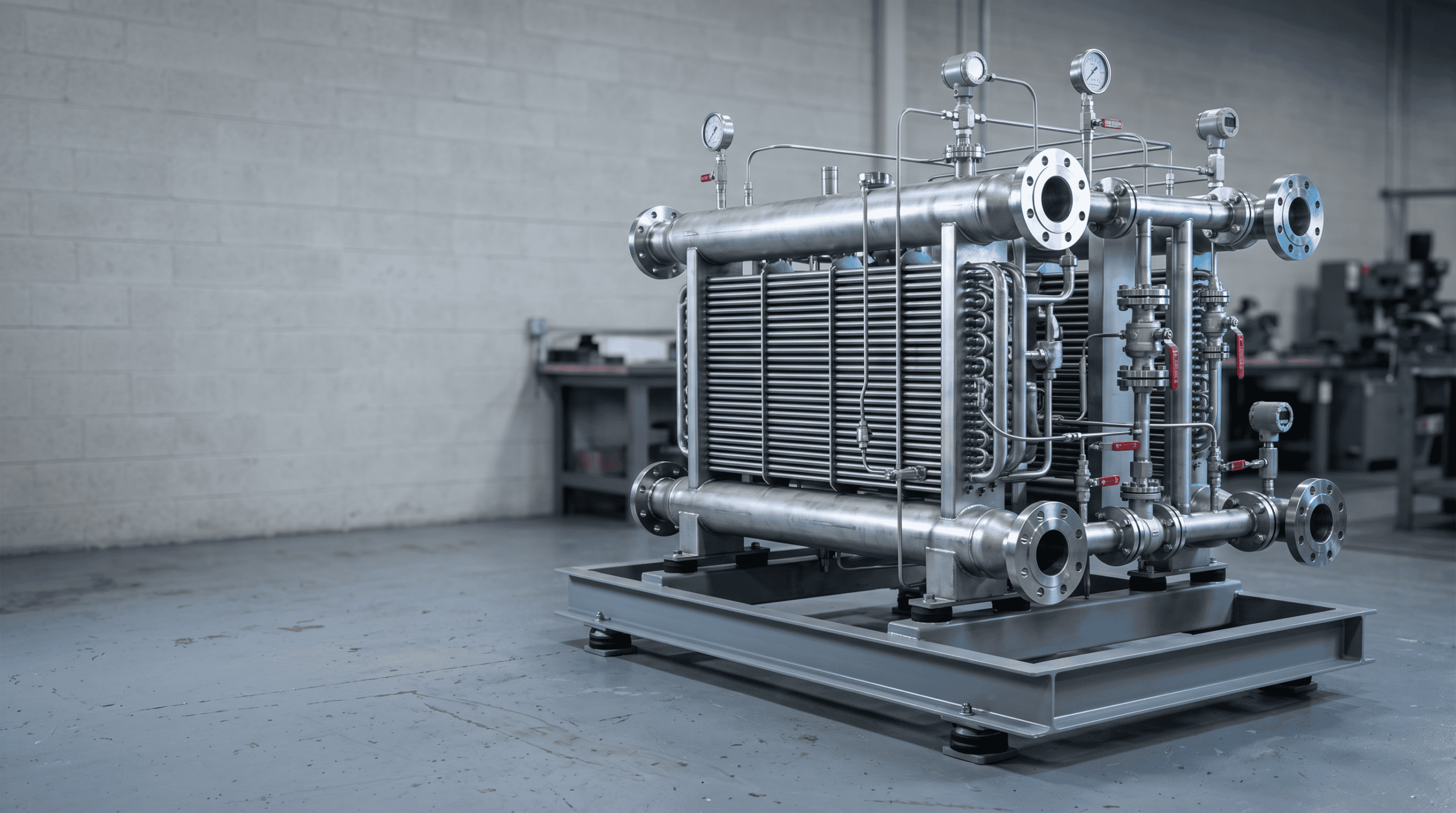
Water-cooled and shell-and-tube condensers need fluid-side information. State flow rate, entering temperature, water chemistry or secondary-fluid type, fouling expectation, allowable pressure drop, cleaning method and connection standard. Tube material should be selected with the fluid and corrosion exposure in mind.
The same heat exchanger may need different pass arrangements for different flows. Confirm whether the duty is single-point, seasonal, variable-speed or part-load. If the system uses ammonia or CO2, provide the design pressure and safety requirements before the supplier proposes a construction.
For more detail on this construction, use the shell-and-tube heat exchanger selection guide. For a custom coil or replacement assembly, the custom coil fabrication page explains the drawing-review route.
Replacement condenser-coil checks
For a replacement, send the failed coil, drawing, nameplate, measured dimensions and photographs together. The supplier should compare:
| Replacement item | Why it matters |
|---|---|
| Face, depth and row count | Determines fit and available surface area |
| Tube and fin construction | Affects duty, corrosion and pressure capability |
| Circuiting and headers | Affects distribution, pressure drop and connection work |
| Connections and datums | Determines piping and field fit-up |
| Mounting and service clearance | Prevents installation or maintenance conflicts |
| Fans, guards and controls | Confirms whether the quote is coil-only or a complete module |
| Testing and records | Defines release evidence for the replacement |
If the old coil failed from corrosion, vibration, blocked airflow or an incorrect operating condition, copying it without addressing the cause may shorten the replacement life. Ask for a failure-mode discussion where the evidence supports one.
Inspection, packaging and transport
Industrial condenser coils may be large, fragile or difficult to handle. Define protective caps, fin protection, headers, lifting points, pallet or crate requirements, moisture protection, maximum stack height and destination handling. Packaging must protect the part without blocking the connections or creating a hidden inspection issue.
Typical release records may include dimensional inspection, material or coating documents, pressure or leak-test results, photographs, packing list and drawing revision. The final list depends on the project and customer quality plan; do not promise a report that has not been agreed.
How to compare condenser-coil quotations
Ask every supplier to price the same scope and identify deviations. Compare rating condition, heat-rejection duty, refrigerant, pressure, material, coating, airflow or water flow, pressure drop, dimensions, connections, test package, packaging, lead time and exclusions.
Do not compare a bare coil price with a complete assembly price. Separate non-recurring engineering, tooling, sample validation, recurring unit price and logistics. A clear price ladder helps procurement evaluate a lower-cost option without accidentally removing a required inspection or mounting component.
FAQ: industrial refrigeration condenser coils
What information is needed to select condenser coils?
Provide refrigerant, design pressure, heat-rejection duty, condensing condition, entering air or water data, flow or airflow, pressure-drop limit, dimensions, material, corrosion exposure and testing requirements.
Are air-cooled and water-cooled condensers interchangeable?
No. They use different heat sinks, controls, connections, maintenance methods and operating assumptions. The system architecture must be reviewed before changing condenser type.
How does fin spacing affect an air-cooled condenser?
Fin spacing changes surface area, airflow resistance, cleaning access, frost or dirt sensitivity and sometimes coil depth. Review it with the fan curve and environment.
Can Domi make a replacement condenser coil from a sample?
A sample can help confirm geometry, but the supplier still needs refrigerant, duty, pressure, material and connection information to review performance and safety.
What should be included in a condenser-coil inspection plan?
Define dimensions, connection orientation, material or coating evidence, pressure or leak testing, appearance, packaging and any performance test required by the project.
When should a condenser coil be replaced instead of repaired?
The decision depends on leak location, corrosion, structural condition, access, repair quality, downtime and the risk of recurrence. A qualified service engineer should assess the installed system.
Related Articles
- Industrial refrigeration evaporator selection guide
- Industrial heat exchanger replacement guide
- Tube bundle heat exchanger engineering guide
- Shell-and-tube heat exchanger selection guide
- Forced-air cooler selection for cold storage
- Condenser coil MOQ planning for OEM programs
Request a condenser-coil review
Send the drawing, refrigerant, duty, operating condition, dimensions, quantity, corrosion environment and required test records. Domi can then separate confirmed requirements from design assumptions and prepare the appropriate coil or assembly review.