
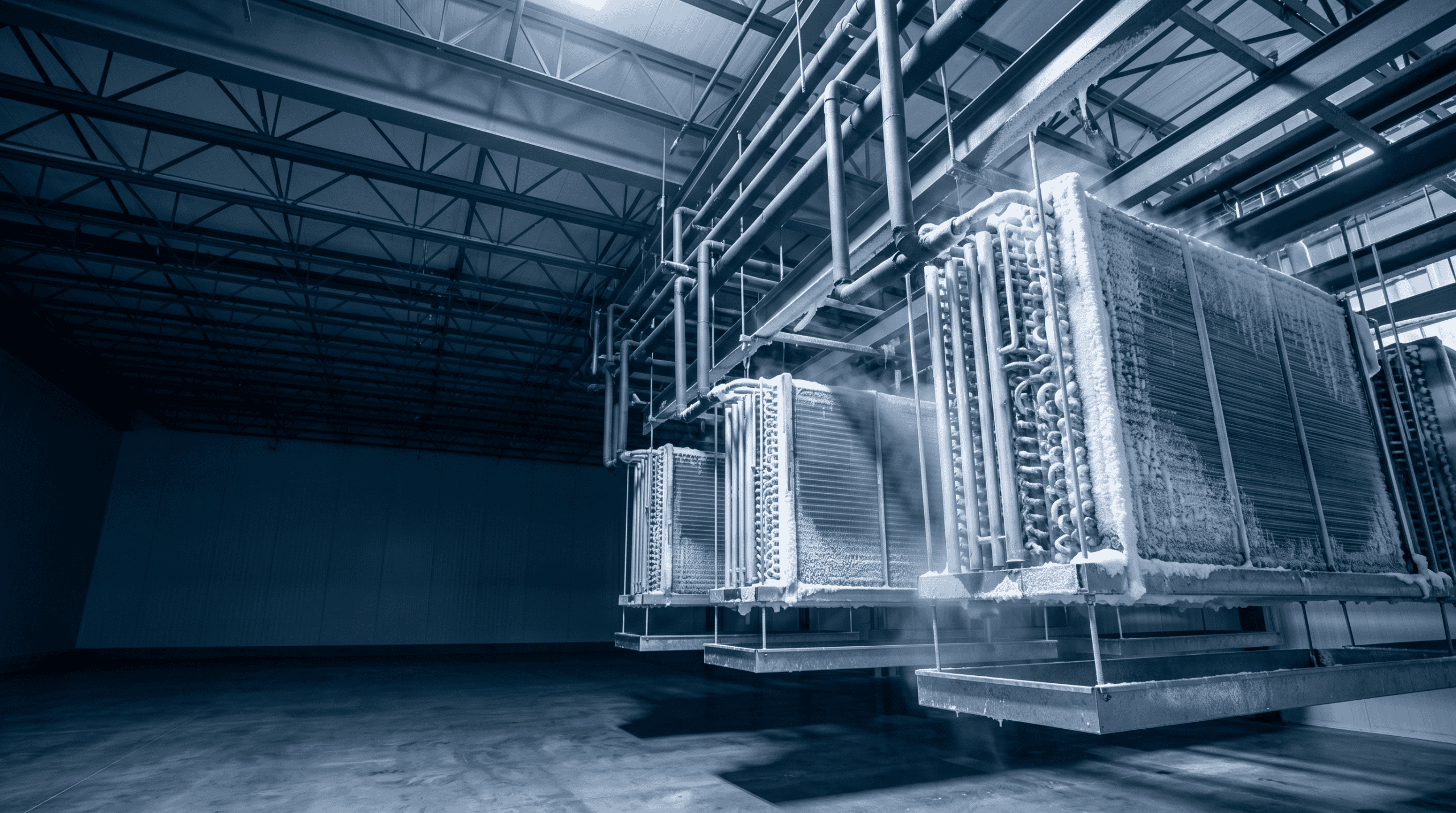
This guide is written for engineers, procurement managers, distributors and project owners who need to turn evaporator coil leak into a reviewable industrial refrigeration coil requirement. The search term is broad, but the buying decision is specific: identify the component role, the operating envelope, the material interfaces, the expected evidence and the installation constraints before a supplier is asked to commit to a design.
Domi’s industrial refrigeration coils page is the commercial starting point for custom evaporator coils, condenser coils, heat exchangers and replacement review. This article stays focused on the engineering questions around evaporator coil leak. It does not replace the responsible engineer’s calculations, code review, site safety procedure or commissioning plan.
How to turn the topic into a coil specification
The phrase evaporator coil leak is useful only when it is connected to the equipment duty, the refrigerant or secondary fluid, the available envelope, and an acceptance method. A buyer may arrive with a broad search term, but a quotation needs a defined operating point. Start by naming the equipment role, the entering and leaving conditions, the required capacity, the pressure range, and the consequence of a performance shortfall. That short list gives an engineering team something to review instead of asking it to guess what the request means.
For an industrial refrigeration coil project, evaporator coil leak should therefore be treated as a decision path rather than a product label. The path should identify the heat-transfer surface, the circuit arrangement, the material interfaces, the airflow or fluid flow, and the maintenance access. If one of these items is not known, mark it as open for supplier proposal. An explicit unknown is safer than an undocumented assumption that later becomes a drawing change, a test failure, or an installation problem.
Operating conditions and boundary data
Any serious discussion of evaporator coil leak begins with boundary data. Record the design ambient or room condition, fluid temperatures, target approach temperature, design pressure, allowable pressure drop, flow range, operating mode, defrost or off-cycle behavior, and the expected duty profile. For a system that cycles or sees seasonal changes, one nominal point is not enough. Provide the normal point, the worst credible point, and the condition that controls the safety or compliance review.
Keep measured data separate from calculated data. A drawing may show nominal dimensions while a commissioning report shows actual airflow, fouling, frost, or pressure drop. Both can be valuable, but they answer different questions. Label each value with its source, unit, date, tolerance, and whether it is guaranteed or preliminary. This discipline helps Domi review a replacement or custom coil without presenting an unverified performance number as a manufacturing promise.
Materials, joining and compatibility
Material selection changes more than the bill of materials. In an evaporator coil leak project it can change forming, brazing or welding, coating, inspection, corrosion exposure, pressure documentation, repair options, and packaging. List tube, fin, header, frame, bracket, gasket, coating, and fastener materials separately. State whether the material is fixed by a customer standard or open to an equivalent proposal. The supplier should be able to explain why a substitute preserves the required duty and service life.
Compatibility must be checked at interfaces, not only within individual parts. Refrigerant, brine, glycol, washdown chemistry, humidity, salt, dissimilar-metal contact, and cleaning agents may create a risk that is not visible in a dry material list. When the application is exposed to condensation or periodic cleaning, include the wet-side and dry-side environments in the RFQ. If the project needs a coating, define the protected surfaces, thickness or process requirement, repair method, and evidence required after coating.
Testing and quality evidence
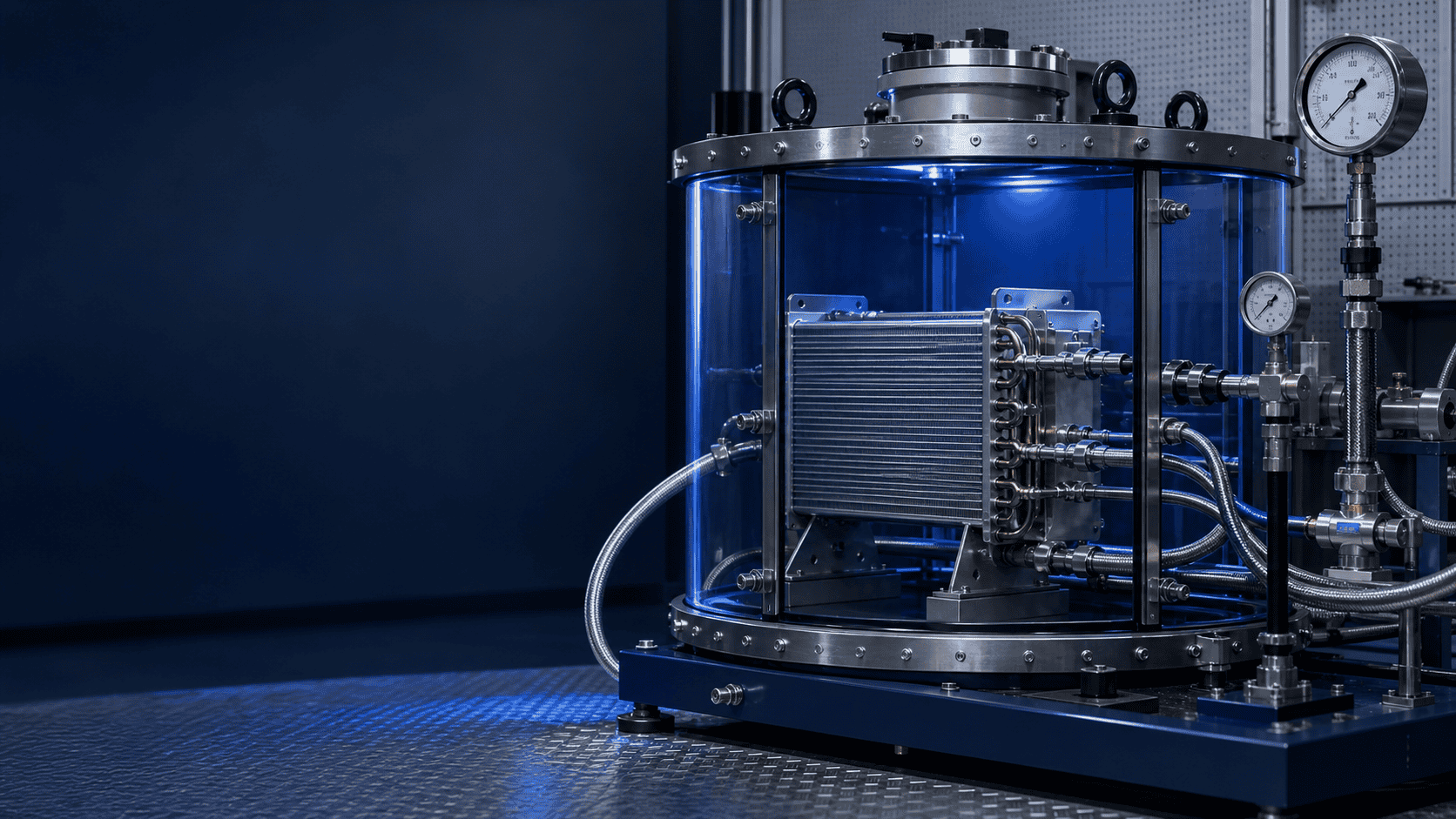
A buyer asking about evaporator coil leak should define the evidence needed before approval. A leak test, pressure test, dimensional inspection, visual inspection, material certificate, thermal performance test, airflow test, or coating check may each answer a different risk. Do not write only ‘tested’ in a purchase order. Name the method, the sample quantity, the pass criteria, the report format, and how deviations are handled. This is especially important when a component is installed inside a larger refrigeration package and cannot be inspected easily after shipment.
The AHRI 410 coil performance scope can be a useful reference for defined forced-circulation air-cooling and air-heating coils, but its scope and exclusions do not automatically cover every industrial refrigeration configuration. For ammonia, CO2, glycol, brine, frosting, bare-tube, or custom heat-exchanger work, state the project-specific method. A supplier can then identify what is supported by a standard and what requires an agreed engineering test.
Safety, standards and documentation
The evaporator coil leak decision should include the safety documentation required by the installation country and the project owner. Refrigerant classification, operating pressure, relief protection, electrical or mechanical interfaces, pressure-vessel boundaries, worker exposure, and maintenance procedures may all affect the data package. The buyer should identify the governing code or customer standard before the drawing is frozen. A supplier can support document preparation, but the final regulatory responsibility belongs to the project parties that design, install, own, and operate the system.
Use official references as starting points, not as a substitute for project review. The ASHRAE standards and guidelines library explains how standards are organized, while the EPA Section 608 resource covers U.S. refrigerant-management requirements. For ammonia work, the IIAR ammonia refrigeration standards resource and OSHA ammonia refrigeration guidance are useful sources to discuss with the responsible engineer and safety team.
Cost, MOQ and lead-time variables
A request based on evaporator coil leak should separate non-recurring work from the recurring part price. Engineering review, thermal calculations, drawing updates, tooling, sample fabrication, pressure or leak tests, coatings, special packing, and documentation may not scale with the piece count. Ask the supplier to show which items are one-time, which are per sample, and which repeat at production. This makes a low-volume prototype comparable with a later production quotation and reduces the chance that a hidden setup cost is treated as a surprise.
Lead time is also a chain of activities, not one factory number. The schedule may include clarification, drawing approval, material purchasing, tooling, fabrication, inspection, report release, packaging, and freight preparation. In the RFQ, state the date needed for the first engineering sample and the date needed for repeat production. If a project can accept a standard material or a staged approval, say so. Those choices may shorten the schedule without changing the functional requirement.
Packaging, installation and service
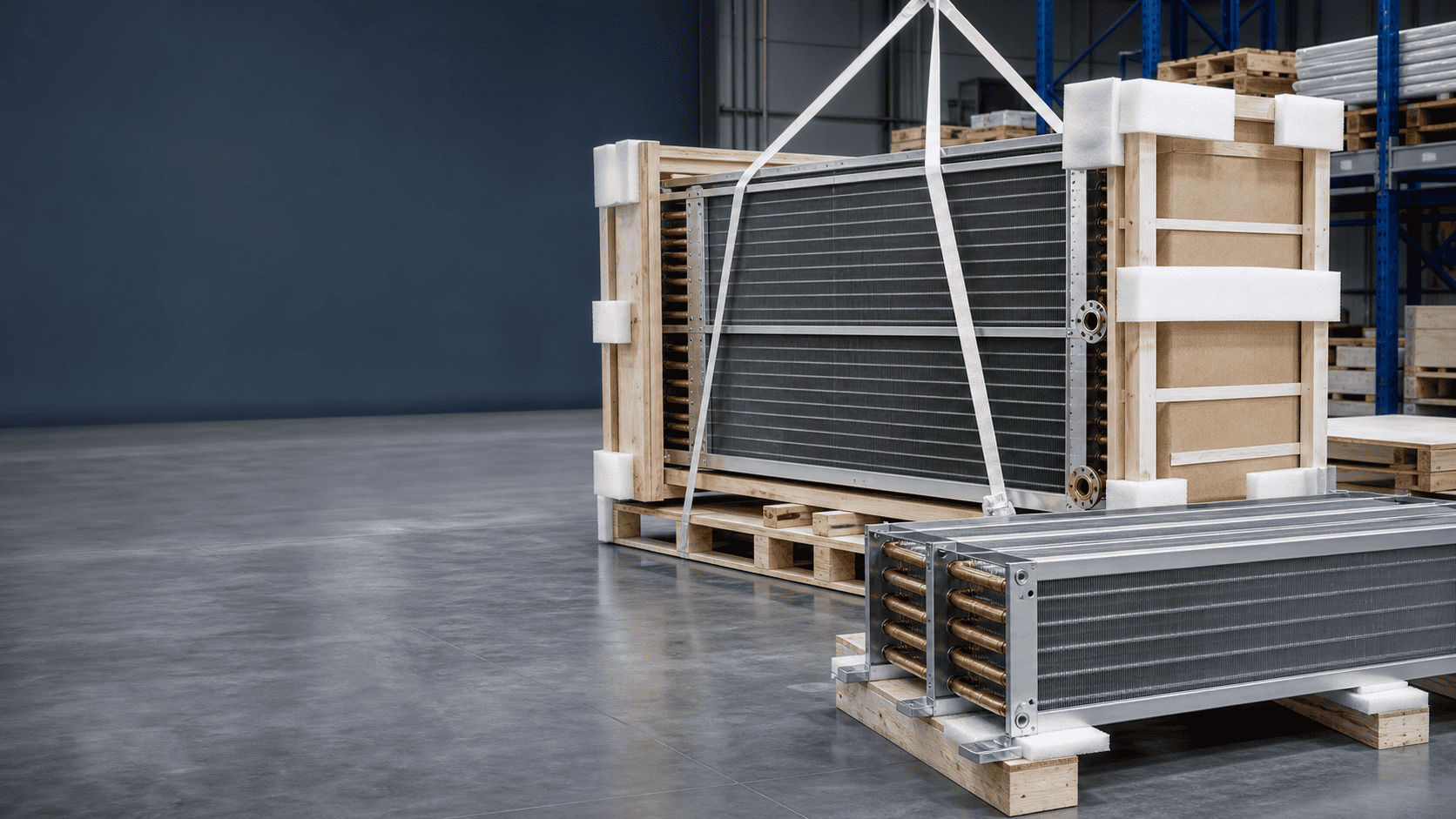
The value of an evaporator coil leak solution is lost if the coil arrives damaged or cannot be installed. Define lifting points, connection protection, fin protection, frame rigidity, pallet or crate limits, orientation, moisture protection, and the maximum package dimensions. If the route includes multiple transfers, explain the handling risk. Large coil assemblies often need temporary supports or protected headers even when the final equipment frame will carry the finished component.
Installation information should be returned to the supplier before the design is released. Provide connection orientation, service clearances, drain routing, access panels, fan or pump locations, removal path, and the parts that must be reusable from the old assembly. A replacement review should include photographs and a measured sketch, not only a nameplate. A custom design should include an installation drawing that identifies critical dimensions and the tolerances that matter in the field.
What to send for a supplier review
The fastest way to discuss evaporator coil leak with a B2B manufacturer is to send a compact package with a clear file index. Include the application description, process or room conditions, refrigerant or secondary fluid, duty target, drawing or sample photos, connection data, material requirements, inspection plan, quantity ladder, destination, and requested delivery dates. Put the open questions on the first page. This lets an engineer start with the decisions that affect feasibility rather than searching through unrelated purchase documents.
A useful package distinguishes ‘must hold’ dimensions from dimensions that may be proposed. Mark connection locations, mounting points, envelope limits, service access, and safety interfaces as critical where appropriate. For performance values, show the calculation basis and tolerance. For commercial values, show annual demand, order pattern, SKU count, packaging expectation, and whether the price should include samples or tooling. A clear boundary around each requirement is more valuable than a long document with no priorities.
How Domi can support the next step
Domi can review an evaporator coil leak project when the buyer provides enough information to connect the application to a manufacturable coil or heat-exchanger assembly. The review may cover the drawing, sample, dimensions, material interfaces, refrigerant or secondary fluid, pressure, airflow or fluid flow, inspection requirements, packaging, and quantity. The result should be a defined list of confirmed inputs, open questions, and the files needed for quotation. It should not be treated as a final design approval until the responsible project engineer accepts the proposal.
For a commercial starting point, see Domi’s industrial refrigeration coils page and its industrial refrigeration solutions page. Buyers who need a fabrication discussion can also review the custom coil fabrication capability and heat-exchanger testing laboratory. When the part is a replacement, include the old coil, the available drawings, and the installation constraints so the review can focus on fit and service continuity.
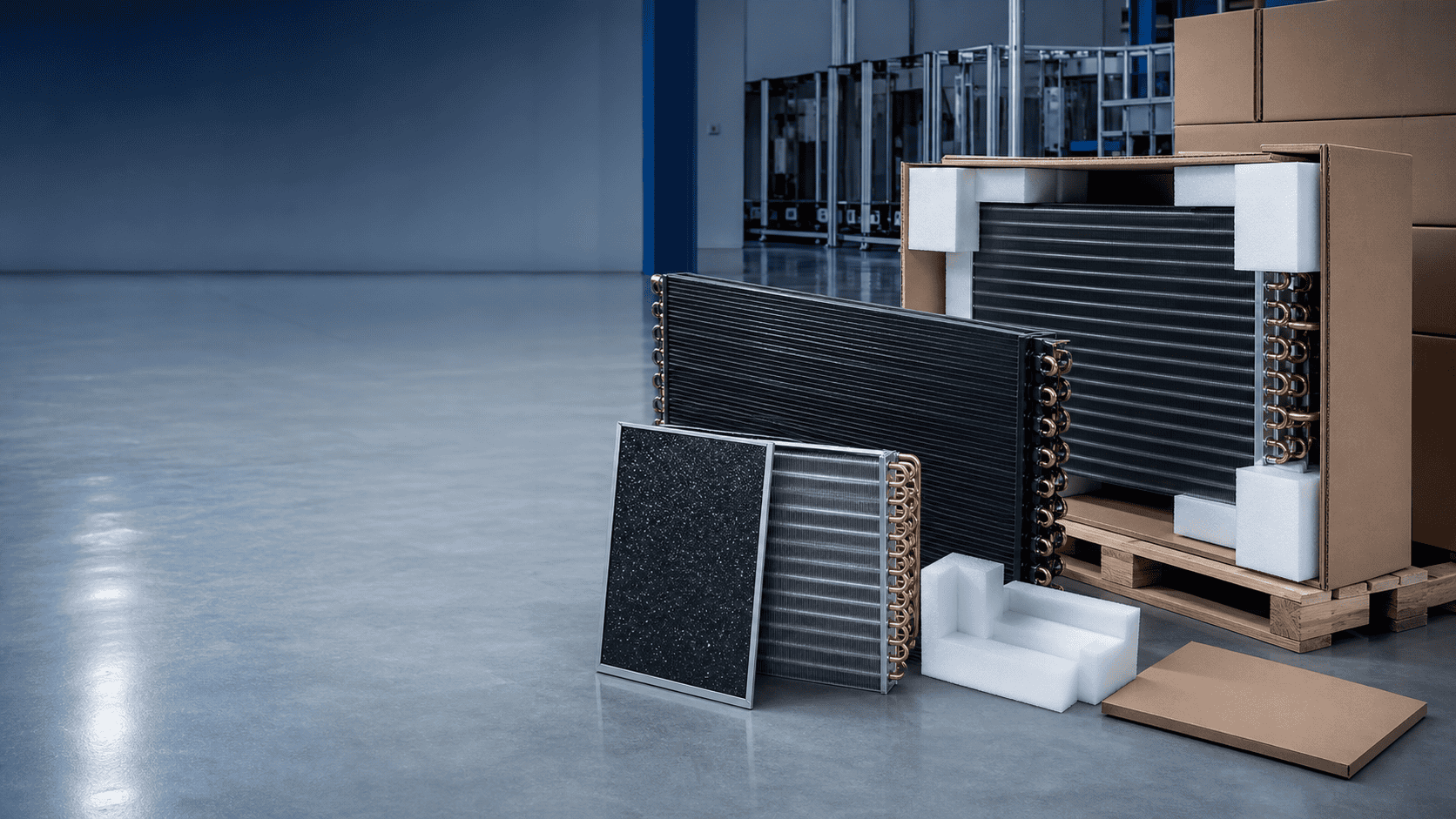
Topic-specific engineering guidance
What an evaporator coil leak can indicate
An evaporator coil leak is a symptom, not a complete failure diagnosis. The leak may be in a tube, header, joint, braze, weld, connection, drain interface, vibration point, corrosion pit or a location damaged during handling or defrost. A system may show low charge, poor temperature control, frost imbalance, oil staining or repeated alarms, but those signs do not identify the exact leak path without a controlled inspection.
The first objective is to protect people, product and equipment while preserving evidence. Follow the site isolation, recovery, ventilation, lockout and refrigerant-handling procedure. Record the operating condition, alarm history, suction or discharge data, frost pattern, visible oil, water exposure, vibration, defrost sequence and recent maintenance. A supplier can then review evidence that is much more useful than a request stating only ‘replace the evaporator coil.’
Inspection before repair or replacement
Start an evaporator coil leak review with the part identity and installation context. Photograph the full coil, face, headers, connections, supports, drain, fans, defrost components, insulation and adjacent pipework. Measure the envelope, connection centers, mounting points, coil depth, fin condition and service clearances. Record the refrigerant, pressure, design temperature, defrost method, room or process duty and the time since the leak was discovered.
The leak location should be confirmed with a method suitable for the refrigerant and the site. Bubble testing, electronic detection, pressure decay, tracer methods, visual inspection, dye or other methods may be appropriate depending on the system and safety procedure. The test pressure and medium must be set by the responsible engineer. Do not pressurize a damaged or unknown assembly with an improvised method, and do not treat a negative surface test as proof that an intermittent thermal or vibration leak does not exist.
Corrosion, vibration and freeze damage
Corrosion is a common reason for an evaporator coil leak, but the corrosion mechanism still needs to be understood. Condensate, salt, washdown, cleaning chemistry, galvanic contact, coating damage, wet insulation and standing water can attack different parts of a coil. Inspect fins, tubes, headers, supports, drains and joints separately. If the failure is distributed across a large area, a single patch may not restore the expected service life.
Vibration and thermal cycling can create fatigue at tube supports, headers, joints and connections. Repeated defrost, fan imbalance, piping loads, ice expansion, poor support or transport damage may all contribute. Record the operating cycle, the position of the failure, the support condition and whether other joints show marks. A replacement design should correct the load path or installation condition rather than reproduce the same weakness.
Repair versus replacement
The decision for an evaporator coil leak should compare safety, duty, access, remaining condition, repair quality, downtime, parts availability and future risk. A repair may be reasonable when the leak is isolated, the pressure boundary is accessible, the material and process are known, and the project owner accepts the repair method. Replacement may be more appropriate when corrosion is widespread, the assembly is inaccessible, the original material is unavailable, or the coil has repeated failures.
Do not approve a replacement from catalog dimensions alone. The new coil must match the refrigerant and pressure basis, duty, airflow, defrost, connection layout, drain, frame, service access and installation route. If the original coil was undersized or operated outside its intended point, a like-for-like replacement may reproduce the failure or fail to solve the temperature problem. Mark which requirements are fixed and which may be proposed by the supplier.
Testing and documentation
A buyer should define the test plan before an evaporator coil leak replacement is ordered. Pressure testing, leak testing, dimensional inspection, joint inspection, material traceability, thermal or airflow verification, coating evidence and packing inspection may each be needed. The plan should name the method, pressure or conditions, sample quantity, acceptance limits, record format and deviation process. ‘Tested’ without these details is not enough for a critical cold-storage or process-cooling component.
For certain forced-circulation air coils, the AHRI 410 scope reference can help structure a performance discussion, but a frosting evaporator, custom industrial coil, bare-tube assembly or replacement part may need a project-specific method. Explain whether the buyer needs a factory report, a site commissioning check, or both. Keep the old coil photos and failure report with the new part record.
Installation and restart checks
After an evaporator coil leak replacement, installation quality can determine whether the repair remains successful. Check connection orientation, support, piping stress, drain slope, fan direction, defrost components, insulation, airflow path and service access. Verify that the coil is protected from fin damage during installation and that the headers or joints are not loaded by field piping. Photograph critical interfaces before closing panels or insulation.
Restart should be controlled and recorded. Confirm leak and pressure results, evacuation or preparation steps, refrigerant charge procedure, superheat or other control values, room or process temperature, airflow, frost pattern, drain operation and defrost termination. The exact values depend on the system and responsible engineer. The important point is to create a baseline so a later change can be compared with the condition immediately after installation.
Evaporator coil leak RFQ checklist
An evaporator coil leak quotation should include the old part identity, photos, dimensions, connections, mounting, refrigerant, pressure, duty, airflow, defrost, drain, materials, corrosion exposure, test records, quantity, packaging and destination. Add the leak location, test method, failure date, operating symptoms and the decision sought: repair, replacement, redesign or a quotation for more than one option.
The industrial refrigeration coils page is the relevant commercial route for a replacement or custom coil discussion. Include the replacement solutions page when service continuity is the priority, and include the testing laboratory page when validation evidence is required. If the installation uses ammonia, the OSHA ammonia refrigeration guidance should be considered with the site safety procedure.
Evaporator coil leak investigation inputs
| Evidence | Examples | Decision supported |
|---|---|---|
| Operating symptoms | Low suction, warm room, frost imbalance | Defines the system effect |
| Leak evidence | Oil mark, detector result, pressure decay | Locates and confirms the leak |
| Failure environment | Condensate, salt, cleaning and vibration | Identifies the mechanism |
| Fit data | Envelope, connections, supports and drain | Supports replacement review |
| Validation | Pressure, leak, dimension and performance records | Controls restart risk |
Use this evaporator coil leak table as an RFQ discussion aid. The values and acceptance limits still need to be confirmed for the actual equipment, refrigerant, installation and project standard.
Repair or replacement comparison
| Factor | Repair may suit | Replacement may suit |
|---|---|---|
| Failure extent | Single accessible defect | Distributed corrosion or repeated leaks |
| Material | Known and repairable | Unknown, obsolete or incompatible |
| Downtime | Short controlled intervention | Planned outage with long-term reset |
| Performance | Original duty remains suitable | Original coil was undersized or changed |
| Documentation | Repair record is accepted | New traceable assembly is required |
Use this evaporator coil leak table as an RFQ discussion aid. The values and acceptance limits still need to be confirmed for the actual equipment, refrigerant, installation and project standard.
Replacement coil acceptance plan
| Stage | Record | Release check |
|---|---|---|
| Site survey | Photos and critical dimensions | Fit path confirmed |
| Engineering | Marked drawing and material list | Duty and pressure accepted |
| Factory | Leak, pressure and dimensional reports | Workmanship accepted |
| Installation | Connection, drain and support photos | Field fit accepted |
| Restart | Temperature, airflow and control baseline | System returned to service |
Use this evaporator coil leak table as an RFQ discussion aid. The values and acceptance limits still need to be confirmed for the actual equipment, refrigerant, installation and project standard.
Implementation notes for an industrial project
The practical value of evaporator coil leak appears during the handoff between engineering, procurement, quality and installation. Engineering owns the duty and the assumptions. Procurement owns the commercial scope, quantity and delivery requirement. Quality owns the inspection and record package. Installation owns access, supports, connections, drainage and commissioning evidence. If each group receives a different version of the requirement, a supplier may be asked to solve four different problems under one part number.
Use one controlled requirement sheet for evaporator coil leak and give every revision a date, author and change note. A change to refrigerant, pressure, airflow, material, coating, connection, fin spacing or defrost can change more than one downstream document. Mark whether the change is an editorial correction, a performance change, a fit change, a safety change or a commercial change. This makes the approval path visible and helps the supplier identify whether an existing sample remains valid.
During sample approval, compare the actual part with the released drawing and the agreed test plan. Do not approve a sample because it looks similar to the previous coil. Check critical dimensions, connection orientation, supports, material and finish, labels, test evidence, packaging protection and any field-access requirement. For evaporator coil leak, the most expensive rework often happens when a sample is accepted visually but its operating assumptions were never confirmed.
During production release, keep the part number, drawing revision, inspection plan, material record and packaging instruction together. If the order includes multiple sizes or variants, make the SKU matrix explicit. Identify shared tooling and variant-specific tooling. Identify which dimensions can be checked with a common gauge and which need a variant-specific fixture. This is useful for evaporator coil leak because a family of coils can share a concept while still having different pressure, airflow, connection or corrosion risks.
After installation, record a baseline that connects the equipment condition to the delivered component. Depending on the application, this may include entering and leaving temperature, airflow or fluid flow, pressure, superheat or subcooling, humidity, frost or condensate, fan current, vibration, drain operation and defrost behavior. The baseline is not a universal acceptance value. It is a project record that allows the owner to distinguish normal variation from a design, installation or maintenance issue.
Maintenance instructions should be written around the actual failure mechanisms. A coil exposed to salt may need a different cleaning and inspection interval from a dry indoor coil. A frosted evaporator needs a different defrost and drain review from a dry cooler. A high-pressure component needs a different pressure and joint record from a low-pressure air coil. Make the evaporator coil leak maintenance discussion specific to the material, environment, operating cycle and access that were approved.
Keep the delivered documents usable for the people who will operate the equipment. A pressure or leak report should identify the part number and revision. A dimensional report should identify the datum and tolerance. A material or coating record should identify the lot or batch. A packing record should show how connections and fins were protected. This document discipline turns evaporator coil leak from a one-time purchase phrase into a traceable component record that can support service, replacement and future procurement.
When the project uses several suppliers, normalize the assumptions before the technical comparison. Ask each supplier to state the same duty point, property basis, airflow or fluid-flow basis, pressure-drop limit, material interpretation, test method, packaging scope and delivery term. If a supplier proposes a different route for evaporator coil leak, record the difference as a design option with its benefit, risk, evidence requirement and cost effect. This is more useful than forcing every quotation into a single unexplained unit price.
Keep questions open until the evidence is available, but do not let open questions disappear into email threads. Add an owner and due date to each one, and link the answer to the drawing revision or purchase specification. A small assumption register can record whether evaporator coil leak has been confirmed by calculation, supplier data, sample testing, site measurement or customer approval. That simple record helps prevent a technically correct component from being installed against an outdated requirement.
Finally, keep the scope honest. A supplier can review drawings, samples, materials, heat-transfer inputs, testing and packaging, but no article or quotation can replace the responsible engineer’s system design, code review, refrigerant safety plan or commissioning decision. The right outcome for evaporator coil leak is a documented proposal with open questions and agreed verification points. That gives the buyer a defensible basis for the next technical and commercial decision.
Practical next step for buyers
If the project is ready for a quotation, send the evaporator coil leak requirement together with the drawing or sample photos, operating conditions, pressure and temperature data, material requirements, connection layout, inspection plan, quantity ladder, packaging requirements and destination. Ask the supplier to return a marked assumption register, a proposed technical basis and a list of open questions before the commercial offer is approved.
When a buyer uses evaporator coil leak as the starting point, the most useful outcome is not a generic product description. It is a clear engineering trail from application to coil, from coil to test, and from test to installation. That trail helps procurement compare quotations and helps the project team identify what must be confirmed before sample or production release.
FAQ
What are common signs of an evaporator coil leak?
Common signs can include low charge, poor cooling, oil staining, abnormal frost, repeated alarms or a pressure loss, but the leak should be confirmed with a controlled method.
Can a leaking evaporator coil always be repaired?
No. Repair depends on location, material, pressure boundary, access, corrosion extent, safety procedure, process capability and the project owner’s acceptance criteria.
What should be photographed before a replacement quote?
Photograph the full coil, headers, connections, supports, drain, fans, defrost components, frame, damage, nameplate and the available removal path.
Does a replacement need the same dimensions?
It needs to match critical envelope, connections, supports, airflow, duty, pressure, defrost and service interfaces. A simple dimensional match may not restore performance.
Can corrosion cause repeated evaporator leaks?
Yes, if condensate, salt, cleaning, dissimilar-metal contact, coating damage or standing water continues. The cause should be addressed with the replacement or installation plan.
What tests should be included in an evaporator replacement?
Agree pressure, leak, dimensional, joint, material, thermal, airflow, coating or corrosion checks according to the actual failure risk and system requirements.
Can Domi review an evaporator coil leak case?
Domi can review photos, drawings, measurements, refrigerant, pressure, duty, defrost, materials, failure evidence, testing and packaging information.
What information speeds up an evaporator coil quote?
A complete application brief, measured fit data, connection sketch, old sample or photos, operating conditions, failure evidence, quantity, destination and required test records.