
For covered automatic commercial ice makers, DOE standards set maximum energy use by equipment class and harvest rate, expressed in kWh per 100 lb of ice. An OEM first identifies the production process, machine architecture, cooling method and applicable harvest-rate band. The resulting limit then becomes one input to a complete-machine testing and certification review.
Before requesting a condenser or evaporator quote, record the applicable limit, the conditions used to rate production, and the equipment included in the energy measurement. With those inputs, a supplier can explain what its component data can contribute to a prototype comparison.
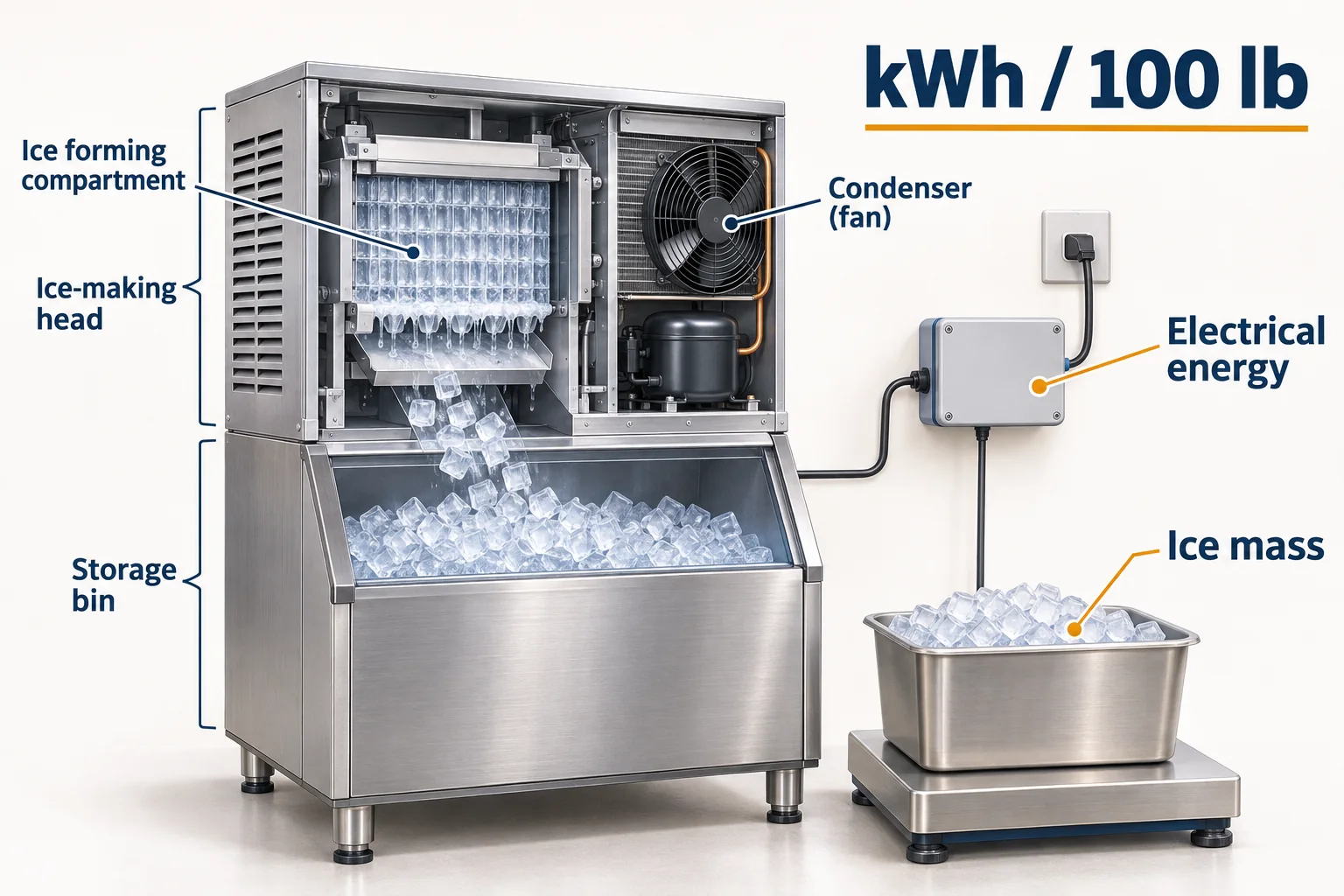
The illustrations explain equipment and measurement concepts. Numerical examples use hypothetical inputs. Regulatory review completed on November 10, 2026, using legal text current through November 6, 2026.
Identify the machine before choosing a limit
Open the classification discussion before asking a supplier to meet a particular energy number. The commercial name on a brochure may leave several choices unresolved, especially when an ice-making head, storage bin and remote refrigeration equipment are supplied separately.
Record five items on the design brief.
- Production process. Identify batch or continuous operation.
- Architecture. Identify an ice-making head, self-contained unit or the applicable remote arrangement.
- Heat rejection. State air cooling or water cooling, including the remote condenser configuration where relevant.
- Applicability. Record the manufacturing date and the applicable standards provision.
- Harvest rate. State H in lb/24 h with its rating condition and evidence.
The definition of an ice-making head excludes an integral storage bin. A self-contained arrangement combines ice-making equipment and storage in one cabinet. Remote arrangements need additional attention to where the compressor and condenser sit. The definitions in 10 CFR 431.132 provide the basis for these distinctions. DOE equipment definitions

Keep the completed classification beside the supplier drawing. It should remain visible when the proposed fan, refrigerant circuit or installation envelope changes.
Keep batch and continuous ratings separate
A batch machine freezes a quantity of water and then releases the formed ice during a harvest period. A continuous machine freezes and removes ice in an ongoing process. These operating patterns lead to different equipment categories and different rows in the standards.

For a batch design, the development record should connect electrical energy with freeze, harvest and intervening operating states. For a continuous design, it should also identify the prescribed ice-hardness adjustment used in the reported energy result.
Use the process classification throughout the document set. A drawing revision that leaves the cabinet dimensions unchanged can still alter how the machine operates. Ask the OEM’s responsible compliance team to confirm the category whenever the mechanism or intended configuration changes.
Read the current rule and its dates
The current batch and continuous tables in 10 CFR 431.136(c) and (d) apply to equipment manufactured on or after January 28, 2018. A project reviewed during 2026 should record that applicability date alongside its own design-release date.
DOE also publishes proposals, testing updates and other proceedings. Its current equipment page lists a 2023 energy-standards proposal and a May 2025 proposal concerning amended water-use requirements. The 2022 final rule revised the test method. From October 27, 2023, representations of energy use or efficiency, including compliance certifications, must use the revised method. DOE automatic commercial ice-maker requirements and proceedings
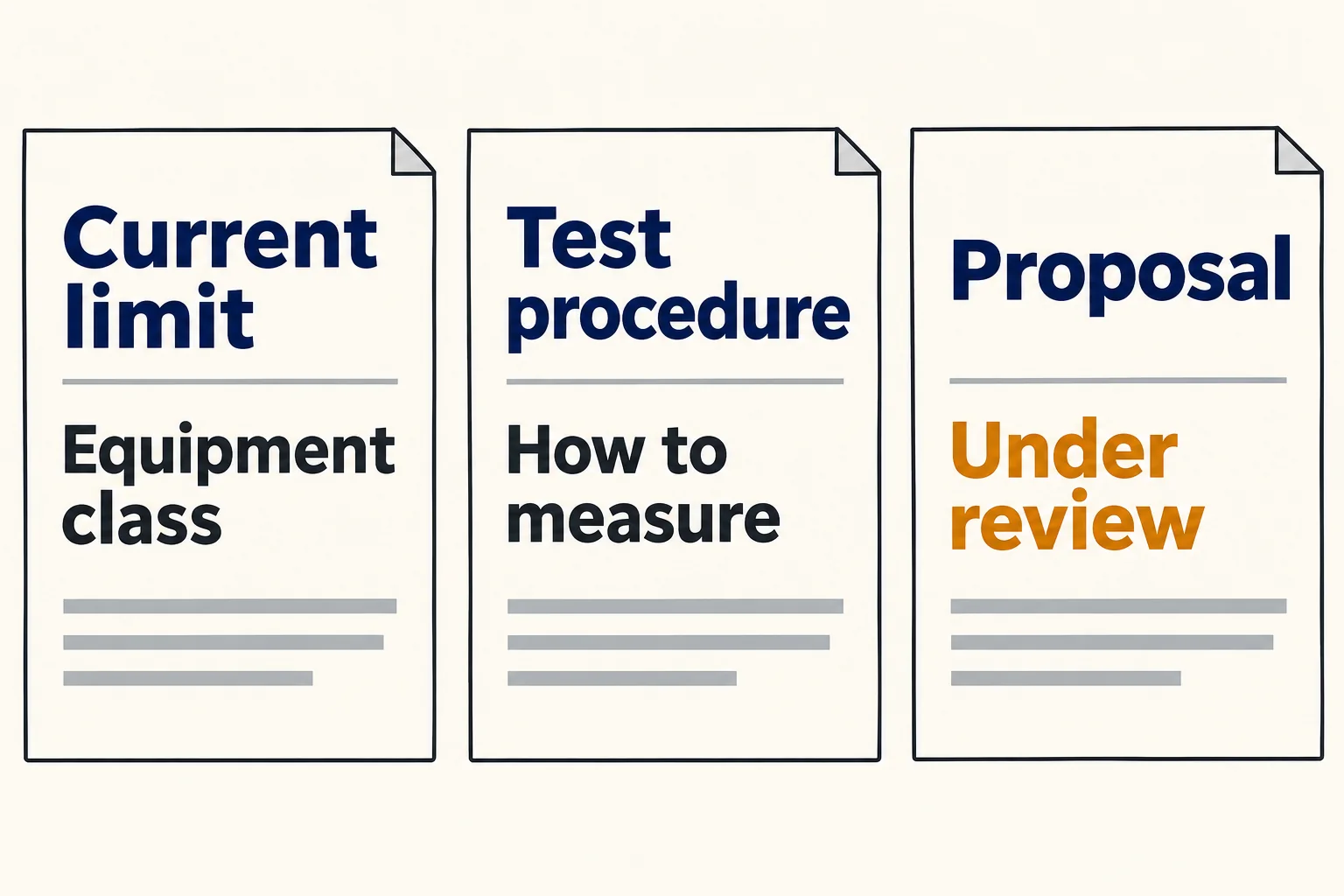
Put the rule citation, paragraph, equipment row and source-review date in the energy specification. When a project document refers to a future compliance event, trace it to the actual adopted provision before changing the procurement target.
Calculate the row at a matched harvest rate
H is the applicable harvest rate in pounds per 24 hours. Once the class is established, select its harvest-rate interval and substitute the supported H value into that row’s equation.
Consider two formula examples at H = 500 lb/24 h. Both are air-cooled ice-making heads.
- For the batch row covering 300 ≤ H < 800, the maximum energy equation is 7.05 − 0.0025H. At H = 500, the result is 5.80 kWh/100 lb.
- For the continuous row covering 310 ≤ H < 820, the equation is 8.23 − 0.0032H. At H = 500, the result is 6.63 kWh/100 lb.
The different results follow from the two equipment rows. These are calculations of legal-limit examples, with the inputs stated. Every other architecture, cooling type and rate interval needs its own applicable row. Current class-specific energy limits
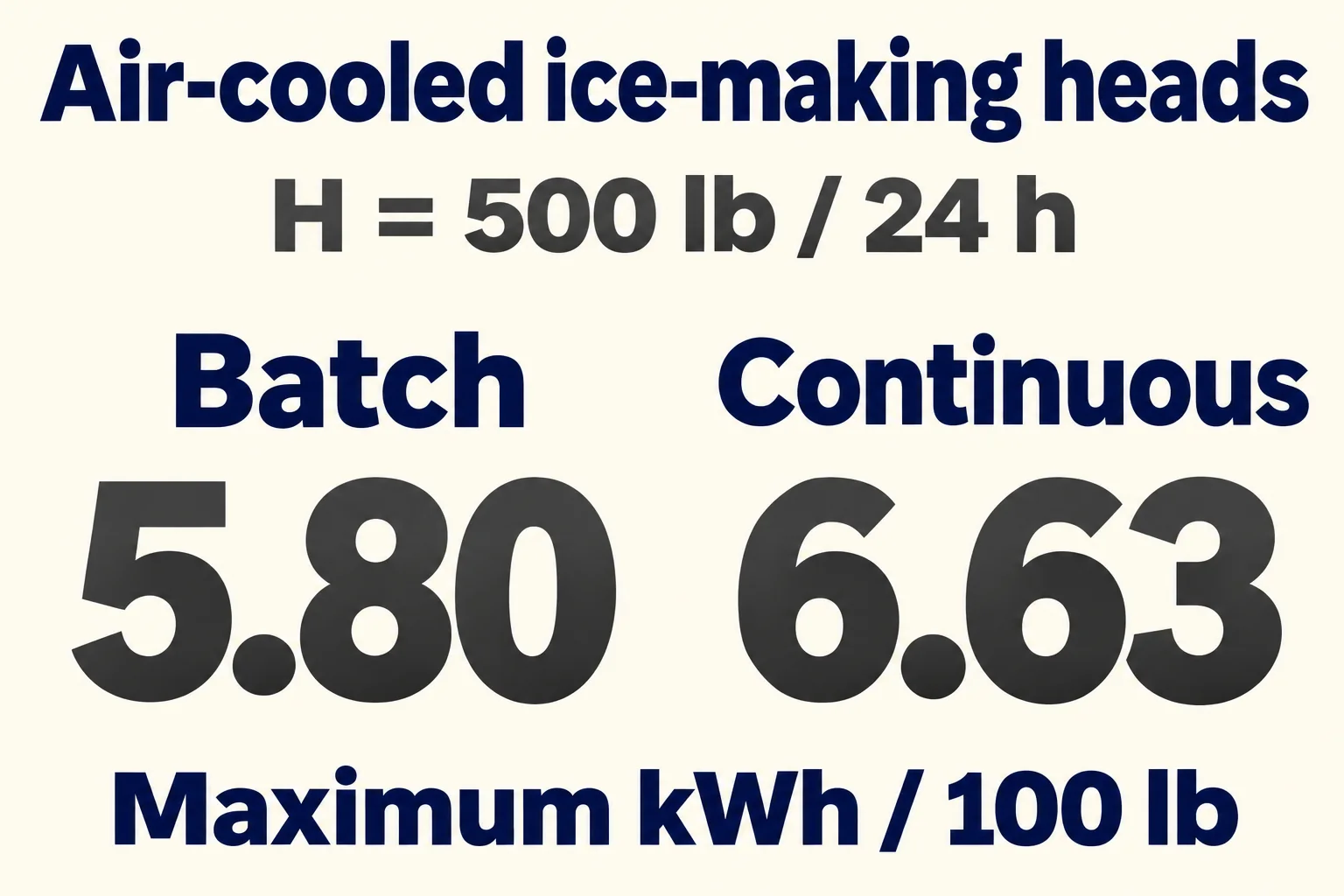
Keep the classification beside the result. “Batch, air-cooled ice-making head, H = 500” preserves the assumptions that make 5.80 relevant. A number copied into a coil specification without those assumptions leaves the engineering target ambiguous.
Normalize energy and ice mass over one window
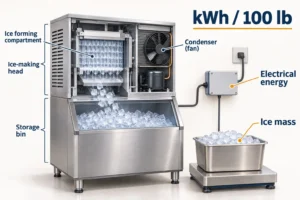
For an engineering observation, specific energy relates the electrical energy used to the ice mass collected during a defined common interval.
Specific energy in kWh/100 lb = electrical energy in kWh ÷ ice mass in lb × 100.
In a hypothetical 24-hour observation, the defined equipment boundary uses 28 kWh and delivers 500 lb of ice. The arithmetic is 28 ÷ 500 × 100, giving 5.60 kWh/100 lb. Keep the collection interval, meter boundary and ice-handling method with that value.

A DOE rating requires the prescribed setup, stabilization, averaging, adjustments and rounding. For continuous equipment, the reported result includes the applicable ice-hardness adjustment. The laboratory should preserve enough detail to connect the raw observations to the final reported value. DOE test procedure
During development, investigate a changed ratio through both inputs. Lower electrical energy accompanied by a larger loss of delivered ice can increase energy per unit of production. Record energy and accepted ice mass together whenever a component or control setting changes.
Keep the units consistent
100 lb equals 45.359237 kg. An energy figure quoted per kilogram therefore uses a much smaller mass denominator than kWh/100 lb. The hypothetical 5.60 kWh/100 lb example is approximately 0.12346 kWh/kg.
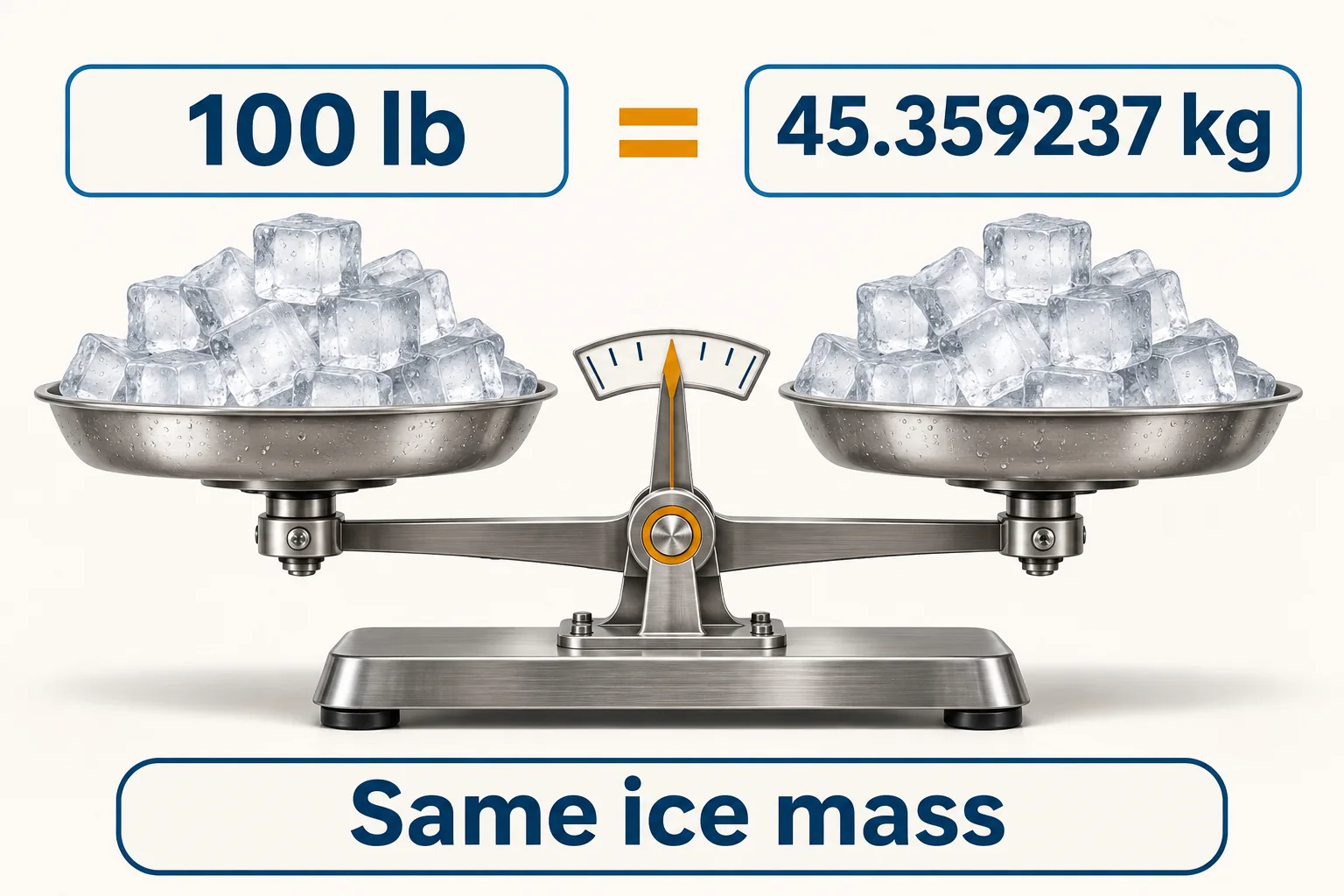
Retain the original value and unit in the supplier return, then show any conversion in a separate field. Preserve the original harvest-rate unit too. The standards use H in lb/24 h, so a capacity supplied in kg/day needs a traceable conversion before it enters the equation.
Power requires its own field. A kW value describes power, while kWh measures accumulated electrical energy. A nameplate power figure alone leaves the operating time, cycling and production mass unresolved. For an energy-cost estimate, use a supported energy quantity and a clearly stated operating scenario.
Name the target program
An OEM may have several targets in the same project. Identify each one by program, equipment class and version so the supplier understands which decision the data will support.
DOE’s applicable conservation limits, test procedure and certification provisions establish the federal equipment requirements. ENERGY STAR has separate eligibility, energy, potable-water and certification criteria. The current commercial ice-maker criteria are Version 3.0, effective January 28, 2018, with equations for eligible air-cooled batch and continuous designs. The program requires certification by an EPA-recognized certification body. ENERGY STAR commercial ice-maker criteria and certification requirements
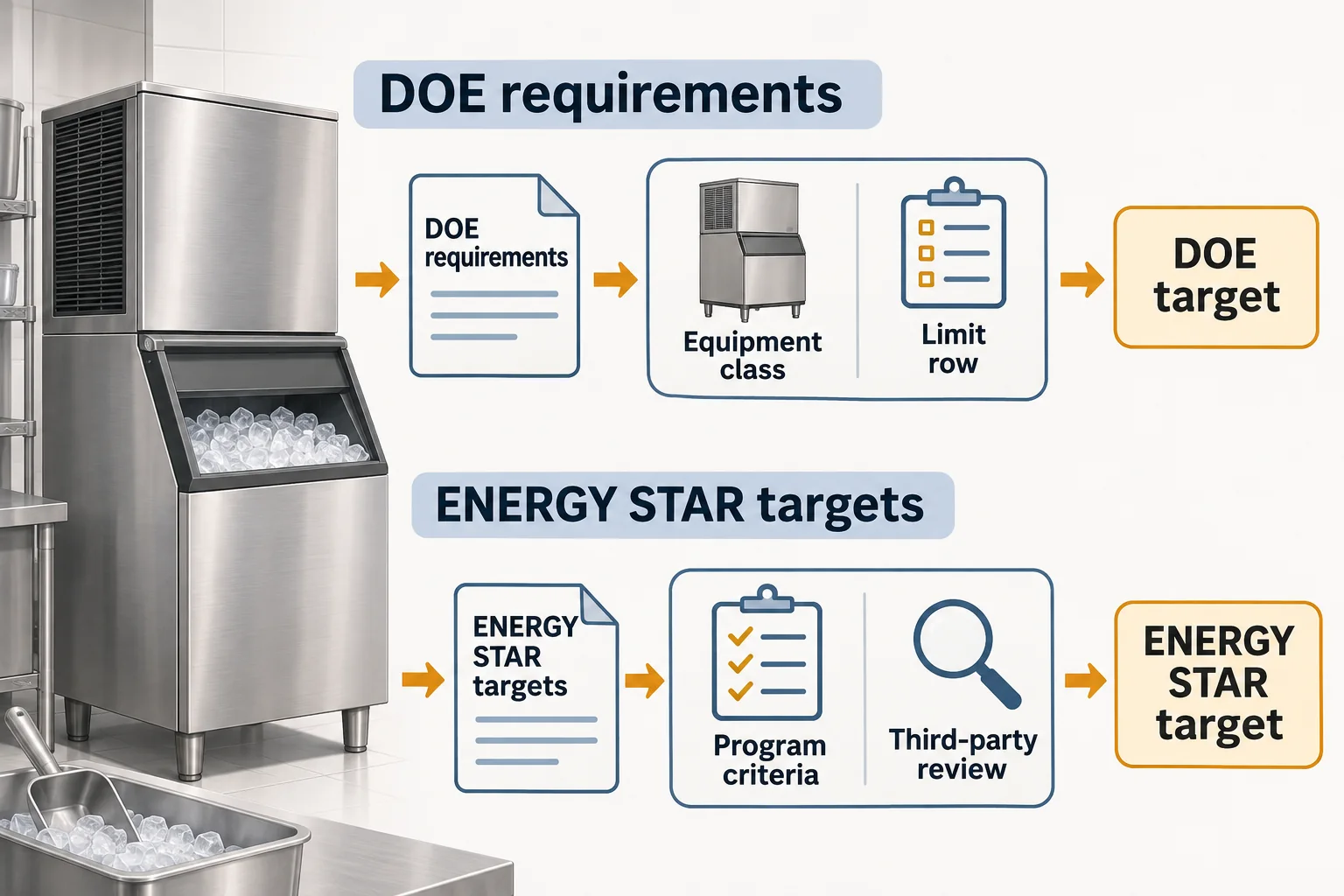
Water figures also need a named boundary. The condenser-water column in the DOE standards concerns cooling water and excludes potable water used for ice production. An ENERGY STAR potable-water criterion concerns a different consumption quantity. State the relevant unit, water stream and program when a water figure enters the specification.
Draw the complete energy boundary
Mark every supply measured during the test and identify the equipment each meter serves. For the defined remote arrangements, the reported energy includes the ice-making mechanism, compressor and remote condenser or condensing unit. An ice-making head’s reported energy excludes the additional energy associated with its storage bin under the equipment definition.

A development log should make the boundary easy to reconstruct.
- Identify the machine, compressor and condenser model combination.
- Show separate electrical feeds and how their energy enters the total.
- Identify the pumps, fans and controls included in the relevant equipment measurement.
- Describe storage and any additional installed loads separately.
- Preserve meter identification, observation times and configuration revisions.
Give the component supplier the installed fan and heat-rejection conditions. Keep the whole-machine meter boundary in the test file so the OEM can relate the proposal to the measured total.
Turn the target into an engineering budget
Use the hypothetical 28 kWh observation to illustrate how an OEM might allocate energy during development. The following values are assumed accounting inputs for the same 24-hour window and 500 lb output.
| Electrical contributor | Assumed energy |
|---|---|
| Compressor | 23.0 kWh |
| Condenser fan | 2.0 kWh |
| Water pump | 1.5 kWh |
| Other included loads | 1.5 kWh |
| Total | 28.0 kWh |
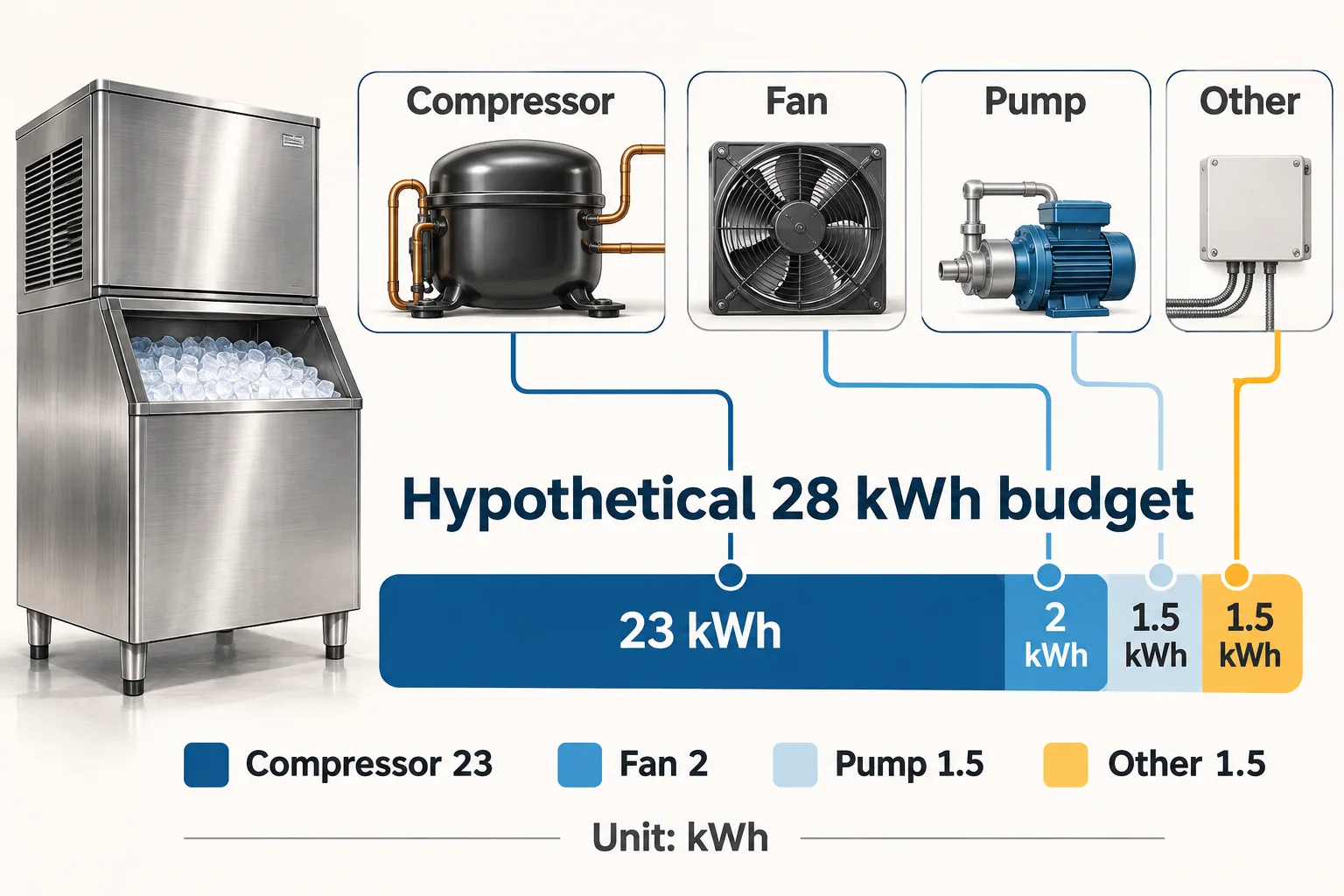
The budget directs the next measurement. If a condenser change reduces compressor energy but increases fan energy, compare both effects over the same interval and output. If an evaporator change alters ice mass or harvest behavior, revise the production record at the same time.
Against the illustrated 5.80 batch limit, the hypothetical 5.60 ratio leaves an absolute arithmetic gap of 0.20 kWh/100 lb. Dividing 0.20 by 5.80 gives 3.45% arithmetic headroom. The 3.45% applies only to this example. An OEM still needs a justified development allowance, variability assessment and the applicable represented-value calculation before deciding whether its design is ready for release.
Review the installed condenser and evaporator
A component’s proposal needs the conditions it will experience inside the machine. For a condenser, request the operating point, heat-rejection requirement, refrigerant, airflow, air-side resistance and the fan configuration used for the return data. Include the intake and exhaust arrangement so the review can address recirculation.
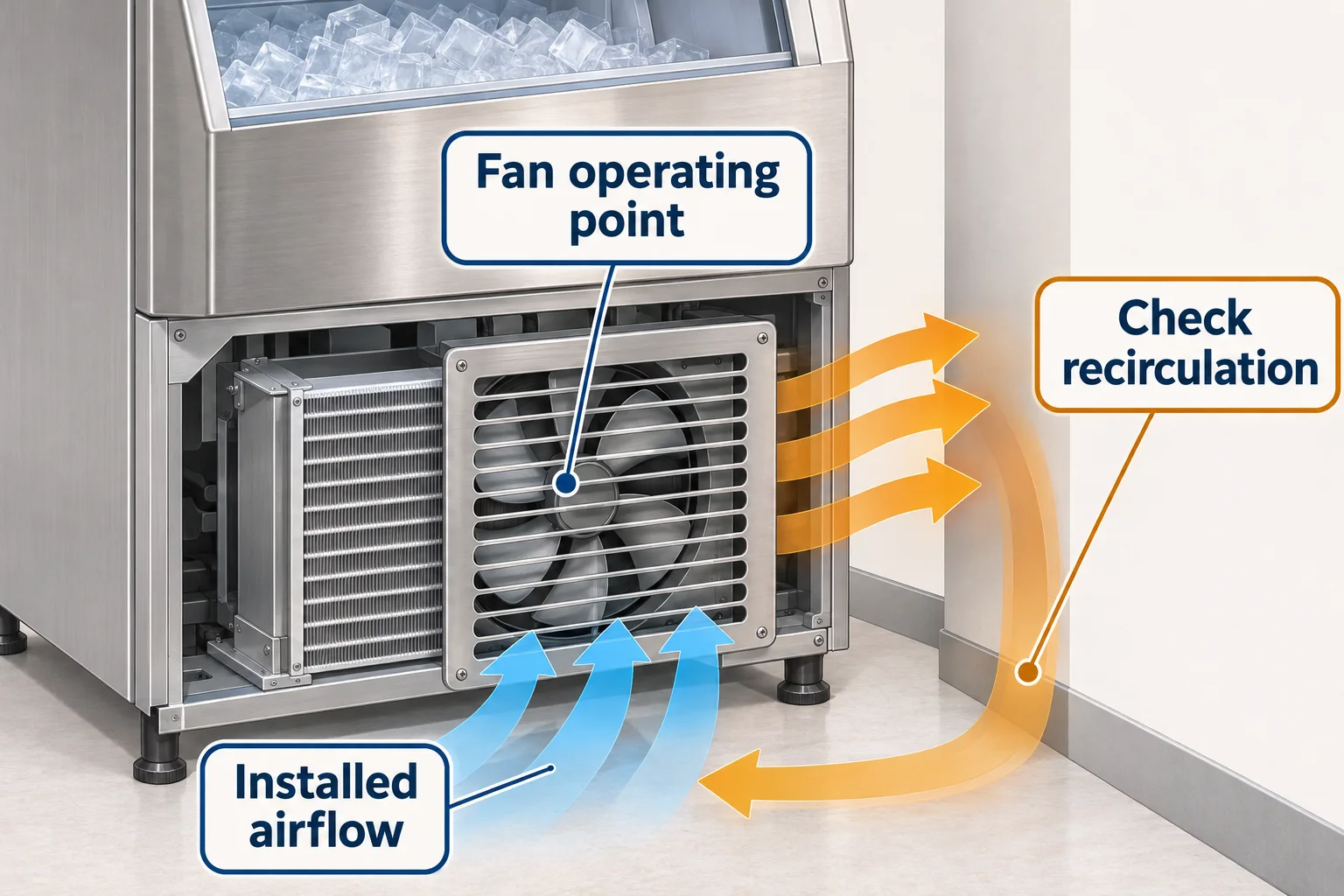
Use the condenser selection guide to check the proposed heat sink and installed duty. Carry the resulting component assumptions back into the machine’s energy budget.
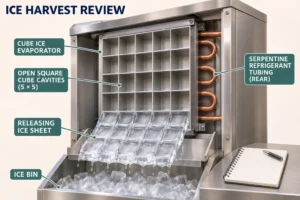
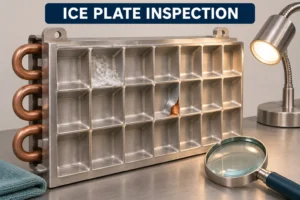
For an evaporator, connect the drawing and operating conditions with ice mass, freeze duration, release behavior and the water state used during testing. The harvest-cycle review provides a separate path for investigating release and cycle timing. Keep material condition and cleaning history identifiable when comparing used equipment with a new prototype. The evaporator corrosion and scale guide addresses that diagnosis in more detail.
Control the comparison conditions
Before testing a proposed change, agree on the baseline configuration and the question the comparison should answer. Change one identified assembly or setting at a time where the experiment permits it. Record any additional changes that could affect the outcome.
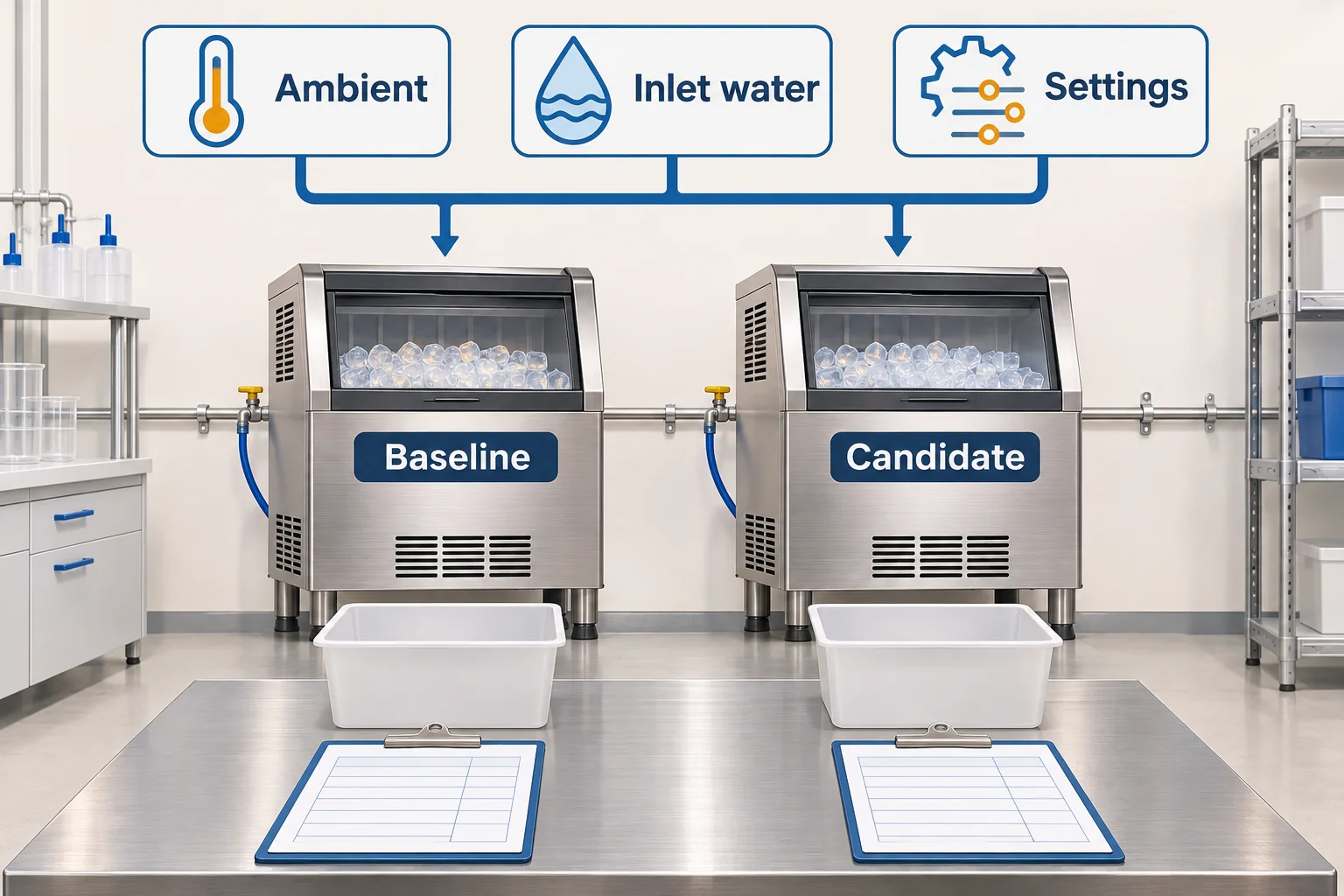
For an OEM development comparison, keep the following conditions traceable.
- Ambient and inlet-water temperatures, together with the measurement locations.
- Electrical supply and any remote-equipment operating conditions.
- Water supply, purge setting and relevant water-quality information.
- Refrigerant, charge condition, fan and controller revisions.
- Ice-thickness or endpoint settings and the ice collection method.
- Component cleanliness, conditioning and stabilization state.
- Observation window, delivered mass, energy and any adjusted reported values.
A specification sheet may place an “up to” production figure beside an energy number measured at a named condition. Ask for the harvest rate that belongs to that energy condition before combining them. Preserve the paired values and their configuration together in the comparison file.
Require evidence that survives a component change
The release file should let another engineer reproduce the decision. Keep the approved drawing revision, component bill of materials, model combination, target row, test conditions and energy report together. Record the changed characteristic and the reason the proposed comparison addresses it.
Apply the operating-sample rules and the basic-model unit-sampling rules as separate steps. The test procedure controls stability and the averaging of three calculated samples. It also requires unrounded intermediate calculations and energy reporting to 0.01 kWh/100 lb. For a basic-model rating, apply the applicable statistical requirements and the separate unit-sampling rule. That rule generally calls for at least two tested units and provides specific exceptions. Ice-maker sampling and reporting and general unit-sampling requirements
Agree with the responsible laboratory and compliance team which changes require further evidence. A supplier’s performance return, an OEM’s development comparison and the certification file each serve a defined part of that review. The engineering inquiry route can help frame the component question and the information needed to assess its scope.
Frequently asked questions
Is there one DOE energy target for every commercial ice maker?
The limit depends on the equipment class, cooling type and harvest-rate interval. Start with the classification and applicable manufacturing date, then select the corresponding row in 10 CFR 431.136.
What does kWh/100 lb mean?
It expresses electrical energy relative to 100 pounds of ice production. For engineering arithmetic, divide energy by the paired ice mass and multiply by 100. A regulatory rating follows the prescribed test and reporting procedure.
Which harvest rate should enter the limit equation?
Use the rate supported by the applicable rating and test basis. Preserve its condition and units. Resolve a brochure’s headline capacity with the OEM before using it in a limit calculation.
Can a lower-power fan establish better machine efficiency?
Evaluate the fan together with installed heat rejection, compressor energy, operating time and ice production. The useful evidence is the complete comparison at the agreed conditions.
How should an OEM set its energy allowance?
Set a project-specific allowance based on measurement uncertainty, production variation and the applicable representation rules. The 3.45% example compares a hypothetical observation with one calculated limit.
How should continuous ice results be compared?
Identify the raw measurement and the prescribed ice-hardness adjustment. Compare values reported on the same basis and retain the equipment category, test conditions and harvest rate with each result.
Does meeting the DOE energy limit establish ENERGY STAR certification?
ENERGY STAR eligibility includes its own performance, water and certification requirements. Check the actual equipment against the applicable program criteria and certification process.
What should accompany an energy-focused coil inquiry?
Send the equipment class, target row, paired harvest-rate and energy conditions, complete measurement boundary, coil drawing and relevant operating-point data. Include the baseline problem and the evidence requested for the proposed component change.
Send the target row with the coil drawing
Give the next supplier a defined engineering question. A condenser inquiry benefits from installed airflow and fan data. An evaporator inquiry needs its freeze, harvest and ice-production conditions. Add the target class, limit equation, drawing revision and available test record so the discussion starts from the same assumptions.

Domi’s custom coil fabrication inquiry provides a route to discuss a condenser or evaporator component requirement. Include the machine class, target energy row, refrigerant, operating conditions and coil drawing, together with the paired energy and production data available from development. Identify which component question you want reviewed and what supporting performance information you need returned. That package helps establish the technical scope before drawings, samples or a quotation are discussed.
Send Your Coil Drawing and Test Conditions