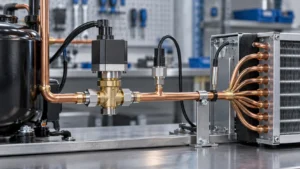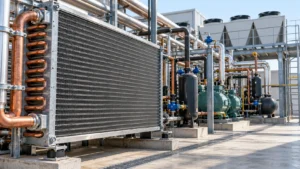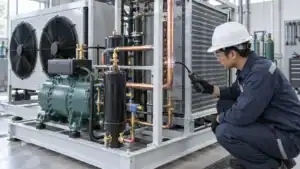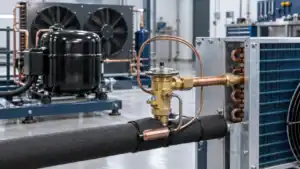

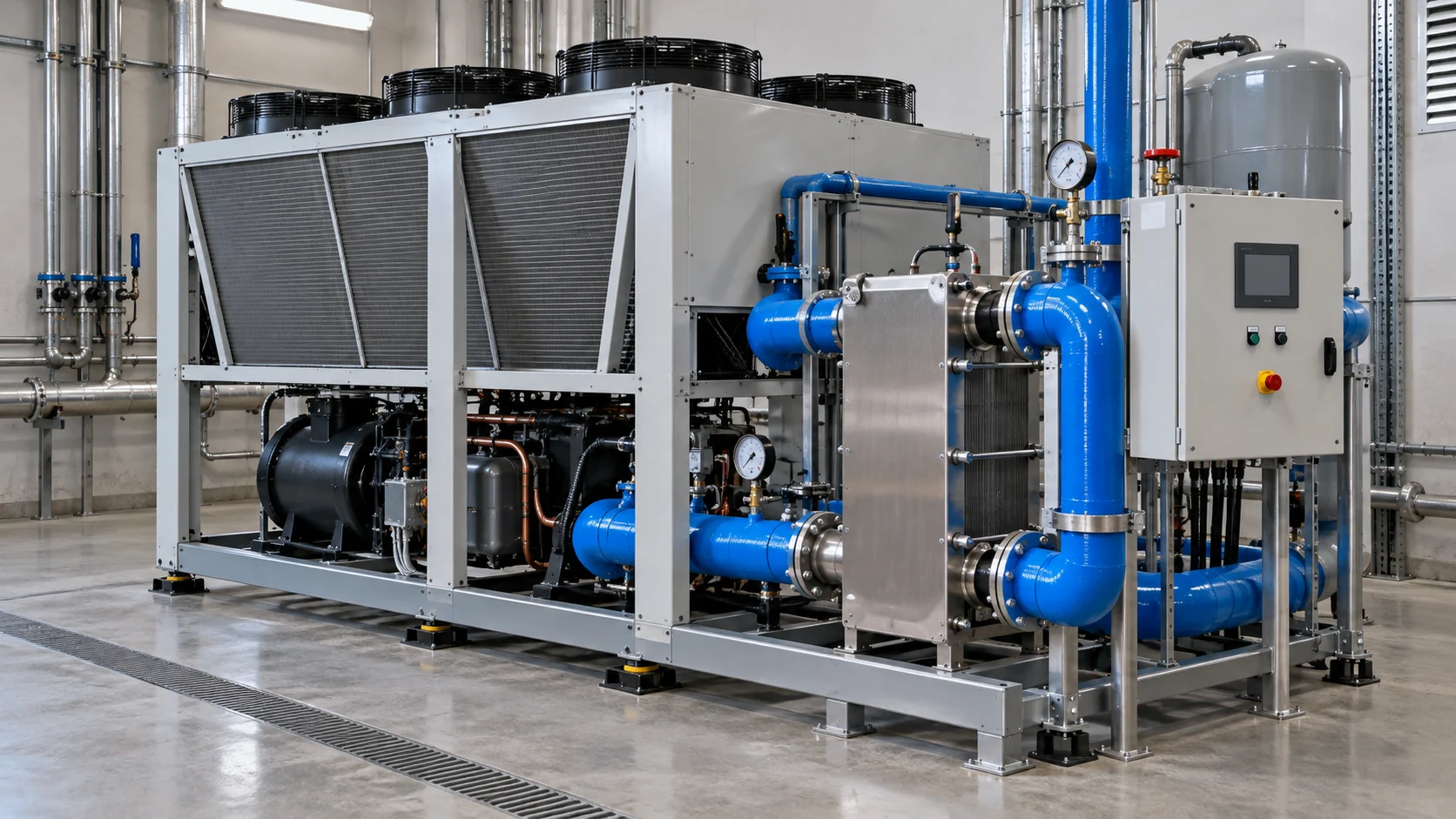
For most industrial and commercial projects, a glycol chiller should be selected from the required cooling load, leaving and return temperatures, glycol type and concentration, design flow, heat rejection method, materials, pump duty and service conditions. The chiller is only one part of the system. The fluid, heat exchanger, secondary loop and controls must be specified as one package so the system reaches the target temperature without excessive pumping power, freeze risk or corrosion.
Quick answer: what to specify first
Send a supplier the process or room heat load, leaving glycol temperature, return temperature, lowest ambient or exposed-pipe temperature, fluid chemistry, required flow, site elevation, available power, heat rejection preference and connection details. Add the application, operating schedule, redundancy requirement, material restrictions and controls interface. These inputs are more useful than a request for a nominal chiller tonnage because glycol concentration and temperature change the real heat transfer and pump duty.
For food, beverage, pharmaceutical or other applications where incidental contact is possible, confirm whether inhibited propylene glycol is required. For outdoor piping, select freeze protection for the lowest credible fluid temperature, not just the normal leaving temperature. A supplier should show the design point, pressure drop, expected leaving temperature and safety limits on the quotation.
What a glycol chiller does
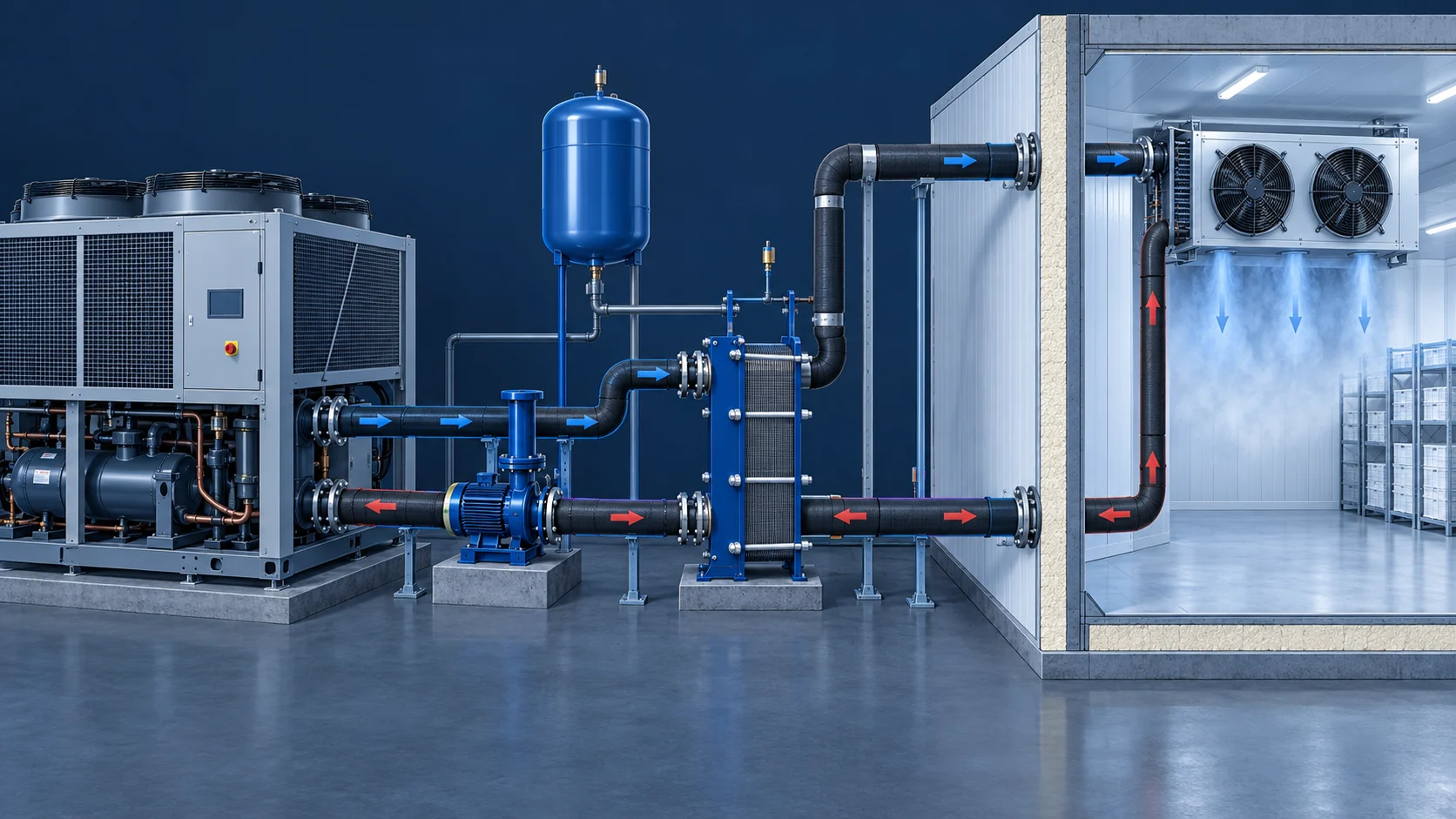
A glycol chiller removes heat from a water and glycol solution in a closed or semi-closed loop. The cooled solution travels to process equipment, an air cooler, a jacketed tank, a cold room coil or another heat exchanger. It absorbs heat and returns to the chiller. The refrigeration circuit rejects that heat through an air-cooled condenser, water-cooled condenser or another approved heat rejection arrangement.
The secondary loop separates the refrigerant from many points of use. That can reduce refrigerant piping in occupied areas, make multiple loads easier to control and help protect a process from a direct refrigerant leak. It also adds a pump, expansion volume, fluid charge and pressure drop. The design therefore needs a clear balance between safety, temperature stability, energy use and maintenance access.
Select the fluid before finalizing the chiller
Propylene glycol or ethylene glycol
Propylene glycol is often preferred where low acute toxicity, food processing or incidental contact requirements matter. Ethylene glycol can provide strong low-temperature performance, but its toxicity profile requires careful site controls and local compliance review. The fluid supplier, equipment manufacturer and project safety team should agree on the product and inhibitor package. Automotive antifreeze should not be substituted for an engineered heat-transfer fluid without written compatibility evidence.
| Selection item | Propylene glycol | Ethylene glycol | Buyer check |
|---|---|---|---|
| Typical reason to choose | Lower acute oral toxicity and food or beverage compatibility review | Lower viscosity and strong low-temperature performance in some designs | Confirm the project safety and regulatory requirement |
| Concentration basis | Volume or mass percentage from the fluid supplier data sheet | Volume or mass percentage from the fluid supplier data sheet | Do not mix volume and mass percentages |
| Inhibitor package | Required for corrosion control in a closed loop | Required for corrosion control in a closed loop | Request the inhibitor and maintenance instructions |
| Heat-transfer effect | Higher concentration usually raises viscosity and pressure drop | Also raises viscosity and pump duty as concentration increases | Size the pump at the actual design concentration |
| Compatibility | Check copper, brass, stainless steel, elastomers and seals | Check copper, brass, stainless steel, elastomers and seals | Obtain a written material compatibility list |
Set freeze protection and burst protection separately
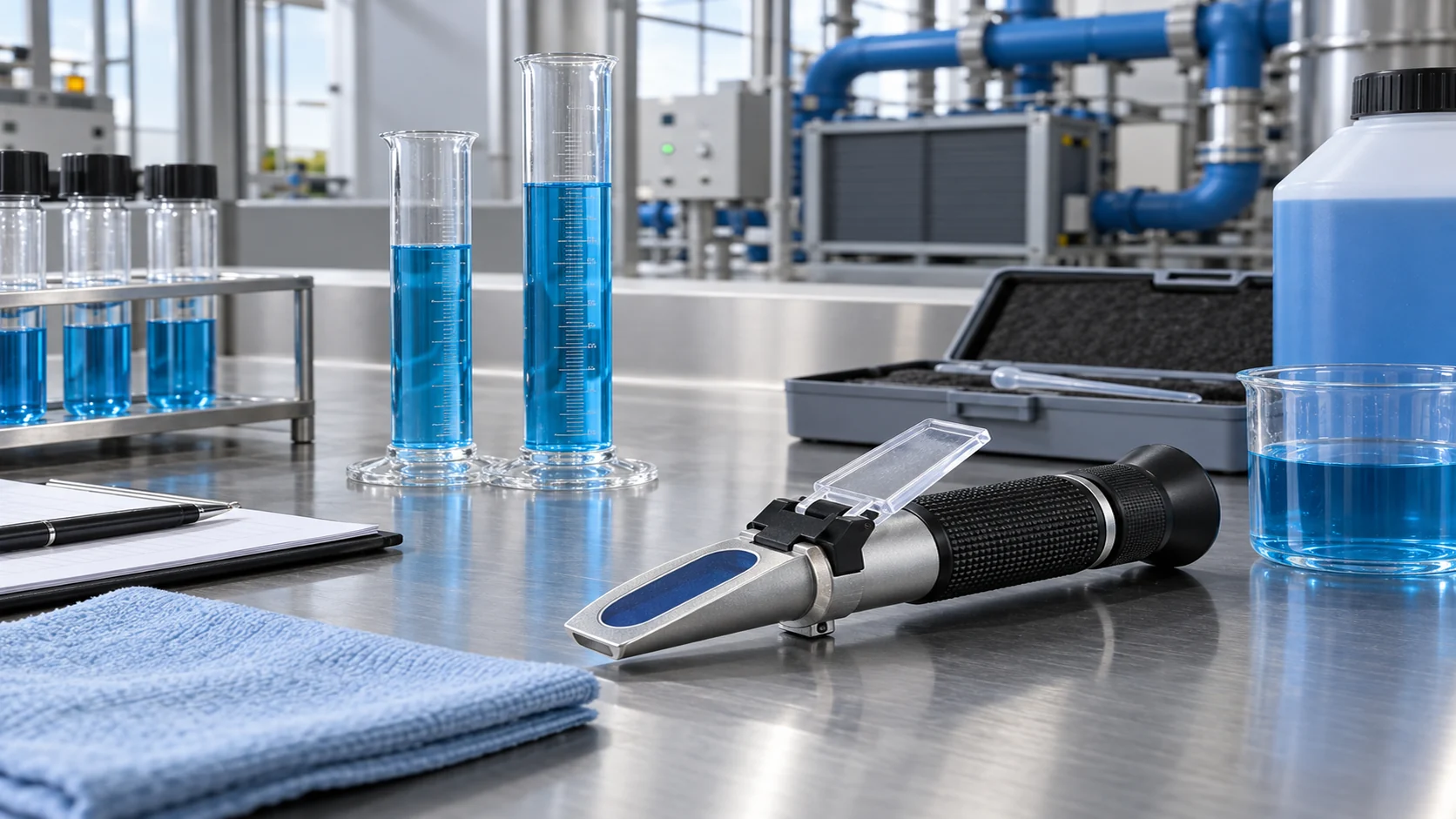
Freeze protection means preventing ice crystals at the specified temperature. Burst protection is a lower concentration target that helps prevent mechanical damage if water freezes in a component. They are not interchangeable. Dow’s DOWFROST technical data shows different concentrations for freeze and burst protection, and notes that a design margin should be added below the expected lowest temperature. Trane’s chiller application guidance also warns that adding more glycol than the application requires reduces chiller efficiency.
Use the fluid supplier’s table for the actual product. Document the lowest outdoor temperature, the coldest fluid location, the protection target, the concentration measurement method and the acceptance range. If pipes can be stagnant or exposed to wind, evaluate those conditions rather than using only the chiller leaving-water setpoint.
Size cooling capacity, flow and temperature difference
The first sizing check is the heat balance. For a single-phase liquid loop, a useful starting equation is:
Cooling capacity = mass flow × specific heat × fluid temperature difference.
The specific heat and density are properties of the selected glycol concentration and temperature. A water-only calculation can therefore understate the required mass flow or pump head. The final selection should include the coil or heat-exchanger pressure drop, piping losses, control-valve authority, fouling allowance and any required standby capacity.
| Design input | What to provide | Why it changes the glycol chiller selection |
|---|---|---|
| Heat load | Normal, peak, pull-down and future load in kW or tons | Sets compressor, evaporator and condenser capacity |
| Leaving and return temperature | Target temperature and allowable rise in the loop | Sets fluid properties, flow and heat-exchanger approach |
| Glycol type and concentration | Product name, concentration basis and design margin | Changes density, specific heat, viscosity and freeze protection |
| Flow and pressure drop | Required flow plus coil, valve and piping resistance | Sets pump size, motor power and control range |
| Ambient and site conditions | Outdoor design temperature, elevation, dust and noise limits | Sets condenser selection, derating and enclosure requirements |
Avoid selecting by compressor horsepower alone. Ask for the net cooling capacity at the actual leaving temperature, glycol concentration, entering fluid temperature and outdoor ambient. If the process has a large intermittent load, compare a buffer tank or staged compressors with a chiller that is oversized for the entire day.
Air-cooled or water-cooled glycol chiller
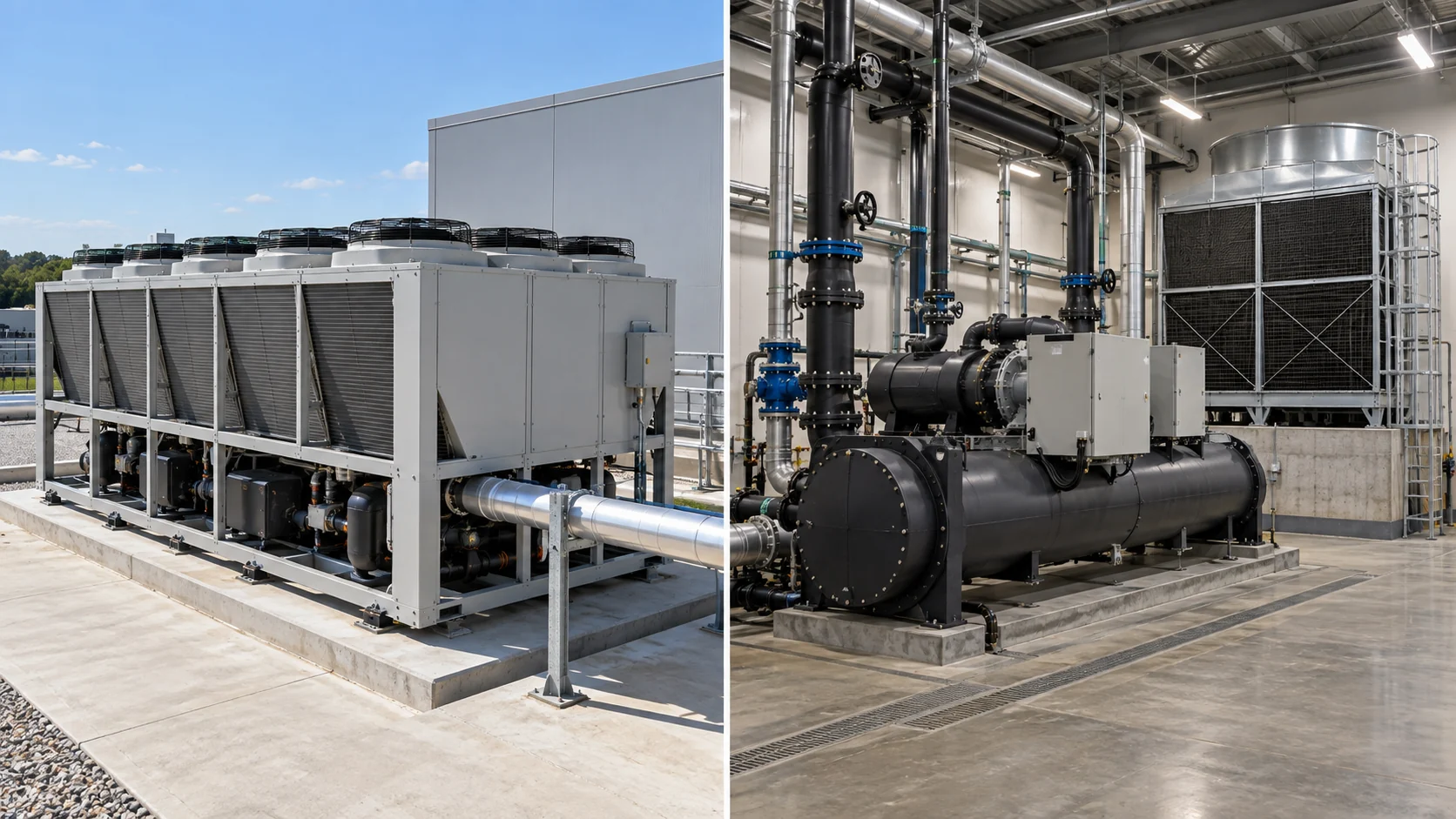
An air-cooled glycol chiller rejects heat directly to outdoor air. It usually simplifies water treatment and eliminates a cooling tower, but its capacity and efficiency depend on outdoor temperature, coil cleanliness and available airflow. A water-cooled unit can be quieter at the process area and may perform well where condenser water is already available, but it requires a reliable water loop, treatment, filtration and an approach temperature review.
| Decision factor | Air-cooled glycol chiller | Water-cooled glycol chiller | Questions for the RFQ |
|---|---|---|---|
| Heat rejection | Outdoor air through a finned coil and fans | Condenser water through a heat exchanger | What ambient or condenser-water entering temperature is used? |
| Utilities | Electrical power and clear air path | Electrical power, condenser-water flow and treatment | Is condenser water available year-round? |
| Maintenance | Coil cleaning, fan service and freeze protection | Tube or plate cleaning, water chemistry and pump service | Who owns water treatment and cleaning? |
| Footprint and sound | Outdoor footprint and fan noise | Chiller room plus condenser-water equipment | What are the site noise and access limits? |
| Part-load behavior | Fan staging or speed control can reduce power | Tower and condenser-water controls must track load | Provide the part-load data at the glycol design point |
Choose the heat rejection method from the site, not from a generic efficiency claim. A water-cooled option is not automatically more efficient if the tower, pumps and treatment loads are included. An air-cooled option is not automatically simpler if the coil is exposed to salt, dust or a high summer ambient.
Design the secondary glycol loop
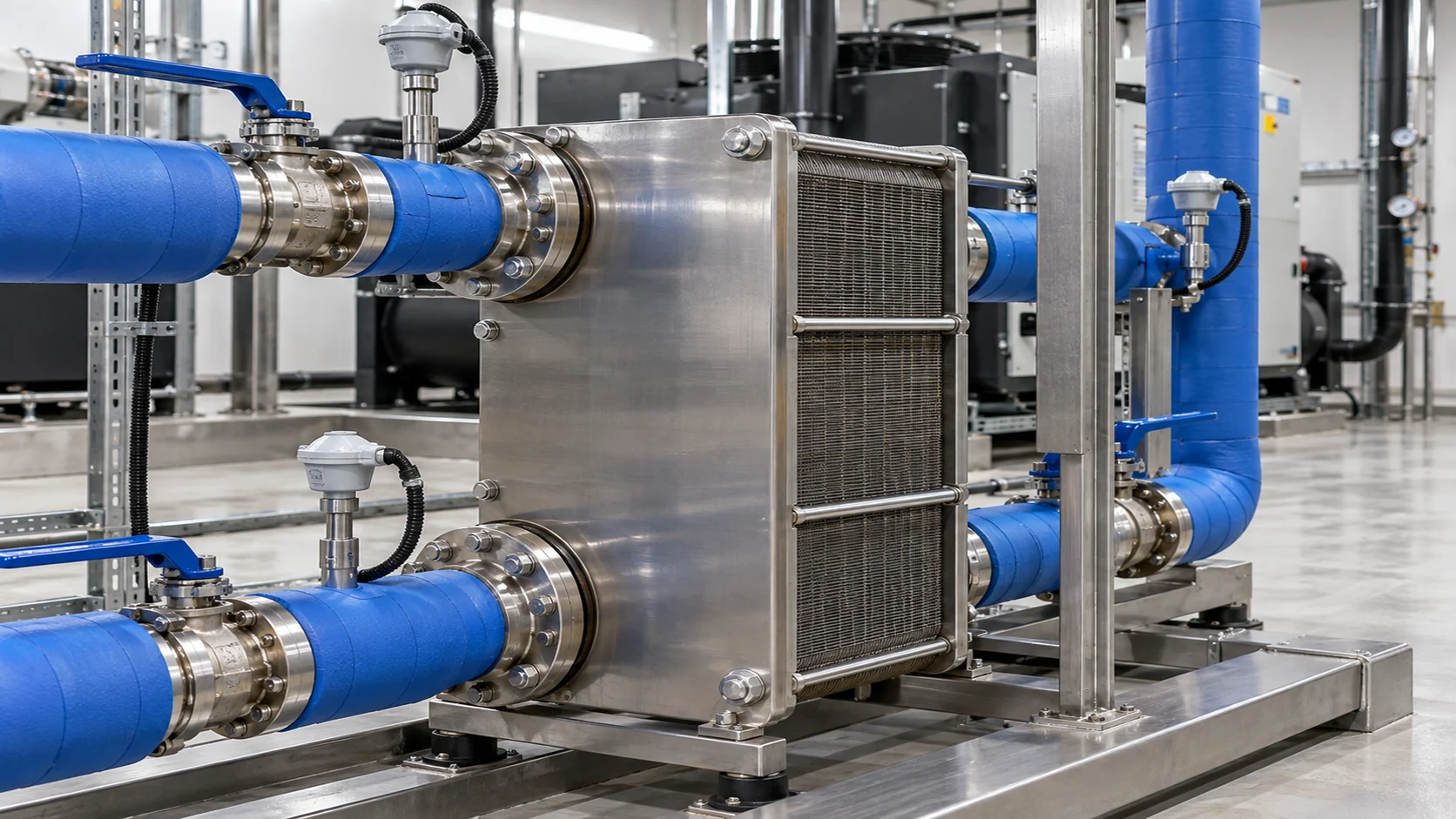
The loop should show the chiller, pump, expansion volume, air separator, strainer, isolation valves, drains, vents, temperature sensors, flow measurement and end-use heat exchangers. Place the expansion connection near the pump suction or at the point required by the hydraulic design. Provide a way to fill, purge, sample and drain the fluid without making the chiller inaccessible.
Pump, flow and pressure drop
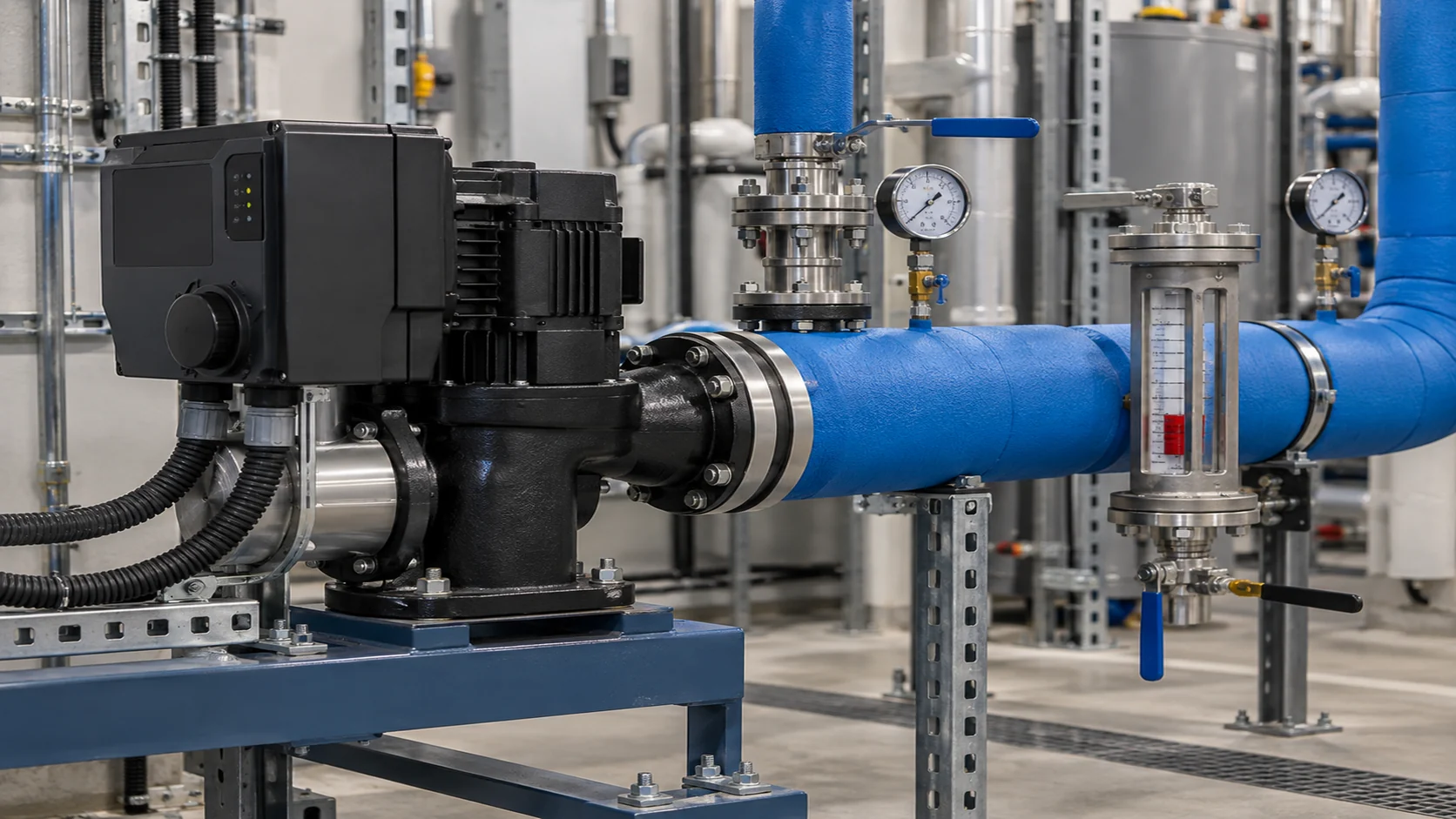
Pump selection depends on design flow and total dynamic head at the actual glycol viscosity. A variable-speed pump can follow load changes, but the control range must remain stable at minimum flow. Confirm the chiller’s minimum evaporator flow, the end-use valve authority and the bypass arrangement. A flow meter or differential-pressure measurement point helps commissioning teams verify that the system is operating at the quoted duty.
Expansion tank and air removal
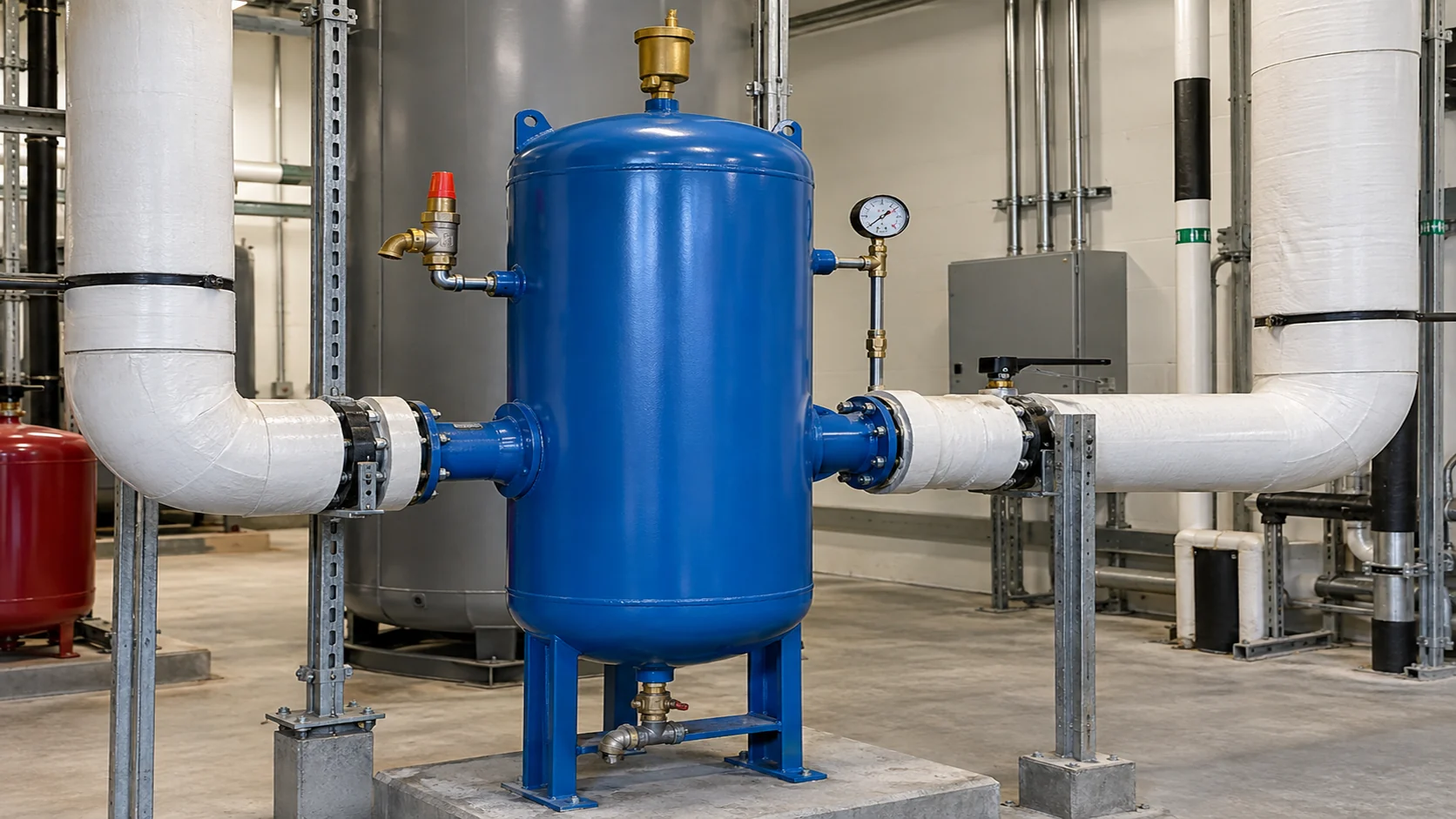
Glycol expands as temperature rises. The expansion tank, relief valve and air separator should be sized and located from the fluid volume, operating temperature range and static pressure. Trapped air can reduce heat transfer, create noise and cause pump cavitation. Provide automatic or manual vents at high points and a commissioning procedure that records the fill pressure and cold operating pressure.
| Loop component | Specify at quotation stage | Acceptance check |
|---|---|---|
| Pump and motor | Flow, head, glycol viscosity, motor rating and control method | Measured flow and current at design and minimum speed |
| Expansion tank | Usable volume, pre-charge, maximum pressure and connection size | Cold fill pressure, hot pressure and relief setting |
| Air separator and vents | Connection size, service access and vent location | No persistent air noise or loss of flow after purge |
| Strainer and filters | Mesh, pressure rating, isolation and drain arrangement | Clean element, differential pressure and leak-free service |
| Sensors and controls | Supply and return temperature, flow proof, alarms and interface | Sensor calibration, alarm test and trend record |
Applications that benefit from a secondary glycol loop
Glycol chillers are used for process tanks, beverage and food lines, laser or machine-tool cooling, cold rooms, ice-making, pharmaceutical utilities and other applications where one chiller serves several heat loads. The common design question is not simply whether the fluid can reach a low temperature. It is whether every branch can receive the required flow while the chiller remains within its minimum flow, concentration and operating limits.
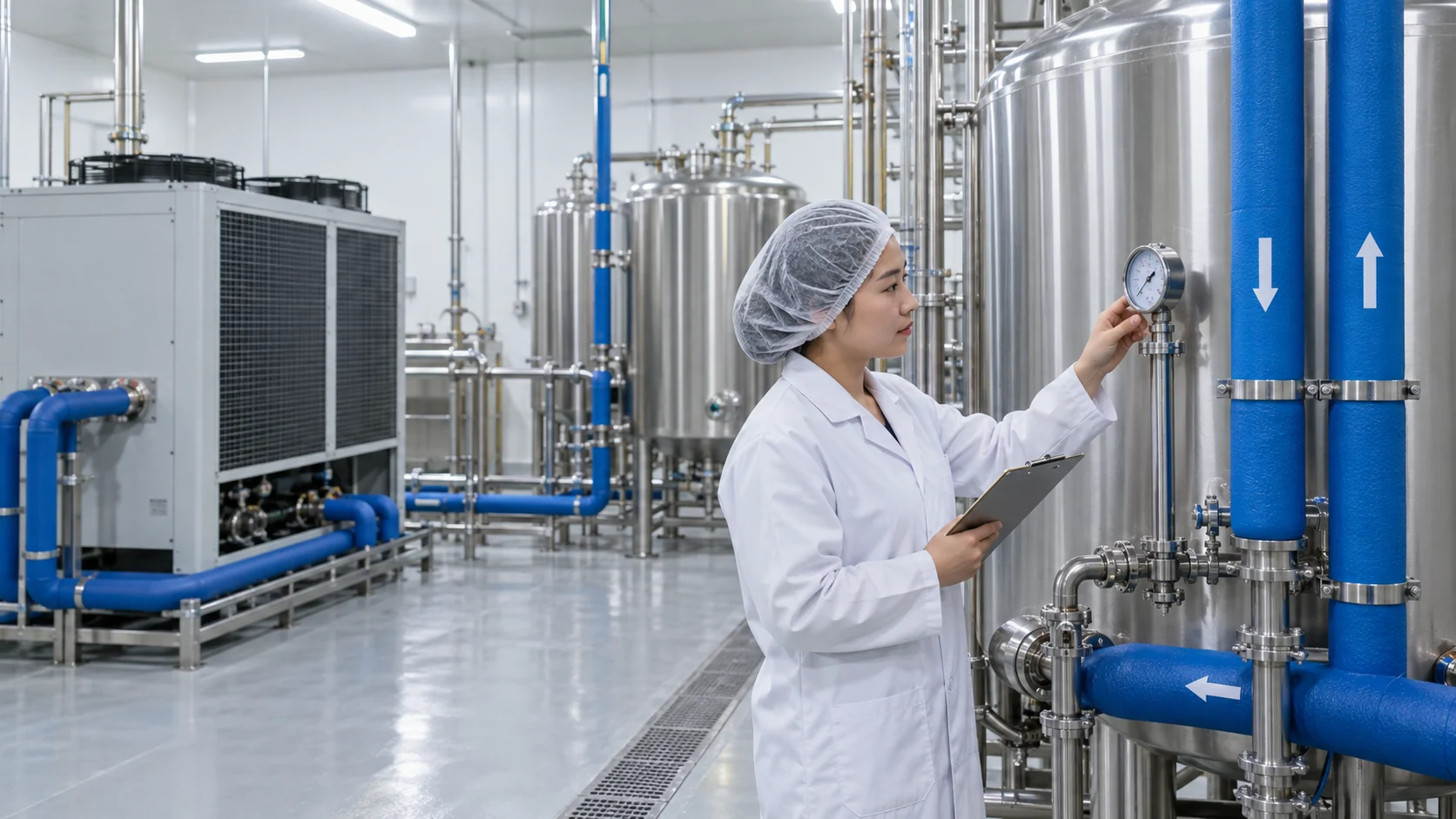
In food and beverage projects, review fluid grade, seals, drainability, cleaning chemicals and the separation between the glycol loop and product-contact surfaces. A food-safe fluid does not make every connected material or heat exchanger food-contact compliant. Request certificates and compatibility statements for the complete assembly.
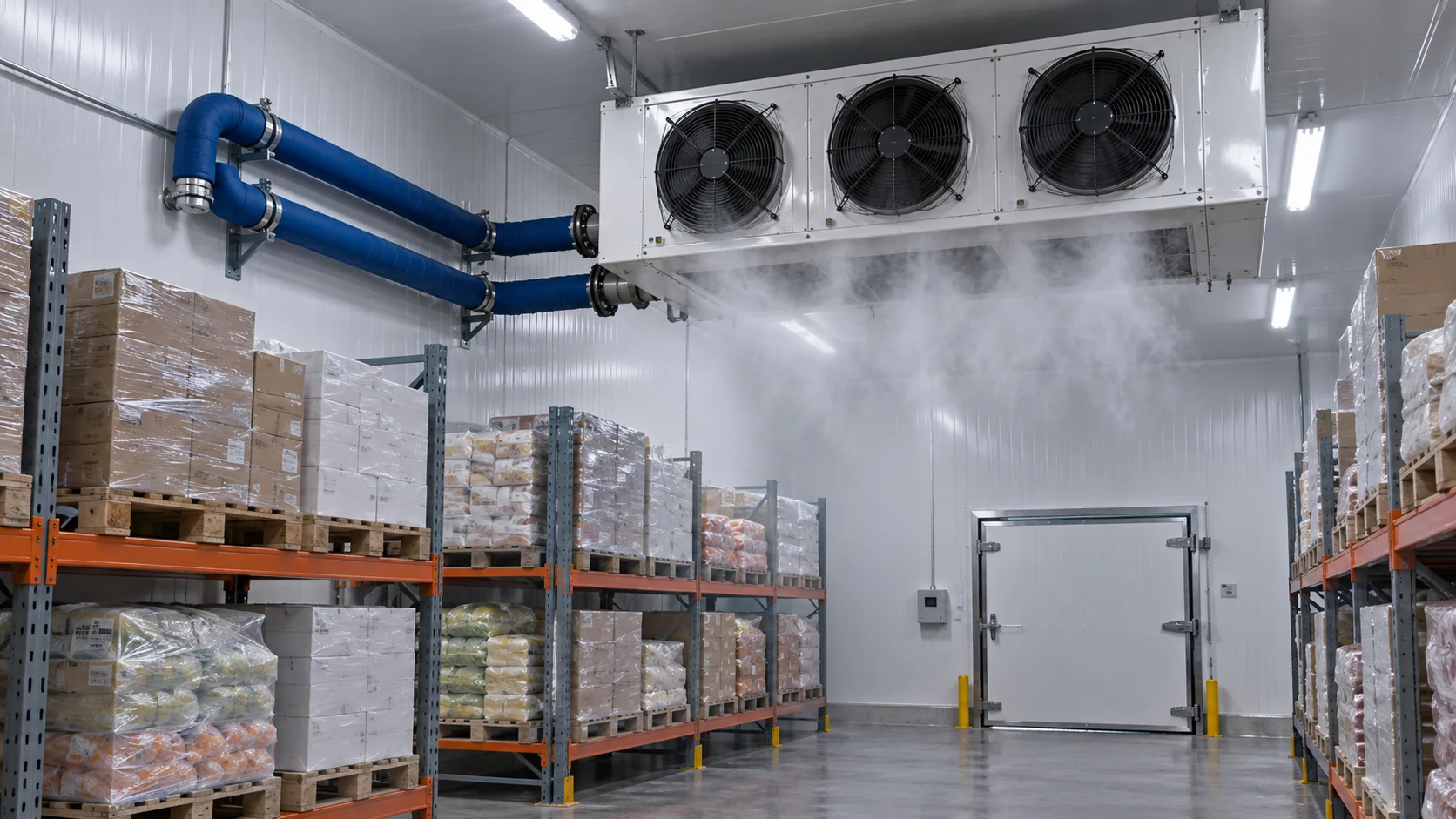
For cold rooms, review air throw, coil fin spacing, defrost method, room humidity, door openings and the lowest fluid temperature. The glycol concentration can raise coil pressure drop and reduce capacity compared with water. The air cooler and chiller should therefore be selected together.
Materials, corrosion and serviceability
Select the heat exchanger, coil, pump seal, valve body, gasket and pipe materials as a compatible set. Chlorides, oxygen ingress, poor inhibitor control and mixed metals can accelerate corrosion. Request a fluid technical data sheet, material compatibility list, inhibitor limits and a test method for concentration and pH. Do not assume that a blue pipe jacket or a stainless cabinet proves chemical compatibility.
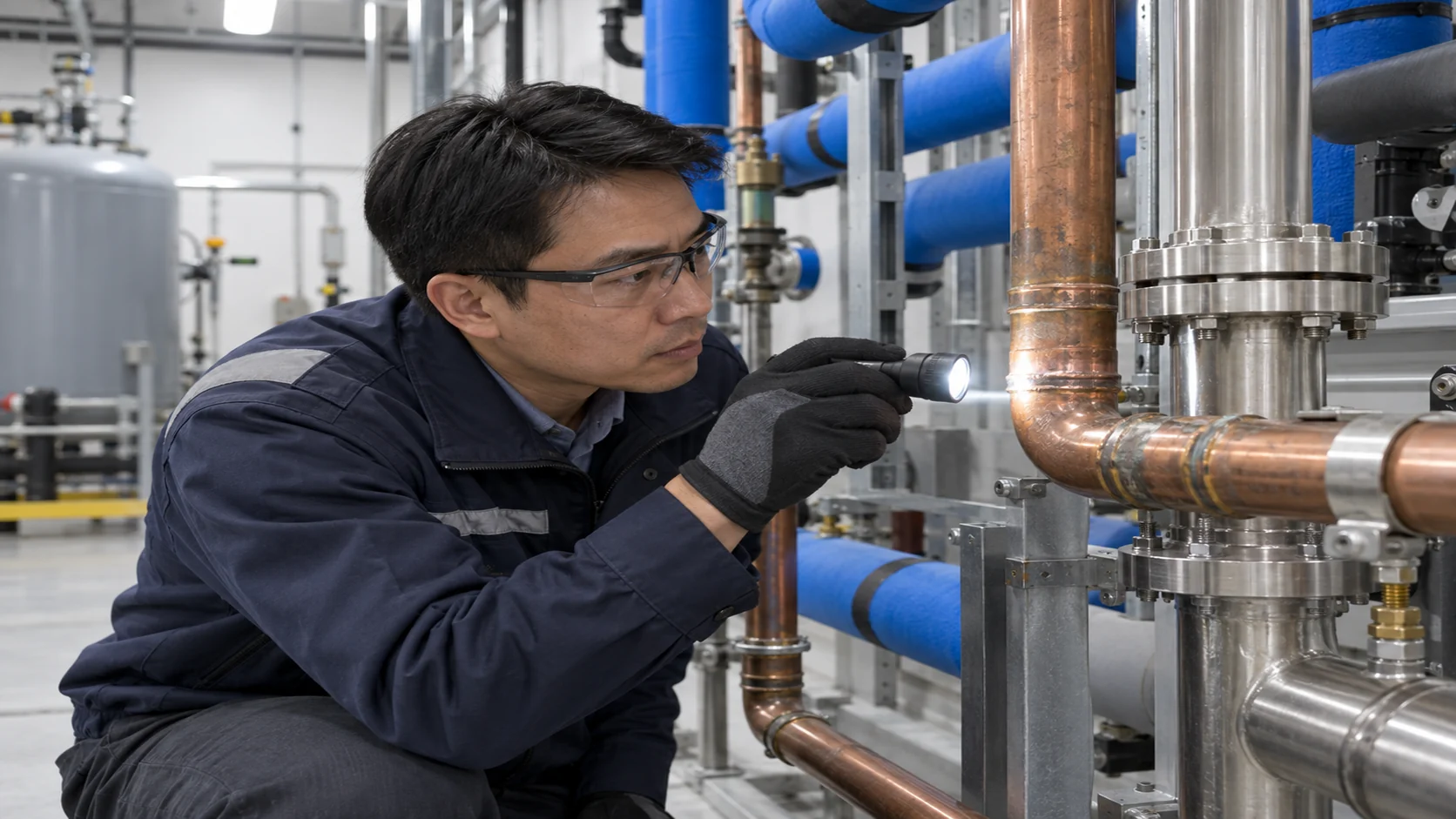
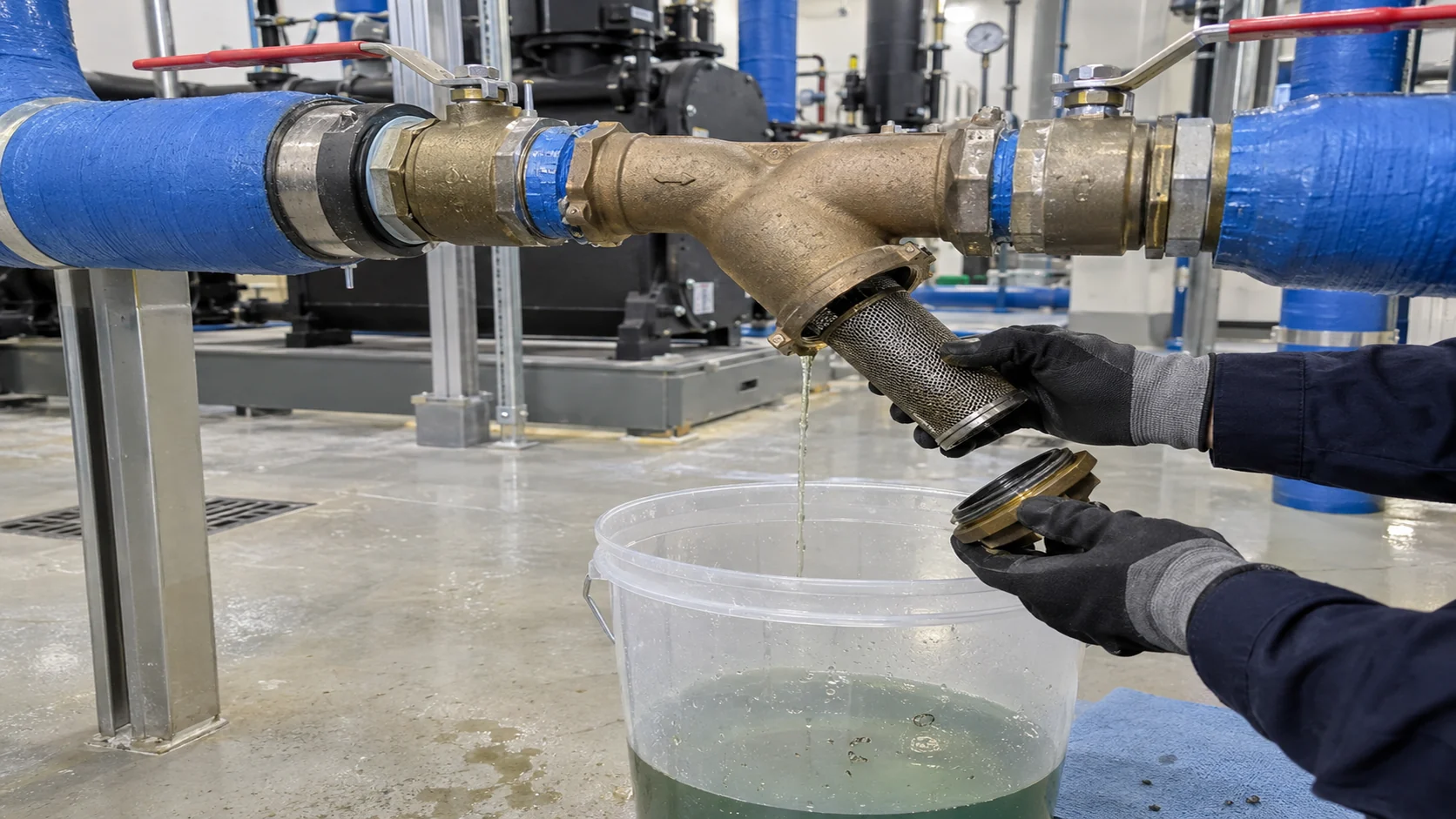
Maintenance access should allow technicians to isolate the pump, clean the strainer, sample the fluid, service sensors and remove the heat exchanger if required. Keep a record of glycol concentration, pH, inhibitor reserve, filter differential pressure, supply and return temperatures, pump speed and alarm history. A small log can reveal a slow loss of flow or heat-transfer performance before a process trip.
Commissioning and factory acceptance checks
Before start-up, pressure-test and flush the loop using a procedure compatible with the selected fluid. Confirm that the fluid is mixed at the required concentration before filling the system, or use a controlled premixed product. Verify pump rotation, flow proof, sensor calibration, expansion-tank pre-charge, relief protection and minimum-flow logic. Record the entering and leaving glycol temperatures at stable load.
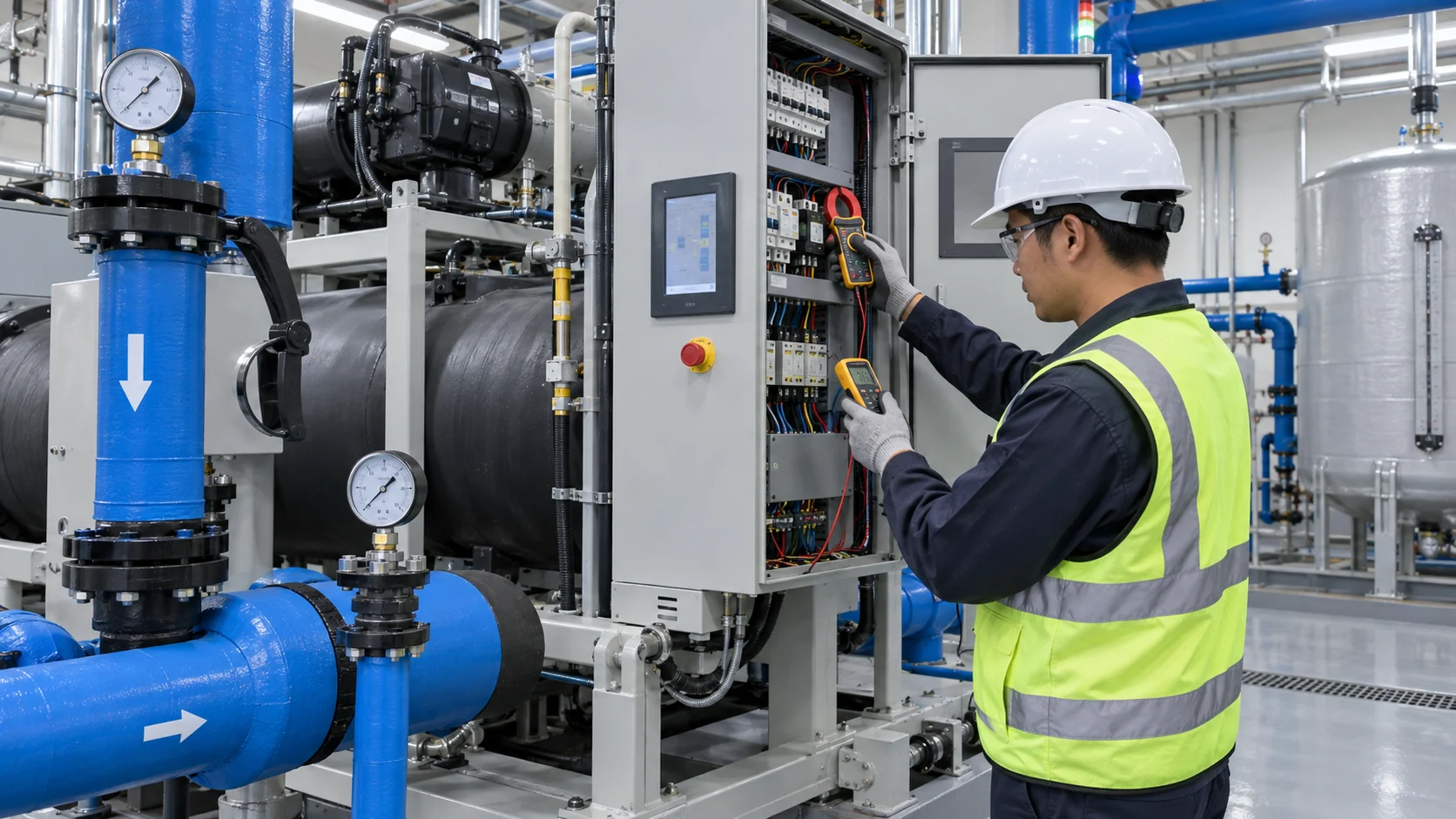
At factory or site acceptance, ask for the test point rather than a brochure rating. Useful records include capacity, leaving temperature, entering temperature, flow, pressure drop, ambient or condenser-water condition, current, sound level when relevant and alarm response. If a supplier cannot state the conditions behind a capacity number, the number cannot be compared fairly with another quotation.
RFQ checklist for a glycol chiller supplier
Include the following information in one controlled RFQ package:
- Application and end-use equipment, including process tanks, air coolers, cold rooms or heat exchangers.
- Normal and peak heat load, pull-down time, operating hours and future expansion allowance.
- Glycol type, product name if known, concentration basis, freeze target, burst target and fluid temperature range.
- Leaving and return temperature, design flow, allowable pressure drop and minimum-flow requirement.
- Air-cooled or water-cooled preference, outdoor ambient or condenser-water data, altitude, noise and corrosion exposure.
- Heat-exchanger material, connection size, valve arrangement, pump duty, expansion tank, air separator and filters.
- Electrical supply, controls protocol, alarms, remote monitoring and enclosure or weather-protection needs.
- Layout drawing, service-clearance limits, lifting constraints, delivery split, spare parts and commissioning scope.
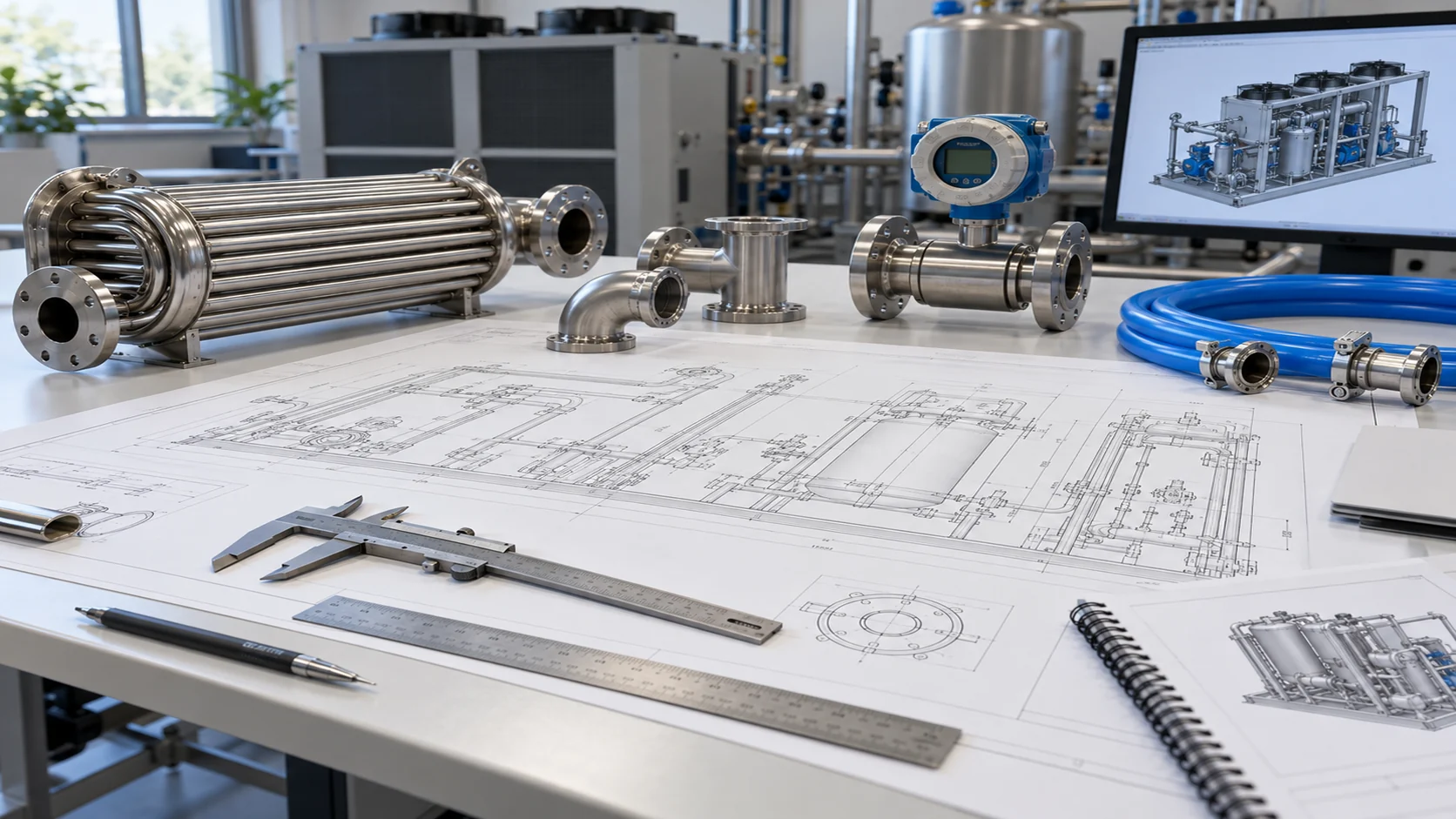
Domi’s refrigeration engineering team can review a glycol chiller requirement together with the connected coil, heat exchanger and refrigeration system. Send the load profile, fluid data and a drawing for a technical fit review. A quote should confirm the design point, not only the model name.
Frequently asked questions
What is a glycol chiller used for?
A glycol chiller cools a water and glycol solution that circulates to process equipment, air coolers, cold-room coils or heat exchangers. It is useful when one refrigeration plant must serve several loads or when the project needs a secondary loop instead of refrigerant piping at every load.
How much glycol should be used in a chiller?
Use the concentration required by the selected fluid supplier for the lowest credible fluid temperature, then add the supplier’s recommended design margin. The correct value depends on freeze protection, burst protection, fluid type, exposure and local rules. More glycol is not automatically better because it increases viscosity and pump power.
Is propylene glycol better than ethylene glycol for refrigeration?
Propylene glycol is often chosen for food, beverage or lower-toxicity requirements. Ethylene glycol may be considered where its thermal and hydraulic properties fit the application and the site can control its toxicity. The choice should be documented with the fluid data sheet, material compatibility and project safety review.
How do I size a glycol chiller?
Start with the peak heat load, leaving and return temperature, glycol concentration and design flow. Then include heat-exchanger approach, piping pressure drop, pump duty, ambient or condenser-water conditions, minimum flow and any redundancy requirement. Request net capacity at those exact conditions.
Should I choose an air-cooled or water-cooled glycol chiller?
Choose air-cooled when outdoor air rejection, footprint and water availability make sense. Choose water-cooled when a reliable treated condenser-water loop is available and its pumps, tower and maintenance are acceptable. Compare total system power, operating conditions, service access and site noise instead of comparing chiller-only efficiency.
What should be included in a glycol chiller RFQ?
Include the application, heat load, glycol product and concentration, temperature setpoints, flow, pressure drop, heat rejection method, ambient or condenser-water data, materials, connections, electrical supply, controls, service clearances and acceptance-test conditions. A drawing and a fluid data sheet reduce clarification cycles.