
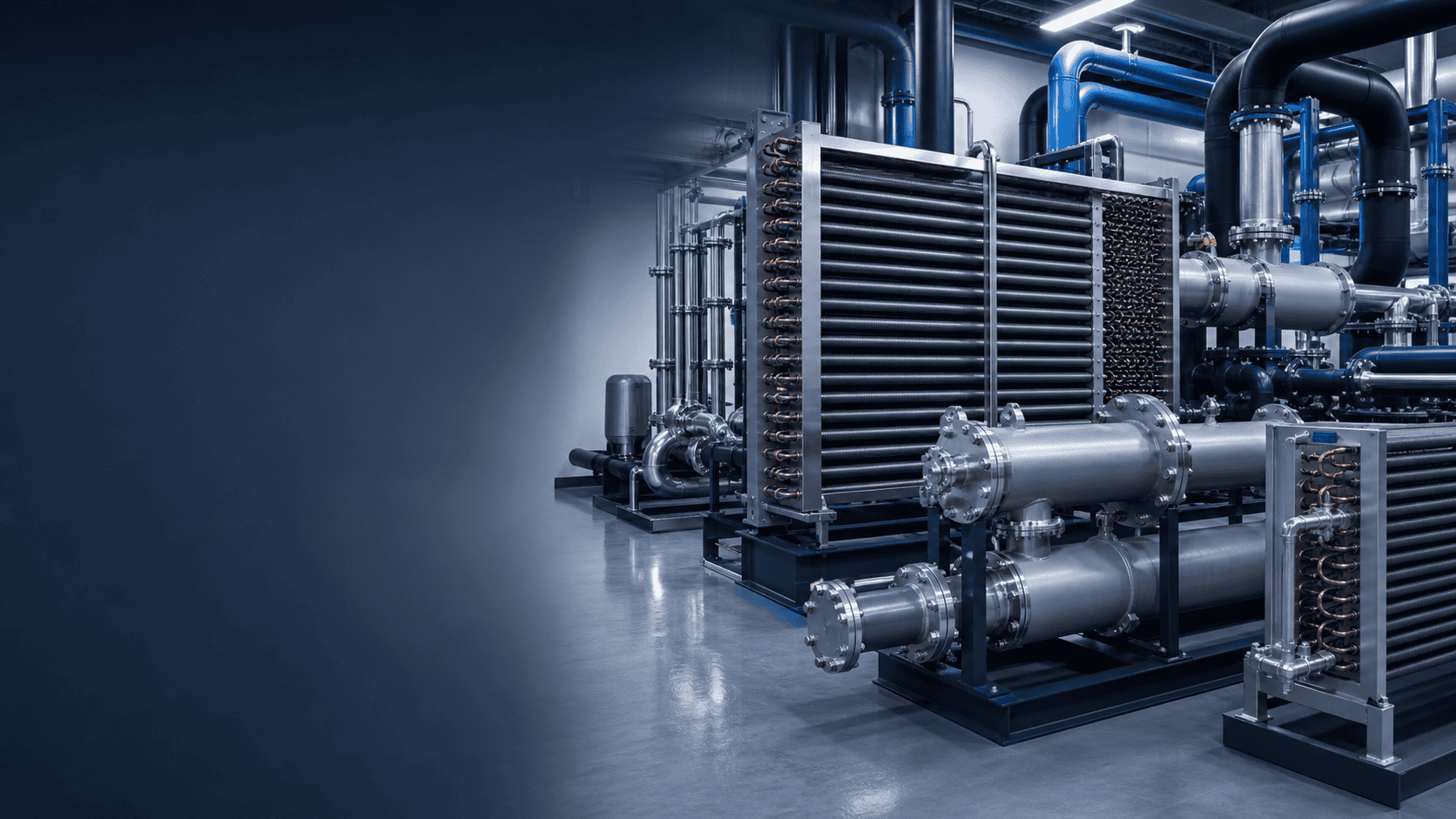
Tube bundles are the working surface inside many industrial heat exchangers. The bundle may be designed for condensing, evaporating, process cooling, oil cooling or a secondary-fluid loop. The right bundle is defined by the duty and the mechanical envelope together.
This guide is intended for engineers, OEM buyers and maintenance teams reviewing a new bundle, an obsolete replacement, or a custom shell-and-tube assembly. It does not replace a pressure-design review or site safety procedure.
What the tube bundle does
One fluid passes through the tubes while another fluid passes around the outside of the tubes. Heat crosses the tube wall without the streams mixing during normal operation. The bundle arrangement controls heat-transfer area, flow path, pressure drop, service access and the ability to remove or clean the bundle.
The application should be defined before the construction:
| Duty | Tube-side question | Shell-side question |
|---|---|---|
| Condensing | What refrigerant and pressure enter the tubes? | What fluid or air-side sink removes the heat? |
| Evaporating | What fluid is being cooled or boiled? | What is the flow and temperature approach? |
| Process cooling | What is the fluid chemistry and fouling risk? | What duty and control range are required? |
| Replacement | What bundle fits the existing shell and supports? | Which dimensions and connections are fixed? |
Bundle configurations to confirm
The exact construction depends on duty, pressure, temperature, maintenance and manufacturing route. A buyer should ask the supplier to identify the proposed configuration rather than using “tube bundle” as the entire specification.
Tube pattern and passes
Tube diameter, length, pitch, number of passes and tube pattern affect heat-transfer area and pressure drop. More area may not be useful if the fluid cannot flow through the bundle at the required rate or if the pressure drop exceeds the system limit.
U-tube, fixed-sheet and removable arrangements
U-tube, fixed-tube-sheet and removable-bundle arrangements have different thermal expansion, cleaning and replacement implications. The correct choice depends on the temperature difference, fluid cleanliness, maintenance method, shell constraints and required access.
Do not select a configuration from a catalogue photograph. Ask for a drawing that shows bundle length, tube sheet, supports, baffles, connections, clearances and removal direction.
Baffles and support
Baffles can guide shell-side flow and support the tubes, but they also affect pressure drop, vibration and cleaning access. The supplier should review support spacing and the expected flow condition, particularly where vibration, two-phase flow or dirty fluid is present.
Technical data for a bundle RFQ
Provide a complete input sheet where possible:
- Both fluids or refrigerant and secondary medium.
- Inlet and outlet temperatures, phase change and required duty.
- Flow rate, density, viscosity and allowable pressure drop.
- Operating and design pressure, vacuum exposure and test requirement.
- Tube material, diameter, wall, length and preferred construction.
- Shell, tube-sheet, baffle and gasket material requirements.
- Fouling, corrosion, cleaning method and inspection access.
- Envelope, supports, connections, orientation and removal clearance.
- Quantity, sample requirement, documentation and packaging.
If the fluid is ammonia, CO2, glycol, water, oil or a process chemical, state it clearly. “Industrial refrigeration” does not define compatibility by itself.
Materials and compatibility
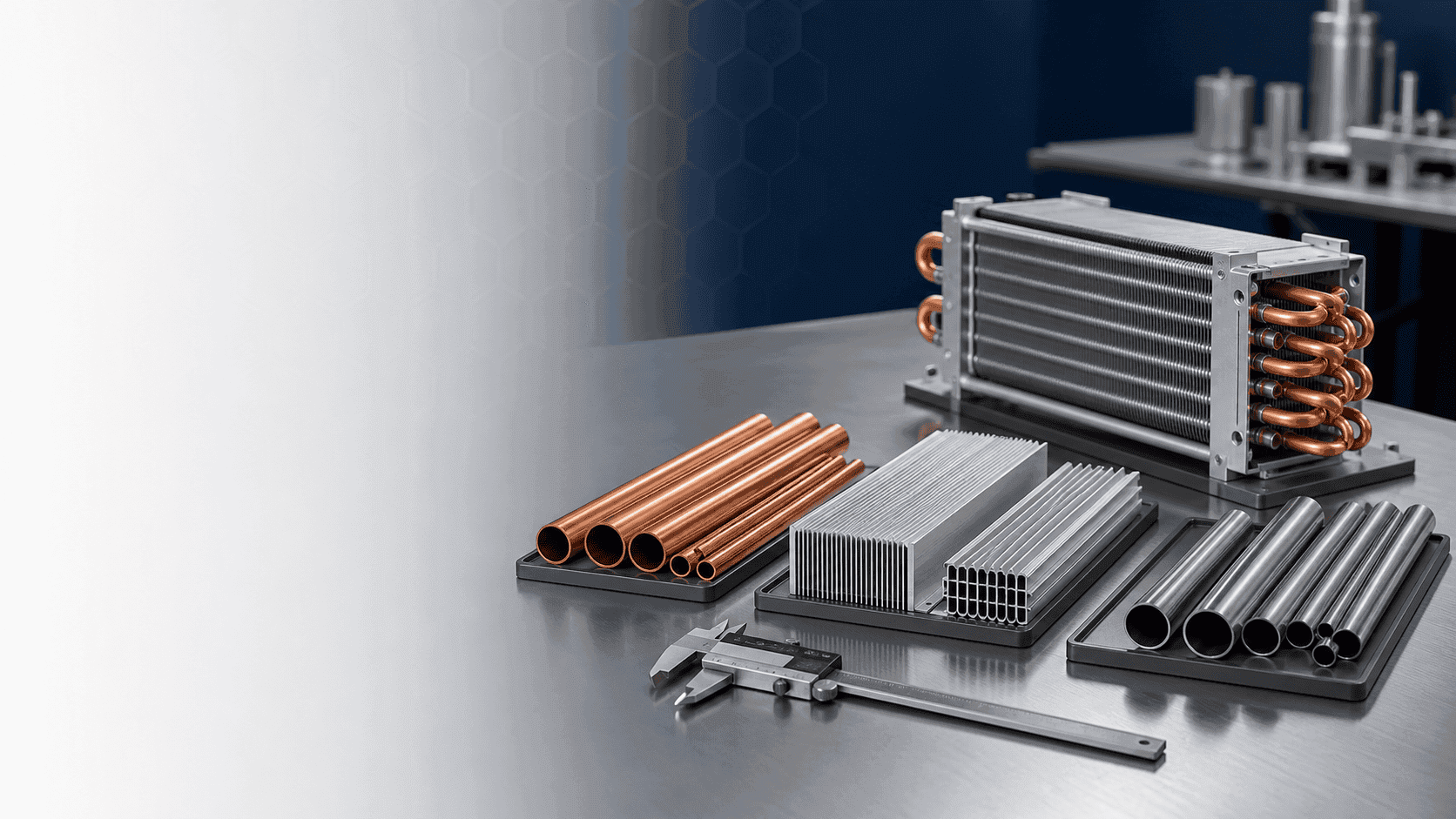
Tube and shell materials should be evaluated with pressure, temperature, fluid chemistry, cleaning and joining method. Copper, aluminum, stainless steel, carbon steel and other alloys each create different fabrication and corrosion questions. A material change may also affect tube expansion, brazing, welding, gasket selection and inspection.
For natural refrigerants and industrial service, confirm the design pressure and applicable safety requirements before the supplier quotes a final construction. Do not use an appliance heat-exchanger assumption for a high-pressure or ammonia project.
Coatings or surface treatments may help a particular environment, but they need a defined surface, application method, masking plan and acceptance test. A coating can also affect cleanability and thermal assumptions. Ask for an option sheet rather than accepting a general “anti-corrosion” label.
Thermal and mechanical review
Thermal design should show the duty basis, temperature approach, flow rates and pressure drops. Mechanical design should show shell and tube-side pressure, temperature, supports, expansion, connections, clearances and test conditions. These reviews are connected: a change in tube size can change both thermal performance and pressure drop; a change in material can change joining and test requirements.
Request a deviation list when the supplier proposes a different tube size, number of passes, material or connection. The list should state what changes, why it is proposed, and what test or calculation confirms the alternative.
Replacement bundle measurements
For a replacement, capture more than the outside diameter and length:
| Measurement | Why it matters |
|---|---|
| Shell inside diameter and available length | Determines fit and clearance |
| Tube-sheet diameter and thickness | Controls sealing and support interface |
| Tube count, diameter, pitch and length | Defines area and bundle fit |
| Pass partitions and nozzle orientation | Controls flow path and piping |
| Baffle type and spacing | Affects shell-side flow and support |
| Gasket, flange and bolt pattern | Determines assembly and leak risk |
| Removal direction and access | Confirms maintenance feasibility |
Use the latest drawing and a controlled measurement record. If the old bundle has been modified, mark field changes separately from the original design.
Inspection, testing and documentation
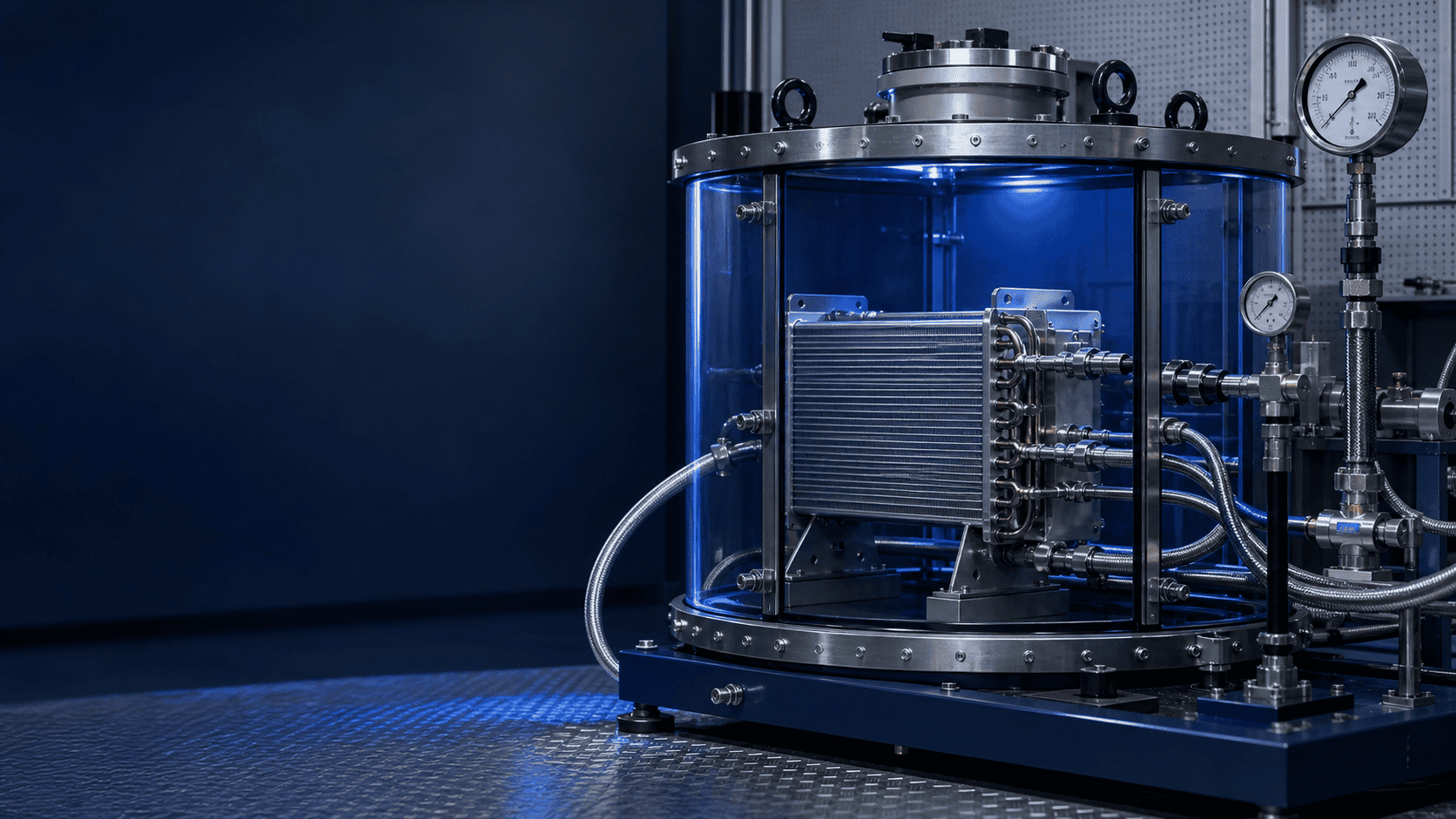
Agree the release package before the first sample. Depending on the project, it may include dimensional inspection, material documents, tube-to-tube-sheet inspection, pressure or leak testing, cleanliness, coating records and a performance test at defined conditions.
Testing should have a purpose. A pressure or leak test answers a containment question; a performance test answers a duty question; a dimensional report answers a fit question. The supplier and buyer should define the method, condition, acceptance and record format rather than using “tested” as a blanket statement.
Packaging and installation
Protect tubes, tube sheets, flanges, nozzles and coatings during transport. State caps, separators, lifting points, crate or pallet, moisture protection and receiving inspection. If the bundle is removable, identify the lifting and removal requirements in the installation handoff.
The buyer should receive the approved drawing, connection orientation, inspection records and storage guidance with the shipment. A correct bundle can still be damaged by unsupported lifting or by contamination entering open connections.
FAQ: tube bundle heat exchangers
What is inside a tube bundle heat exchanger?
It contains a group of tubes, tube sheets, supports and often baffles or pass partitions. The exact arrangement depends on the duty, pressure, fluids and maintenance method.
How do I choose tube material?
Start with fluid chemistry, pressure, temperature, corrosion, cleaning and joining requirements. The material should be confirmed by the responsible engineering team for the application.
Is a tube bundle the same as a shell-and-tube heat exchanger?
A tube bundle is the tube assembly inside many shell-and-tube exchangers. A shell-and-tube exchanger also includes the shell, tube sheets, baffles, connections, seals and other parts.
What should be measured for a replacement bundle?
Measure shell and tube-sheet interfaces, tube count and pattern, tube length and diameter, pass partitions, nozzle orientation, baffles, seals, supports and removal clearance.
Can Domi manufacture a custom tube bundle?
Domi can review a custom heat-exchanger or replacement-bundle request from drawings, samples and operating data. Final feasibility depends on the confirmed duty, materials, pressure and manufacturing requirements.
What tests should be requested?
Define dimensional, pressure or leak, cleanliness, material, coating and performance checks according to the project release plan. Each test should have a clear acceptance purpose.
Related Articles
- Industrial heat exchanger replacement guide
- Shell-and-tube heat exchanger selection guide
- Industrial refrigeration evaporator selection guide
- Industrial refrigeration condenser-coil selection guide
- Custom coil fabrication
- Engineering capabilities
Request a bundle engineering review
Send the shell or equipment drawing, bundle measurements, fluids, duty, pressure, materials, quantity and test requirements. Domi can then identify the open inputs and prepare a custom or replacement heat-exchanger review.