
Colmac Coil Midwest refers to Colmac Coil’s manufacturing facility in Paxton, Illinois. Buyers comparing it with another coil supplier should verify the application, refrigerant, pressure or code basis, materials, documentation, and delivery terms for the specific project.
The search usually comes from a real buying task. You may be checking a replacement coil, looking for a second source, or trying to understand whether a supplier’s Midwest operation can support an industrial refrigeration project. The company name identifies the supplier, but it does not answer the questions that determine whether a coil will fit and perform.
What does Colmac Coil Midwest refer to?
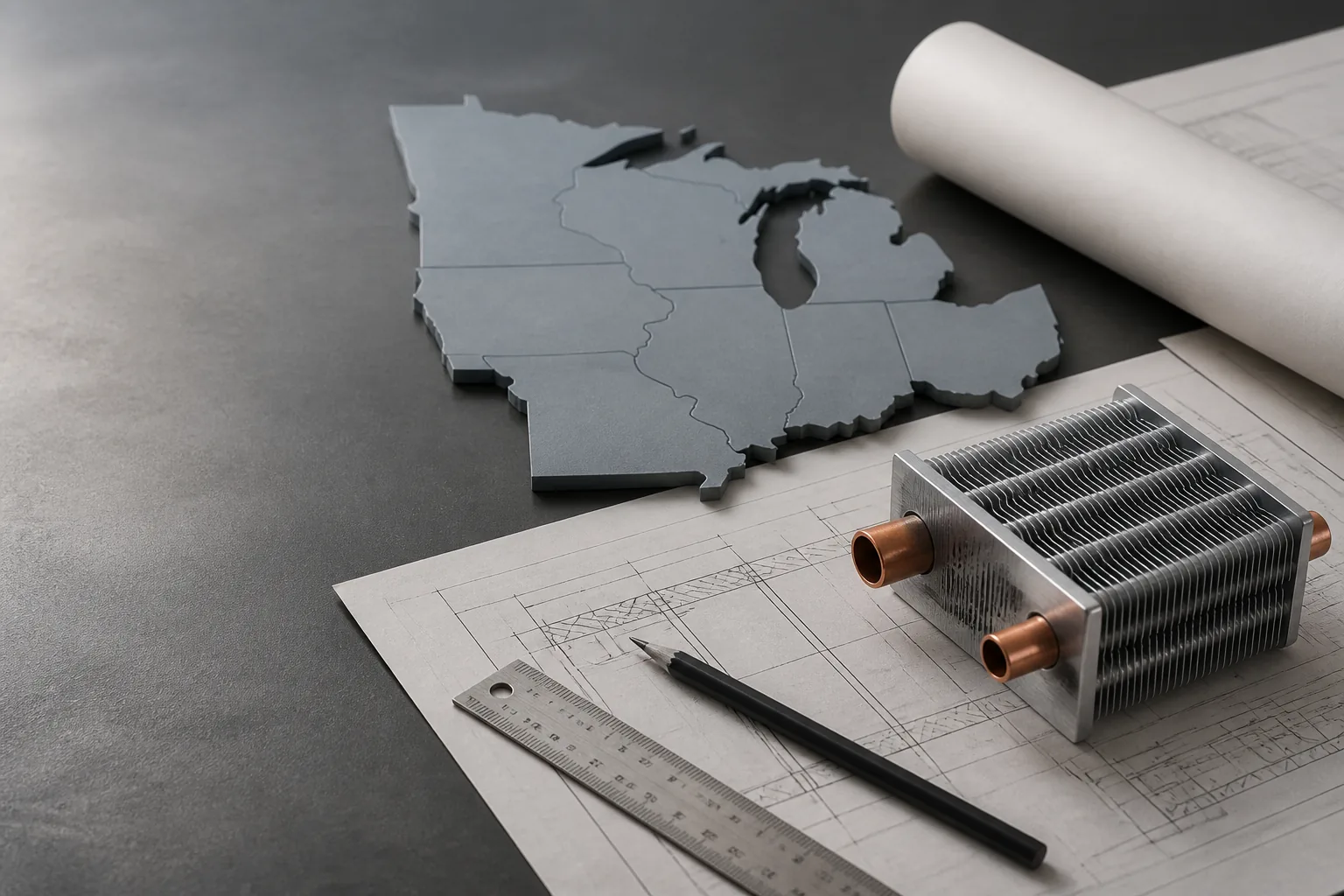
Colmac Coil Midwest is the Paxton, Illinois facility associated with Colmac Coil Manufacturing. The company’s factory contact page lists the site at 350 Baltimore Drive, Paxton, Illinois 60957, with a published phone number and operating hours. That page is the right place to confirm current contact details before sending a quotation request.
Colmac’s company history says the business began in 1971 and started operating its second manufacturing facility in Paxton in 2009. The company describes markets that include industrial refrigeration, HVAC, power generation, and gas compression.
The Midwest location may matter for freight planning, service coverage, or a project that needs a US manufacturing point. It does not, by itself, prove a shorter lead time, a lower delivered cost, or a particular certification for your coil. Those points still need to be confirmed against the drawing, duty conditions, and the order documents.
Colmac also has a public update titled ASME Certifies Colmac Coil Midwest. The page states that the Paxton facility was capable of building certified U-stamped coils to ASME Section VIII Division 1 requirements. Read that statement as a capability and scope question. A U stamp does not automatically apply to every coil, every material, or every project. Ask which code basis, design review, inspection record, and nameplate information will apply to the order you are considering.
What products and applications are publicly documented?
Colmac’s official homepage lists plate-fin heating and cooling coils, dry coolers, air-cooled condensers, heat pipe air-to-air heat exchangers, refrigeration evaporators, air coolers, blast freezers, tube bundles, and hydrocoolers. The same page mentions Freon, ammonia, and glycol or brine refrigeration markets.
The company’s refrigeration coil page gives a more technical view. It describes condenser, evaporator, supercritical CO2 gas cooler, desuperheater, and oil cooler applications. It also lists tube and fin material options, corrosion-resistant coatings, circuiting choices, and defrost arrangements.
That published range is useful when you are screening a supplier, but it is not a substitute for a selection sheet. A coil designed for ammonia, CO2, glycol, or another fluid will have different pressure, temperature, material, connection, and control questions. Two projects using the same refrigerant may still need different tube patterns, fin spacing, circuiting, headers, casings, or defrost methods.
For a Domi project, the industrial refrigeration coils page covers a similar type of buyer information: application, refrigerant or secondary fluid, cooling capacity, operating pressure, dimensions, airflow, materials, connection requirements, and installation limits. The page is a useful starting point for a second-source discussion, not evidence that two suppliers will quote identical designs without a shared specification.
What should buyers verify before comparing a coil supplier?
Supplier comparisons work only when both parties receive the same technical brief. A brand name, product family, or facility location is not enough to make two quotations comparable.
| Check | What to verify and why |
|---|---|
| Application and duty | Confirm entering and leaving temperatures, design load, ambient conditions, and operating hours. Room conditions, process load, and operating cycle affect the required heat-transfer surface and airflow. |
| Refrigerant or secondary fluid | State the refrigerant or glycol/brine concentration, phase, flow rate, and design temperatures. Fluid choice changes pressure, materials, circuiting, controls, and safety review. |
| Pressure and code basis | List design and test pressure, code or jurisdiction, nameplate information, and inspection requirements. A pressure vessel or U-stamp requirement may change construction and documentation. |
| Geometry and connections | Send the drawing, old coil photos, equipment model, connection sizes, orientation, and clearances. A replacement coil can fail at installation if the face size, row depth, headers, or connection positions are wrong. |
| Tube, fin, casing, and coating materials | Identify material grades, fin thickness, coating system, casing material, and cleaning conditions. Corrosion, washdown, salt exposure, hygiene, and temperature affect the choice. |
| Airflow and defrost | Provide air volume, face velocity, fin spacing, airflow direction, defrost method, and drain layout. Frosting, drainage, fan selection, and defrost affect capacity and run time. |
| Testing and records | Request the test plan, inspection points, reports, serial records, certificates, and acceptance criteria. The buyer may need to prove pressure integrity, leakage control, thermal performance, or traceability. |
| Packaging and delivery | Compare crate or pallet design, lifting points, dimensions, gross weight, Incoterms, and delivery route. Large or delicate coils can suffer fin, tube, header, or connection damage in transit. |
A comparable quotation needs more than a sentence saying that the supplier can build the coil. Ask for a marked-up drawing, a selection report, a materials list, a test plan, and a written list of assumptions.
Pay attention to the boundary between a published capability and an approved design. A supplier may list several refrigerants, coatings, tube materials, or circuiting patterns, while the project only permits a smaller set. Your comparison should record the option that was actually selected, the reason for that selection, and any customer approval still outstanding. This is especially useful when an OEM changes a coil over several drawing revisions or when a replacement must fit equipment that is already in the field.
How to prepare an RFQ for Colmac Coil Midwest or a second source
Start with the application, not the supplier name. State whether the coil is for a cold room, freezer, process cooler, chiller, air handler, condenser, gas cooler, or another piece of equipment. Include the design load and the conditions that define it.
Then assemble the information below:
- Provide entering and leaving air or fluid temperatures, design ambient, target capacity, operating hours, and the expected load profile.
- State the refrigerant or secondary fluid, concentration where relevant, evaporating or condensing condition, mass or volume flow, and any oil or contamination concern.
- List design and test pressure, the applicable code or jurisdiction, required nameplate information, inspection records, and customer or insurer requirements.
- Send a current drawing, old coil photographs, face dimensions, row depth, tube or header positions, connection sizes, mounting points, drain details, airflow direction, and service clearances.
- Identify tube, fin, casing, header, coating, corrosion, washdown, food-contact, salt-air, or chemical-cleaning requirements.
- Include prototype quantity, annual volume, repeat-order expectations, destination, packaging limits, lifting constraints, requested delivery window, and documentation format.
Domi’s custom refrigerator coil RFQ checklist can help organize the engineering information before a supplier review. For projects where capacity or airflow is still being developed, the commercial refrigeration coil sizing guide provides a related internal reference. These pages do not replace a project-specific selection calculation. They help prevent an RFQ from becoming a series of guesses.
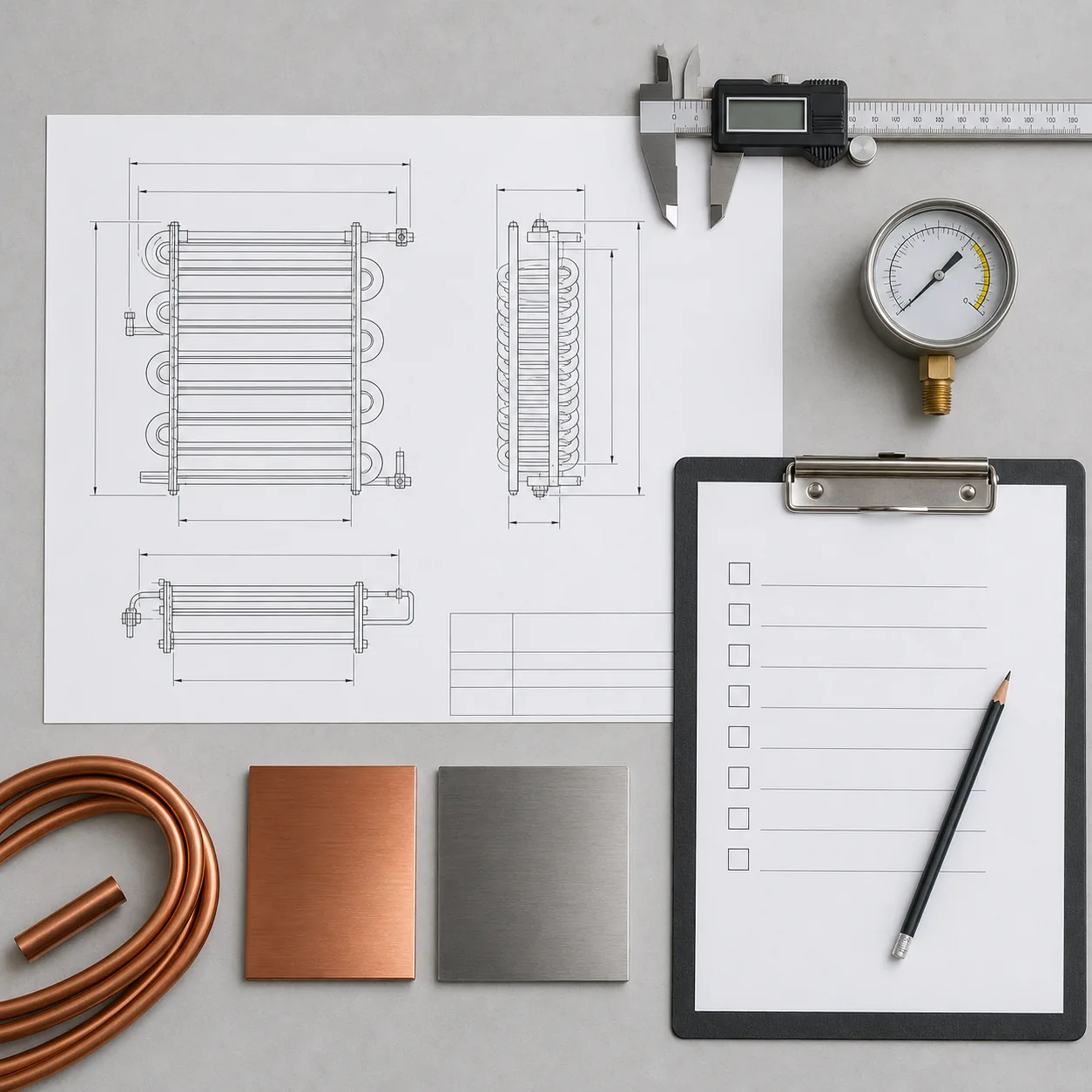
Before comparing the responses, ask each supplier to identify assumptions. A quotation based on a standard fin spacing should not be compared with one based on a custom frost condition. A quote that excludes the crate, inspection report, or special connection should not be treated as a lower total cost until those items are added.
Keep the revision number with every file. A supplier may be quoting from an earlier drawing while the buyer is working from a newer connection layout. The same problem can occur when a PDF, a sample photograph, and a spreadsheet describe slightly different dimensions. Put the controlling revision in the RFQ and ask the supplier to return it on the quotation and approval drawing.
When should you request a second quote?
A second quote is useful when the existing supplier cannot support the required schedule, when a replacement coil has incomplete documentation, or when the project team wants to qualify another source before a repeat-order program. It is also reasonable when the first quotation leaves major assumptions unclear.
The second-source request should use the same drawing revision and the same duty conditions. Ask both suppliers to state what they included and excluded, which dimensions or operating values they assumed, what will be inspected and tested, which certifications or code documents apply to the exact order, how packaging protects the coil during transport, and which changes require a new approval.
Do not compare one supplier’s standard product with another supplier’s custom design and then treat the difference as a performance or price verdict. That approach creates a procurement decision before the engineering basis is settled.
Domi’s custom heat exchanger fabrication page describes a drawing and specification review path for custom projects. A buyer can send the same drawing, sample images, duty conditions, and documentation requirements used for the incumbent supplier. Domi can then confirm what it can review and which details still need client input. Exact lead time, certification scope, pressure rating, and commercial terms should be confirmed for the project rather than assumed from a general page.
Questions about Colmac Coil Midwest and custom refrigeration coils
Where is Colmac Coil Midwest located?
Colmac’s contact page lists Colmac Coil Midwest at 350 Baltimore Drive, Paxton, Illinois 60957, USA. The same page lists a phone number and published operating hours. Confirm those details directly before arranging a visit, shipment, or factory contact.
What types of coils does Colmac publish for industrial refrigeration?
The public product information covers refrigeration evaporators, air coolers, condensers, CO2 gas coolers, desuperheaters, oil coolers, and custom heat-transfer coils. The listed refrigerant and material options include ammonia, CO2, glycol or brine, stainless tube options, aluminum or coated fins, and other configurations. The exact selection still depends on duty, pressure, geometry, and documentation requirements.
Does a public U-stamp statement apply to every coil?
No. The ASME page describes a certified U-stamp capability for the Paxton facility. It does not say that every coil carries the stamp. Ask the supplier whether the certification applies to the exact design, material, pressure basis, inspection plan, and jurisdiction for your order.
What should a buyer send for a comparable quote?
Send the application, cooling duty, entering and leaving conditions, working fluid, design and test pressure, dimensions, connections, materials, airflow or fluid flow, defrost method, quantity, destination, packaging limits, drawings, and any inspection or certification requirement. If it is a replacement, include old coil photographs and the equipment model.
Can Domi review a replacement or second-source coil requirement?
Domi’s industrial coil information asks buyers to provide drawings, sample photos, dimensions, refrigerant or working medium, cooling capacity, airflow, operating pressure, material requirements, and installation space. That supports an initial project review. Final suitability, testing, certification, lead time, and pricing still need to be confirmed against the buyer’s actual data.
Choose the next verification step for your coil project
If you are evaluating Colmac Coil Midwest for a defined project, collect the latest drawing revision and the operating data before asking for a quote. If you are preparing a second-source review, send the same information to each supplier and ask them to list assumptions, exclusions, tests, and documentation.
For a Domi review, use Send Your Coil Drawing for Review or Request a Custom Quote. Include the refrigerant, capacity, pressure, dimensions, connection layout, quantity, destination, and required documents. That gives the engineering team enough context to tell you what can be evaluated next.