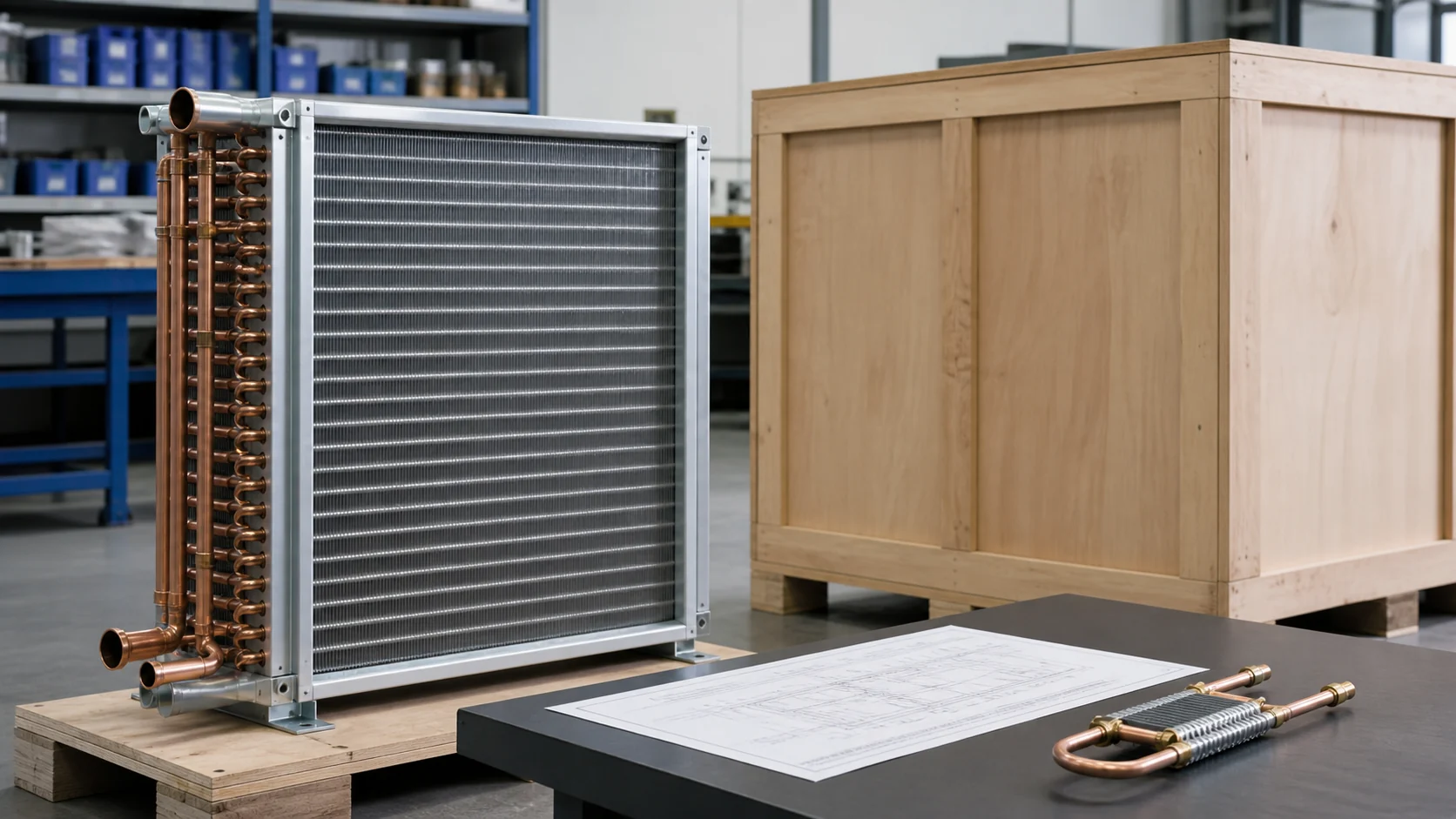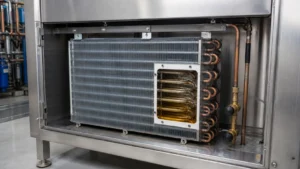

In refrigeration, gravity coils are static evaporators that cool a room or display by natural air movement instead of a fan. They can suit quiet, low-air-velocity, high-humidity applications, but they need more attention to load, surface area, fin spacing, refrigerant circulation, drainage, and placement than a catalogue unit cooler. The correct choice starts with the room and system limits, not with the word gravity alone.
What gravity coils mean in refrigeration
The term has two meanings that buyers should separate. In the air side, a gravity coil uses the density difference between cold and warm air to create a slow circulation pattern. Cold air falls, warmer air rises, and the room gradually exchanges heat with the coil. In the refrigerant side, gravity circulation can describe a static head and density difference that move refrigerant through a flooded or thermosiphon arrangement. A project may use one meaning, the other, or both.
ASHRAE describes natural-convection finned coils as a special heat-transfer problem because the coefficient changes with temperature difference and the spacing between fins. Its heat-transfer guidance is useful for understanding why a gravity coil cannot be rated by copying a forced-air coil’s face velocity or fan curve. The ASHRAE terminology entry for gravity-circulating evaporators also distinguishes circulation driven by density differences from fan-driven air movement.
In practical procurement language, gravity coils often refer to ceiling or wall-mounted finned evaporators for rooms where a fan would create too much air movement, noise, dehydration, or dust. The equipment is still a refrigeration heat exchanger. It needs an approved refrigerant or secondary-fluid circuit, a defined duty, safe pressure and temperature limits, a drain path, and a test record.
Where gravity coils make sense
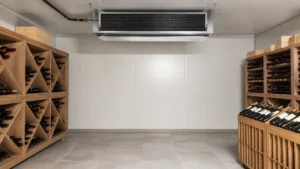
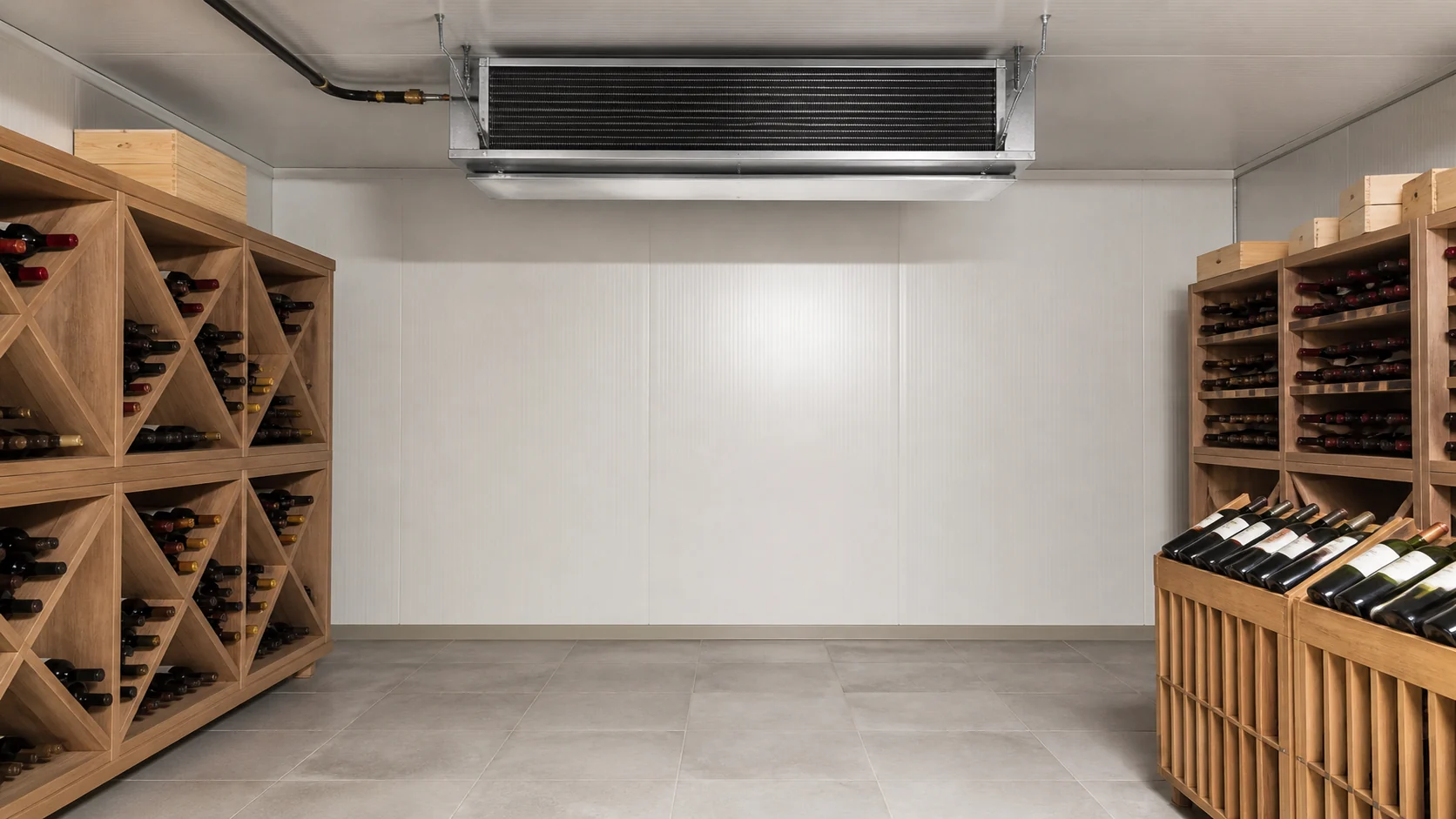
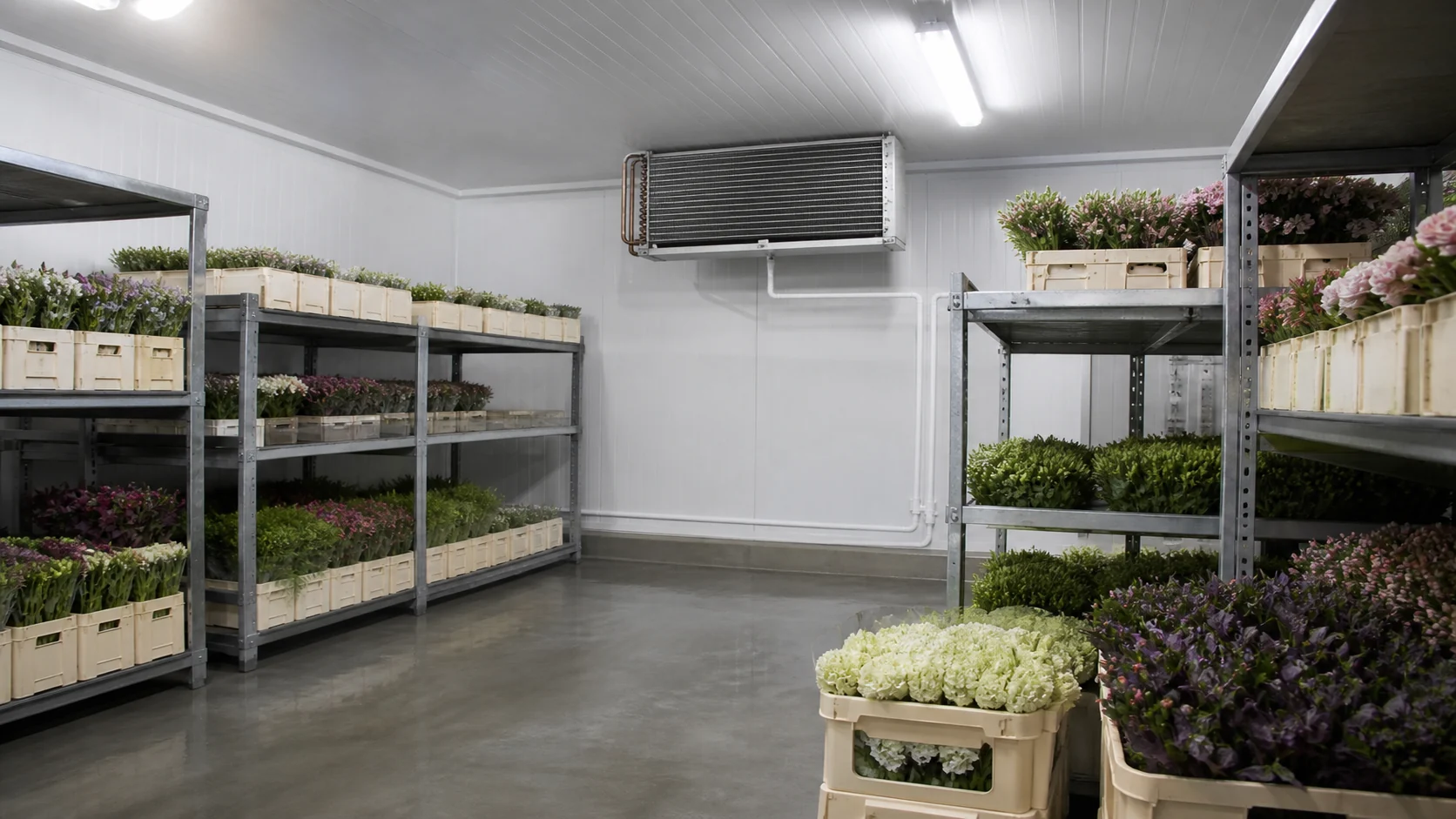
Gravity coils earn consideration when the application values a gentle temperature field more than compact size or rapid pull-down. Typical examples include wine rooms, humidors, fur storage, floral storage, quiet rooms, explosion-proof rooms, and selected display cases. LRC describes gravity-coil units for low-velocity cooling in wine rooms, humidors, fur storage, and other quiet applications in its gravity coil product overview. Refplus lists gravity-flow coil families for room temperatures above freezing and shows options for several refrigerants and secondary fluids in its EGA series information.
The same strengths create limits. A gravity coil normally needs more exposed surface and a clearer natural circulation path than a fan coil. A tightly packed cabinet, a high latent load, a fast recovery requirement, or a room with large door openings may favor a forced-air evaporator. If the project needs a very uniform air temperature at many rack levels, the engineer may need to model the room rather than assume that the coil’s surface temperature will do the work.
Use a gravity coil when the buyer can accept slower air movement and has a deliberate plan for surface area, placement, defrost, and condensate. Do not choose one only because it has no fan. The absence of a fan changes the entire air-side design.
Gravity coil versus forced-air unit cooler
The comparison below is a decision aid, not a universal performance ranking. Final selection depends on the actual room, load, refrigerant, and control sequence.
| Decision field | Gravity coil | Forced-air unit cooler |
|---|---|---|
| Air movement | Natural convection; low velocity | Fan-driven circulation |
| Typical reason to use it | Quiet operation, humidity retention, low disturbance | Compact surface, faster mixing, stronger pull-down |
| Placement sensitivity | High; clear vertical circulation matters | Moderate; discharge pattern and throw matter |
| Surface area | Often larger for the same duty | Often more compact, subject to fan and coil rating |
| Noise and moving parts | No evaporator fan in the coil unit | Fan, motor, guards, and controls require service |
| Frost and moisture | Drainage and off-cycle behavior need close review | Defrost and fan restart sequence need close review |
| RFQ evidence | Room layout, natural-convection assumptions, coil placement | Airflow, fan curve, face velocity, sound, and coil rating |
The existing industrial air cooler air-throw guide covers fan-driven coverage questions. Use it when the application needs a measured throw or a fan layout. Use a gravity-coil brief when the room must stay calm and the design team can protect the natural circulation path.
Choose the circulation model before sizing
A gravity-coil RFQ should state whether the project means natural air convection, gravity-fed refrigerant circulation, or both. These are not interchangeable design notes.
For natural air convection, describe the room height, coil elevation, clearances, shelving, product loading, doors, partitions, and any heat sources that could interrupt the loop. A coil hidden above a dense rack may have the same face area as an exposed coil but a different effective duty. For gravity refrigerant circulation, describe the receiver or surge arrangement, liquid level, piping elevations, return path, oil-management approach, and controls. A supplier cannot validate a thermosiphon path from a coil drawing alone.
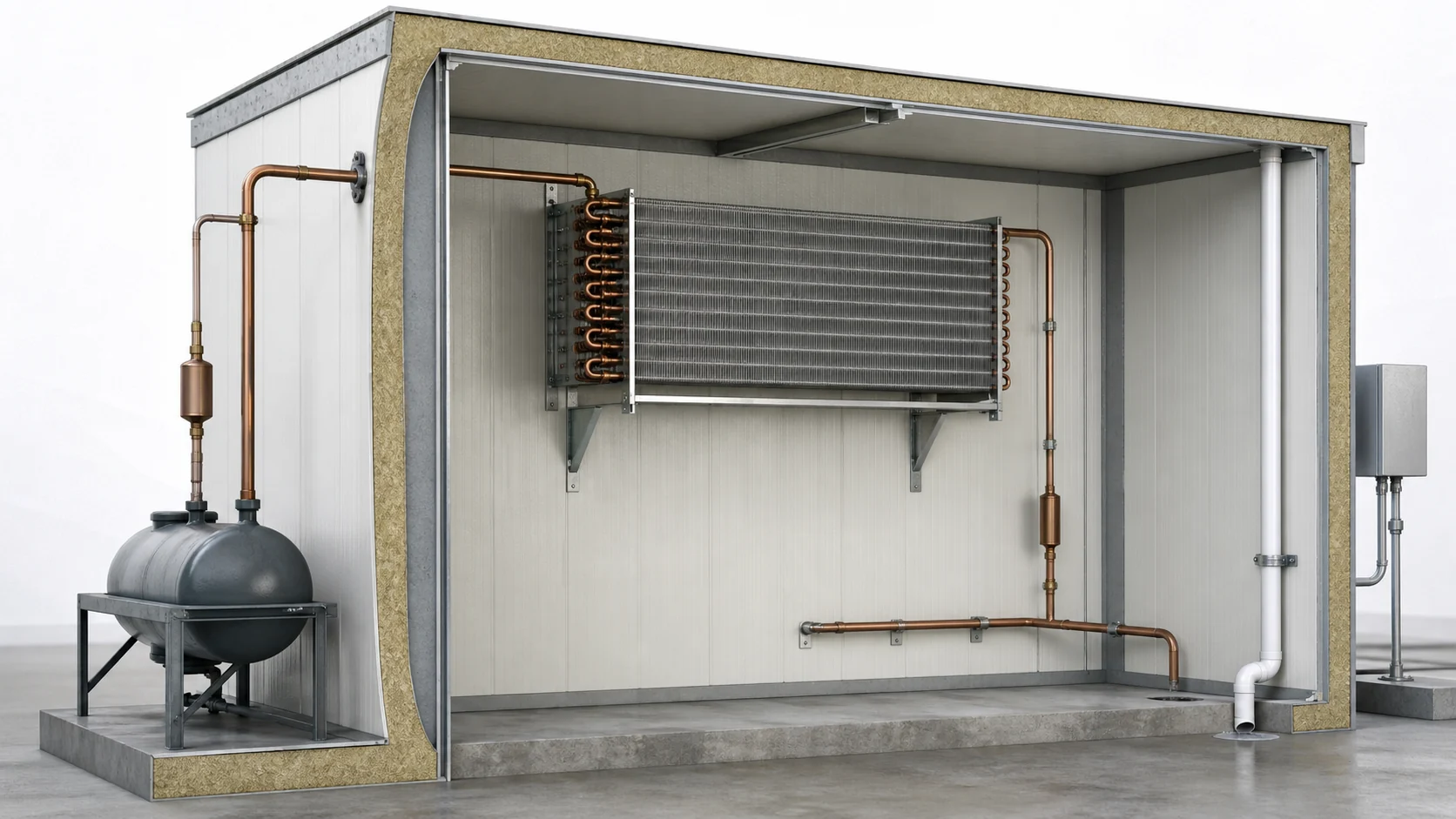
If the application uses a secondary fluid such as glycol or water, define the pump, flow range, entering temperature, leaving temperature, and allowable pressure drop. A no-fan air side does not mean a no-pump fluid side. Refplus documentation lists synthetic refrigerants, CO2, steam, water, and glycol among possible fluid categories for a gravity-coil product family, but the actual combination must be confirmed for the project.
Start with the room load and temperature difference
Gravity coils are sensitive to the temperature difference that drives natural convection. The brief should identify the design room temperature, expected entering product condition, wall and ceiling gains, lighting, people, infiltration, door openings, defrost recovery, and any pull-down period. If the load changes by season or operating mode, show the cases separately.
Do not turn an advertised capacity into a promise for the project. A rating may depend on refrigerant, saturated temperature, room humidity, coil orientation, fin efficiency, and the definition of the temperature difference. Ask the supplier to state the rating basis and the test or calculation method. If the same coil must serve both a holding room and a short pull-down cycle, request separate duty points rather than one blended number.

The industrial refrigeration evaporator selection guide provides a broader checklist for refrigerant, frost, airflow, dimensions, and defrost. For a gravity coil, add the natural-convection assumption and the room layout to that same engineering conversation.
Set coil geometry for natural air movement
The coil geometry must give warm air a path toward the coil and cooled air a path away from it. A ceiling-mounted coil may use sloped slabs, a vertical bank, or another arrangement that fits the room. A wall-mounted coil may need a clear zone below and above it. Avoid treating the mounting brackets as a minor accessory. They affect the coil’s level, drainage, service access, and distance from obstructions.
Fin spacing is a design variable, not a decorative feature. Wider spacing can reduce interference between natural-convection currents and leave more room for frost or dust. Narrower spacing may add surface area in a clean, controlled environment but can restrict free flow and complicate cleaning. ASHRAE notes that fin efficiency and spacing change natural-convection heat transfer, so the supplier should show the chosen fin pitch and its duty basis.
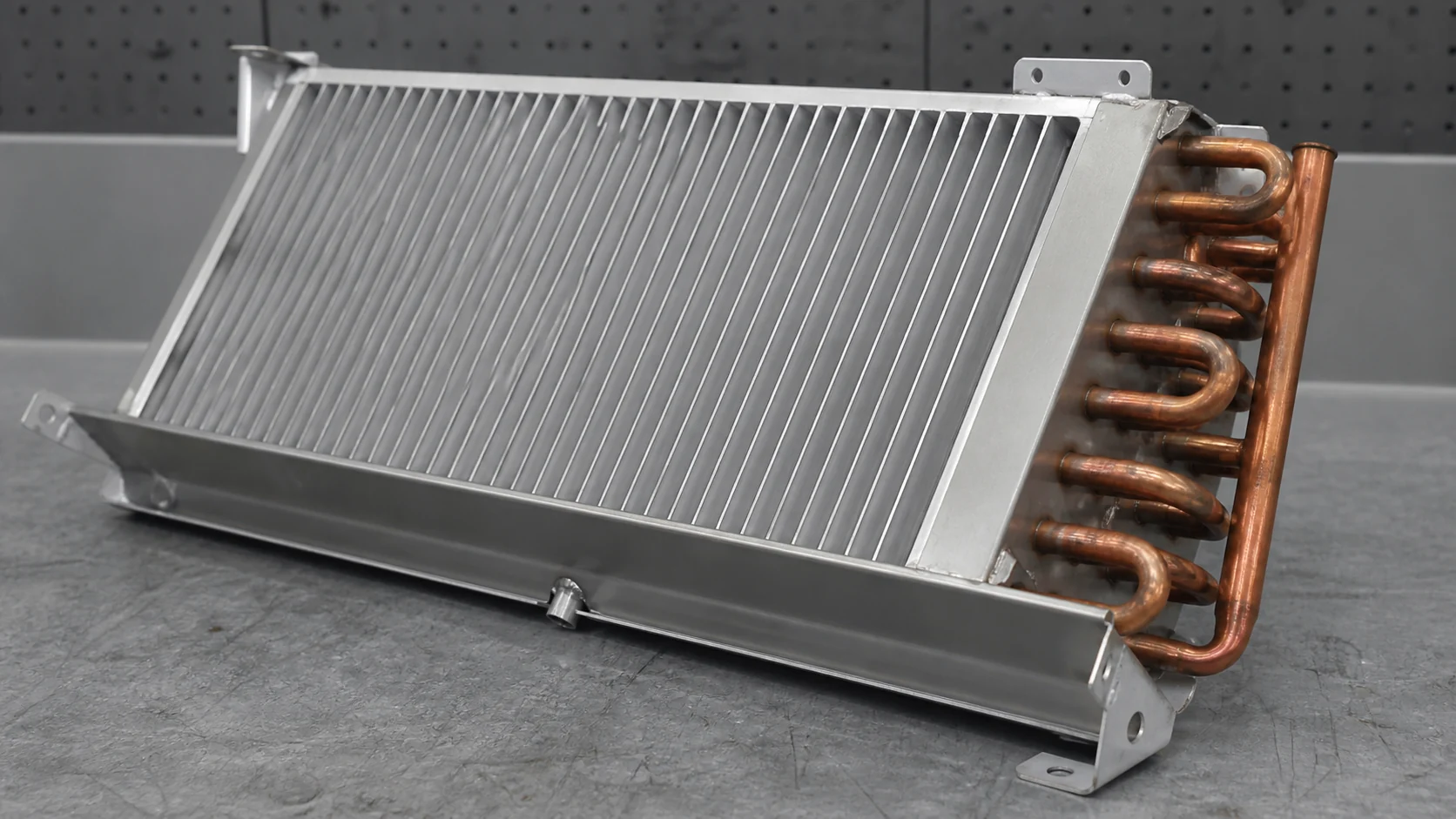
Ask for the face dimensions, number of slabs or rows, tube diameter, fin material, fin pitch, casing, connection positions, drain pan or tray, and mounting orientation. If the coil must fit around a beam, door header, or rack, provide a dimensioned drawing rather than a maximum envelope alone.
Match the refrigerant or secondary fluid
State the fluid before asking for a price. A gravity coil for a direct-expansion refrigerant does not use the same circuiting logic as a water or glycol coil. A flooded or thermosiphon arrangement has additional elevation and oil-return questions. CO2 and ammonia projects also need a pressure and materials review that cannot be inferred from a generic refrigerant name.
The fluid section of the RFQ should include:
- Refrigerant or secondary fluid and concentration where applicable.
- Design evaporating or entering fluid temperature and the expected range.
- Maximum operating and test pressure, with the governing project or code requirement.
- Inlet and outlet locations, connection type, tube size, and service valves.
- Allowed pressure drop and the control device or receiver arrangement.
- Oil return, liquid level, pump, or thermosiphon assumptions when relevant.
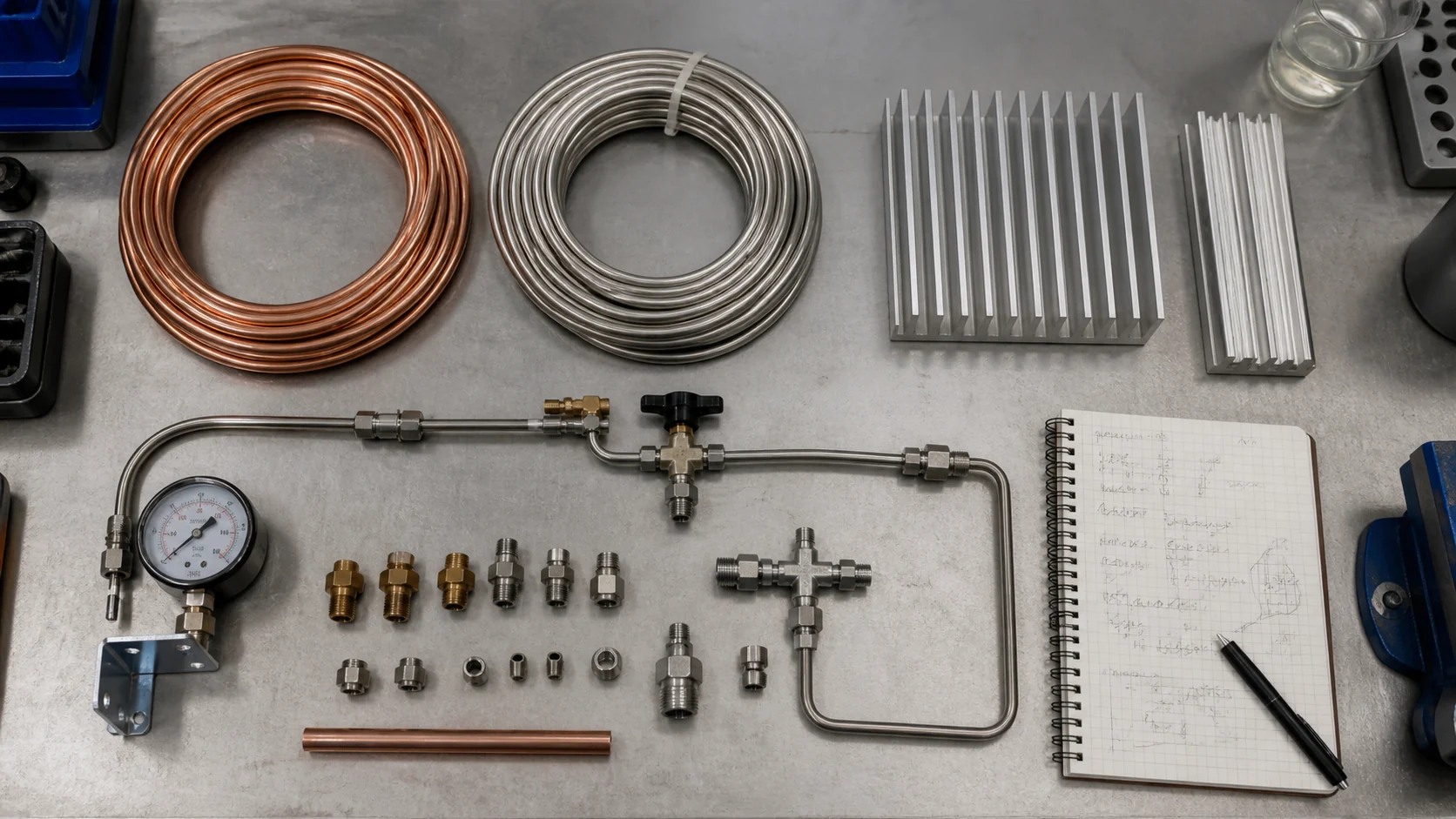
The fluid decision also affects corrosion, cleaning, brazing or welding, and inspection. Do not accept a material substitution without checking water chemistry, refrigerant compatibility, temperature, pressure, and the customer’s approved drawing.
Control frost, condensation, and drainage
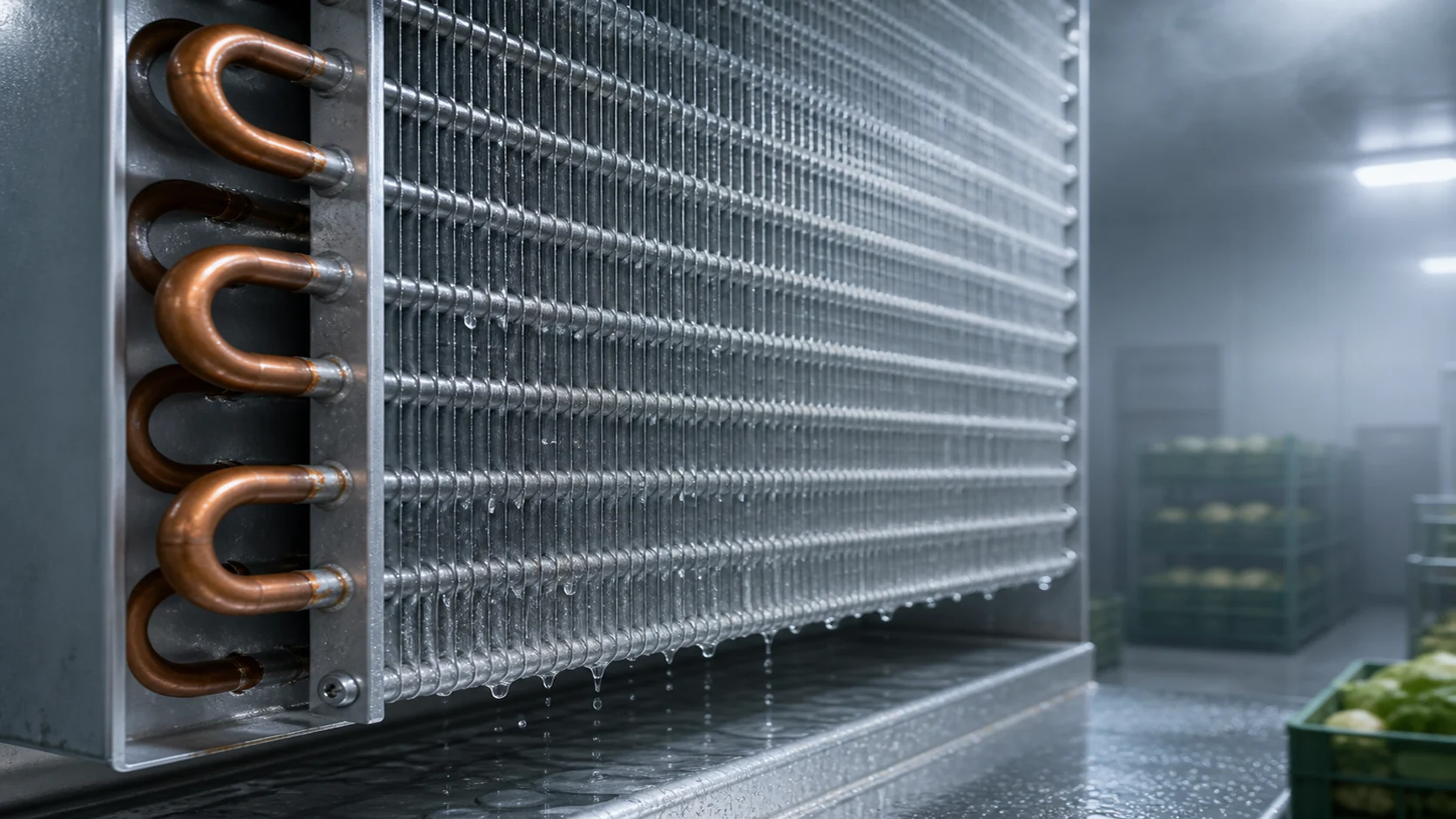
Gravity coils often serve humid rooms, which is part of their appeal and part of their risk. Moisture can condense on the fin pack, freeze during low-temperature operation, or collect in a pan and drain line. The design needs a defined off-cycle and defrost approach. A coil that performs well at steady state may still create a problem when a door opens, a heater cycles, or the fan in a nearby system changes the room pattern.
Review these points before approval:
- Where does condensate leave the coil and the room?
- Does the tray slope remain effective after installation?
- Is the drain heated, insulated, trapped, or open to the room as required?
- Does the defrost method fit the material, fluid, and product exposure?
- What happens to water and frost during restart?
- Can a technician clean the fins without bending them or blocking the drain?
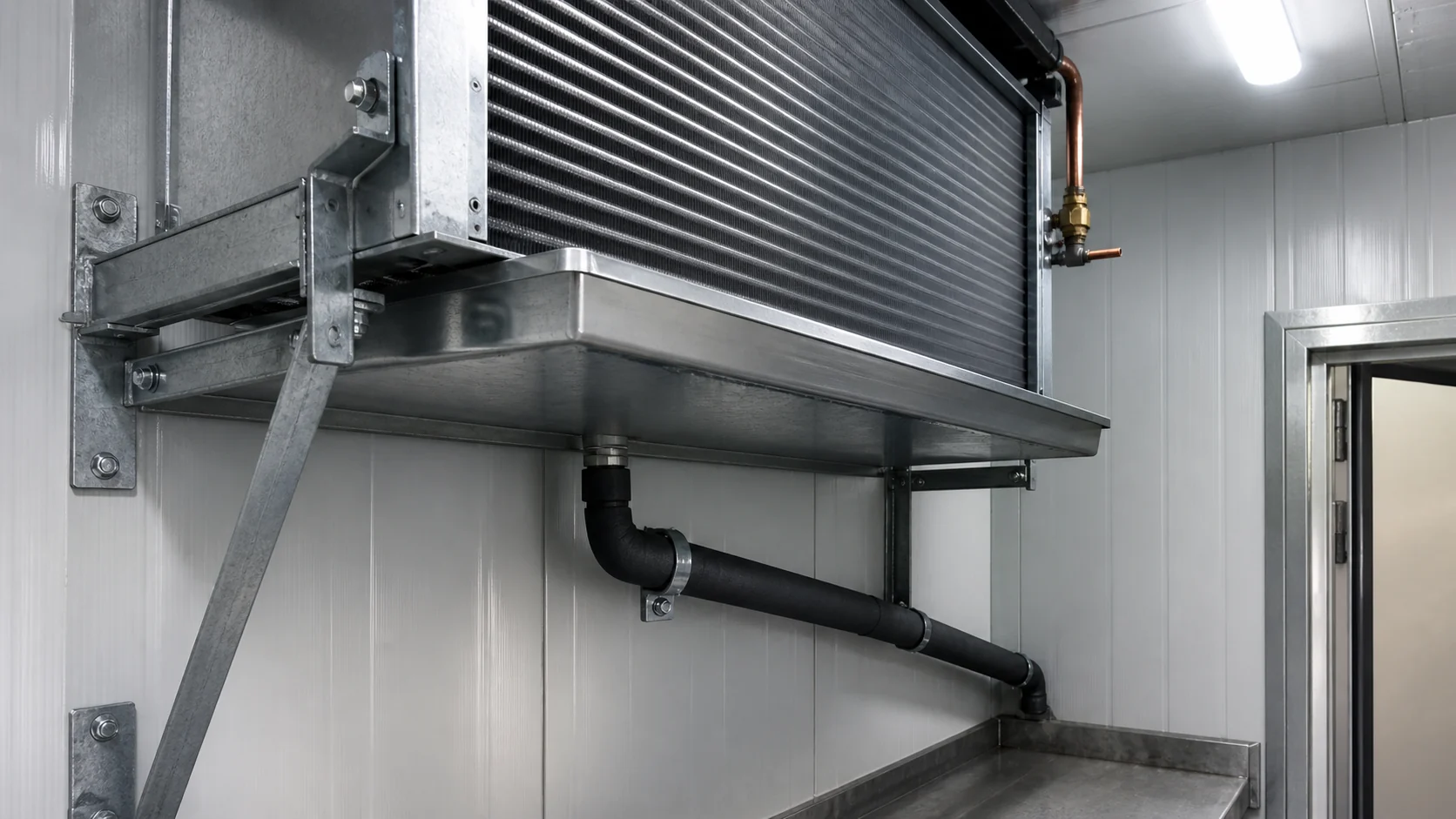
The drawing revision control guide is useful when a drain, bracket, or connection changes late in an OEM program. Treat the drain path as part of the coil design, not as an installation afterthought.
Select materials for water, corrosion, and cleaning
Copper tubes and aluminum fins are common in many finned coils, but they are not automatically correct. Stainless steel, cupro-nickel, coated aluminum, or other combinations may be considered for water quality, salt, cleaning chemicals, food environments, or special pressure requirements. The choice should follow the fluid and exposure record.
Ask the supplier to separate the material decisions by part: tubes, fins, headers, casing, drain pan, fasteners, braze or weld filler, and coating. A coating on the fins does not protect a header joint. A stainless drain pan does not make a copper tube compatible with every water chemistry. A material list without exposure limits is incomplete.
Cleaning is part of the material choice. If the end user uses foaming cleaners, pressure washing, or sanitizing chemicals, record the chemical family, concentration, temperature, contact time, and rinse method. The supplier can then identify surfaces that need a coating, a different alloy, a protective finish, or a maintenance limit.
Define inspection and performance evidence
A gravity-coil supplier should be able to explain what will be checked at design review, production, and release. The evidence depends on the project, so request a plan instead of assuming that one pressure test proves thermal performance.
| Evidence type | Buyer question | What the record should identify |
|---|---|---|
| Drawing review | Which geometry and orientation were approved? | Revision, dimensions, connections, mounting, drain path |
| Thermal rating | Under which conditions was capacity calculated or tested? | Fluid, temperatures, load case, assumptions, method |
| Leak and pressure | Which boundary was tested and to what approved requirement? | Test boundary, medium, pressure, duration, result, inspector |
| Materials | Can the coil be traced to the approved material list? | Tube, fin, header, filler, coating, batch or heat reference |
| Dimensional inspection | Will the coil fit the cabinet and service space? | Key dimensions, tolerances, connection location, drain slope |
| Release review | Who accepted the final deviation status? | Inspection status, repair log, open items, approval signature |
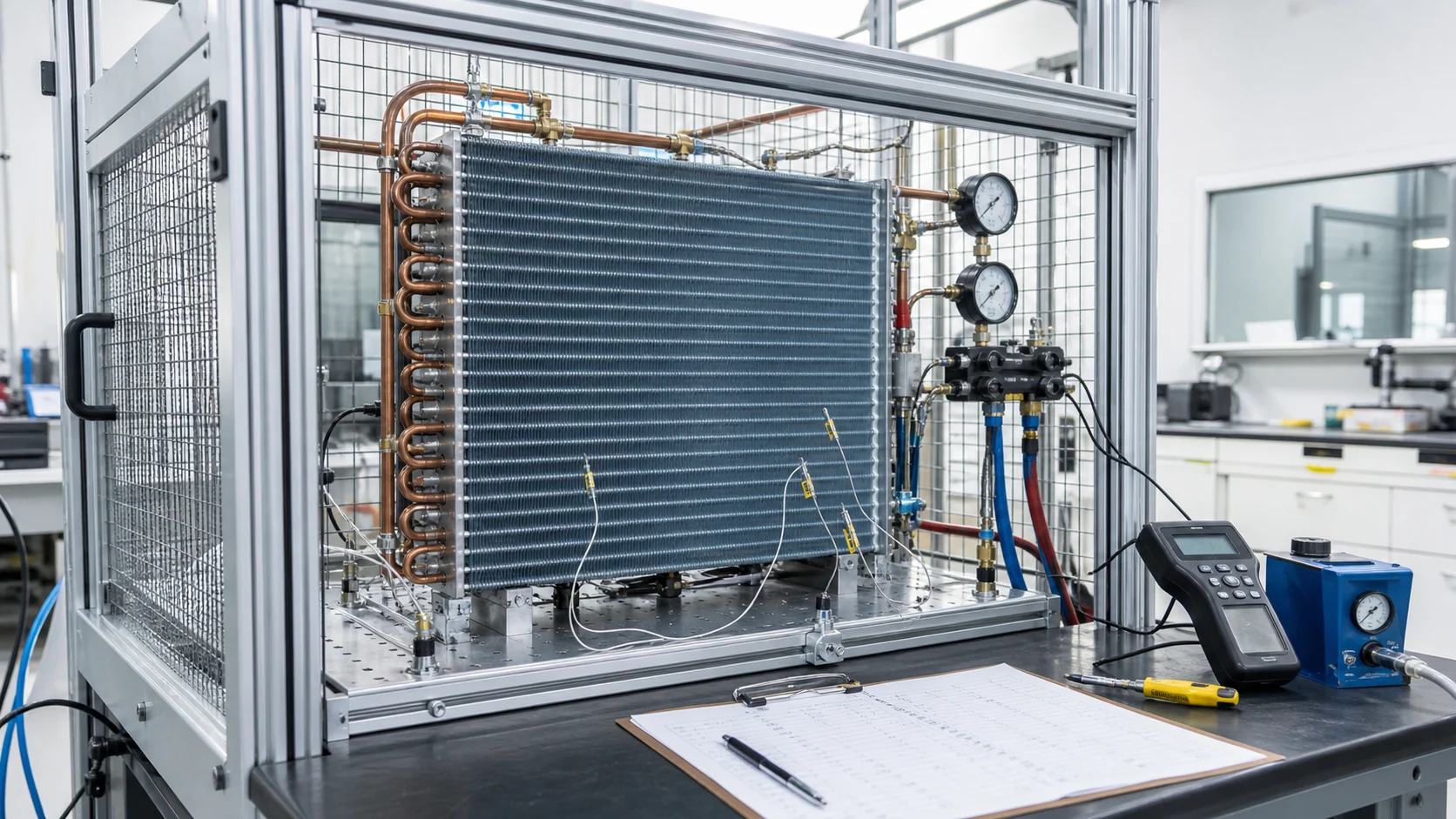
For test-method context, review the ASHRAE standards and scopes page, which lists Standard 25 for testing forced-convection and natural-convection air coolers for refrigeration. The supplier and responsible engineer still need to confirm which edition, acceptance criteria, and customer procedure apply to the project.
Build an RFQ that a coil supplier can price
The phrase gravity coils is too broad for a reliable quotation. A buyer should send enough information to distinguish a quiet room coil, a static display coil, a flooded evaporator, and a secondary-fluid coil.
| RFQ section | Minimum information to provide | Why it changes the quote |
|---|---|---|
| Application | Room, case, wine room, floral storage, process space, or other use | Sets humidity, noise, clearance, and sanitation priorities |
| Duty | Load cases, room temperature, entering product, pull-down or holding mode | Sets surface area and rating basis |
| Fluid | Refrigerant or water/glycol, concentration, temperatures, pressure | Sets circuitry, tube material, testing, and controls |
| Geometry | Face, depth, height, slab or row arrangement, mounting, connections | Sets tooling, casing, brackets, and fit-up |
| Air side | No-fan assumption, clearances, shelving, obstructions, nearby fans | Sets effective natural-convection path |
| Moisture | Humidity, frost, defrost, tray, drain line, cleaning | Sets fin pitch, slope, insulation, and service details |
| Quality | Inspection, pressure or leak evidence, material traceability, deviations | Sets the release package and approval path |

The custom refrigerator coil RFQ checklist can help organize drawings, load data, materials, connection positions, and sample information. Add the natural-convection and placement details above so a supplier does not have to guess how the coil will be used.
Review the drawing before production
The approval drawing should make the coil understandable without a separate conversation. Mark the fluid path, inlet and outlet, high and low points, drain path, mounting orientation, fin direction, service clearances, casing, and any slope needed for gravity circulation. If the coil uses several slabs, identify the order and connection between them.
Use a revision table and a single controlled source for the production drawing. A change from four slabs to three, a new connection height, or a different fin pitch can alter capacity, pressure drop, drainage, or fit. The OEM condenser coil specification checklist shows the kind of field-by-field review that can be adapted to a gravity-coil program, even though the component is an evaporator.
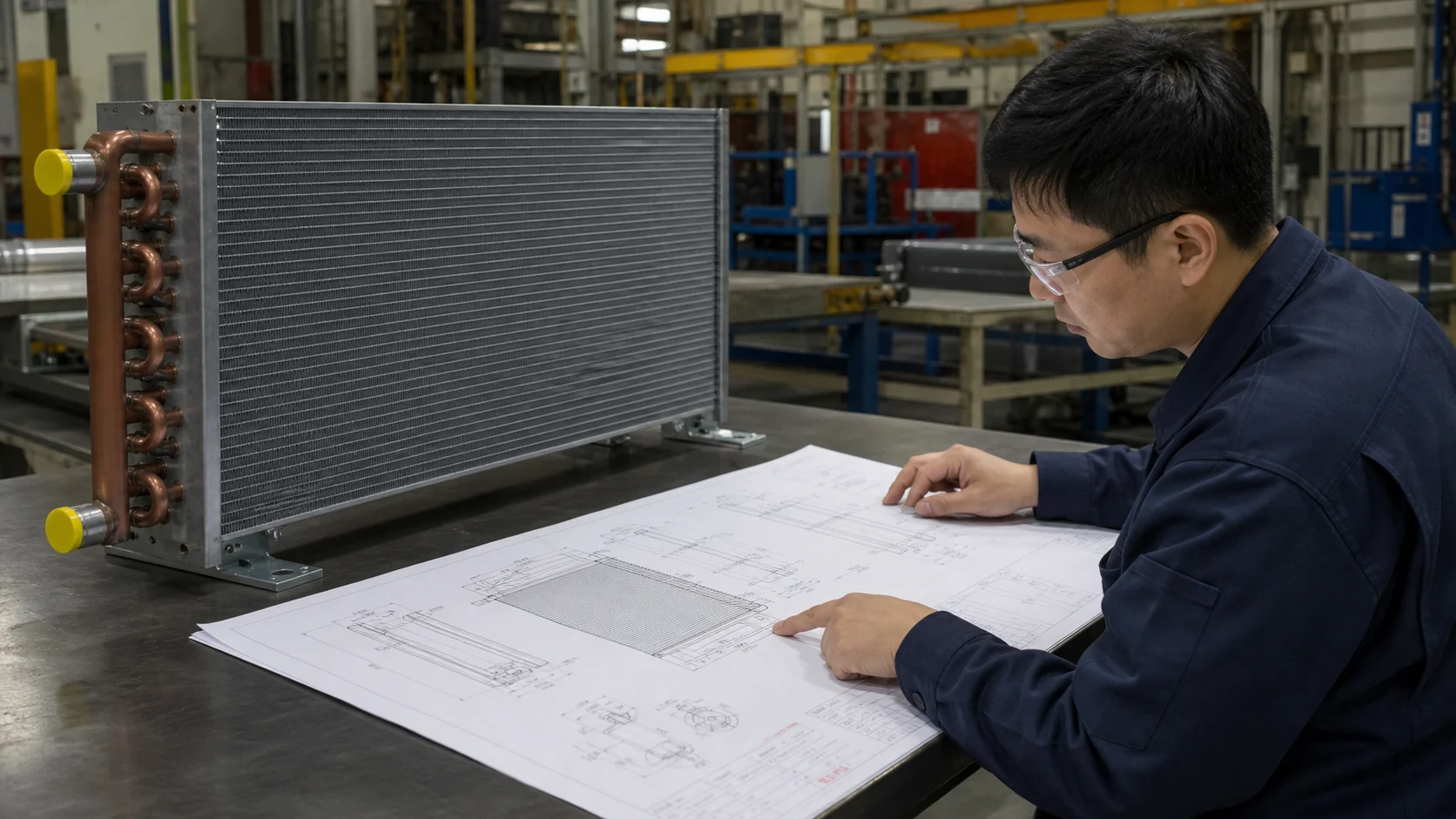
Do not release production on a verbal change. Record the revision, the reason, the affected dimensions, the new inspection point, and the person who approved it. This protects the buyer when a prototype becomes a repeat SKU.
Plan installation and maintenance
Installation determines whether the room receives the natural-convection pattern used in the rating. Keep the coil clear of stored product, ceiling pockets, partitions, lights, and nearby fans that can short-circuit the air path. Confirm that the coil is level or sloped as shown, that the drain remains open, and that service access exists for cleaning and leak inspection.
| Installation check | Acceptance point | Record to keep |
|---|---|---|
| Coil location | Clear vertical path and approved distance from racks, lights, walls, and nearby fans | Marked-up room layout and installation photos |
| Mounting | Brackets, level or slope, fasteners, and service clearance match the approved drawing | Installer checklist and dimensional sign-off |
| Drain path | Tray outlet, insulation, trap or open termination, and slope match the condensate plan | Drain test result and photo before close-up |
| Fluid connections | Inlet, outlet, high point, low point, valves, and insulation match the circuit drawing | Connection inspection and pressure or leak record |
| Commissioning | Room temperature, frost pattern, operating pressures, and control sequence are within the approved case | Start-up sheet with date, conditions, and approver |
Maintenance should be simple enough to follow. Inspect the fin face, drain, tray, casing, joints, insulation, and mounting points. Look for a change in frost pattern, water marks, unusual temperature difference, or a new noise from another nearby component. A gravity coil has no evaporator fan to announce a problem, so visual and temperature checks matter.

Frequently asked questions
What does a gravity coil do?
A gravity coil removes heat through a static evaporator and natural air movement. Cold air falls while warmer air rises, so the room circulates without an evaporator fan. The coil still needs a defined load, fluid circuit, pressure limit, drain path, and installation clearance.
How is a gravity coil different from a forced-air unit cooler?
A gravity coil relies on natural convection and normally operates at a lower air velocity. A forced-air unit cooler uses a fan to mix air and can provide stronger throw in a compact package. Choose between them from humidity, noise, product sensitivity, pull-down time, room layout, and service requirements.
When should a cold room use a gravity coil?
Consider one for quiet rooms, high-humidity storage, delicate products, low-air-velocity display areas, or applications where a fan would cause disturbance. Do not use the label alone as the selection rule. Confirm the load, room circulation, frost behavior, defrost method, and available surface area.
Does a gravity coil need a fan?
The air side can work without an evaporator fan, which is the usual reason to select a gravity coil. A separate pump, valve, or system fan may still exist elsewhere in the refrigeration or secondary-fluid circuit. The RFQ should state exactly which circulation is natural and which is mechanically driven.
What refrigerants or fluids can gravity coils use?
Gravity-coil families may be designed for selected synthetic refrigerants, CO2, water, glycol, or other fluids, but the approved combination depends on pressure, temperature, materials, circuiting, controls, and code requirements. Ask for a project-specific rating and material review rather than assuming that a published family supports every fluid.
What should an RFQ include for gravity coils?
Include the application, load cases, room and fluid temperatures, refrigerant or secondary fluid, pressure and test requirements, geometry, mounting, connection locations, clearances, fin spacing, frost and drain plan, materials, inspection evidence, and drawing revision process. A sketch with only outside dimensions is rarely enough for a reliable quote.
Turn a gravity coil brief into a quote
The best gravity-coil request is specific about what must remain quiet, what must stay humid, how much heat must move, and what evidence will release the coil. Send the room layout, load cases, fluid data, pressure limits, drawing revision, and drain assumptions together. For a new design or a replacement, request a technical coil review and ask the supplier to identify any missing inputs before pricing.