
Short answer: select a condenser fan from the required heat rejection, airflow at the installed coil resistance, blade diameter and rotation, motor duty, electrical supply, speed-control method, noise limit, weather exposure and service envelope. A fan that fits the opening can still move too little air, run backward, overload the motor, raise condensing pressure or create unacceptable noise. Treat the fan, motor, blade, guard, coil and controller as one operating point.
What a condenser fan does in a refrigeration system
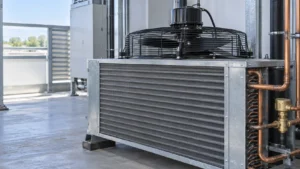
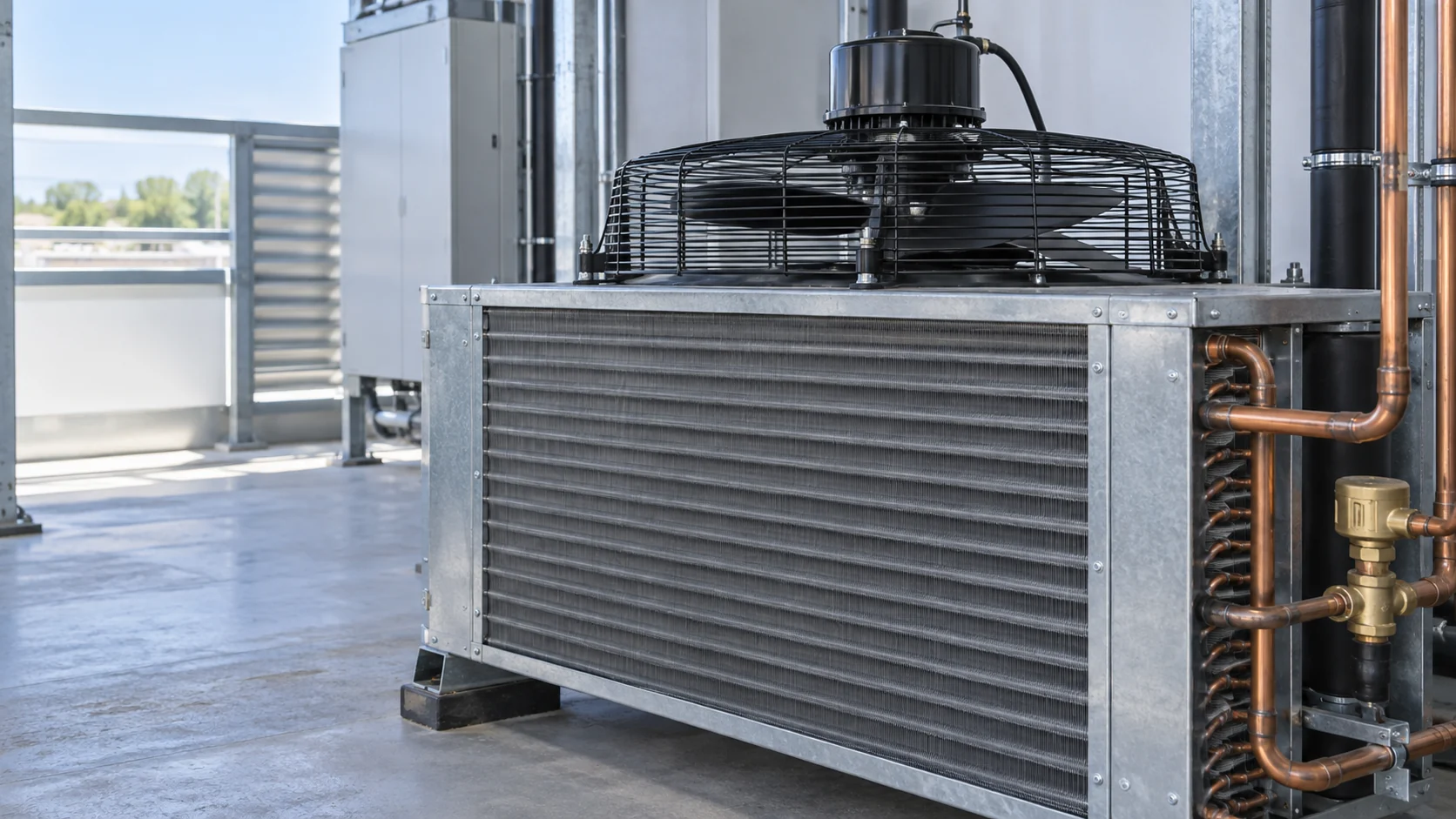
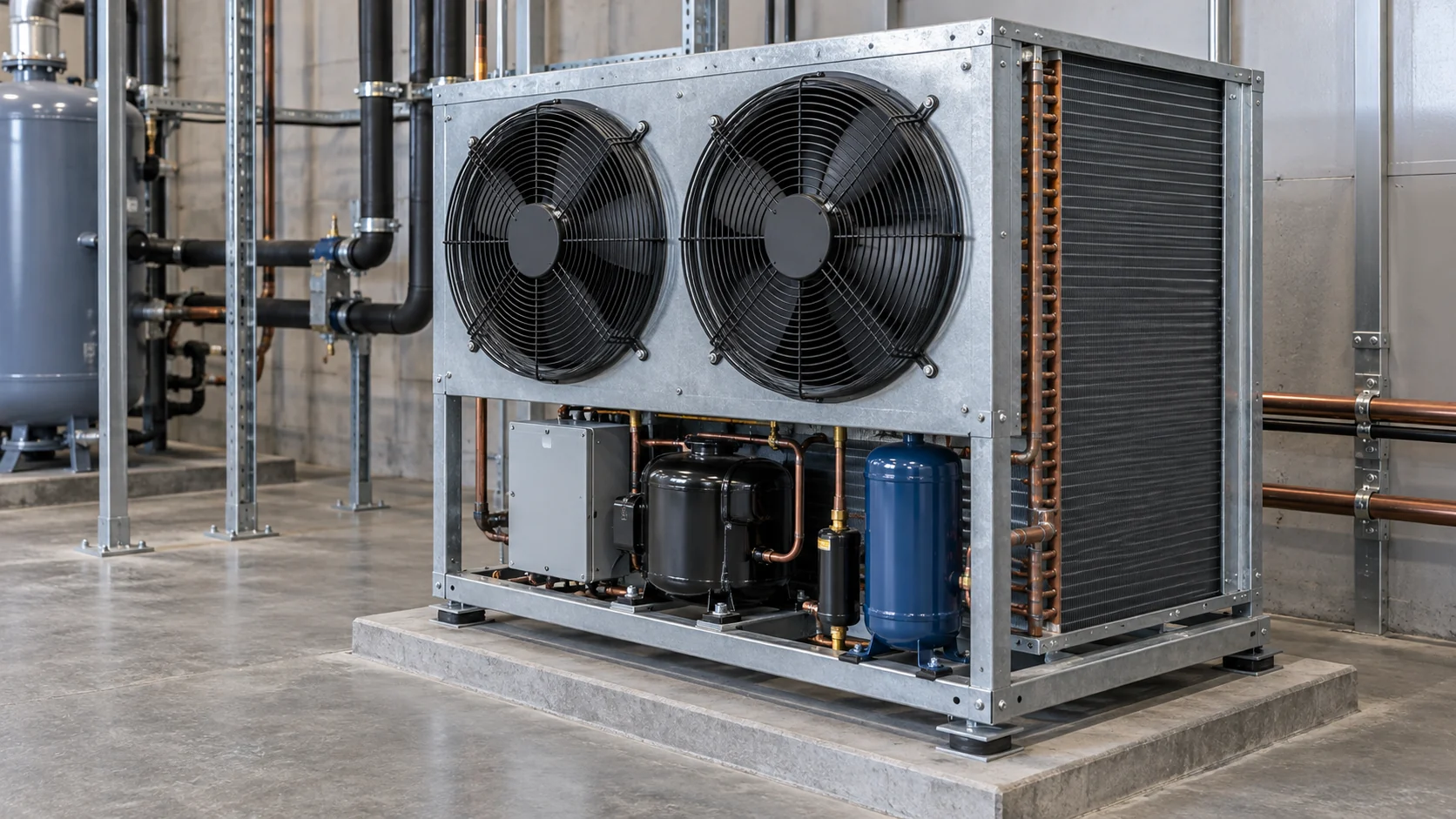
A condenser fan moves air through an air-cooled condenser so refrigerant heat can leave the circuit. The fan does not create cooling by itself. It supports the condenser coil, compressor, receiver, controls and outdoor airflow path. If the fan delivers less air than the coil needs, condensing temperature and discharge pressure can rise even when the compressor and refrigerant charge are correct.
The condenser fan is different from an evaporator fan. A condenser fan normally rejects heat to outdoor or plant-room air. An evaporator fan circulates air across an evaporator to cool a cabinet, room or product zone. The motors may look similar, but the air temperature, moisture, pressure, mounting, control sequence and failure consequences are different. Do not use an evaporator replacement as a condenser replacement simply because the shaft and diameter appear to match.
ABB’s condenser fan motor information separates condenser duty from general motor selection and discusses outdoor and low-temperature refrigeration applications. Use the application boundary when requesting a motor or a complete fan assembly.
| Control boundary | What it does | Information the buyer must confirm | Common mismatch |
|---|---|---|---|
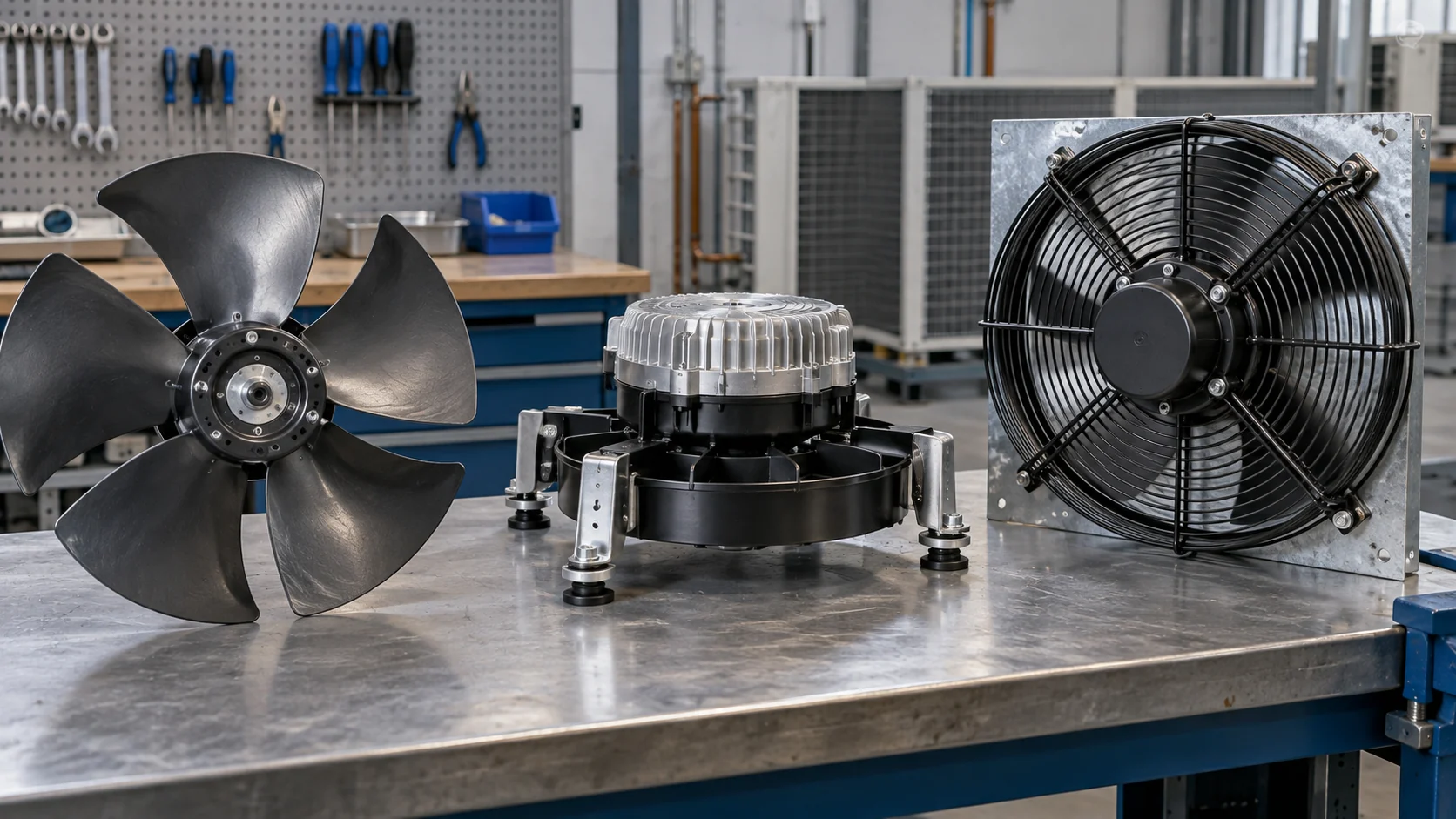
| Fan blade and hub | Converts motor torque into axial airflow | Diameter, pitch, rotation, hub, balance, material and guard clearance | Selecting a blade by diameter while ignoring rotation or pitch |
| Fan motor | Supplies torque at the required speed and environment | Voltage, phase, frequency, RPM, bearings, duty, temperature and mounting | Replacing a weather-rated motor with an indoor motor |
| Condenser coil | Provides the airside surface that rejects heat | Heat load, face area, fin spacing, circuiting, fouling and pressure drop | Assuming the old fan can serve a changed coil |
| Fan control | Stages or modulates capacity as ambient and load change | Pressure reference, minimum speed, sensor, ramp, alarms and fail-safe state | Allowing a VFD or EC motor to hunt at low head pressure |
Use Domi’s air-cooled condenser selection page for the adjacent coil and heat-rejection assembly. This guide owns the condenser-side fan decision and the evidence needed to connect that fan to the coil and controls.
Start with heat rejection and the required airflow
Begin with the condenser duty rather than the old fan label. A refrigeration condenser rejects the evaporator load plus the compressor’s heat input. The selection sheet should state the design ambient, refrigerant or fluid, condensing condition, entering-air temperature, target leaving condition, coil face area and fouling allowance. If the condenser is part of a rack or packaged unit, include the number of compressors and the minimum and peak operating cases.
Airflow is meaningful only at a resistance. A fan curve relates airflow to pressure. The coil, guard, louver, filter, rain hood, discharge transition and nearby wall all consume part of the available pressure. A fan that produces a catalog airflow in free air may deliver much less through a dirty coil or a tight discharge path. Ask for the operating point at the installed resistance, not only a nominal cubic-feet-per-minute value.
| Selection input | What to send | Why it changes the fan decision |
|---|---|---|
| Heat-rejection duty | Refrigeration capacity, compressor input, design ambient, refrigerant and condensing target | Sets the condenser capacity and the airflow the fan must deliver |
| Airside resistance | Coil pressure drop, guard, louver, hood, filter, transition and discharge geometry | Defines the actual fan operating point instead of a free-air estimate |
| Operating cases | Minimum load, normal load, peak load, pull-down, low ambient and restart | Checks turndown, stability, staging and motor heating |
| Installation | Indoor or outdoor location, wall distance, recirculation path, elevation and service access | Changes air density, inlet conditions, sound and maintenance risk |
| Acceptance evidence | Airflow or pressure test, motor current, condensing pressure, sound and vibration | Creates a measurable commissioning record rather than a fitment assumption |
Danfoss describes fan-speed controllers as a way to stabilize condensing pressure by changing condenser fan speed. Its fan-speed controller reference also frames low-ambient operation, fan noise and different AC, three-phase and EC motor arrangements as selection considerations.
Match fan geometry to the coil and installed resistance
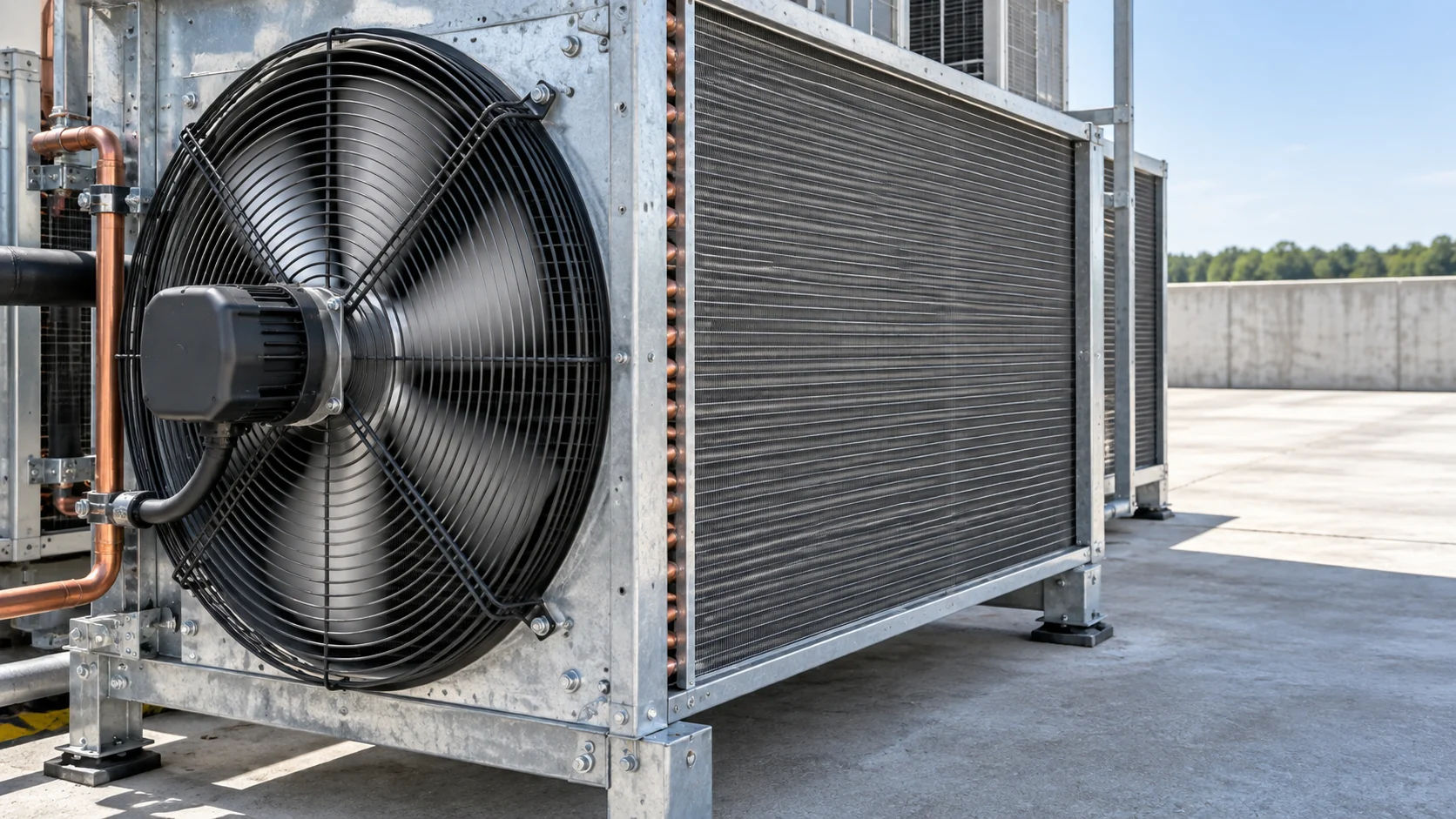
Axial propeller fans are common on air-cooled condensers because they move a large volume of air through a relatively open coil path. Their performance still depends on diameter, blade pitch, blade count, hub ratio, rotation and the spacing between the blade, guard and coil. A larger blade is not automatically better. It can strike the guard, produce a different pressure curve or operate at a speed that the motor cannot support.
Fan rotation must match the blade and the air path. Reversing the motor leads on a single-phase or three-phase motor can change rotation, while an EC motor may use a control parameter or wiring input. Mark the intended rotation on the drawing and check airflow direction after installation. Verify that a replacement blade is handed correctly; a clockwise blade on a counterclockwise assembly can move air but miss the intended operating point.
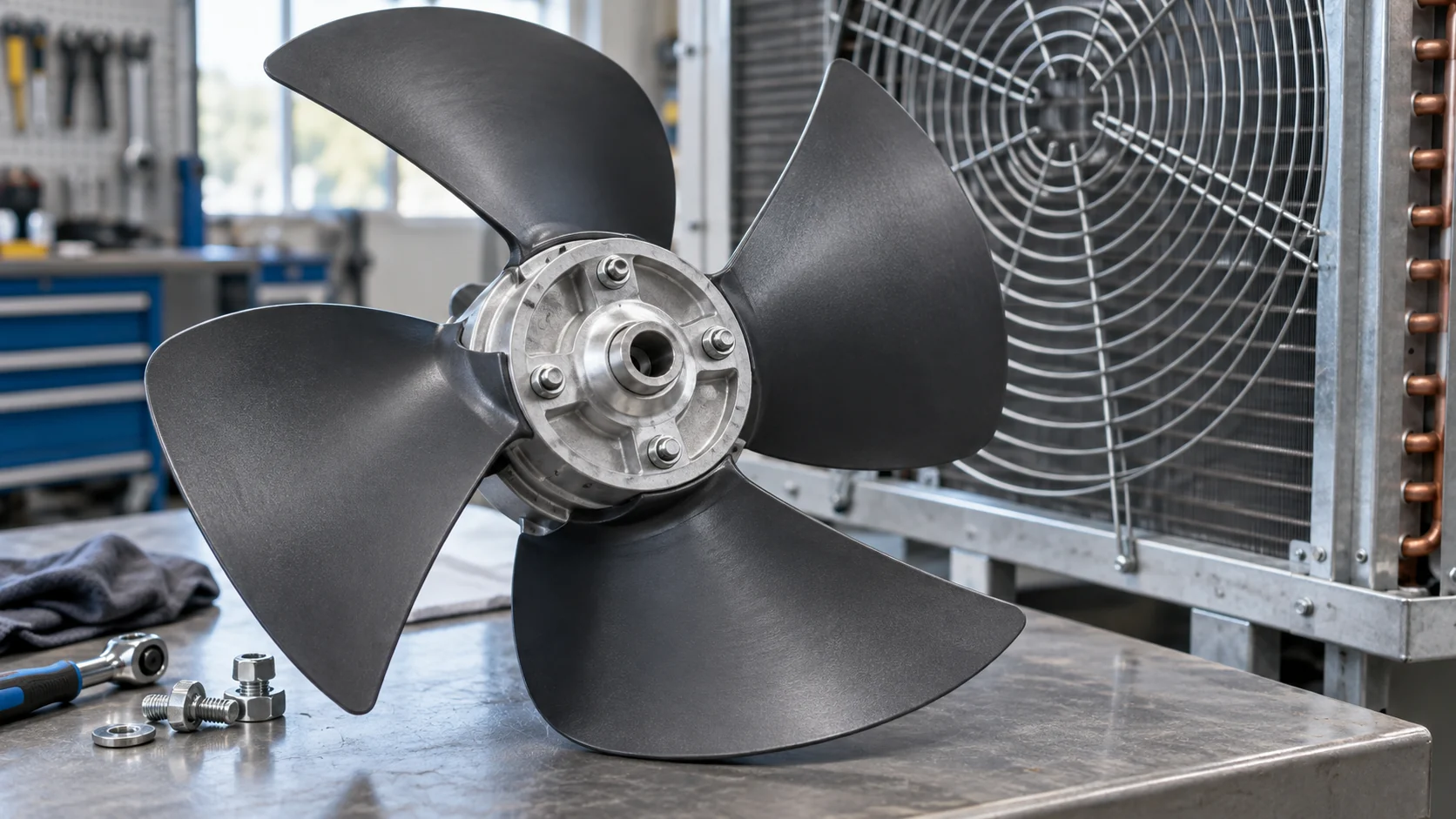
The hub, shaft and mounting pattern also matter. Record shaft diameter, shaft length, key or clamp method, bolt circle, motor face, guard depth and the distance from the blade to the coil. Check blade balance and clearance at the maximum speed. A small interference can become a recurring vibration problem after thermal expansion, dirt accumulation or a change in mounting orientation.
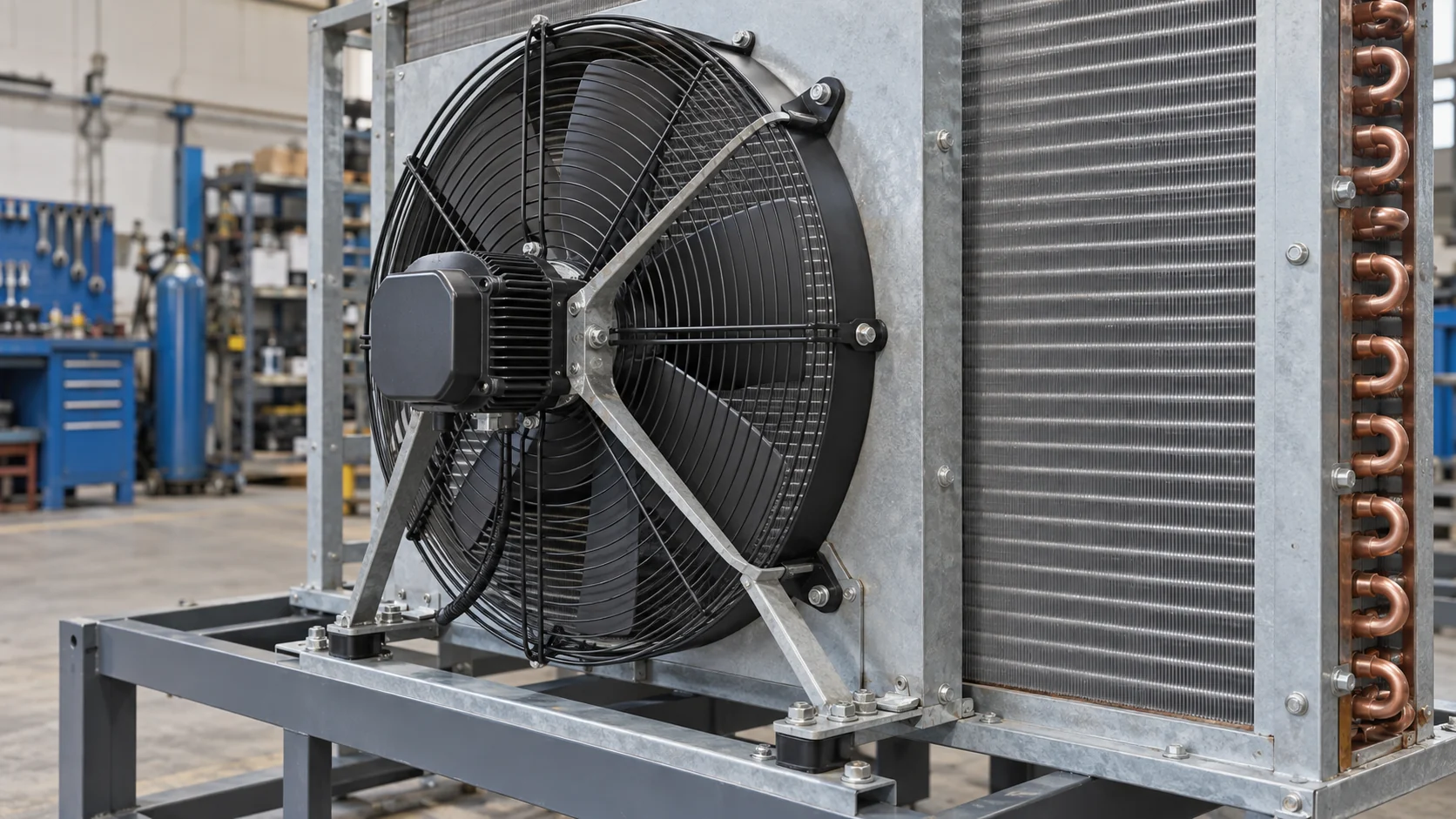
Select the motor and the control method together
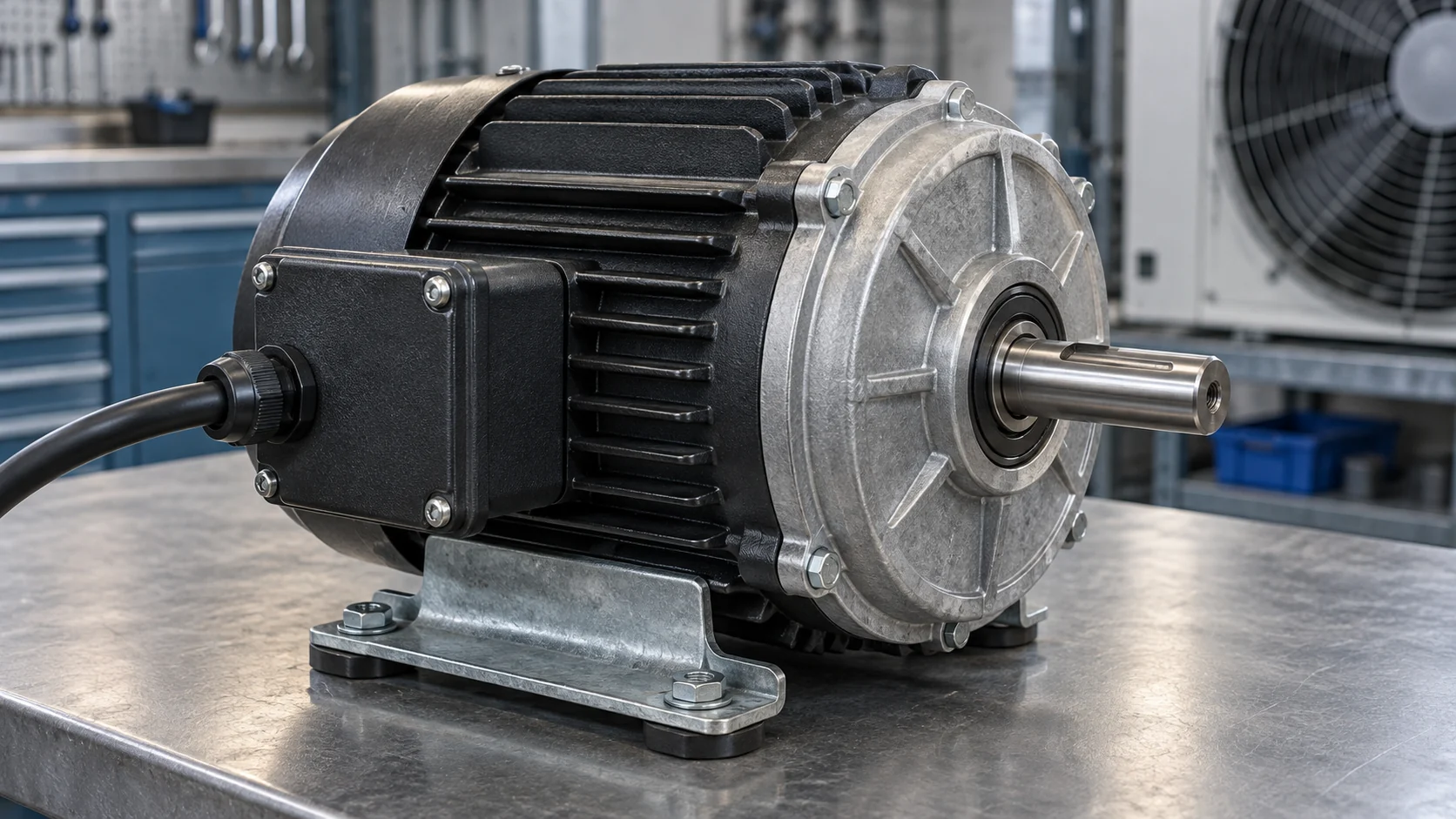
The motor must match the electrical supply and the airside duty. Record voltage, phase, frequency, rated current, RPM, starting method, insulation, bearing type, allowable orientation and ambient temperature. A condenser motor often operates outdoors or near a hot discharge stream, so the motor’s thermal and enclosure details are part of the refrigeration specification.
AC, PSC, shaded-pole, three-phase and EC motors each create different control and replacement boundaries. An EC motor can combine motor and electronics in one assembly and may accept an analog, PWM or network command. A fixed-speed AC motor may be simple to replace but can consume more energy at part load or require staging. The right choice depends on the coil, controls, service team, quantity and the required low-ambient behavior.
Do not select a VFD only from motor horsepower. Confirm that the drive is suitable for a fan’s variable-torque duty, the motor insulation and cable length are compatible, the minimum speed is safe, and the control reference will not cause unstable cycling. Danfoss’s VFD selection criteria for refrigeration and cold storage discusses fan-drive overload, outdoor protection, minimum-speed settings, display data and energy optimization.
| Motor or control option | Appropriate when | Confirm before release | Risk if chosen by appearance |
|---|---|---|---|
| Fixed-speed AC motor | The condenser has a stable duty and staged on/off control is acceptable | Voltage, phase, RPM, starting current, duty, bearings, rotation and overload | High noise, high fan power or excessive cycling at low ambient |
| EC motor | Variable airflow, efficient part-load operation or integrated electronics are useful | Command type, minimum speed, fault output, harmonics, ambient and replacement process | A control signal or parameter mismatch can leave the fan stopped or hunting |
| VFD-driven motor | Several fans or a larger condenser need coordinated modulation | Variable-torque rating, motor insulation, cable, ramp, bypass, minimum speed and alarms | Drive trips, motor heating or unstable head pressure from poor tuning |
| Step-controlled fans | A simple pressure sequence and multiple fan stages are acceptable | Stage order, cut-in and cut-out values, minimum run time and fail-safe state | Large pressure swings and repeated starts when stages are too coarse |
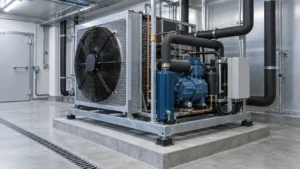
Copeland’s Digital X-Line outdoor refrigeration unit is an example of a packaged system that combines compression technology with variable-speed fan motor control, condenser capacity and protection. The system-level lesson is more useful than any one product feature: the fan motor, coil and compressor controls need a shared sequence.
Apply condenser fans to real installations
Walk-in coolers and freezers
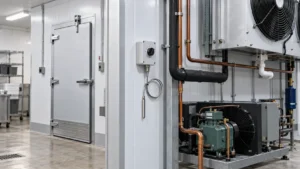
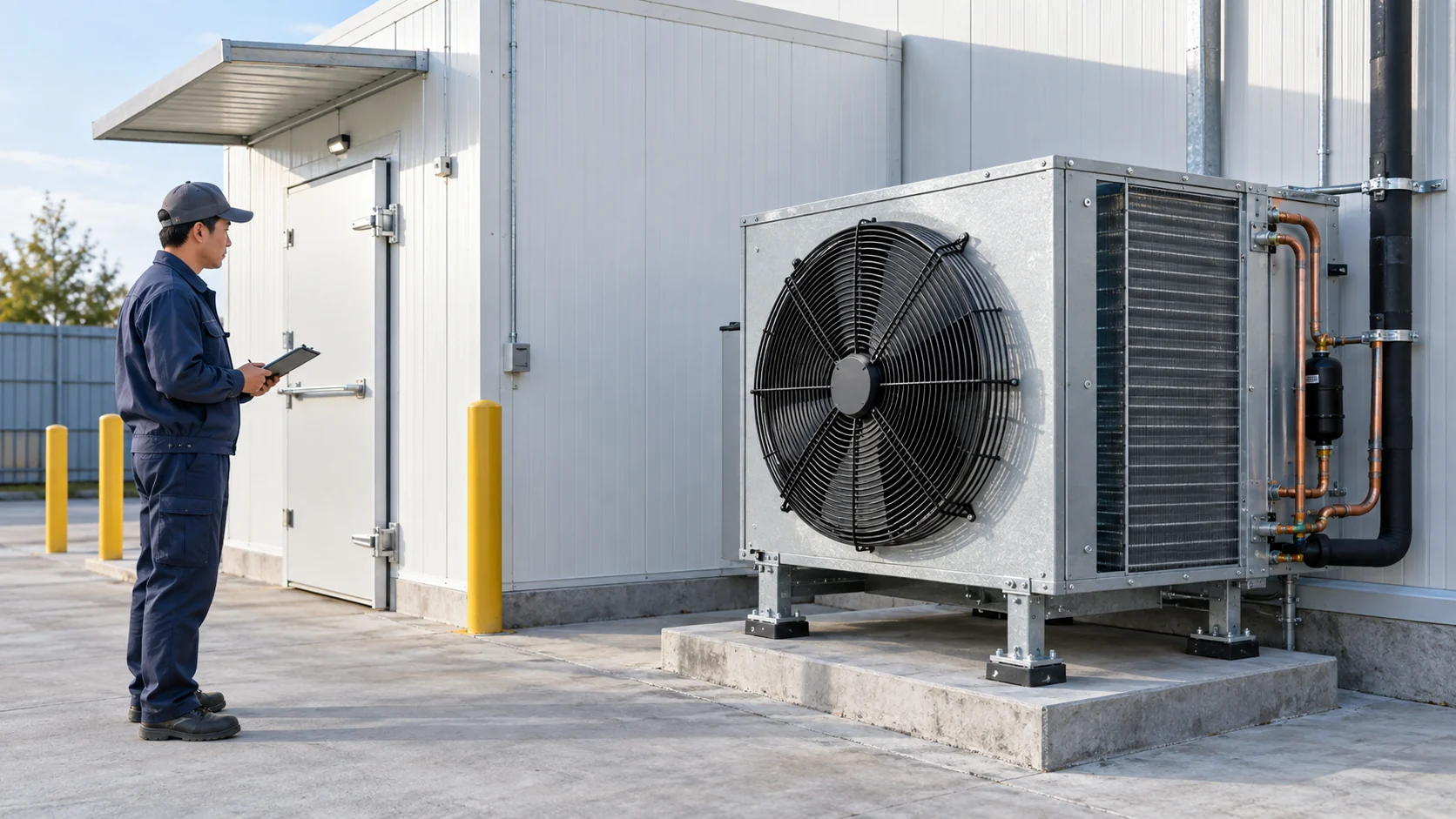
For a walk-in cooler, record the outdoor ambient range, condenser location, service clearance, coil cleanliness plan and expected door or product load. A wall or roof close to the fan discharge can recirculate hot air into the coil. A rain hood or louver can protect the equipment but adds resistance. For a freezer, check low-ambient fan control and the effect of defrost or pull-down on head pressure.
Rooftop units and air-cooled chillers
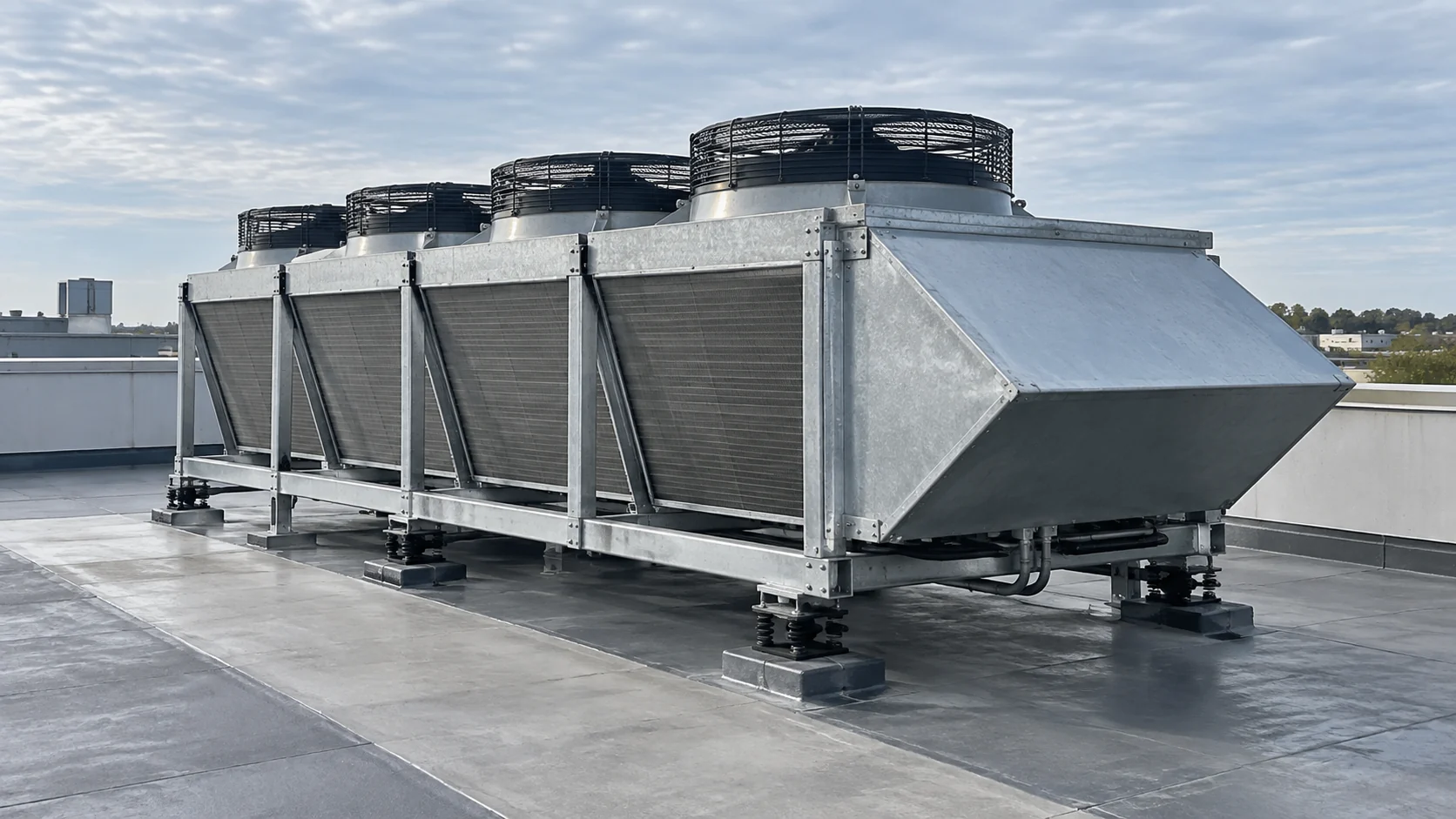
Rooftop equipment needs a weather-rated motor, secure guard, vibration isolation, lifting plan and safe access. Air-cooled chillers may use several fans across a long coil. Balance the fan stages or speed references so one section does not carry excessive airflow while another section is starved. Keep the discharge clear of parapets and adjacent equipment, and document the service path before changing a fan diameter.
Parallel compressor racks and industrial condensers
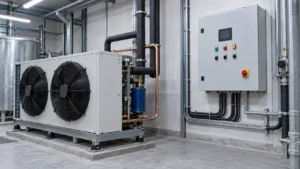
Rack and industrial applications usually need a control narrative, not just a replacement motor. State how fan capacity follows discharge pressure, condensing temperature, wet-bulb reference or another approved signal. Record the number of fans, stage order, VFD or EC interface, fan-failure alarm, high-pressure override and emergency mode. If a condenser panel is involved, separate the fan assembly data from the panel I/O and power-protection data. Domi’s refrigeration controller selection guide is an adjacent reference for broader sequence decisions.
Control condensing pressure without hunting
Fan control should follow the condenser’s thermal need. Staging can be practical for a small system with a few discrete capacity steps. Speed control can reduce airflow and fan power when ambient or load falls, but it needs a defined minimum speed and a stable pressure or temperature reference. A controller that reacts too quickly to a noisy sensor can repeatedly accelerate and decelerate the fan.
Use a sequence that defines fan cut-in, cut-out, minimum run time, minimum speed, ramp time, sensor failure, high-pressure override and restart after a power interruption. For multiple fans, decide whether all fans track together or whether the controller adds stages in a defined order. Confirm that a stopped fan cannot backspin into an operating fan in a way that creates unsafe or noisy conditions.
Danfoss notes that variable-speed control can reduce fan power and noise compared with simple fan cycling, while also supporting stable condensing pressure. Its refrigeration and cold-storage VFD article provides the system-level rationale without replacing a project-specific fan curve or control narrative.
Manage noise, vibration and weather exposure
Noise is usually a combination of blade tip speed, turbulent airflow, motor bearings, guard interaction, structure-borne vibration and nearby surfaces. Reducing speed can help, but a poorly balanced blade or loose guard can remain loud at any speed. Record the measurement position and operating condition so a service check can be compared with the original acceptance record.
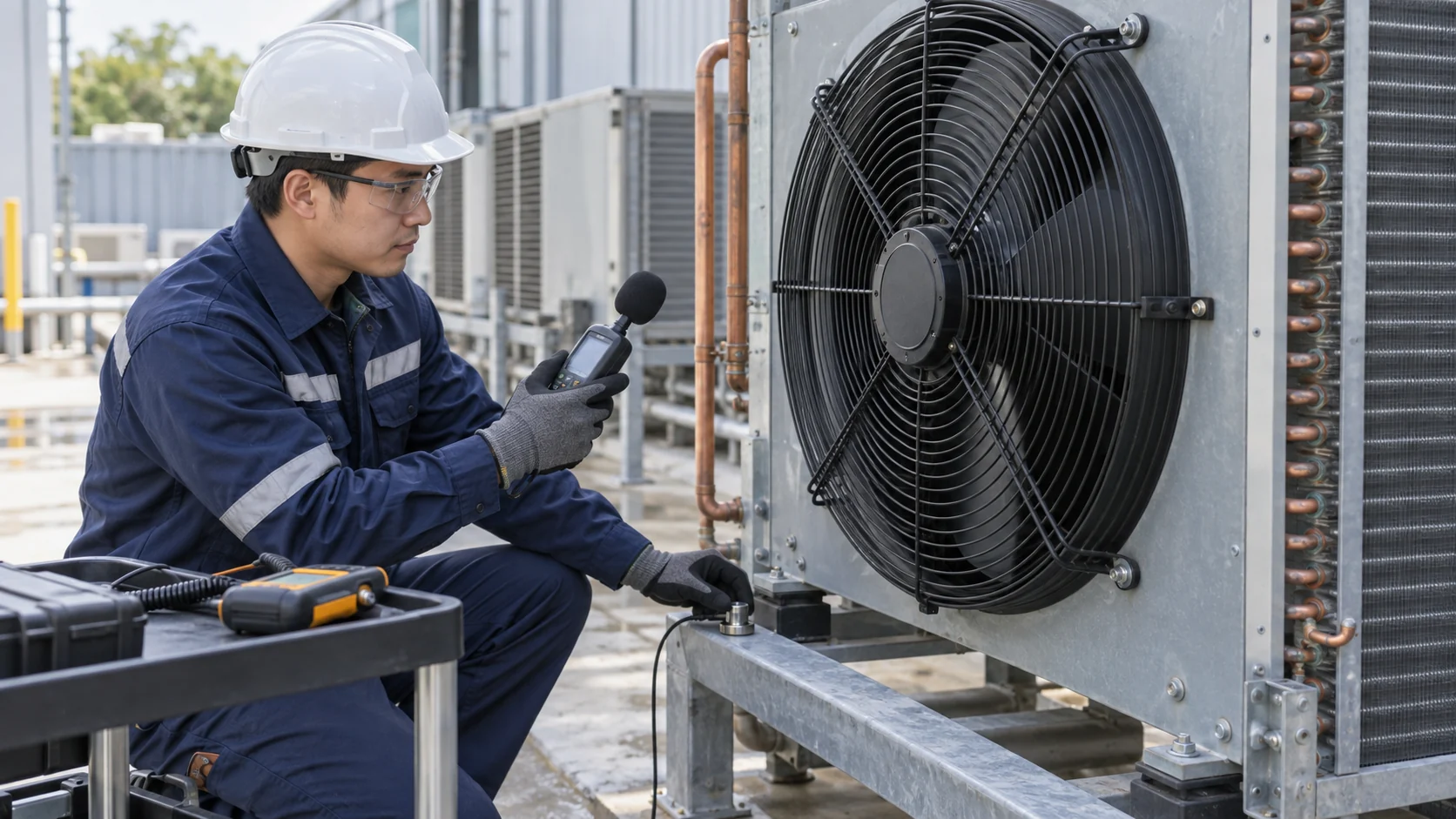
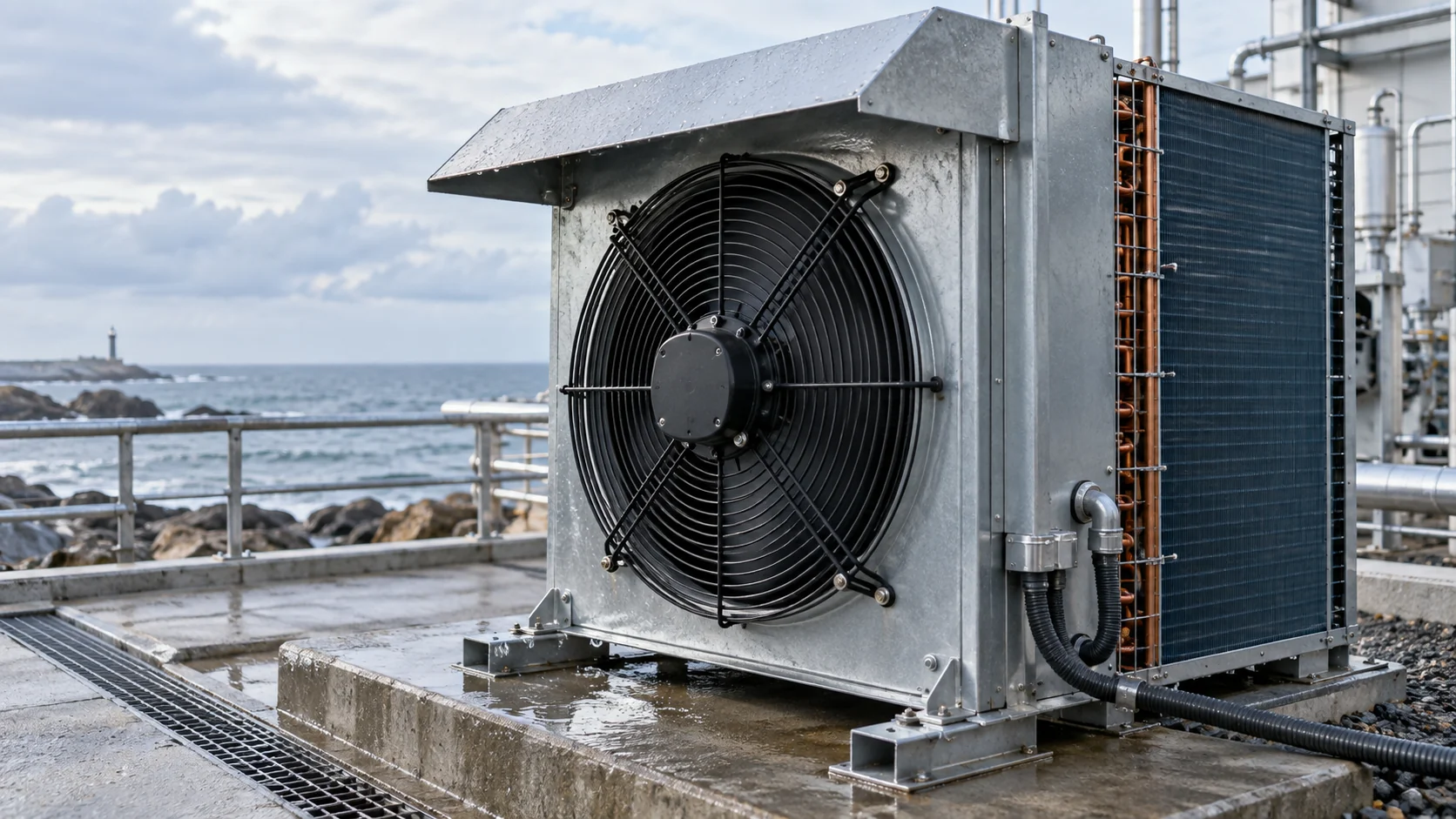
For outdoor equipment, specify corrosion exposure, rain entry, UV, snow or ice, washdown, cable glands, drain paths and the enclosure or coating. A motor can be electrically correct but unsuitable for a wet, salty or very cold location. Keep the guard and coil frame rigid, isolate vibration where required and prevent the fan discharge from short-circuiting back to the coil inlet.
Commission the fan against refrigeration evidence
Commissioning should prove the installed fan and coil combination. Confirm the blade rotation and clearance, then measure motor current, voltage, speed or command, airflow or pressure where practical, condensing pressure, discharge temperature, vibration and sound. Repeat the check at normal and low ambient conditions if the control method modulates the fan.
Do not diagnose a high head pressure event by replacing the motor first. Check coil cleanliness, airflow direction, hot-air recirculation, fan staging, pressure-sensor location, refrigerant charge and the condenser’s actual heat load. A new motor cannot correct a blocked coil or a discharge path that turns back into the intake.
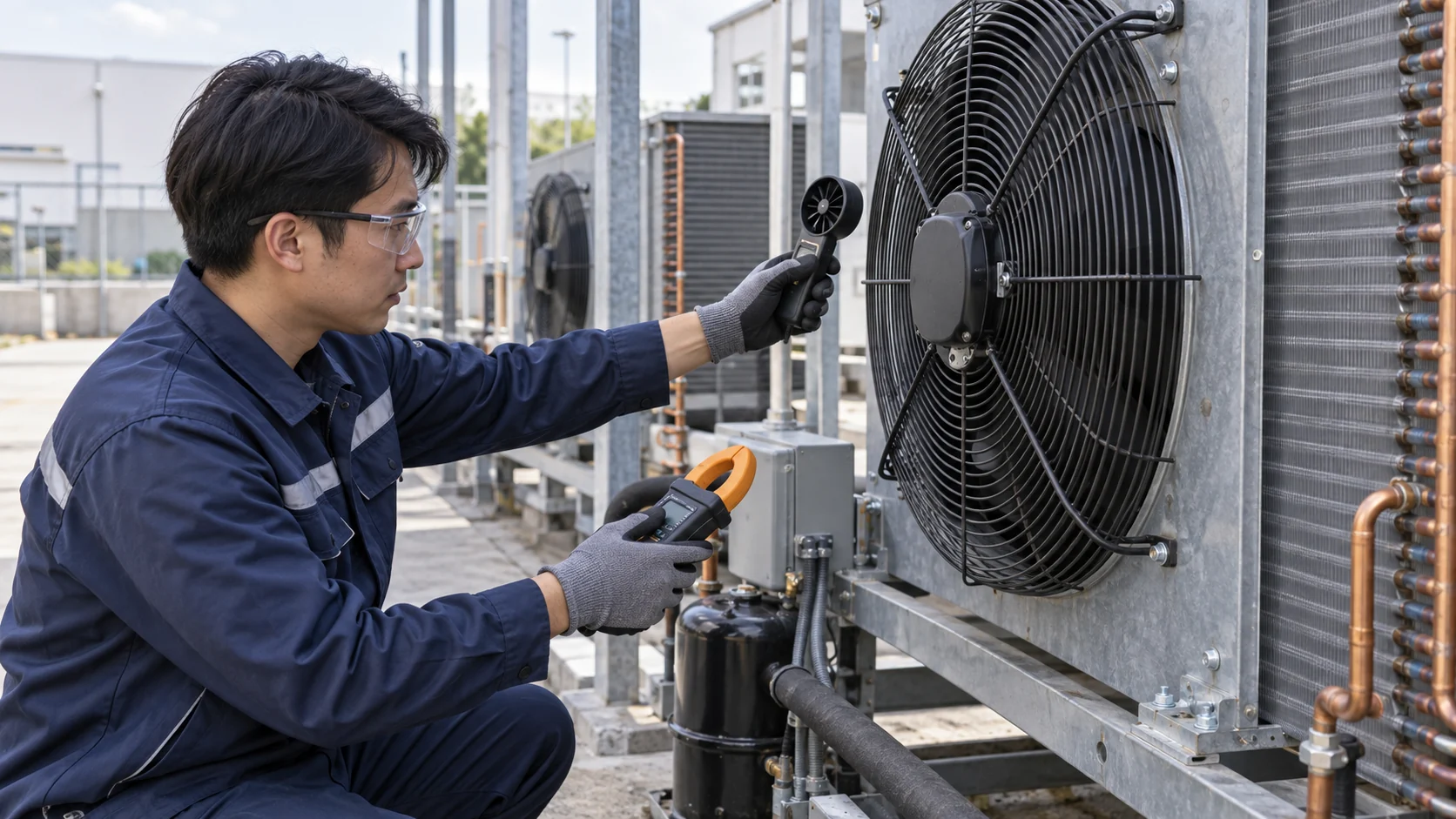
Keep the final fan curve, motor data, blade part number, rotation, mounting drawing, control parameters and test record with the equipment file. If a future replacement is needed, those records reduce the chance that a visually similar but incompatible motor is installed.
Prepare a condenser fan replacement or OEM RFQ
Send the supplier enough information to validate the operating point. Include the equipment model and serial information, condenser coil drawing, fan opening, blade and hub dimensions, rotation, motor nameplate, voltage, phase, frequency, control signal, ambient range, weather exposure, noise limit, quantity and required documents. Add photos of the guard, mounting and cable entry when replacing an installed assembly.
For an OEM design, include heat rejection, entering-air condition, target condensing condition, coil resistance, fan curve, motor curve, staged or modulated sequence, alarm behavior, service access and packaging. If the condenser coil or enclosure is also changing, send the complete interface drawing rather than a fan-only sketch. Domi’s engineering capabilities can be used to review the surrounding thermal and drawing inputs; availability of a particular fan motor or assembly is confirmed per project.

| RFQ field | Information to send | What the supplier should return |
|---|---|---|
| Duty and operating point | Heat rejection, ambient, refrigerant, condensing target, coil resistance and operating cases | Fan curve at the installed resistance and stated assumptions |
| Mechanical fit | Diameter, pitch, rotation, hub, shaft, bolt circle, guard, coil face and service clearance | Dimensioned fan, blade, motor and mounting drawing |
| Electrical interface | Voltage, phase, frequency, current, starting method, control signal and protection | Motor data, terminal diagram, control compatibility and fault behavior |
| Environment and sound | Outdoor or indoor location, moisture, corrosion, temperature, vibration and sound limit | Enclosure, bearing, coating, mounting and acoustic recommendations |
| Controls and testing | Staging or speed reference, minimum speed, sensors, alarms, commissioning points | Sequence, parameter list, test method and acceptance record |
| Delivery and lifecycle | Quantity, spares, packaging, documents, sample, MOQ and lead time | Quote, deviations, spare strategy, documentation list and delivery plan |
Use Domi’s testing laboratory page when defining the evidence expected for a thermal-component or assembly review. The RFQ should make clear which results are supplier-rated, which are measured on a sample and which remain a site commissioning responsibility.
Frequently asked questions
Can I choose a condenser fan by diameter alone?
No. Diameter is only one input. Confirm airflow at the condenser’s installed resistance, blade pitch and rotation, hub and shaft, motor speed, electrical supply, guard clearance, sound, ambient and control method. A same-diameter fan can have a different pressure curve and fail to hold the required condensing condition.
What is the difference between a condenser fan and an evaporator fan?
A condenser fan rejects compressor and evaporator heat through an outdoor or plant-room coil. An evaporator fan circulates air through a cold coil and may operate inside a humid or low-temperature room. Their motor environment, airflow path, control sequence and failure consequences differ, so match the replacement to the equipment side. See Domi’s cold-room evaporator fan selection guide for the adjacent evaporator-side decision.
Should I use an AC or EC condenser fan motor?
Choose from the required control range, efficiency target, service strategy, electrical supply, ambient, fault handling and total installed cost. An EC motor can simplify variable-speed control, while a fixed-speed AC motor can be easier to replace in a stable duty. Confirm the command type, minimum speed, fault output and replacement process before selecting either option.
How do I control a condenser fan in low ambient conditions?
Use a documented pressure or temperature-based sequence with defined minimum speed, cut-in and cut-out, ramp, sensor location and high-pressure override. Staged fans can work for discrete loads; speed control is useful when the condenser must modulate smoothly. Verify the fan curve and control stability at the lowest expected ambient rather than copying a factory default.
What data is needed to replace a condenser fan motor?
Send the equipment model and serial information, old motor and blade part numbers, nameplate voltage and current, RPM, phase, frequency, rotation, shaft and mounting dimensions, ambient, guard and coil photos, control method and the failure symptom. If the part is not an exact replacement, ask for a written compatibility statement and deviation list.
Why can a new condenser fan still leave high head pressure or excessive noise?
The coil may be dirty, the fan may rotate the wrong way, the blade may be mismatched, the discharge air may recirculate, the control may run too slowly or the system may have a refrigerant or heat-load problem. Check airflow, rotation, motor current, pressure sensor, coil condition, clearance, vibration and the complete refrigeration sequence before replacing more components.
Before you request pricing
A defensible condenser fan decision closes four loops: the fan curve matches the coil resistance, the motor and blade match the electrical and mechanical interfaces, the control sequence remains stable across load and ambient, and the RFQ records weather, sound, testing and service requirements. Send your condenser fan specification, drawing or replacement photos for a technical review before ordering a visually similar part. Request a Custom Quote or Send Your Drawing for Review.