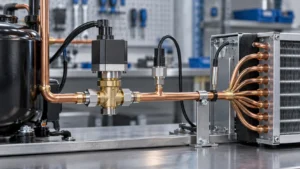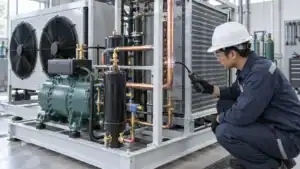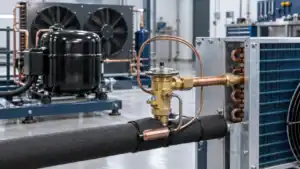

For a commercial or OEM refrigeration system, choose a refrigeration fan from the installed airflow and pressure duty, air-path role, motor and control interface, low-temperature environment, mechanical fit, and service requirements. Diameter or free-air CFM alone is not enough. This guide covers evaporator, condenser, cabinet, and process-air applications. It is written for equipment buyers and engineers, not household refrigerator repair.
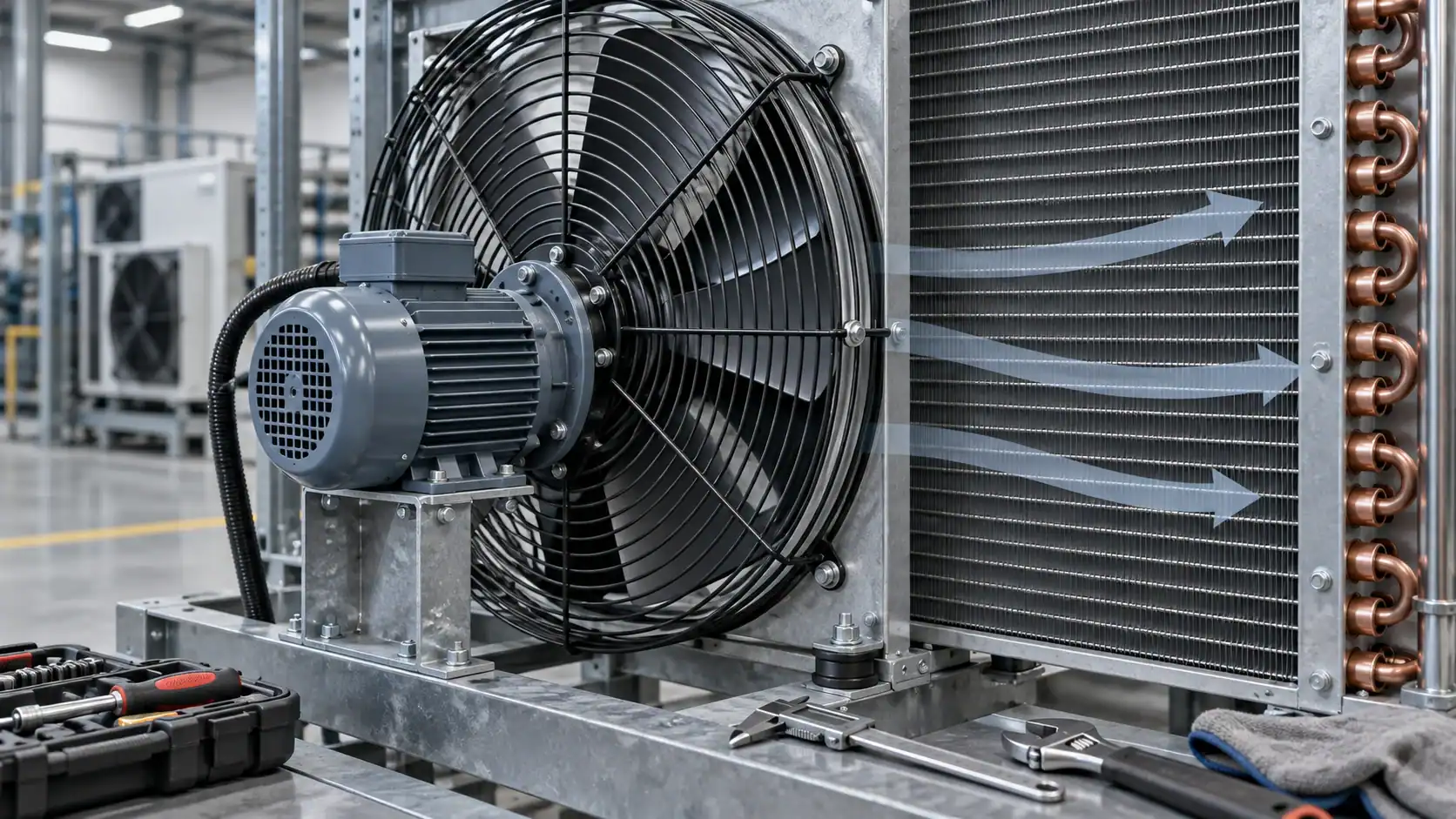
The fan is part of a working air path. A blade, guard, motor, coil, shroud, controller, and cabinet opening can change the duty point. A replacement that fits the mounting holes may still deliver too little air, rotate in the wrong direction, overload the motor, or add heat to a cold room. Start with the application and measured conditions, then confirm the fan curve and interface with the supplier.
What a refrigeration fan does in a commercial system
A refrigeration fan moves air across a heat-transfer surface or through a refrigerated enclosure. On the evaporator side, it circulates room air across the coil. On the condenser side, it rejects heat to ambient air. In a cabinet or compact unit, it may maintain a directed internal air path. In a process application, it may serve an air cooler or a packaged heat exchanger.
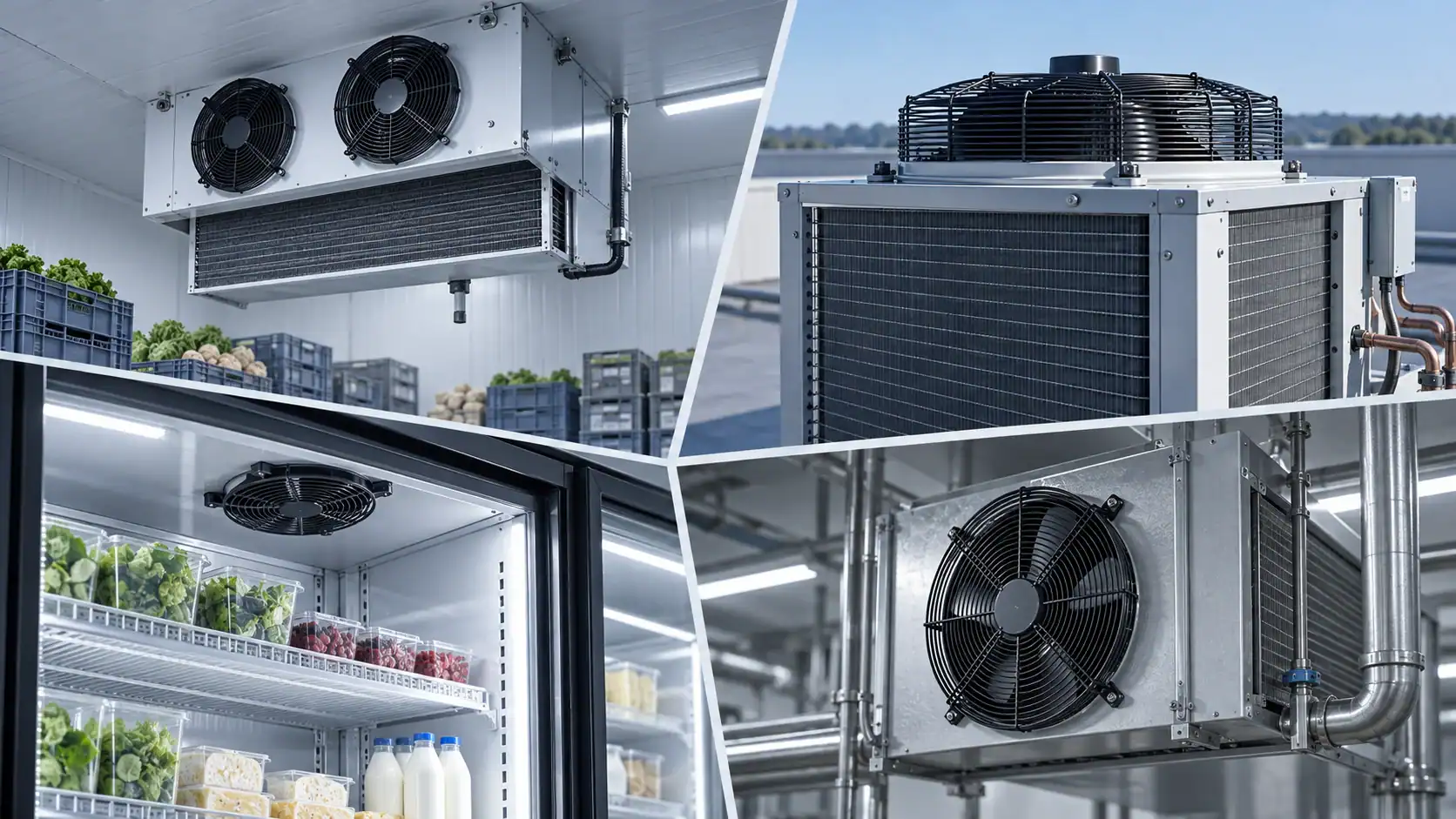
The words fan, motor, blade, blower, and fan assembly are often used as if they mean the same thing. They do not. A motor supplies torque. A blade or impeller transfers energy to air. A guard and shroud control the inlet and outlet path. The assembly has a real pressure and airflow curve after all of those parts are installed.
| Fan role | Typical air path | Main selection question | Common mistake |
|---|---|---|---|
| Evaporator or unit cooler | Room air through a cold coil and back to the space | Will the assembly deliver the required air at coil resistance and room conditions? | Selecting from free-air volume without checking frost, guard, coil, or defrost conditions |
| Condenser fan | Ambient air through a condenser coil and out of the condensing unit | Can it reject heat at the design ambient temperature without excessive condensing pressure? | Matching diameter while ignoring rotation, coil resistance, fan cycling, or discharge recirculation |
| Refrigerated cabinet | Internal air across shelves, product zones, or a compact coil | Does the air pattern protect product temperature without drying or local hot spots? | Treating a cabinet fan as a generic computer-style fan |
| Process or air cooler | Air through a coil, duct, enclosure, or production zone | Does the fan supply the required pressure at the actual fittings and duct path? | Choosing an axial fan when the system needs higher pressure or a controlled discharge |
The application role narrows the acceptable fan family before a part number is discussed. The same nominal diameter can represent very different blade pitch, motor power, rotation, pressure capability, and temperature limits.
Choose the fan by air path first
1. Evaporator and unit-cooler fans
An evaporator fan must move air through the coil and distribute it through the room. The coil face, fin spacing, guard, housing, and frost condition all add resistance. Low-temperature operation also changes the motor, bearing, lubricant, wire, and starting behavior.
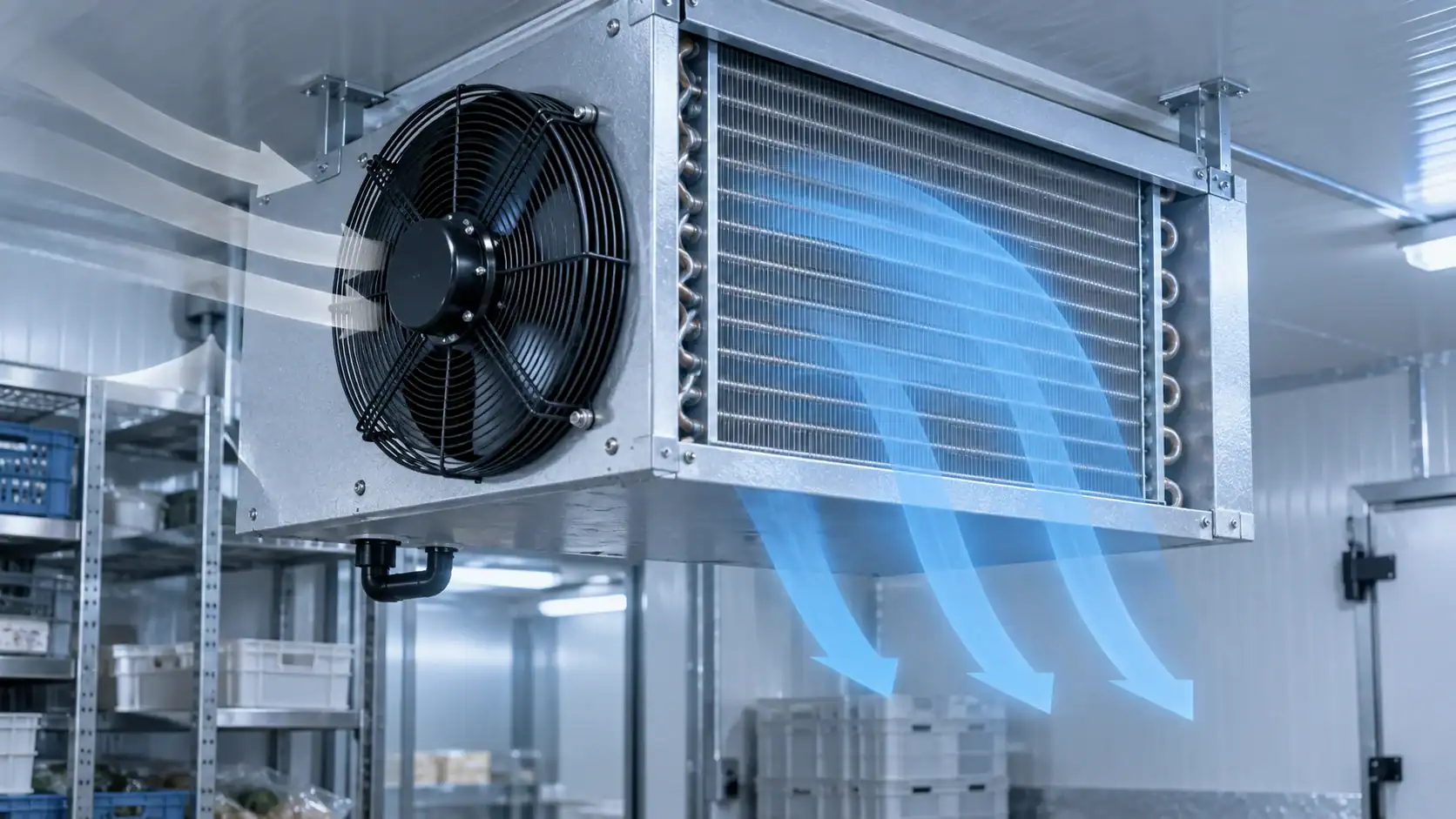
For a cold room or freezer, record room temperature, coil condition, defrost method, fan arrangement, airflow direction, and clear distance to walls or stored product. If the equipment already works, a measured operating point and a clear photo of the assembly are more useful than a guess based on diameter.
2. Condenser fans
A condenser fan moves ambient air through the condenser coil. The selection must account for design ambient, coil cleanliness, discharge clearance, neighboring units, wind exposure, and whether the controller cycles or modulates the fan. A fan that recirculates warm discharge air can reduce capacity even when its catalogue airflow looks adequate.
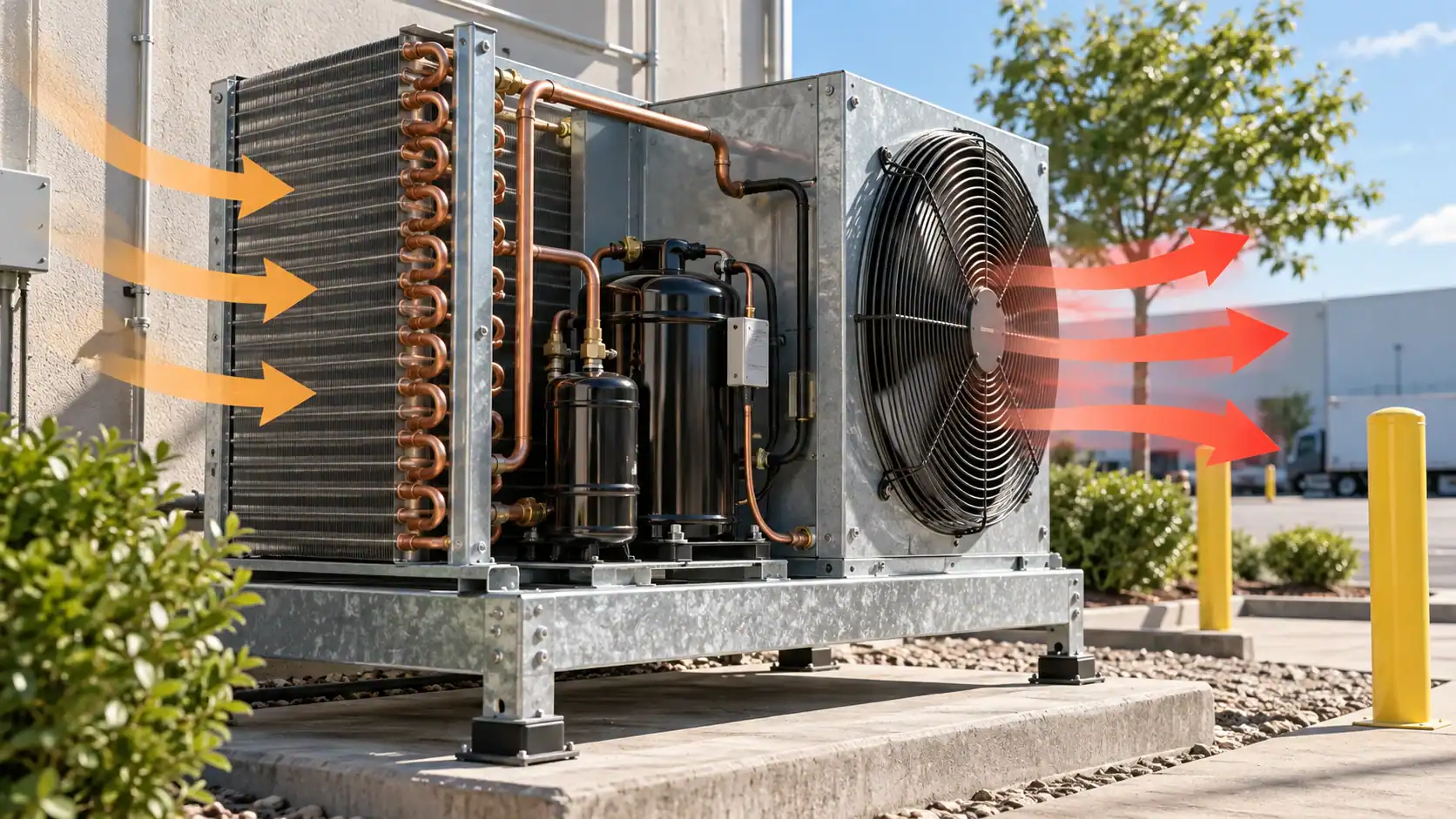
The existing Domi condenser-fan guide covers this role in more detail. This page keeps the distinction clear and routes condenser-specific buyers to that specialist resource instead of repeating its entire selection path.
3. Cabinet, transport, and process-air fans
Cabinet fans usually have a short air path, but the opening, grille, evaporator cover, and product load still affect airflow. Refrigerated transport and process-air systems may need a compact motor, a defined connector, vibration control, or a higher pressure capability. Ask for the complete assembly duty instead of treating every small fan as interchangeable.
| Application | What to document | Why it changes the selection |
|---|---|---|
| Display or storage cabinet | Product zone, air return, grille, evaporator cover, noise limit | A high air volume can dry product or create uneven temperature if the pattern is wrong |
| Refrigerated transport | Supply voltage, shock and vibration, ambient range, connector, service access | The fan may see mobile power, vibration, and restricted ventilation |
| Air-cooled package | Coil face, discharge clearance, design ambient, fan cycling or modulation | Recirculation and pressure resistance can change heat rejection |
| Process air cooler | Required airflow, pressure, duct or hood resistance, operating temperature | Duct pressure can make a small axial fan unsuitable |
Match fan geometry to pressure and packaging
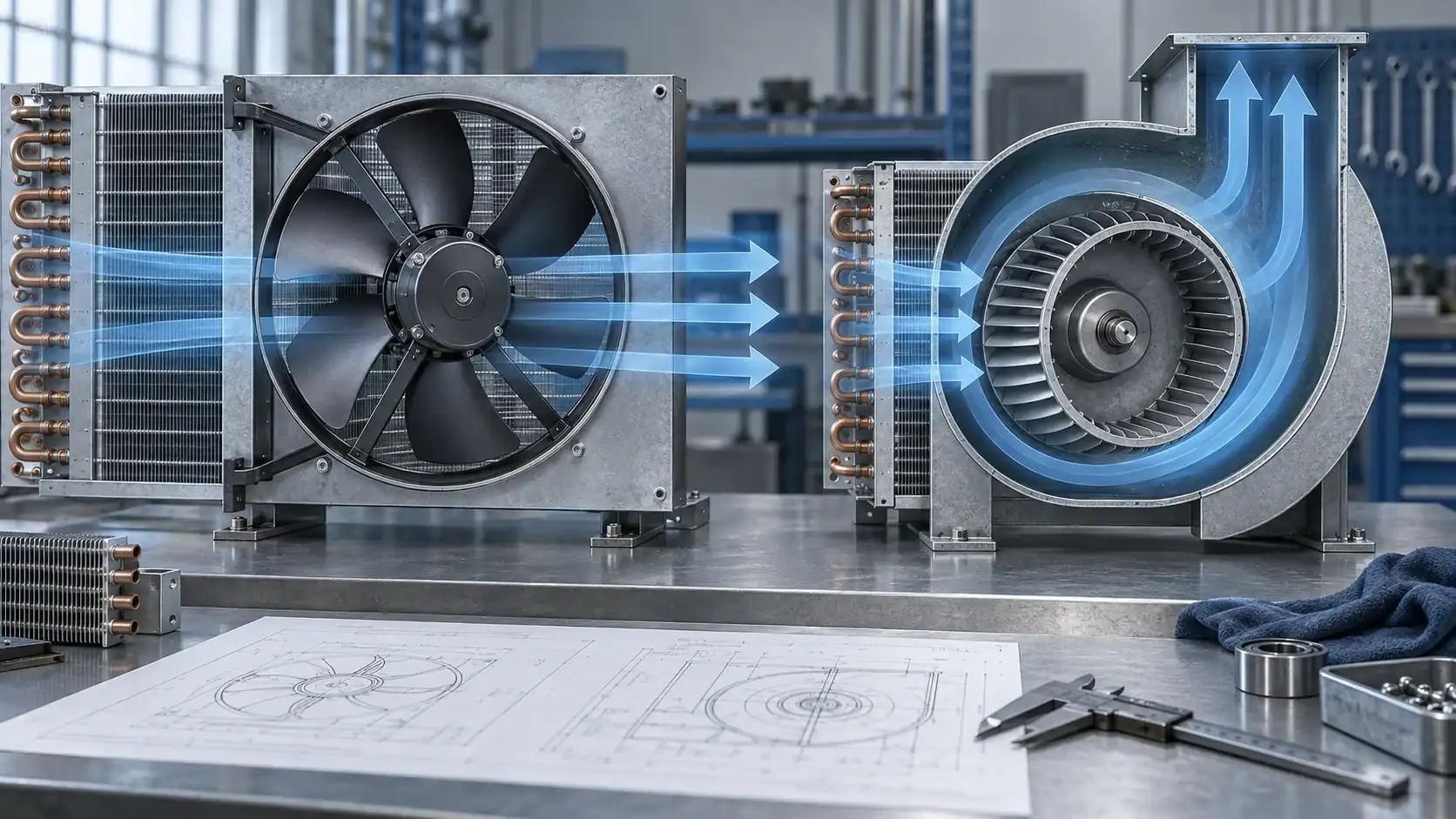
Axial fans
Axial fans move air mainly along the shaft. They are common in evaporators, air coolers, condensers, and short cabinet air paths. Their performance depends on the inlet, outlet, shroud, blade pitch, rotation, and system resistance. A nozzle or guide vane can change useful pressure and airflow, so the fan should be evaluated in its installed housing.
Centrifugal or plug blowers
A blower changes the direction of the air path and can suit a system with more pressure resistance, ducting, filters, or a controlled discharge. It is not automatically the better option. The buyer still needs the operating point, sound limit, motor data, and maintenance access. If the supplier offers both axial and blower designs, send the complete air-path sketch for comparison.
Blade and housing details
Blade diameter is only one field. Also confirm blade pitch, number of blades, rotation, suction or blowing arrangement, hub dimensions, guard, shroud, inlet clearance, and discharge direction. For a replacement, photograph the label and wiring before removal. A part number without the original mounting and control details may not identify a compatible assembly.
Select the motor and control interface
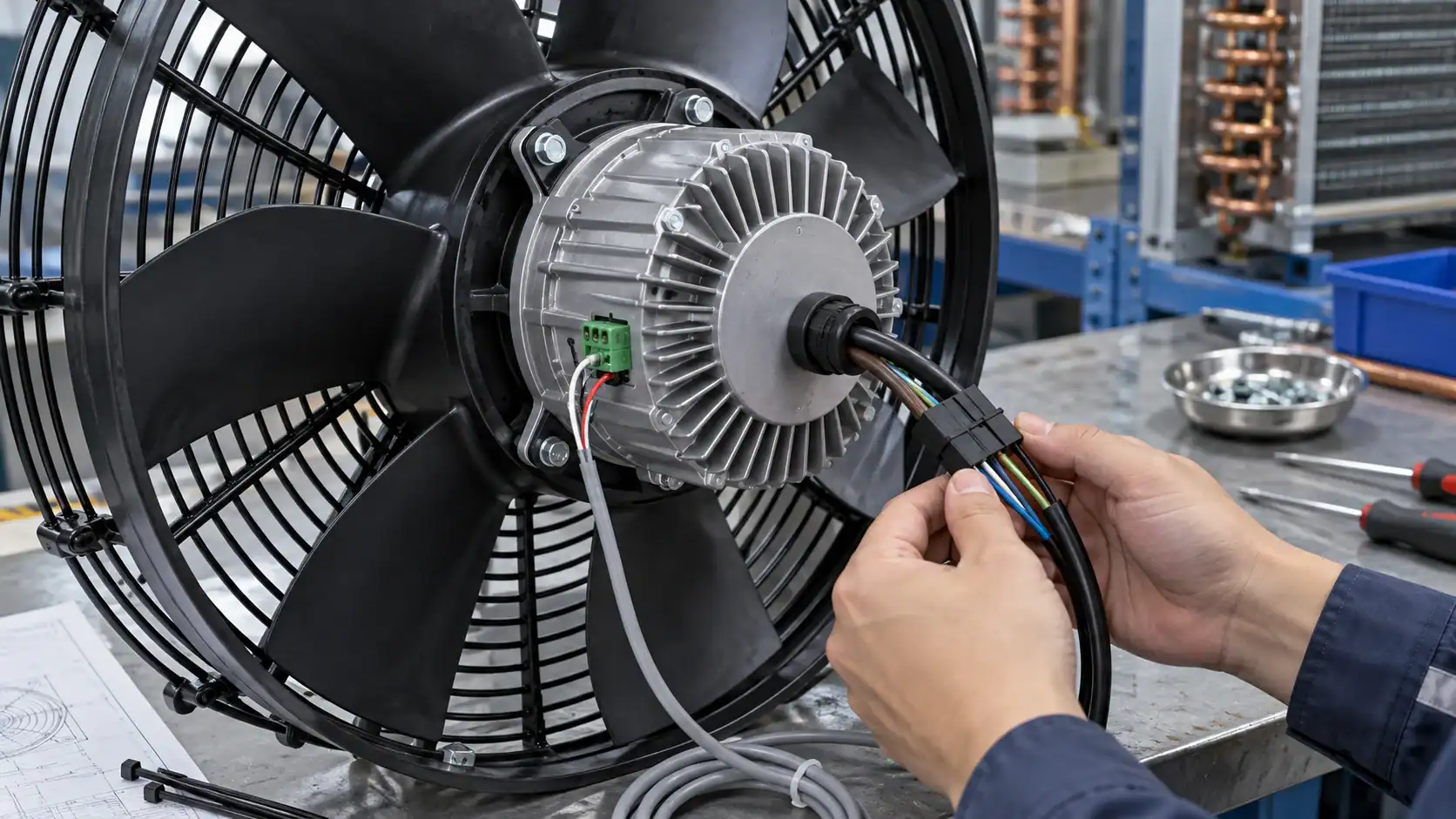
EC and DC motors
EC motors are electronically commutated motor systems. Depending on the product, an EC motor can accept an AC supply through an integrated conversion stage or work as a DC system with a defined control input. Confirm the actual voltage range, frequency, current, speed range, control signal, rotation, protection, and connector from the data sheet.
EC control can reduce power at part load, but the control signal must match the system. A speed command, PWM input, alarm output, or enable circuit is not universal. Never assume that two fans with the same voltage and mounting diameter share the same control interface.
AC motors
AC shaded-pole, PSC, and other motor types remain common in refrigeration equipment. They may be simple to wire and suitable for fixed-speed operation, but the buyer still needs the correct phase, frequency, rotation, thermal protection, low-temperature rating, and motor load. A motor’s nameplate power is not a substitute for the fan curve.
What the controller must know
The controller or refrigeration system should define whether the fan runs continuously, cycles with the compressor, stops during defrost, ramps with pressure or temperature, or follows a cabinet control sequence. Record the control behavior before specifying a replacement. A motor that can run continuously may still be wrong for a defrost sequence or a variable-speed controller.
Compare airflow, pressure, and system duty
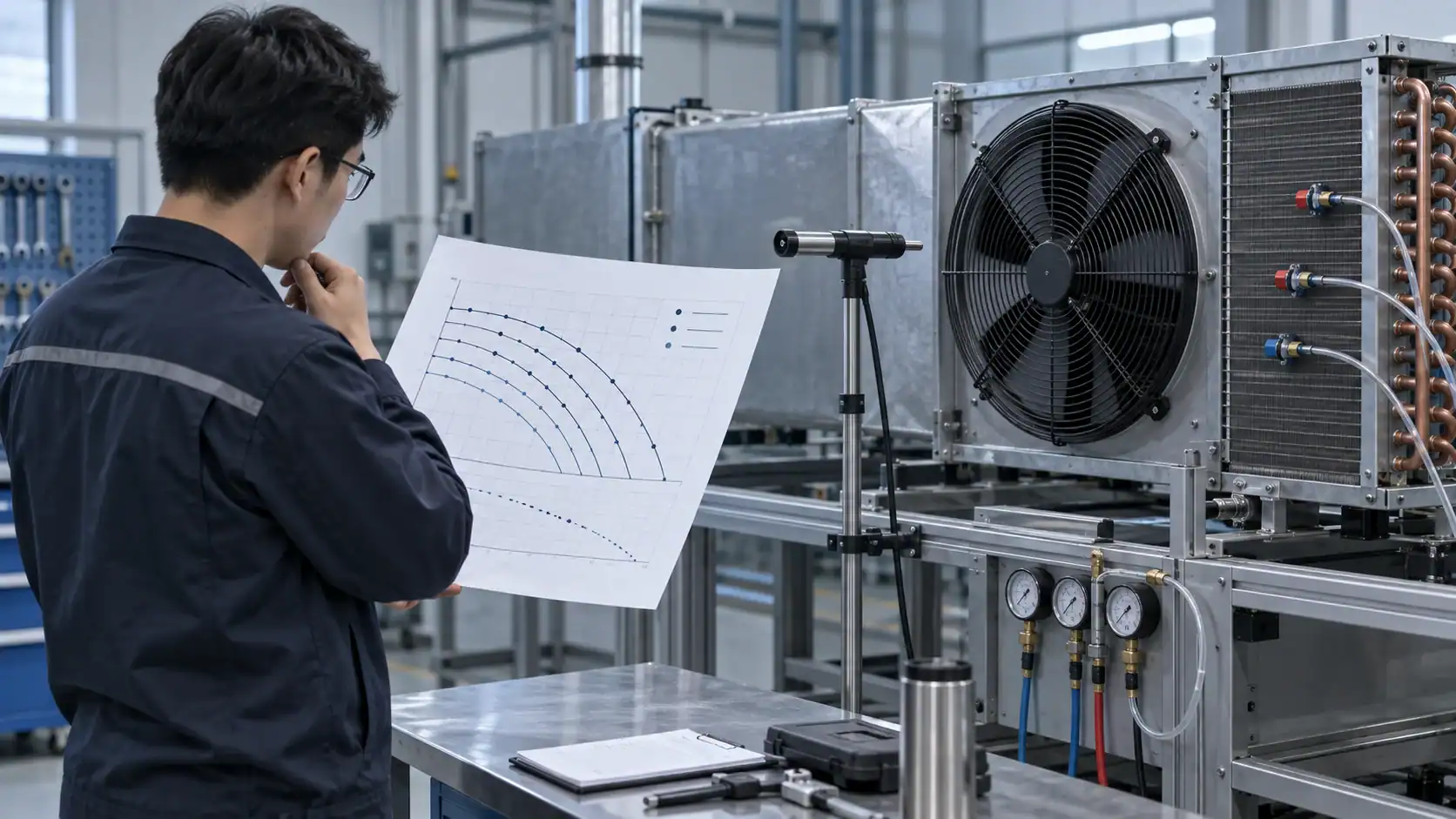
Airflow should be compared at a stated pressure and test arrangement. Free-air volume is a useful catalogue reference, but it does not represent the installed point behind a coil, guard, grille, duct, or condenser. Ask for a fan curve or a supplier selection at the actual resistance.
Use the following fields when comparing two candidates:
| Input | What to record | What it proves |
|---|---|---|
| Airflow | CFM or m³/h, test condition, direction, and tolerance | The quantity of air expected at a defined point |
| Static pressure | Pa, inH₂O, or the supplier’s stated unit at the duty point | Whether the fan can overcome coil, guard, grille, and duct resistance |
| Fan curve | Curve, operating point, and system resistance | Whether the candidate works after installation rather than only in free air |
| Motor load | Voltage, phase, frequency, current, input power, and thermal protection | Whether the electrical system can start and run the assembly safely |
| Air temperature | Minimum, maximum, and transient condition | Whether bearings, insulation, electronics, and lubricant are suitable |
| Noise and vibration | Test position, speed, mounting, and limit | Whether a quiet catalogue number remains acceptable in the cabinet or room |
For a coil-mounted fan, the supplier should be able to explain how the coil, guard, housing, and motor were included in the selection. If there is no defined pressure point, the quotation should state that the rating is provisional and requires confirmation after the system resistance is known.
Check low temperature, defrost, and hygiene constraints
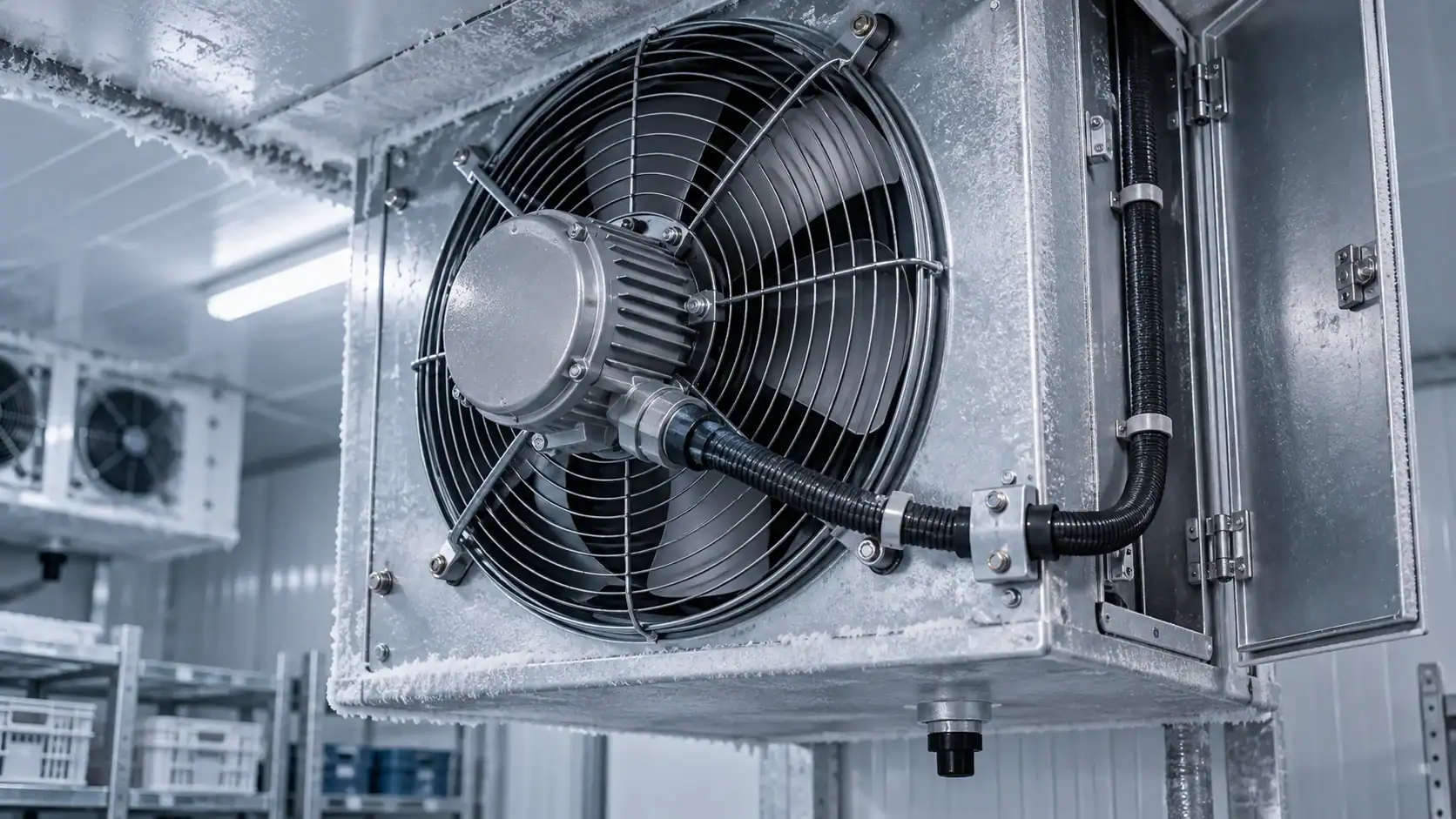
Low temperature affects more than the air. Confirm the motor’s operating range, bearing system, wire jacket, connector, electronics, starting torque, and lubricant. A fan can spin in a warm workshop and fail to start after a cold soak. If the equipment operates in a humid or washdown area, record the expected splash, condensation, cleaning process, and enclosure requirement.
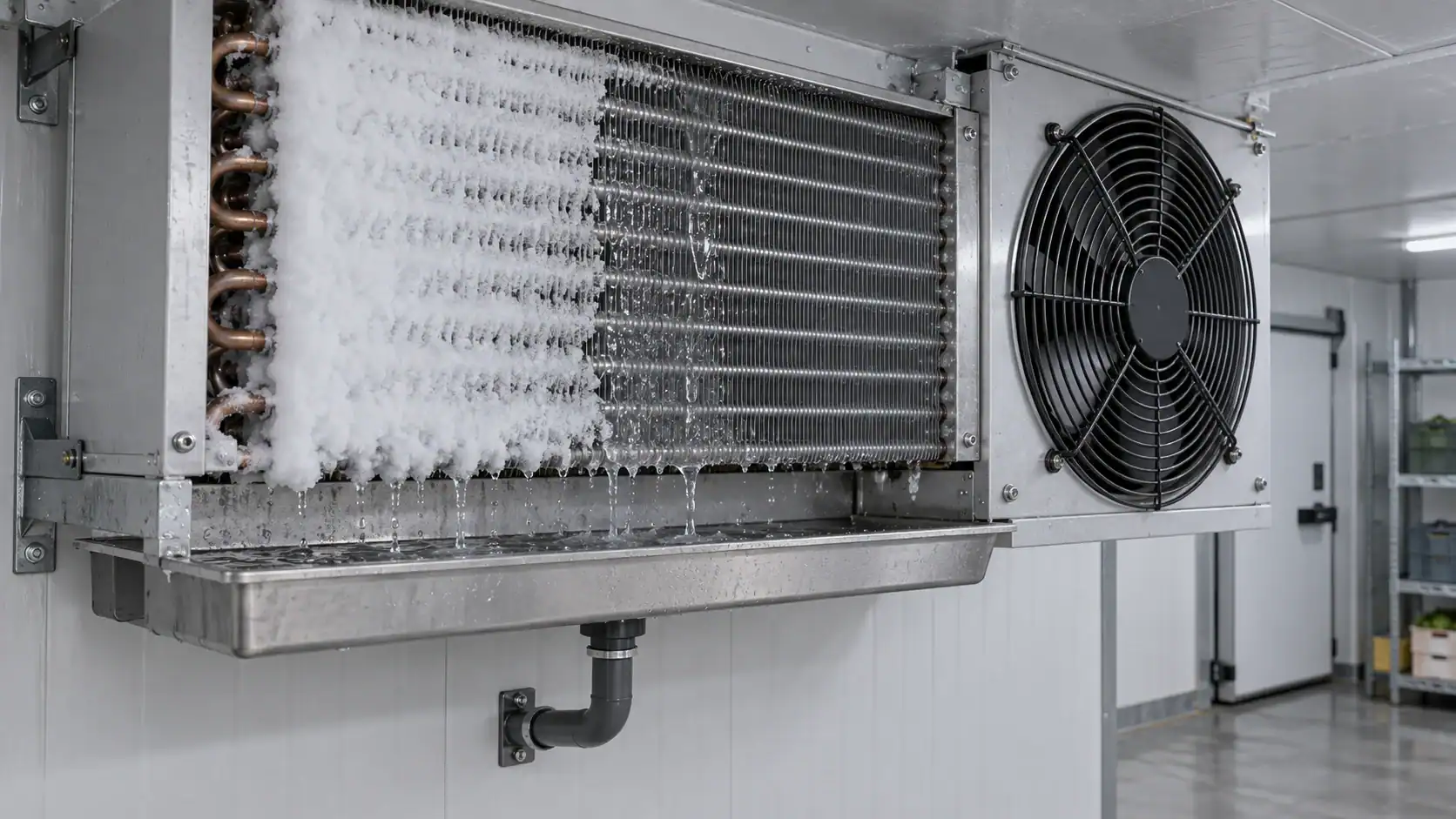
Defrost changes the fan duty and the water path. Confirm whether the fan stops, how the coil drains, where meltwater travels, and when the fan restarts. A restart command issued before the coil is ready can throw water into the air path or create an ice problem. The fan selection should be reviewed with the defrost sequence, not as an isolated motor swap.
For food or hygiene-sensitive systems, review smooth surfaces, cleanability, splash protection, corrosion exposure, and access to the coil and guard. Use the supplier’s actual protection and material information. Do not copy an IP rating or certification from a different part number.
Verify mechanical fit, guarding, and service access
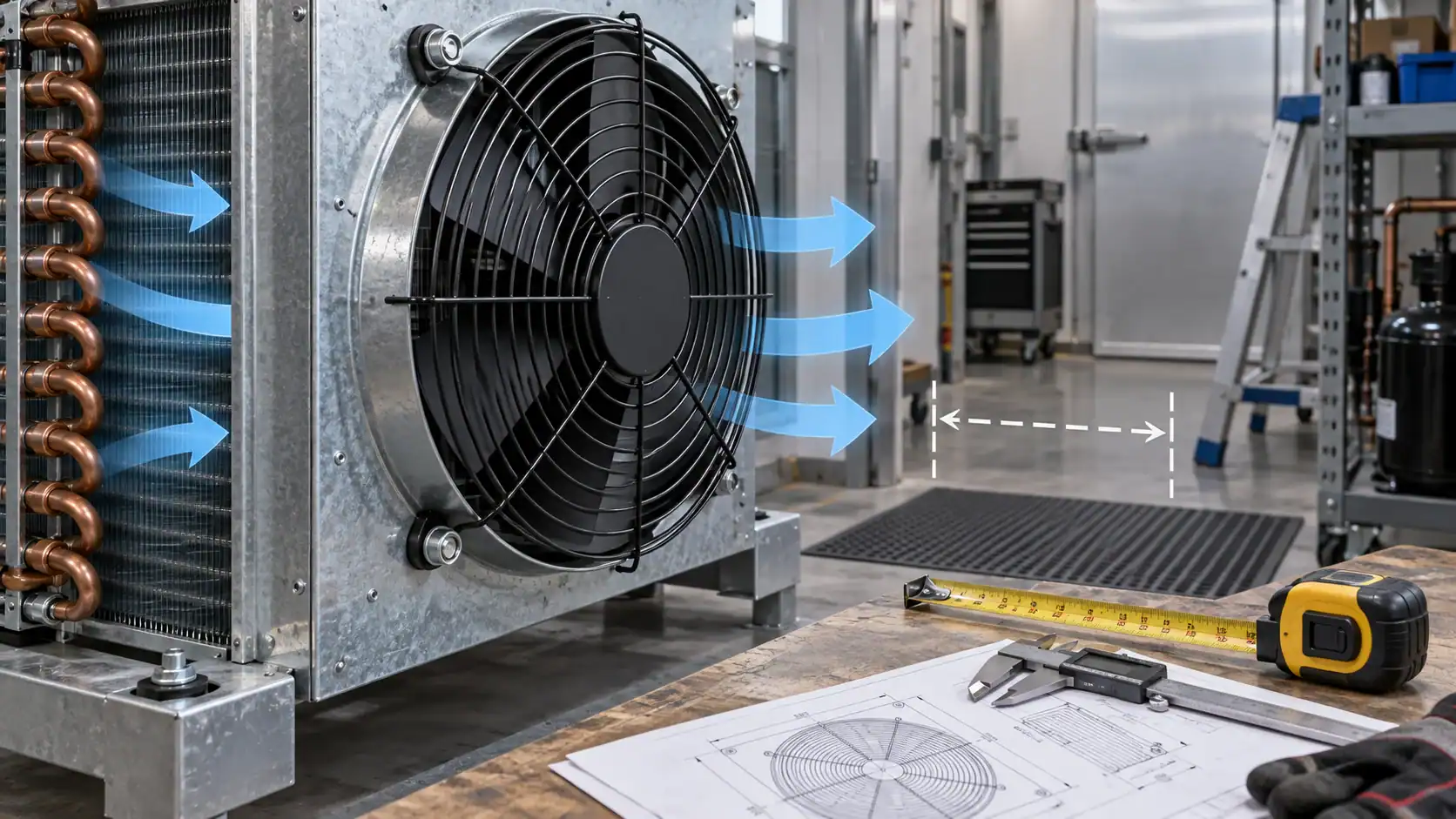
The mechanical envelope should be checked before the electrical details are finalized. Measure the opening, bolt pattern, hub or shaft, depth, guard, shroud, connector clearance, wire exit, and distance to the coil or panel. Record whether the fan is installed for suction or blowing and mark the rotation from the air-flow side.
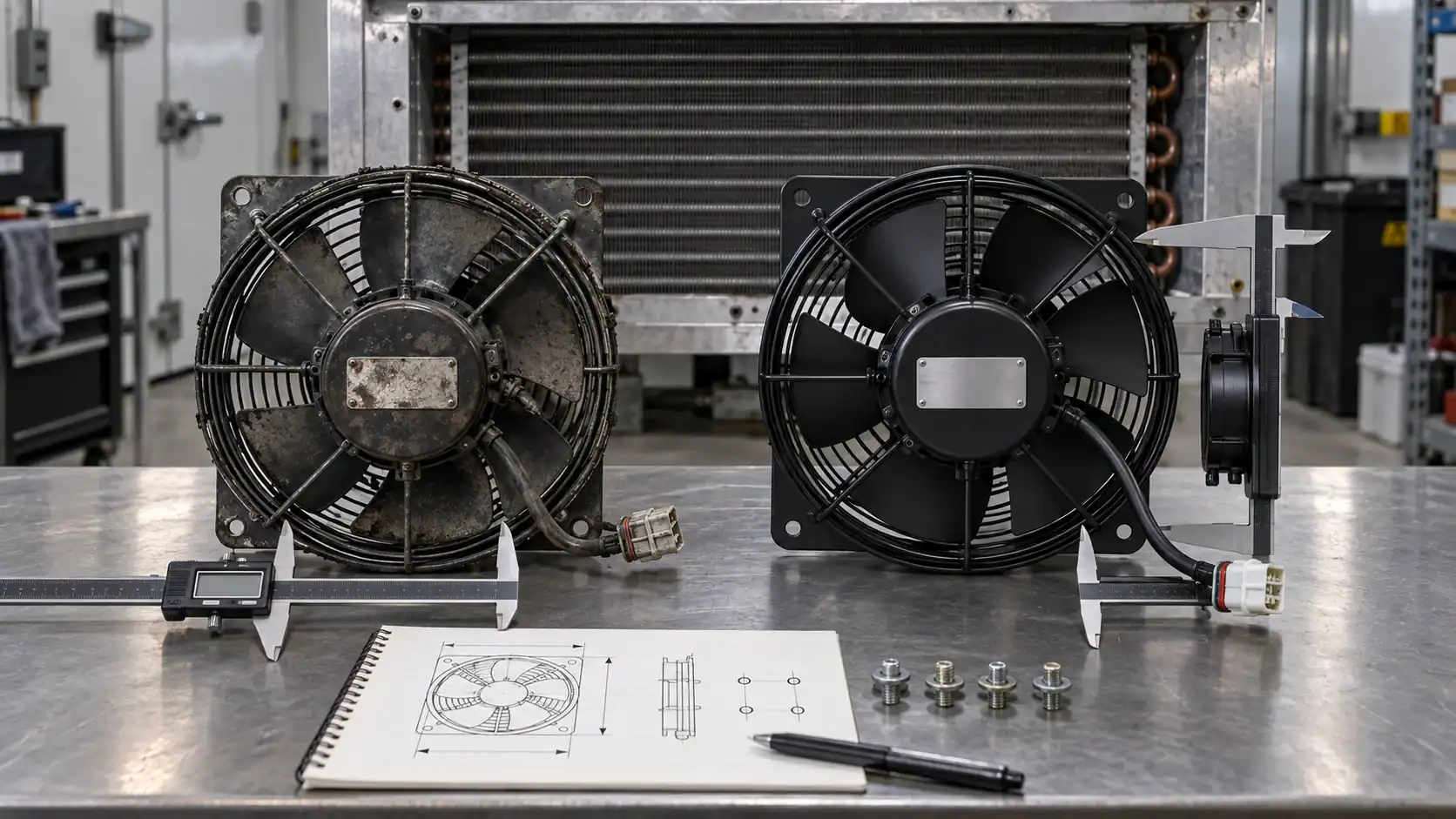
Replacement-fit checklist
- Photograph the nameplate, label, connector, and wiring before removal.
- Measure diameter, depth, mounting hole spacing, hub, shaft, and guard clearance.
- Record supply voltage, frequency, phase, current, speed, rotation, and control signal.
- Note minimum and maximum air temperature, defrost behavior, humidity, and cleaning exposure.
- Compare the fan curve at the installed resistance rather than the catalogue free-air number.
- Confirm the replacement’s wire exit, connector, protection, and service access with the installer.
Do not change rotation by swapping wires unless the motor documentation explicitly allows it. Do not change blade pitch or guard geometry without checking the fan curve and motor load. Those changes can alter airflow, noise, current, and coil performance.
What to send in a refrigeration fan RFQ

A useful RFQ lets the supplier compare a complete duty point. A product name such as “refrigeration fan” is a starting phrase, not a specification.
| RFQ field | Example of the information to provide | If unavailable |
|---|---|---|
| Application role | Evaporator, condenser, cabinet, transport, or process air | Send photos and a simple air-path sketch |
| Air duty | Required CFM or m³/h at stated pressure, coil, grille, or duct | Ask for a provisional selection with assumptions listed |
| Environment | Minimum and maximum air temperature, humidity, washdown, corrosion, altitude | State the normal and worst-case condition |
| Electrical data | Voltage, frequency, phase, current limit, connector, control signal | Send the existing nameplate and controller model |
| Mechanical data | Diameter, depth, mounting, guard, shroud, rotation, suction or blowing | Send a drawing or scaled photos with dimensions |
| System sequence | Continuous run, fan cycling, defrost stop, ramping, alarm, restart delay | Describe the present sequence and failure symptoms |
| Commercial requirement | Quantity, sample need, packaging, drawing approval, inspection records | State the project stage and expected order range |
Include the coil drawing or equipment model when the fan is part of a heat exchanger. If the fan is a replacement, include the original part number and a photo of the assembly. The quotation should identify assumptions and open checks instead of hiding them inside a generic equivalent description.
Inspect before release and during commissioning
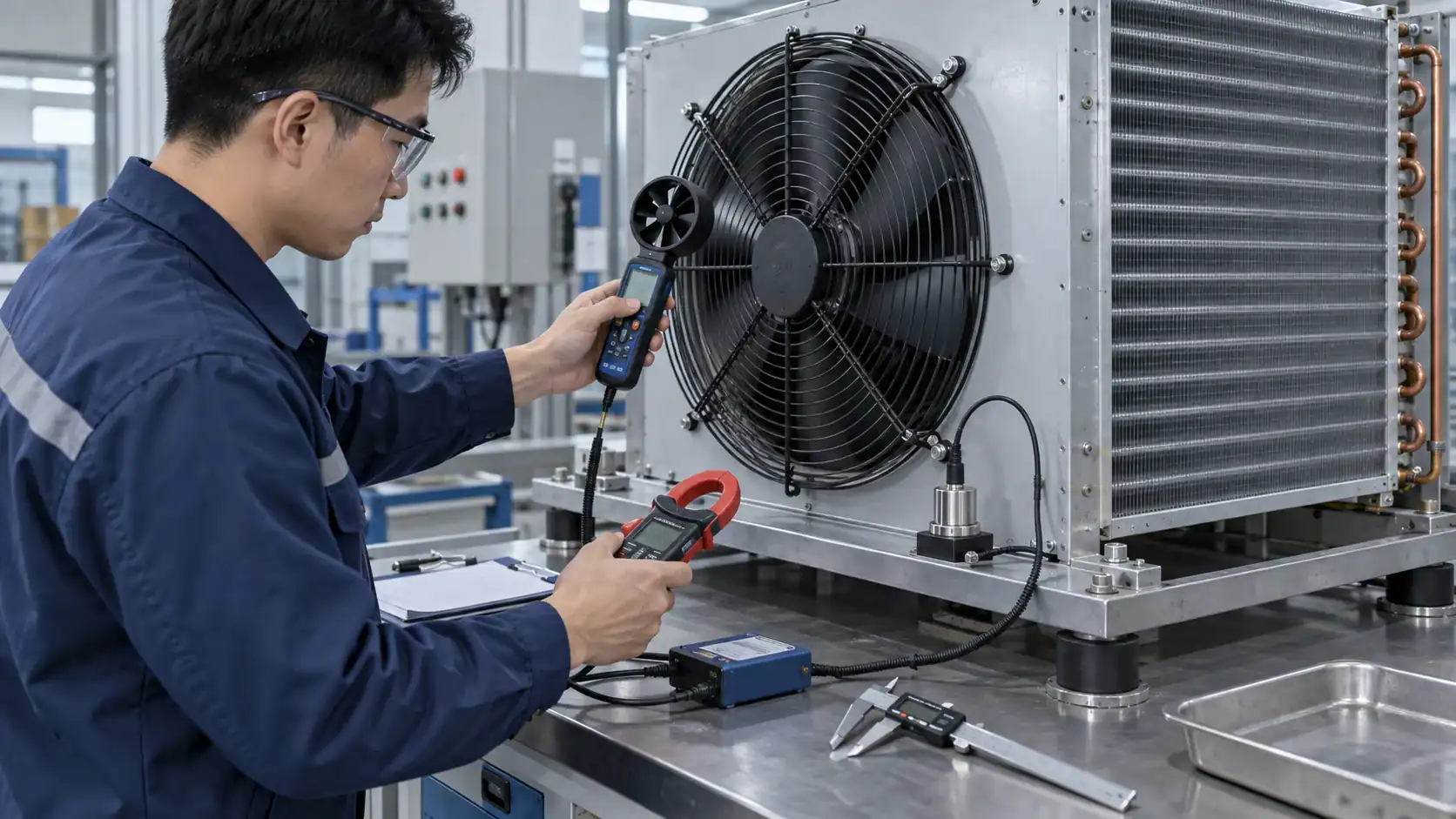
Before release, review the drawing, fan curve, motor data sheet, wiring diagram, rotation, mounting dimensions, and environmental limits as one package. For a repeat order, keep the approved revision and part number with the purchase record. A supplier change to the motor, blade, connector, or guard can change the assembly even when the product name stays the same.
During commissioning, check rotation, current, airflow direction, vibration, sound, discharge temperature, coil condition, and controller response. For an evaporator, confirm that the air reaches the intended space without creating a local draft or bypass. For a condenser, confirm that discharge air does not recirculate into the coil. Record the test conditions so a later service team can distinguish a fan problem from a dirty coil, blocked grille, control fault, or refrigerant-side problem.
Common refrigeration fan selection errors
Choosing from diameter alone
Diameter identifies the envelope, not the duty point. Two fans with the same diameter can have different blade pitch, speed, motor power, pressure capability, and rotation.
Treating free-air CFM as installed airflow
The coil, guard, shroud, grille, and duct create resistance. Compare the fan at the pressure expected in the equipment.
Ignoring motor heat in a cold room
Motor input power becomes heat that the refrigeration system must remove. The effect depends on the installation and operating schedule, so include motor data in the load review.
Replacing an EC assembly with a fixed-speed motor
The replacement may run, but the controller command, alarm circuit, speed range, or defrost sequence may no longer work. Check the complete interface.
Copying a specification from a similar part number
Similar-looking fans can differ in voltage, rotation, connector, protection, bearing, temperature range, and mounting. Use the exact data sheet and a measured assembly.
Frequently asked questions
What is a refrigeration fan used for?
A refrigeration fan moves air across an evaporator, condenser, refrigerated cabinet, air cooler, or process heat exchanger. The correct design depends on the air path, pressure resistance, temperature, motor, control sequence, and mechanical envelope.
What is the difference between an evaporator fan and a condenser fan?
An evaporator fan circulates room or cabinet air across a cold coil. A condenser fan moves ambient air across a hot coil to reject heat. Their temperature, control, airflow direction, coil resistance, and discharge requirements can be different, so they should not be treated as interchangeable.
Is an axial fan always the best refrigeration fan?
No. Axial fans suit many short air paths and coil applications, but a blower may suit a system with higher pressure resistance or a controlled ducted discharge. The fan curve and installed air path should decide.
Are EC refrigeration fans more efficient than AC fans?
An EC design can reduce input power at the operating points for which it was selected, especially when speed control is used. The result depends on the motor, controller, duty cycle, and system curve. Compare measured or specified performance at the same duty point.
What information is needed for a refrigeration fan replacement?
Send the original part number, nameplate photo, dimensions, mounting pattern, rotation, airflow direction, voltage, frequency, phase, current, control signal, operating temperature, defrost sequence, and a photo of the surrounding coil or housing.
How do I request a commercial refrigeration fan quote?
Send the application role, airflow and pressure duty, environmental range, electrical interface, mechanical drawing or photos, quantity, and inspection requirements. If the fan is part of a coil or condensing unit, include the complete assembly drawing so the supplier can review the interface.
Get the fan and coil interface reviewed
The shortest path to a useful quotation is a complete duty point, not a generic request for a replacement fan. Domi can review the fan, coil, housing, drawing, and operating information as a connected RFQ package. Send the original nameplate, dimensions, controller details, coil or equipment drawing, and the required quantity. If some fields are missing, identify the unknowns and include photos so the selection assumptions are visible.