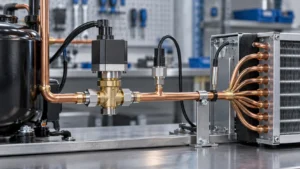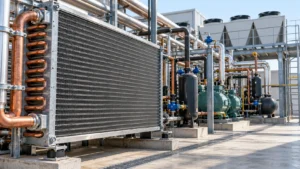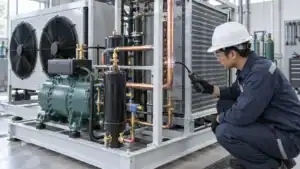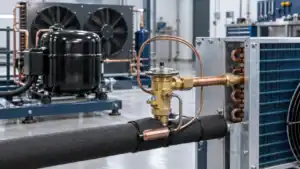

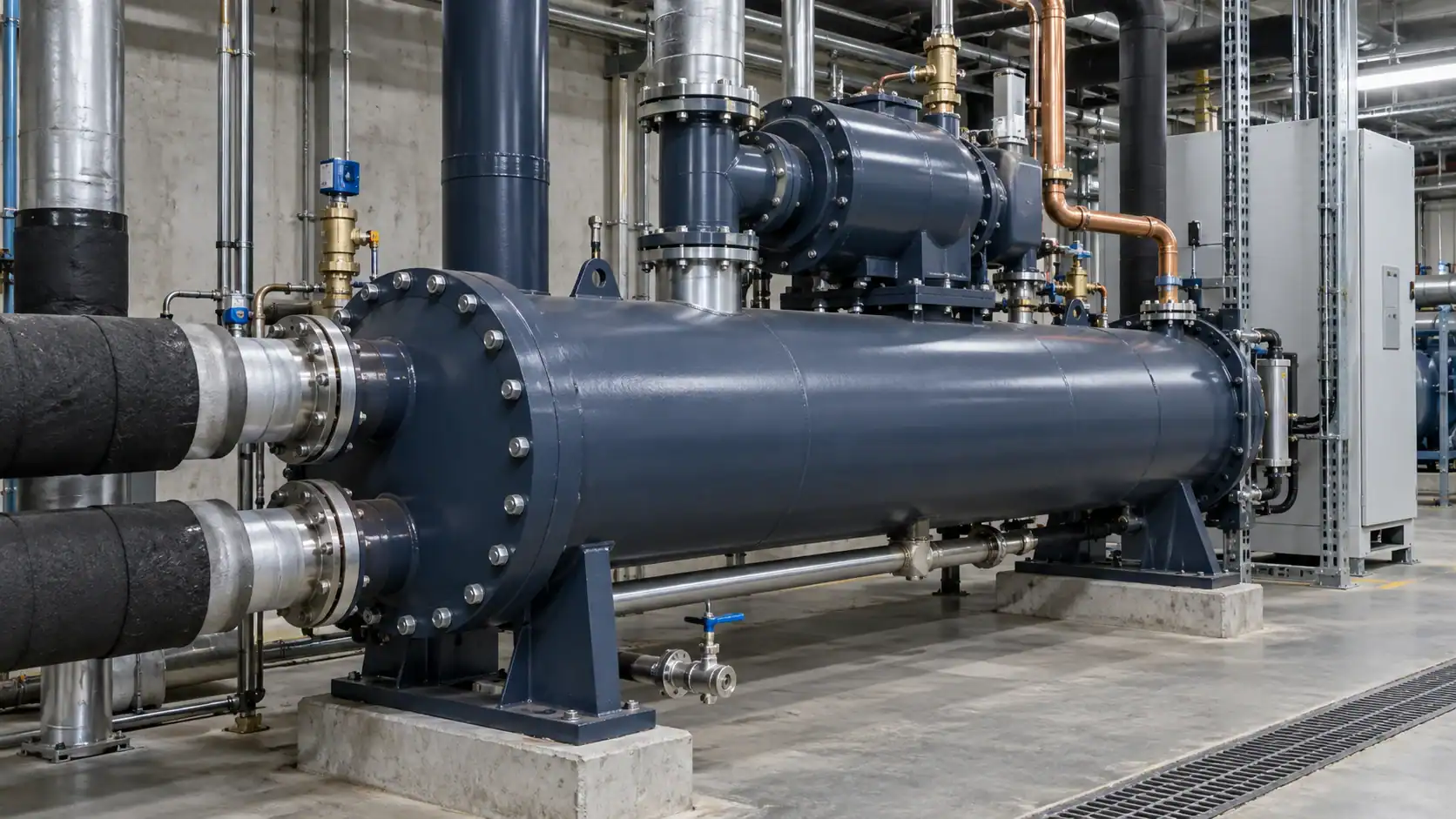
A water-cooled condenser transfers heat from a refrigeration or heat-pump refrigerant circuit into circulating water. The useful selection variables are heat-rejection duty, entering and leaving water temperature, water flow, construction, water quality, allowable pressure drop, service access, and the evidence needed for a quotation. This guide helps engineers, OEM buyers, distributors, and maintenance teams decide which arrangement to specify before requesting a condenser or replacement heat exchanger.
What a water-cooled condenser does
In a refrigeration cycle, the compressor raises the refrigerant pressure and temperature. The condenser then removes that heat so the refrigerant can change from vapor to liquid. In a water-cooled design, the condenser water receives the heat through a tube wall or plate surface. The warmed water then moves to a cooling tower, dry cooler, process loop, or another heat-rejection device.
The condenser is therefore one part of a heat-rejection system. A replacement selected only by refrigerant connection size can perform poorly if the water temperature, flow, fouling condition, or pressure drop differs from the original design. The EPA cooling tower guidance explains that cooling towers reject heat from recirculated water mainly through evaporation. The U.S. Department of Energy cooling-water guidance also connects tower evaporation and blowdown with dissolved mineral concentration in the condenser-water loop.
The first technical question is not “Which condenser is cheapest?” It is “What heat must be rejected, into which water loop, under which design conditions?”
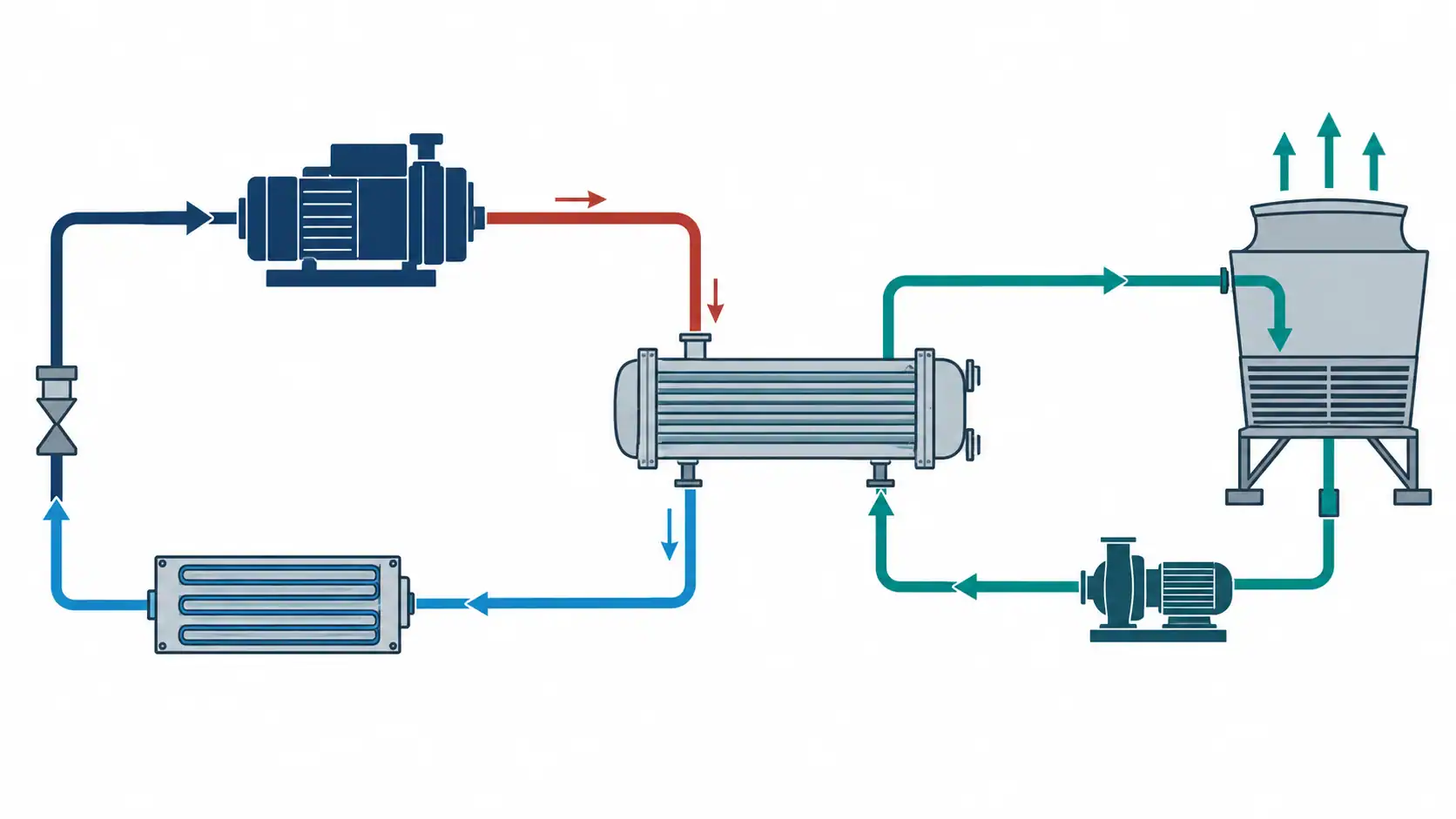
Choose the heat-rejection arrangement before the condenser
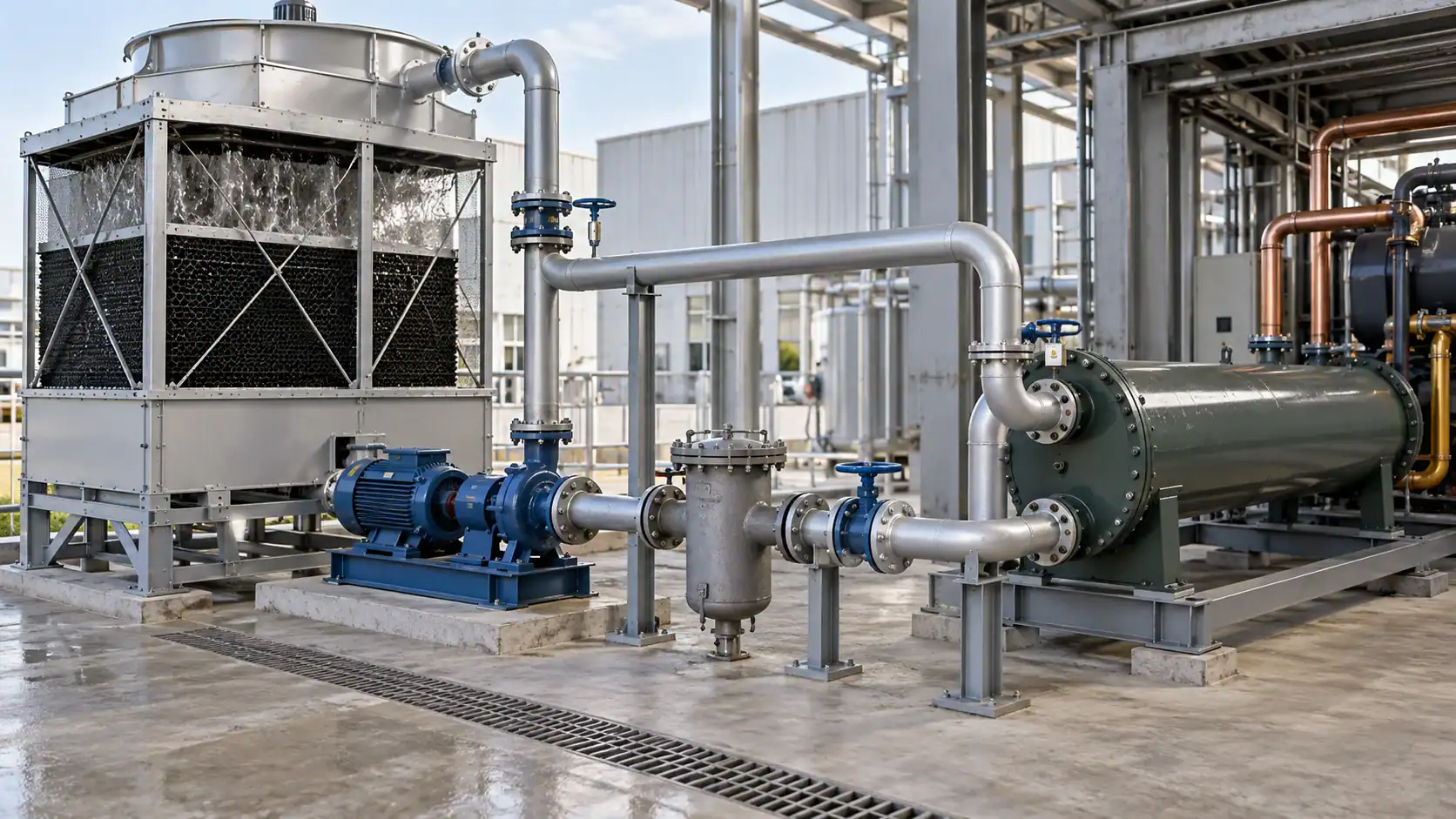
Water-cooled condensers commonly sit in one of three arrangements. Each arrangement changes the water chemistry, controls, maintenance access, and information a supplier needs.
| Arrangement | Typical water path | Main selection concern | RFQ evidence to provide |
|---|---|---|---|
| Once-through water | Source water enters the condenser and leaves to drain or treatment | Water temperature, availability, discharge rules, and corrosion or scaling risk | Source water analysis, flow limit, inlet temperature, outlet requirement |
| Open cooling-tower loop | Condenser water circulates between the condenser and an open tower | Concentration cycles, filtration, blowdown, biological control, and tower approach | Tower design data, water treatment plan, design flow, entering water temperature |
| Closed or process-water loop | Treated water or glycol mixture circulates through a closed circuit | Fluid concentration, freeze protection, pump head, and heat rejection at the final cooler | Fluid type and concentration, supply and return temperatures, flow, pressure limits |
| Hybrid or isolated loop | A plate or secondary heat exchanger separates two water conditions | Cross-contamination, approach temperature, and additional pressure drop | Primary and secondary fluid data, isolation requirements, allowable approach |
An open tower loop can reduce condensing temperature when the outdoor wet-bulb condition is favorable, but it brings water-treatment and fouling work into the selection. A closed loop can make fluid quality easier to control, but the pump, dry cooler, tower, or secondary exchanger must reject the added heat. The arrangement should be agreed before a supplier sizes the condenser surface.
Compare the main water-cooled condenser types
The construction determines how the heat-transfer surface can be cleaned, how much pressure drop is available, and how the condenser responds to water quality. The broad types of condensers guide is useful for the wider taxonomy. For a water-cooled RFQ, the following comparison is more practical.
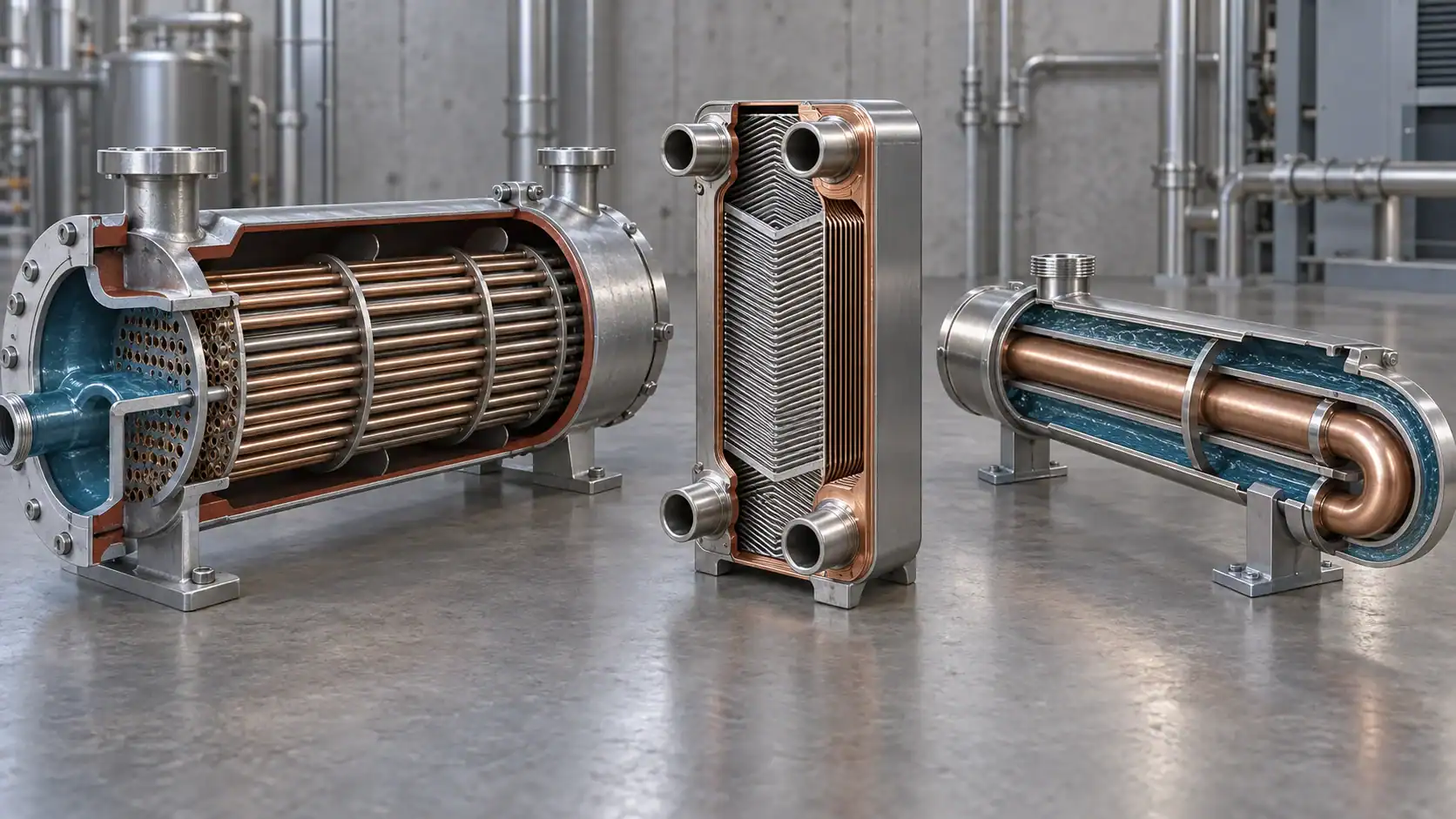
| Condenser type | Where it fits | Strength to verify | Limitation to check |
|---|---|---|---|
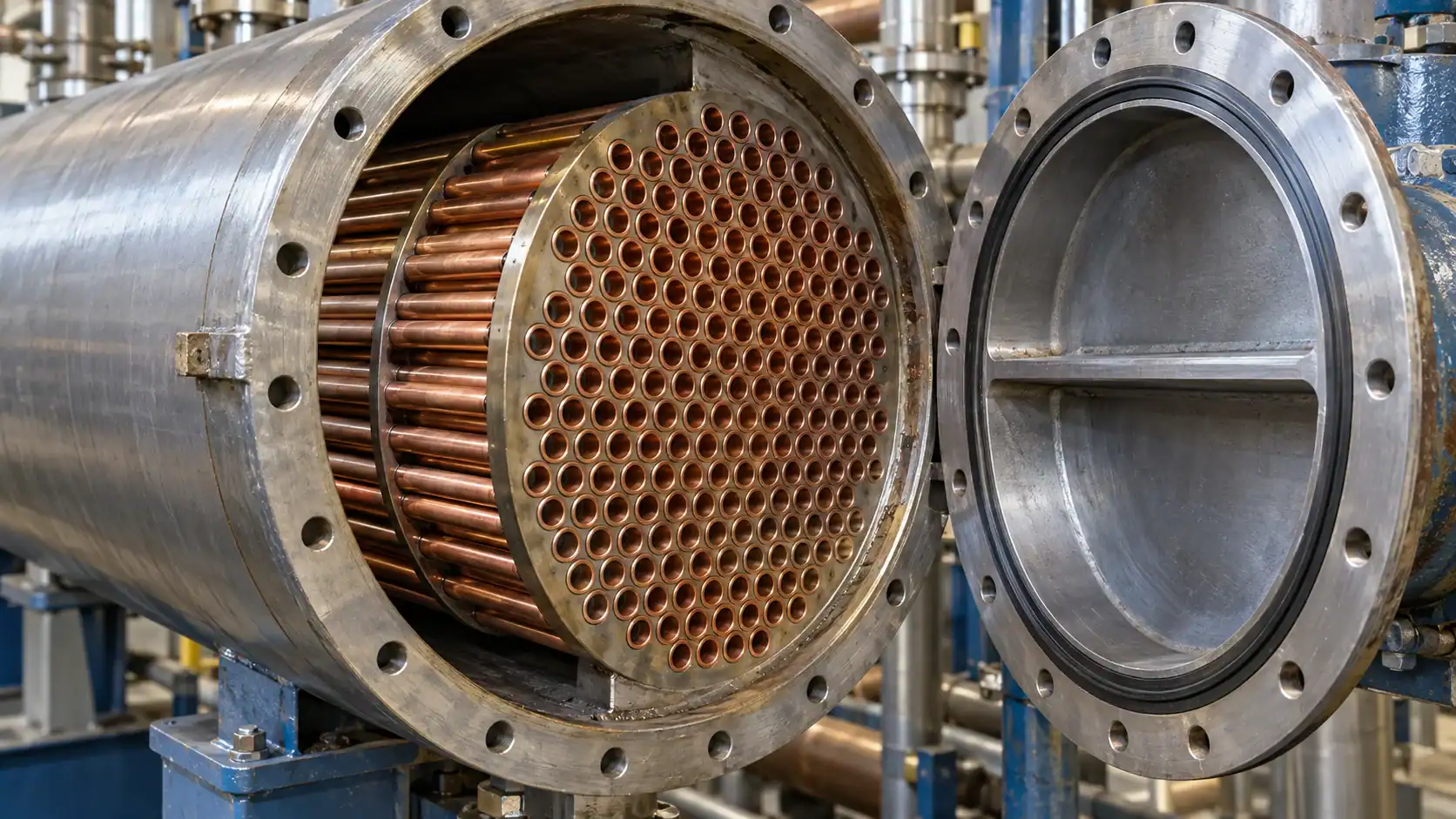
| Shell-and-tube | Industrial refrigeration, chillers, larger duty, and applications needing service access | Removable head or suitable cleaning access, tube material, tube-side velocity, and pressure rating | Larger envelope, weight, and installation clearance |
| Brazed plate | Compact packaged equipment and clean, treated water loops | Approach temperature, refrigerant and water pressure ratings, port arrangement, and fluid compatibility | Internal cleaning is limited if fouling or debris reaches the passages |
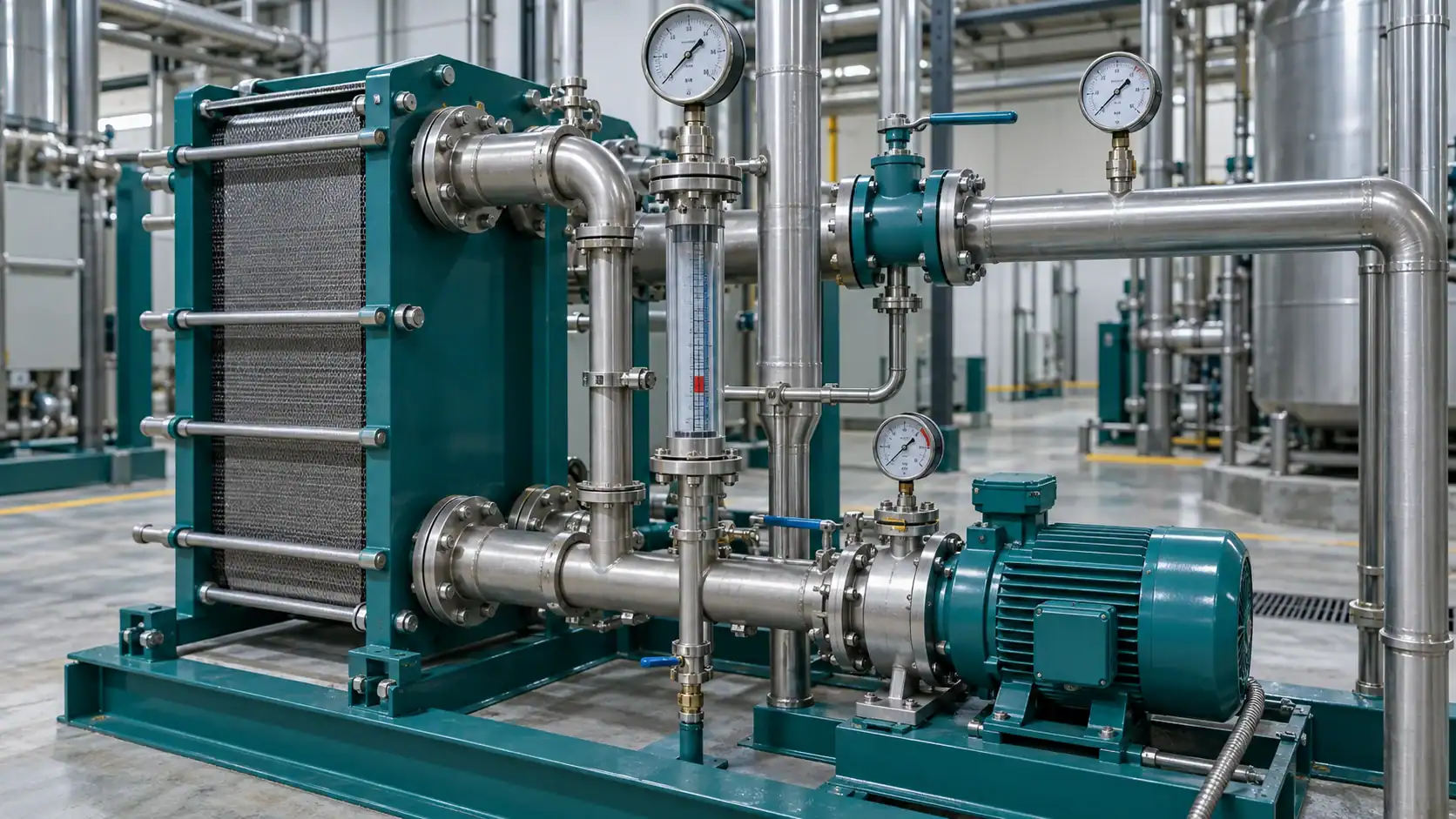
| Plate-and-frame | Larger modular systems or applications needing an openable heat-transfer pack | Gasket material, plate pattern, tightening dimension, and spare-plate availability | Gasket care, leakage control, and maintenance space |
| Coaxial or tube-in-tube | Smaller systems, compact skids, and dedicated circuits | Flow direction, pressure drop, tube material, and cleanability | Capacity range and service options can be narrower |
The phrase “water-cooled condenser” does not identify a single product geometry. A shell-and-tube condenser may be the right choice for a serviceable industrial system, while a compact plate design may suit a clean packaged loop. The correct choice depends on duty and maintenance conditions together.
Start with duty and water-side design conditions
Condenser sizing starts with heat rejection, not with the face dimensions of an old unit. The heat rejected by the condenser includes the evaporator load plus compressor power and any other heat entering the refrigerant circuit. A supplier normally needs the design or measured duty, refrigerant, condensing condition, and expected operating range.
Send these conditions in a consistent unit system:
- Refrigerant name and the operating or design condensing temperature and pressure.
- Required heat rejection or refrigeration capacity, including the rating condition.
- Entering and leaving water temperature, design flow, and allowable water-side pressure drop.
- Water or glycol composition, concentration, minimum temperature, and treatment limits.
- Refrigerant-side pressure, connection size, connection orientation, and control arrangement.
- Available footprint, service clearance, mounting points, insulation needs, and drain or vent requirements.
The entering water temperature is especially important. A condenser selected at 29 C entering water may not deliver the same condensing pressure at 35 C. Flow also matters. More flow can reduce the water temperature rise, but the pump must overcome the pressure drop and the system must keep velocity within a suitable range for the tube or plate material.
For replacement work, provide the original nameplate, a clear photograph of every connection, the old unit dimensions, and the reason for replacement. “Same size” is useful evidence, but it is not a complete design condition.
Water quality can decide service life
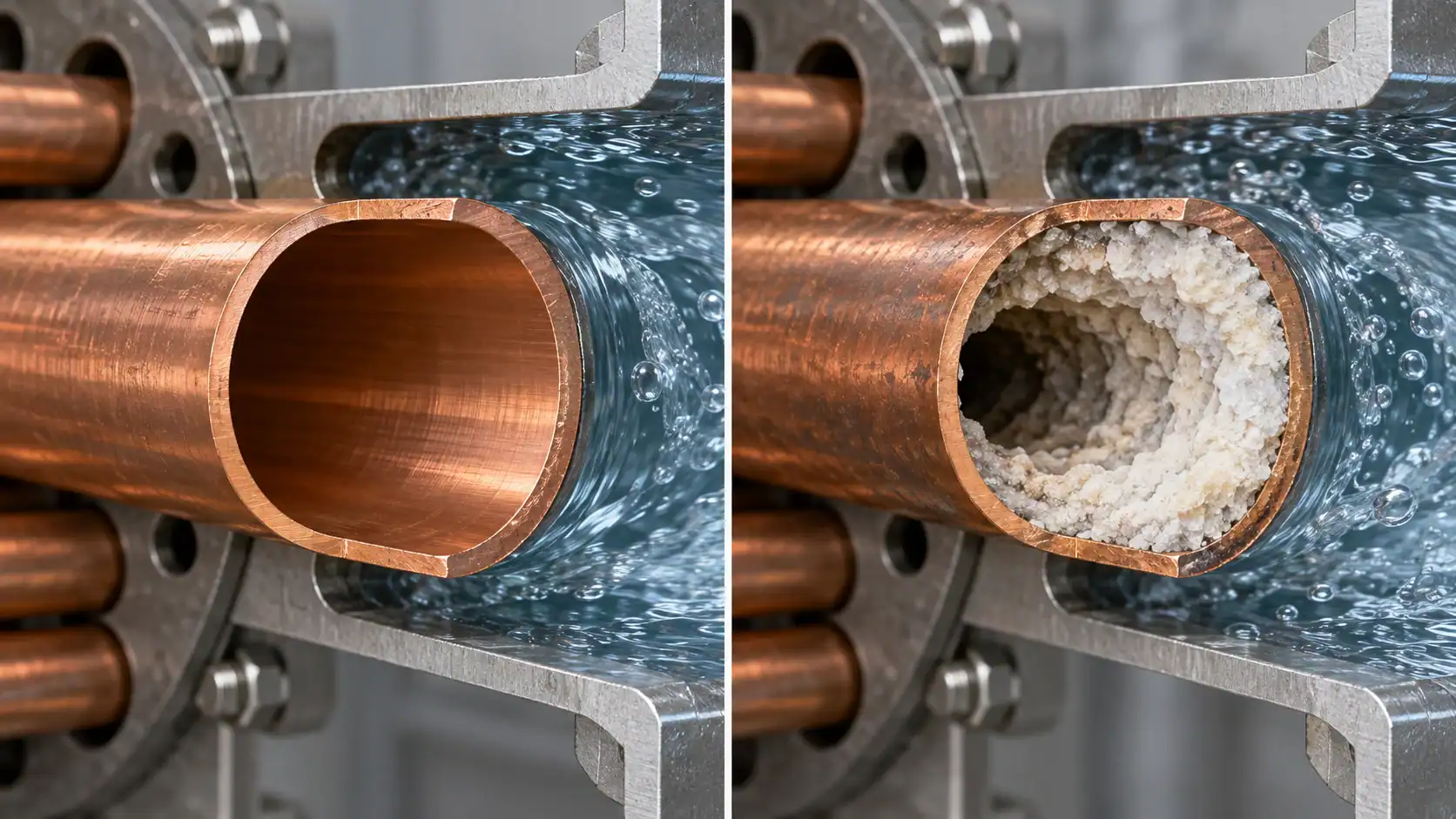
Water-side performance can decline even when the refrigerant circuit is charged correctly. Scale adds thermal resistance. Suspended solids can block strainers and passages. Corrosion can thin tubes or attack plates. Biological growth can restrict flow in an open loop. The ASHRAE cooling tower chapter treats basin condition, solids, and cleanliness as operating indicators, while the EPA facilities manual describes water-cooled condenser service features such as removable heads and water chemistry control points.
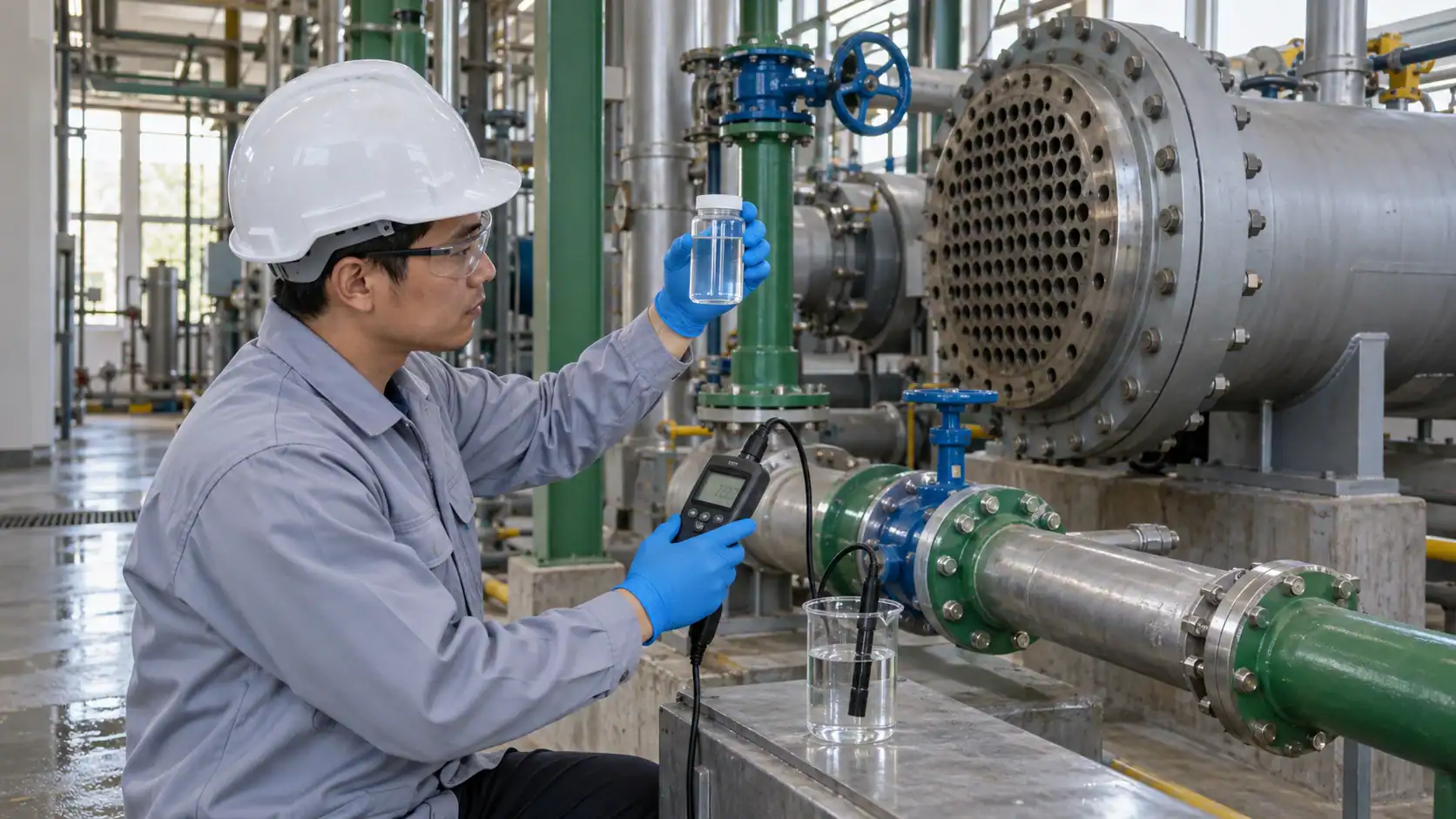
Ask for a current water analysis when the condenser will use an open tower loop, untreated source water, seawater-influenced water, or a process fluid with unusual chemistry. Useful data can include hardness, alkalinity, pH, conductivity, chloride level, suspended solids, biological control method, and the planned cycles of concentration. The exact acceptable range belongs to the selected material and treatment program.
| Field condition | What it can cause | Selection or operating response |
|---|---|---|
| High hardness or alkalinity | Mineral scale on heat-transfer surfaces | Confirm treatment, filtration, cleaning access, and a suitable surface or material |
| High chloride or aggressive chemistry | Pitting or general corrosion | Review tube, plate, brazing, gasket, and coating compatibility with the fluid data |
| Suspended solids | Strainer loading and passage blockage | Add filtration, confirm mesh and service access, and state the cleaning interval assumption |
| Biological activity | Slime, odor, restricted flow, and hygiene concerns | Coordinate biocide and blowdown control with the water-treatment plan |
| Low outdoor temperature in a water loop | Freeze damage during shutdown | Provide drain, heat tracing, glycol, circulation, or another verified freeze-protection method |
When condensing pressure rises, check water temperature, water quantity, pump operation, blocked filters, scale deposits, and the water valve before changing refrigerant charge. The Danfoss water-cooled condenser troubleshooting reference lists these causes as practical diagnostic checkpoints.
Select materials, tubes, and connections for exposure
Material selection follows the actual water, refrigerant, temperature, pressure, and cleaning method. Copper alloys may suit many treated water applications. Stainless steel may be considered when the fluid or cleaning regime requires a different corrosion strategy. Plate designs add questions about plate alloy, brazing material, gasket, and crevice exposure. A coating can help in a defined environment, but it is not a substitute for water treatment or a compatibility review.
Do not specify “stainless” or “anti-corrosion” without recording the fluid chemistry and the exact wetted parts. Include tube sheet, end cover, brazing, gasket, nozzle, and drain materials when the application is sensitive. A supplier should be able to state what the quoted configuration includes and which assumptions still need confirmation.
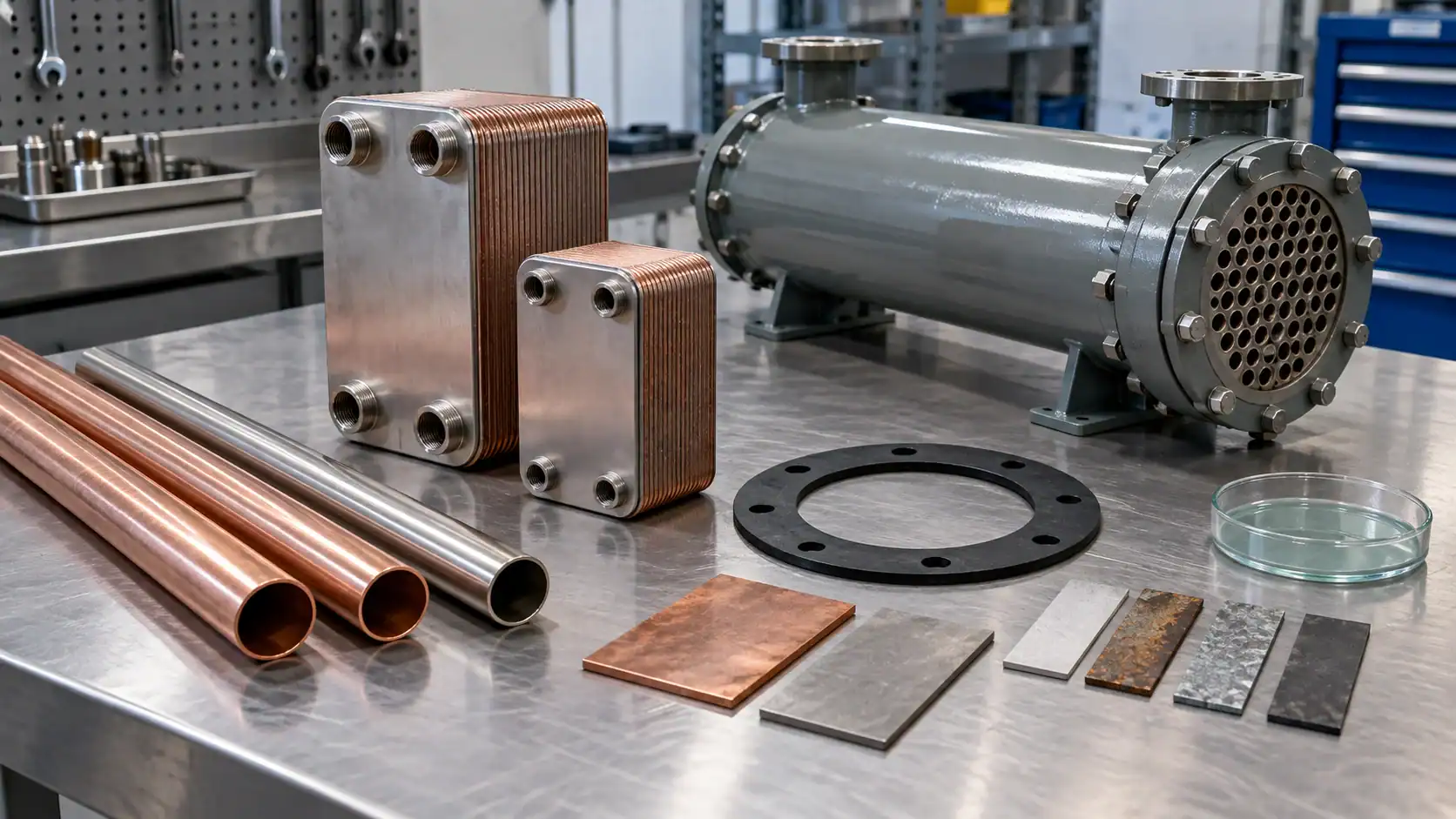
Connection details also affect installation. Confirm whether the water side needs flanges, threaded ports, grooved couplings, or welded connections. Record flow direction, vent and drain positions, sensor pockets, service clearance, and the orientation allowed by the plant piping. These details prevent a thermally suitable unit from becoming difficult to install or clean.
Match the condenser to service access
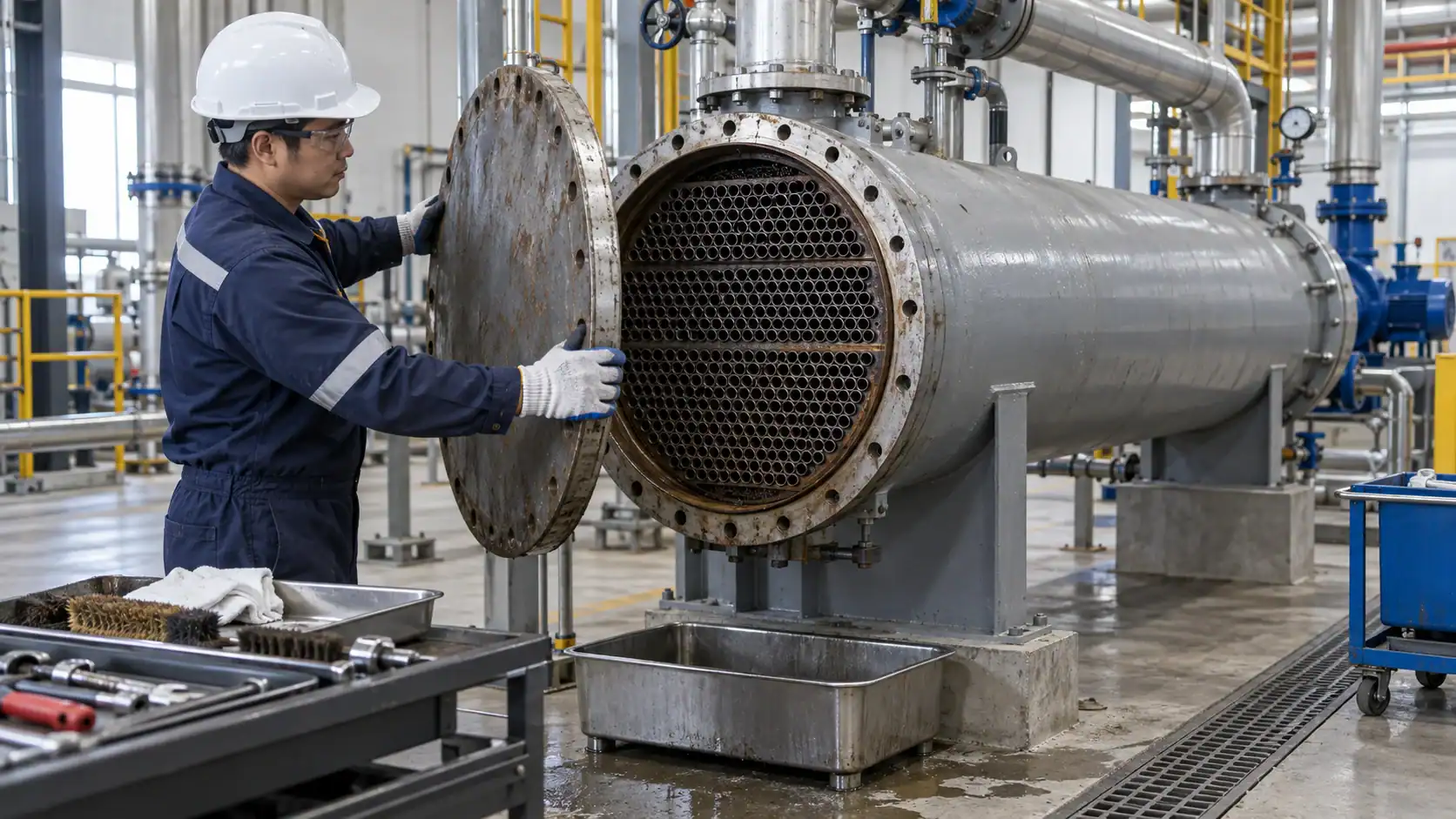
A water-cooled condenser needs space around the water circuit, even if it has no fan. Provide a strainer or filtration point upstream, flow verification, isolation valves, drain and vent access, and enough room to remove the head or plate pack when the construction requires it. The EPA facilities manual is a useful reference for why tube cleaning access and water chemistry measurement belong in the equipment layout.
For an existing plant, photograph the service side with the surrounding valves visible. Measure the pull-out direction, not only the body length. Note whether a crane, lifting eye, trolley, or removable panel is available. A compact replacement that cannot be removed later can create a higher lifecycle cost than a slightly larger serviceable unit.
Water-cooled versus air-cooled: when the trade-off makes sense
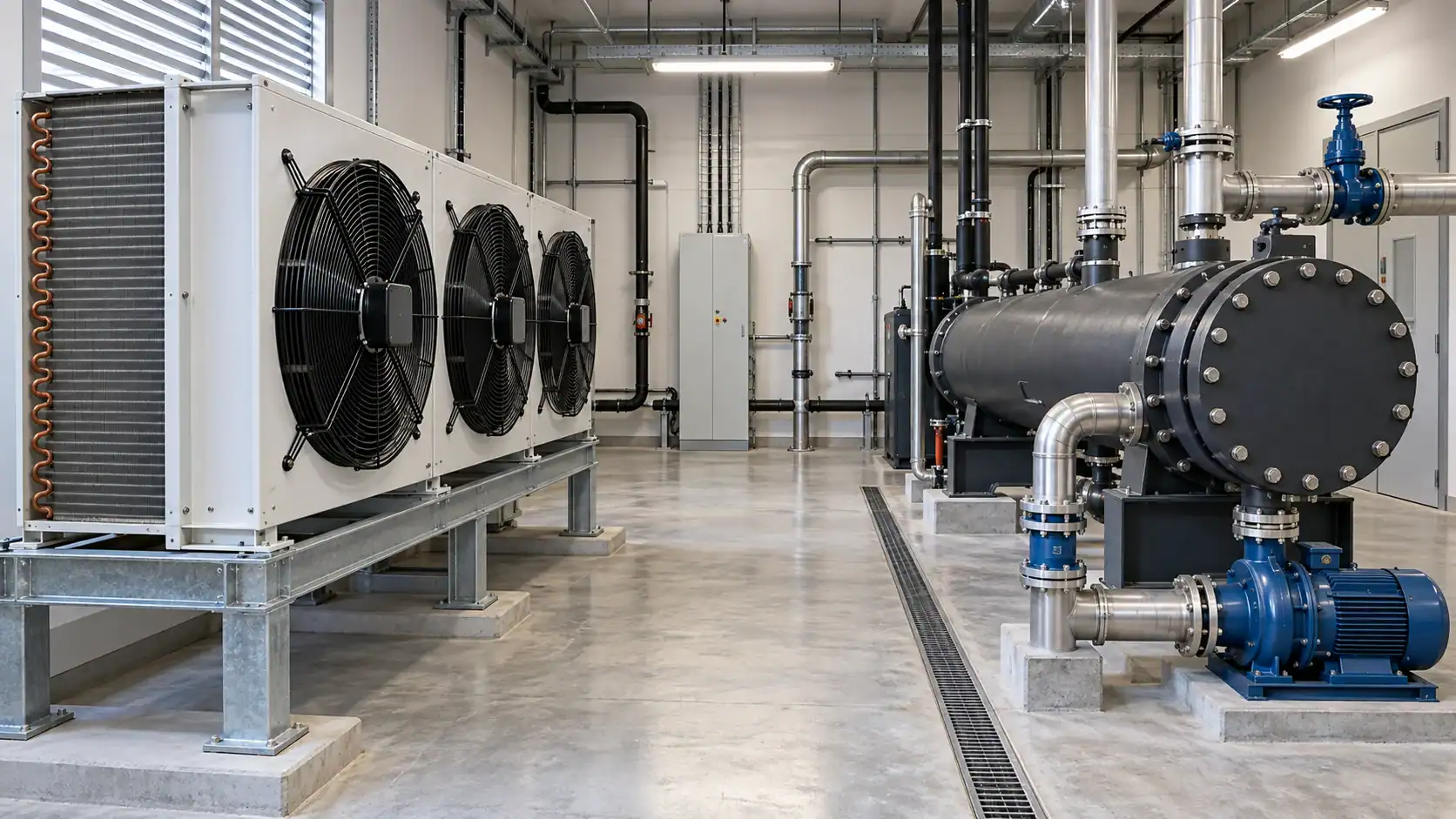
Water-cooled condensers can be attractive where a controlled water loop is available, indoor heat rejection is preferred, or the system benefits from a compact heat-transfer package. Air-cooled condensers may be simpler where water is scarce, water treatment is not practical, or outdoor airflow and noise conditions are acceptable. Neither arrangement is automatically better.
| Decision point | Water-cooled condenser | Air-cooled condenser |
|---|---|---|
| Heat-rejection medium | Water or water-based fluid | Outdoor or indoor air |
| Main auxiliary equipment | Pump, strainer, valves, tower, dry cooler, or process loop | Fans, motors, guards, and airflow path |
| Water treatment | Required when water chemistry can foul or corrode the circuit | Not applicable to the condenser coil |
| Installation footprint | Often compact at the heat exchanger, with additional water-loop equipment | Requires coil face area and airflow clearance |
| Maintenance risk | Water-side fouling, leaks, chemistry, and pump issues | Coil dirt, fan service, airflow restriction, and ambient temperature |
| Best first question | Is a stable, treatable water loop available? | Is the airflow path and outdoor design condition acceptable? |
The air-cooled condenser guide can support the alternative review. If the system is a water-cooled chiller, compare the whole condenser-water loop, tower, pump head, controls, and maintenance plan rather than comparing the heat exchanger shell alone.
Build an RFQ that suppliers can actually price
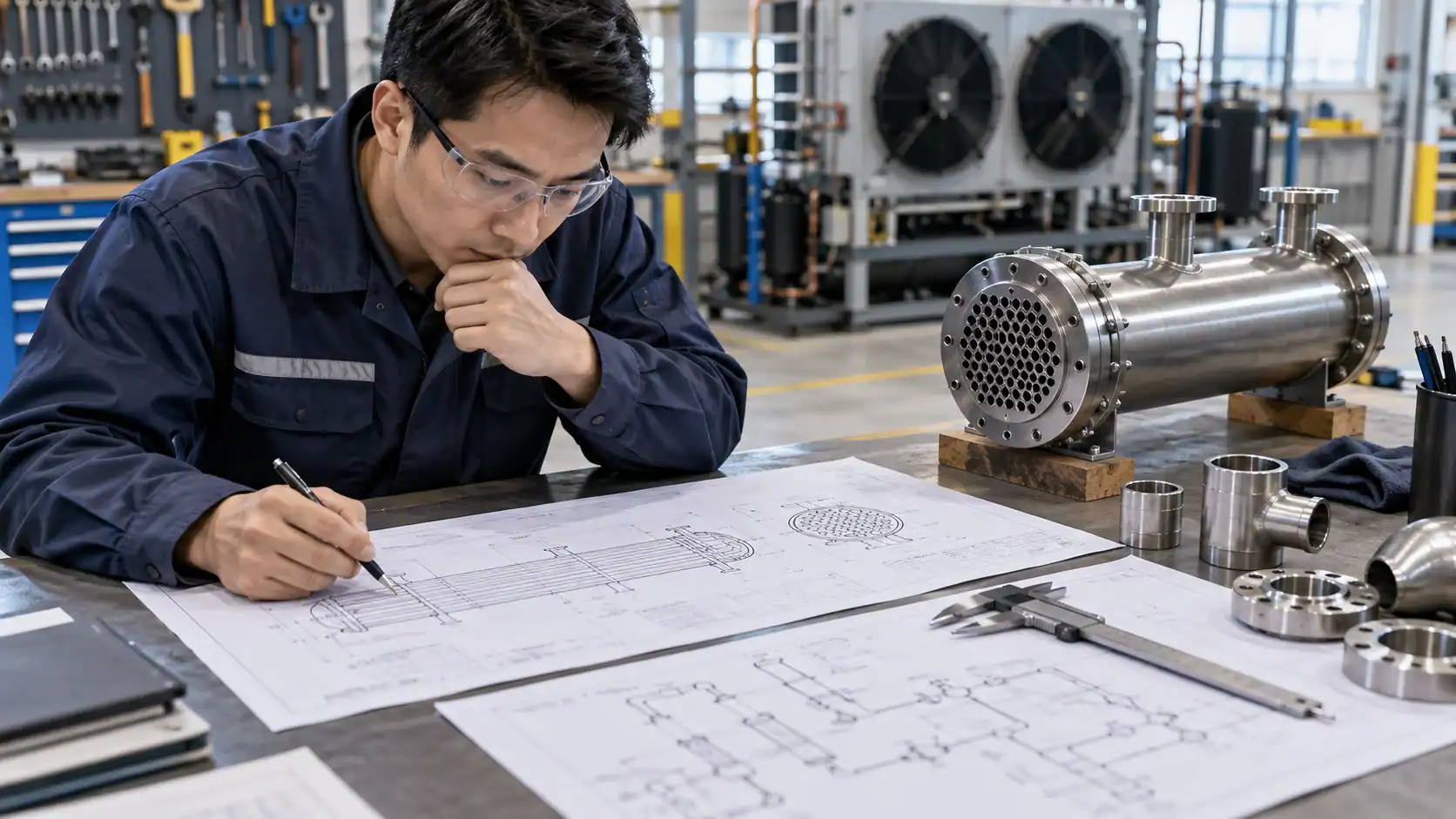
A useful RFQ gives a supplier enough information to distinguish a thermal problem from an installation problem. Attach drawings and photos instead of writing only “replace water-cooled condenser.” For custom coils or heat exchanger components, Domi’s industrial refrigeration coil page explains the type of drawing, application, and material discussion that can support a technical review.
| RFQ item | Minimum information | Helpful evidence |
|---|---|---|
| Duty and refrigerant | Heat rejection, capacity basis, refrigerant, condensing condition | Original selection sheet, operating log, or nameplate |
| Water side | Fluid, concentration, entering and leaving temperature, flow, pressure-drop limit | Water analysis, pump curve, flow reading, tower data |
| Construction | Shell-and-tube, plate, coaxial, or open-to-recommendation | Existing model, cutaway photo, cleaning requirement |
| Materials and connections | Wetted materials, ports, flow direction, pressure and temperature rating | Piping drawing, connection photographs, material restrictions |
| Envelope and service | Length, diameter, height, mountings, pull-out clearance, drains and vents | Dimensioned sketch, 3D model, installation photos |
| Commercial requirements | Quantity, sample need, packaging, inspection documents, destination | Purchase schedule and quality-document checklist |
If some values are unknown, label them as unknown and provide a measurement plan. A supplier can then return a quotation with clear assumptions instead of hiding uncertainty inside a nominal price.
Validate the sample before production release
The sample stage should verify the complete buyer requirement. A dimension check alone cannot confirm heat-transfer performance or water-side pressure drop. Agree the acceptance evidence before the sample is made.
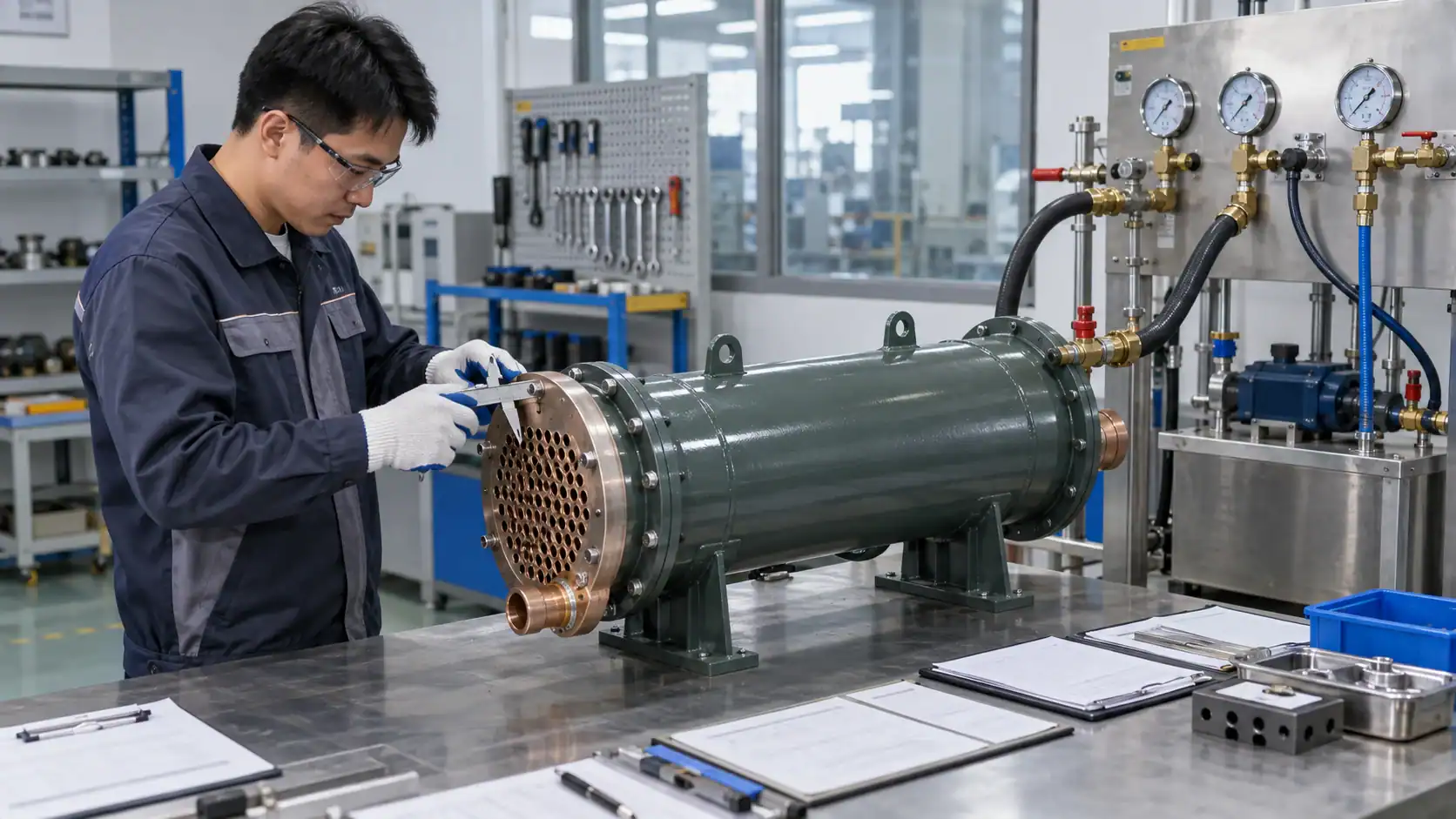
| Validation stage | Evidence to review | Release question |
|---|---|---|
| Identity and dimensions | Drawing revision, materials, ports, envelope, mountings | Does the sample match the approved installation and wetted-material scope? |
| Leak and pressure safety | Pressure or leak test record using the agreed method | Is the unit safe for the stated refrigerant and water-side pressure? |
| Thermal performance | Test condition, capacity, entering and leaving temperatures, flow | Does the result apply to the buyer’s design condition? |
| Hydraulic performance | Water flow, pressure drop, pump operating point | Can the existing pump and valves deliver the required flow? |
| Service and documentation | Cleaning access, drain and vent, inspection report, packing list | Can the plant install, maintain, identify, and reorder the unit? |
Use one drawing revision through quotation, sample, and production. If the water chemistry or duty changes, reopen the selection instead of treating the first approval as permanent. Domi’s testing lab page describes airflow, corrosion, pressure-safety, leak-testing, and performance-documentation capabilities that may be relevant to a confirmed project scope.
A practical selection sequence for a new or replacement condenser
Use this sequence when the application is still being defined:
- Identify the refrigerant circuit, required heat rejection, and the rating condition.
- Record the water-loop arrangement and the entering water temperature range.
- Measure or estimate design flow and set an allowable water-side pressure drop.
- Obtain water chemistry and define filtration, treatment, and freeze protection.
- Choose a construction that matches duty, fouling risk, materials, and cleaning access.
- Confirm connection orientation, service envelope, drain and vent positions, and mountings.
- Send the complete RFQ package with photos, drawings, and known uncertainties.
- Review the supplier drawing, test evidence, and assumptions before production release.
For a custom component review, include the same information in the first contact. Domi’s engineering capabilities page covers requirement review, heat-transfer calculation, material selection, sample development, and validation guidance. The final scope remains subject to the project data and approved drawing.
Frequently asked questions
What is a water-cooled condenser?
A water-cooled condenser is a heat exchanger that removes heat from high-pressure refrigerant vapor and transfers that heat to circulating water. The warmed water then goes to a cooling tower, dry cooler, process loop, or another heat-rejection device.
How does a water-cooled condenser work?
Refrigerant condenses on one side of a tube or plate surface while water flows on the other side. Heat crosses the surface, the refrigerant leaves as a liquid, and the water carries the rejected heat away. Actual performance depends on duty, temperature, flow, surface condition, and pressure drop.
What water flow does a water-cooled condenser need?
There is no single flow value for every condenser. The required flow is calculated from heat rejection, water temperature rise, fluid properties, and the permitted pressure drop. Send the duty, entering and leaving water temperature, and pump information for a meaningful selection.
What are the main types of water-cooled condensers?
Common types include shell-and-tube, brazed plate, plate-and-frame, and coaxial or tube-in-tube designs. The best type depends on capacity, water cleanliness, material compatibility, service access, pressure rating, footprint, and lifecycle maintenance.
Is a water-cooled condenser better than an air-cooled condenser?
It depends on the site. Water cooling can suit compact indoor equipment and a controlled water loop. Air cooling can suit sites where water treatment, pumps, towers, or water discharge are impractical. Compare the complete system and maintenance plan.
What information should I send for a water-cooled condenser quote?
Send the refrigerant, heat rejection or capacity basis, condensing condition, water fluid and chemistry, entering and leaving water temperature, flow, allowable pressure drop, connections, dimensions, service clearance, quantity, destination, and any drawing or nameplate. Photos of the installed unit help confirm the replacement scope.
Send the water loop and condenser duty together
A water-cooled condenser quotation becomes more reliable when the heat duty and the water-loop conditions are sent as one package. Include the water chemistry, service access, connection layout, and acceptance evidence so the proposed construction can be checked before the purchase order.