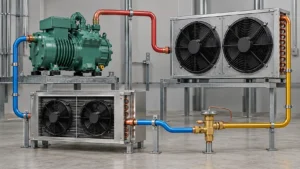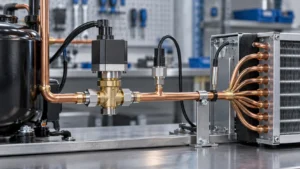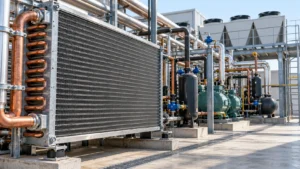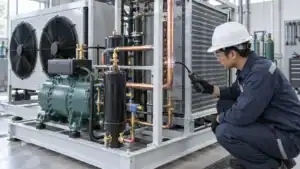

CO2 refrigeration coil burst pressure testing is a destructive or limit test used to understand the pressure boundary of a coil specimen. It is not the same as a leak test, a proof test, or the working pressure assigned to a production part. The responsible engineer, applicable code, and customer specification must define the test pressure, medium, fixture, exclusion zone, instrumentation, and acceptance record. For an OEM buyer, the safest deliverable is a traceable pressure-evidence package that connects the coil revision, test method, instrument identity, result, and release decision without publishing an unverified pressure value.
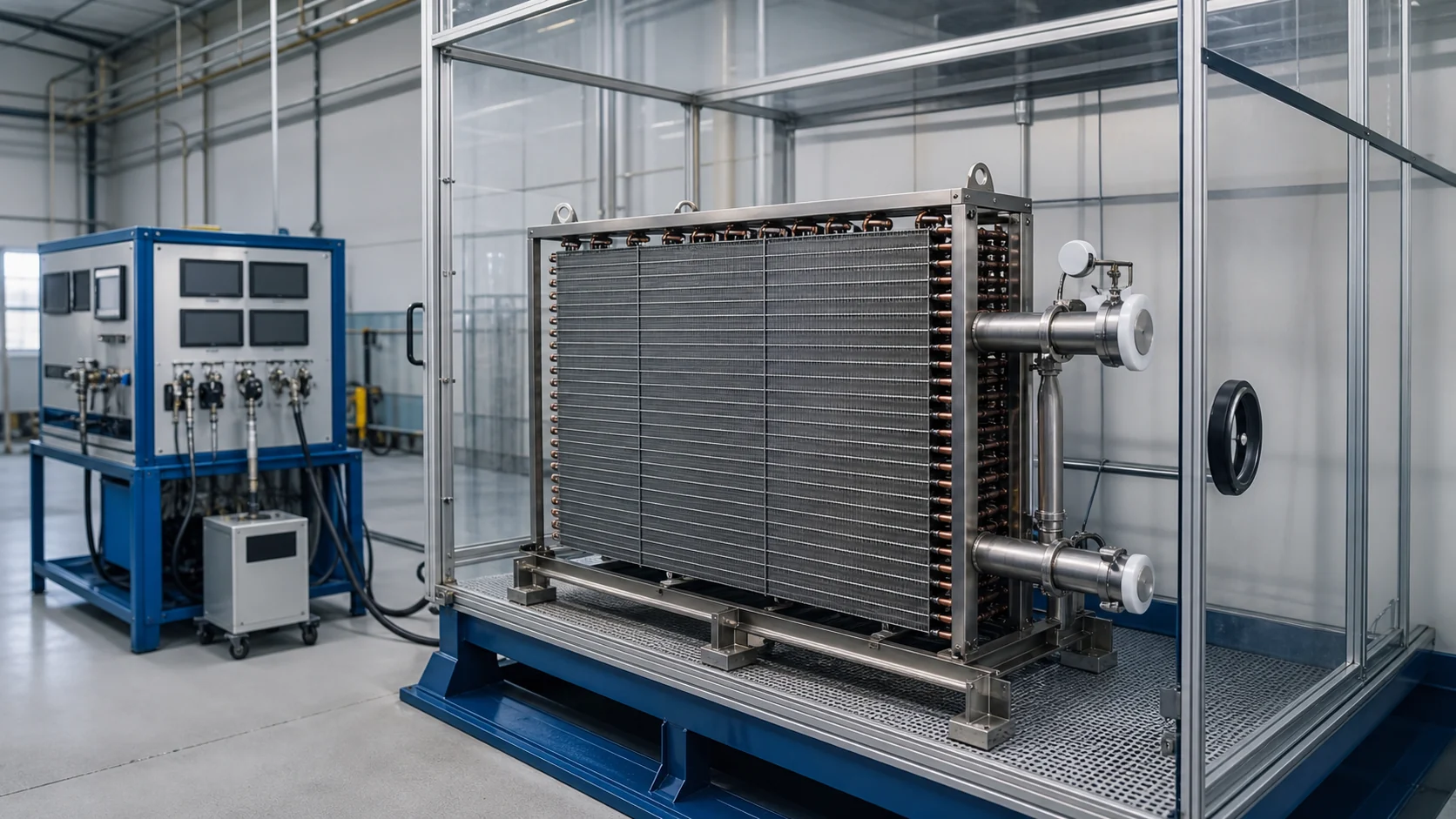
What a CO2 coil burst test answers
A burst test asks when a pressure boundary loses structural integrity under a specified test setup. The result belongs to the tested specimen and its exact configuration: tube material, header geometry, joints, caps, fixtures, temperature, medium, and test method. It does not automatically become the allowable working pressure for every coil made from the same drawing.
The test is normally part of a wider engineering plan. A leak test looks for escape through a boundary. A proof or pressure test checks a defined pressure condition without intending to damage the part. A burst test explores a failure boundary and may consume the specimen. A working or design pressure is a system requirement that must be assigned through the applicable design rules and operating envelope. A supplier that reports only “pressure tested” has not explained which question was answered.
| Term | Engineering question | What the buyer should request |
|---|---|---|
| Working pressure | What pressure may the released component see during the defined operating envelope? | Approved design basis, refrigerant state, temperature range, relief strategy, and responsible sign-off |
| Design pressure | What pressure boundary was used to size and select the component? | Drawing revision, material basis, joint design, and code or customer rule used |
| Proof pressure | Can the specified specimen tolerate a controlled pressure condition without unacceptable deformation or leakage? | Method, medium, hold or observation rule, instrument identity, and post-test inspection |
| Leak test pressure | Can the test detect leakage at the required sensitivity and boundary? | Detection method, calibration, circuit coverage, pass criteria, and report |
| Burst pressure | At what condition did the tested specimen lose integrity under the agreed setup? | Specimen identity, fixture, sequence, observed failure mode, raw record, and disposition |
Do not use a burst result as a marketing number. The useful question is whether the test supports a defined safety margin and release decision for the exact product configuration. A qualified engineer should also confirm whether the coil is treated as a pressure vessel, a heat exchanger, piping component, or another category under the project rules.
Why CO2 projects need an explicit pressure boundary
CO2 systems can operate across subcritical and transcritical conditions, so the refrigerant name alone does not define a coil’s pressure duty. State whether the component is an evaporator, gas cooler, condenser, intercooler, receiver-side exchanger, or another heat-transfer role. Identify the highest expected pressure and temperature combination, relief interfaces, isolation conditions, and the operating state that controls the design review.
Use the current project and jurisdiction requirements rather than copying a number from an unrelated coil. ASHRAE’s refrigeration resources identify Standard 15 for refrigeration-system safety and Standard 34 for refrigerant designation and safety classification. The ASHRAE refrigeration resources page is a starting point, not a substitute for the purchased standard or the responsible engineer’s interpretation. IIAR also publishes a CO2 closed-circuit refrigeration safety standard resource; confirm whether its scope and edition apply to the project.
ASME’s BPVC standards family includes pressure-vessel construction, inspection, and certification resources. Whether a particular coil is within a code scope, requires a customer rule, or follows another jurisdictional path is a project decision. Record the applicable rule in the RFQ and never imply certification that has not been verified.
Define the pressure boundary before requesting a quotation
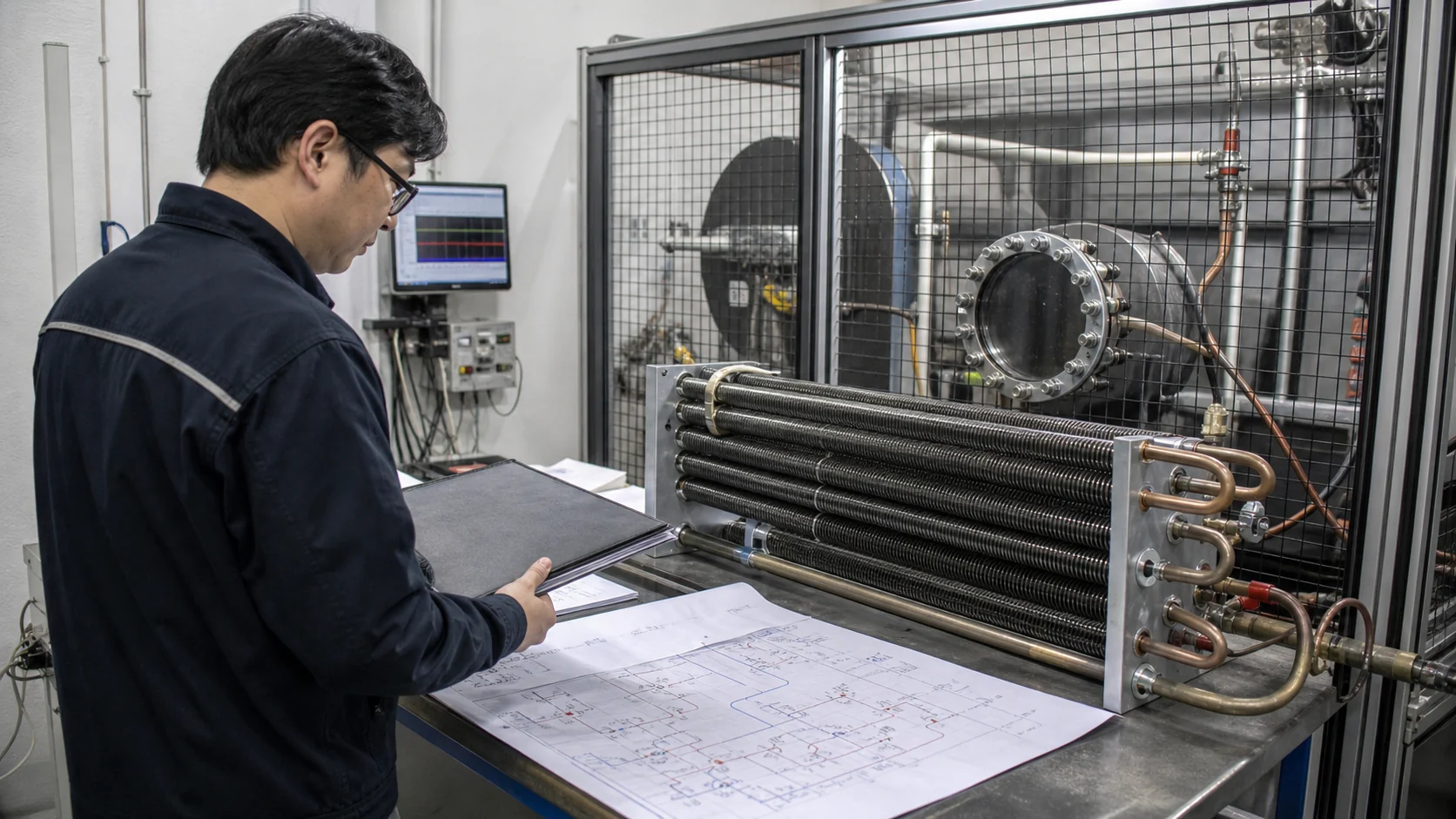
Start with the latest drawing and mark every pressure-containing boundary: tubes, headers, return bends, brazed or welded joints, caps, distributor connections, valves, plugs, service ports, and any factory-installed accessories. Identify which circuits are tested together and which are isolated. A coil can pass a single-circuit check while an untested branch, cap, or header interface remains outside the evidence boundary.
Record the refrigerant role, temperature envelope, design pressure basis, connection orientation, material specification, wall or tube requirement where applicable, joint process, heat-treatment or cleaning requirement, relief interfaces, and the intended test medium. The test medium is a safety decision. Do not improvise a compressed-gas test or pressurize an unknown assembly. Water, inert gas, and other media have different stored-energy and contamination implications, and the responsible engineer must select the method.
Inspect the joints and instrumentation that control confidence
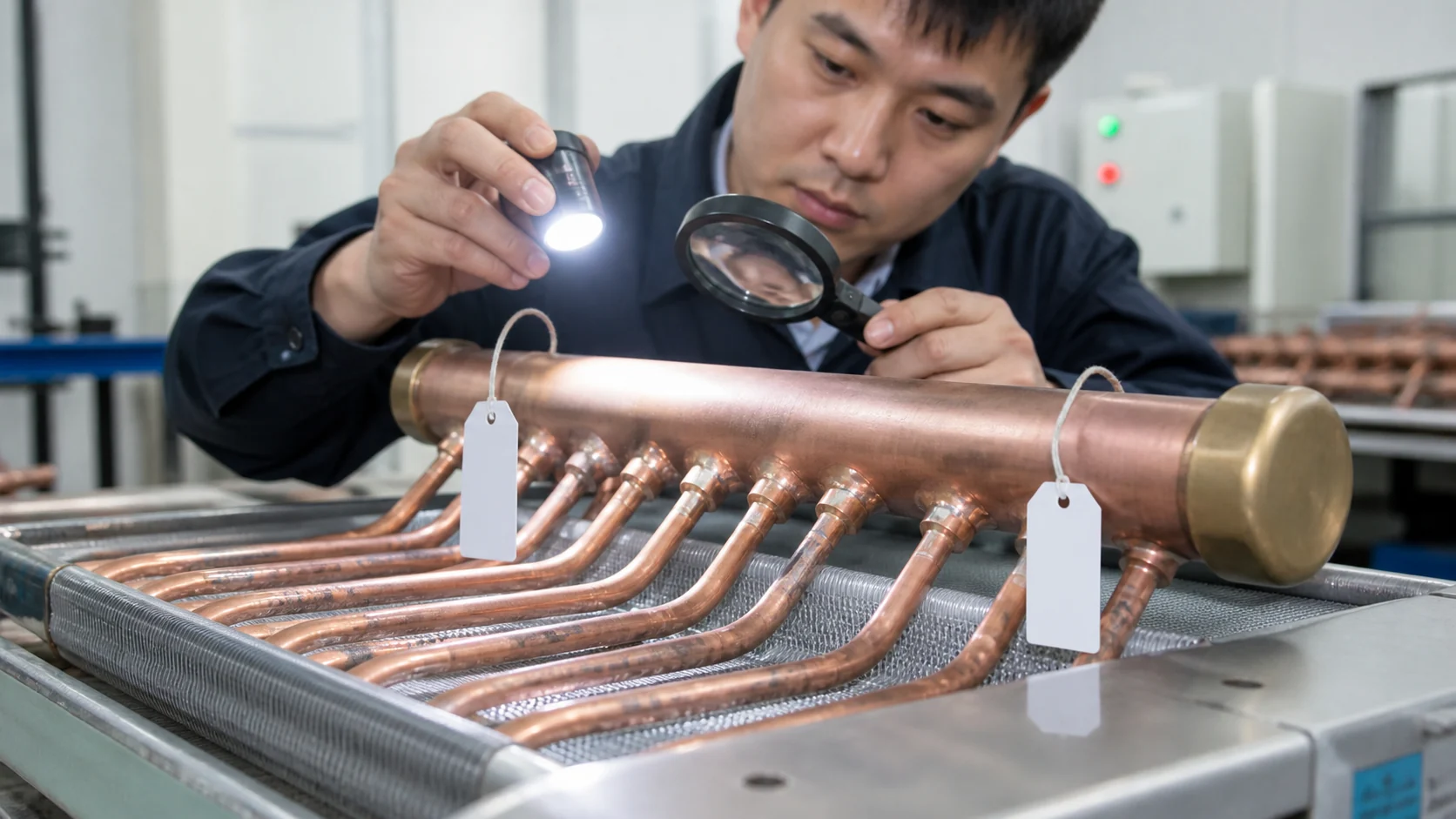
Pressure evidence is only as credible as the boundary and the measurement chain. Inspect headers, return bends, brazed or welded joints, caps, threaded interfaces, valves, and supports before connecting the test fixture. Keep the coil revision, material lot, joint process, operator or station record, and inspection status together. If a defect is repaired, preserve the original result and record the repaired specimen as a new configuration or a controlled deviation.
Use calibrated instrumentation with a range and accuracy suitable for the test plan. Record the instrument identity, calibration status, data-logging method, sampling or observation sequence, isolation-valve position, and the person responsible for the test. The visible display in a photograph is not a test record. A raw file, signed report, or controlled digital record should be linked to the specimen and the fixture.
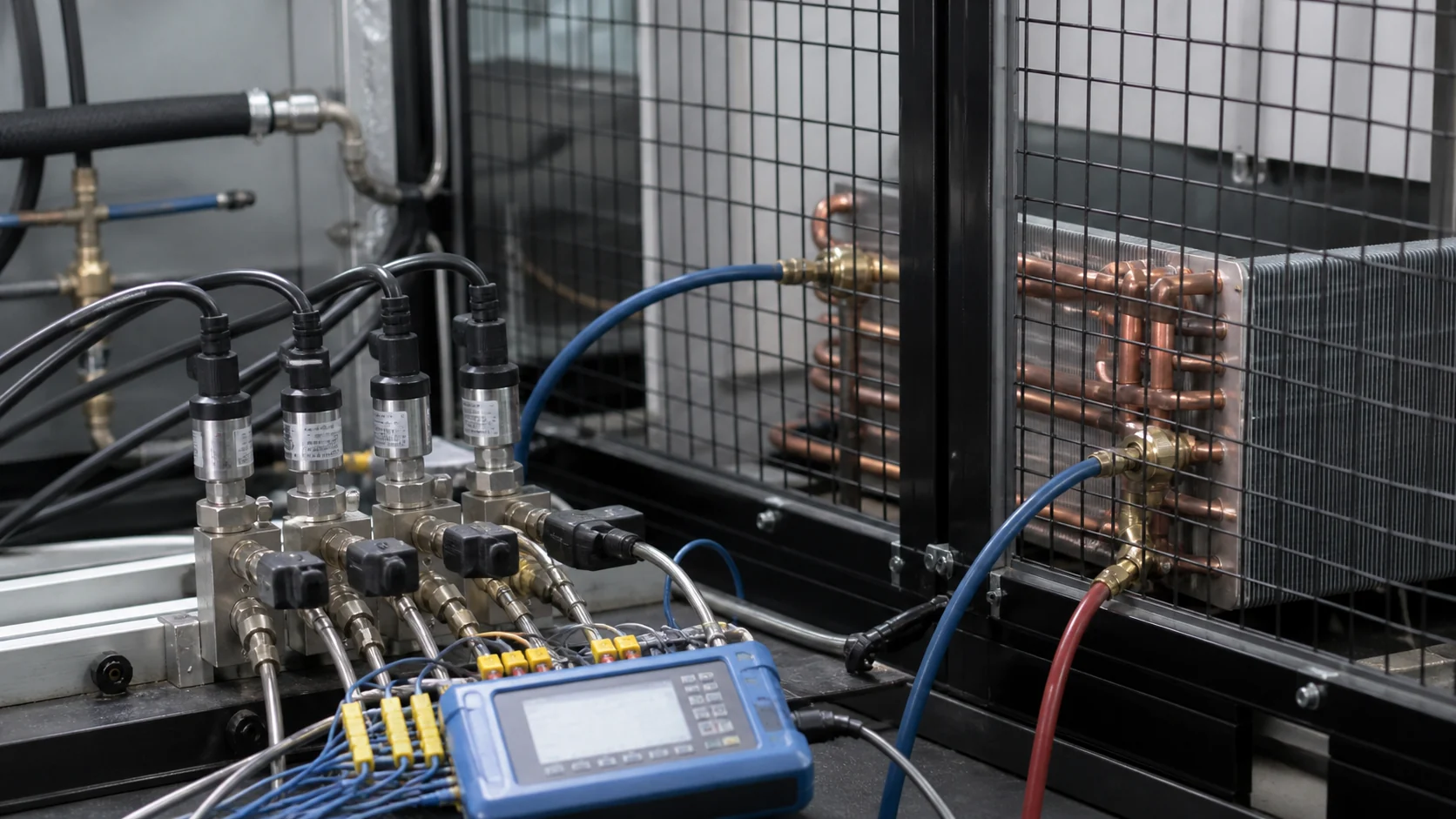
The evaporator coil leak diagnosis guide is the adjacent owner for leak-location logic. Link to it when a project still has an open leak question, but keep burst or proof evidence as a separate decision gate.
Keep leak, proof, and burst work in separate test records
One test report should not hide several different objectives. Name the test type in the request, identify the specimen, and state whether the result is destructive. If a burst specimen is cut open or repaired afterward, it cannot silently return to production stock. If a proof test leaves the part unchanged, retain the post-test inspection and release status.
| Test activity | Main purpose | Minimum record boundary | Production implication |
|---|---|---|---|
| Visual and dimensional inspection | Confirm that the specimen matches the released definition before pressure work | Drawing revision, material or lot, dimensions, joints, caps, connections, and photos | Hold if a pressure-critical feature is out of definition |
| Leak test | Detect escape from the defined circuit or pressure boundary | Medium, detection method, sensitivity or pass rule, instrument, circuit coverage, and result | A failed leak result is a containment or rework decision, not a burst result |
| Proof or pressure test | Demonstrate response at a controlled specified condition | Test sequence, medium, instrument, observation or hold rule, post-test inspection, and disposition | Release only when the stated proof scope is met and documented |
| Burst test | Characterize failure behavior of the tested specimen under the agreed setup | Specimen identity, fixture, remote operation, sequence, raw record, failure location, and disposition | Treat specimen as destructive unless the responsible engineer states otherwise |
| Post-test review | Connect evidence to the product and change decision | Signed report, deviation log, revision comparison, and approval owner | No production release without a clear status and next action |
Build a safe test cell and exclusion boundary
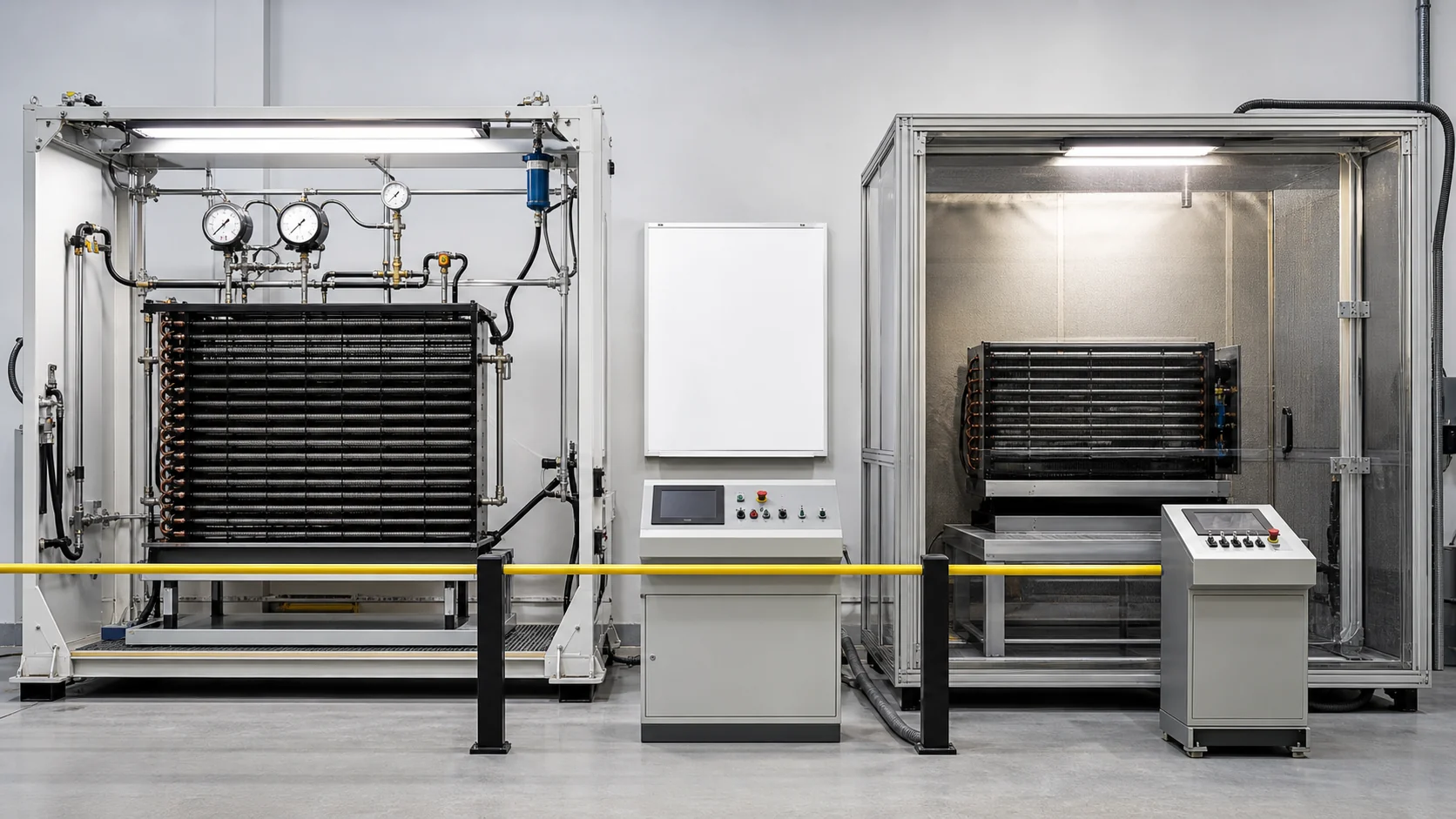
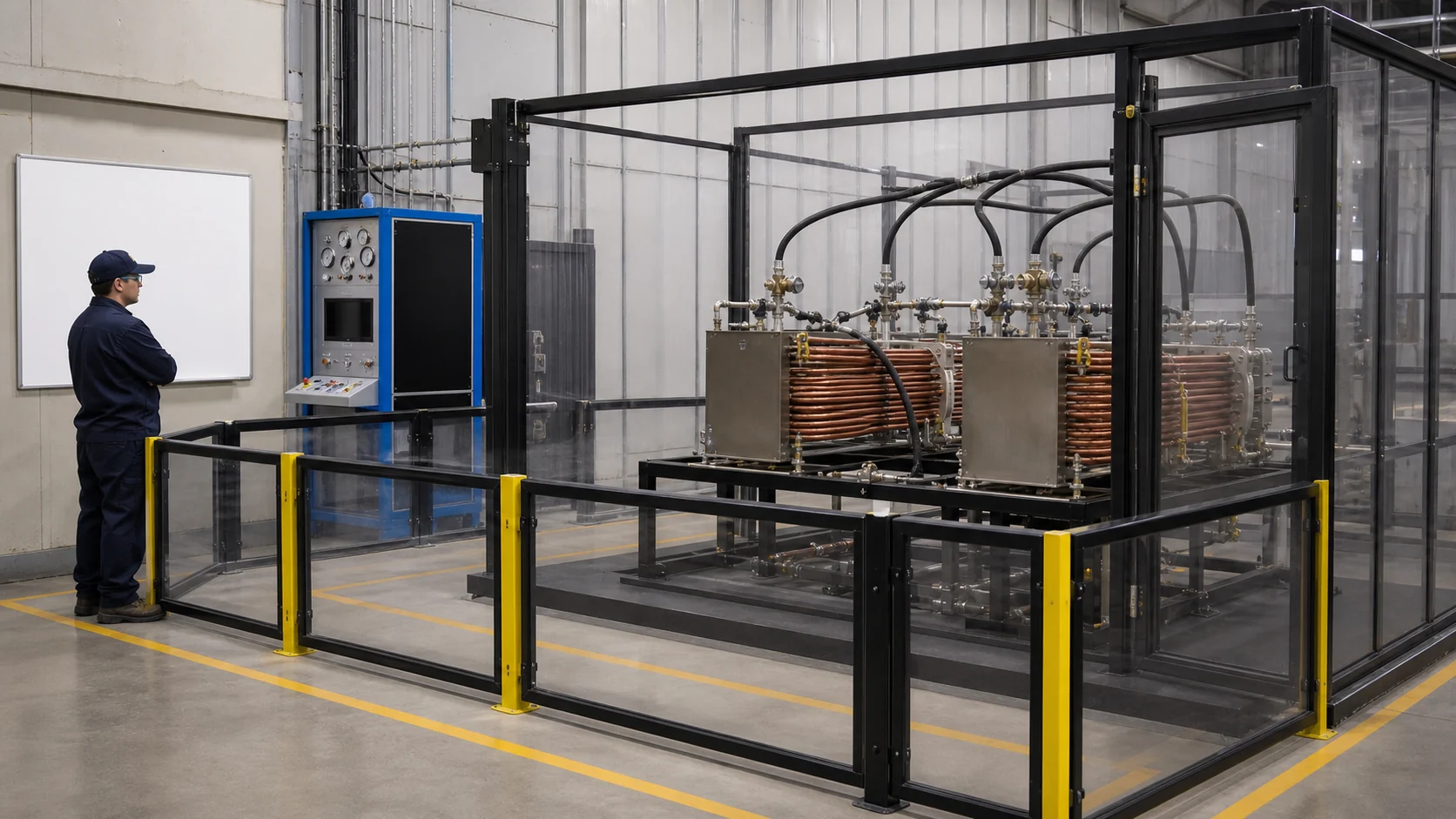
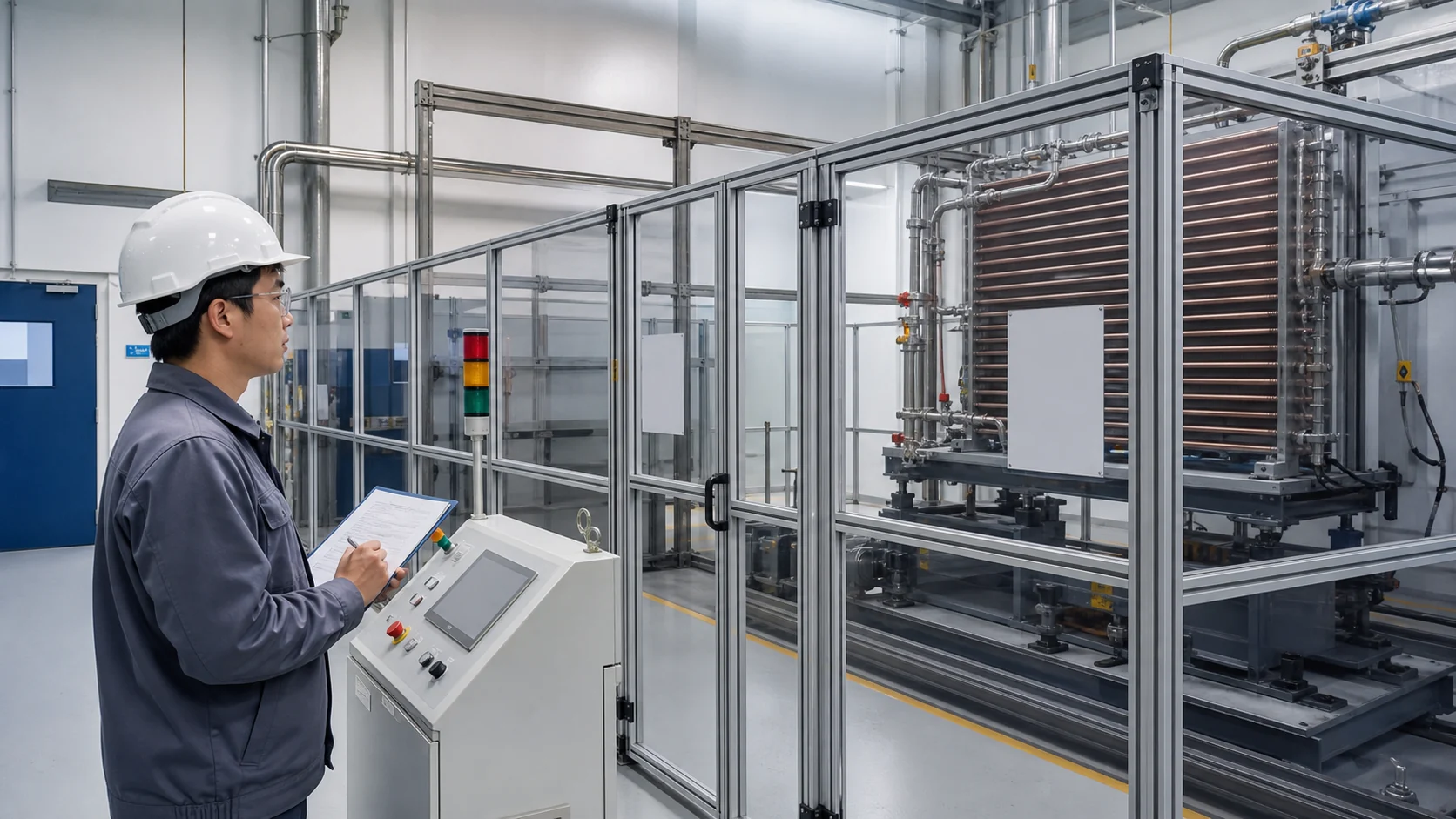
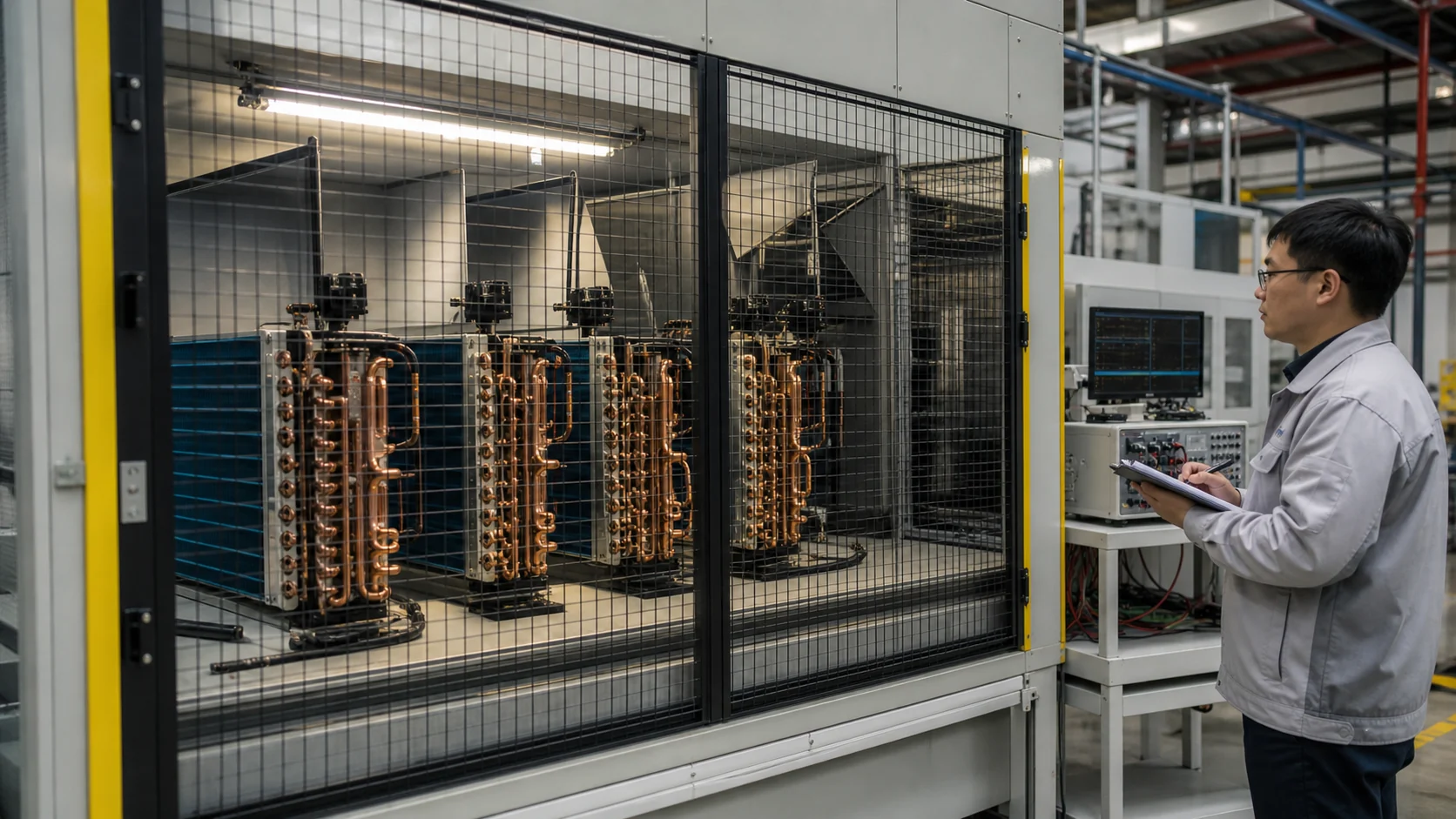
The pressure-test fixture should control access, remote operation, energy release, hoses, fittings, vents, drains, and emergency response. A barrier is not proof that the test is safe; it is one part of a risk assessment. Confirm the fixture rating, restraint method, relief or isolation approach, camera or observation method, evacuation route, lockout procedure, and inspection before the test starts.
Do not show or publish a “burst moment” as if it were a routine factory demonstration. The buyer needs the safe setup, the controlled method, and the evidence chain. If the project requires a destructive test, use the responsible engineer’s procedure and a facility authorized for the task.
Make test results traceable to the physical coil
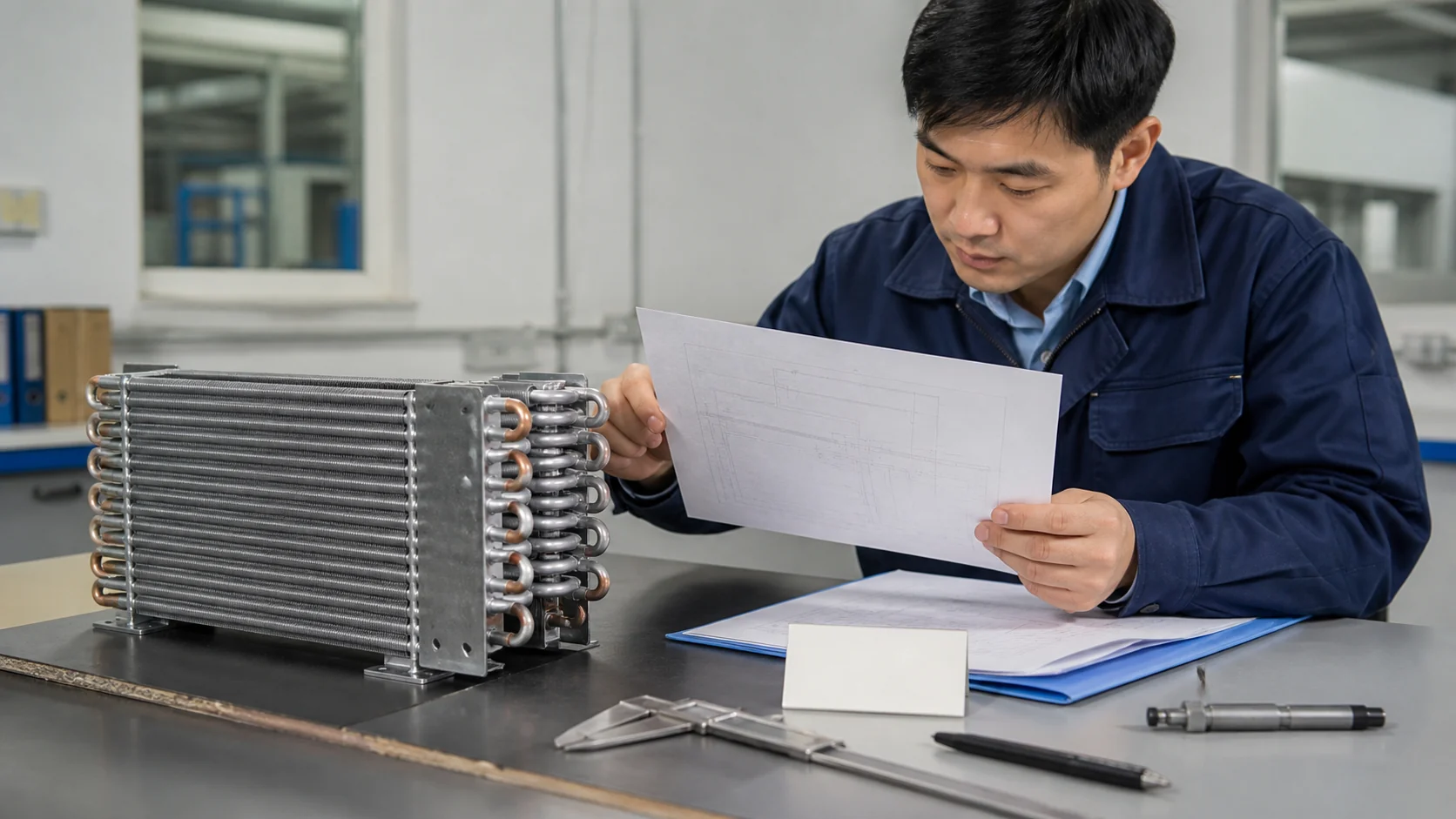
Traceability should follow the specimen from incoming material to test and disposition. A serial or batch identifier, drawing revision, material record, joint process, fixture ID, instrument IDs, operator, date, test type, result, and disposition are more useful than a generic certificate. For a multi-circuit coil, the report should show which circuits and pressure boundaries were included.
Avoid using a certificate from a similar-looking coil. The test result belongs to the tested specimen and configuration. If a header, tube, connection, coating, or joint process changes, decide whether the change requires a new test, a documented engineering review, or both.
Inspect the sample before pressure testing
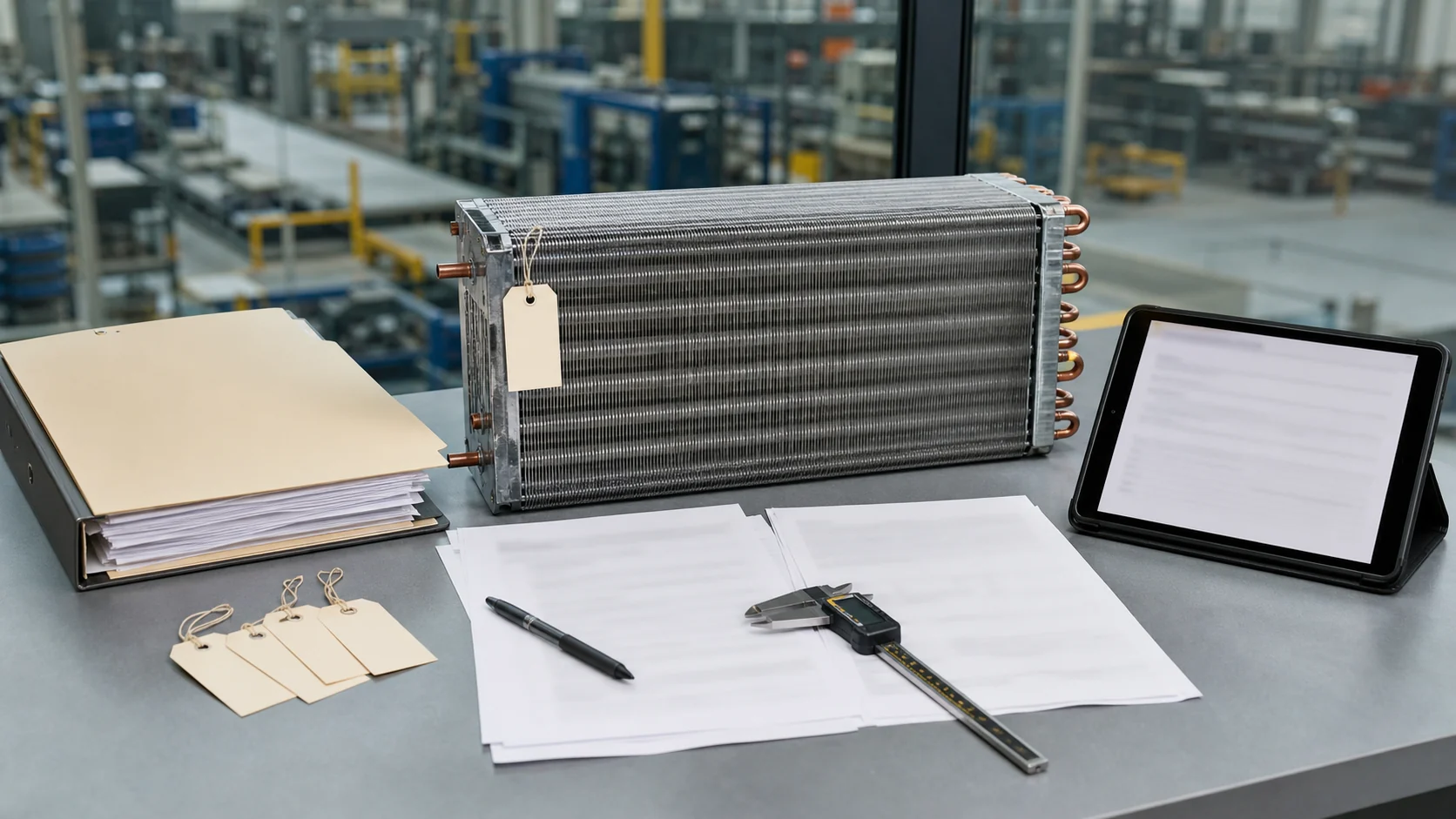
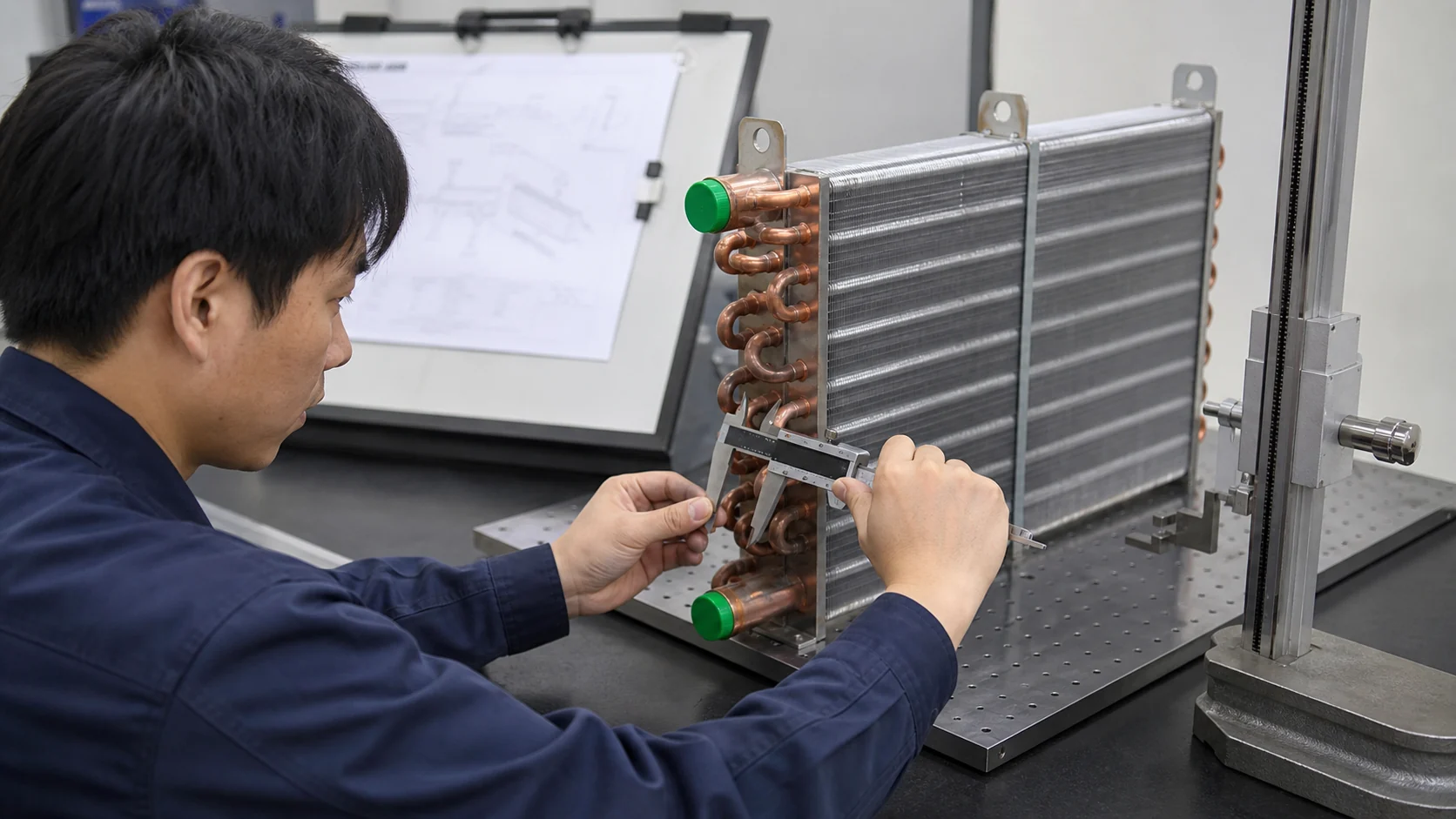
Dimensional inspection does not replace pressure testing, but it protects the test’s meaning. Check the envelope, tube spacing, header position, connection size and orientation, mounting points, caps, plugs, valves, and any design feature that changes the pressure boundary. Compare the physical sample with the released drawing before the fixture is connected.
If the sample is a prototype, mark the deviations and state whether the specimen represents production intent. If the sample is a replacement, record what changed from the installed coil and which pressure boundary is being requalified. A buyer should not approve a test report when the tested geometry cannot be matched to the quotation or the production drawing.
Put the evidence requirements in the RFQ
The RFQ should describe the decision the test must support. State whether the buyer needs leak detection, proof evidence, burst characterization, or a complete qualification sequence. Ask the supplier to identify what is performed in-house, what is subcontracted, which records are raw data, and which statements are engineering interpretation.
| RFQ field | Detail to include | Buyer decision protected |
|---|---|---|
| Component role | Evaporator, gas cooler, condenser, intercooler, or other heat exchanger; circuit count and refrigerant role | Prevents a generic CO2 pressure claim from being applied to the wrong component |
| Pressure boundary | Tubes, headers, joints, caps, valves, service ports, circuits, and accessories | Shows exactly what must be included in the test |
| Test objective | Leak, proof, burst, post-test inspection, or a staged qualification plan | Prevents the phrase “pressure tested” from hiding the real question |
| Safety method | Test medium, enclosure, remote operation, fixture rating, access control, and emergency plan | Makes stored-energy risk reviewable before quotation |
| Measurement evidence | Instrument IDs, calibration status, raw file, observation sequence, and report format | Makes supplier results comparable and auditable |
| Change and release | Specimen identity, drawing revision, deviations, sample quantity, destructive disposition, and approval owner | Stops an untracked test result from entering production |

Review the result before production release
Successful pressure evidence is not a stand-alone production release. Compare the tested specimen with the released drawing, confirm that the test objective was met, review deviations, and verify that the result is applicable to the production process. If a burst test was destructive, confirm how the evidence informs the design and which non-destructive checks apply to production units.
Validate the complete change where pressure interacts with thermal performance, connections, controls, or installation. The R744 CO2 coil system design guide covers the broader operating-envelope and component-role review. The OEM coil production part approval process provides the adjacent change-control route. Keep this article’s pressure-evidence boundary distinct from those owners.
Use a release table that identifies the test status, open deviations, responsible approver, next action, and affected revision. Do not infer compliance from a supplier logo, a photograph of a gauge, or a report that does not identify the specimen. A controlled “hold” is safer than a release with missing evidence.
| Release checkpoint | Evidence that supports release | Hold trigger |
|---|---|---|
| Specimen identity | Serial or batch, drawing revision, material and joint records match the tested coil | Identity or revision cannot be linked |
| Test objective | Report states leak, proof, burst, or staged qualification scope and the result | Report uses only “pressure tested” |
| Boundary coverage | Tested circuits, headers, caps, valves and accessories are listed | Boundary or circuit coverage is unclear |
| Instrument chain | Fixture and instrument IDs, calibration status, raw or controlled record | Instrument or fixture traceability is missing |
| Deviation disposition | Engineering owner signs the deviation, repair, retest, or rejection route | Open deviation has no owner or due action |
What to send for a Domi technical review
Send the latest drawing, component role, refrigerant and operating envelope, pressure-boundary sketch, connection and joint details, test objective, required standard or customer rule, sample status, quantity, and the evidence format you need. Include whether the request is for a production coil, a replacement, a prototype, or a destructive qualification specimen.
The heat exchanger testing laboratory is the intent-matched conversion page for a test scope. If the project also needs a custom coil, request a custom coil quote with the drawing revision and the pressure-evidence boundary attached. Domi’s team should be asked to confirm which test method, facility, and documentation are available for the specific project rather than assuming a universal test package.
Before approval, ask:
- Which pressure boundary and circuits were tested?
- Which test objective was performed, and was the specimen destructive?
- Which rule, customer specification, or engineering basis set the method?
- Which instruments, fixture, medium, and raw records are traceable?
- Which deviations remain open, and who owns the release decision?
Frequently asked questions
Is burst pressure testing the same as a leak test?
No. A leak test looks for escape through the defined boundary, while a burst test explores the failure behavior of a specimen under an agreed setup. A proof or pressure test answers another question again. The RFQ and report should name the objective instead of using the generic phrase “pressure tested.”
Can a burst result be used as the working pressure for a production CO2 coil?
Not by itself. The result is tied to the tested specimen, fixture, medium, temperature, joints, and configuration. Working or design pressure must be assigned through the applicable engineering rules, operating envelope, relief strategy, and customer or jurisdictional requirements.
What should a supplier include in a CO2 coil pressure-test report?
Request the specimen or batch identity, drawing revision, pressure boundary, test objective, medium, fixture, instrument IDs and calibration status, sequence, raw or controlled records, observations, failure or leak location when applicable, deviations, and disposition. A generic certificate without traceability is not comparable evidence.
Are numeric CO2 burst-pressure values safe to copy between projects?
No. Numeric values depend on the component role, design, refrigerant state, temperature, materials, joints, code or customer rule, and test method. This guide intentionally does not publish a pressure value. Use the responsible engineer’s approved basis for the specific coil and jurisdiction.
Does a safety barrier make a destructive pressure test acceptable?
No. A barrier is only one part of a documented risk assessment. The fixture, remote operation, test medium, restraint, isolation, relief or venting approach, access control, emergency plan, and authorized personnel must all be reviewed before the test.
When can a pressure-tested sample support production release?
Only after the test objective is met, the specimen matches the released definition, deviations are closed or formally approved, the report is traceable, and the responsible owner confirms applicability to the production process. A destructive specimen normally cannot return to production stock without an explicit engineering disposition.