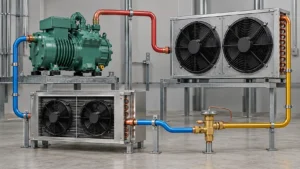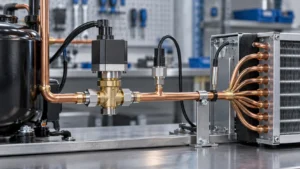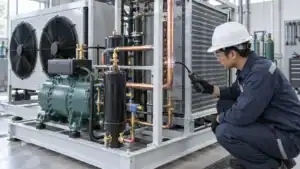

An OEM coil production part approval process confirms that the approved design can be built at the intended production rate with the same materials, process controls, inspection method, test conditions, and packaging agreed in the release package. It starts after prototype or first sample approval. The buyer reviews a production-intent run, checks the evidence against one controlled revision, and then records a clear release status. The goal is to prevent a coil that passed a one-off sample review from entering repeat orders with hidden changes.
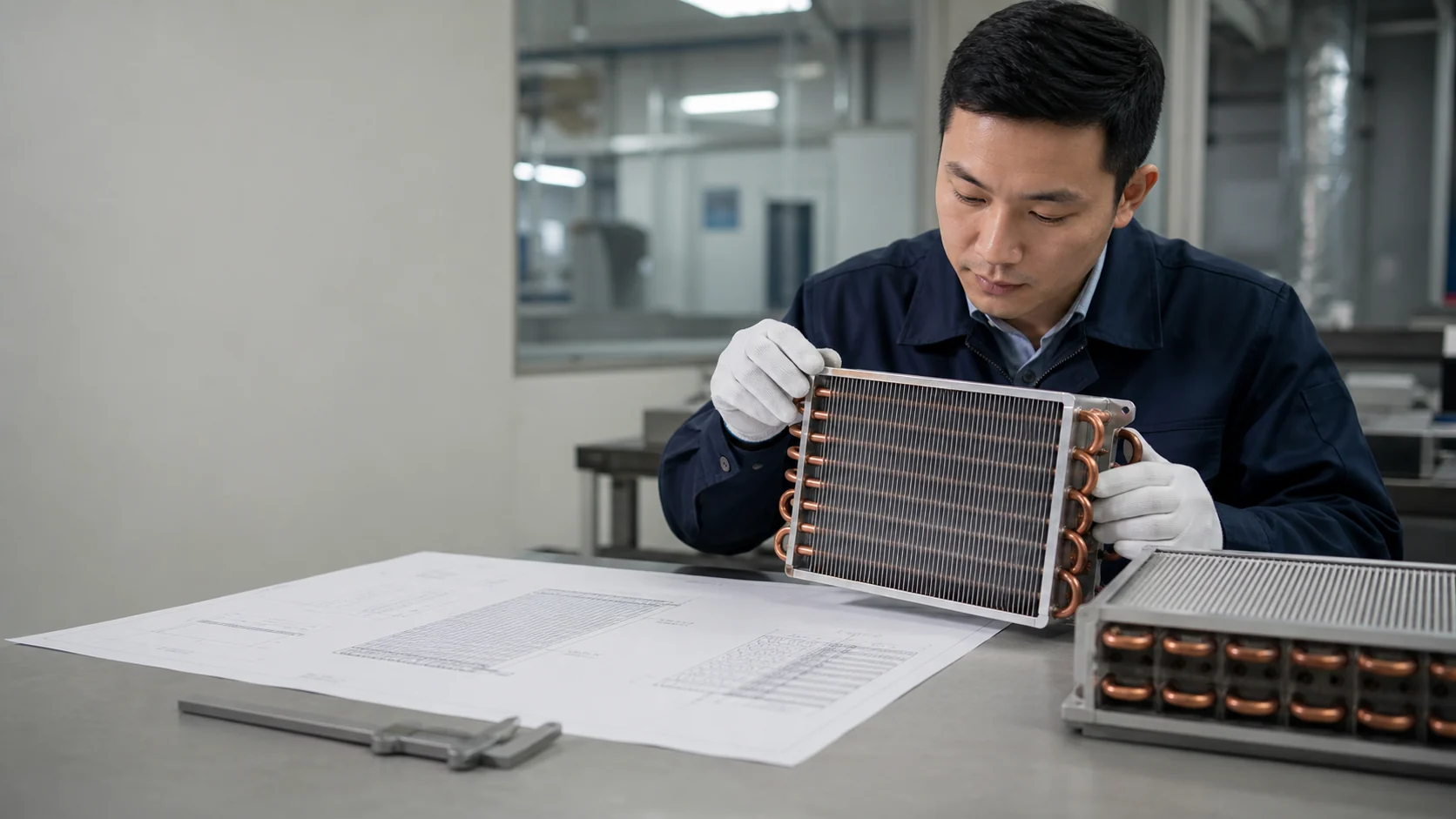
Production part approval is a transfer gate, not another prototype review
Prototype approval asks whether a new coil fits, performs, and can be corrected. Production part approval asks a different question: can the supplier repeat that approved result through the normal process, at the planned rate, with records that another engineer can audit later?
The distinction matters for custom evaporator coils, condenser coils, heat-pump coils, and heat exchangers. A prototype may use extra engineering attention, hand-selected material, temporary fixtures, or a test condition that is not practical for every order. A production-intent run exposes those transfer risks before the buyer releases a repeat purchase order.
AIAG describes PPAP as an industry process for checking that engineering design records and specification requirements are met during an actual production run at production rates. Some customers use the PPAP name and forms. Others use a first article inspection, source inspection, or an internal production release pack. The buyer should agree on the required format before the run. The process is the important part, not the label. See the AIAG PPAP overview for the published scope of the PPAP manual.
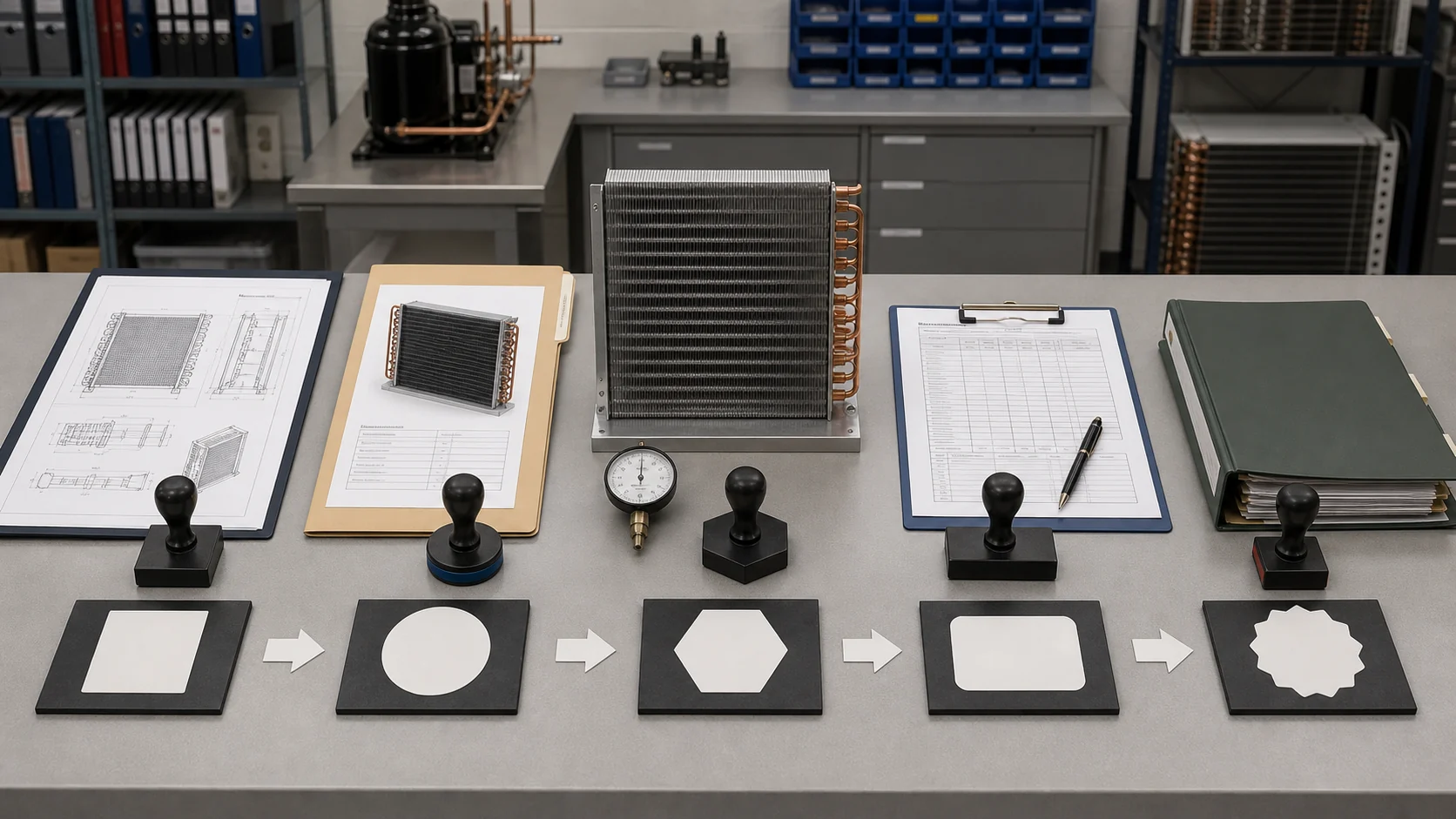
| Approval stage | Buyer decision | Minimum output | Primary owner |
|---|---|---|---|
| Design record freeze | Are the requirements complete and unambiguous? | Signed drawing, rating conditions, materials, connections, and inspection characteristics | Engineering |
| Production-intent planning | Will the normal route and planned rate be used? | Process flow, tooling or fixture list, inspection plan, and run quantity | Supplier quality |
| Production-intent run | Did the actual process produce conforming coils? | Identified sample set, dimensional results, test records, deviations, and packing evidence | Manufacturing and quality |
| Cross-functional review | Are all gaps closed or formally accepted? | Approval signatures, open-item owner, due date, and risk decision | Engineering, quality, procurement |
| Release decision | Can repeat orders use this revision? | Released, conditional, hold, or rejected status with effective date | Buyer quality |
Freeze the design record before asking for production evidence
The evidence pack cannot be judged if the target keeps moving. Start by attaching every requirement that can change coil fit or performance to one part number and revision. A drawing alone is rarely enough for a custom refrigeration coil.
Define the coil at the rating point
Record whether the part is an evaporator, condenser, heat-pump outdoor coil, gas cooler, or another heat exchanger. State the refrigerant or fluid, entering air condition, airflow, target capacity or heat rejection, pressure limits, operating range, pressure-drop limits, defrost condition, and test method. If the buyer uses a rating schedule outside the drawing, give it its own revision and link it to the part.
Freeze fit and connection details
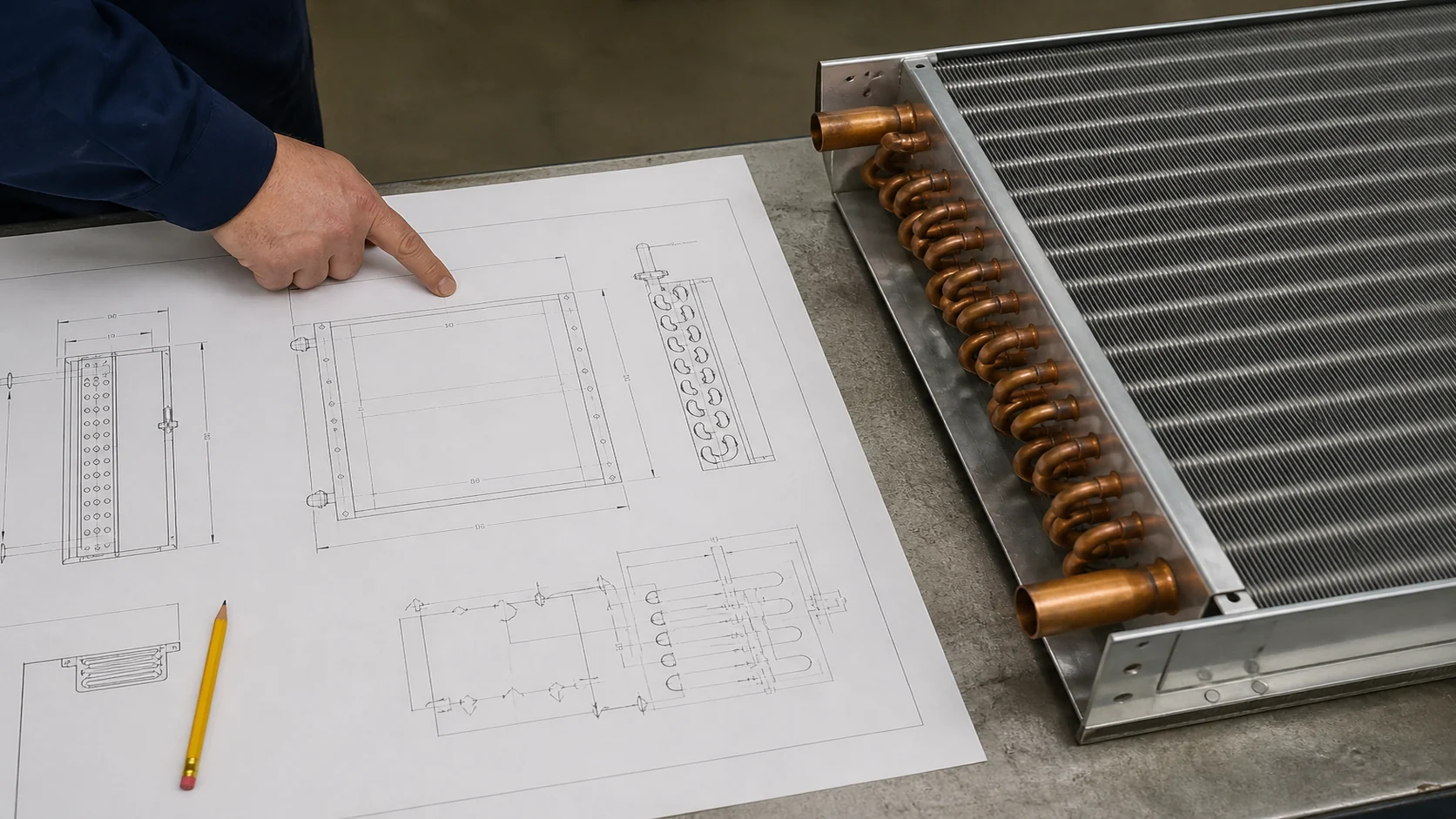
Include the overall envelope, rows, fin pitch, tube diameter, circuiting, headers, connection centers, tube projection, mounting holes, drain path, fan clearance, service clearance, and orientation. Mark which dimensions are critical-to-fit and which are reference dimensions. A small connection shift can create a cabinet rework even when the coil’s thermal result is acceptable.
Make assumptions visible
Have the supplier send an assumptions and exclusions register with both the quote and the release file. Do not bury a substituted tube material, a different airflow, or a shortened pressure hold in a note that appears after approval. The OEM condenser coil specification checklist can help buyers collect the design and quality fields before they set the release baseline.
Build a production-intent evidence pack
The pack should let a second reviewer answer three questions without opening a new email thread: What was supposed to be built? What was actually built? Who accepted the difference, if any?
| Evidence group | Coil-specific records | Acceptance question |
|---|---|---|
| Design and requirement | Approved drawing, rating schedule, bill of materials, connection map, revision history | Do all records point to one part number and revision? |
| Process definition | Process flow, work instructions, fixture list, brazing or expansion controls, cleaning route | Does the described route match the production-intent run? |
| Material and traceability | Tube, fin, header, frame, coating, braze alloy, and lot or heat references | Can the sample be traced back to the approved material requirements? |
| Inspection and measurement | Control plan, dimensional report, gauge list, calibration status, visual criteria | Are critical characteristics measured with suitable equipment? |
| Pressure and performance | Pressure test, leak test, thermal or airflow method, raw results, instrument identity | Are the test conditions comparable to the released rating? |
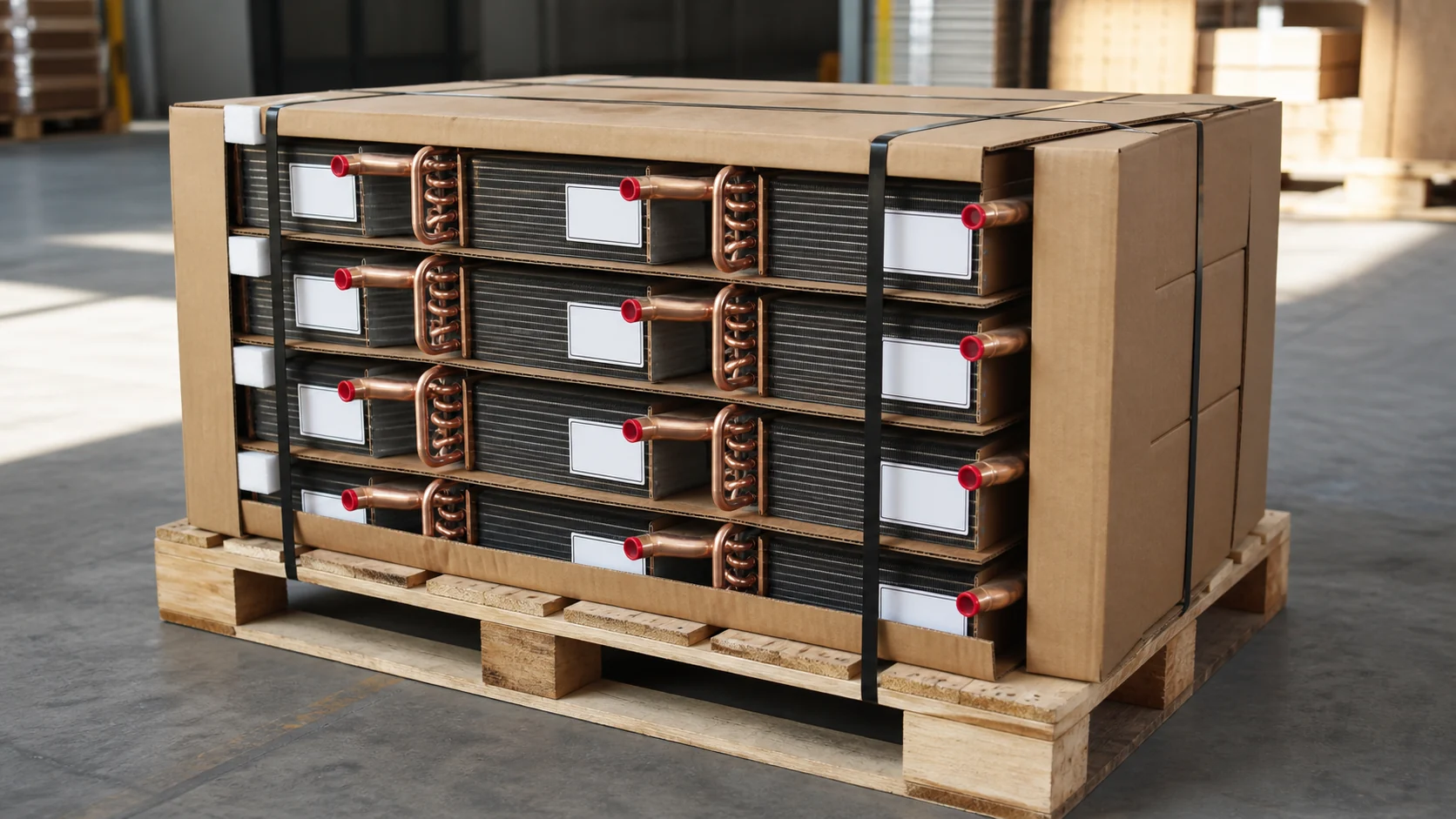
| Packaging and release | Packing instruction, caps and plugs, labels, pallet photos, shipping protection, deviation list | Can the approved part arrive without damage or identification loss? |
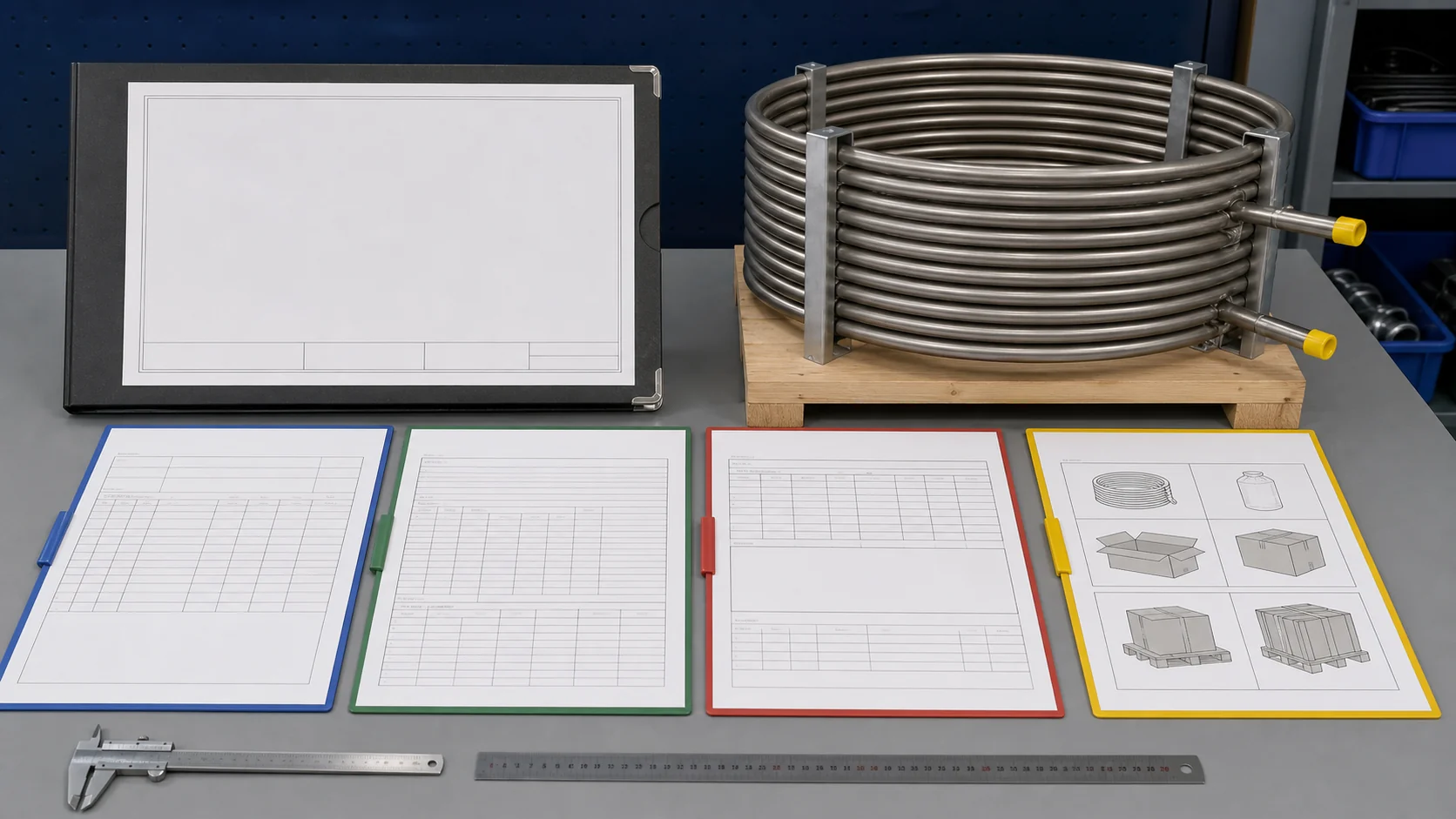
The ISO 9001 standard page is useful context for separating a quality-management system from product evidence. An ISO 9001 certificate, if a supplier provides one, cannot establish conformance of one coil to the buyer’s capacity, pressure, leak, dimensional, or material requirements. Check the certificate scope separately, then review the product records.
Run the sample at production intent
Use normal operators, tooling, fixtures, inspection equipment, material sources, and test steps whenever the purpose is to release repeat production. If a temporary condition is unavoidable, record it as a deviation and decide whether the result is suitable for release or only for learning.
Identify the run and the samples
Write down the run date, line or work center, operator group, material lots, tooling or fixture IDs, quantity planned, quantity completed, quantity inspected, and quantity rejected or reworked. Label each inspected coil with the part number, revision, sample number, and traceability reference. A photograph without an identifier cannot support a later release decision.

Check dimensions before performance
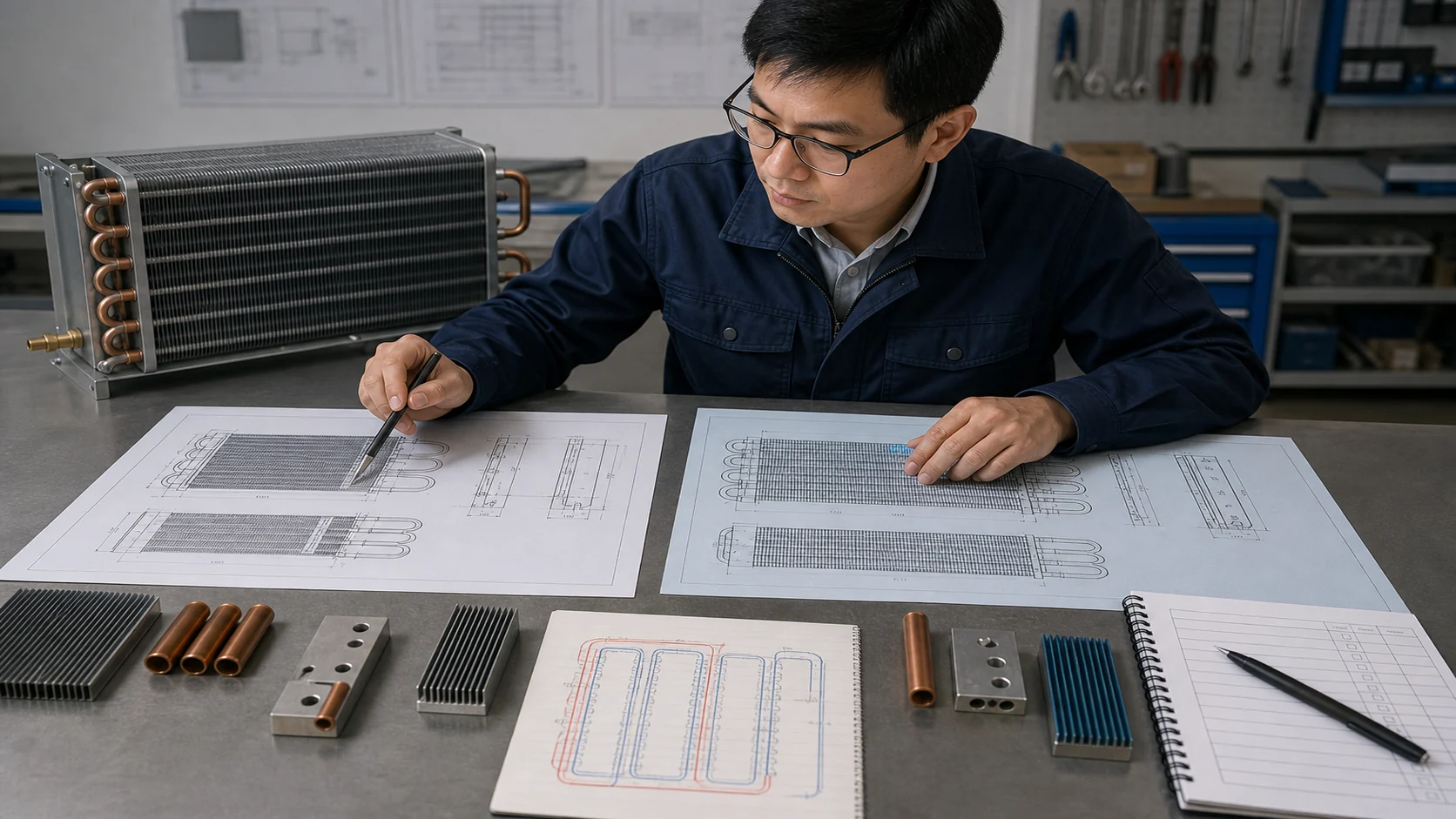
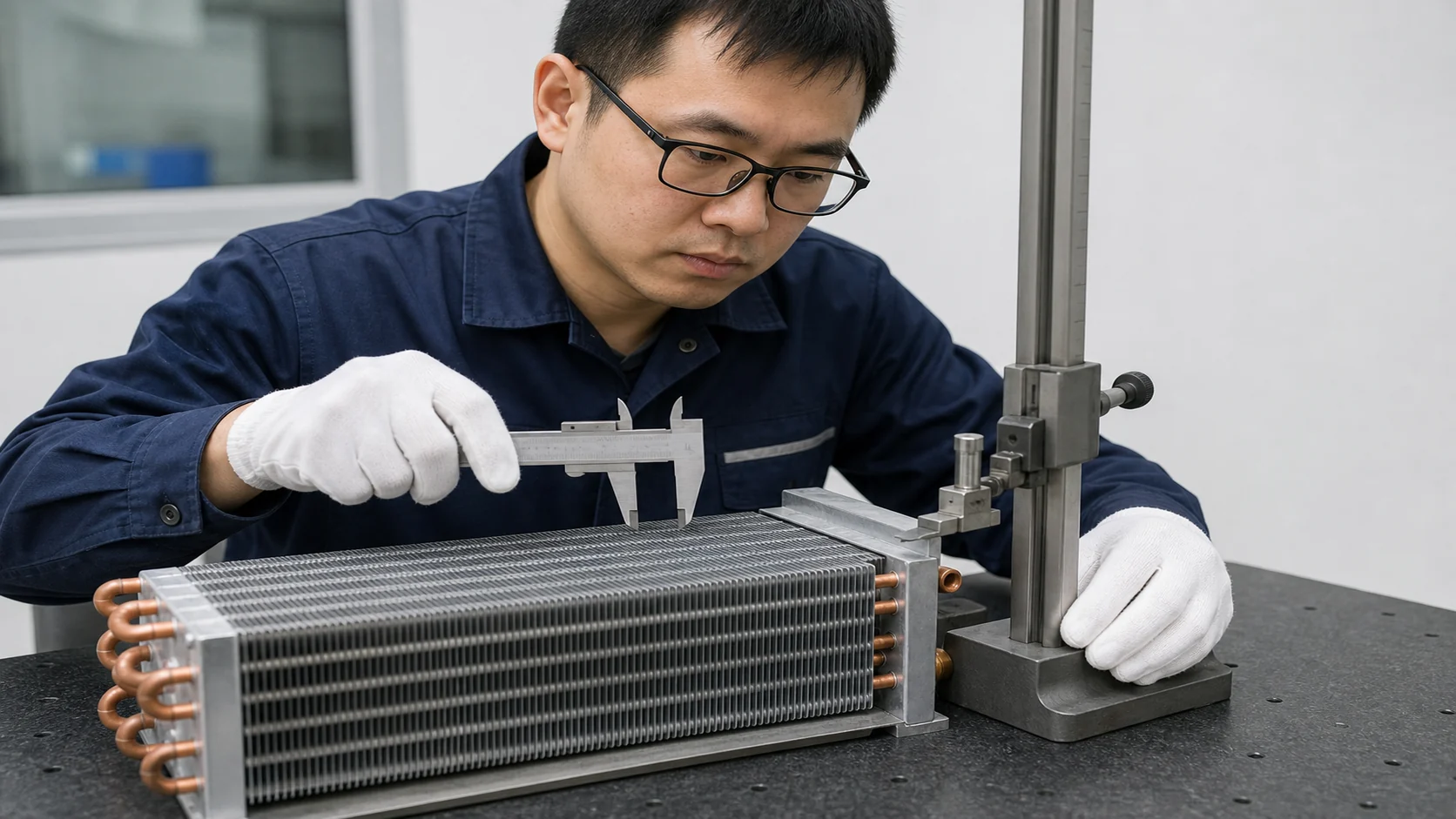
Start with the characteristics that can make the part unusable even when the heat-transfer result looks good: overall envelope, mounting locations, connection centers, header orientation, tube projection, fin damage, drain location, and service clearances. Record actual values, not only pass or fail. Use the controlled drawing revision on the report.
Verify pressure and leak integrity
Name the test gas or fluid, specified pressure and dwell, part temperature, permitted loss, gauge resolution, and circuits covered. Include headers, brazed joints, valves, and plugs where they are part of the released assembly. Keep the factory acceptance record separate from a field pressure test. If the report only says “tested”, request the method and instrument details before approval.
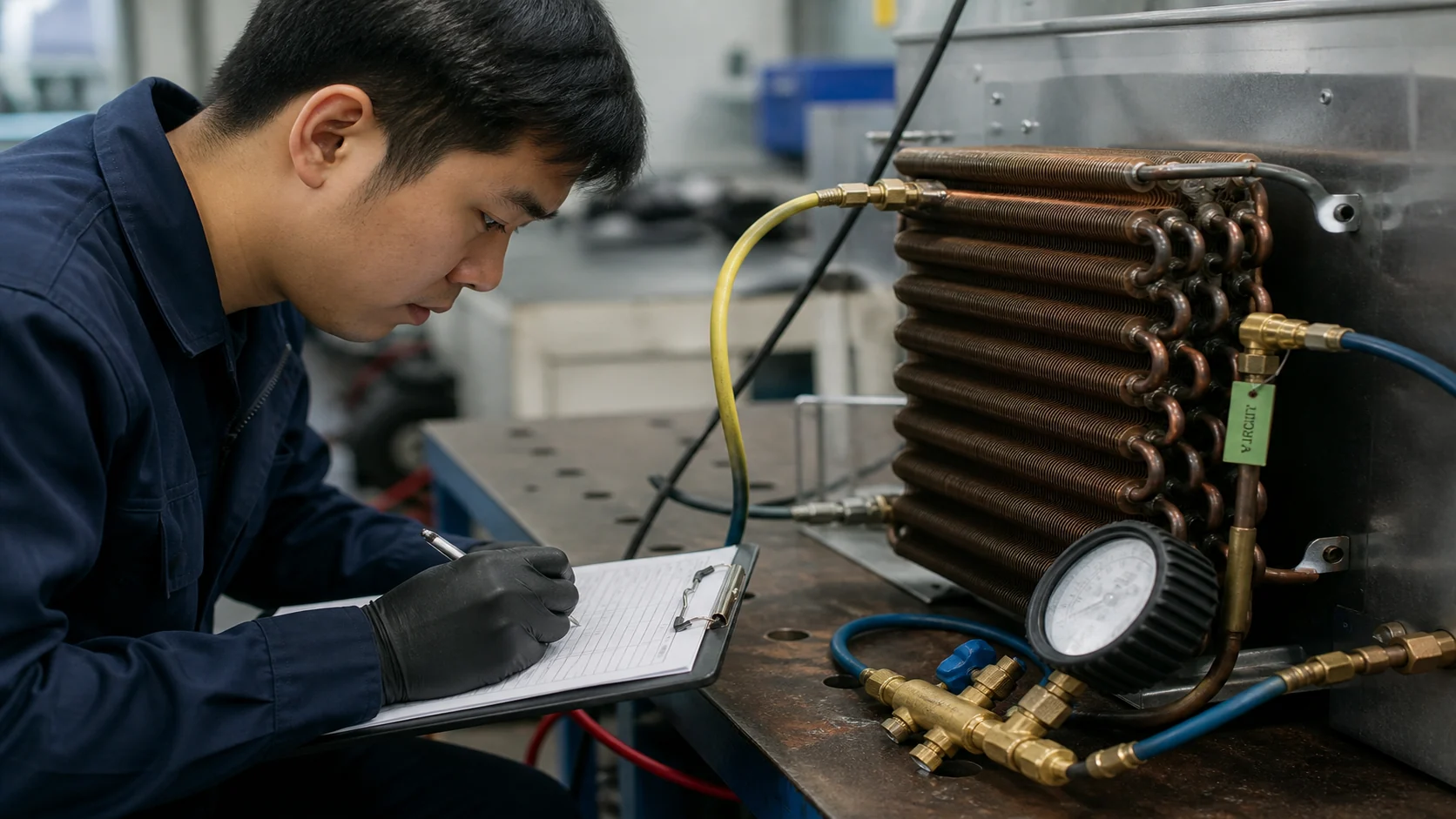
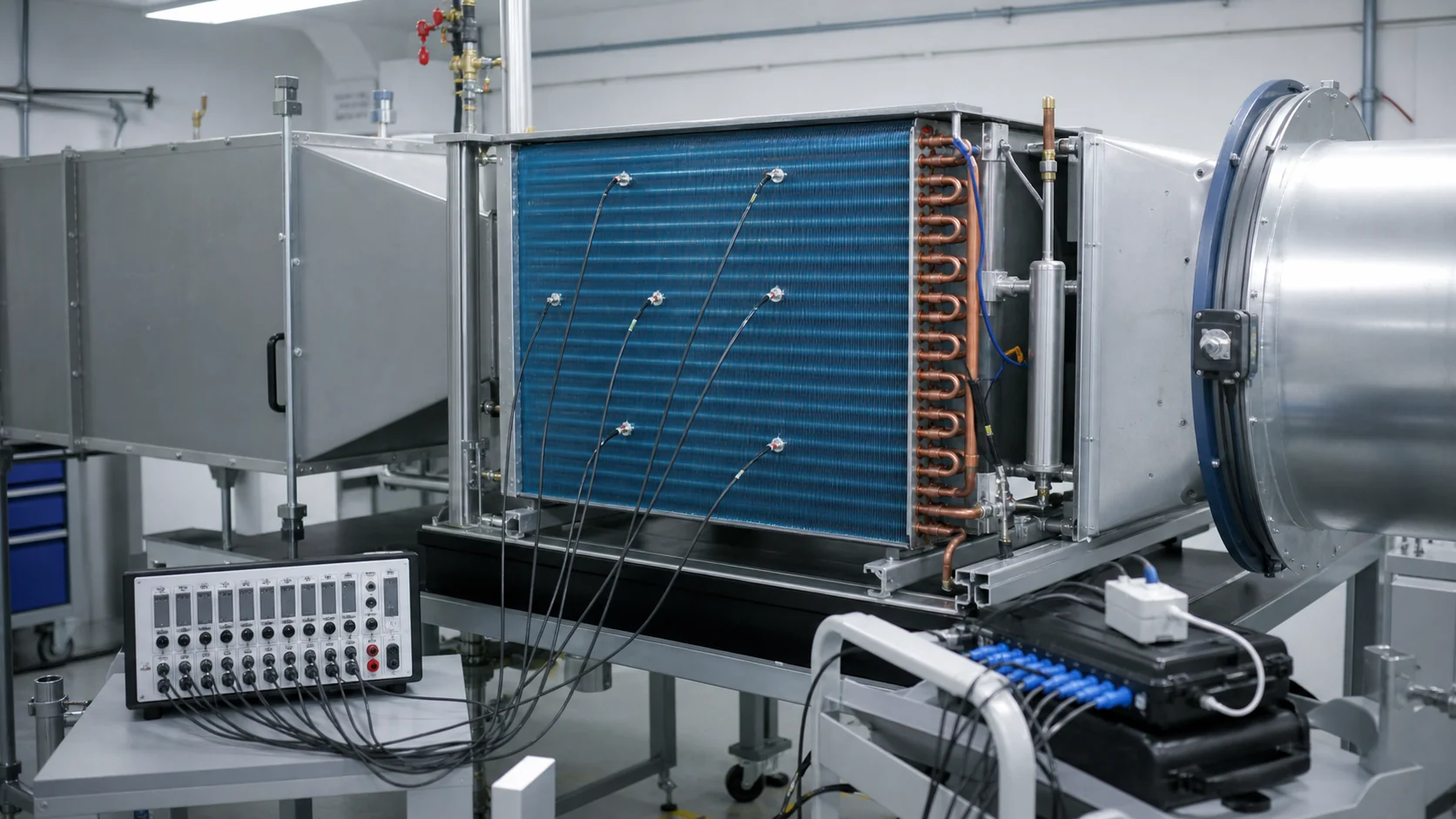
Compare thermal and airflow results at the released condition
Repeat the rating setup: entering air, airflow, refrigerant state, saturated temperature or pressure, outlet condition, pressure-drop limit, and measurement locations. Record instrument identity and uncertainty where it affects the decision. A result taken at another airflow or temperature difference may inform engineering, but it cannot confirm the released rating by itself.
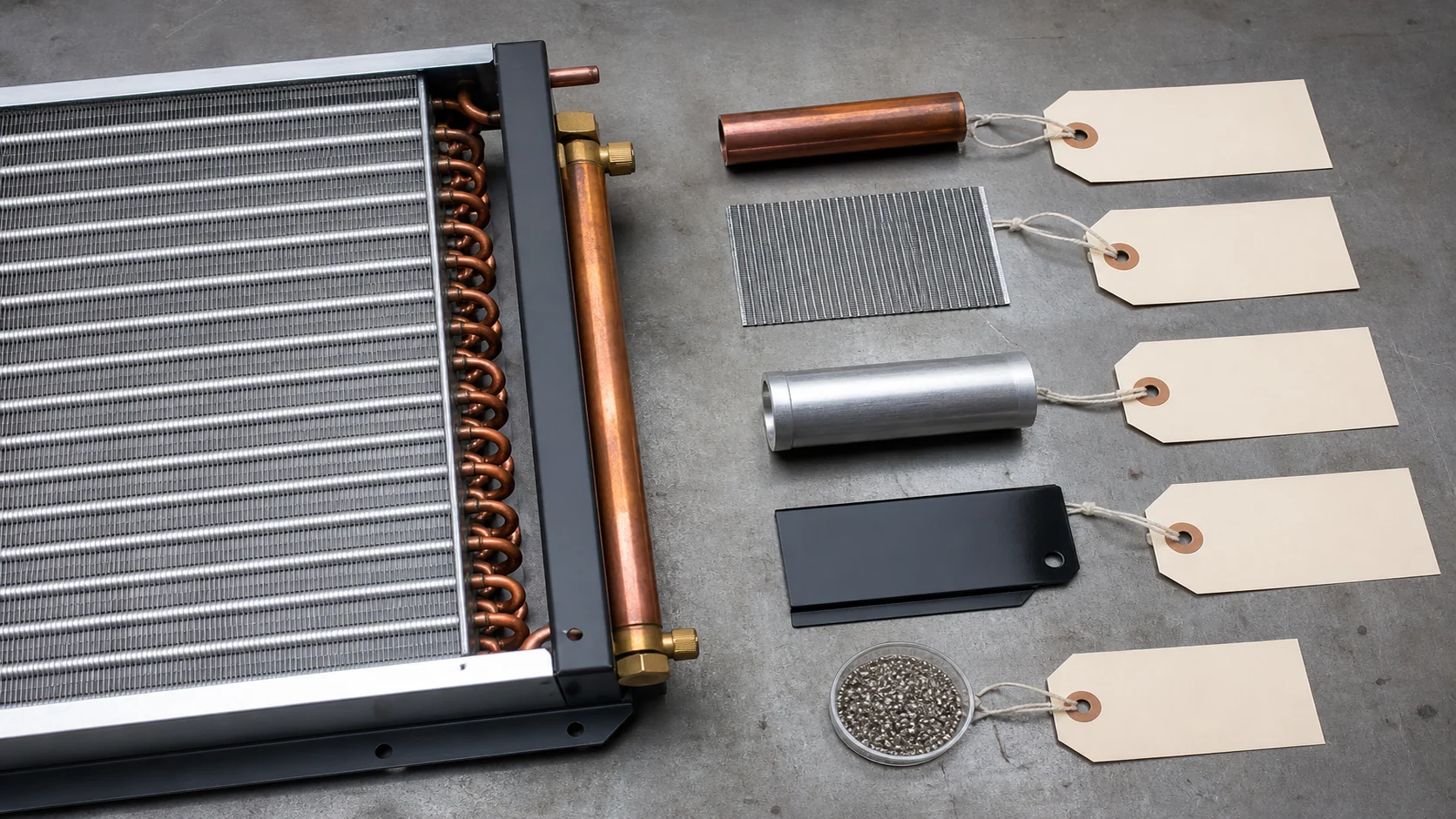
Check material and lot traceability
Match the material certificates or supplier declarations to the lot used in the run. Confirm tube and fin dimensions, header material, frame or coating requirements, braze alloy, and any cleanliness or corrosion-control requirement. If the supplier proposes an alternate source, pause the release until the buyer decides whether the change requires a new sample or test.
Review the process controls behind the result
Production approval is stronger when the buyer can connect each critical result to a control in the process. Trace the coil through fin forming, tube preparation, expansion or assembly, brazing, cleaning, pressure testing, inspection, labeling, and packing. Ask where the process prevents the defect and where inspection detects it if prevention fails.
For brazed coils, review joint preparation, purge practice where applicable, alloy identification, fixture support, visual criteria, and leak-test coverage. For mechanically expanded assemblies, review tube expansion settings, fin bond or contact criteria, tube projection, and fin damage controls. For coated coils, confirm surface preparation, coating identification, coverage criteria, cure or handling instructions, and packaging protection.

Use the Domi coil manufacturing process page as a starting point for a factory discussion about fin stamping, tube forming, brazing, assembly, leak testing, inspection, and export packaging. The page is a capability reference. It does not replace project-specific records or a buyer audit.
Use explicit release statuses
Avoid a vague “approved” email. Give the part a status that says what production may happen and what evidence remains open.
| Status | Meaning | Permitted action | Required next step |
|---|---|---|---|
| Released | Required evidence meets the approved revision and no critical item is open | Repeat orders may use the released revision within the agreed scope | Monitor changes and refresh evidence when triggers occur |
| Conditional release | The buyer accepts a defined low-risk gap for a limited quantity or date | Only the listed quantity, site, or use may proceed | Assign an owner, due date, and closure evidence |
| Hold | Evidence or result is incomplete, contradictory, or outside the requirement | Do not release repeat production for the affected scope | Correct the record, retest, or resolve the requirement |
| Rejected | The production-intent run fails a hard requirement or the supplier cannot provide required evidence | Stop the release and contain affected material | Correct the process or redesign, then repeat the approval gate |
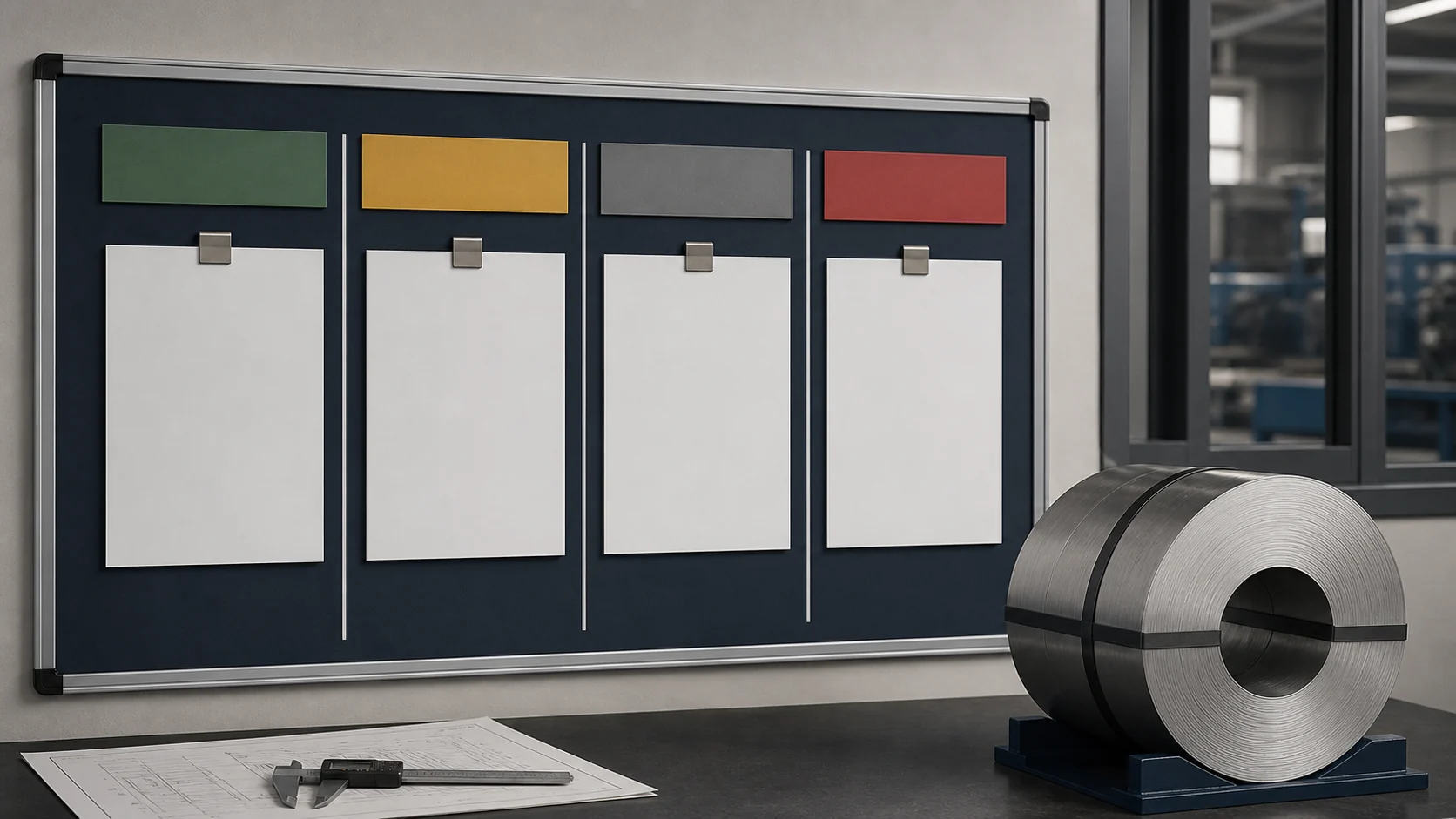
Set hard stops for unresolved fit dimensions, unverified pressure integrity, missing required material or compliance evidence, a test at the wrong rating point, and an unapproved production-site or sub-tier change. A conditional release is not a softer word for an unresolved safety or function failure.
ISO 19011 describes audit evidence as information that is relevant to the audit criteria and verifiable. A buyer does not need to perform a certification audit to use the same habit. Keep each open item tied to a requirement, evidence owner, due date, and acceptance decision. See the ISO 19011:2026 release note for the current official description.
Reopen approval when the released part changes
The approval record belongs to a defined part and process, not to a supplier name in the abstract. A change can preserve the drawing number while altering the actual coil’s performance or fit. Ask for notice before the change enters production and decide whether to re-rate, inspect a new sample, repeat a pressure test, or repeat the full evidence pack.
| Change trigger | Possible coil risk | Typical buyer response |
|---|---|---|
| Tube, fin, header, frame, coating, or braze alloy change | Capacity, corrosion, joining, cleanliness, or compliance can shift | Review material evidence and decide on sample or retest |
| Rows, fin pitch, circuiting, header, connection, or orientation change | Airflow, pressure drop, distribution, fit, and service access can change | Update the drawing and rating schedule, then validate affected characteristics |
| Brazing, expansion, cleaning, or coating process change | Leak rate, bond quality, residue, or coating durability can change | Review process risk and repeat first-article checks where needed |
| Manufacturing site, line, tooling, or major sub-tier change | Process window, equipment, operators, and traceability can differ | Audit or qualify the new route before release |
| Test method, instrument, rating condition, or acceptance limit change | Old and new results may not be comparable | Reconfirm the rating basis and issue a new controlled report |
| Packaging, label, cap, plug, or pallet change | Damage, moisture, contamination, and identification risk can change | Review a packed sample and update the packing instruction |
Archive both revisions with affected part numbers, risk review, validation plan, and approval record in one change folder. The Domi drawing revision control guide covers the document side of this discipline. This article adds the production-release decision that follows it.
Turn the approval gate into an RFQ requirement
Tell the supplier at the quotation stage that the project includes a production-intent approval gate. That changes the commercial response. The supplier can plan sample quantity, inspection time, test capacity, material traceability, packing review, and the evidence package instead of treating them as late additions.
Send:
- the equipment type, coil function, refrigerant or fluid, and target operating points;
- the envelope drawing, connection sketch, mounting and service clearances, and current revision;
- tube, fin, header, frame, coating, braze, cleanliness, and corrosion requirements;
- airflow, pressure-drop, capacity or heat-rejection, pressure-test, and performance-test requirements;
- sample quantity, production-intent quantity, inspection characteristics, and required records;
- annual demand, release pattern, MOQ, packaging, shipping route, launch date, and change-notice expectations.
The custom refrigerator coil RFQ checklist helps organize the technical package. After the scope is clear, buyers can send the drawing to Domi for an OEM quote or use the Domi contact page to start a technical review. Do not promise a release date until the drawing, production route, test plan, and evidence responsibilities are agreed.
Frequently asked questions
Is PPAP required for every custom refrigeration coil?
No. PPAP is an industry process and some OEM customers require its forms or submission levels. Other buyers use a first article or production release pack. Agree on the required records, sample quantity, approval authority, and change triggers before the production-intent run. Do not claim PPAP compliance unless the customer has defined the requirement and the submitted records meet it.
How is production part approval different from prototype approval?
Prototype approval checks whether a new design can fit, perform, and be corrected. Production part approval checks whether the normal production route can repeat the approved design at the intended rate with traceable material, inspection, test, and packaging records. A prototype can pass while the production route still needs correction.
What should a refrigeration coil production release pack contain?
At minimum, include the approved drawing and rating schedule, bill of materials, process flow, inspection or control plan, material and lot references, dimensional report, pressure and leak record, relevant thermal or airflow result, deviation log, packaging instruction, and release decision. Add customer-specific forms when required.
Can a supplier use a different material after approval?
Only after the buyer reviews and accepts the change. Tube, fin, header, coating, frame, or braze-alloy changes can affect fit, capacity, pressure integrity, corrosion, joining, cleanliness, or compliance. Require a change notice, risk review, updated records, and the sample or retest evidence specified by the buyer.
What does conditional release mean for an OEM coil?
It means the buyer has accepted a defined, limited risk for a named quantity, site, or date. The open item must have an owner, due date, and closure evidence. Conditional release should never cover an unresolved fit failure, pressure leak, incorrect rating condition, or unapproved material or process change.
How should an OEM buyer prepare for the production-intent run?
Freeze the part number and revision, rating conditions, materials, connections, critical dimensions, test methods, sample identity rules, acceptance limits, required records, and approval signers. State the planned run quantity and normal process route. Then send the package with the RFQ so the supplier can price and schedule the approval work.