

Condenser coil MOQ depends on samples, tooling, material buying, SKU mix, release pattern, and repeat production volume.

When an OEM buyer asks for the condenser coil MOQ, the supplier may hear several different questions. Is the buyer asking for the smallest sample order? The smallest economical production lot? The number of units needed to recover a fixture? Or the volume required to hold a quoted material price?
Those questions do not have the same answer. A condenser coil can be technically easy to build but commercially awkward to order if the program uses many low-volume SKUs, special brackets, or a coating that must be purchased in batches. Conversely, a complicated coil may be manageable at low volume when the buyer accepts a prototype price and a longer lead time.
This guide gives OEM engineers, procurement managers, distributors, and project owners a practical way to discuss condenser coil MOQ without treating it as a single factory number. It covers sample quantities, pilot runs, tooling, material buying, SKU mix, packaging, inspection, price breaks, and the questions that should appear in a supplier quotation. For application context, see Domi’s OEM refrigerator and freezer coil solutions before requesting a program quotation.
What condenser coil MOQ actually means
Condenser coil MOQ is the minimum quantity or commercial condition that makes a specific order practical for the supplier and acceptable to the buyer. It may be expressed as pieces, meters of material, a tooling commitment, a release schedule, or a combination of these.
Four different minimums can exist
Ask a supplier to identify which minimum is being quoted.
| Minimum | What it covers | Typical buyer question |
|---|---|---|
| Sample minimum | Engineering parts for fit, leak, or thermal checks | Can we buy one or several samples? |
| Pilot minimum | A controlled lot made with the intended process | How many units do we need to validate repeatability? |
| Economic lot minimum | Quantity that makes setup and inspection efficient | What order size produces the standard unit price? |
| Material or packaging minimum | Supplier purchase quantity for special inputs | Do we need to buy a full coil of tube, coating batch, or divider run? |
Confusing these minimums creates avoidable friction. A buyer may reject a supplier because the sample quote is higher than the production price, even though the supplier is pricing different work. Or the buyer may accept a low production MOQ and later discover that a special fin material must be purchased in a larger batch.
MOQ is not the same as capacity
MOQ answers how small an order can be. Capacity answers how much can be produced in a period. A supplier can have enough capacity for a large annual program but still set a small-order condition because the setup, material, packaging, and inspection work do not shrink in proportion to the piece count.
The reverse can also happen. A small shop may accept a low condenser coil MOQ for samples but struggle with a seasonal production surge. Ask for both the minimum practical order and the expected monthly capacity at the requested configuration.
The AHRI 410 scope page is a useful reminder to clarify the applicable rating method. Its listed scope and exclusions do not cover every refrigeration condenser configuration. Do not use a generic coil standard as a substitute for stating the appliance duty, refrigerant, test point, and acceptance method in the RFQ.
Build a quantity ladder before asking for MOQ
The cleanest way to discuss condenser coil MOQ is to provide the supplier with a quantity ladder. The ladder separates engineering work from repeat production and shows how the program might grow.
Engineering samples
Samples support drawing review, cabinet fit, joint inspection, pressure or leak testing, and sometimes a system performance test. The right quantity depends on the validation plan. If one unit goes into a destructive test, include another retained unit. If three appliance variants need fit checks, do not request one sample and hope the parts are interchangeable.
State whether samples must use production-intent material and process. A hand-built sample may answer a geometry question but not a repeatability question. If the buyer needs a production-intent sample, say so and ask the supplier to identify any temporary steps.
Pilot quantity
A pilot lot shows whether the drawing, tooling, work instructions, inspection method, and packaging can produce repeatable parts. It is not necessarily the same as a normal production order. The buyer may want additional inspection, serial records, or a controlled build at the pilot stage.
Set the pilot quantity around the decisions it must support. A large pilot is not automatically better. If the main risk is cabinet fit, a smaller quantity may be enough. If the risk is brazing variation or coil deformation after fin insertion, the supplier may recommend a larger lot so the process can be observed across multiple units.
Monthly and annual demand
Give both the expected annual volume and the release pattern. A forecast of 12,000 coils per year can mean 1,000 per month, four seasonal releases of 3,000, or one shipment of 12,000. These patterns affect material planning, storage, inspection, and packaging.
| Planning line | Information to send | Why it changes the condenser coil MOQ |
|---|---|---|
| First order | Sample, pilot, or production release | Sets the first setup and material decision |
| Monthly release | Average and peak quantity | Shows labor and equipment loading |
| Annual forecast | Expected range, not only a point estimate | Supports price bands and material planning |
| SKU family | Shared and unique features | Determines changeover and finished-goods complexity |
| Delivery pattern | Full shipment, split shipment, or blanket order | Changes storage and packaging requirements |
Do not inflate the forecast to obtain a lower quote. A supplier prices risk into an uncertain forecast, and the buyer may later face a request to buy unused material or tooling. Use a realistic range and identify what is firm.
Blanket orders and scheduled releases
A blanket order can sometimes reduce the practical condenser coil MOQ without forcing the buyer to receive all pieces immediately. The supplier gets planning visibility while the buyer receives parts on a schedule. The agreement should define material ownership, price validity, inventory responsibility, release notice, cancellation, and the point at which a custom component becomes non-cancellable.
If the buyer wants the supplier to hold finished goods, specify storage conditions and maximum age. Condenser coils may need protection from humidity, dust, impact, and corrosion during storage. A price agreement without a storage plan is incomplete.
Cost drivers that create a condenser coil MOQ
The supplier’s minimum usually reflects work that occurs before the coil reaches the production line. Ask for those drivers separately rather than negotiating only the unit price.
Material purchase quantities
Tube, sheet, fin stock, headers, brackets, coatings, and packaging components may be purchased in supplier-defined quantities. The coil’s physical size and material family matter, but the finish and connection details can be just as important.
Ask whether the material minimum is:
- A true full-batch purchase that cannot be split.
- A preferred quantity that can be reduced with a surcharge.
- A temporary condition caused by supplier availability.
- A condition that disappears once the program reaches repeat volume.
The answer helps the buyer decide whether to accept an initial surcharge, consolidate SKUs, change a preferred material, or negotiate a scheduled release.
Tooling and fixtures
Tooling may include forming dies, tube bending tools, header fixtures, drilling or punching fixtures, leak-test fixtures, brazing nests, inspection gauges, and packaging inserts. Some fixtures are specific to one coil; others can support a family.
Ask the supplier to identify ownership, maintenance, storage, change charges, and what happens if the drawing changes. Tooling should be priced separately unless the agreement clearly states how it is amortized. A low unit price that hides a large tooling recovery can make two supplier offers impossible to compare.
Setup and changeover
Condenser coil production may require setup for fin pitch, row arrangement, circuiting, tube length, header position, braze fixtures, or coating. The setup time does not disappear when the order becomes smaller. This is why two similar SKUs may share an MOQ if they use the same process, while a visually similar SKU may not if the bracket or connection changes.
Use a family table in the RFQ. Identify which features are common and which require a changeover.
Inspection and documentation
First articles, enhanced inspection, sample reports, material certificates, and performance tests add labor. They may be appropriate for a new program, but the buyer should say whether they are required for every shipment or only the first lot.
The ISO 9001 explanation from ISO describes documented information, measurement, process control, and improvement as parts of quality management. The practical purchasing lesson is simple: put the required records in the quote package so they are priced and scheduled rather than added later as an unplanned cost.
Packaging and shipment efficiency
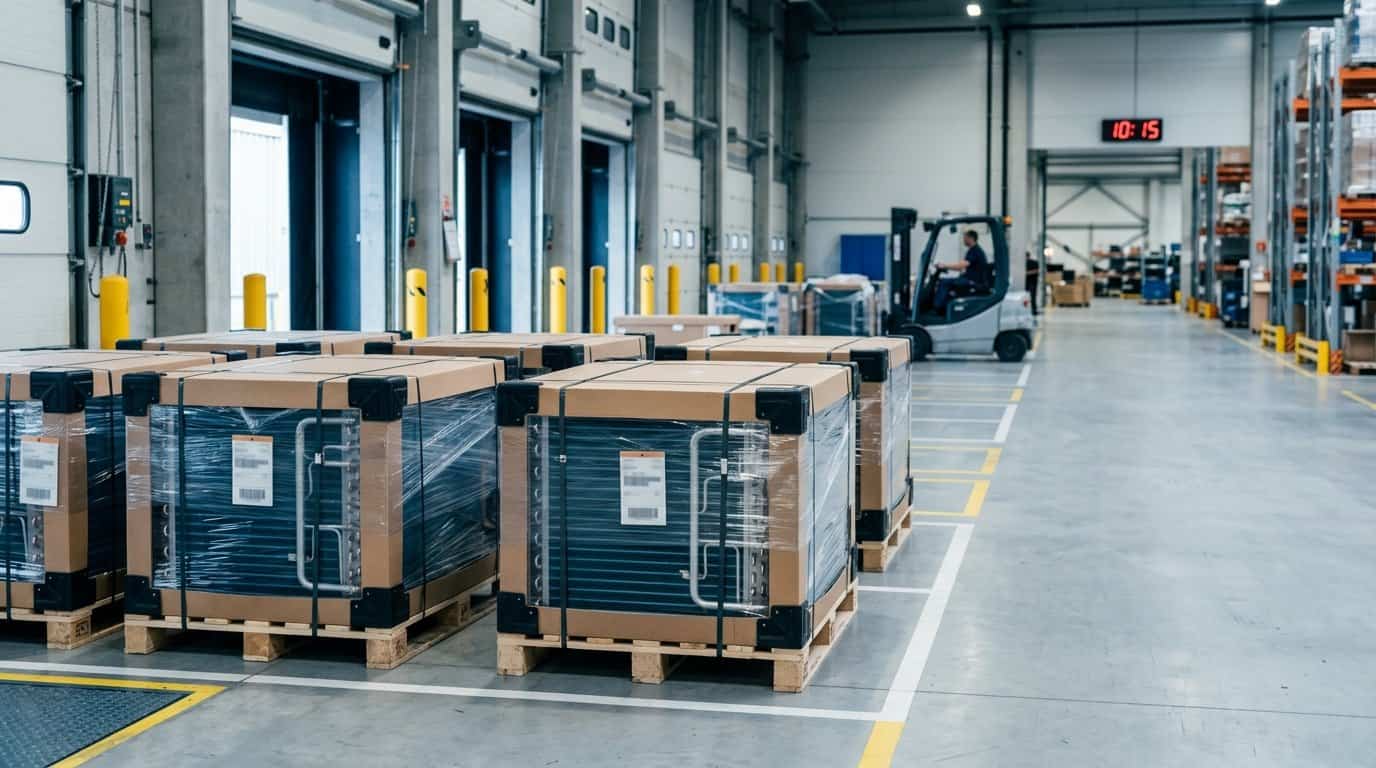
Fins and tube ends can be damaged when a coil is packed too tightly, stacked without separation, or moved without edge protection. Packaging often has its own minimum order, especially when a printed carton, custom divider, or returnable rack is used.
Ask for both standard packaging and program packaging. Standard packaging may be the economical choice for early samples. Program packaging may reduce damage and handling cost at repeat volume. The right condenser coil MOQ can differ between the two.
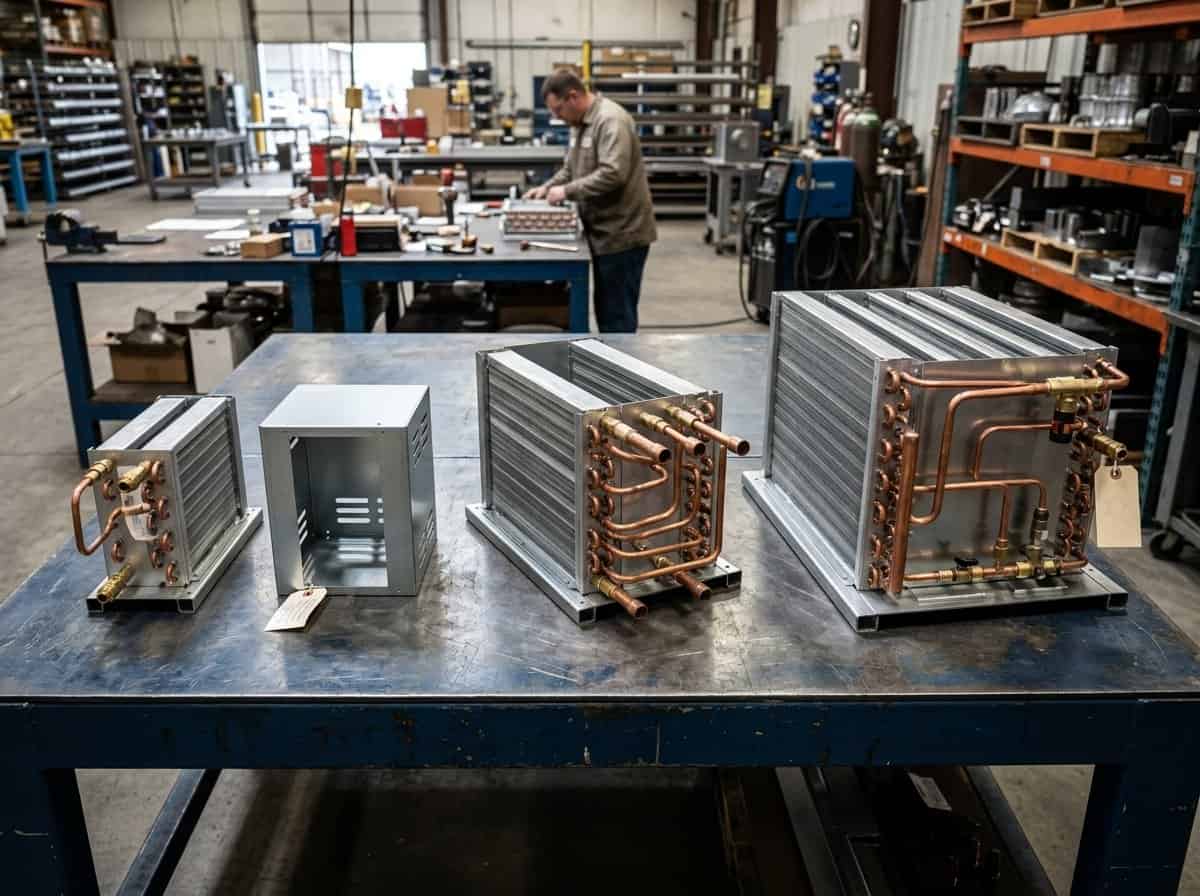
The ASHRAE refrigeration resources page explains that Standard 34 assigns refrigerant designations and safety classifications while Standard 15 addresses safe refrigeration system design and operation. When a program changes refrigerant or adds a regional variant, the MOQ discussion may change with it because materials, pressure tests, handling controls, and documentation may no longer be shared. Do not group SKUs only because their cabinets look similar. Group them when the refrigerant, pressure boundary, connection package, manufacturing process, and validation plan are compatible.
SKU mix changes the minimum practical order
An OEM program rarely contains one coil forever. Cabinet widths, voltage options, refrigerant choices, export markets, and product generations create a family of parts. The supplier needs to know whether the quoted MOQ applies per SKU, per family, per material batch, or per shipment.
Group SKUs by process, not only by model name
Create a matrix with these columns:
- Part number and drawing revision.
- Core dimensions and row count.
- Tube and fin material.
- Header and connection arrangement.
- Brackets and mounting features.
- Coating or corrosion requirement.
- Packaging method.
- Monthly and annual demand.
Two parts may look different to the buyer but share the same manufacturing route. Two parts with the same core may require different fixtures because their connections exit at opposite ends. The matrix lets the supplier explain the real grouping.
Ask for price breaks by family
Request three views when possible:
- Unit price by individual SKU.
- Unit price if a combined family order reaches a stated total.
- Unit price for a scheduled release over a defined period.
This gives procurement a way to compare a low-MOQ supplier with a larger supplier that offers a better family price. It also prevents a program from claiming a volume tier that only exists when every variant ships at once.
Manage low-volume variants honestly
Low-volume SKUs are not automatically bad. They may be essential for a regional appliance or a service replacement. The cost should be visible. Options include a low-volume surcharge, quarterly batching, common brackets, standard packaging, or a longer lead time.
Do not force a supplier to hide the cost of a low-volume variant inside the main SKU price. That makes the program look cheaper until the mix changes.
The EPA page on substitutes in refrigeration and air conditioning groups refrigerant use by end use, including retail food refrigeration. As refrigerant choices evolve across product families, an OEM should review whether a new refrigerant variant requires different materials, tests, safety documentation, or supplier grouping. A family price is only useful when the family is technically coherent.
How to negotiate MOQ without weakening the program
The goal is not the smallest number at any cost. The goal is a commercial condition that supports validation, repeat quality, cash flow, and delivery.
Trade planning visibility for order flexibility
If the buyer can provide a credible forecast, ask whether the supplier can reduce the first-release condition while keeping a scheduled annual commitment. Define what information the supplier receives, how often the forecast is updated, and which part of the forecast is firm.
Trade standardization for a lower minimum
Standard tube sizes, common headers, shared brackets, common caps, and standard cartons can reduce setup and inventory complexity. Ask the supplier to identify which change would have the largest effect. Do not change a thermal or fit-critical feature only to reduce MOQ.
Trade price for lead time
An urgent low-quantity order often costs more because the supplier has to interrupt a run or buy material quickly. If the project can accept a planned slot, ask for a scheduled alternative. The result may be a lower price without a larger finished-goods inventory.
Protect the quality gate
Do not accept a smaller condenser coil MOQ by removing the first-article review, leak test, or drawing confirmation. A lower commercial threshold does not make a technical risk disappear. If the buyer wants to reduce documentation for repeat lots, define which records remain mandatory.
A practical RFQ response matrix
Send a matrix that makes the supplier answer the same questions in the same order.
| Requirement | Buyer input | Supplier response |
|---|---|---|
| Sample quantity | Number of fit, performance, and retained samples | Confirm sample lot and price |
| Pilot quantity | Target units and intended process | Confirm process and inspection plan |
| Production MOQ | Per SKU, family, or shipment | State the exact basis |
| Tooling | Existing, new, or supplier proposal | List cost, ownership, and lead time |
| Material | Required and preferred inputs | Confirm availability and batch limits |
| SKU mix | Common and unique features | Explain changeover or family grouping |
| Packaging | Standard and program options | State unit, pallet, and storage assumptions |
| Release pattern | Monthly, quarterly, or blanket schedule | Confirm capacity and price validity |
Ask the supplier to mark each line as confirmed, exception, or alternative. A response matrix is more useful than a long email because it creates a record that engineering and purchasing can review together.

Common MOQ mistakes in OEM coil buying
Treating a marketplace MOQ as an engineering quotation
Public listings often show a minimum for a generic coil, not a validated custom part with the buyer’s refrigerant, dimensions, connection layout, packaging, and test records. Use marketplace information as a rough market signal only. It cannot replace a controlled RFQ.
Requesting an annual price with no release pattern
The supplier cannot plan material or labor from an annual total alone. Provide the release pattern or ask for separate prices for a full truckload, monthly release, and small replenishment.
Mixing sample and production requirements
The first sample may need extra inspection and a one-off fixture. Production may use a different packaging setup. Separate the stages in the RFQ so the supplier can quote them honestly.
Changing the drawing after price acceptance
A changed connection, material, coating, or bracket may affect tooling and MOQ. Use a revision process and request a re-quotation when a change alters cost or process. The ASME Y14.35 guidance on revising engineering product definition data provides a useful reference for recording changes and their identification.
Assuming lower MOQ always improves cash flow
Small lots can carry a higher unit price, more freight events, more receiving labor, and more packaging waste. Compare total program cost, not only the minimum order line.
When a larger order is the safer commercial choice
The smallest possible condenser coil MOQ is not always the best answer for an OEM program. A buyer may save warehouse space with frequent small releases, but the program can become more exposed to material price changes, production-slot shortages, and repeated freight charges. A larger planned lot can also make inspection and traceability easier because the parts share one controlled build window.
Compare total landed cost
Build a simple comparison using the same assumptions for every supplier. Include the unit price, sample charges, tooling, packaging, freight, receiving labor, storage, and any expected scrap or rework. If the supplier offers a lower price only when the buyer takes a large lot, calculate how long the stock will remain before the next design or model change.
The storage question is especially important for seasonal products. A condenser coil that sits for months in a humid warehouse may need better protection than a coil shipped directly into production. Ask about caps, vapor barrier, carton strength, and recommended storage time. These items are part of the commercial decision even when they do not appear in the unit-price column.
Consider engineering change risk
If the appliance platform is still being tested, a large production release may create stranded inventory when the drawing changes. Hold the initial order at the pilot level until the major fit, performance, and connection decisions are closed. If a large material purchase is unavoidable, define who owns unused material and whether it can support other SKUs.
The buyer can reduce this risk by grouping only stable features. Do not group two parts simply because they use the same tube. If one part has a different bracket, header, coating, or refrigerant, the revision risk may be different. A supplier should be able to show which material or fixture is common and which is dedicated.
Balance service demand and new production
Service parts can make the quantity ladder look larger than new production demand. A supplier may need to reserve low-volume capacity for replacement parts while the factory plans the main SKU run. Identify service demand separately and ask whether the supplier can batch it quarterly or use a shared family setup.
This is also a good place to agree on obsolescence rules. Define the notice period for a part retirement, how long drawings and inspection records remain available, and whether a last-time buy is expected. A clear rule protects both sides without forcing the buyer to overbuy at the start.
Use a staged commercial agreement
A staged agreement can combine a low initial condenser coil MOQ with a clear path to repeat production:
- Approve a defined sample quantity at a prototype price.
- Release a pilot lot after drawing and validation review.
- Confirm the production family and packaging after pilot feedback.
- Set a recurring price band tied to a realistic release range.
- Use scheduled releases or a blanket order once the forecast becomes reliable.
This structure gives engineering room to learn and gives the supplier a basis for planning. It also makes it easier to explain internally why the first lot costs more than the later production price.
Questions to ask before accepting a minimum
Before accepting a quoted minimum, ask whether the quantity is driven by a machine setup, a material purchase, a packaging run, a quality requirement, or a supplier policy. The answer determines what can change. A machine setup may improve when SKUs are combined. A material minimum may be reduced with a different grade or a scheduled release. A packaging minimum may disappear if standard cartons are used. A policy minimum may be negotiable when the program has a credible forecast.
Also ask what happens if the buyer orders below the stated minimum. The supplier may apply a surcharge, extend the lead time, use standard packaging, or decline the order. None of those responses is automatically unreasonable. The important point is to make the trade-off visible before the purchase order is released.
Keep the answer with the quotation record. If the volume or SKU mix changes later, the team can see why the original minimum was set and ask for a deliberate re-quote instead of restarting the conversation from memory.
FAQ: condenser coil MOQ
What is a normal condenser coil MOQ?
There is no single normal condenser coil MOQ for custom OEM work. The practical minimum depends on sample requirements, material batch, tooling, SKU mix, packaging, inspection, and order timing. Bottom line: ask for separate sample, pilot, and repeat-production conditions instead of one headline number.
Can I order one custom condenser coil?
You can often request one or a small number of engineering samples, but the supplier may apply a prototype charge or use a temporary process. Confirm whether the sample represents production-intent material and tooling. Bottom line: one sample can answer a fit question, but it may not prove production repeatability.
Does tooling increase the condenser coil MOQ?
Tooling does not always increase the piece minimum, but it can create a commercial minimum or one-time charge. Ask whether the tooling is dedicated, shared across a family, owned by the buyer, and reusable after a revision. Bottom line: separate tooling recovery from the piece-based MOQ.
How does SKU mix affect MOQ?
SKU mix can make the MOQ apply per part number, per process family, or per combined order. Different brackets, connections, coatings, or materials may require separate setups. Bottom line: send a family matrix and ask the supplier to state the MOQ basis in writing.
Can a forecast lower the MOQ?
A credible forecast and scheduled release may lower the first shipment condition because the supplier can plan material and production. The agreement must define firm quantities, forecast visibility, price validity, and cancellation responsibility. Bottom line: planning visibility can be more valuable than a vague annual promise.
Should I accept a low MOQ from a generic listing?
Do not treat a generic listing as proof that the supplier can meet your custom duty, fit, refrigerant, test, and packaging requirements. Use it as a starting question, then issue a controlled RFQ. Bottom line: a low listed MOQ does not confirm a production-ready custom coil.
How should I compare two MOQ offers?
Compare sample price, pilot price, recurring unit price, tooling, material minimum, packaging, freight, lead time, inspection records, and SKU assumptions. Put both offers into the same response matrix. Bottom line: compare the full program condition, not only the smallest order quantity.
What should be in the MOQ section of a purchase agreement?
State the per-SKU or family basis, release schedule, forecast rules, tooling ownership, material liability, price validity, packaging, quality records, and change-control process. Bottom line: write the assumptions that would otherwise appear in separate emails.
Choose an MOQ that supports the entire program
The best condenser coil MOQ is the smallest commercial condition that still supports a controlled sample, a useful pilot, repeatable production, and protected delivery. It may be one number for the first order and a different number after the process stabilizes. It may also be a blanket commitment with scheduled releases rather than a large shipment.
For a project-specific review, connect the quantity ladder to Domi’s OEM partnership program and custom coil fabrication page. Include the drawing revision, refrigerant, duty, SKU family, sample plan, and the release pattern you can actually support.
How to compare two MOQ answers
Two suppliers can quote different condenser coil MOQ values and both be acting reasonably. The buyer needs to compare the basis behind each answer, not only the number printed beside the part price.
Ask what the quantity actually controls
One supplier may define MOQ as the number of finished coils per SKU. Another may define it as the material batch, production run, or shipment quantity. Ask whether the minimum applies to every cabinet width, every refrigerant variant, each header configuration, or the complete family. Also ask whether the supplier can mix compatible SKUs inside one run. The answer should describe the real constraint, such as fin material purchasing, tube setup, brazing fixture changeover, pressure testing, or packaging. A vague minimum does not help procurement plan inventory.
Put samples, pilots, and repeat orders on one ladder
The first sample should not be compared with a repeat-production MOQ as if they were the same commercial event. Record the quantity, tooling status, inspection scope, and expected lead time for the sample, pilot, and production release. If the supplier offers a lower repeat MOQ after the pilot, ask what forecast or release pattern makes that possible. If the supplier requires a larger first order, ask whether the quantity can be split into staged deliveries while the buyer holds one approved revision. These questions turn MOQ into a release plan rather than a single obstacle.
Check inventory risk before choosing the lower number
A small MOQ can still be expensive if it creates many leftover variants. Review forecast confidence, cabinet lifecycle, service demand, packaging volume, and the cost of storing coils that cannot be used in another SKU. A family-based order may be sensible when the coils share refrigerant, material, pressure requirements, fixtures, and validation evidence. It is risky when the parts only look similar from the outside. Put the usable quantity, delivery split, and change responsibility in the purchase discussion so the selected MOQ supports the program instead of transferring hidden inventory risk to the buyer.