

Custom coil cost factors include material, thermal geometry, circuiting, tooling, testing, labor, packaging, volume, and change risk.
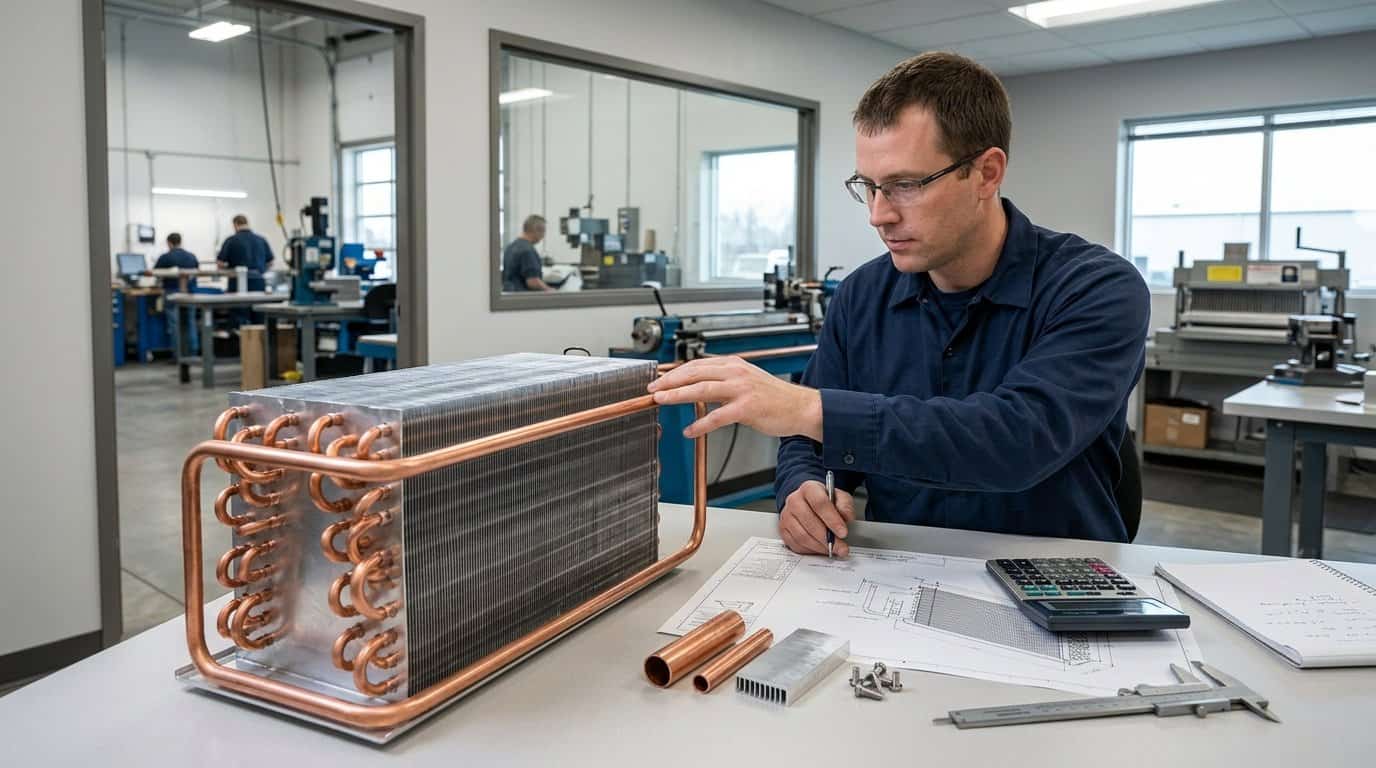
An OEM refrigerator coil quotation is rarely driven by one material price. The quote reflects the heat-transfer duty, the physical envelope, the joining route, the number of operations, the inspection plan, the order pattern, and the risk that the design will change before repeat production. A low unit price can hide tooling recovery, special packaging, or a performance assumption that the buyer has not approved.
This guide separates the main custom coil cost factors so engineers and procurement teams can compare quotations on the same basis. It is written for refrigerator and freezer platforms, commercial refrigeration equipment, distributors, and buyers who need a supplier to review a drawing rather than sell a standard replacement part.
If the project is still at the information-gathering stage, start with Domi’s OEM refrigerator and freezer coil solutions. Then use the sections below to decide which cost inputs are fixed, which are negotiable, and which require a technical proposal.
Why custom coil cost factors are easy to misread
Two quotations can describe the same outside dimensions but represent different parts. One may include a tested, capped assembly with a coating and custom divider. The other may cover an open core with standard packaging and no performance test. The prices cannot be compared until the scope is aligned.
Separate the quote into cost layers
Ask the supplier to show at least these layers:
| Cost layer | What belongs in it | Question for comparison |
|---|---|---|
| Non-recurring engineering | Design review, simulation, drawing work, fixture design | Is this included, separate, or limited to one revision? |
| Tooling and fixtures | Forming tools, headers, brazing nests, gauges, test fixtures | Who owns the tool and what happens after a revision? |
| Recurring part cost | Material, labor, process, inspection, and normal packaging | Is the price based on the same quantity and SKU mix? |
| Validation | Samples, pressure or leak tests, performance tests, reports | Which tests are included in the quoted lot? |
| Logistics | Packaging, freight preparation, storage, and delivery terms | Is the price ex-works, port, or delivered? |
This breakdown turns a price discussion into an engineering conversation. It also lets the buyer choose where to spend. A project may accept standard packaging during pilot work but require returnable racks at repeat production. A supplier may offer a value-engineering option that changes a non-critical bracket while preserving thermal duty.
Do not compare a proposal with an assumption
The most expensive line in a quotation is sometimes the assumption that no one wrote down. Examples include a guessed refrigerant, nominal room-temperature air, a standard wall thickness, or a sample that is not production-intent. Add an assumption register to the RFQ and require the supplier to confirm or change each line.
The AHRI 410 performance-rating page shows why scope matters. The standard applies to defined forced-circulation air-cooling and air-heating coils but lists exclusions for several configurations, including microchannel coils, bare-tube coils, frosting conditions, and certain direct-expansion and refrigerant condenser applications. A quotation should state its own rating method when the design falls outside that scope.
Material is only the first cost factor
Material choice affects the part cost, forming work, joining method, corrosion risk, test plan, and sometimes the available supplier base. The cheapest kilogram is not automatically the lowest installed cost.
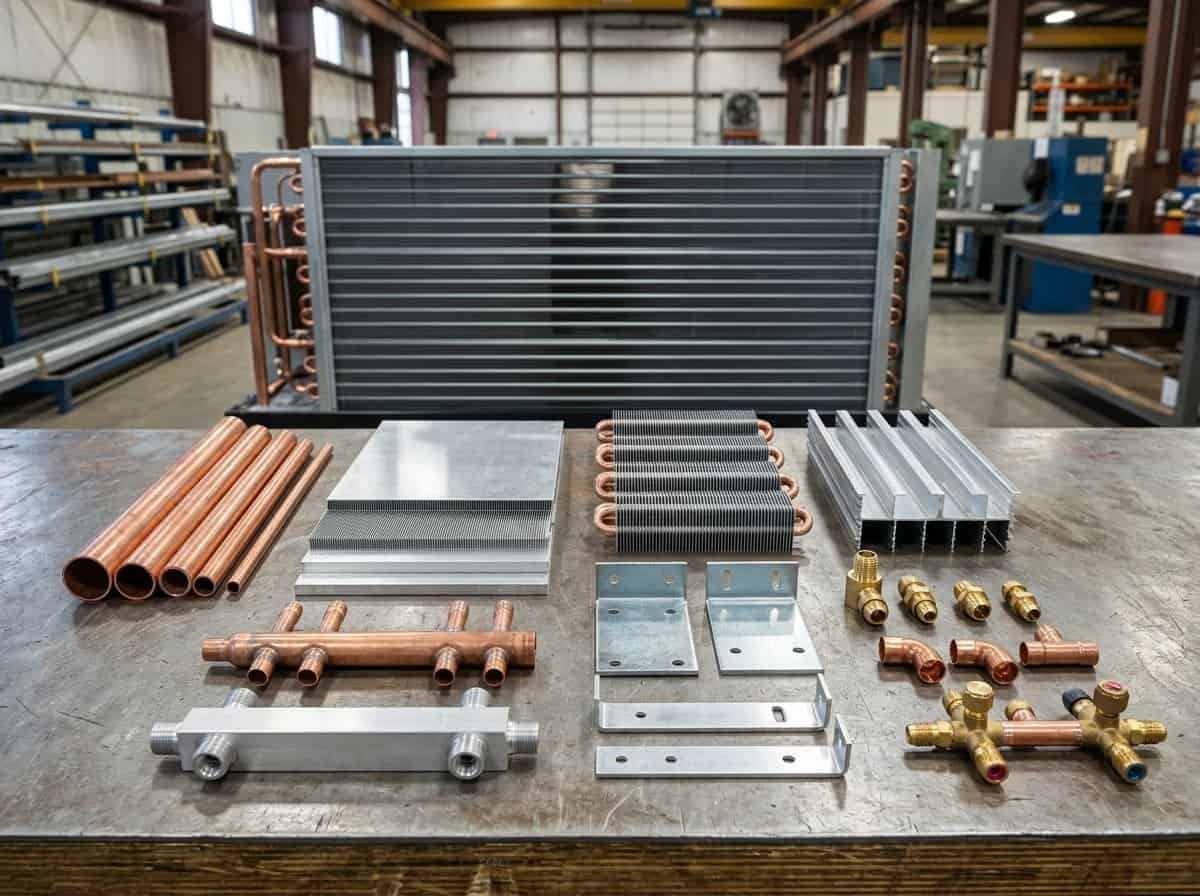
Tube, fin, header, and bracket choices
List each major material rather than writing “aluminum or copper as needed.” The supplier needs to know which material is fixed, which is preferred, and which may be proposed as an equivalent.
| Material decision | Cost effect | Technical question |
|---|---|---|
| Tube material and size | Changes raw material, forming, pressure capability, and heat transfer | Is the size fixed by design or open to review? |
| Fin stock and pitch | Changes material use, forming, airflow, and surface area | Does the air-side pressure drop have a limit? |
| Header or manifold | Changes fabrication, joint count, and circuit distribution | Is the header custom or a standard component? |
| Brackets and supports | Adds cutting, forming, welding, or assembly steps | Can a common bracket serve multiple SKUs? |
| Coating or finish | Adds material, process time, curing, and inspection | What test or visual standard defines acceptance? |
The cost factor is not simply material price times weight. A thin fin may reduce material but require more care in handling. A mixed-metal joint may lower one component cost but add process controls for galvanic compatibility. A coating may improve corrosion performance but complicate tube-end masking and inspection.
Refrigerant and safety assumptions
A coil design must be reviewed in the context of the refrigerant and the appliance system. The ASHRAE refrigeration resources page describes Standard 34 as the system for refrigerant designation and safety classification and Standard 15 as the safety standard for refrigeration systems. These references do not produce a quotation by themselves, but they make the buyer’s assumptions visible.
The EPA refrigerant safety guidance identifies toxicity, flammability, asphyxiation, and physical hazards as risks that may need to be managed. A buyer should therefore provide the refrigerant, operating pressure or temperature range, and the safety information required by the system design. Leaving the refrigerant as “to be confirmed” can make a quote look lower than the final cost because material, test, and handling requirements may change later.
Corrosion and finish requirements
“Anti-corrosion” is not a complete specification. State the environment, cleaning exposure, salt or humidity risk, storage condition, and the acceptance method. If the coating is still open, ask for a base material price and a coating option.
Ask whether the finish affects heat-transfer assumptions, brazing, tube-end cleanliness, drainage, or service repair. These interactions belong in the cost review because a finish that is cheap to apply can be expensive to control at the joint.
Geometry and circuiting drive labor and performance
Geometry is one of the most important custom coil cost factors because it changes material use and the number of manufacturing operations. It also determines whether the requested duty can be reached inside the appliance envelope.
Size, row count, and fin pitch
Larger face area can increase material and handling cost, but a smaller coil may require more rows, tighter fin pitch, higher airflow, or more difficult circuiting. A cost review should include the thermal and pressure-drop effect of each option.
Ask the supplier to show alternatives only when the buyer can validate them. For example, a wider coil may reduce depth and lower circuit complexity, but it may not fit the cabinet. A different fin pitch may improve heat transfer but increase fan power or frost sensitivity. The point of a value-engineering option is to make the trade-off clear, not to replace the approved design silently.
Circuiting and distribution
Circuiting changes tube length, joints, headers, pressure drop, refrigerant distribution, and inspection. It may also change the balance between thermal performance and ease of assembly. A coil with more circuits is not automatically more expensive, but it can require more header work and a more involved test setup.
State whether the circuiting is fixed by a validated design or open to supplier review. If the supplier proposes a change, request the expected impact on duty, pressure drop, charge, and validation effort.
Connections and joint count
Every connection can affect material, labor, fixture design, leak risk, and inspection. Include the connection type, orientation, tube end condition, fittings, and whether the appliance factory completes the final joint.
The EPA page on refrigeration and air-conditioning substitutes organizes refrigerant use by end use, including retail food refrigeration. As the refrigerant and system architecture change, the connection and safety assumptions in the coil quotation may change too. A quote that separates the core from the final connection package is easier to update when the system specification moves.
Tooling, prototype work, and engineering changes
Tooling and engineering work are often the largest non-recurring custom coil cost factors. Treating them as invisible overhead makes the first price look attractive and the change order look unreasonable.
What tooling may include
Depending on the design, tooling may cover tube forming, bending, fin assembly, header positioning, brazing, bracket forming, drilling, leak testing, or packaging. Ask for a list, not a single “tooling fee”.
For each tool, confirm:
- Purpose and part family supported.
- Expected life and maintenance.
- Ownership and storage.
- Change charge after a drawing revision.
- Inspection gauge calibration responsibility.
- Whether the tool can be transferred if the supplier changes.
Some fixtures are inexpensive but dedicated. Others cost more but support several SKUs. The best choice depends on the program’s expected life and change risk.
Prototype price is not production price
A prototype may require manual setup, low-volume material purchasing, extra inspection, and a separate shipping method. It should not be used as a direct forecast of production price. Ask the supplier to state which prototype activities disappear after process approval and which costs remain.
The ASME Y14.35 revision guidance explains the importance of identifying and recording changes to engineering product definition datasets and associated documents. That discipline also protects the quote. If a design change modifies the tool, material, or process, the supplier can connect the new cost to a defined revision instead of a vague request.
Engineering change risk
The earlier the project stage, the more valuable flexibility is. Avoid locking a long production commitment while the cabinet envelope, fan curve, refrigerant, or connection layout is still moving. If a material batch must be purchased early, state who owns unused stock and whether the material can be used on another SKU.

Testing and quality records are real costs
Testing is not decoration added after a quote. It is labor, equipment time, calibration, samples, and record retention.
Define the validation level
Separate tests into design validation, first-article inspection, production testing, and periodic audit. A new coil may need a full performance test, while repeat production may require a leak test and dimensional checks. The quote should say which level applies to each stage.
Possible items include:
- Dimensional inspection and connection orientation.
- Material or coating certificates.
- Pressure, leak, vacuum, or decay testing.
- Performance at a defined air and refrigerant condition.
- Flow restriction or pressure-drop measurement.
- Frost, defrost, drainage, or condensation observations.
- Packaging and incoming inspection records.
The ISO 9001 overview describes documented information, monitoring, measurement, and performance evaluation as parts of a quality system. The purchasing implication is direct: if a report is required, name it and price it. If a record is not required for every lot, state the sampling rule.
Avoid buying a test you cannot use
Before requesting a performance report, define the data needed for the engineering decision. A large report that does not use the appliance airflow or refrigerant condition may add cost without reducing risk. Ask the supplier to state the test setup, tolerances, and what the result will prove.
Connect quality to a release decision
Every required record should answer a release question. Does the unit fit? Is it leak-tight? Does it meet the requested duty? Is the coating acceptable? Is the package intact? If a report has no decision attached, it may be a habit rather than a useful control.
Volume, SKU mix, packaging, and logistics
Annual volume affects labor and material planning, but it is not the only recurring cost factor.
Volume ladder and MOQ
Request separate prices for engineering samples, pilot quantity, standard production lot, and a larger family volume. Ask whether the minimum applies per SKU, per family, per material batch, or per shipment. Link the pricing request to the condenser coil MOQ planning guide so the quote uses the same quantity assumptions.
SKU mix and changeovers
Five coil models may share the same tube but require different brackets, headers, coatings, or packaging. Ask the supplier to group them by process rather than treating the family as one number. A changeover matrix often reveals a cheaper way to share material or fixtures without merging technically different parts.
Packaging and landed cost
Fins, headers, and tube ends need protection. Ask for standard and program packaging options, carton size, pallet pattern, maximum stack height, storage condition, and replacement policy for transport damage. Small unit-price savings do not help if the shipment needs repacking at the receiving site.
How to compare two custom coil quotations
Use the same model for every supplier.
| Comparison item | Supplier A | Supplier B | Buyer check |
|---|---|---|---|
| Part scope | Same drawing revision and connection package? | ||
| Capacity basis | Same test condition and tolerance? | ||
| Material | Same grade, thickness, and finish? | ||
| Tooling | Same ownership and change assumptions? | ||
| Validation | Same sample and report scope? | ||
| Recurring price | Same volume and SKU mix? | ||
| Packaging and freight | Same delivery basis? | ||
| Change response | Clear revision and re-quote process? |
Then classify every difference as technical, commercial, or unconfirmed. Do not average unknowns. Ask the supplier to close them.
A cost factor worksheet for engineering and sourcing
Use a worksheet before the quotation meeting. It gives the team a place to write what is known, what is assumed, and what still needs a supplier proposal. The worksheet should follow the part through the program instead of ending at the first unit price.
Lock the technical baseline
Record the drawing revision, part number, refrigerant, duty point, air condition, connection package, and critical envelope. If any of those items is open, mark it as open. Do not let the price meeting turn a design assumption into an approved requirement.
Next, write the acceptance points. A supplier may quote the same dimensions but use a different performance basis. The buyer needs to know whether the part will be accepted by dimension, leak test, thermal duty, pressure drop, cabinet fit, or a combination of these tests. Each acceptance point can create a material, labor, or test cost, so it belongs in the cost model.
Split known cost from risk cost
Known cost includes the parts of the quote the buyer can define clearly: material family, approximate size, number of units, standard packaging, and required reports. Risk cost appears where the project may change or the supplier must solve an open problem. Examples include an unproven coating, a new circuiting proposal, a high-frost application, or a bracket that has not been tested in the cabinet.
Do not ask a supplier to bury risk in a single price. Ask for a base case and a risk option. The base case uses the current approved assumption. The option shows the additional work or material required if the open condition remains.
Rank the levers by reversibility
Some cost changes are easy to reverse. Packaging, shipment timing, and report format can often change without redesigning the coil. Other changes are difficult to reverse after tooling or cabinet validation, such as tube size, circuiting, header location, or bracket geometry. Review the easy levers first, then make a deliberate decision on the structural ones.
This ranking prevents a familiar mistake: reducing a line item with a change that later forces a new sample, new fixture, and new appliance test. The apparent saving was only a transfer of cost to a later stage.
Ask for a sensitivity note
If a supplier proposes a change, ask which result is most sensitive to it. A fin-pitch change may affect airflow and frosting. A connection change may affect brazing time and cabinet assembly. A header change may affect distribution and pressure drop. A bracket change may affect fit but not heat transfer.
The answer does not need to be a new full design study for every option. A concise technical note that identifies the likely impact and the test needed for confirmation can prevent a poor cost decision. This is particularly useful when several custom coil cost factors move together.
Use a release gate
Set a gate for each commercial stage:
| Stage | Cost question | Release evidence |
|---|---|---|
| Feasibility | Can the proposed geometry meet the duty and fit? | Initial review and assumptions list |
| Prototype | What does one production-intent part cost? | Sample quote and test plan |
| Pilot | Can the process repeat with the selected material and fixture? | Pilot quote, inspection plan, deviation log |
| Production | What is the recurring landed cost? | Approved drawing, price basis, packaging, release schedule |
| Change | What cost does the revision create? | New revision, affected tool and material list |
This release model keeps the cost factors tied to a decision. It also helps an OEM explain why a prototype quote contains engineering work that is not present in the later unit price.
Review the result with the supplier
Send the completed worksheet before the quotation meeting and ask the supplier to mark every line as confirmed, exception, or proposal. When the supplier answers with a general statement, ask which specific custom coil cost factors are included. A clear conversation at this point can remove several rounds of quote revision later.
Treat quote validity as a technical assumption
Material, freight, and labor conditions can change during a long approval cycle. Ask the supplier to state the quote validity period and which inputs may be re-priced. If the design is not yet frozen, do not present a provisional price as a permanent production commitment. Record the date, revision, quantity, and assumptions beside the quote. That record makes a later change easier to explain and keeps the cost discussion tied to the part that was actually reviewed.
If the buyer needs a longer validity period, ask what planning information would support it. A firm material commitment, a defined release schedule, or an approved substitution may help, but each option should be written into the commercial record. This keeps price protection from being confused with a promise that the technical design will not change.
For a long OEM program, review the quote again at drawing freeze, pilot approval, and production release. The cost factors do not disappear between those gates. They become easier to confirm, and the team can replace estimates with supplier records, measured test results, and an agreed release pattern.
That review also protects the buyer from comparing an early feasibility number with a production-ready offer. Use the same revision and test basis at each gate, then record the reason for every price change.
For a long OEM program, review the quote again at drawing freeze, pilot approval, and production release. The cost factors do not disappear between those gates. They become easier to confirm, and the team can replace estimates with supplier records, measured test results, and an agreed release pattern. That review also protects the buyer from comparing an early feasibility number with a production-ready offer. Use the same revision and test basis at each gate, then record the reason for every price change. If the buyer changes the cabinet, refrigerant, packaging, or forecast after approval, mark the change as a new commercial assumption instead of quietly absorbing it into the old quote.
Cost-down ideas that protect the coil design
The most useful cost-down work starts with a fixed performance and fit requirement. Ask for options in this order:
- Remove duplicate handling and inspection steps.
- Combine compatible SKUs into a shared fixture or material family.
- Standardize brackets, caps, and packaging where the cabinet allows it.
- Review fin pitch, row count, or circuiting with a performance check.
- Review material or coating with a corrosion and joint assessment.
- Adjust release timing to reduce urgent setup and freight.
Do not begin with a thinner material or a lower inspection level. Those changes can reduce price while increasing leakage, deformation, service failures, or acceptance risk. A supplier proposal should state the expected benefit and the test needed to prove it.
FAQ: custom coil cost factors
What are the main custom coil cost factors?
The main custom coil cost factors are material, geometry, circuiting, connection work, tooling, labor, testing, packaging, order volume, SKU mix, logistics, and engineering change risk. Bottom line: request a layered quotation instead of asking for a single unit price.
Does copper always cost more than aluminum?
Raw material price is only one part of the comparison. Forming, joining, coating, pressure capability, corrosion exposure, and the available manufacturing route can change the installed cost. Bottom line: compare a complete validated coil option, not material price per kilogram.
Which design detail affects coil cost the most?
There is no universal answer. Large changes in circuiting, joint count, tooling, coating, or packaging can matter more than a small dimensional change. Bottom line: ask the supplier to rank the cost drivers for the specific drawing.
Does a larger coil always cost more?
A larger coil often uses more material and requires more handling, but geometry can also reduce row count, circuit complexity, or pressure drop. Bottom line: compare size, duty, labor, and validation together.
Should tooling be included in the unit price?
Tooling should normally be shown separately so the buyer can compare non-recurring and recurring costs. If it is amortized, state the quantity and what happens if the program ends early. Bottom line: keep tooling visible even when the commercial agreement spreads the recovery over units.
How can I reduce cost without changing performance?
Start with SKU grouping, common fixtures, standard packaging, planned releases, and removal of duplicate handling. Only then review geometry or material with a performance and corrosion check. Bottom line: reduce process waste before reducing the safety or performance margin.
Why is the sample price much higher than the production price?
Samples may use manual setup, small material purchases, extra inspection, special packaging, and engineering time. They answer a different question from a repeat-production lot. Bottom line: ask which sample costs disappear after process approval.
What should a cost comparison spreadsheet contain?
Include part scope, duty, material, tooling, sample and pilot costs, recurring price, test records, packaging, freight, MOQ, lead time, and change-control assumptions. Bottom line: record the assumptions beside the price so a later revision does not create a false comparison.
Turn a cost discussion into an engineering decision
Good custom coil cost factors analysis does not chase the lowest line item. It shows what the buyer receives, what the supplier must control, and which options reduce cost without creating a new field failure. Keep the technical scope, test condition, volume ladder, and revision status together.
For a project-specific review, connect the quotation to Domi’s thermal engineering and CFD support, custom heat exchanger fabrication, and testing laboratory. Send the current drawing, duty point, quantity ladder, and the cost option you want evaluated.
How to read the cost breakdown before approval
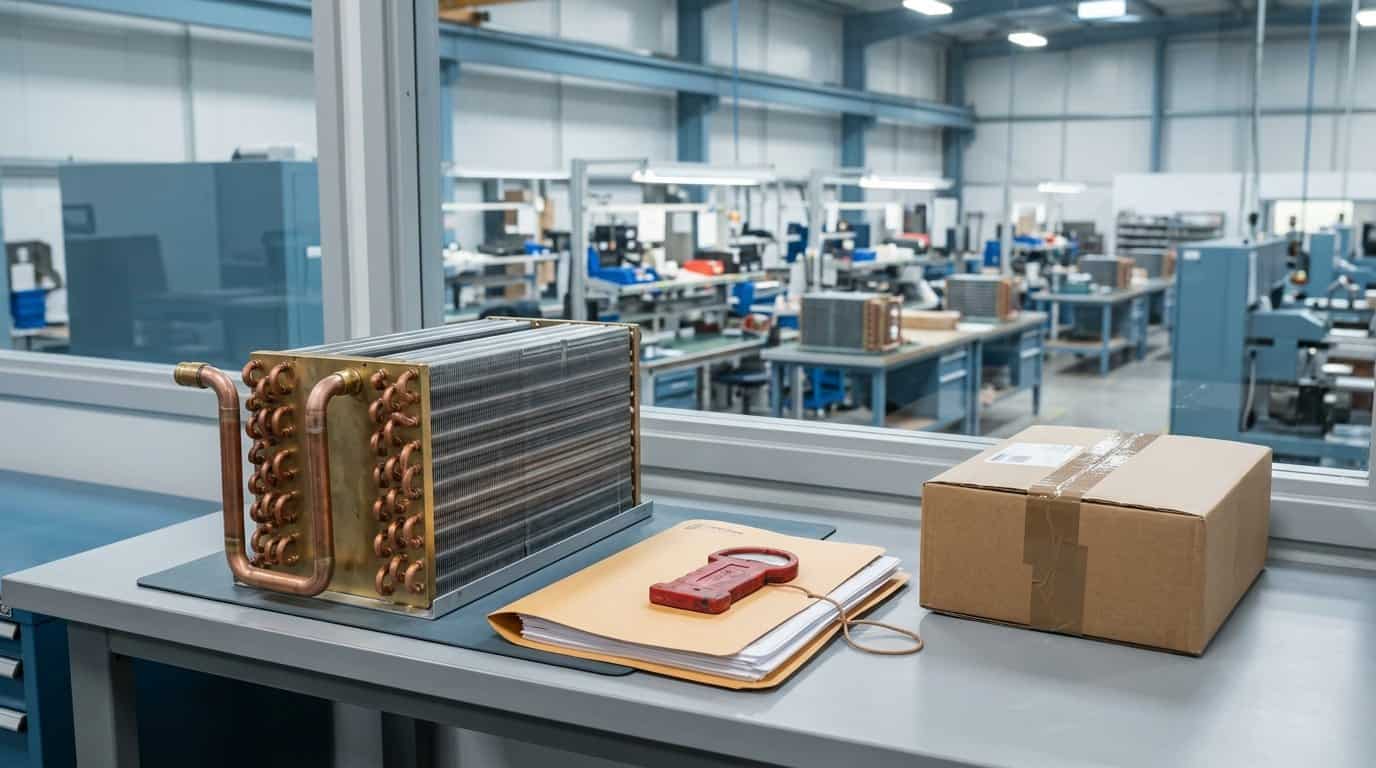
A useful custom coil cost breakdown shows which costs are fixed, which costs vary with quantity, and which assumptions can change after the drawing or test plan is revised. That structure is more valuable than a single low total.
Identify the first cost driver that can move
Start with the items most likely to change the design: capacity, refrigerant, circuiting, material, fin pitch, cabinet envelope, and connection package. If one of these is still open, the quotation should show a range or a clearly labeled assumption. Ask whether the proposed option changes heat transfer area, pressure drop, brazing work, tooling, inspection, or packaging. This lets engineering judge whether a lower cost comes from a real simplification or from a requirement that has quietly been omitted.
Separate one-time and recurring costs
Tooling, fixtures, sample fabrication, special gauges, and first-article work may be one-time costs. Material, labor, testing, packaging, freight, and quality documentation usually recur with each release. The boundary is not always identical between suppliers, so ask for the treatment of repair fixtures, replacement tooling, engineering changes, and repeat validation. A buyer should know whether the quoted unit price assumes that the first fixture is already paid, that a minimum material batch is consumed, or that a specific delivery split is maintained.
Recheck the total at the right approval gate
Review the cost model at requirement freeze, drawing freeze, pilot approval, and production release. At each point, replace estimates with the latest drawing revision, measured test result, approved material, confirmed packaging, and realistic release pattern. Record the reason for every change. If the cabinet, forecast, or compliance requirement changes, issue a new commercial assumption instead of blending the change into the old total. This gives procurement a defensible comparison and gives engineering a clear view of what performance or risk is being exchanged for a cost reduction.