
R-454B is an A2L refrigerant blend used in new air-conditioning and heat-pump equipment designed for it. The U.S. EPA lists it for residential and light-commercial air conditioning and heat pumps under specified use conditions, with a listed GWP of 470 for that end use. It is not a drop-in charge for an R-410A system: equipment, coils, safety provisions, and service procedures must be selected for the refrigerant and the applicable rules.
OEM buyers need to know whether the application, complete system, coil performance, approved components, and current rules fit together. Work through these checks before treating a coil drawing or quotation as final.
What is R-454B refrigerant?
R-454B is a blended refrigerant classified as A2L, which means lower flammability and lower toxicity under the ASHRAE safety classification system. You may also see it written as R454B without the hyphen. In EPA’s SNAP table for residential and light-commercial air conditioning and heat pumps, R-454B is listed for new equipment at GWP 470, with conditions on its use. That table applies to the named end use only; it does not authorize R-454B for every refrigeration or process system.
EPA’s Technology Transitions GWP table lists R-454B at 465 and R-410A at 2,088. EPA’s residential and light-commercial SNAP page lists R-454B at 470. The tables serve different regulatory contexts. When a specification or rule sets a threshold, use the value and method named there. Do not copy a number from another table into a compliance declaration.

EPA also lists refrigerants separately by application. For example, it maintains a distinct SNAP page for industrial process refrigeration. Confirm the exact end-use category before specifying R-454B; “EPA listed” by itself is not a complete application decision.
Is R-454B a replacement for R-410A?
EPA’s GWP table makes R-454B a lower-GWP option for some new equipment designs. That does not make it a service replacement for an existing R-410A unit. EPA’s guidance draws the boundary at equipment design: use R-454B only in systems designed for it. Do not top off, retrofit, or convert an R-410A circuit based on refrigerant similarity or a coil connection that appears to fit.
The transition is an equipment design decision. A new model may need a different refrigerant circuit, charge strategy, component selection, marking, installation instructions, and safety evaluation. Follow the original equipment manufacturer’s approved refrigerant and the applicable code and listing requirements.

For a buyer comparing R-410A and R-454B, keep four questions separate:
- Application: Is R-454B acceptable for this exact equipment category and market?
- Safety: Is the complete system designed, evaluated, labeled, installed, and serviced for an A2L refrigerant?
- Performance: Does the complete system meet capacity and efficiency targets at the specified operating conditions?
- Transition timing: Which current manufacture, import, installation, or servicing rules apply to the product and date?
What is the difference between R-410A and R-454B for an OEM?
For an OEM, a refrigerant name on a quotation says little about whether the full system is approved. R-454B’s A2L classification changes the safety assumptions. The manufacturer must check the complete appliance against the applicable product standard and instructions. System performance also depends on the compressor, metering device, charge, heat exchangers, controls, and test conditions.

Generic concept comparison; the illustrated layouts are not validated R-410A or R-454B designs.
Do not assume an R-410A coil is suitable because its material, dimensions, or connector size look familiar. Confirm at least the refrigerant approval, design pressure and temperature range, coil circuiting, connection details, rated capacity at the new operating points, and any safety-related equipment constraints. An existing part number or performance result cannot be transferred to a new refrigerant without the equipment designer’s review.
What changes when designing an HVAC coil for R-454B?
The coil remains one part of the refrigeration circuit. Its design must fit the system’s target duty and operating envelope, while the complete appliance meets its safety requirements. A refrigerant change can affect mass flow, heat-transfer conditions, circuit selection, pressure drop, refrigerant charge, and control behavior. The direction and size of each effect depend on the equipment and operating point, so reusing a coil without a design review is not a sound basis for approval.
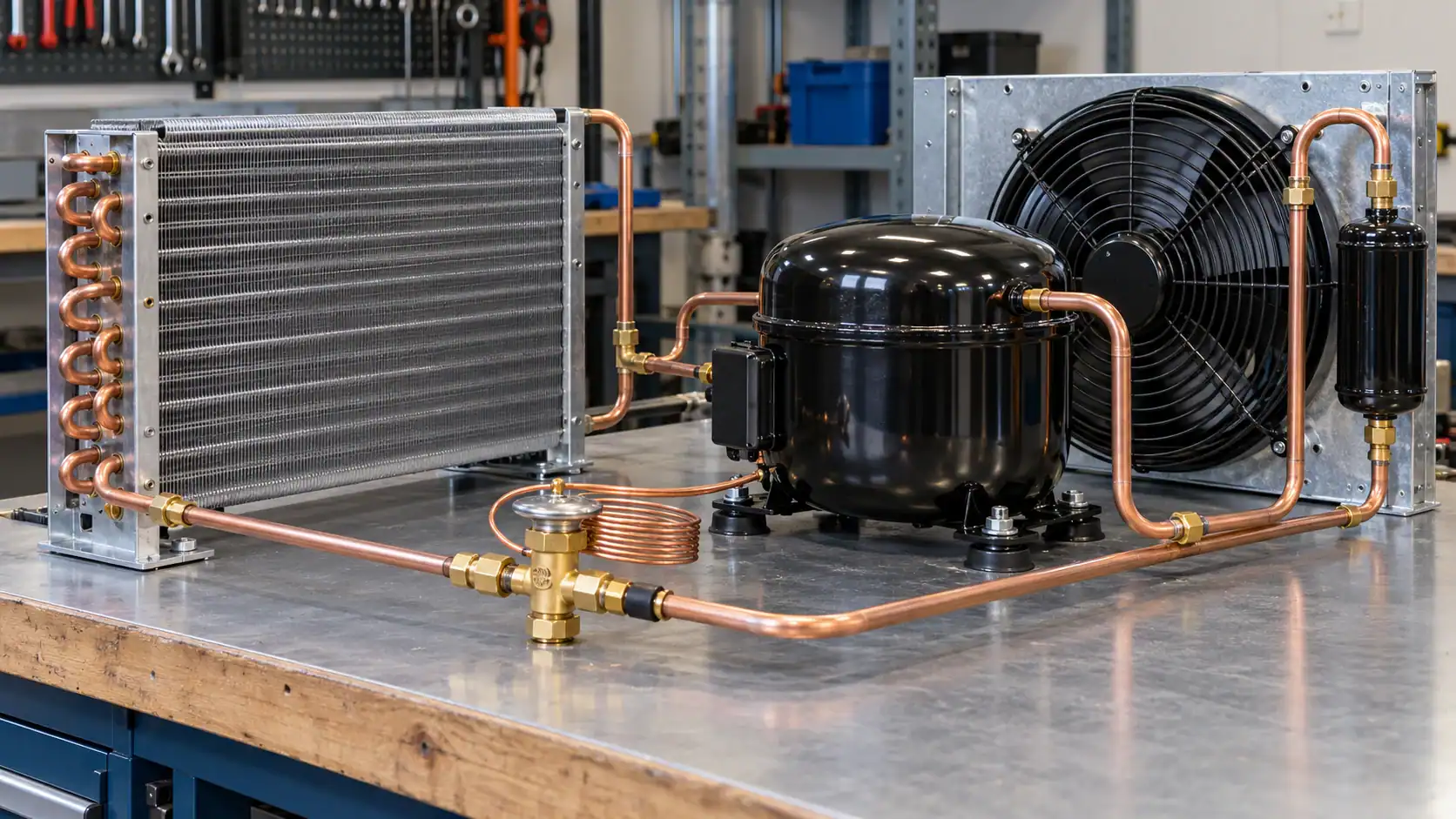
Start with the OEM’s rated conditions and verify the coil against the full set of required modes, not a single nominal rating. For a heat pump, that may include cooling, heating, defrost, and the outdoor conditions that govern each mode. For an air conditioner, confirm the specified indoor and outdoor conditions, airflow, and capacity target. The system designer should define which conditions are acceptance points.
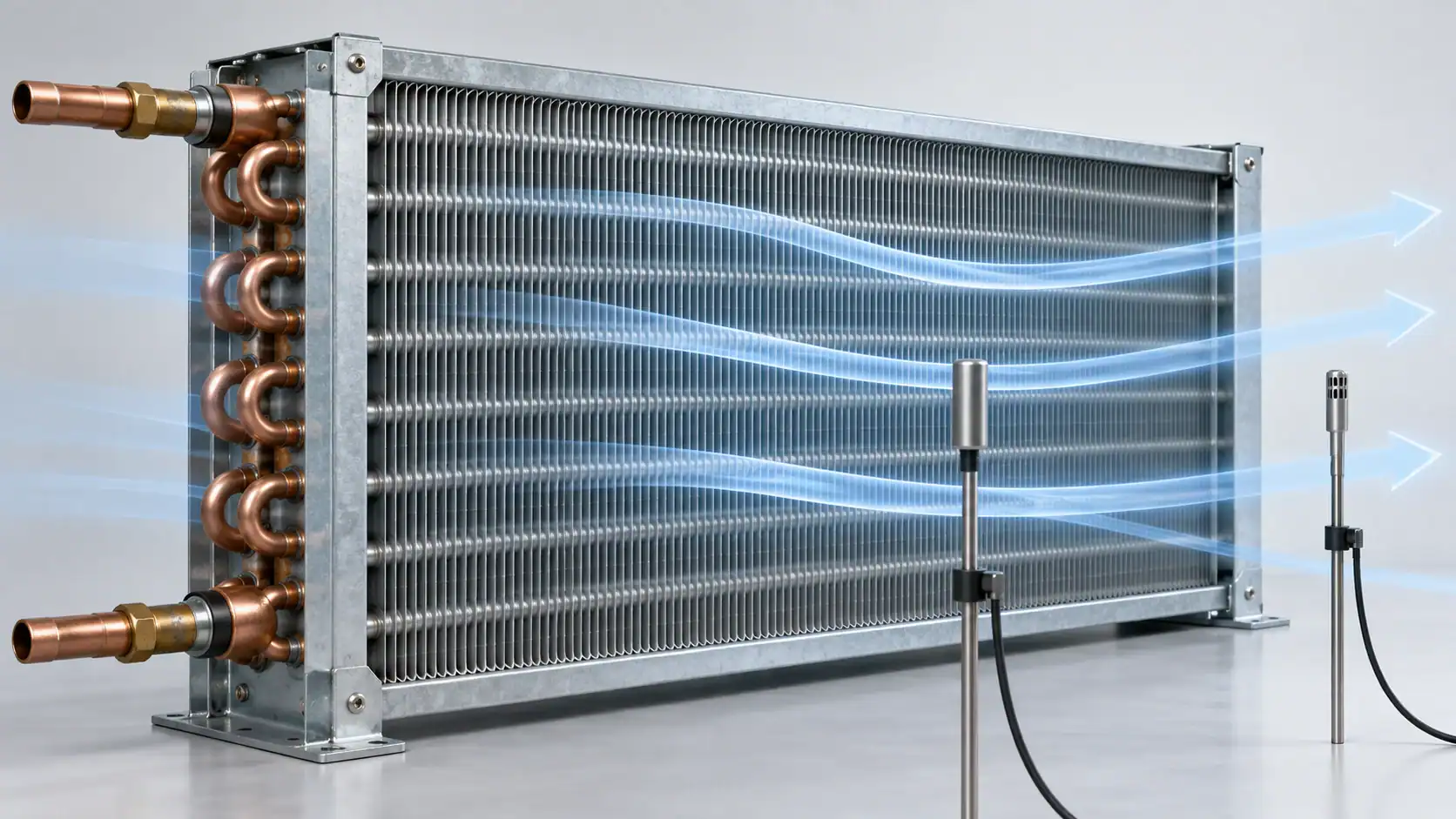
Include these inputs in the coil specification:
- Refrigerant and compressor or condensing-unit model.
- Required capacity and rating conditions, including the air-side conditions and airflow.
- Evaporating and condensing conditions, superheat or subcooling assumptions where applicable, and operating range.
- Coil face area, depth, rows, fin details, tube material, circuiting, and connection orientation.
- Design pressure and temperature limits, connection type, coating or corrosion requirements, and condensate handling.
- Safety-standard, listing, installation, and service requirements that constrain the complete appliance.
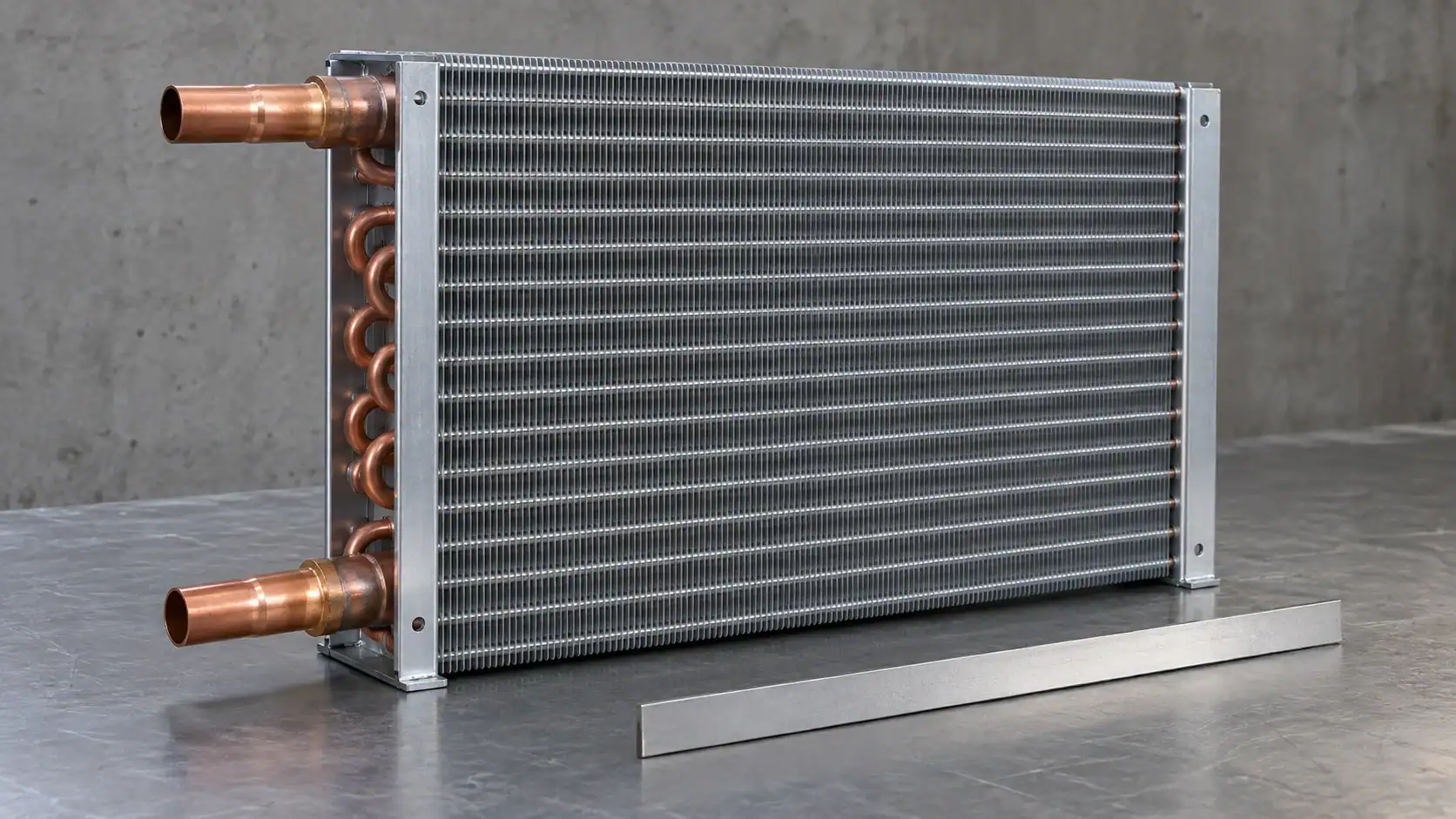
Which coil details should be rechecked before freezing the design?
Revisit the refrigerant-side circuit and every interface to the rest of the system. Check the number and arrangement of circuits, distributor and header selection, tube and fin configuration, connection size and location, and how the coil drains or defrosts in the intended orientation. Confirm the selected construction against the OEM’s design limits and approved materials.
Assess compatibility from the approved refrigerant, operating envelope, coil circuit, and complete-appliance requirements. A pressure test establishes pressure integrity; by itself, it says nothing about thermal performance or A2L safety compliance. Set a separate acceptance criterion for capacity, refrigerant-side pressure drop, leakage, material compatibility, and appliance evaluation.

Generic component illustration; it does not represent a Domi manufacturing or inspection process.
How should an OEM validate an R-454B coil design?
Use the test plan specified by the equipment owner and applicable standard. Record the model and revision, refrigerant, operating conditions, coil configuration, airflow, measurement method, acceptance limits, and approver. Pressure and leak checks are separate from capacity and temperature measurements. One does not substitute for the other.
If the design is still at quotation stage, label unknown values as open items. Do not present a concept coil, a generic illustration, or an unverified capacity estimate as a tested R-454B product. Request supplier evidence for the exact model and conditions that matter to the project.
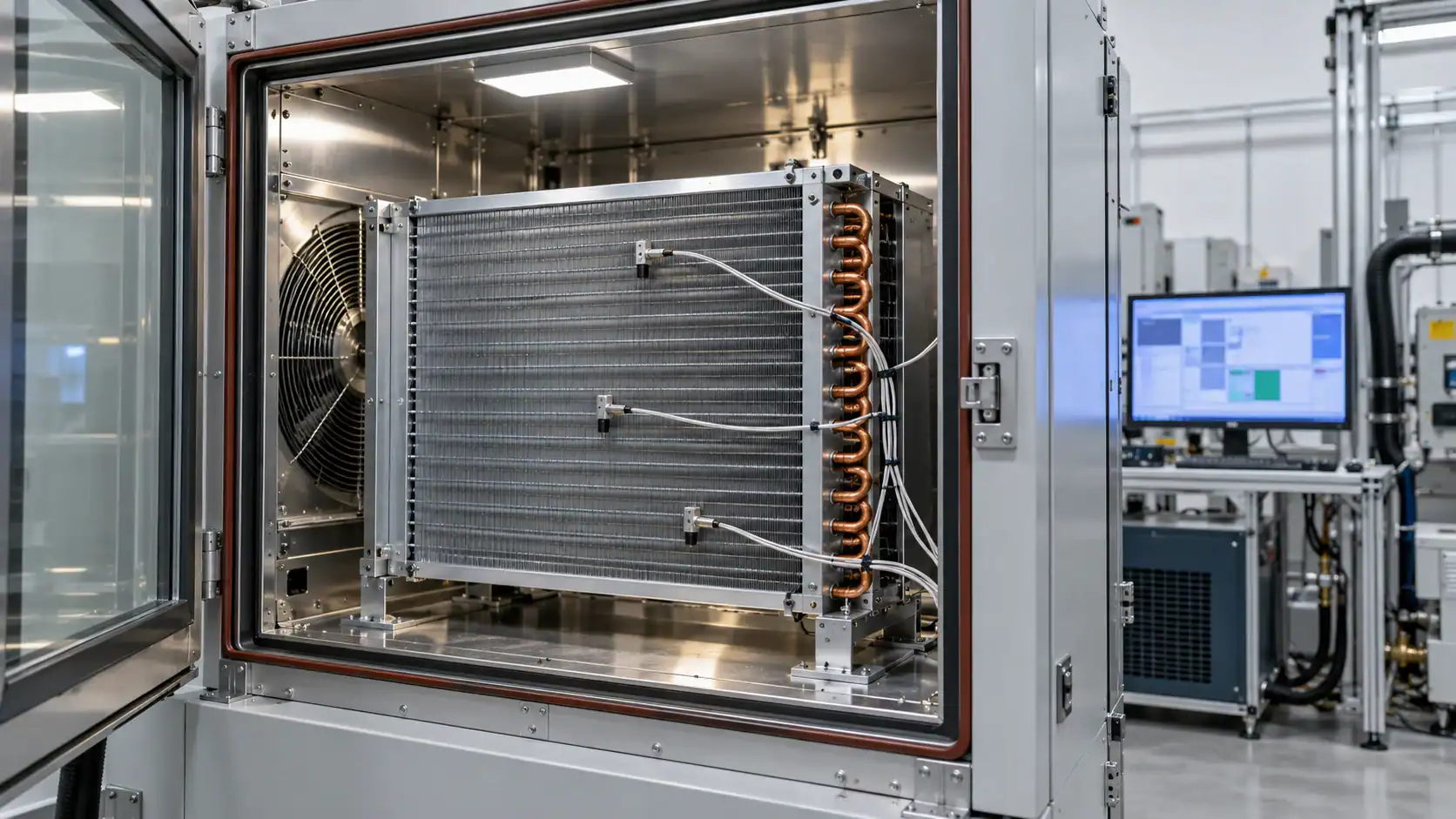
What should buyers verify about EPA rules and application?
EPA’s Technology Transitions restrictions are organized by sector and subsector. Limits and dates differ by product category, and rules can distinguish manufacture or import from installation. EPA issued a 2026 reconsideration, so an older summary may no longer match the current rule. Check the current EPA sector table for the exact product category, refrigerant threshold, and compliance date before using a date in a purchase specification.
Also check the relevant SNAP use conditions and the adopted equipment safety standard. SNAP addresses acceptable substitutes for specified end uses. Technology Transitions sets sector-based HFC restrictions. Equipment standards and listings address product safety and design. Passing one check does not automatically pass the others.

Generic planning scene; it does not depict legal advice, a certification, or a completed compliance review.
What information belongs in an R-454B coil RFQ?
Refrigerant name and nominal tonnage alone do not give a supplier enough information to assess the coil. Include the refrigerant, application, operating points, performance targets, air-side conditions, physical envelope, connections, materials, pressure and temperature limits, quantity, and requested delivery schedule. Mark provisional values as assumptions.
Attach the coil drawing or envelope, system schematic, compressor and metering-device references, rating conditions, and required inspection or test documents. State whether you want concept pricing, a prototype, or production supply. Keep unresolved design values open until the system engineer approves them.

When you are ready to discuss a custom coil, use Domi’s custom coil fabrication page and engineering capabilities to prepare the request. Confirm refrigerant compatibility and design conditions with the responsible system engineer before treating any quotation as an approved R-454B design.
A five-gate decision before approving a new coil
Use this sequence before treating a refrigerant change as a part-number substitution:
- Check that the refrigerant is acceptable for the exact product end use and market.
- Verify the appliance design, standard, listing, labeling, installation, and service requirements for A2L.
- Match the compressor, metering device, valves, coil connections, materials, and pressure-temperature limits as one design.
- Review capacity and operation at the OEM’s rating points and across the stated operating range.
- Record the drawing revision, assumptions, test method, results, and approvals before production release.
If a gate is unresolved, keep it open in the RFQ or design review. This is safer than treating a lower-GWP selection as proof that the existing system or coil is compatible.

Frequently asked questions
Is R-454B an A2L refrigerant?
Yes. EPA’s residential and light-commercial AC and heat-pump SNAP listing identifies R-454B as A2L and acceptable with use conditions for that end use. Follow the applicable equipment standard and use conditions.
Can R-454B replace R-410A?
It can be selected for some new equipment designs, but it is not a general replacement charge for R-410A systems. Use only the refrigerant specified for the equipment.
Is R-454B a drop-in replacement for R-410A?
No. Do not put R-454B into equipment designed for R-410A. The refrigerant’s A2L classification and the system’s component, safety, and listing requirements all need to be addressed by the equipment designer.
Can anyone buy R-454B refrigerant?
There is no single answer across markets. Check local rules and supplier requirements before ordering. Availability does not show that a particular system is approved for R-454B.
What is the difference between R-410A and R-454B?
EPA’s Technology Transitions GWP table lists R-454B at 465 and R-410A at 2,088. R-454B is also classified A2L. Equipment designed for R-454B has different refrigerant and safety requirements from an R-410A unit. Compare the full system under the applicable rule and standard.
How much does R-454B cost?
The price depends on supplier, package size, market, date, and quantity. For an OEM project, compare refrigerant cost alongside redesign, approved components, testing, installation, and service requirements. Ask suppliers for a current written price rather than relying on an old online figure.
Is R-454B a good AC refrigerant?
It may be suitable for equipment designed and approved for its application. Whether it is the right choice depends on the product category, performance target, safety design, local rules, and service plan. It is not a universal retrofit option.
What should an OEM include in an R-454B coil RFQ?
Include the refrigerant, capacity target, rating conditions, airflow, coil envelope, circuit and connection details, material and coating requirements, pressure and temperature limits, applicable standards, test requirements, quantity, and delivery expectations. Identify assumptions and unresolved values.
Related Articles
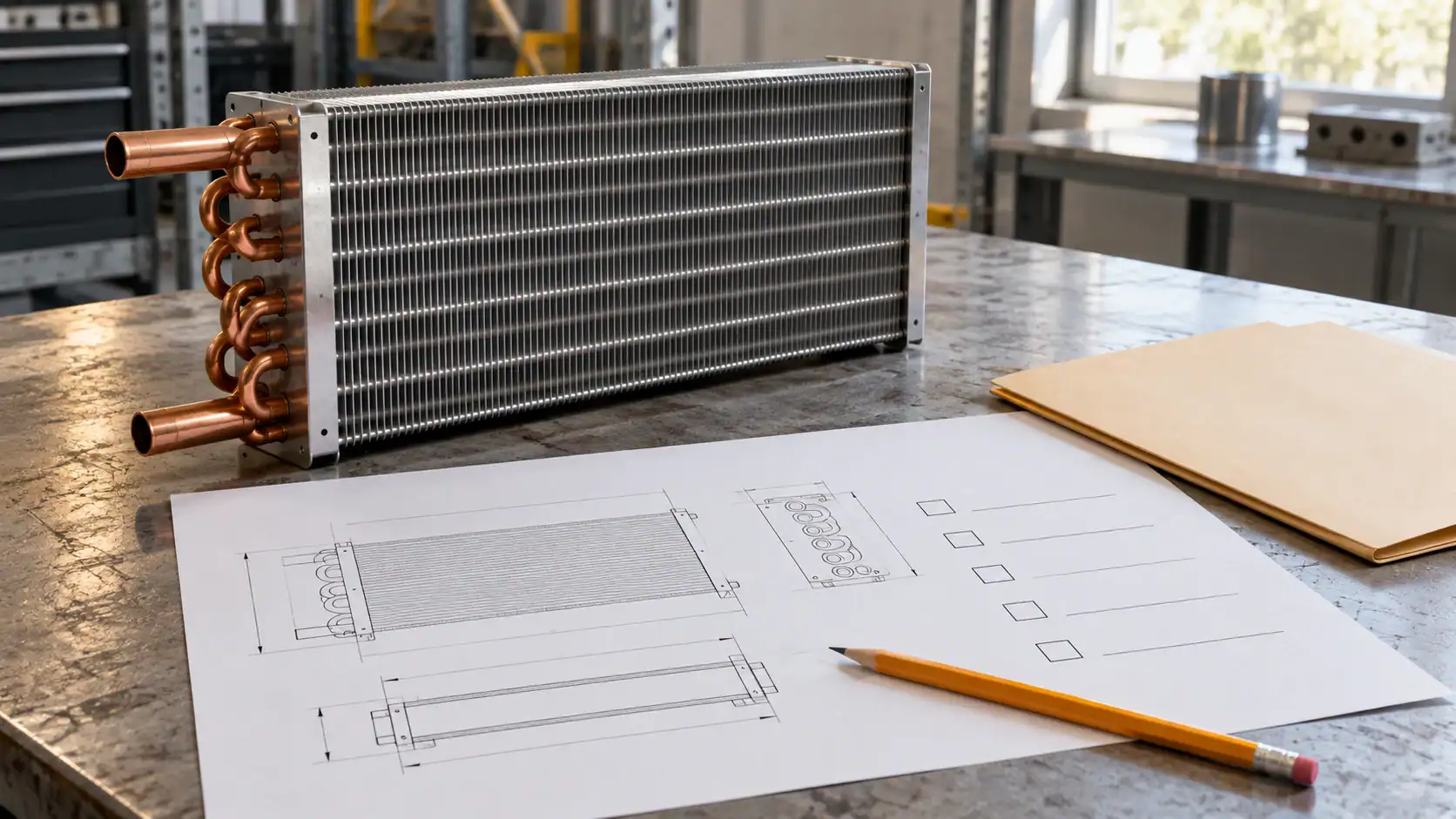
Prepare a coil specification for review
For a new R-454B equipment design, send the operating conditions and coil interface details with the drawing. Keep application and design assumptions documented before releasing a coil for production.