

A refrigeration compressor draws low-pressure vapor from the evaporator, raises its pressure and temperature, and sends that vapor to the condenser so the system can reject heat. For a commercial or industrial project, the right choice is not simply the largest motor or the lowest catalog price. Select the compressor from the design load, refrigerant, suction and condensing temperatures, capacity-control range, oil-return arrangement, electrical service and the matched evaporator and condenser. This guide turns those inputs into a practical OEM request for quotation.
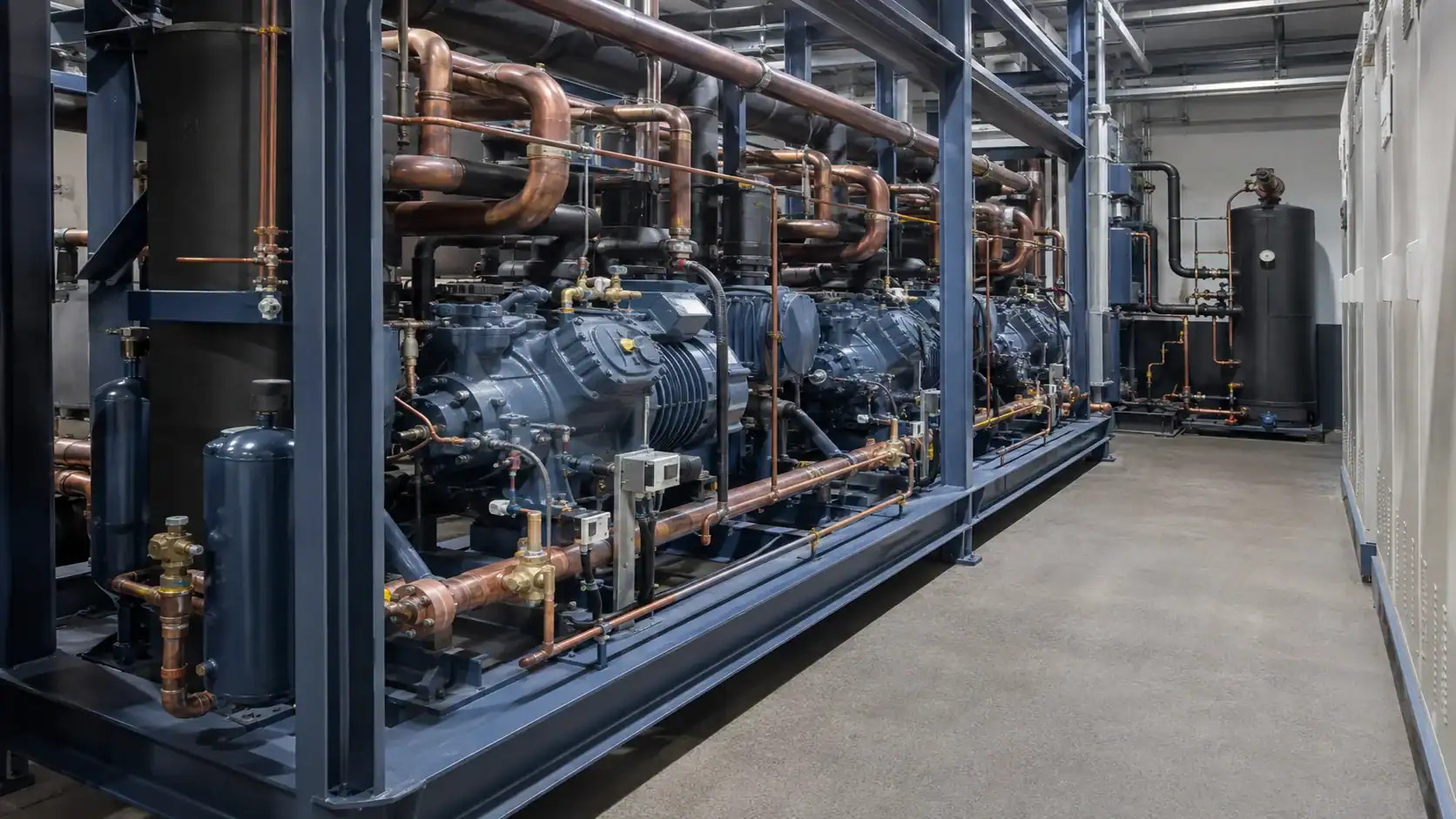
What does a refrigeration compressor do?
The compressor is the pressure-changing device in a vapor-compression system. It receives vapor at the evaporator outlet and provides the pressure difference that moves refrigerant through the expansion device, evaporator, suction line, discharge line and condenser. The sequence is simple, but the operating conditions are not interchangeable.
- Suction: vapor leaves the evaporator and enters the compressor at a specified suction pressure and superheat.
- Compression: the motor and compression mechanism raise the vapor pressure and discharge temperature.
- Discharge: hot vapor travels to the condenser, where heat is rejected to air, water or another process fluid.
- Capacity response: the compressor unloads, cycles, stages or varies speed as the refrigeration load changes.
The compressor therefore works as part of a matched circuit. A compressor that appears adequate at one rating point may run outside its approved envelope when the ambient rises, the evaporating temperature falls, or the system has a different refrigerant charge. The ASHRAE compressor guidance is a useful reference for comparing performance at equivalent conditions.
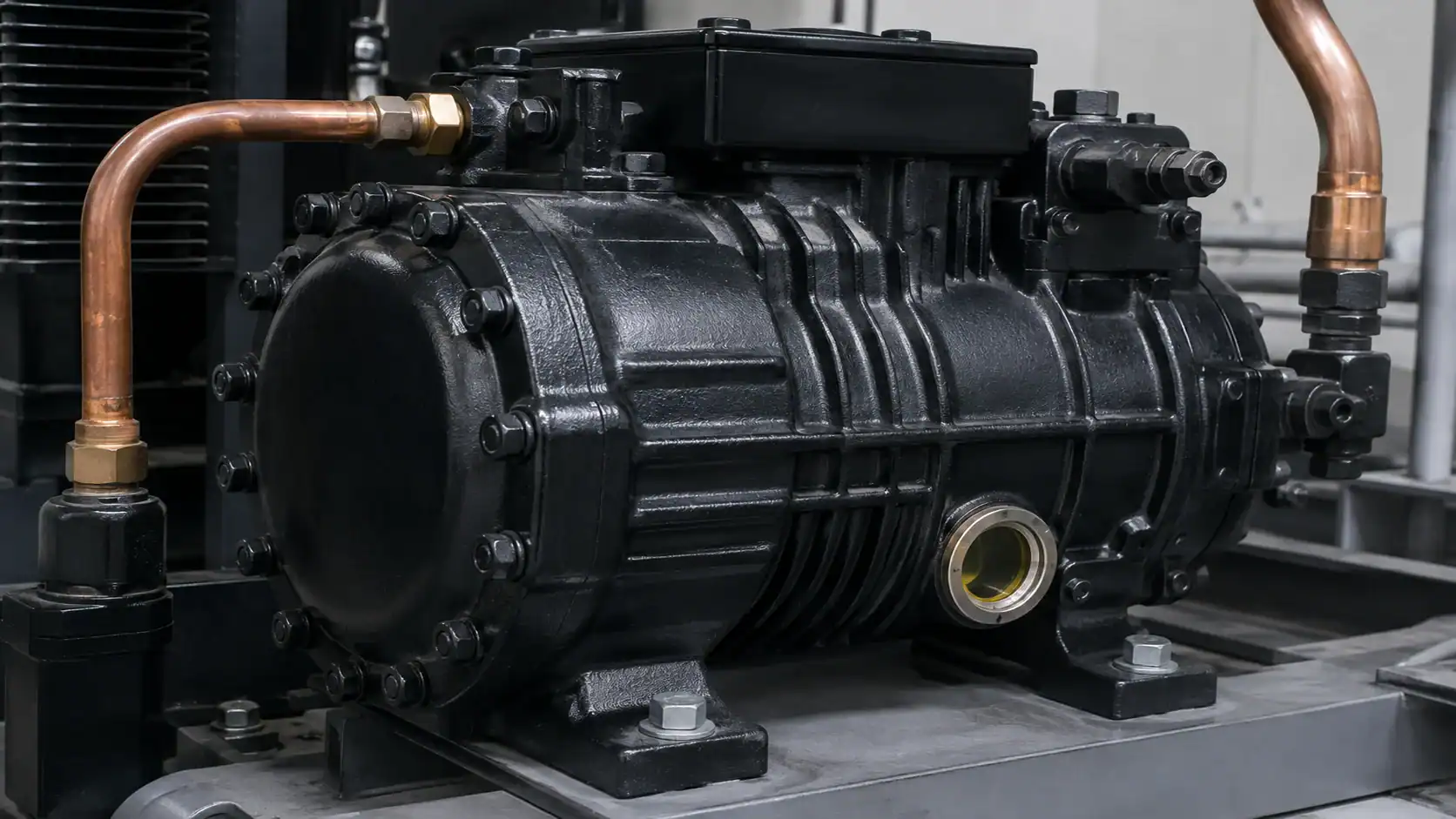
Refrigeration compressor types and where they fit
The compressor mechanism affects efficiency, sound, service access, modulation and the practical capacity range. Use the table as a screening tool, then require the OEM to submit ratings at the actual design point.
| Compressor type | How it compresses vapor | Common project fit | Buyer checkpoint |
|---|---|---|---|
| Reciprocating | Pistons change cylinder volume through suction and discharge valves | Walk-ins, medium systems, parallel racks and industrial compound systems | Confirm cylinder unloading, oil return and service parts |
| Scroll | Two scrolls orbit to reduce the vapor pockets | Small and medium commercial refrigeration, heat pumps and compact racks | Check liquid tolerance, rotation protection and minimum operating envelope |
| Screw | Twin rotors trap and progressively reduce vapor volume | Large cold storage, process cooling and continuous industrial loads | Normalize built-in volume ratio, slide-valve range and oil cooling |
| Centrifugal | A high-speed impeller raises vapor velocity and converts it to pressure | Very large flow applications with a suitable pressure ratio | Confirm surge margin, guide-vane control and minimum load |
| Rotary vane or rolling piston | A rotating element changes a sealed chamber volume | Small packaged equipment and specialty systems | Verify refrigerant compatibility, lubrication and replacement access |
Reciprocating compressors
Reciprocating compressors are familiar to service teams because valves, cylinders and unloaders are accessible. A single machine can cover a broad range when cylinder unloading is specified correctly. Multiple semi-hermetic reciprocating compressors on a parallel rack can also provide staging and a degree of redundancy. For low-temperature duty, ask whether the selection is single-stage, compound or booster. A high pressure ratio can increase discharge temperature and reduce useful capacity even when the motor nameplate looks adequate.
Scroll compressors
Scroll designs have few moving parts and can be quiet in small commercial systems. They are often a good fit for display cases, small cold rooms and compact condensing units, but the selected model still needs a defined refrigerant, suction temperature and liquid-management strategy. Confirm that the controller, check valve and oil return sequence protect the scroll during start, stop and defrost events.
Screw compressors
Screw compressors suit large and relatively steady loads. Oil injection controls discharge temperature and seals the rotor clearance, so the oil separator, oil cooler and oil-return line are part of the compressor selection. A screw’s internal volume ratio should be compared with the system pressure ratio. If those ratios do not align, the machine can experience over-compression or under-compression and waste power. The Danfoss refrigeration compressor range illustrates why refrigerant family and operating envelope belong in the same selection conversation.
Centrifugal compressors
Centrifugal machines can be efficient at high flow when the pressure ratio and load profile stay inside the map. They require careful control of surge, guide vanes and minimum load. They are usually considered for large process or chilled-water applications rather than a small walk-in, and should be evaluated with an annual operating profile rather than one peak point.
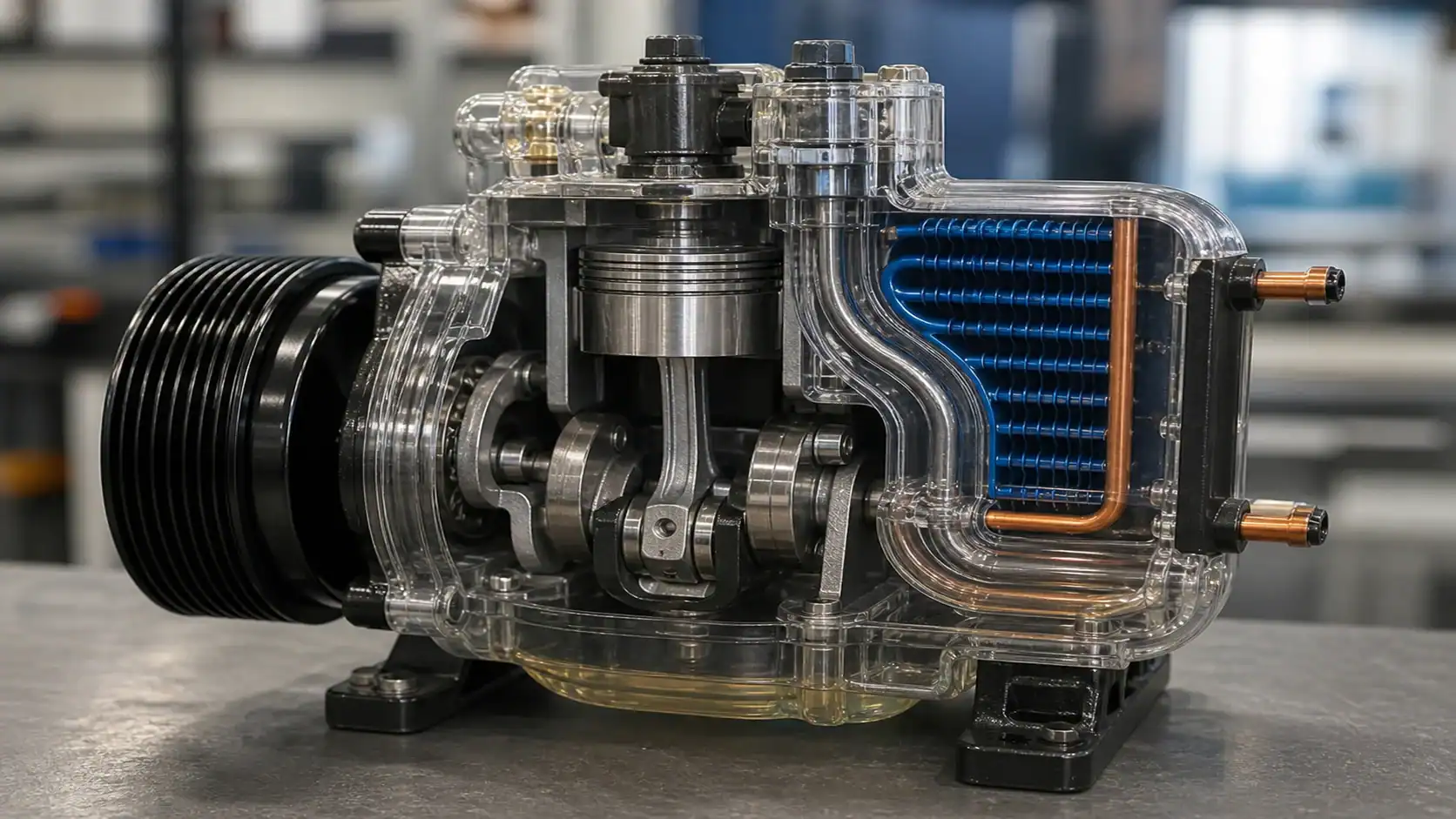
How to size a refrigeration compressor
Start with the refrigeration load at the evaporator, not with horsepower. A basic first pass is:
Required compressor refrigeration capacity = design evaporator load + specified pull-down allowance + approved safety margin
The compressor catalog rating must then be corrected for the refrigerant, evaporating temperature, condensing temperature, suction superheat, liquid temperature, compressor speed and capacity-control position. Avoid adding unrelated margins at each component. Double-counted safety factors can produce a compressor that short-cycles, returns oil poorly and costs more to operate.
| Input for sizing | Data to provide | Why it changes the selection | Evidence to request |
|---|---|---|---|
| Room or process load | Transmission, product, infiltration, people, lighting and equipment loads | Establishes steady and peak heat removal | Load summary with assumptions and diversity |
| Pull-down event | Product entering temperature, mass per hour and target time | Can be much larger than holding load | Peak profile and recovery requirement |
| Refrigerant | Refrigerant name, blend glide if relevant and oil family | Changes pressure, mass flow, capacity and material compatibility | Rating table at the specified refrigerant |
| Suction condition | Evaporating temperature, suction superheat and pressure drop | Sets inlet density and compressor volumetric efficiency | Net capacity and power at the suction condition |
| Condensing condition | Ambient or fluid temperature, condensing temperature and subcooling | Sets pressure ratio and discharge temperature | Rating at design and high-ambient points |
| Capacity modulation | On-off, cylinder unloading, slide valve, inverter or parallel staging | Controls cycling and part-load efficiency | Minimum stable load and control sequence |
| Electrical service | Voltage, phase, frequency, starter or VFD limits | Determines motor suitability and starting behavior | MCA, starting current and protection data |
| Redundancy | Required standby, number of circuits and maintenance plan | Affects number and size of machines | Duty and standby matrix with failure case |
If a supplier gives only a nominal BTU/h value, ask which rating standard and conditions were used. Two compressors with the same nominal capacity can have different net capacity after fan heat, motor heat, suction-line loss or rating corrections. For an OEM package, request both the design point and at least two off-design points so the controls team can verify stable operation.
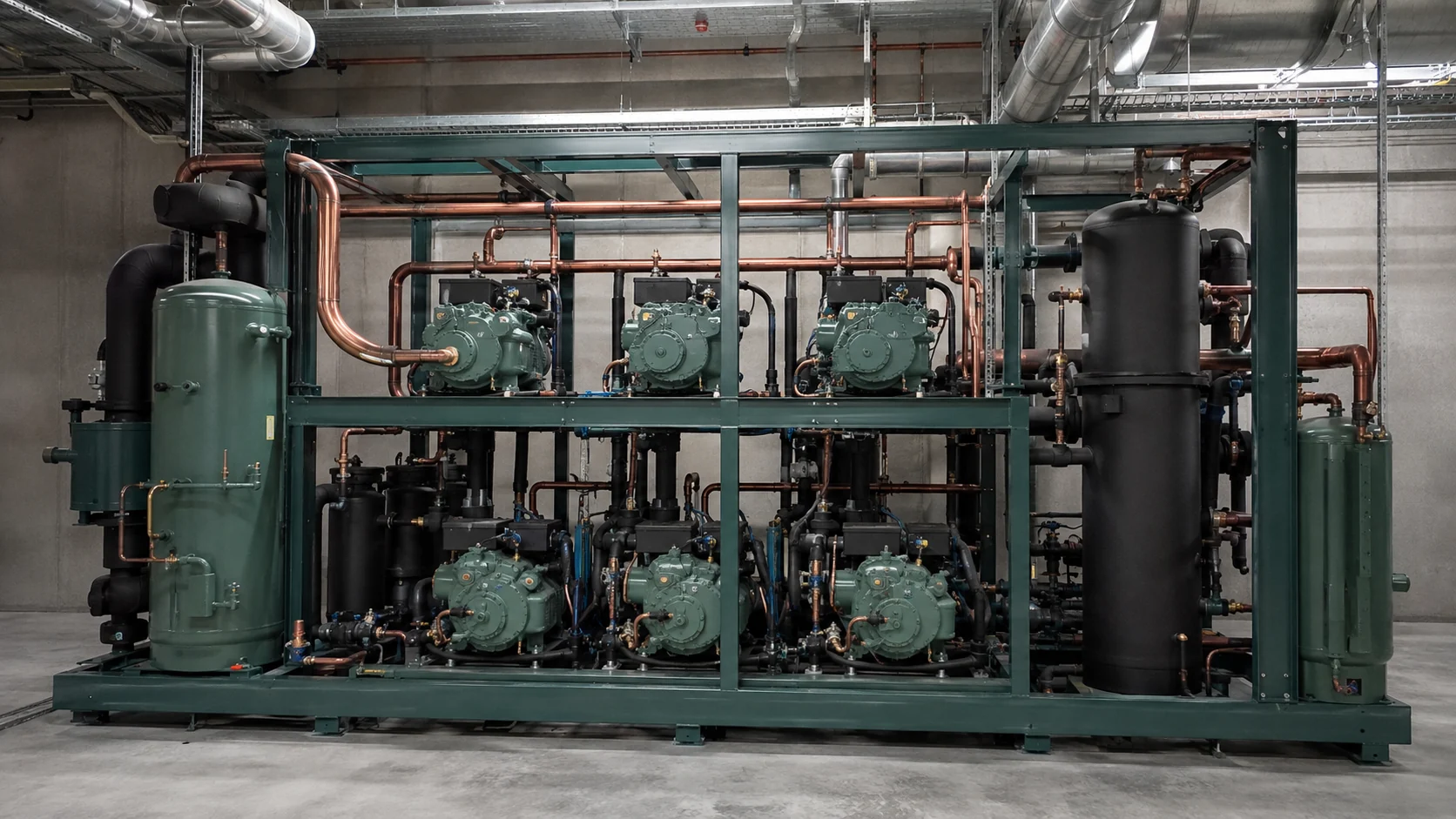
Match the compressor to operating conditions
Refrigerant and pressure ratio
Refrigerant choice affects density, mass flow, discharge temperature, lubricant, elastomers and pressure-vessel requirements. R744 systems operate at higher pressures than many HFC or HFO systems, while ammonia systems require different materials, oil-management practices and safety provisions. Do not transfer a compressor model from one refrigerant to another without an OEM rating.
Pressure ratio is a useful screening value:
Pressure ratio = absolute discharge pressure / absolute suction pressure
Use absolute pressure, not gauge pressure. Then examine the complete operating envelope. A low suction temperature, high ambient and inadequate subcooling can create a discharge condition that is technically possible for a few minutes but unsuitable for continuous duty.
Suction superheat and liquid management
Superheat protects the compressor from liquid entering the compression chamber, but excessive superheat reduces suction density and can reduce capacity. The expansion valve, evaporator, suction accumulator and control logic must work together. For scroll and reciprocating compressors, ask for the allowable start and transient liquid conditions. For screw compressors, confirm oil injection, separator carryover and oil-return stability at minimum load.
Condenser and coil matching
Every compressor selection should be paired with a condenser capacity at the same refrigerant and condensing condition. The Copeland product selection software is one example of a tool that evaluates compressor operating points instead of comparing nameplate power alone. An air-cooled condenser that is too small raises condensing temperature and power. A condenser that is too large can create control and minimum-pressure problems in cold weather if the receiver and head-pressure strategy are not designed together.

| Condition to normalize | Minimum quotation field | Risk if omitted | Practical comparison |
|---|---|---|---|
| Refrigerant | Exact refrigerant and oil family | Capacity and pressure data are not comparable | Compare net capacity, mass flow and discharge temperature |
| Evaporating temperature | SST or evaporating pressure | Low-temperature duty may be overstated | Compare capacity at the same SST |
| Condensing temperature | SCT or condensing pressure | High ambient power is hidden | Compare power at design and peak ambient |
| Suction superheat | Value and measurement location | Capacity can be inflated by an optimistic inlet | Use the same superheat basis |
| Liquid condition | Subcooling or liquid temperature | Flash gas changes mass flow | Check valve inlet quality and receiver behavior |
| Capacity-control point | Full load, part load and minimum load | Cycling and oil return are missed | Compare kW per unit of refrigeration across the map |
| Electrical basis | Voltage, phase, frequency and motor efficiency | Starting and running power differ | Normalize input power and protection data |
| Heat rejection | Air or water entering condition | Condenser sizing cannot be checked | Match compressor heat rejection to condenser duty |
Select the architecture for the application
Walk-in coolers and freezers
Small and medium walk-ins often use a scroll or reciprocating compressor in a condensing unit. The right decision depends on box temperature, product load, door traffic, ambient design and defrost strategy. A freezer compressor must handle the lower evaporating temperature and higher pressure ratio, while the evaporator needs wider fin spacing and a suitable defrost method. For a walk-in, specify the compressor, condenser, evaporator, expansion device and controls as one package.
Supermarkets and distributed commercial systems
Parallel compressor racks can stage capacity across multiple cases and temperature levels. The rack controller needs a defined lead-lag sequence, minimum run time, oil-return cycle and alarm behavior. Ask for the minimum stable capacity and what happens when one compressor is unavailable. Redundancy is useful only when the remaining machines and the condenser can carry the required emergency load.
Cold storage and food processing
Cold stores often have long run hours and changing product loads. A screw compressor may suit a large continuous load, while a combination of screws and reciprocating boosters can cover different temperature levels. Product pull-down, blast freezing and defrost recovery should be represented in the load profile. A supplier that quotes only a peak point cannot show annual energy or recovery performance.
Industrial process refrigeration
Industrial projects add pump-down logic, oil cooling, remote monitoring, vibration limits and maintenance access. Review the compressor foundation, isolation, service clearance and lifting path at the layout stage. Include the control cabinet, pressure transmitters and safety shutdowns in the equipment boundary so the commissioning team can test the complete sequence.
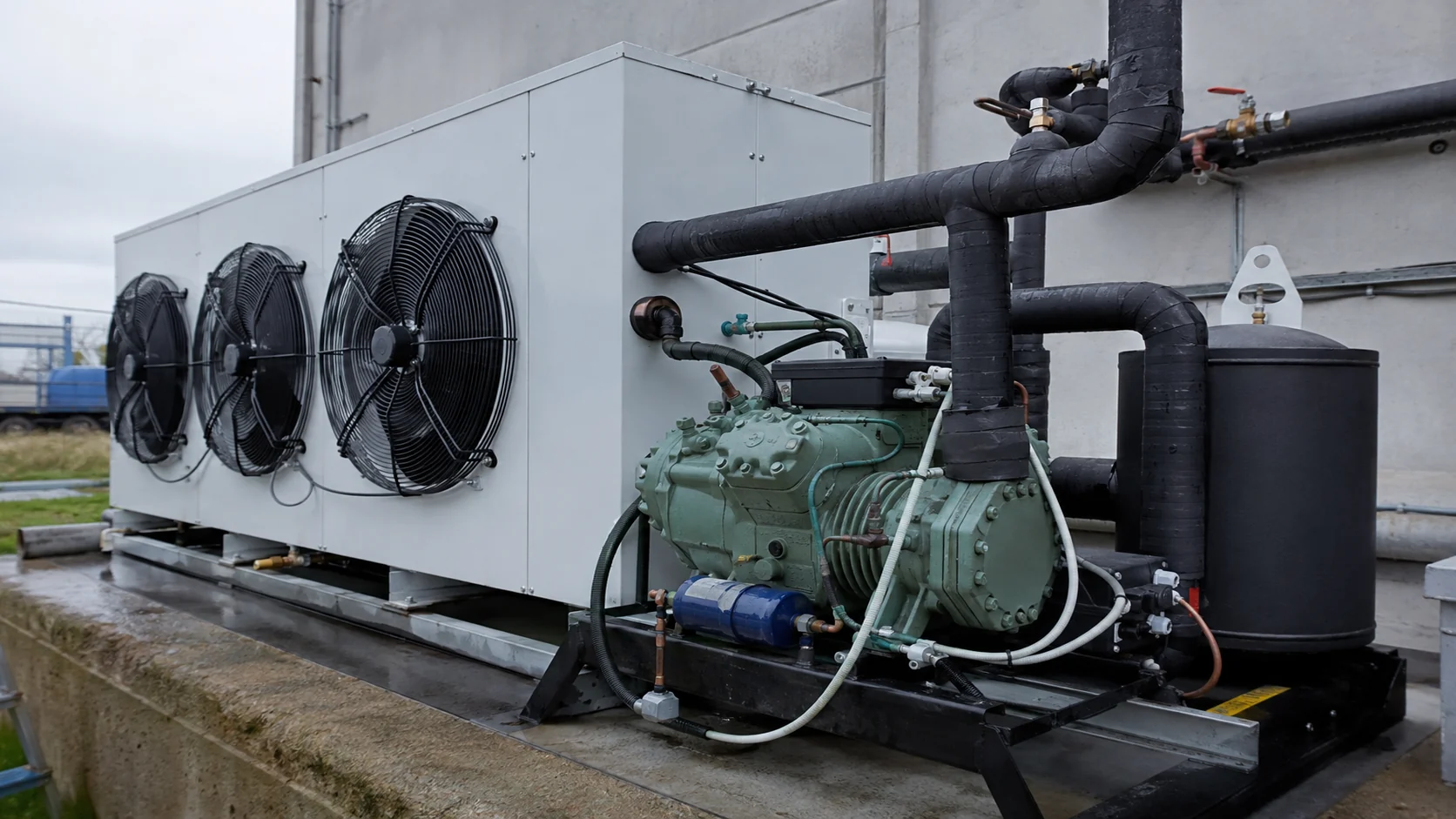
| Application | Typical architecture to investigate | Main design check | Information for an OEM quote |
|---|---|---|---|
| Small reach-in or walk-in cooler | Scroll or single reciprocating condensing unit | Fast recovery with stable cycling | Box dimensions, product load, SST, SCT and voltage |
| Walk-in freezer | Low-temperature reciprocating or scroll package | Discharge temperature, defrost and oil return | Freezer setpoint, pull-down, defrost method and fin spacing |
| Supermarket cases | Parallel scroll or semi-hermetic rack | Staging, minimum load and service continuity | Case loads by suction group and redundancy target |
| Medium cold store | Multi-compressor rack or small screw package | Seasonal load and condenser head pressure | Annual load profile, ambient bin data and controls interface |
| Large process plant | Screw, reciprocating or compound system | Oil cooling, vibration and emergency operation | Process temperatures, refrigerant, duty cycle and shutdown logic |
| Very large flow application | Centrifugal where the map fits | Surge margin and part-load behavior | Flow range, pressure ratio and annual operating hours |
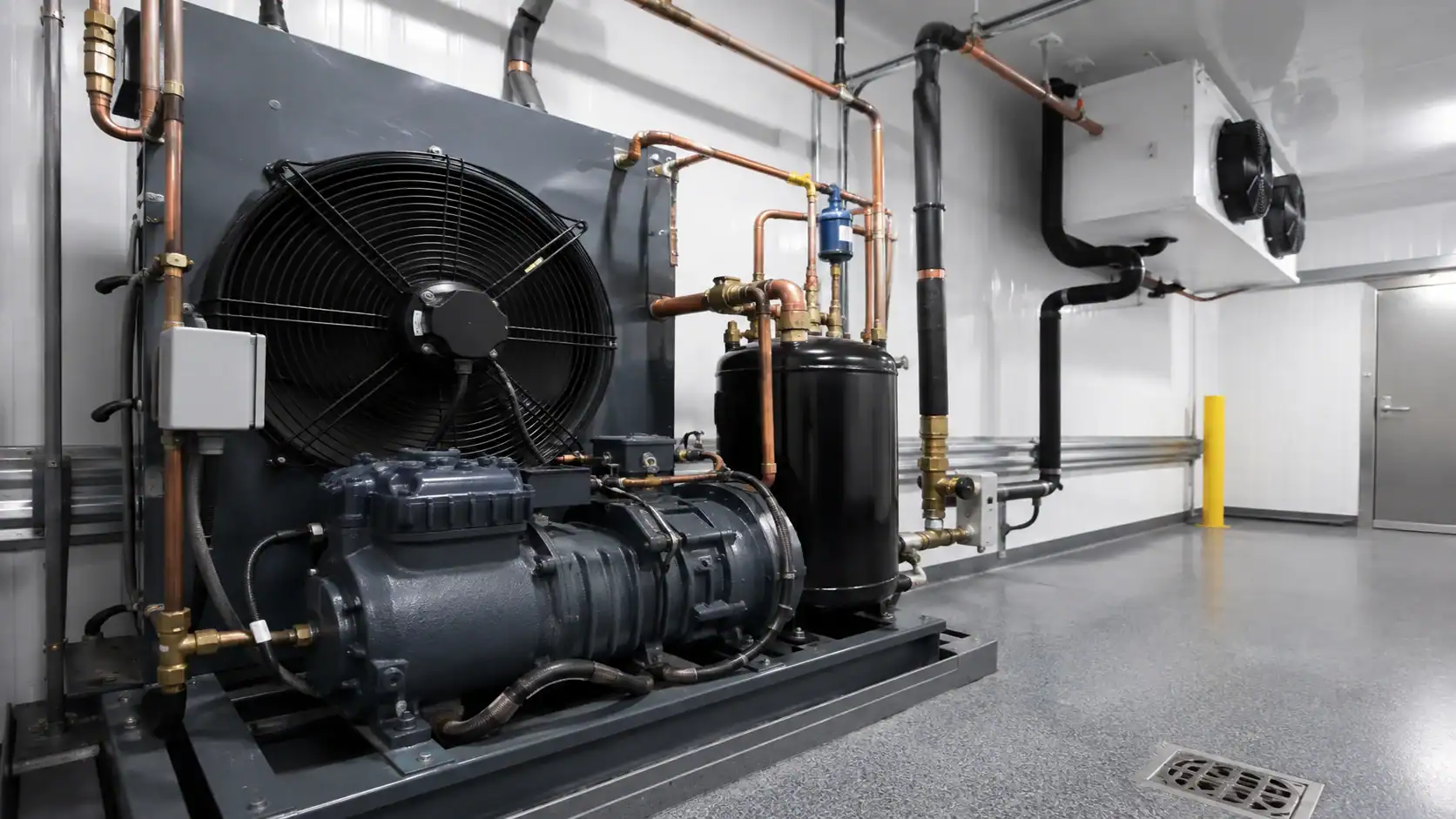
Controls, oil management and reliability
Compressor reliability is usually a system issue. The following checks belong in the controls and mechanical review.
Capacity control: Define the sequence for on-off cycling, cylinder unloading, slide-valve movement, inverter speed or parallel staging. State the minimum run time, anti-short-cycle delay and restart conditions. A control range that looks good on paper can be unstable if the sensor is slow or the load is small.
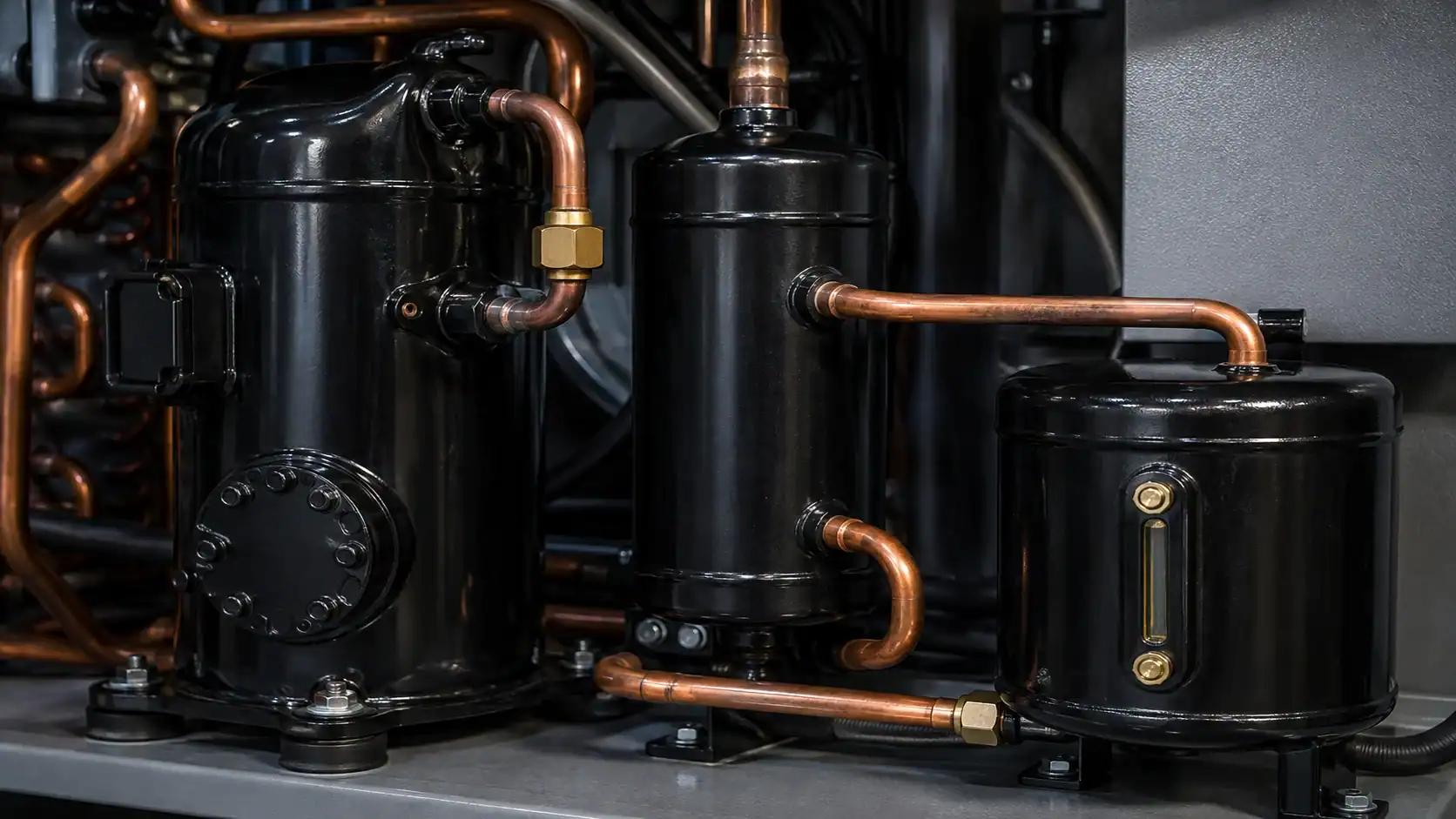
Oil return: Show the oil separator, reservoir, differential-pressure regulator, return line and level protection. Confirm oil velocity in vertical risers at minimum load and during defrost. A machine can have adequate capacity and still fail if oil leaves the compressor and does not return.
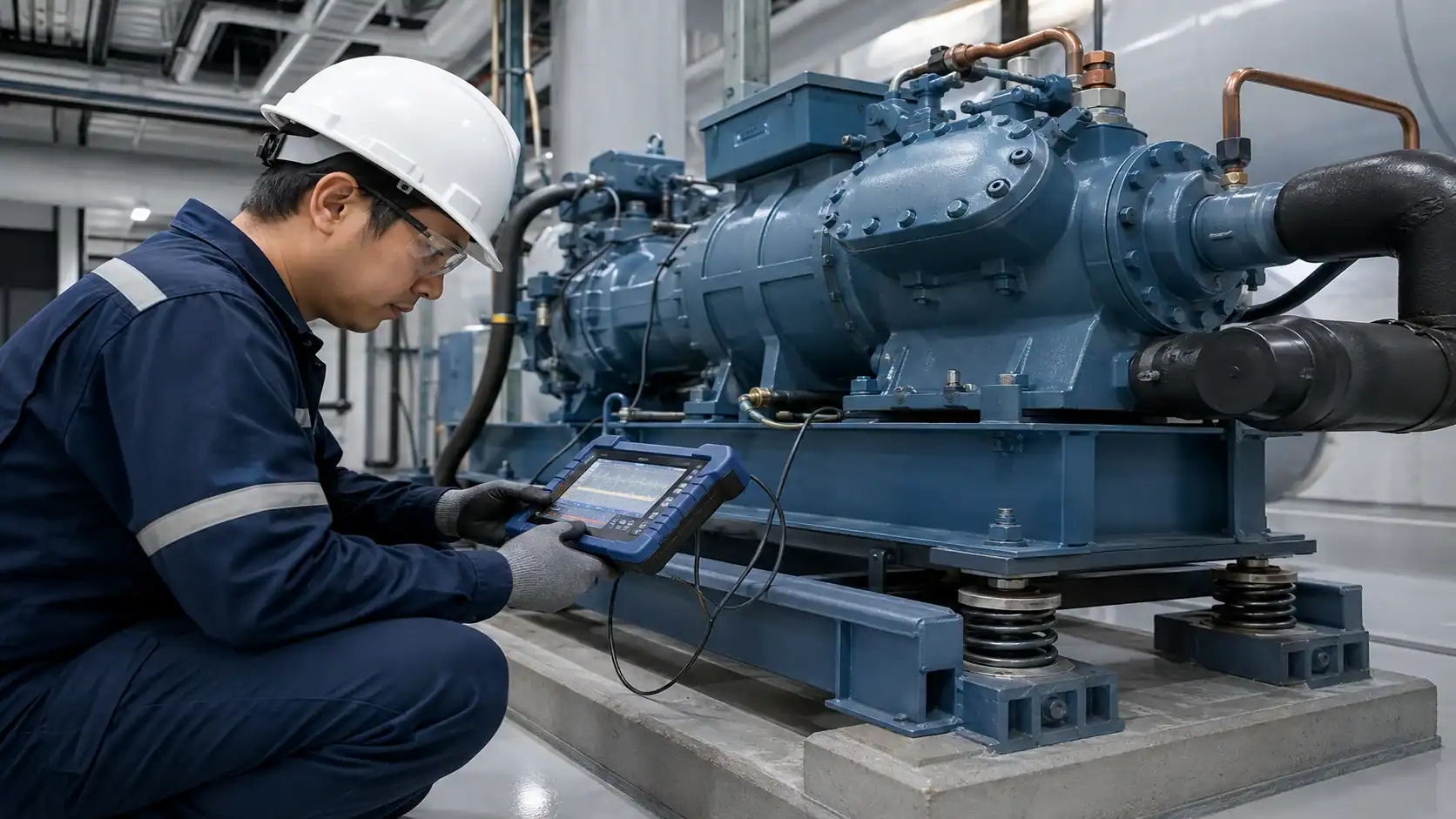
Vibration and piping: Use flexible connectors only where the OEM allows them, and support piping so the compressor shell does not carry line loads. Check the foundation, isolation spring or pad, alignment and service clearance. Record vibration at commissioning and after the first operating season.
Protection: Include high and low pressure cutouts, discharge-temperature protection, oil-pressure protection, motor overload, phase monitoring and crankcase or sump heating where required. Coordinate setpoints with the refrigerant, oil and compressor model instead of copying values from another system.
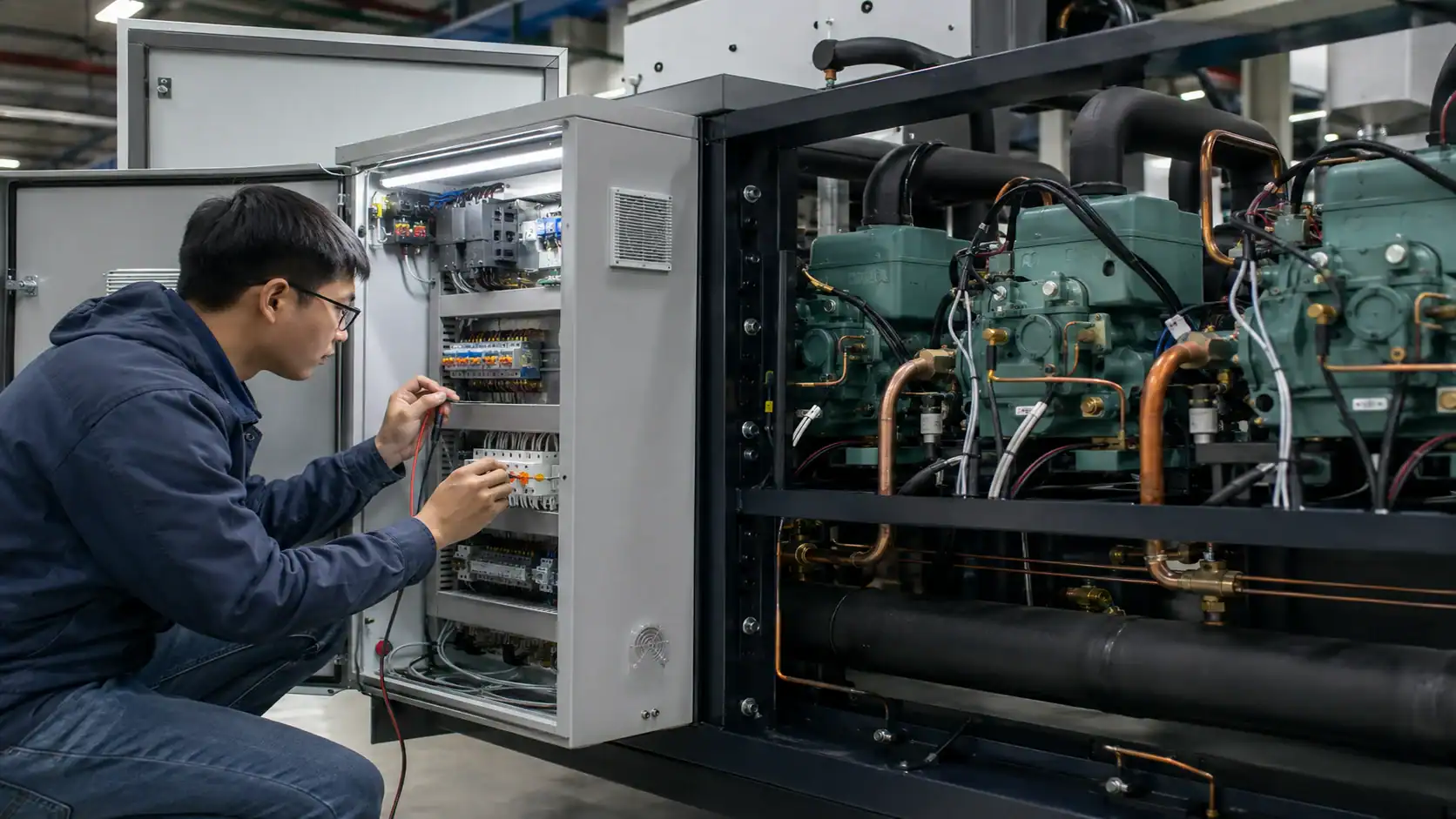
What to include in an OEM compressor RFQ
Send one consistent data sheet to every supplier. The following fields prevent the most common comparison errors:
- Refrigerant and lubricant family.
- Required net refrigeration capacity at design SST and SCT.
- Minimum, normal and peak ambient or condensing conditions.
- Suction superheat, liquid temperature or subcooling and allowable pressure drop.
- Full-load and part-load power, COP or kW per refrigeration unit.
- Compressor type, model, displacement, speed range and capacity-control method.
- Operating-envelope plot with discharge-temperature limits.
- Oil separator, oil cooler, reservoir, return method and minimum-load oil behavior.
- Motor voltage, phase, frequency, starting current, overload and VFD compatibility.
- Connections, dimensions, weight, service clearances and lifting points.
- Noise and vibration limits, isolation arrangement and piping loads.
- Controller interface, sensors, alarms, remote monitoring and communications protocol.
- Factory test scope, leak test pressure, electrical test and documentation package.
- Packaging, moisture protection, spare parts, lead time and sample or first-article plan.
Ask the supplier to identify any business input required before a final rating is issued. For example, a missing ambient design value or an unconfirmed refrigerant cannot be safely filled with a generic assumption. A transparent hold point is more useful than a precise-looking quote based on unknown conditions.

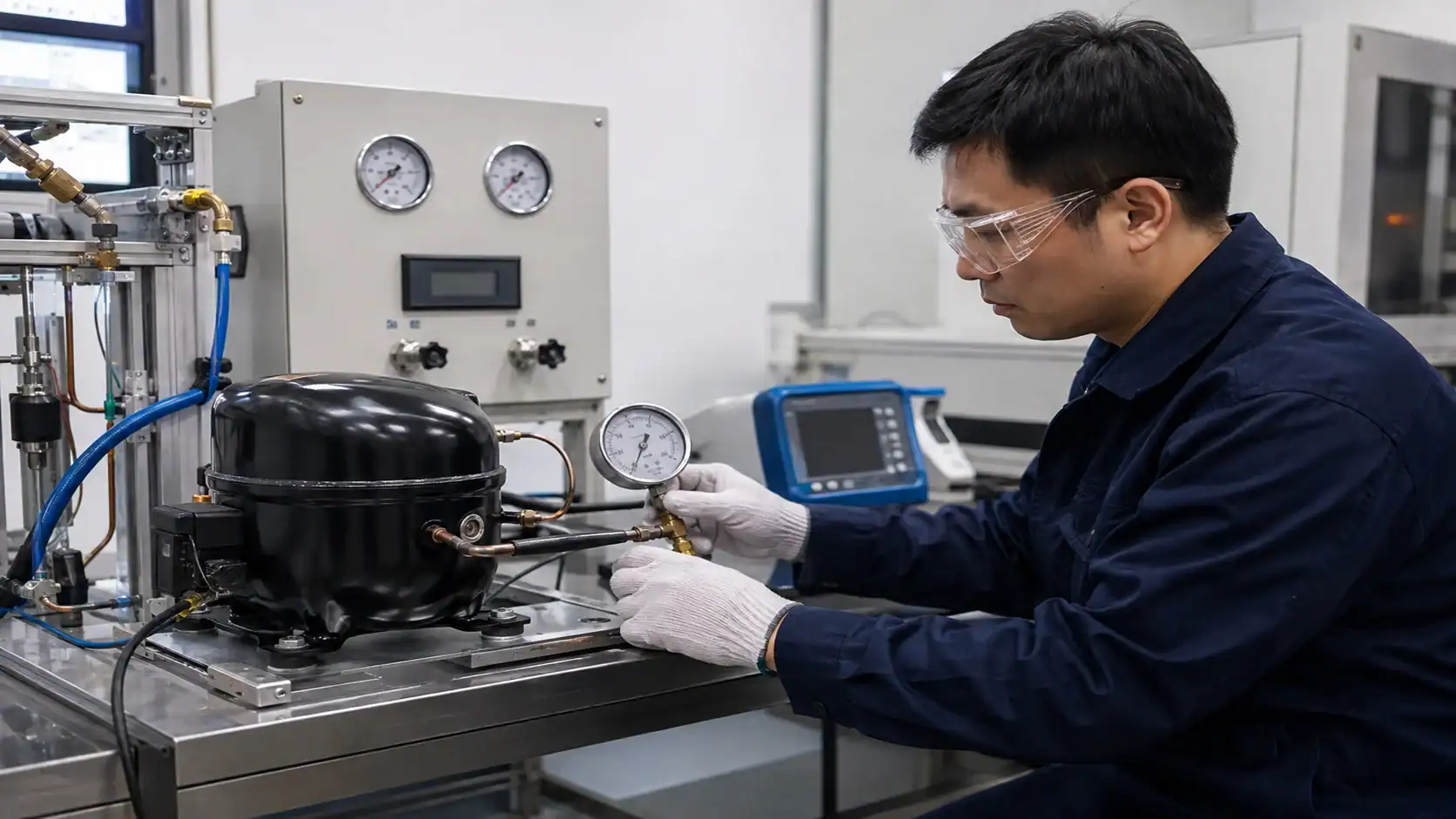
Factory acceptance and shipment checks
Before release, confirm that the serial number, model, refrigerant, voltage and connection sizes match the approved submittal. Review pressure and leak-test records, electrical test results, oil charge, rotation or phase requirements and the control parameter list. If a matched evaporator or condenser is included, keep the same revision code across the compressor, coil drawing and packing list.
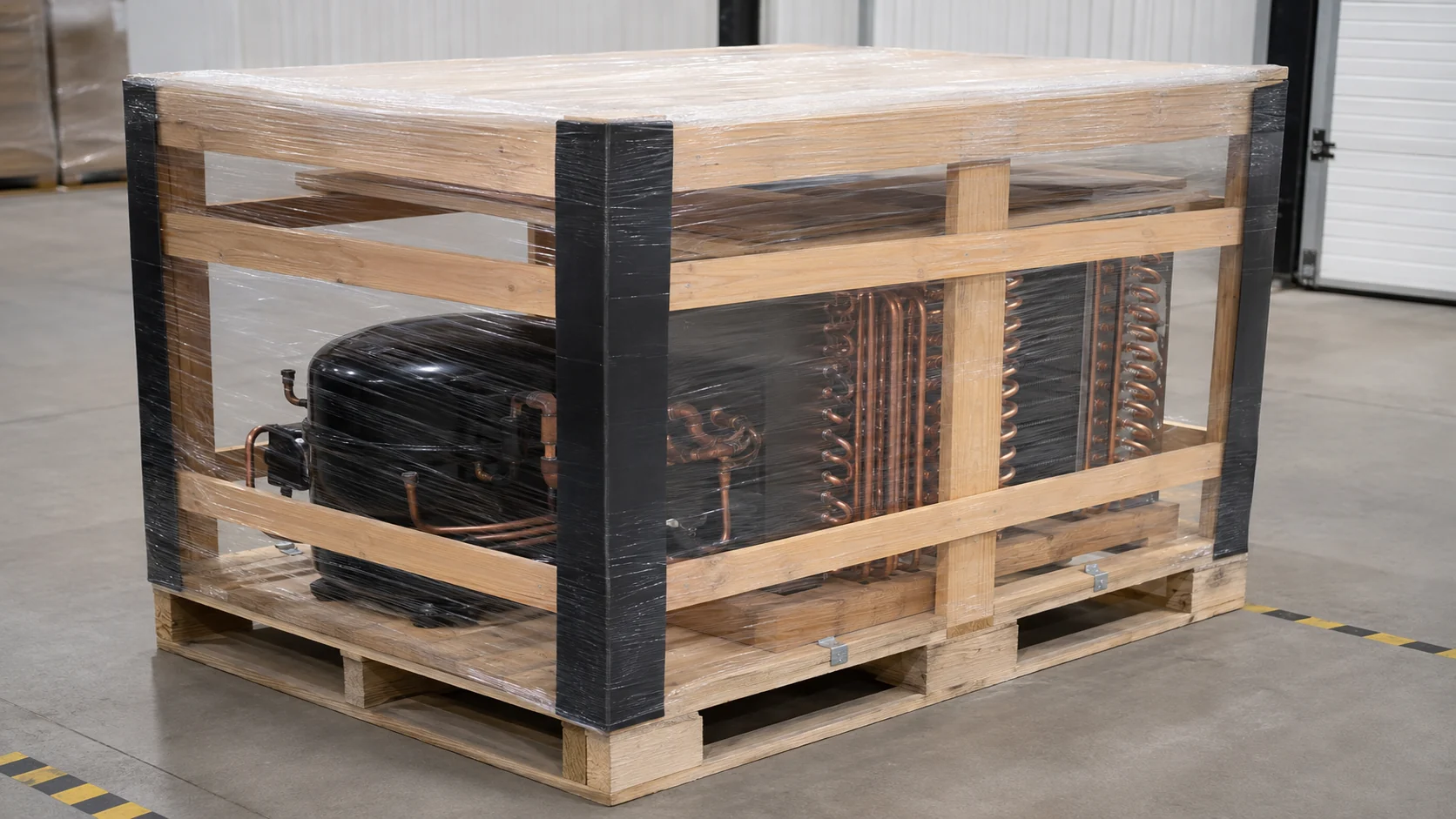
For export, protect service ports and electrical connectors from impact and moisture. Use a crate or pallet that supports the compressor base without loading the piping. Photograph the packed condition, record gross dimensions and include the installation, lifting and storage instructions. These records make a replacement or warranty discussion much faster.
Frequently asked questions
What is a refrigeration compressor?
A refrigeration compressor is the pressure-changing machine in a vapor-compression circuit. It takes low-pressure vapor from the evaporator, raises its pressure and temperature, and delivers it to the condenser. The compressor must be rated for the refrigerant and the complete suction and condensing conditions, not just for a nominal motor size.
How do I choose the right compressor size?
Calculate the evaporator load at the design event, add only the approved pull-down allowance and margin, then use the OEM rating at the actual refrigerant, SST, SCT, superheat and liquid condition. Check full-load, normal-load and minimum-load performance. A compressor that is oversized for the holding load may short-cycle and return oil poorly.
Which compressor type is best for a walk-in cooler?
Scroll or reciprocating compressors are common starting points for small and medium walk-ins, but the best choice depends on box temperature, product load, ambient, defrost and service strategy. Freezer duty usually requires a different operating envelope than cooler duty. Specify the compressor together with the evaporator, condenser, expansion device and controls.
What is the difference between a compressor and a condensing unit?
The compressor is one component that compresses vapor. A condensing unit normally packages the compressor with a condenser, fan or water circuit, receiver, controls and service components. A replacement compressor must match the existing condensing unit’s refrigerant, capacity, electrical service, connections and control sequence.
Why must the compressor match the refrigeration coils?
The evaporator determines the suction condition and the condenser determines the heat-rejection condition. If either coil is undersized, the compressor sees a higher pressure ratio or an unstable control condition. Match net coil capacity, airflow, refrigerant circuiting, pressure drop and defrost requirements at the same rating point.
What should I send for a compressor and coil quote?
Send the refrigerant, capacity, SST, SCT or ambient, superheat, subcooling, voltage, phase, frequency, application, operating hours, load profile, defrost method, dimensions, connection sizes, controls interface and required redundancy. A drawing, nameplate photo or failed sample is also useful. If any value is unknown, label it for confirmation instead of assuming it.
Related Articles
Send a compressor and coil RFQ
Domi can review the coil side of a refrigeration package from your load data, drawing, sample or nameplate. Send the refrigerant, capacity, SST, SCT, airflow, connection layout and required delivery date through the Domi technical inquiry page. The team can then confirm coil construction, circuiting, material, testing and packaging requirements before you release a purchase order.