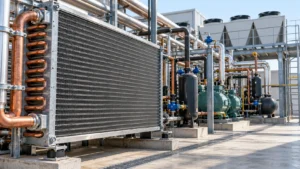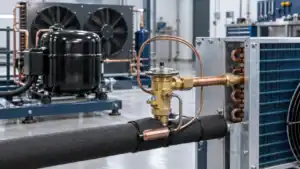

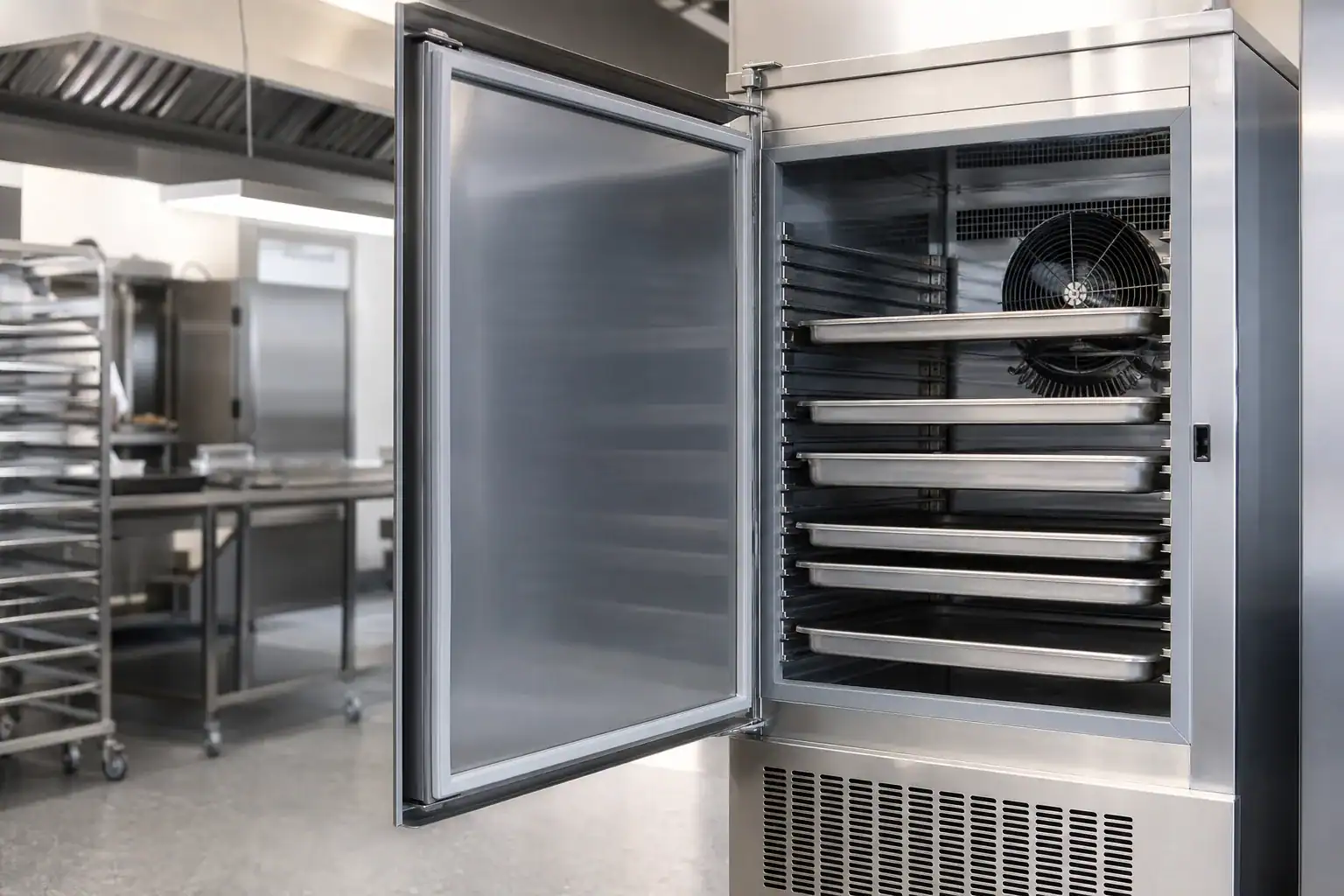
A blast chiller is refrigeration equipment that removes heat from a hot or warm product load by moving controlled cold air across trays, racks, or another defined load surface. It is built for rapid chilling, not simply for holding food that is already cold. The cabinet, evaporator coil, fans, controls, defrost method, drainage, and load geometry must work together for the result to be repeatable.
If you are selecting equipment, replacing an evaporator, or comparing proposals, ask what load must be cooled, from which starting condition, through which product geometry, and within which process limits. This guide explains the working sequence, equipment differences, component decisions, and RFQ information that make that review practical.
What is a blast chiller?
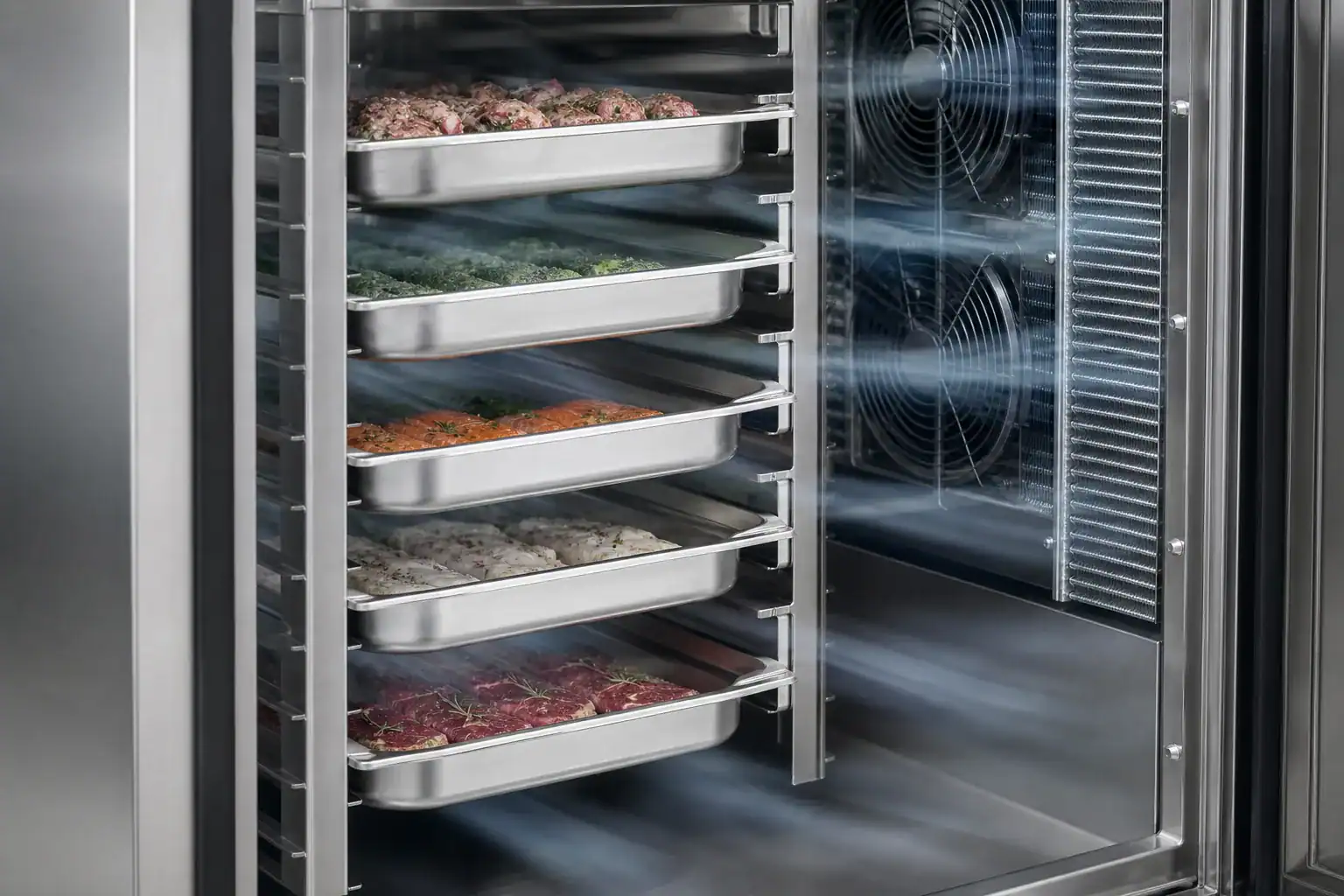
A blast chiller is a forced-air refrigeration cabinet or room designed to cool a defined product load faster than a normal holding refrigerator. Fans circulate air across the load and over an evaporator coil. The coil absorbs heat from the air, the refrigeration circuit rejects that heat outside the cooled space, and the controls manage the cycle according to the selected process.
The word “blast” refers to intentional air movement across the product. A large, deep, tightly packed load can still cool slowly if heat cannot move from its center to the air stream. A shallow load with open air paths may perform very differently in the same cabinet.
In practical terms, a blast chiller combines five functions:
- It accepts a known load format, such as trays, pans, racks, or containers.
- It pulls heat through a controlled air path, evaporator, and refrigeration circuit.
- It measures or estimates the process using air and product sensing.
- It stops, changes mode, or hands the load over to holding refrigeration according to the process requirement.
That last step matters because a blast chiller is part of a larger workflow. It may sit between cooking and chilled storage, production and dispatch, or a process step and packaging. It does not replace a documented procedure, holding refrigerator, or operator verification.
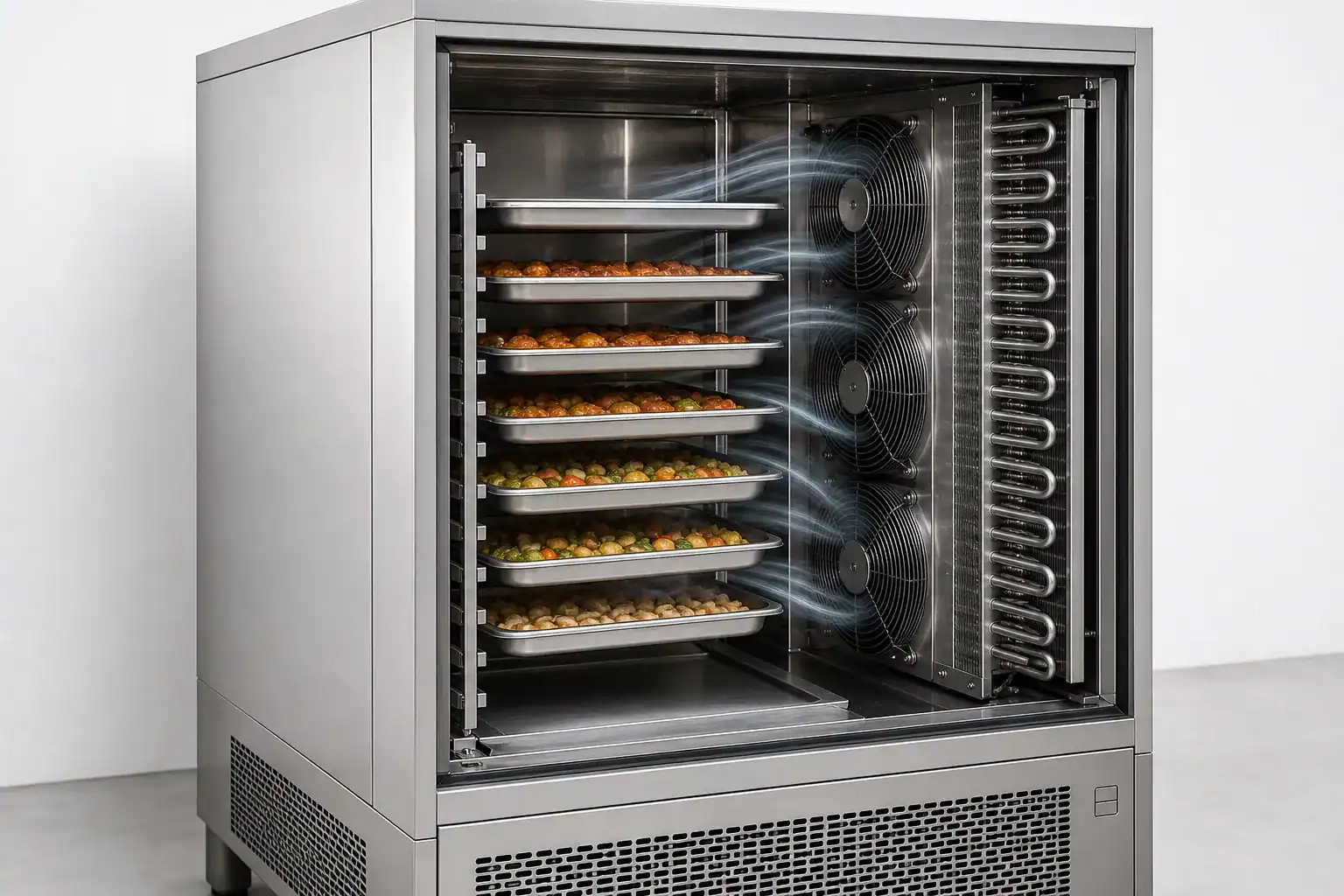
Conceptual view: the visible air movement and cabinet layout illustrate the operating principle, not a fixed equipment design.
Why blast chilling is different from ordinary refrigeration
An ordinary refrigerator is usually selected to keep already chilled products within a storage range. A blast chiller is selected around the heat load that enters the cabinet. That difference affects the coil surface, fan arrangement, air temperature, controls, drain design, insulation, and expected duty cycle.
| Question | Blast chiller | Ordinary holding refrigerator |
|---|---|---|
| Main job | Remove heat from a warm or hot product load quickly | Maintain products that are already chilled |
| Load assumption | Defined batch, tray, rack, or product geometry | Mixed or steady storage load |
| Air movement | Deliberate high-throughput circulation across the load | Circulation intended for holding and uniformity |
| Control focus | Process time, air condition, product response, and cycle completion | Stable holding condition and recovery after door openings |
| Design risk | A blocked air path or oversized load can change the cooling result | Poor organization can still affect temperature, but the duty is different |
Using a holding refrigerator for a hot batch can create a long recovery period and uneven product temperatures. Using a blast chiller as a permanent storage cabinet can waste energy and reduce available production capacity. The right choice follows the process, not the name on the door.
How a blast chiller works from load to heat rejection
1. The load enters with a known starting condition
The cycle begins with the product, tray, rack, and starting temperature. The mass, thickness, moisture, container material, and arrangement determine how much heat must move. Operators should also consider whether the load is uniform. A shallow tray of a uniform product does not behave like a deep container with a dense center.
Rack position and tray spacing are part of the thermal design. If trays touch, product is too deep, or packaging blocks the air stream, the fan may circulate air without moving enough heat through the load.
2. Fans create the usable air path
The fans move air through the cabinet and across the evaporator. Their performance depends on the fan curve, motor selection, guard and housing geometry, coil resistance, rack spacing, and the leakage paths around the load. A larger fan is not automatically a better fan. It can add noise, power use, or uneven velocity if the air path was not designed with it.
The question is whether air reaches the relevant product surfaces predictably. A coil with plenty of surface area can still underperform if the rack blocks it or air short-circuits around the load.
3. The evaporator absorbs heat from the air
As air crosses the evaporator, the refrigerant-side circuit absorbs heat. The coil transfers heat through its tube, fin, and air-side surfaces. Fin spacing, tube arrangement, circuiting, material selection, surface condition, and the expected moisture load all affect the working result.
The coil must be matched to the refrigerant circuit, fan, cabinet, and control sequence. It should also leave enough access for inspection and cleaning. A coil that looks efficient on a drawing may be difficult to service once it is installed behind a tight panel or near a drain pan.
4. The refrigeration circuit rejects the heat
The compressor moves refrigerant through the system. The condenser rejects heat to the surrounding environment. The expansion device changes the refrigerant condition before it reaches the evaporator. The cycle then repeats while the fans continue moving air over the load.
This balance affects pull-down time, stability, frost behavior, and power demand. Ambient conditions, condenser airflow, refrigerant choice, pressure limits, and piping also matter, so a coil cannot be specified from cabinet volume alone.
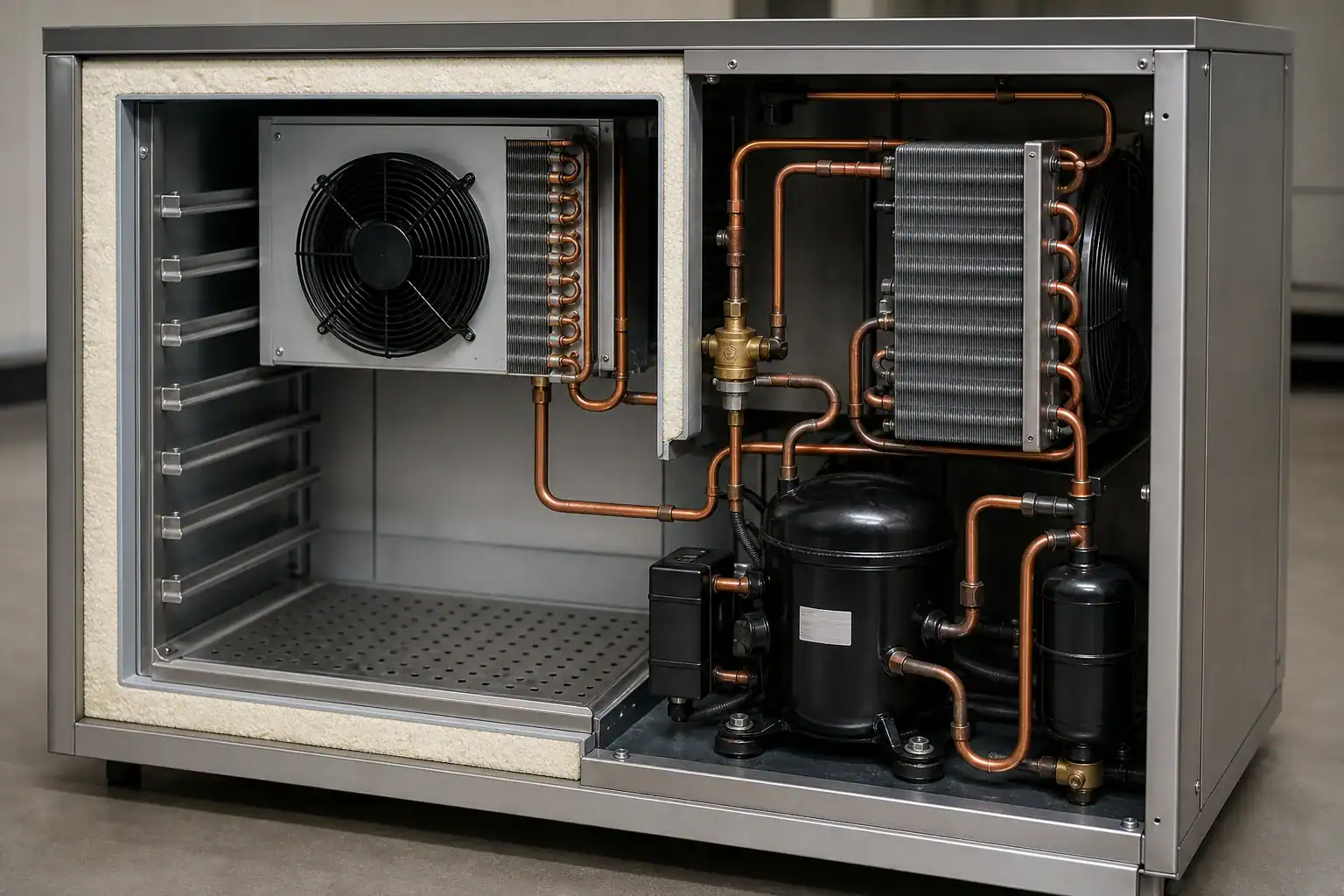
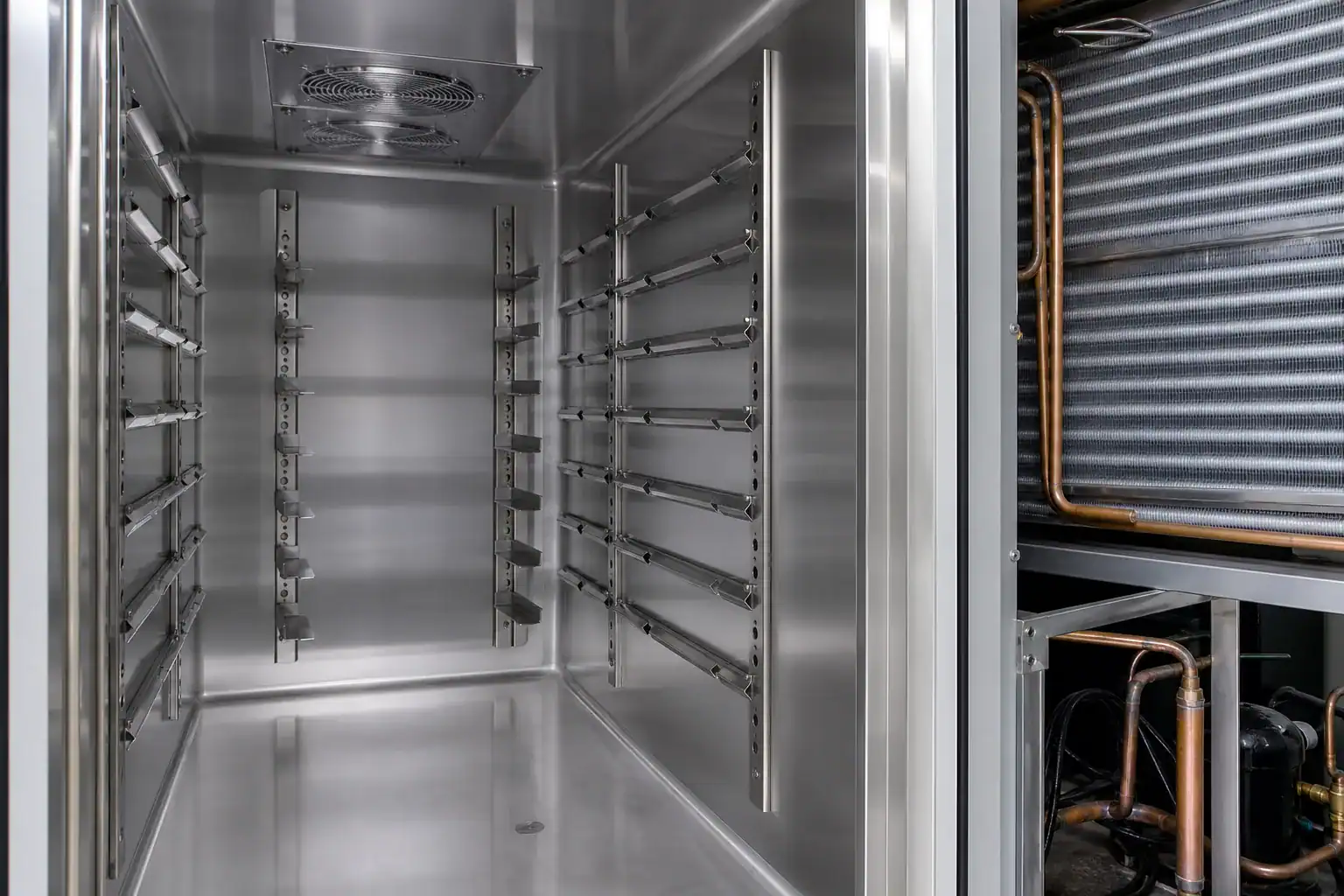
Conceptual refrigeration layout showing the cabinet side, evaporator, copper circuit, condenser-side components, and compressor.
For a complete equipment or application discussion, Domi’s commercial refrigeration solutions page is a useful starting point. A coil supplier still needs the project-specific load and circuit information before recommending a component.
5. Sensors and controls determine when the cycle is complete
Air temperature alone may not describe the product’s condition. Depending on the equipment and process, the control strategy can use air sensors, product probes, time, staged modes, or a combination. The sensor location matters. A probe placed near the door or in a thin part of the load can give a different result from one placed in the slowest-cooling location.
Buyers should ask how the machine identifies cycle completion, what happens if a probe is disconnected, how alarms are recorded, and how operators transfer the load to holding refrigeration.
Blast chiller vs blast freezer vs walk-in cooler
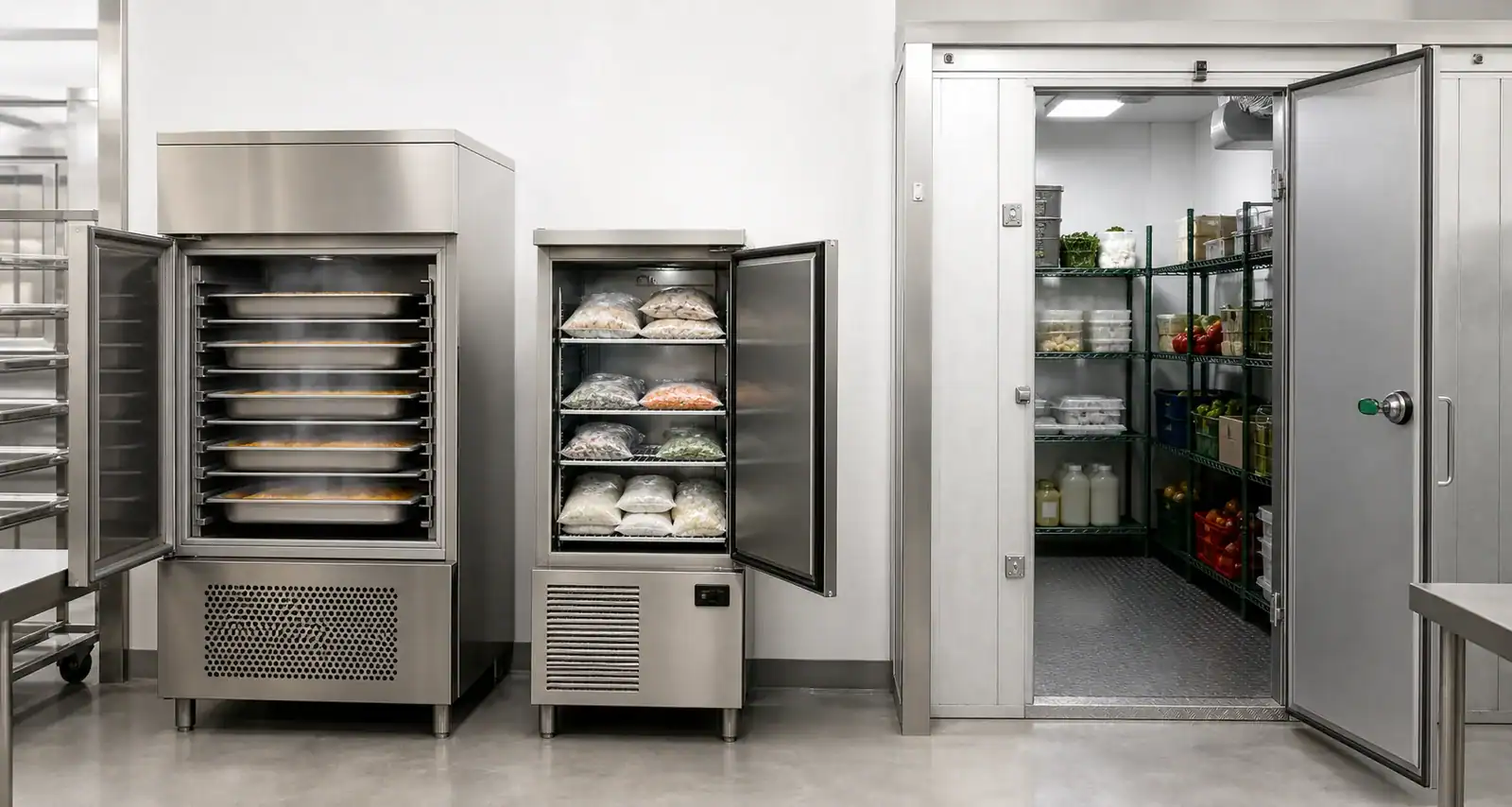
These three equipment types can appear in the same food-production facility, but they solve different thermal problems.
Blast chiller
A blast chiller is intended to move a product load down into a chilled condition quickly and then pass it to the next process step or holding location. The design emphasis is rapid heat removal without treating every load as a freezing cycle.
Blast freezer
A blast freezer is designed for a freezing process. The product, packaging, coil, defrost method, control program, and acceptance criteria may be different from those of a blast chiller. Some cabinets can offer more than one mode, but the buyer should confirm the actual load and process instead of assuming that a “blast” label covers both uses.
Walk-in cooler
A walk-in cooler provides space for chilled storage and access by people, carts, or racks. It is generally evaluated around holding capacity, organization, door traffic, and recovery. It may be downstream of a blast chiller rather than a substitute for it.
The practical rule is simple: use a blast chiller to remove heat from the defined batch, a blast freezer to freeze when the process requires it, and a walk-in cooler to hold products that have already reached their required chilled condition.
What determines blast-chilling performance?
The equipment name does not tell you the full performance story. The following variables should be written into the application brief before a supplier selects the coil or fan package.
Load mass, thickness, and starting condition
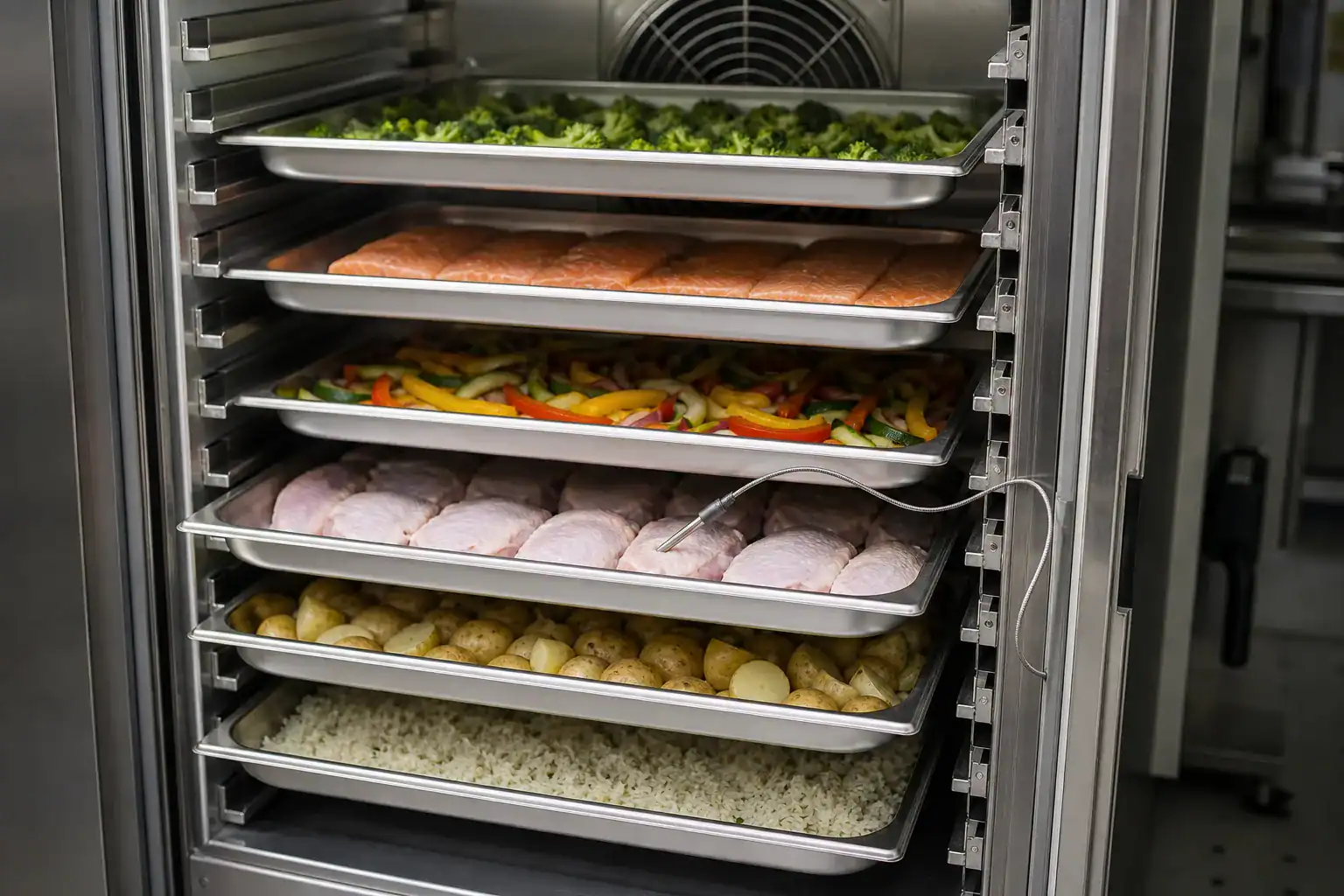
Record the minimum, normal, and maximum batch where possible. Include product mass per tray, number of trays per rack, product depth, container material, and starting condition. A supplier may also ask whether the load arrives directly from a cooking step, a tempering step, or another room.
The center of a thick load is often the limiting point. The air may feel cold while the center is still warm. A repeatable process therefore needs a defined test location and a clear end condition.
Tray geometry and spacing
Tray length, width, depth, perforation, lid design, and rack pitch determine how much air can contact the product. Two cabinets with the same internal volume can have very different usable capacity if one allows a more open air path.
Do not send only the cabinet outside dimensions. Include the rack drawing, usable tray size, loading direction, and the clearance around the evaporator and fans.
Air temperature, velocity, and distribution
Rapid cooling requires both a temperature difference and a useful air path. High air velocity in one channel does not compensate for stagnant areas elsewhere. Ask the supplier how the proposed fan and coil package handles the full rack, not just an empty cabinet.
If the load changes from batch to batch, the control method should account for that variation. Otherwise the same time setting may be too short for one load and unnecessarily long for another.
Door openings and surrounding conditions
Door openings add warm, moist air and can change frost formation, recovery, and cycle repeatability. Room temperature, condenser ventilation, installation clearance, and power conditions also affect the refrigeration system.
Define normal operator behavior. A closed-door laboratory result may not represent a busy kitchen or dispatch area.
End condition and handoff
The process should state what happens after the blast cycle. Is the load moved into a holding refrigerator, packed, portioned, or dispatched? The handoff time and container arrangement can affect the finished product, so they belong in the application review.
The coil and airflow choices buyers should review
An evaporator coil for a blast chiller is not a generic fin pack selected only by face dimensions. It is part of an air-side and refrigerant-side system.
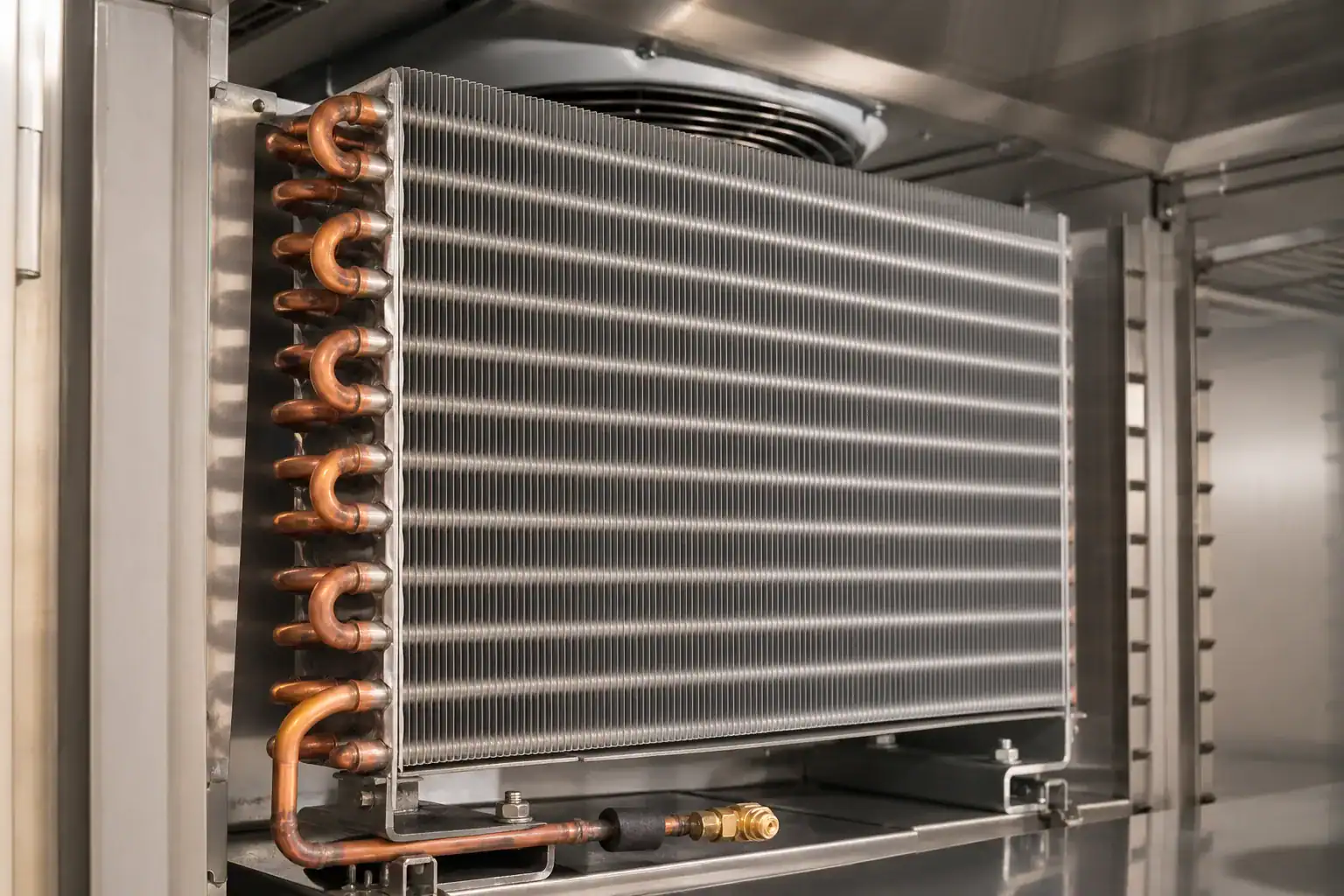
Coil face, depth, and fin spacing
The coil must fit the cabinet and leave room for airflow, service, defrost, and drainage. Fin spacing should be reviewed against humidity, frost exposure, cleaning method, and the expected air resistance. A tight fin pack may offer more surface in some conditions, but it can also become more sensitive to fouling or ice.
Ask for the proposed coil face area, depth, tube pattern, fin material, fin spacing, circuiting approach, and connection arrangement. These details make two supplier proposals easier to compare.
Material and refrigerant compatibility
Tube and fin materials must be compatible with the refrigerant circuit, operating pressures, environment, joining method, and cleaning conditions. Coatings or special materials may be useful in some environments, but they should be specified from the actual exposure rather than added as a generic premium feature.
The commercial cooling coils page on Domi’s site describes custom commercial evaporator and condenser coil work for refrigeration applications. It also highlights the importance of application details such as coil geometry, airflow, material, and coating. These are the same categories a blast-chiller buyer should put into an RFQ.
Fan and coil matching
The fan must move air through the actual coil and loaded cabinet, not only through a free-air test condition. Review fan diameter, speed, motor type, guard, sound expectations, pressure drop, and control range. If the fan operates at more than one speed, explain when each mode is used.
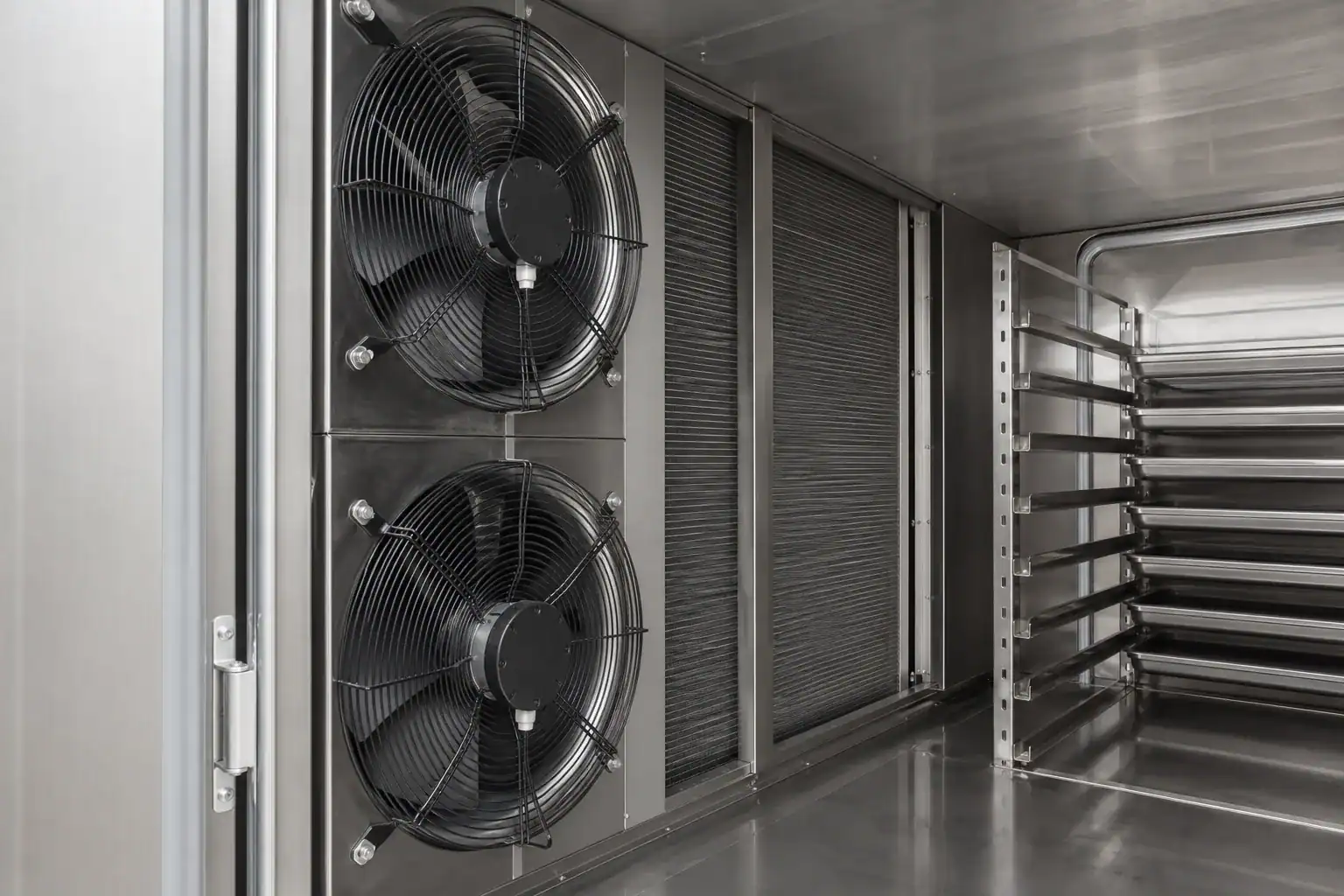
The coil’s air-side resistance and the fan’s available pressure should be reviewed together. This is also where engineering support can prevent a common problem: a component that meets a nominal capacity but does not distribute air evenly across the rack.
Defrost, drainage, and service access
Moisture from the product and incoming air can collect on cold surfaces. The equipment needs a practical way to manage frost, condensate, and defrost water without contaminating the product area or blocking the air path.
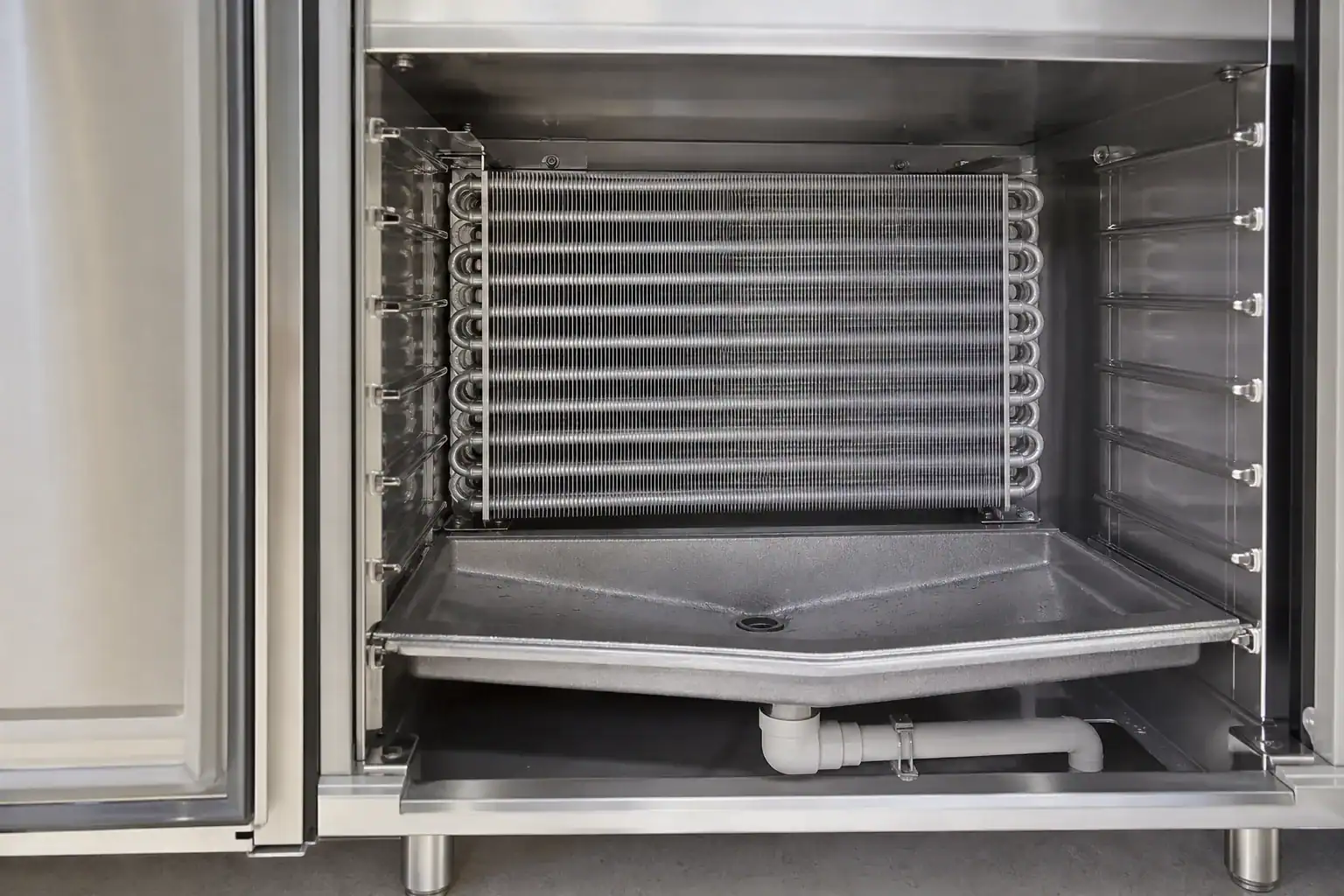
Review drain-pan slope, outlet position, insulation, heat tracing if required by the installation, access for cleaning, and the control sequence for defrost. The right design depends on the cabinet and site. Do not assume that a standard drain arrangement will suit every rack orientation.
For project-specific geometry and integration, Domi’s engineering capabilities page describes engineering, CAD, airflow, and CFD-related support. The value of that work is not a slogan. It is the ability to review the coil in the same physical context as the cabinet, load, fan, and connections.
Food-safety guidance and equipment boundaries
A blast chiller can support a cooling process, but it is not a food-safety plan. The operator, facility, product, local rules, measurement method, sanitation program, and procedure still matter.
The U.S. FDA Food Code is a model code adopted and modified by jurisdictions. Its cooling guidance for cooked time/temperature control for safety food describes a staged path from 135°F to 70°F within two hours, followed by cooling to 41°F or below within the remaining time in the model sequence. Review the current requirements that apply to your facility through the FDA Food Code 2022 and the FDA’s cooling methods handout. This article does not replace local regulatory or food-safety advice.
For equipment selection, translate the applicable rule into a measurable test plan:
- Define the product and the representative load.
- Record the starting condition, time, air condition, and product-probe location.
- Identify the slowest-cooling point rather than relying only on a display near the door.
- Record door openings, load arrangement, and any change in operating mode.
- State what happens when the cycle ends and where the product is stored next.
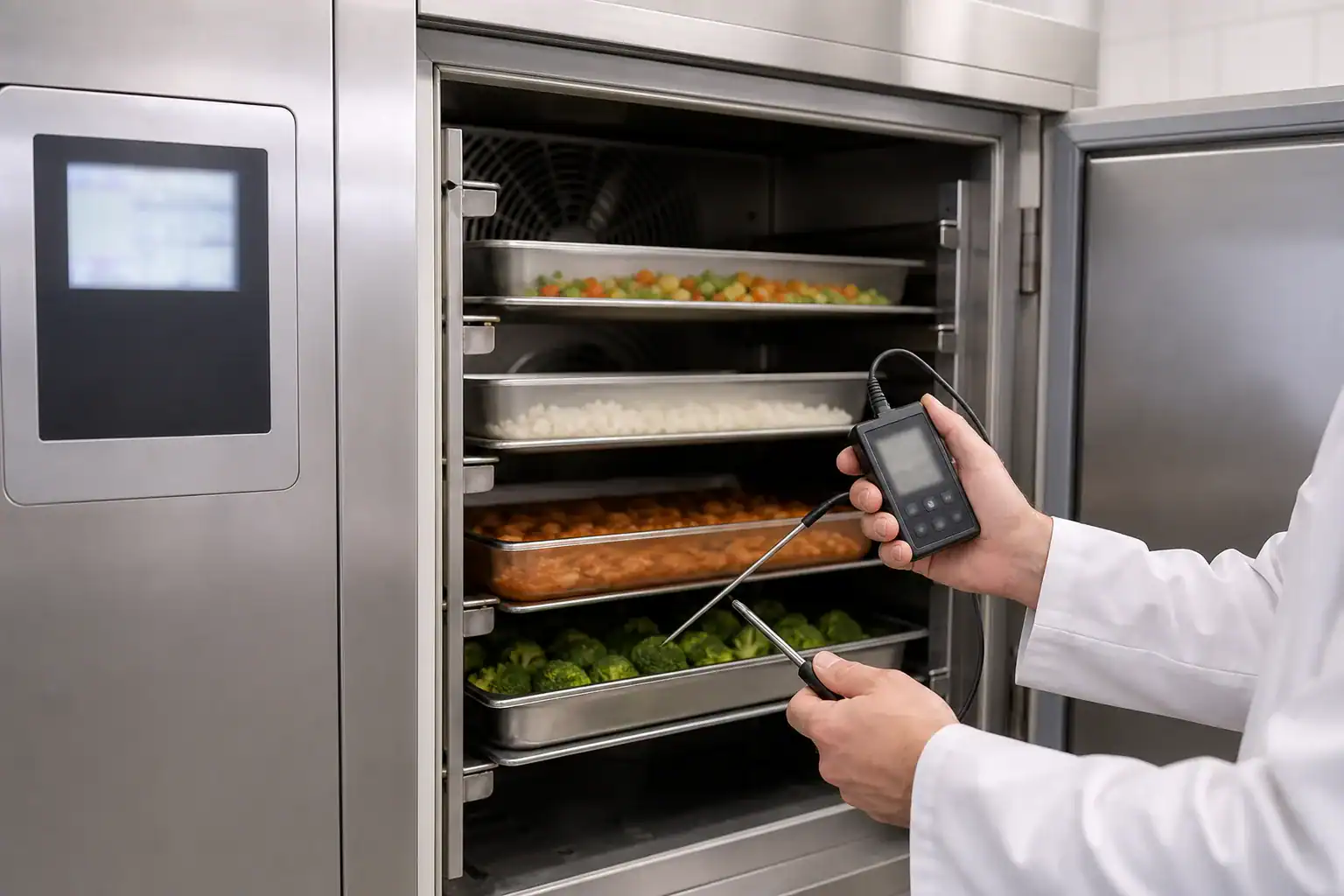
The supplier can help define the equipment test, but the facility should approve the criteria. A result is useful only when the load, probe position, instruments, and procedure can be repeated.
Where blast chillers are used
Blast chillers are used when a warm product load must enter a chilled workflow with more control than passive cooling or ordinary storage can provide. The design changes by product, batch size, container, and downstream process.
Restaurants and central kitchens
Cook-chill programs may use blast chilling between cooking and service, portioning, or distribution. Tray format, door traffic, cleaning, and shift schedule matter.
Prepared food and meal production
Prepared meals, sauces, components, and other chilled products vary in thickness and moisture. Review the equipment around the slowest product and actual container, not an average batch.
Bakeries and pastry production
Some bakery and pastry processes need controlled chilling for fillings, creams, dough-related steps, or finished products. Confirm product sensitivity, surface-drying risk, airflow, and cleaning controls before selecting a cycle.
Food processing and distribution
Production facilities may use rack-based cabinets or larger systems to move repeatable batches into chilled storage or dispatch. Throughput, loading consistency, documentation, and system integration matter as much as the cabinet.
Other process applications may use a similar forced-air principle, but they need their own engineering review because the product, standards, materials, and acceptance test can differ.
What to send a supplier before requesting a quote
A clear RFQ gives the supplier something to calculate. A sentence such as “we need a powerful blast chiller” does not define the load or the acceptance test.
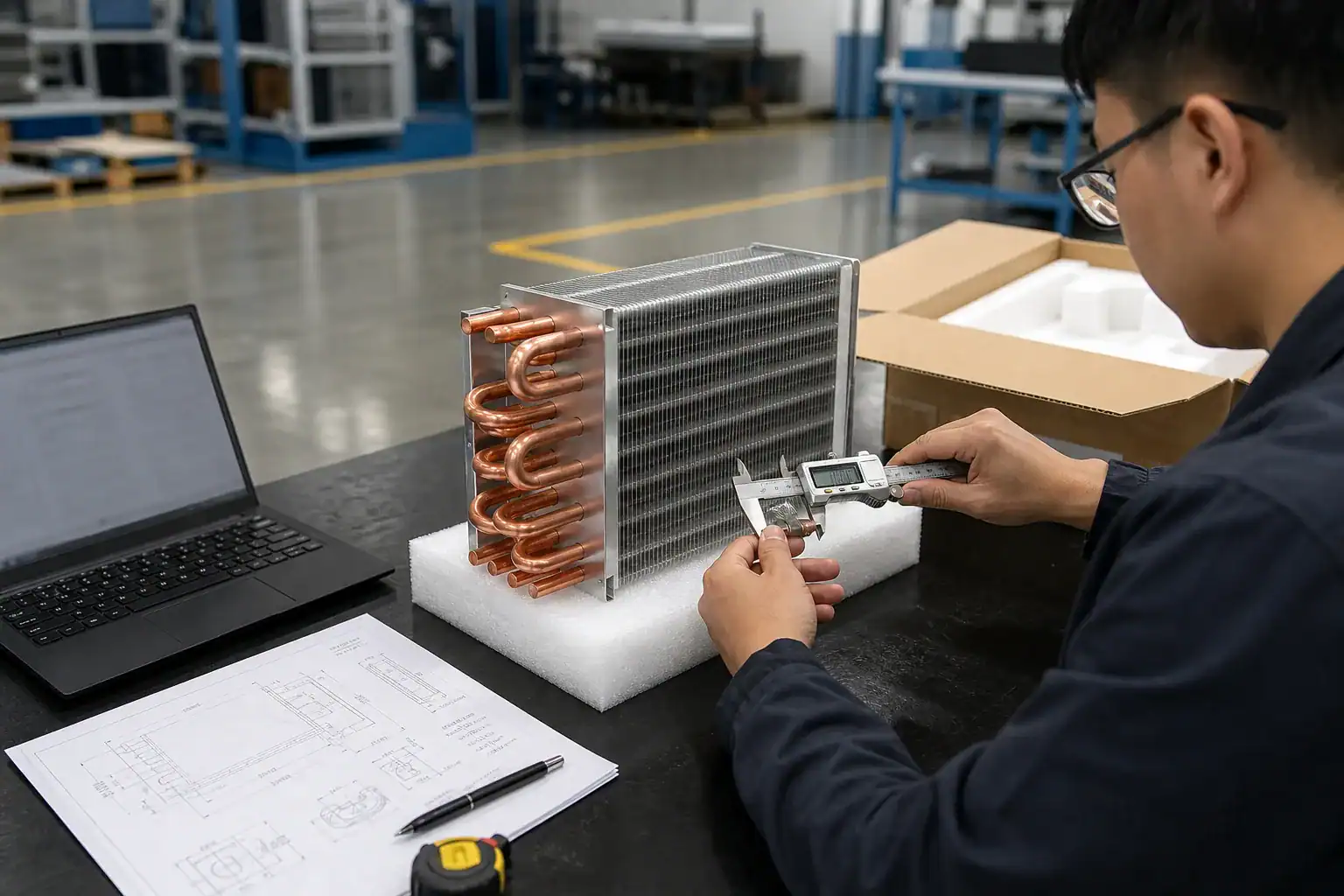
Prepare the following information where it is available:
- Product and process: product type, product form, packaging, cooking or upstream step, and downstream handoff.
- Batch definition: minimum, normal, and maximum mass; number of trays; rack count; and cycles per shift or day.
- Geometry: tray length, width, depth, pitch, perforation, lid, product depth, and the required clearances.
- Thermal conditions: starting condition, target or end condition, required cycle window, and the location used for the representative product probe.
- Room and installation: ambient range, condenser location, available footprint, door position, ventilation, electrical supply, and drainage route.
- Refrigeration details: refrigerant or system constraints, operating pressure requirements, connection size, circuit arrangement, and any existing component that must be replaced.
- Hygiene and service: interior material, cleaning method, removable parts, access requirements, condensate handling, defrost method, and allergen or contamination controls.
- Documentation and testing: drawings, bill of materials if required, inspection points, sample or prototype expectations, and the acceptance test you want to witness or review.
When a coil is being replaced, include photos of the old coil, nameplate information, connection orientation, failed-part symptoms, and the space available around the component. A replacement that fits the hole but changes airflow or circuit behavior may not solve the original problem.
How to compare blast-chiller proposals
Compare proposals against the same load and the same test conditions. A lower component price does not show whether the coil, fan, controls, drain system, or documentation will suit the process.
| Proposal item | Questions to ask | Why it matters |
|---|---|---|
| Cooling basis | What load, starting condition, end condition, and cycle window were used? | It shows whether the quote matches your actual process |
| Evaporator | What are the face dimensions, depth, fin spacing, circuiting, materials, and connections? | These details affect airflow, heat transfer, frost, and fit |
| Fan package | What airflow and pressure condition were considered with the coil and loaded rack? | Free-air fan figures may not represent the installed cabinet |
| Controls | Which sensors, modes, alarms, and end conditions are included? | Operators need a repeatable and verifiable cycle |
| Defrost and drain | How is moisture managed, and how can the area be inspected and cleaned? | Frost and standing water can affect hygiene and performance |
| Verification | What drawings, samples, inspections, and test records are available? | Evidence makes acceptance and future service easier |
| Integration | What are the power, piping, clearances, and installation assumptions? | A component can fail to work when the site assumptions are wrong |
The supplier should state assumptions instead of hiding them inside a single capacity number. If your load changes, ask how the result is expected to change and which variables must remain fixed.
Common selection mistakes and their consequences
Treating the cabinet as a bigger refrigerator
This leads to a proposal based on internal volume while the real problem is batch heat load, causing slow pull-down or uneven product temperature.
Specifying only the coil face size
Face dimensions do not describe fin spacing, circuiting, air resistance, drain access, material, or connection orientation.
Packing trays tightly to increase capacity
More trays do not always mean more usable output. If product blocks the air path, nominal rack capacity can exceed the cycle’s thermal capacity. Define product depth and spacing.
Using cabinet air temperature as the only proof
Cold air near a sensor does not prove that the product center has reached the required condition. Use a representative probe and repeatable method.
Ignoring moisture and defrost
Frost can reduce air movement and coil performance, while poor drainage can create cleaning problems. Review both during design.
Selecting the coil before confirming the circuit
A coil must belong to a refrigeration circuit. Refrigerant, pressure, piping, expansion control, fan, ambient conditions, and controls all affect selection.
Accepting a proposal without a defined test
If the buyer and supplier use different loads, probe positions, or end conditions, both can believe the equipment met its promise. Put the test in writing. Domi’s testing lab page is relevant for inspection and test support.
How Domi can support a blast-chiller component review
Domi’s public pages describe custom refrigeration coils and heat exchangers for commercial, HVAC, heat-pump, and industrial applications. For a blast-chiller project, start with the component and application brief rather than a generic request for a “cold coil.”
A review can start with these questions:
- What is the load, tray geometry, batch mass, and starting condition?
- What air path must the evaporator and fans create through the loaded cabinet?
- Which refrigerant, pressure, material, coating, connection, and installation constraints apply?
- How will condensate and defrost water be handled?
- Which drawings, samples, inspection points, and acceptance records are needed?
Domi’s custom coil fabrication page is a route for discussing coil geometry and fabrication. Send a drawing, sample, replacement measurements, or application brief through the contact page.
Frequently asked questions about blast chillers
What is a blast chiller used for?
A blast chiller is used to remove heat from a defined warm or hot product load and move it into a chilled workflow. It is commonly positioned between cooking or production and chilled holding, portioning, packaging, or distribution. The suitable load, cycle, and end condition depend on the product and the facility’s documented process.
Does a blast chiller freeze food?
A blast chiller is primarily intended for rapid chilling, not freezing. Some equipment offers multiple modes, but a blast freezer has a different objective and may require different coil, control, defrost, and acceptance criteria. Confirm the required product condition instead of relying on the word “blast.”
How does a blast chiller work?
Fans move air across a warm product load and through an evaporator coil. The coil absorbs heat from the air, the refrigeration circuit rejects it outside the cooled space, and sensors or controls manage the cycle. Tray spacing, product thickness, fan pressure, door openings, and the end condition all affect the result.
What is the difference between a blast chiller and a walk-in cooler?
A blast chiller removes heat from a batch quickly. A walk-in cooler normally holds products that are already chilled, with space for people, carts, racks, and repeated access. A facility may use both: the blast chiller handles the warm batch and the walk-in cooler handles downstream storage.
Why does tray spacing matter in a blast chiller?
Tray spacing creates the air path through the rack. If trays touch, product is too deep, or packaging blocks the coil and fan, air may bypass surfaces and leave the load center warm. A supplier needs tray dimensions, product depth, rack pitch, and loading direction to evaluate the fan and coil package.
What information should I send for a blast-chiller coil quote?
Send the product and batch details, starting and end conditions, cycle window, tray and rack drawings, air-path constraints, refrigerant and pressure requirements, connection orientation, installation conditions, cleaning requirements, and the acceptance test. For a replacement, also send photos, nameplate data, failure symptoms, and the space around the original coil.
Does a blast chiller need a custom evaporator coil?
Not every project needs the same level of customization, but the evaporator still needs to match the cabinet, load, fan, refrigerant circuit, moisture exposure, and service requirements. A standard part may work when those conditions align. A custom review helps when the rack, airflow path, connections, replacement envelope, or process load is unusual.
Does a blast chiller guarantee food safety?
No. It is one part of a larger food-safety process. The facility still needs an applicable procedure, trained operators, suitable instruments, documented probe locations, sanitation controls, and local compliance. A supplier can help define a testable cycle, but the facility must approve and manage the complete process.
Start with the load, then specify the coil
The answer is a process answer: a blast chiller is a controlled forced-air refrigeration system for moving a defined product load into chilled workflow. Its result depends on load geometry, airflow, evaporator design, controls, moisture management, and verification.
For a new unit, replacement coil, or supplier comparison, start with the batch and acceptance test, then specify the coil, fan, connections, drainage, and documentation that support it.
Related Articles
| Commercial Blast Chiller Coil Guide | Commercial Cooling Coils |
| Commercial Refrigeration Solutions | Engineering Capabilities |
| Testing Lab | Custom Coil Fabrication |