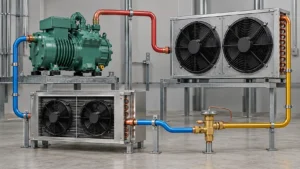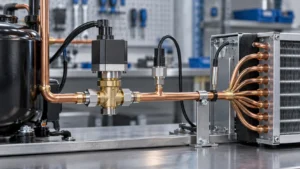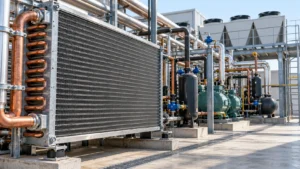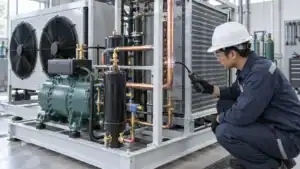

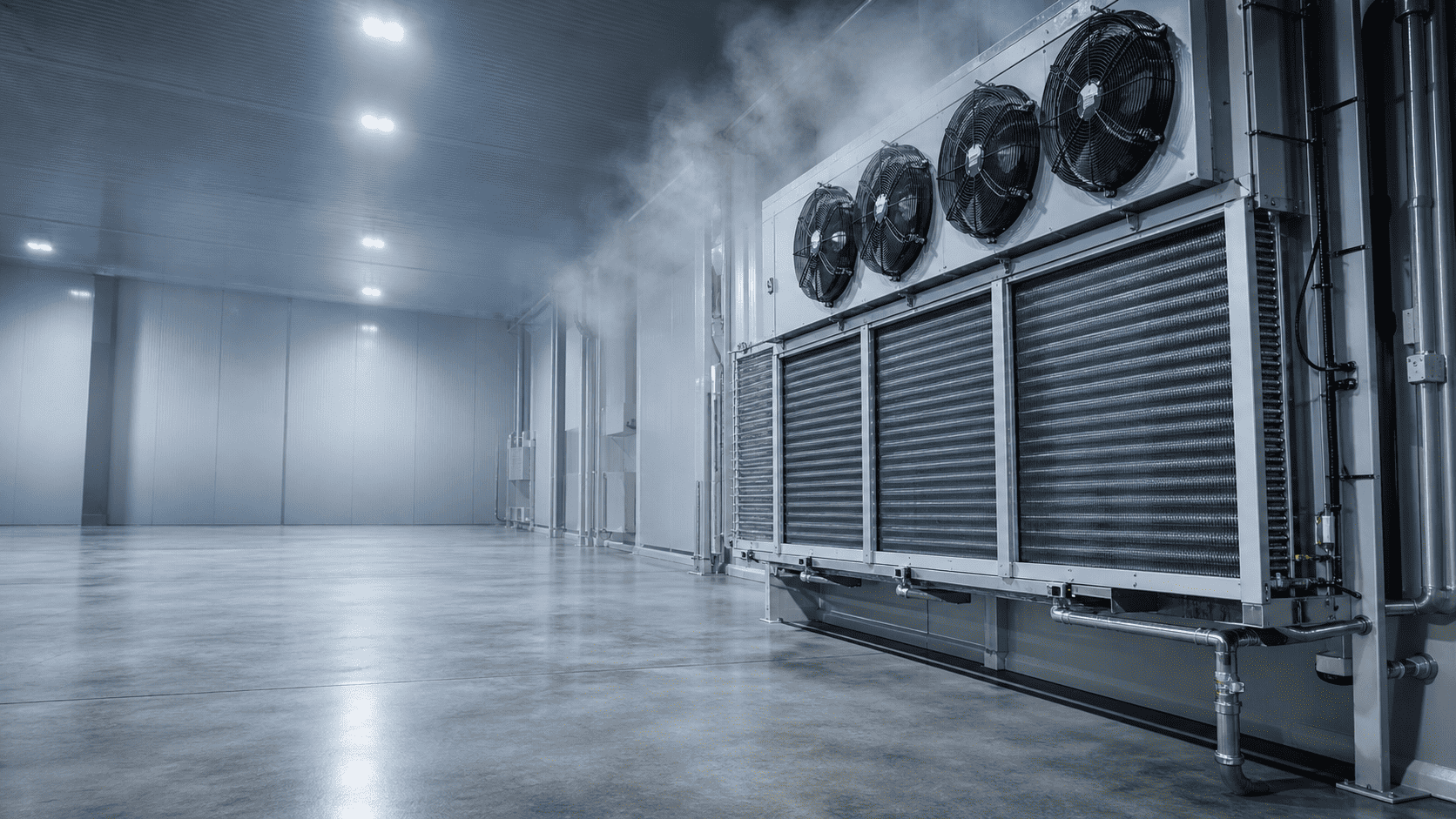
A forced-air cooler is more than a fan pointed at a cold coil. In this guide, forced air cooler means a refrigeration air-cooling assembly designed for a defined product or process load—not a portable room air cooler. The evaporator, fans, room or tunnel geometry, product packaging and airflow path have to work as one system. The right design depends on how the product enters, how quickly it must cool, and how the air can move through the load.
This guide is for cold-storage operators, food-processing buyers, equipment OEMs and engineering teams comparing unit coolers or custom evaporator assemblies. It focuses on refrigeration air-cooler selection, not portable residential air coolers.
How forced-air cooling works
The refrigeration system cools air through an evaporator. Fans then move the refrigerated air across or through the product. The cooling rate depends on air temperature, airflow, product size, packaging, surface area, moisture loss and the resistance of the load.
Common layouts include:
| Layout | Application | Main design question |
|---|---|---|
| Cold-wall or plenum | Pallets or bins placed against an air path | Can air move through the load without bypassing it? |
| Tunnel cooler | Product arranged on both sides of a return or supply channel | Can airflow and cooling time remain consistent across the tunnel? |
| Room cooler | General cold-room pull-down or holding | Is the air distribution appropriate for product and storage pattern? |
| Process cooler | Defined production step | Can capacity and airflow follow the production cycle? |
The layout, product and refrigeration equipment should be reviewed together. An evaporator with adequate nominal capacity can still perform poorly if the air path bypasses the product or if packaging blocks flow.
Define the cooling objective
Start with a measurable target:
- Product type, size, initial temperature and target temperature.
- Product mass per batch, pallet or room and expected loading pattern.
- Required cooling time or pull-down profile.
- Packaging, vent area, pallet spacing and airflow resistance.
- Entering air condition, room condition and relative humidity.
- Refrigerant or secondary-fluid system and evaporating condition.
- Required storage temperature after pre-cooling.
- Operating schedule, cleaning, defrost and maintenance access.
If the buyer only provides “industrial cooler” or “forced-air cooler,” the supplier cannot confirm the actual duty. Mark unknown values and request a preliminary design with its assumptions.
Airflow and pressure drop
Airflow is central to forced-air performance. The fan must overcome coil resistance, filters or guards, product packaging, plenum losses, duct or tunnel geometry and any return path restriction. The supplier should state the airflow basis and the pressure-drop assumptions.
Too little airflow can create long cooling times or uneven product temperature. Too much airflow may increase fan energy, dehydration or product damage depending on the product. The correct target is application-specific.
Product and package resistance
Boxes, bags, bins and pallets can have very different vent areas. A package with low vent area can create a high pressure drop even when the fan is correctly selected. Include package drawings or photographs and describe the intended pallet arrangement.
Avoiding air bypass
Air follows the path of least resistance. Gaps beside the product, open doors, poor curtains or missing seals can allow bypass and reduce cooling through the load. A design review should include the plenum, tarp, door, return path and loading process—not just the coil face.
Evaporator coil and fan selection
Coil geometry
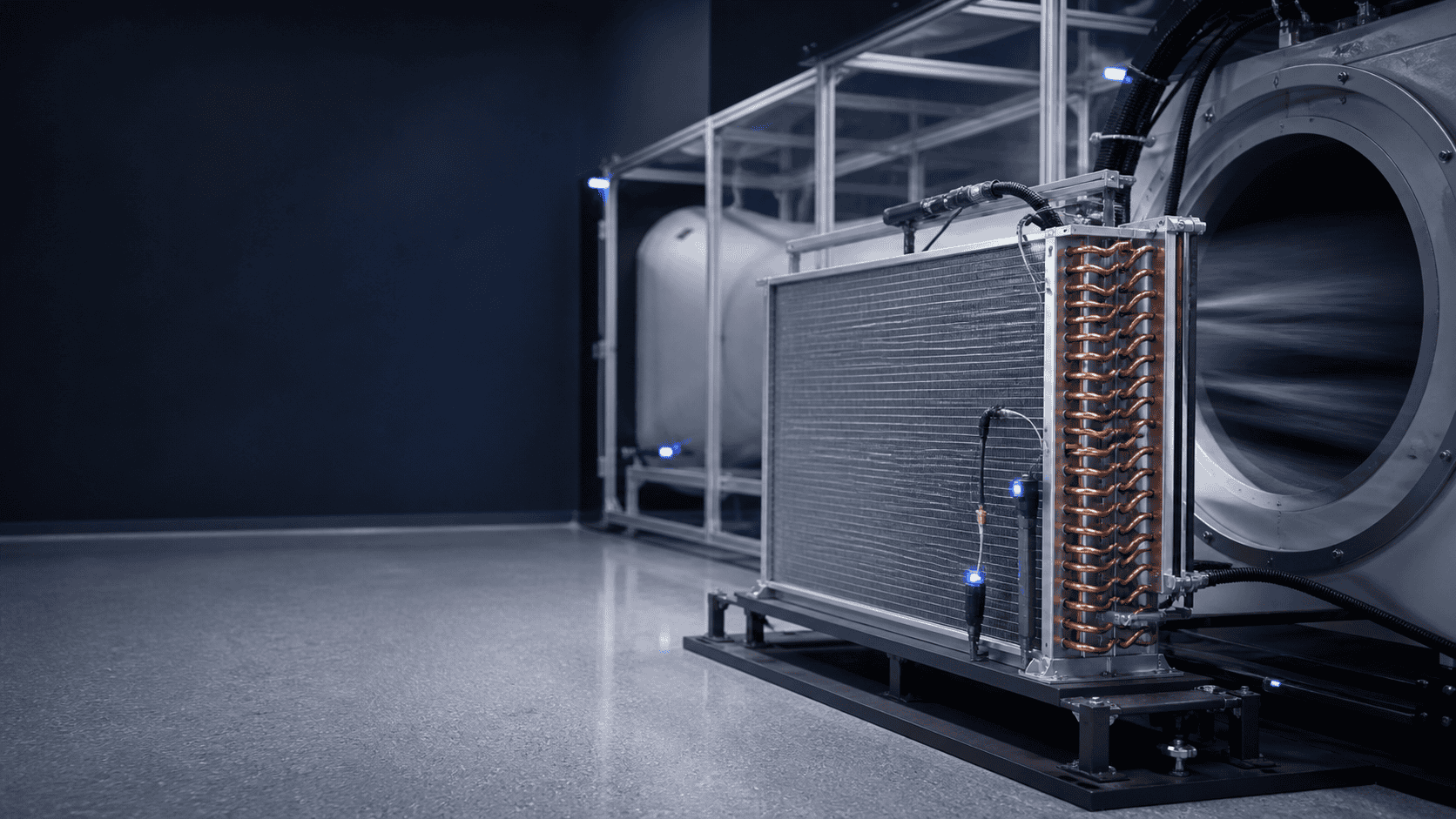
Tube, fin, face area, depth and fin spacing affect capacity, pressure drop, frost, cleaning and defrost. Low-temperature service may require wider fin spacing or a defrost arrangement that keeps the coil available during the operating schedule.
Fan interface
State fan diameter, airflow, static pressure, motor, guard, mounting, electrical supply and control requirements. If Domi supplies the evaporator coil only, the buyer should define the fan curve and interface so the coil rating is not compared with a complete unit cooler quotation by mistake.
Humidity, frost and defrost
Air below its dew point can produce condensate; below freezing, frost can accumulate. Frost blocks airflow and reduces heat transfer. Confirm defrost method, duration, drain pan, drain outlet, heater or hot-gas scope, door schedule and product exposure.
An air cooler for a high-humidity process should not be selected from a dry-air rating. Provide entering humidity or dew point where condensation or product quality matters.
Refrigerant and material questions
Provide refrigerant, pressure, evaporating condition, material preference and corrosion environment. Ammonia and CO2 applications need an application-specific pressure and materials review. A standard appliance-coil assumption is not sufficient for an industrial natural-refrigerant system.
The coil frame, fins, tubes, drain pan, coating, fasteners and connections may see different environments. State cleaning chemistry, salt or humidity exposure, sanitation requirement and storage condition. If a coating is requested, define the area, surface preparation, masking and acceptance method.
Cold-storage RFQ checklist
| RFQ area | Information to provide |
|---|---|
| Product | Type, mass, initial and target temperature, package and venting |
| Process | Cooling time, batch size, loading, operating schedule |
| Air system | Airflow, static pressure, tunnel or room dimensions, bypass control |
| Refrigeration | Refrigerant or fluid, capacity, evaporating condition and pressure |
| Coil | Face, depth, rows, fin spacing, circuiting, material and defrost |
| Mechanical | Fans, casing, drain, mounting, lifting, service access |
| Quality | Leak or pressure test, dimensional report, performance check, packaging |
Include a layout or sketch showing product, plenum, fan, coil, doors and airflow direction. A simple plan view can resolve questions that a component drawing cannot.
Installation, packaging and commissioning
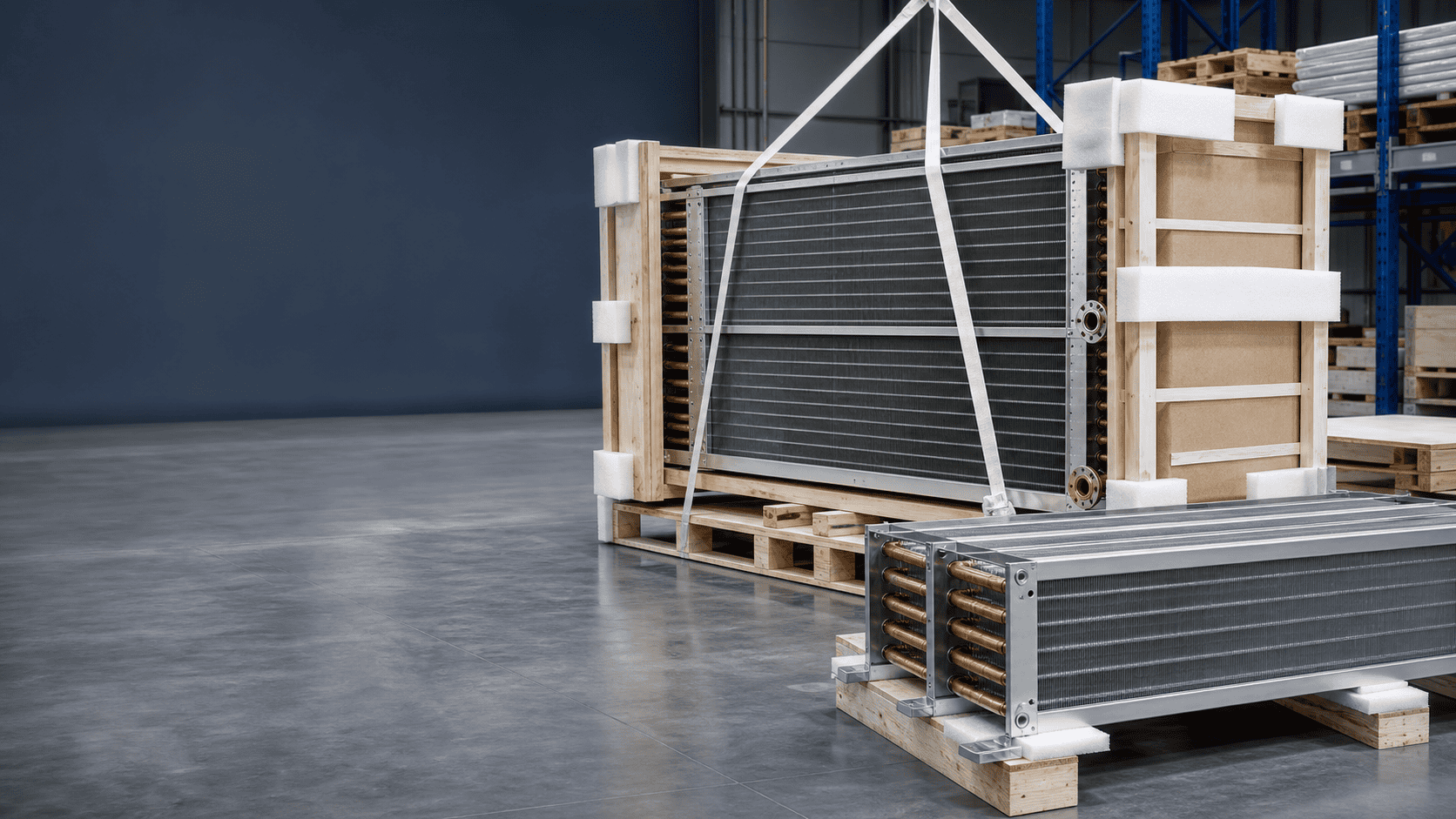
Protect fins, headers, connections, fans and drain components during transport. Define crate or pallet, separators, lifting points, moisture protection and receiving inspection. For a large forced-air cooler, include the removal path and installation sequence in the handoff.
Commissioning should confirm airflow direction, fan operation, coil condition, drain, defrost, controls, room temperature, product temperature and any pressure or leak-test record required by the project. Record the conditions; a temperature reading without airflow or loading context is difficult to interpret.
FAQ: forced-air coolers
What is a forced-air cooler?
It is a cooling system that moves refrigerated air across or through a product or process load. It normally combines an evaporator, fan system and an airflow path designed for the load.
What is the difference between a forced-air cooler and a cold room?
A cold room stores product at a target condition. A forced-air cooler actively drives air through or across the product to remove heat more quickly. The room, product and refrigeration system may be integrated.
How do I size a forced-air cooler?
Start with product mass, initial and target temperatures, cooling time, packaging, airflow resistance, room layout, entering air condition and refrigeration duty. Capacity alone does not define cooling time.
Does more airflow always cool product faster?
Not necessarily. Air bypass, package resistance, moisture loss, fan energy and product sensitivity can limit the benefit. Confirm airflow distribution and product temperature, not fan flow alone.
What does frost do to a forced-air cooler?
Frost reduces airflow and heat transfer and can increase pressure drop. Fin spacing, humidity, defrost, drainage and operating schedule should be reviewed together.
Can Domi supply a forced-air cooler coil?
Domi can review a custom evaporator or coil requirement from product, airflow, refrigerant, duty, dimensions and defrost information. The final scope may be coil-only or an assembly, depending on the project.
Related Articles
- Industrial refrigeration evaporator selection guide
- Industrial refrigeration condenser-coil selection guide
- Industrial heat exchanger replacement guide
- Shell-and-tube heat exchanger selection guide
- Commercial refrigeration solutions
- Industrial refrigeration solutions
Request an air-cooler recommendation
Send the product, load, cooling-time target, package, layout, airflow, refrigerant, coil dimensions and defrost requirements. Domi can then review whether the project needs a custom evaporator coil, a fan-equipped unit, or a broader refrigeration assembly specification.