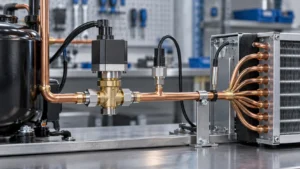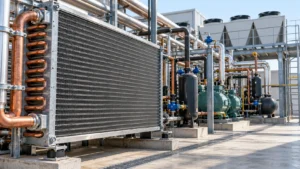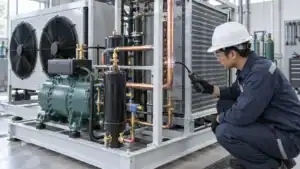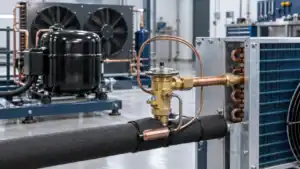

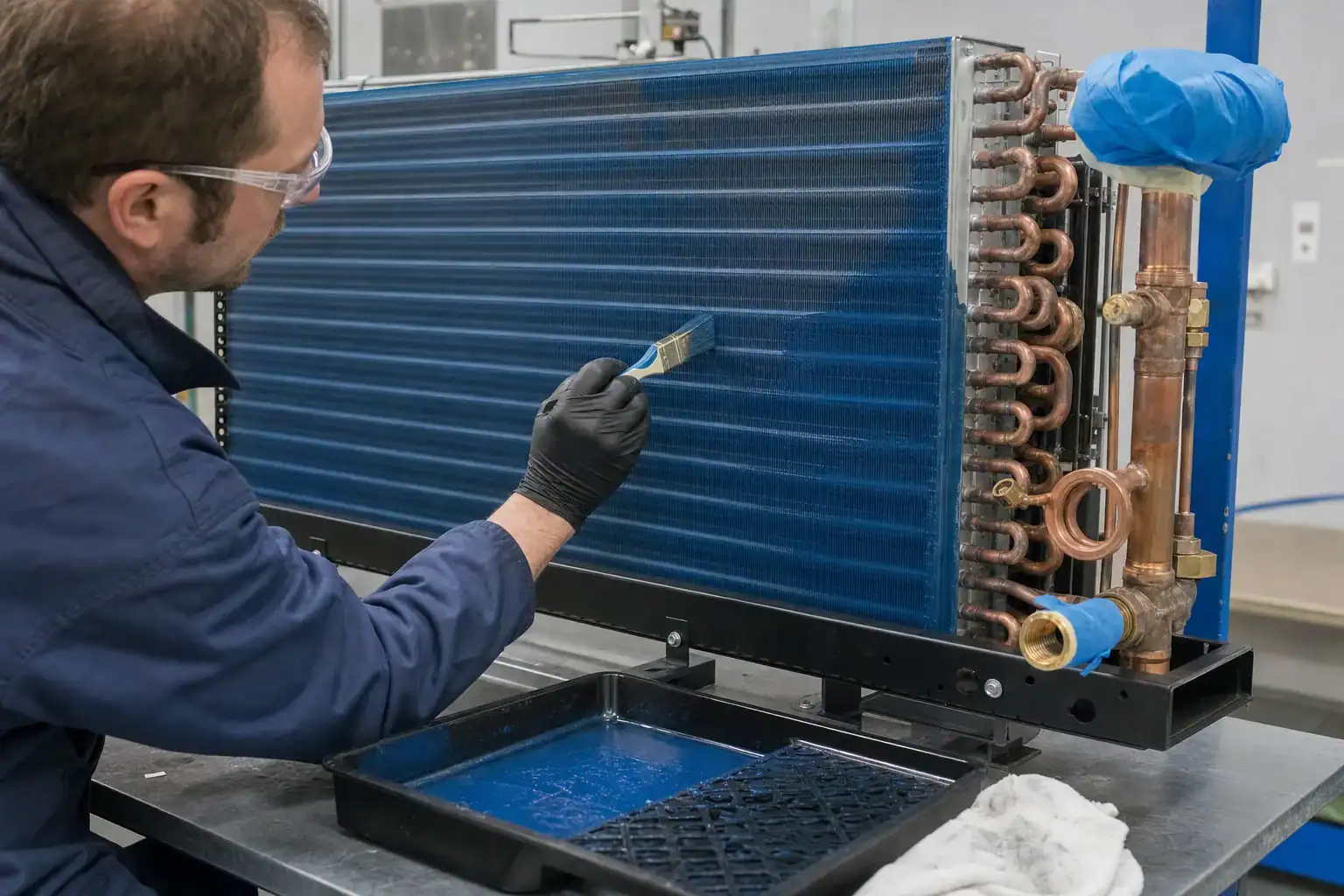
Coil coating is a surface-treatment decision that should be matched to the metal, corrosion exposure, cleaning method, thermal duty, joints, connections, inspection and service plan. A coating label alone does not prove a commercial refrigeration coil will last longer or retain a particular capacity. The project needs a defined environment and a confirmed coating scope.
Commercial refrigeration coils may operate in restaurants, supermarkets, beverage equipment, ice machines, display cases, food-processing areas, cold rooms, and outdoor condensing systems. Humidity, salt, grease, cleaning agents, condensate, dust, and temperature cycling can attack fins, tubes, headers, brackets, joints, and fasteners. A coil coating may be worth evaluating, but the correct decision depends on where the exposure occurs and what the equipment must do.
The word coil coating also has another common meaning in the metal industry: a continuous process used to coat flat metal strip before it is formed. The National Coil Coating Association provides background on that industrial process. In commercial refrigeration conversations, buyers often mean a coating applied to a finished finned coil or a treated fin and tube surface. State which meaning applies in the RFQ.
This guide focuses on finished commercial refrigeration coils and their operating environment. It does not promise a universal coating life, corrosion class, food-contact approval, or performance improvement. The equipment designer, material supplier, coating applicator, and responsible compliance team should confirm those items for the actual project.
What is coil coating on a refrigeration coil?
Coil coating is a protective or functional layer applied to a coil surface, fin, tube, header, frame, or selected component. The layer may help separate the metal from moisture, salt, grease, chemicals, or other exposure. It may also affect surface energy, cleanability, appearance, electrical isolation, or the way contaminants attach. The coating process can include cleaning, pretreatment, masking, application, curing, inspection, and packaging.
The term does not identify the chemistry, thickness, coverage, surface preparation, or acceptance criteria. A buyer should ask what surface is coated, where it is masked, how the layer is applied, how the finished part is inspected, and which cleaning conditions were considered. A coating on the fin face is not automatically a coating on the tube, header, connection, bracket, or joint.
Coating is part of a system decision
Corrosion may be reduced by material selection, drainage, airflow, cleaning, ventilation, geometry, protective packaging, or a coating. A coil coating is one option. If water remains trapped in a pan or between fins, a surface treatment may not correct the design. If grease is never removed, a coating may still be exposed to a damaging layer. If a joint is left unprotected, the visible fin surface may look healthy while the connection fails.
The EPA GreenChill program provides broader information about commercial refrigeration systems and environmental practices. It does not specify a coating for a particular coil. Keep refrigerant, emissions, material, coating, heat-transfer, and maintenance claims separate in the project record.
Condenser and evaporator exposure differ
Condenser surfaces may face warm humid air, grease, dust, salt, rain, and outdoor cycling. Evaporators may face condensate, frost, drain water, cleaning fluids, and low surface temperatures. A coating chosen for an outdoor condenser is not automatically suitable for a frosting evaporator or an ice-making surface. The equipment type and exposure belong in the coating request.
When should a buyer evaluate coil coating?
Evaluate coil coating when the operating environment presents a documented corrosion or cleaning risk that bare construction cannot manage with reasonable maintenance and material choice. Examples include high humidity, coastal salt, restaurant grease, frequent washdown, cleaning chemicals, process vapors, condensation, or a history of fin and tube corrosion. The request should include the failed part, exposure, maintenance record, and desired outcome.
Do not start with the coating name. Start with the exposure and the surface that needs protection. If the real problem is blocked airflow, poor drainage, vibration, a leaking joint, or an incompatible cleaning chemical, coating alone may not be the best response.
| Exposure or condition | Questions to answer | Possible review path |
|---|---|---|
| High humidity or condensate | Where does water collect and how is it drained? | Geometry, material, drainage, surface treatment |
| Restaurant grease | How often is the coil cleaned and with what chemical? | Fin spacing, access, cleaning compatibility, coating |
| Salt or coastal air | Is the equipment indoors, outdoors, or near a washdown zone? | Material, coating, packaging, test and maintenance |
| Frequent washdown | What water pressure, temperature and detergent are used? | Masking, coverage, surface, joint and rinse review |
| Repeated corrosion failure | Where did corrosion start and what changed over time? | Failure analysis, material, drainage, coating and service |
The table is a screening framework, not a coating specification. The responsible engineer should turn the exposure into measurable conditions and acceptance criteria.
Existing equipment and new equipment
For a new equipment platform, coating can be evaluated with fin pitch, tube material, drainage, fan, access, and cleaning from the beginning. For a replacement, check whether the coated part fits the cabinet, pan, connections, brackets, fan, controls, and service path. The coating should not block a connection, change a critical clearance, or create a new cleaning problem.
Product and food-service boundaries
Food-service equipment may place the coil near food, water, ice, condensate, or cleaning activity. The coating surface should be clearly separated from the food-contact boundary. If the coating can contact water or ice, identify the applicable material and compliance requirements. The FDA Food Code 2022 is a reference for food-safety requirements, but it is not a certification for a particular coating or component.
Coating scope: fins, tubes, headers and connections
A quotation should list the coated areas. Options may include fin face, fin edges, tubes, headers, frames, brackets, drain pans, or selected assemblies. Masking may be required at brazing areas, threaded connections, electrical contacts, drain outlets, labels, and inspection points. If a connection is not coated, the reason should be visible.
Fin face and fin edges
Fins have a large surface area and can be difficult to cover uniformly. Fin spacing, depth, edge geometry, and the application method affect coverage. A coating can bridge narrow air passages or create a thicker edge. Ask how the applicator verifies the surface and how damaged areas are handled after shipping and installation.
Tubes, headers and joints
Tubes and headers may experience different thermal, pressure, and cleaning conditions than fins. A coating should not hide a joint or interfere with leak testing. Connection areas often need masking to preserve brazing or fitting quality. State whether the tube, header, bracket, and joint are included and which parts remain bare.
Drain pans and support hardware
Water management components can corrode even when the coil face is protected. The pan, drain outlet, brackets, fasteners, and insulation interface may need their own material or treatment review. Do not assume that coating the fin pack protects the complete assembly.
Thermal, airflow and pressure-drop considerations
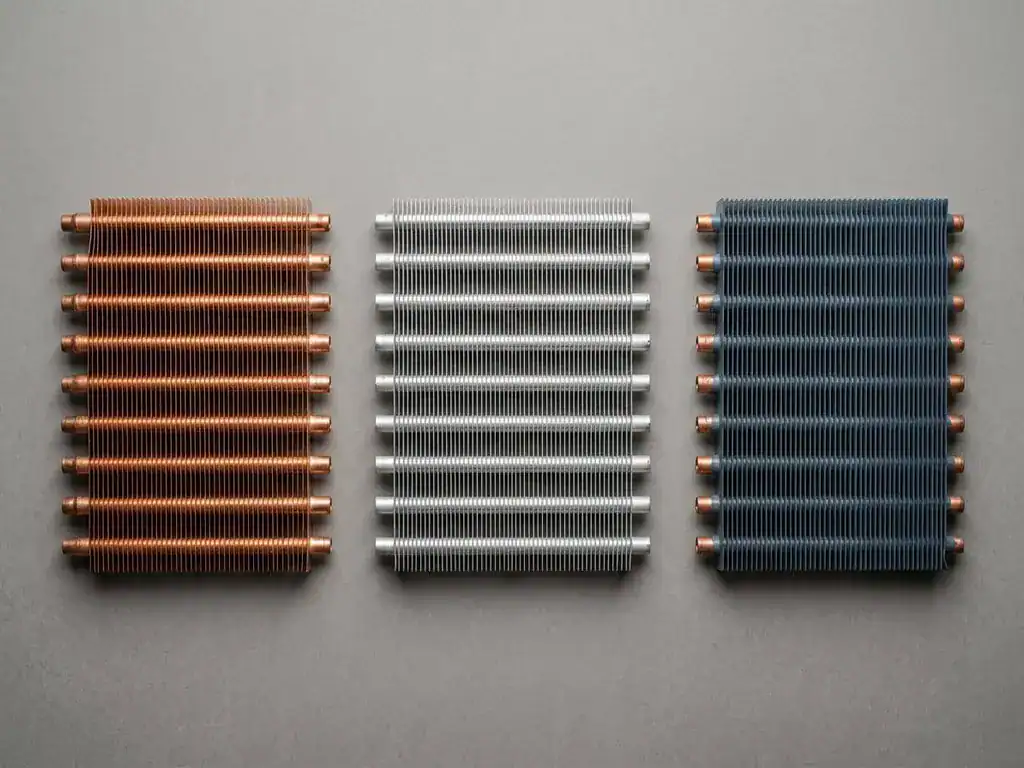
A coating adds a layer to the surface and may change the effective heat-transfer path. The effect depends on the coating system, thickness, coverage, fin geometry, tube contact, surface condition, airflow, and operating temperature. Do not assume that a thin layer has no effect, and do not assume that every coating causes a meaningful capacity loss. Rate the coated construction under the relevant condition.
Coating thickness and fin passages
The coating process should preserve the intended fin passage and surface integrity. Excess build can reduce free area, increase air-side pressure drop, bridge edges, or make cleaning harder. Uneven build can create local variations. The RFQ should state the accepted surface and whether thickness or coverage is inspected.
Coil performance comparison
Compare bare and coated proposals at the same heat duty, air condition, refrigerant or fluid, airflow, pressure drop, and surface condition. If the coated proposal uses a different fin pitch or row count, the difference is not caused by coating alone. Ask for a clear rating basis and note whether the result is a calculated estimate, sample data, or a tested production configuration.
The AHRI 410 standard covers certain forced-circulation air-cooling and air-heating coils and lists exclusions. Many commercial refrigeration direct-expansion, frosting, bare-tube, microchannel, and condenser applications may fall outside that scope. Identify the applicable method instead of using the standard title as a blanket coating claim.
Pressure drop and fan or pump duty
Any change in fin surface or open area can interact with air-side pressure drop. A coated evaporator may also collect frost or condensate differently, while a coated condenser may see grease and dust attachment. Request clean and relevant operating pressure-drop values where they matter. For water or glycol coils, check fluid-side pressure drop, viscosity, and cleaning access.
Coating chemistry and selection language
Buyers may hear terms such as epoxy, polymer, hydrophilic, anti-corrosion, phenolic, or conversion treatment. These terms are not interchangeable and do not by themselves define a finished coil’s performance. The coating supplier or applicator should identify the system, substrate, pretreatment, application method, curing, coverage, thickness, compatibility, and inspection.
Use neutral selection language until the project data is confirmed. For example, ask whether an epoxy-based coating is suitable for a humid kitchen and the stated cleaning chemicals. Do not say that any epoxy coating will resist every chemical or last for a fixed number of years. Ask the supplier to recommend a system based on the actual exposure and required test.
Surface preparation and pretreatment
Surface preparation affects adhesion and corrosion response. Oil, dust, oxidation, moisture, and handling marks can change the result. The process should state how the substrate is prepared, how the part is handled before application, and how the coating is cured. The chosen process may differ for a fin pack, tube, header, aluminum, copper, stainless, or mixed-material assembly.
Adhesion and damage
Coating should remain attached through thermal cycles, vibration, cleaning, handling, and normal operation. If damage occurs, the repair method should be defined. A field touch-up may have a different chemistry, thickness, or coverage than the original process. The buyer should ask whether damaged areas can be repaired and how they are recorded.
Low-temperature and frosting service
An evaporator coating can see low temperature, condensation, frost, defrost, and drying. A condenser coating can see higher surface temperature and warm ambient. Confirm that the system has been evaluated for the actual cycle. If the surface contacts water or ice, the material and compliance boundary need additional review.
Cleaning and maintenance compatibility
A coil coating should be evaluated with the cleaning method used by the equipment owner. Identify chemical name, concentration, temperature, exposure time, pressure, rinse, drying, frequency, and whether operators use brushes or tools. A coating that performs in a static corrosion test may be damaged by repeated chemical or mechanical cleaning.
Cleaning access is part of the design. Close fins, deep rows, tight grilles, and hidden headers make service difficult. A coating may help, but it does not eliminate the need to remove grease, salt, scale, or dust. Provide the service route and tool access in the drawing.
Avoid unapproved pressure washing
High-pressure water can bend fins, drive contaminants deeper, strip a surface, or damage joints. The appropriate method depends on the coil, coating, and equipment. The supplier and equipment manufacturer should identify an approved process. Do not convert a marketing phrase such as cleanable coating into a field instruction without confirming the method.
Record maintenance observations
When investigating a coated coil, photograph the fin face, headers, connections, brackets, drain, and any damaged areas. Record the cleaning method and date, chemical, operating symptoms, ambient or humidity, and visible corrosion. This history helps distinguish coating failure from mechanical damage, blocked airflow, poor drainage, or incompatible service.
Coil coating for commercial applications
Restaurant and food-service equipment can see grease, steam, moisture, detergents, and frequent cleaning. Supermarket and display equipment can see humidity, condensate, dust, and long operating hours. Beverage coolers may have compact cabinets and frequent door openings. Outdoor or coastal equipment may see rain, salt, and wet-dry cycling. Each application should state the surface, exposure, and maintenance.
| Application | Coating question | Other design factors |
|---|---|---|
| Restaurant condenser | Can the surface tolerate grease and the approved cleaning process? | Fin spacing, access, fan, grille, drainage |
| Supermarket display evaporator | How does condensate, frost and defrost affect the surface? | Drain, fin pitch, airflow, recovery |
| Beverage cooler | Can the treated coil fit the compact cabinet and remain serviceable? | Envelope, noise, connections, fan |
| Ice machine | Does the surface contact water or ice and meet the hygiene boundary? | Finish, water chemistry, harvest, cleaning |
| Outdoor condenser | Which moisture, salt, dust and weather exposure is expected? | Material, packaging, joints, inspection |
The application identifies the questions but does not establish a fixed coating product. Obtain the coating supplier’s recommendation and confirm it with the equipment and compliance teams.
Inspection and validation for coil coating
Inspection may cover substrate, pretreatment, coverage, thickness, adhesion, masking, surface defects, connections, joints, fin passage, dimensions, and packaging. The appropriate method depends on the coating system and project risk. The purchase specification should state which records are required and who accepts them.
Visual and dimensional checks
Check whether the coating covers the intended areas and preserves the connection, drain, bracket, and service geometry. Inspect the fin face for bridging, runs, chips, cracks, exposed substrate, and damage. Check the overall envelope because handling, masking, and coating can affect a tight fit.
Corrosion and chemical testing
Laboratory corrosion and chemical tests can provide comparative information, but the test method should represent the real exposure. A salt test result does not automatically predict a restaurant washdown or a low-temperature frosting cycle. State the test standard, substrate, coating system, preparation, duration, evaluation, and limitations.
The ASTM standards organization is a starting point for locating test methods, but the responsible engineer must choose the method and acceptance criteria. Do not publish a test result unless the exact part, coating, substrate, and method are documented.
Thermal and functional validation
Validate coated and uncoated constructions at comparable thermal conditions. Check capacity, airflow, pressure drop, frosting or condensation, drain, defrost, fan, or water path as relevant. Coating should not be evaluated only by appearance. If the component is a replacement, validate fit and service access separately from thermal performance.
RFQ checklist for coil coating
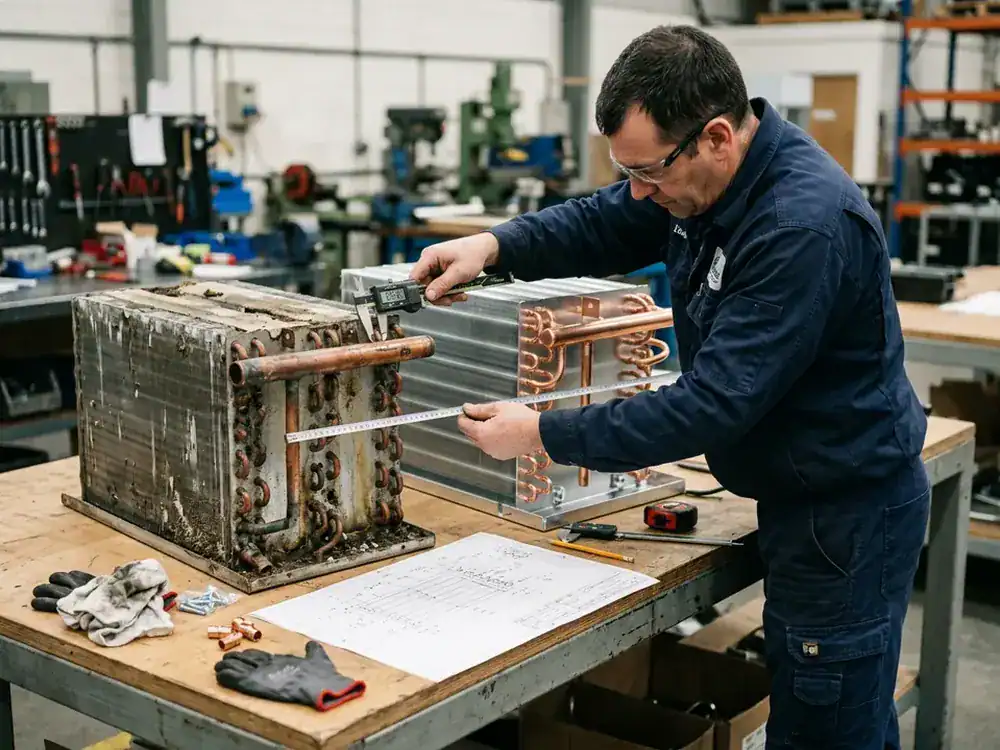
An RFQ should tell the coating supplier and coil manufacturer what environment they are solving. Include the equipment, coil type, material, exposure, cleaning, surface scope, thermal duty, airflow, refrigerant, pressure, dimensions, quantity, test, inspection, packaging, and destination. The ASHRAE standards and guidelines resource can help identify the project references, but the coating requirements still need to be written for the equipment.
| RFQ section | Information to provide | Decision it supports |
|---|---|---|
| Exposure | Humidity, salt, grease, chemicals, condensate, washdown, temperature | Coating and material recommendation |
| Surface scope | Fins, tubes, headers, frame, brackets, pan, connections | Coverage, masking and inspection |
| Operation | Heat duty, airflow, refrigerant, frosting, defrost, fluid | Thermal and pressure-drop review |
| Cleaning | Chemical, concentration, pressure, frequency, tools, rinse | Compatibility and maintenance plan |
| Quality | Adhesion, thickness, coverage, corrosion or chemical test | Acceptance criteria and records |
| Supply | Sample, quantity, packaging, labels, replacement, destination | Production and service control |
Ask what the coating does not cover
List the bare areas, joints, threaded sections, drain, labels, sensor contacts, and mounting faces. Ask how those areas are protected and inspected. This prevents a buyer from assuming that a coated fin face means a fully protected assembly.
Ask for performance assumptions
Request the coated construction’s capacity, airflow, pressure drop, refrigerant or fluid, surface condition, and test method when thermal performance is important. If no test is available, identify the result as an engineering estimate. Do not treat a corrosion test as proof of thermal performance or a thermal rating as proof of corrosion resistance.
Replacement and repair decisions
A replacement coil coating may be helpful when the old part failed through corrosion or when the environment has changed. It may be unnecessary if the failure came from a fan, grille, pressure event, vibration, poor drainage, or an incompatible cleaning practice. Investigate the failure before specifying the treatment.
Measure and photograph the old coil, connections, brackets, pan, fan, grille, clearances, and surface. Record corrosion location, depth, fin damage, leak points, cleaning history, and operating symptom. The new coated part should fit and perform at the approved rating while also addressing the defined exposure.
Repairing a damaged coating
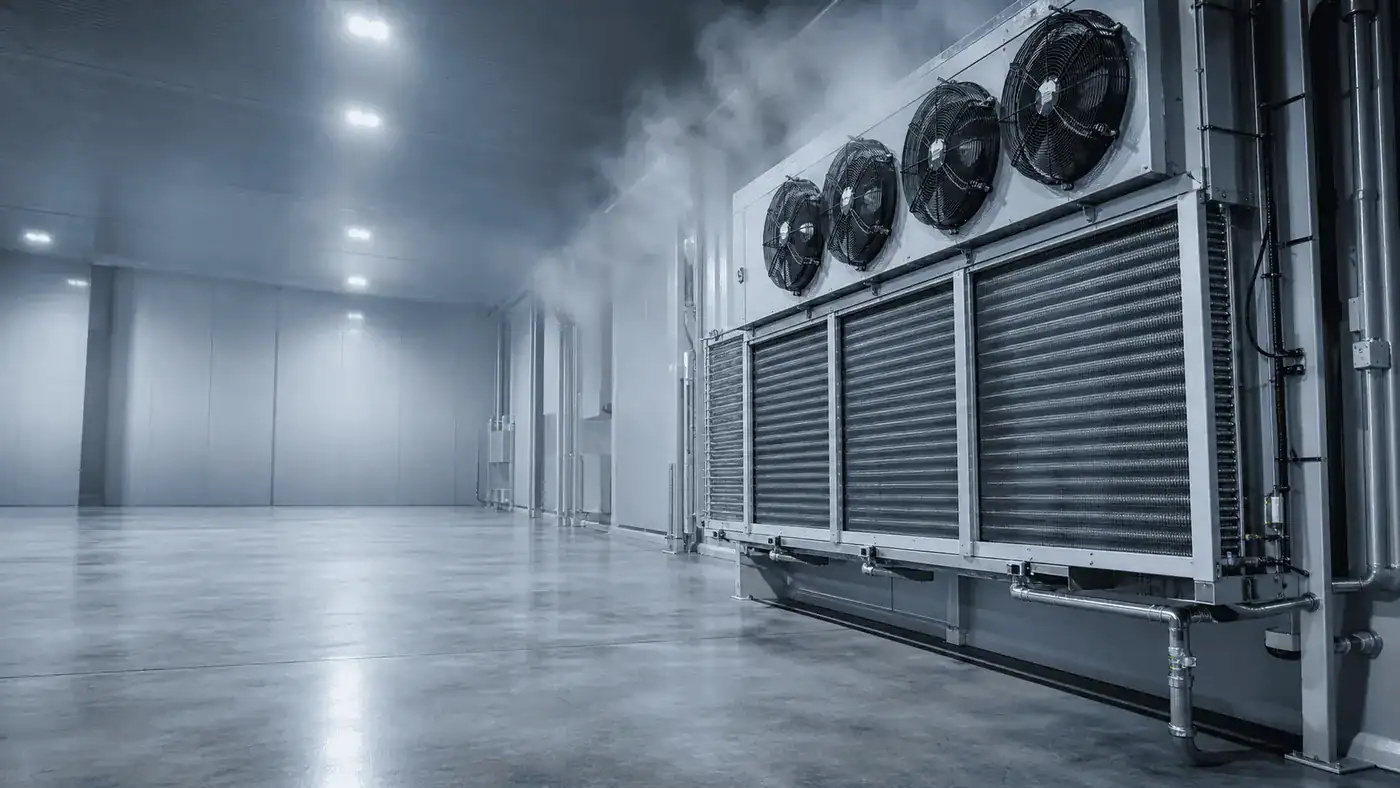
Field repair should follow the coating and equipment instructions. A touch-up product may not match the original substrate preparation or curing. If the damage is widespread, the coil may need replacement or a controlled recoat. Record the area, repair material, method, and acceptance decision.
Distribution and repeat supply
For repeated orders, retain the approved coating system, substrate, scope, masking, inspection, drawing revision, packaging, and cleaning instruction together. A change in applicator, material, fin, or process should trigger a review. Distributors should know whether a coated part can substitute for the bare or previous revision and whether the equipment instruction must change.
Pre-production coil coating review
Before a coated coil enters production, align the coil drawing, coating specification, surface preparation, masking plan, inspection plan, and packaging instruction. The coating specification should name the substrate and areas to be treated, but it should also identify the areas that must stay clear for brazing, electrical contact, drainage, labels, mounting, or service. This prevents a supplier from interpreting a broad phrase such as full coil coating in a way that creates an installation problem.
Review the applicator process
Ask how the part is cleaned, handled, treated, coated, cured, checked, and protected. The process may be different for a fin pack assembled before coating and a coil treated after assembly. The application method should reach the intended surfaces without blocking passages or covering connections. If the coating is applied in more than one step, identify the order and the inspection after each step.
Review the first sample
The first sample should be checked for the coating scope, masking, surface condition, connection fit, fin passage, dimensions, brackets, drain, labels, and packaging damage. If thermal or chemical testing is required, define it before the sample is produced. A sample should not be approved because its color or general appearance looks correct.
The first sample record should include the part drawing, substrate, coating system, process or batch identification, inspection results, photos, open points, and approval owner. If the sample is only approved for fit, state that the thermal or corrosion decision remains open. This distinction protects the project when procurement wants to order a larger quantity before the complete validation is finished.
Review installation and service instructions
The coating affects how the coil is handled and maintained. The installation instruction should explain lifting points, connection protection, fin inspection, clearance, fan direction, and the removal of shipping covers. The service instruction should identify approved cleaning tools and chemicals, signs of damage, and the escalation path for exposed substrate, peeling, corrosion, or a leak.
If a coating changes the cleaning method, update the equipment manual and service training. A coated coil cannot deliver its intended value if operators use a pressure or chemical process that damages the surface. Include the cleaning boundary in the purchase and service documents instead of leaving it as verbal advice.
Define what happens after a change
Changes to substrate, fin material, pretreatment, coating chemistry, applicator, thickness, masking, curing, or packaging should be evaluated. The change may require a new sample or only a document review, but the decision should be recorded. A supplier change without a drawing or process review can create a hidden variation in corrosion or thermal performance.
Keep the approved coating record with the coil part number and drawing revision. If the same component is used in several environments, list which coating or material is approved for each environment. A distributor should not substitute a part because the external dimensions match if the coating scope or service conditions differ.
Keep claims tied to evidence
Website and quotation language should say what is supported. Use phrases such as coating option, exposure review, project-specific recommendation, or coating compatibility discussion when the final evidence is not yet available. A statement such as permanent corrosion protection, guaranteed service life, or zero capacity loss requires a verified test or project record. The same discipline applies to certifications, food-contact claims, and exact performance values.
This is not cautious wording for its own sake. Coating affects material, heat transfer, airflow, cleaning, packaging, and service. A buyer deserves to know which parts are confirmed and which parts need project review. A supplier also needs enough context to recommend a coating that matches the equipment rather than a generic product label.
For a repeat program, capture the coating decision in the same controlled record as the fin pitch, tube material, connection layout, fan, and inspection plan. That way a later replacement order can be checked against the original exposure and not only against a photograph of the finished coil.
Include the approved cleaning method and the responsible approver in that record so purchasing and service do not inherit different surface assumptions.
If the part is exported or distributed, include packaging and storage conditions because moisture trapped during transport can damage a surface before installation.
The package should also identify the part number, drawing revision, coating revision, and inspection status so a warehouse can reject an unapproved substitute.
This traceability is useful when the same coil family is supplied to both clean indoor equipment and harsher food-service or outdoor environments.
It keeps coating decisions visible during later replacement orders.
That record supports the same coating boundary for procurement and service.
It also clarifies later replacement requests.
A Domi review path for commercial coil coating
Send Domi the equipment, coil type, refrigerant or fluid, heat duty, airflow, dimensions, material, exposure, cleaning method, coating scope, quantity, and destination through the contact page. Include the old coil and failure photos for a replacement. Identify whether the coating is a preference, a customer requirement, or a response to a defined failure.
The commercial refrigeration solutions page provides the application hub. The commercial cooling coils page covers related display-case, food-service, beverage, ice-machine, and replacement paths. Domi can review the available project data and identify missing inputs. Final coating system, materials, performance, testing, timing, and commercial terms should be confirmed per project.
Coil coating FAQ
What is coil coating on a refrigeration coil?
It is a protective or functional surface treatment applied to a fin, tube, header, frame, bracket, pan, or selected coil assembly. The exact system, substrate, thickness, coverage, masking, curing, inspection, and cleaning compatibility must be confirmed for the project.
Does coil coating prevent all corrosion?
No. Corrosion depends on exposure, material, drainage, cleaning, joints, handling, coating coverage, and operating conditions. A suitable coating may address a defined risk, but it is not a universal guarantee. State the environment and request a project-specific recommendation.
Should every commercial refrigeration coil be coated?
No. A clean, dry, controlled environment may not need a coating, while a restaurant, coastal, humid, or washdown environment may justify evaluation. Material, geometry, maintenance, packaging, and coating should be compared together.
Does coating reduce coil capacity?
It can affect surface and airflow, but the result depends on the coating system, thickness, coverage, fin geometry, tube contact, and rating condition. Compare coated and uncoated constructions at the same duty, air condition, refrigerant or fluid, airflow, and pressure-drop basis.
Can a coated condenser be cleaned with any chemical?
No. Cleaning chemical, concentration, temperature, pressure, exposure time, tools, rinse, and drying should be checked against the coating and coil materials. Use the equipment and supplier’s approved procedure rather than assuming that a coating is chemical-proof.
Is an epoxy coating automatically food-safe?
No. Food-contact and water or ice exposure require an identified material and compliance review. A coating chemistry name does not prove approval for the complete equipment or surface. The responsible equipment and compliance teams should confirm the applicable requirements.
What should I send for a coil coating quote?
Send equipment, coil type, material, exposure, cleaning method, heat duty, airflow, refrigerant or fluid, dimensions, coating scope, masking, inspection, quantity, packaging, destination, and failure photos if it is a replacement. Mark which values are final and which need review.
Can Domi recommend a coil coating from photos?
Photos can support an initial review, especially when they show corrosion, fin condition, headers, connections, brackets, drain, fan, grille, and scale. A final recommendation needs the operating environment, cleaning, materials, thermal duty, dimensions, quantity, and required documents.