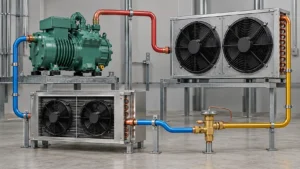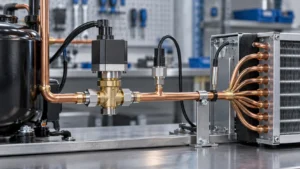

To qualify a refrigeration coil supplier, verify more than a catalog and a low quote. Ask the supplier to prove application fit, heat-transfer design capability, drawing control, material and joining control, pressure and leak testing, prototype support, repeat-production capacity, and change management. Then compare the evidence at the same rating point and approval stage. This process helps OEM buyers separate a capable coil manufacturer from a reseller or a factory that cannot control the details that make a coil fit and perform.

Start with the buyer’s qualification decision
Supplier qualification is a decision gate, not a request for a glossy company presentation. The buyer needs to know whether a candidate can produce the required coil repeatedly, document the result, and respond when the design changes. A supplier may be suitable for a replacement coil but not for a new OEM program. Another may have strong brazing capacity but no reliable thermal rating method. Keep those decisions separate.
The qualification file should answer five questions:
- Can the supplier understand the equipment duty and installation envelope?
- Can it turn that information into a controlled coil design and quotation?
- Can it build a sample with traceable material, joining, and inspection records?
- Can it repeat the approved design at the required volume and lead time?
- Can it notify the buyer before a material, process, location, or sub-tier change?
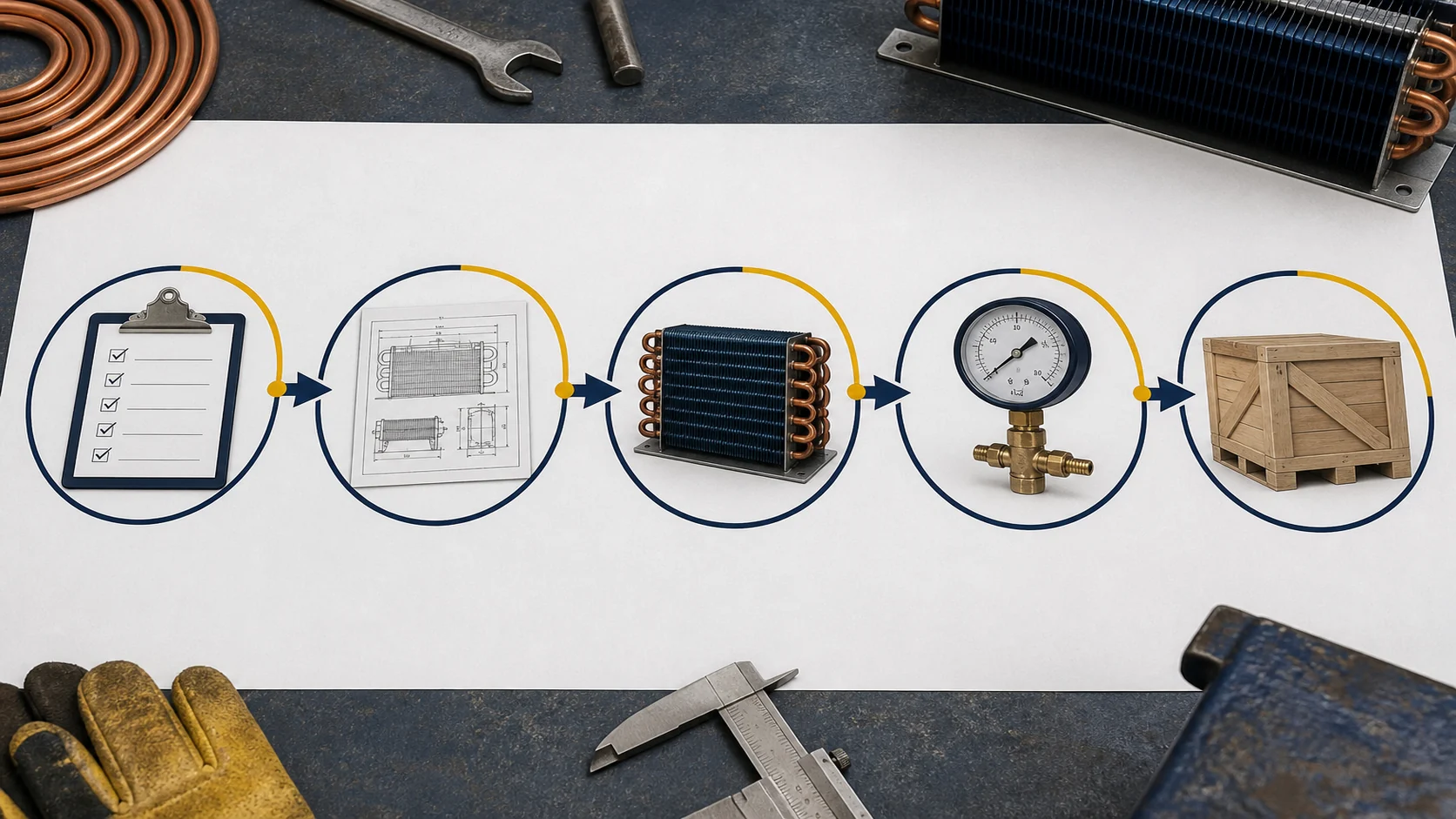
Use a staged review so that an attractive first quote does not move a supplier directly into production.
| Qualification stage | Buyer decision | Minimum evidence |
|---|---|---|
| Initial screen | Is the supplier relevant to the product and market? | Product range, applications, manufacturing location, contact owner, and clear scope of supply |
| Technical review | Can the supplier design or build the required coil? | Completed duty sheet, controlled drawing sample, material options, circuiting explanation, and assumptions list |
| Sample approval | Does the first article fit and perform? | Dimensional report, pressure and leak record, thermal or airflow test method, photos, and deviation list |
| Production release | Can the supplier repeat the approved design? | Process controls, inspection plan, capacity assumptions, packaging method, traceability, and change procedure |
| Ongoing review | Will performance and communication stay stable? | Corrective-action response, change notices, delivery record, and periodic evidence refresh |
Qualify application and engineering capability
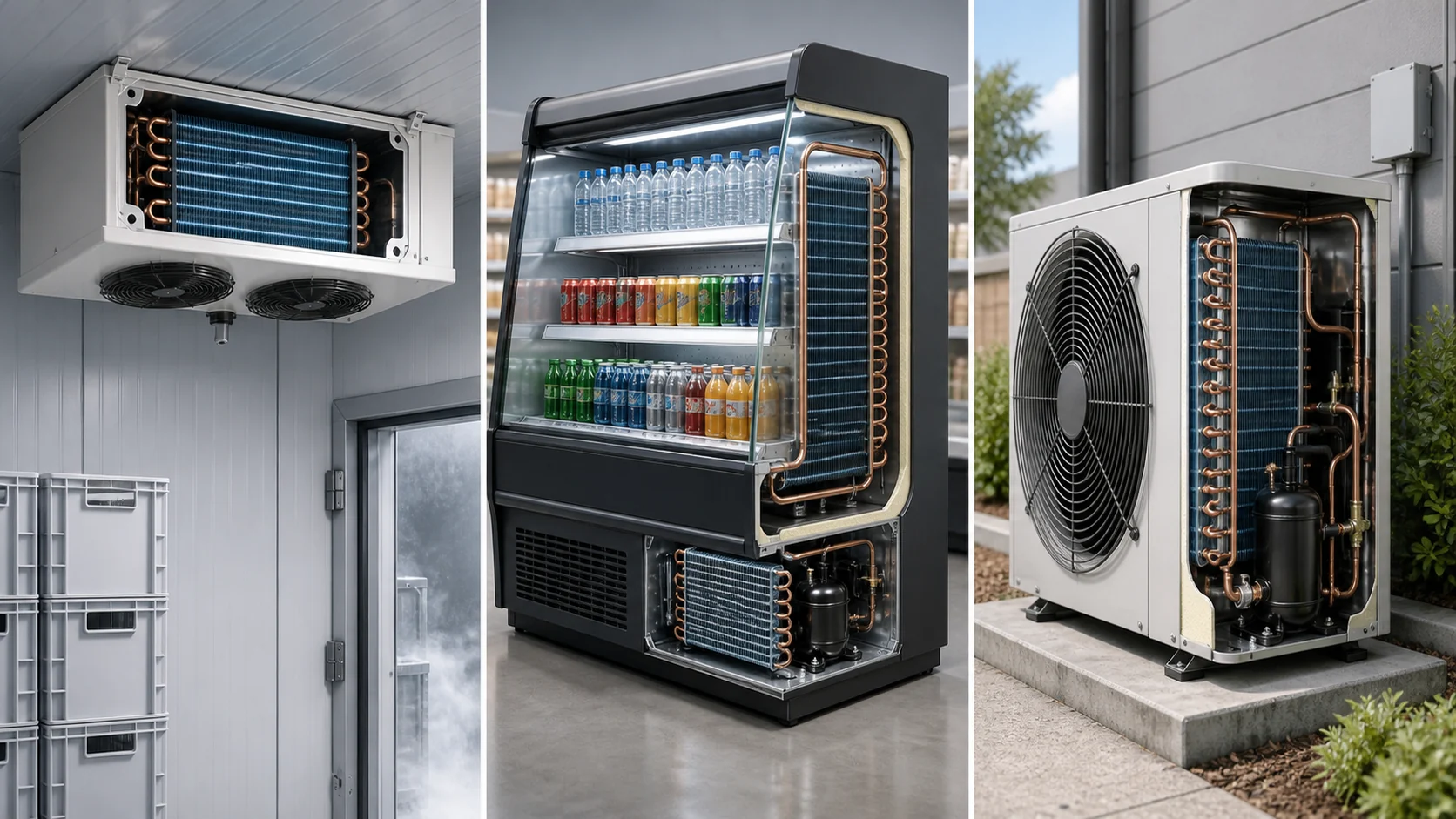
Start with the supplier’s questions. A serious refrigeration coil manufacturer should ask about refrigerant, evaporating and condensing conditions, entering air, airflow, heat rejection or refrigeration capacity, pressure limits, connection geometry, corrosion exposure, installation clearances, quantity, and service environment. If the first response is only a price based on length, width, and tube material, the engineering review has not started.
Check whether the supplier understands the application
Give the candidate a controlled brief rather than a vague product name. State whether the coil is an evaporator, condenser, gas cooler, heat-pump coil, or another heat exchanger. Include the equipment type, ambient range, fan arrangement, target operating points, and what the coil must connect to. Ask the supplier to return a list of assumptions and missing inputs.
For a condenser, do not let refrigeration capacity stand in for total heat rejection without an explanation. For an evaporator, make the refrigerant distribution, superheat control, frosting risk, drain arrangement, and defrost condition explicit. If the supplier cannot explain which inputs drive its selection, treat that as a technical risk.
Review design ownership and calculation boundaries
Ask who owns the thermal selection, circuiting, pressure-drop calculation, and drawing release. A supplier may use in-house software, customer-provided data, a licensed selection program, or a manual method. The method matters less than whether the supplier can state its inputs, limitations, and validation route.
The AHRI 410 standard scope is a useful reminder that a rating standard has defined applications and exclusions. It does not automatically cover every refrigerant coil, microchannel construction, frosting condition, or non-round tube. Ask the supplier which standard or test method applies to the specific coil instead of accepting a generic certification statement.
Review drawings, materials, and manufacturing controls
The drawing is where a supplier’s engineering discipline becomes visible. Ask for a sample controlled drawing with revision, datums, connection locations, tube and fin details, circuiting, frame, coating, joining notes, tolerances, and inspection points. Sensitive commercial information can be redacted, but the structure should remain visible.
Check fit-critical dimensions
For an OEM assembly, measure the details that cause rework when they drift: overall envelope, mounting holes, tube projection, connection centers, header orientation, fan opening, drain location, and service clearances. Confirm which dimensions are inspection characteristics and which are reference-only.
Check material and joining discipline
Request the proposed tube, fin, header, frame, fastener, coating, and braze-alloy specifications. Ask how incoming material is identified and how lot traceability is retained. A material declaration is useful, but it does not prove that the correct material reached the production cell.
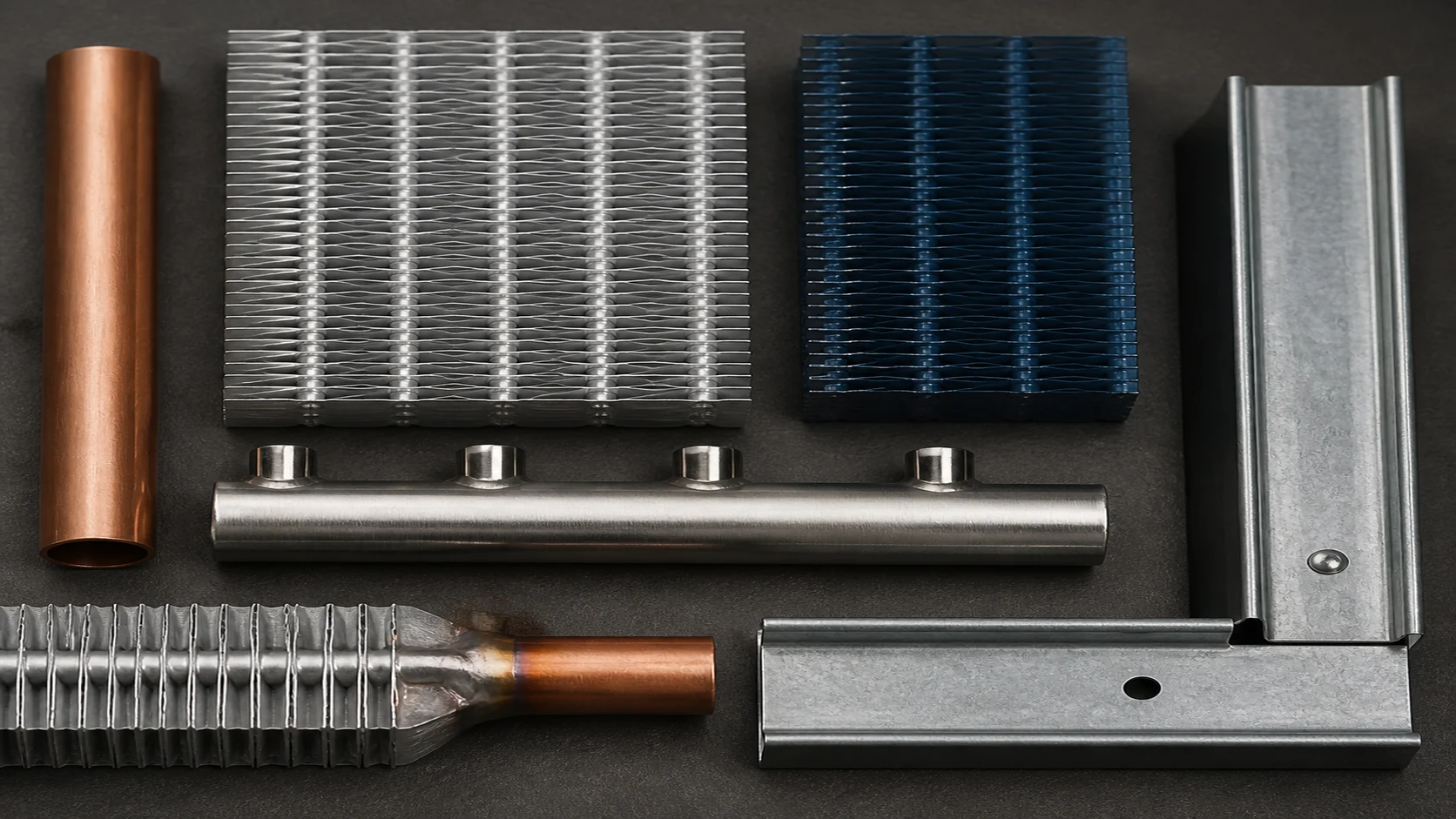
Review the joining process at the level the product requires. For brazed coils, ask about joint preparation, alloy control, purge practice where applicable, operator qualification, visual inspection, and leak testing. For mechanically expanded tube and fin assemblies, ask how bond quality, fin damage, and tube projection are controlled.
| Capability area | Evidence to request | Qualification question |
|---|---|---|
| Thermal selection | Completed rating sheet, inputs, method, and assumptions | Can the supplier explain the quoted result at the buyer’s exact rating point? |
| Circuiting and distribution | Circuit drawing, header details, connection map, and pressure-drop result | Is the refrigerant path appropriate for the control method and orientation? |
| Materials | Material specifications, lot identification, and coating or braze controls | Can the supplier prove the approved material was used in the sample and repeat build? |
| Dimensional control | Controlled drawing, datum scheme, inspection report, and gauge method | Will the coil fit the cabinet, fan, piping, and service envelope? |
| Joining and cleanliness | Work instruction, operator controls, inspection records, and cleaning method | What prevents leaks, blocked passages, contamination, or inconsistent joints? |
Test the sample before approving the supplier
A sample is not qualified because it arrived on time. The buyer should define what will be checked, at which operating condition, with which instruments, and what happens when a result misses the requirement.
Require dimensional and visual inspection
Use the released drawing to inspect the first article. Record actual measurements for envelope, connections, mounting points, fin damage, header orientation, coating coverage, plugs, caps, and protective packaging. Ask the supplier to identify any deviation before the sample ships.

Do not accept photographs as a substitute for a report. Photos help show condition, while a report connects actual values to drawing characteristics and an identified sample.
Verify pressure and leak testing
Ask for the test medium, pressure, hold time, temperature, allowable decay or leak rate, instrument resolution, and circuit coverage. The record should identify the sample or batch and the test instrument. Confirm whether the test covers each circuit, headers, brazed joints, and factory-installed valves.

Keep factory acceptance criteria separate from a field pressure test. A supplier that says “tested” without naming the method has not supplied comparable evidence.
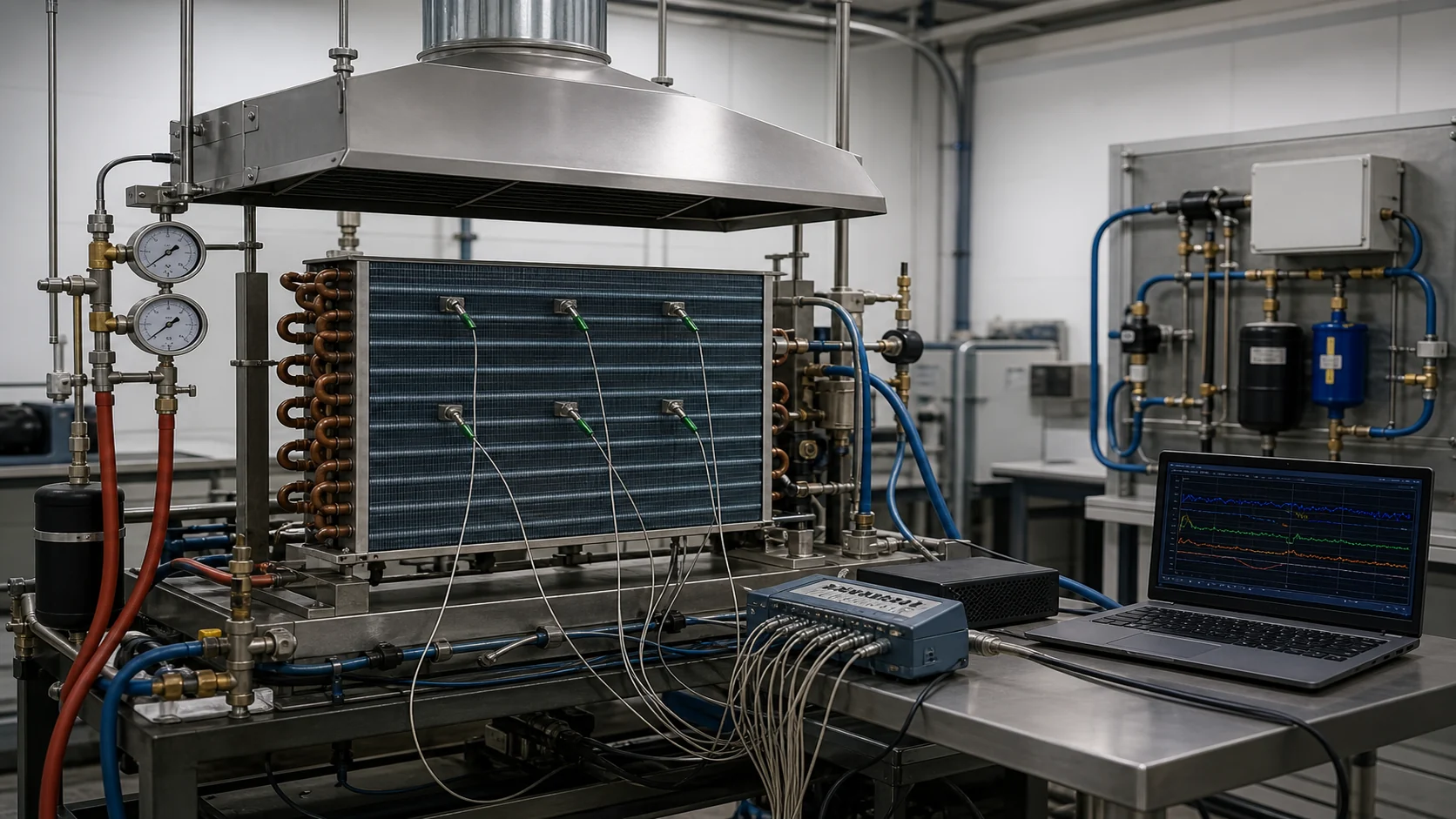
Verify thermal and airflow results
For a performance-critical coil, compare the supplier’s test method with the quotation. Record entering and leaving air, airflow, refrigerant condition, saturated temperature or pressure, liquid outlet condition, pressure drop, fan input, ambient, and instrument uncertainty where relevant. A test at a different airflow or temperature difference cannot be used as a direct confirmation of the quoted result.
The AHRI forced-circulation coil certification program describes data-submittal, challenge-test, verification, and re-rate documentation. That does not mean every custom refrigeration coil belongs in that program, but it gives buyers a useful model for asking what performance evidence exists and how a change would be handled. See the AHRI coil certification program for the program’s stated documents and scope.
Audit the factory and quality system
An audit should follow the part through the factory. Start at incoming material, then trace one sample or batch through cutting, fin forming, tube expansion, circuit assembly, brazing, cleaning, testing, inspection, packing, and release. Ask to see the actual record for the product or a comparable product, not only a blank procedure.
Use risk-based audit questions
The ISO 19011 auditing guidance emphasizes principles, audit-program management, competence, evidence, and risk-based thinking. A buyer does not need to turn a supplier visit into a certification audit, but the same discipline helps keep the review factual.
Ask:
- How is a new drawing released and who can approve a deviation?
- How are tube, fin, header, coating, and braze materials identified by lot?
- Which operations are inspected in process rather than only at final inspection?
- How are gauges, pressure instruments, airflow equipment, and temperature sensors calibrated?
- What happens when a leak, dimensional miss, or performance result fails?
- How are nonconforming parts segregated and dispositioned?
- Which processes are outsourced, and how are sub-tier suppliers controlled?
- How does the factory know which revision is on the production line?

Verify certification claims without over-crediting them
An ISO 9001 certificate can support a quality-system review, but it is not proof that a particular coil meets the buyer’s thermal, dimensional, pressure, or cleanliness requirements. Verify the certificate scope, issuing body, validity, site address, and covered activities. Then inspect product-specific controls.
Never award points for a logo or certificate that the supplier cannot substantiate. Record “not provided” as an evidence gap and let the buyer decide whether the gap is acceptable.
Check process control, capacity, and continuity
Qualification must cover the production system that will make the approved coil. A capable prototype cell may not be the same as the repeat-production line. Ask how the supplier will reserve tooling, fixtures, operators, inspection time, and test capacity for the expected release pattern.
Capacity questions for an OEM program
Request practical numbers tied to the product family: normal lead time, sample lead time, tooling lead time, minimum order quantity, monthly or weekly output assumptions, peak-season constraints, and packaging throughput. Do not turn an unverified capacity claim into a published statistic. Use it as a buyer question that requires evidence.
Ask what happens when demand changes. A supplier should explain how it handles forecast changes, partial releases, engineering changes, and urgent replacement demand without bypassing inspection or revision control.
Continuity and sub-tier risk
Identify sole-source materials, coating vendors, braze-alloy sources, fin suppliers, and outsourced testing. Ask whether the supplier has approved alternates and what notification is required before using them. A second factory may not be equivalent if its tooling, process window, inspection method, or test equipment differs.

Score the evidence before commercial approval
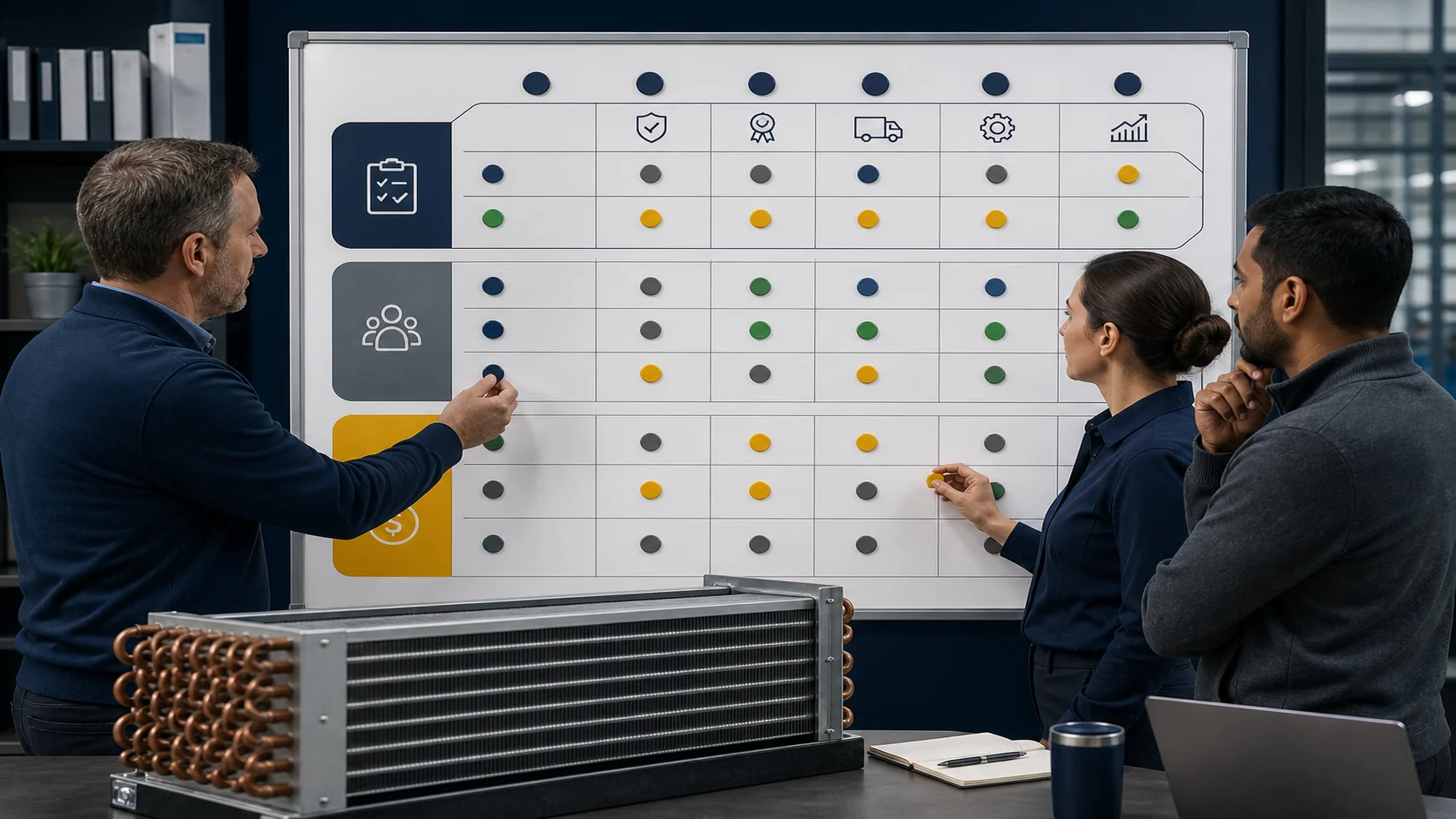
Use a scorecard that separates technical fit, evidence quality, production control, and commercial risk. A supplier with a high sales score but missing pressure-test records should not pass the same gate as a supplier with complete evidence.
| Scorecard category | Suggested review points | Pass evidence |
|---|---|---|
| Technical fit | Application understanding, rating point, circuiting, pressure drop, envelope, and materials | Completed technical response with assumptions resolved and drawing inputs traceable |
| Sample evidence | Dimensions, leak test, thermal or airflow method, deviations, and packaging | Identified first-article report with results tied to the released revision |
| Quality system | Incoming control, calibration, nonconformance, corrective action, and change notice | Current procedures plus product-specific records or audit evidence |
| Production readiness | Tooling, process flow, operators, capacity, inspection, and traceability | Site review and production plan for the actual coil family |
| Commercial continuity | MOQ, lead time, payment, packaging, logistics, sub-tier risk, and warranty boundary | Written assumptions, escalation contact, and approved commercial terms |
Treat the score as a decision aid, not as a way to hide a critical failure. Set hard stops for unverified pressure integrity, unresolved fit dimensions, missing required certifications, or refusal to disclose material and process changes.
Recognize supplier qualification red flags
One weak answer may be fixable. A pattern of weak answers usually signals that the supplier cannot support a controlled OEM program.
| Red flag | Why it matters | Buyer response |
|---|---|---|
| Price arrives before rating assumptions | The quote may not describe an equivalent coil | Return a controlled duty sheet and require a revised technical response |
| Supplier will not share a drawing structure | Fit, circuiting, and revision risk stay hidden | Stop or limit the supplier to a lower-risk replacement inquiry |
| “Tested” has no method or instrument record | Results cannot be compared or audited | Request the complete pressure, leak, and performance method |
| Certificate is shown without scope or validity | A logo is not product-specific proof | Verify the issuer, site, scope, and dates, then inspect product controls |
| Material substitutions are informal | Performance, corrosion, joining, or compliance can change | Require written change notification and approval triggers |
| Sample differs from production plan | Prototype success may not transfer to volume | Audit the actual process, tooling, inspection, and test capacity |
Do not use a single factory visit to prove long-term reliability. Keep the approval conditional until the sample, records, and repeat order demonstrate control.

Build a clear approval and change-control path
Once a supplier passes the initial gate, document the next decision. Define who approves the drawing, who accepts the sample, what evidence is required before production, how deviations are recorded, and what changes trigger requalification.
Typical approval triggers include tube or fin material, fin pitch, rows, circuiting, headers, coating, braze alloy, connection geometry, fan arrangement, manufacturing location, major sub-tier supplier, and test method. A re-rate, new sample, or full first-article test may be appropriate depending on the change.
Ask the supplier for a change notice before the change enters production. Keep the old and new revisions, affected part numbers, risk assessment, validation plan, and approval record together. The ISO quality-management committee resources are useful context here, but the buyer still needs product-specific controls and evidence.

Send a qualification-ready RFQ to Domi
A supplier can respond more accurately when the buyer sends a controlled package. Include the equipment type, application, refrigerant, duty and rating points, air conditions, pressure limits, airflow or fan information, envelope drawing, connection sketch, materials, coating or corrosion exposure, annual demand, sample quantity, packaging, inspection requirements, and target launch date.
For a replacement coil, add nameplate data, photographs, measurements, existing operating conditions, and the reason for replacement. For a new OEM program, add the drawing revision, approval stages, forecast pattern, change-control expectations, and required quality records. Domi’s OEM Partnership Program can be the next commercial discussion after the technical scope is defined. Buyers can also review the custom refrigerator coil RFQ checklist before sending the package.
Frequently asked questions
What is the first document to request from a refrigeration coil supplier?
Start with a completed technical response to the buyer’s duty sheet and a list of assumptions. It should identify application, rating point, refrigerant or fluid, airflow, pressure limits, dimensions, materials, connections, and required evidence. A company brochure can follow, but it should not replace the technical response.
Does ISO 9001 certification qualify a refrigeration coil supplier by itself?
No. Certification can support a review of the supplier’s quality-management system, but it does not prove that a particular coil meets the buyer’s capacity, pressure, leak, dimensional, material, or cleanliness requirements. Verify certificate scope and then inspect product-specific records.
How should an OEM compare two coil supplier quotations?
Put both responses on the same rating point, envelope, refrigerant condition, airflow, pressure-drop limit, materials, testing scope, packaging assumption, MOQ, and lead-time basis. Mark supplier assumptions and exclusions before comparing price.
What should a factory audit include for a coil manufacturer?
Trace a sample through incoming material, fin and tube preparation, circuit assembly, brazing or expansion, cleaning, pressure and leak testing, inspection, packing, and release. Check calibration, nonconformance handling, revision control, traceability, and sub-tier supplier management at the same time.
When should a buyer require a refrigeration coil prototype?
Require a prototype when the coil is new, the fit envelope is tight, the circuiting is custom, the performance risk is material, or the production process has changed. Approve the sample against a controlled drawing and rating point before releasing repeat production.
Which supplier changes should trigger requalification?
Review changes to tube or fin material, fin pitch, rows, circuiting, headers, coating, braze alloy, connection geometry, fan arrangement, manufacturing site, major sub-tier supplier, or test method. The responsible engineer should decide whether a re-rate, sample, or full first-article test is required.