
Dry coolers reject heat from water, glycol, or another single-phase process fluid by moving ambient air across a finned-tube heat exchanger. For an OEM or project engineer, the useful selection starts with heat load, entering and leaving fluid temperatures, flow, design ambient, pressure drop, noise, and the coil drawing. A catalog frame size alone is not enough. This guide explains the trade-offs and the evidence a supplier should provide before a dry-cooling assembly is released.
What are dry coolers?
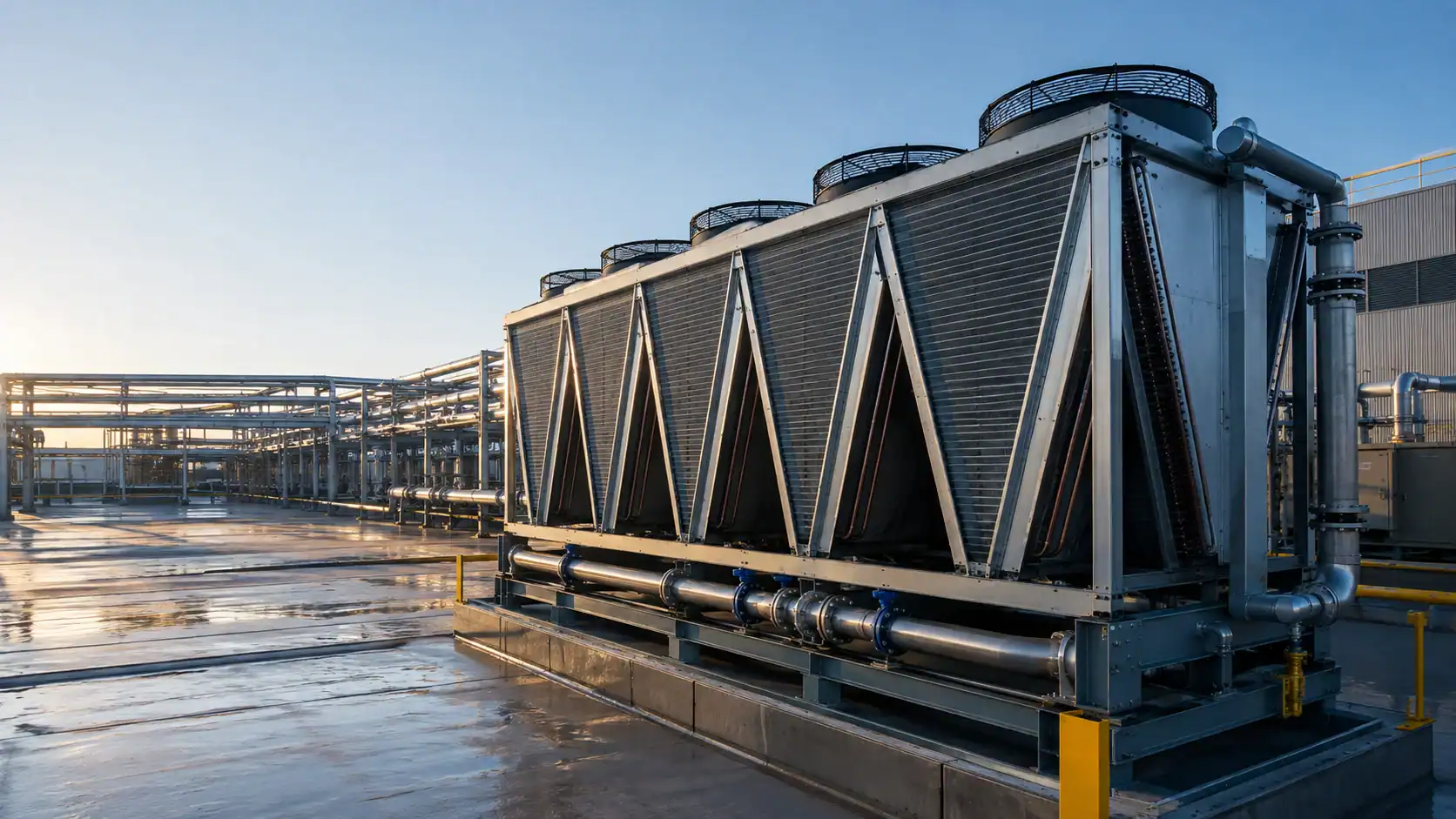
A dry cooler is an air-blast cooler that removes sensible heat from a closed fluid loop. Integral fans pull or push outdoor air across finned tubes while the process fluid travels inside the tubes. The fluid and air do not normally mix, so the cooled fluid returns to the process without the evaporation, blowdown, or water-treatment load associated with an open cooling tower.
The Energy Technology List definition of air blast coolers distinguishes a dry cooler from an adiabatic cooler. A conventional dry cooler uses only air during its dry operating mode. An adiabatic model can add water to pre-cool the entering air when the outdoor dry-bulb temperature makes fully dry operation insufficient. That distinction matters in an RFQ because water supply, drains, controls, winterization, and maintenance change when a spray section is added.
Dry coolers are not chillers. A dry cooler does not use a compressor and refrigerant cycle to drive the fluid below the outdoor dry-bulb condition. It is better understood as a heat-rejection component in a closed loop. The loop may serve a chiller condenser, process equipment, data-center heat exchanger, plastics line, food plant, or another load that can accept the available leaving-fluid temperature.
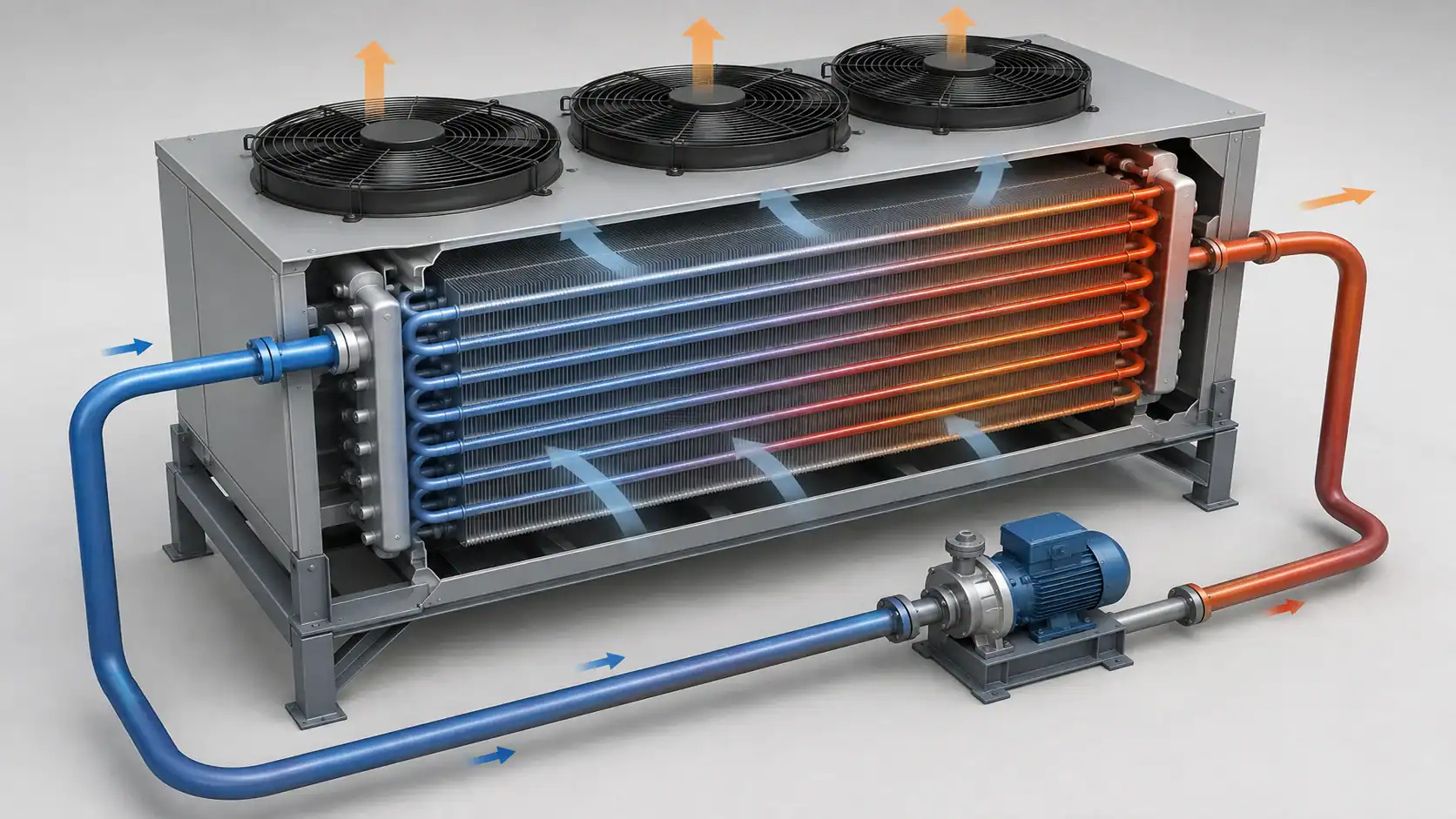
The Energy Technology List application checklist is a useful reminder to state the cooler profile, fluid, duty, and operating condition in the selection record. The equipment choice should follow the heat source, the required fluid temperature, local water constraints, and the site’s service capability.
Dry cooler vs. cooling tower vs. chiller
The three technologies can all remove heat, but they impose different boundary conditions on the project. A dry cooler is usually the simplest match when a closed loop, low water use, and a leaving-fluid temperature above outdoor ambient are acceptable.
| Option | Heat-rejection method | Main utility and maintenance burden | Best fit | Buyer caution |
|---|---|---|---|---|
| Dry cooler | Fans move air across a finned coil; the process fluid remains in a closed circuit | Fan power, coil cleaning, fluid-side filtration, and freeze protection | Water-limited sites, closed glycol loops, seasonal free cooling, and moderate process temperatures | Capacity falls as outdoor dry-bulb rises; coil and fan noise need a site check |
| Cooling tower | Evaporation transfers heat from circulating water to air | Makeup water, blowdown, treatment, drift control, basin cleaning, and biological management | High heat rejection where water and water-treatment service are available | Open or semi-open water circuits add contamination, treatment, and Legionella-control responsibilities |
| Mechanical chiller | Compressor and refrigerant cycle remove heat from the fluid | Compressor electricity, refrigerant-side service, controls, and heat rejection | Tight leaving-fluid temperature, low-temperature duty, or cooling below ambient | Higher system complexity; the condenser still needs a heat-rejection method |
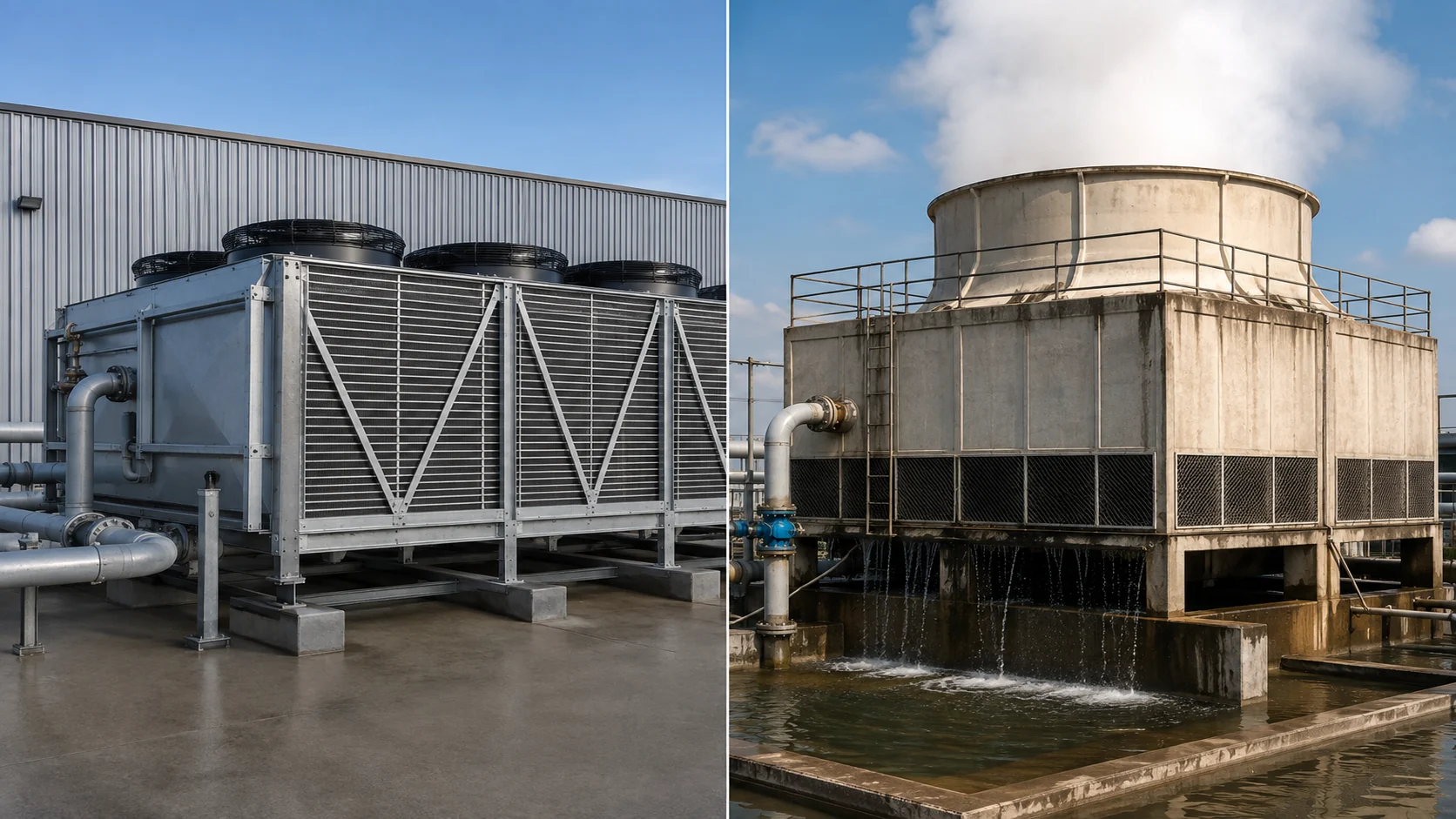
Use a dry cooler when the process can run with a leaving-fluid temperature that tracks outdoor conditions. Use a cooling tower when the project needs approach to the outdoor wet-bulb temperature and can support water management. Use a chiller when the process needs a controlled leaving temperature independent of weather, or when the target is below outdoor dry-bulb. A hybrid arrangement can switch between dry and adiabatic modes, but it should be evaluated as a complete operating sequence rather than as a dry cooler with an optional spray pump.
Coil architecture: the part that sets the thermal boundary
The finned-tube coil is the heat-transfer surface between the fluid circuit and the air stream. Tube material, tube diameter, wall thickness, fin material, fin pitch, rows, circuiting, headers, and connection orientation all affect capacity, pressure drop, cleanability, and manufacturability. The same outdoor frame can perform very differently when the coil geometry changes.
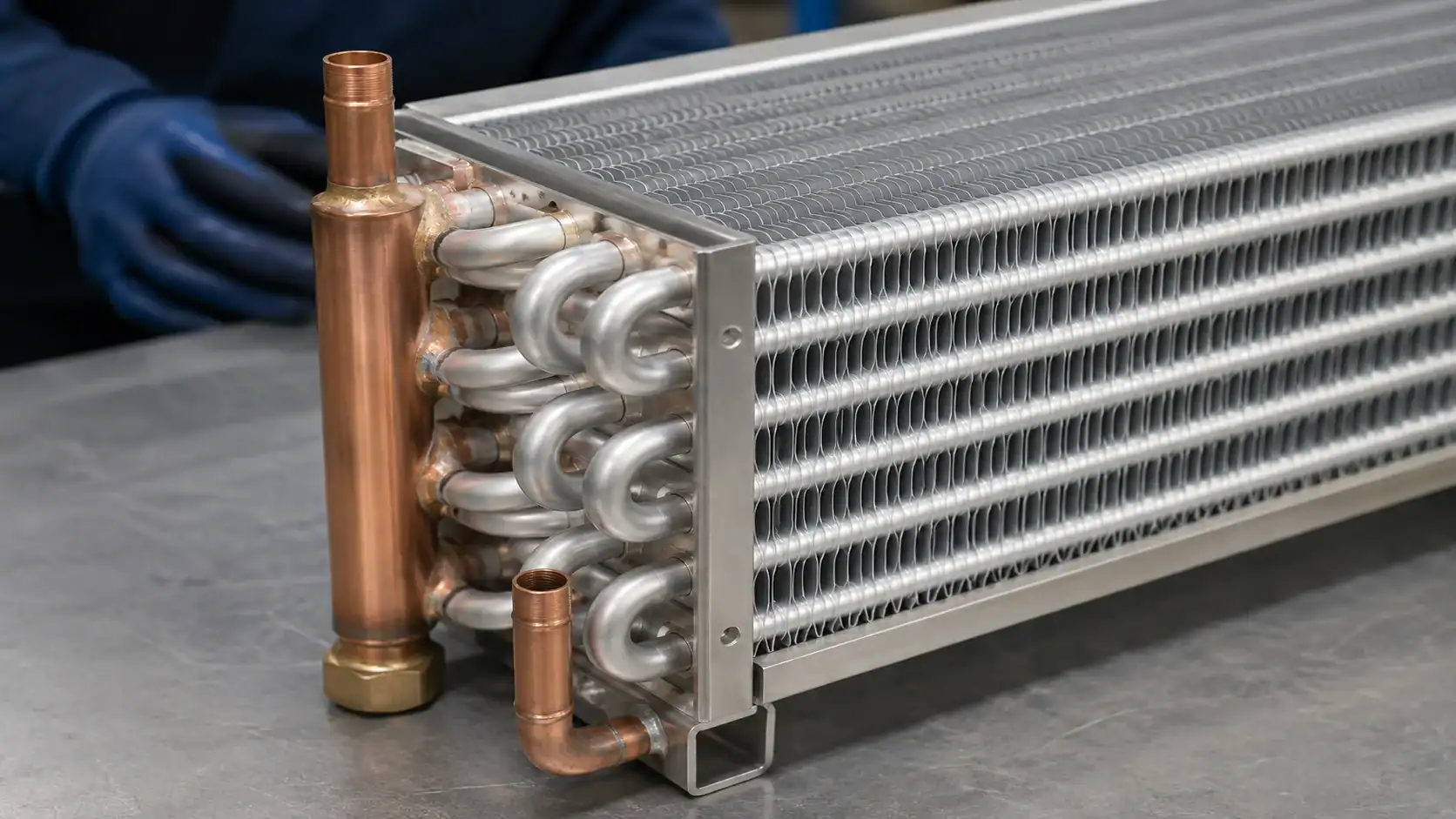
For a custom or replacement coil, send a drawing or sample with the fluid type, design pressure, design temperature, flow, entering and leaving temperatures, face dimensions, connection size, and allowable pressure drop. If the dry cooler will operate with glycol, state the concentration and the minimum winter fluid temperature. Viscosity changes can make a coil that works with water unsuitable for the same pump when glycol is introduced.
The air side also needs a clear basis. State whether the fans draw air through the coil or discharge through it, the available face area, the expected fouling environment, the required sound limit, and the service clearance. A dense fin pack may reduce footprint but can collect dust and raise air pressure drop. A more open pitch can be easier to clean and more tolerant of debris, although it may require more face area for the same duty.
Configurations and closed-loop arrangement
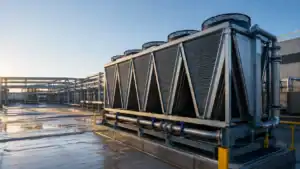
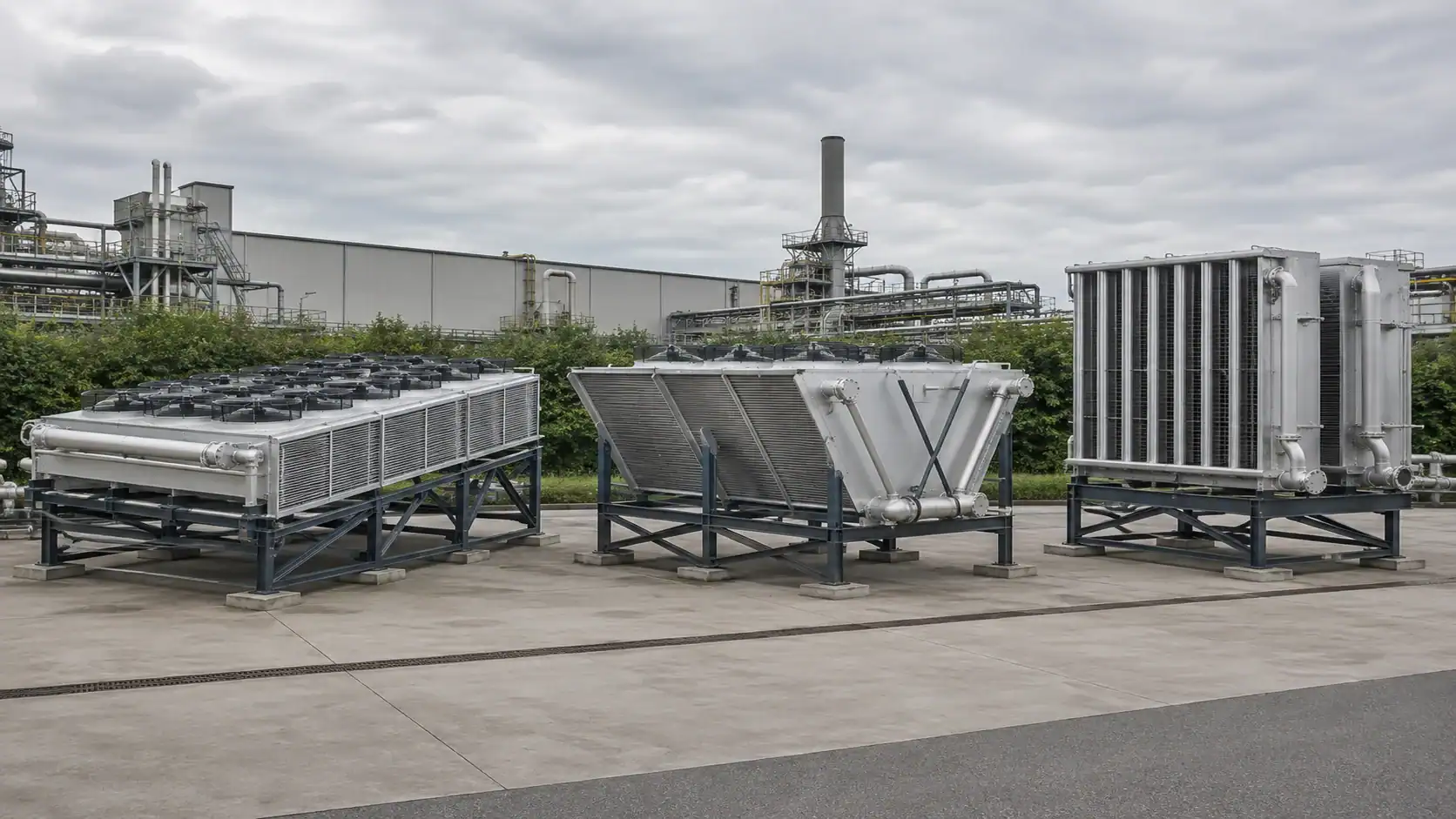
Dry coolers are commonly arranged as flat horizontal banks, V-bank units, or vertical coil banks. The best arrangement depends on the available roof or yard area, airflow recirculation risk, lifting limits, service access, and the number of fans that should be staged together.
| Configuration | Practical advantage | Design watch-out | Typical project question |
|---|---|---|---|
| Flat horizontal bank | Low profile and straightforward coil access from the sides | Large footprint and a higher risk of warm-air recirculation if discharge is trapped | Can the roof or pad support the footprint and fan service clearance? |
| V-bank | More coil face area in a compact plan area; common for packaged heat rejection | Lifting, drainage, header access, and unequal airflow between banks need review | Is the frame rigid enough for transport and can both coil faces be cleaned? |
| Vertical coil bank | Useful when the pad is narrow or airflow needs a tall discharge path | Wind loading, access platforms, and header support become more important | How will the unit be lifted, drained, and serviced at height? |
The closed loop should show the dry cooler as one component, not as an isolated box. A pump, expansion vessel, air separator, strainers, isolation valves, drains, vents, sensors, and bypass may be required by the process. Confirm the connection sequence and the control valve location before the coil drawing is frozen. A bypass that is placed too close to the cooler can short-circuit flow and create a false impression of capacity.
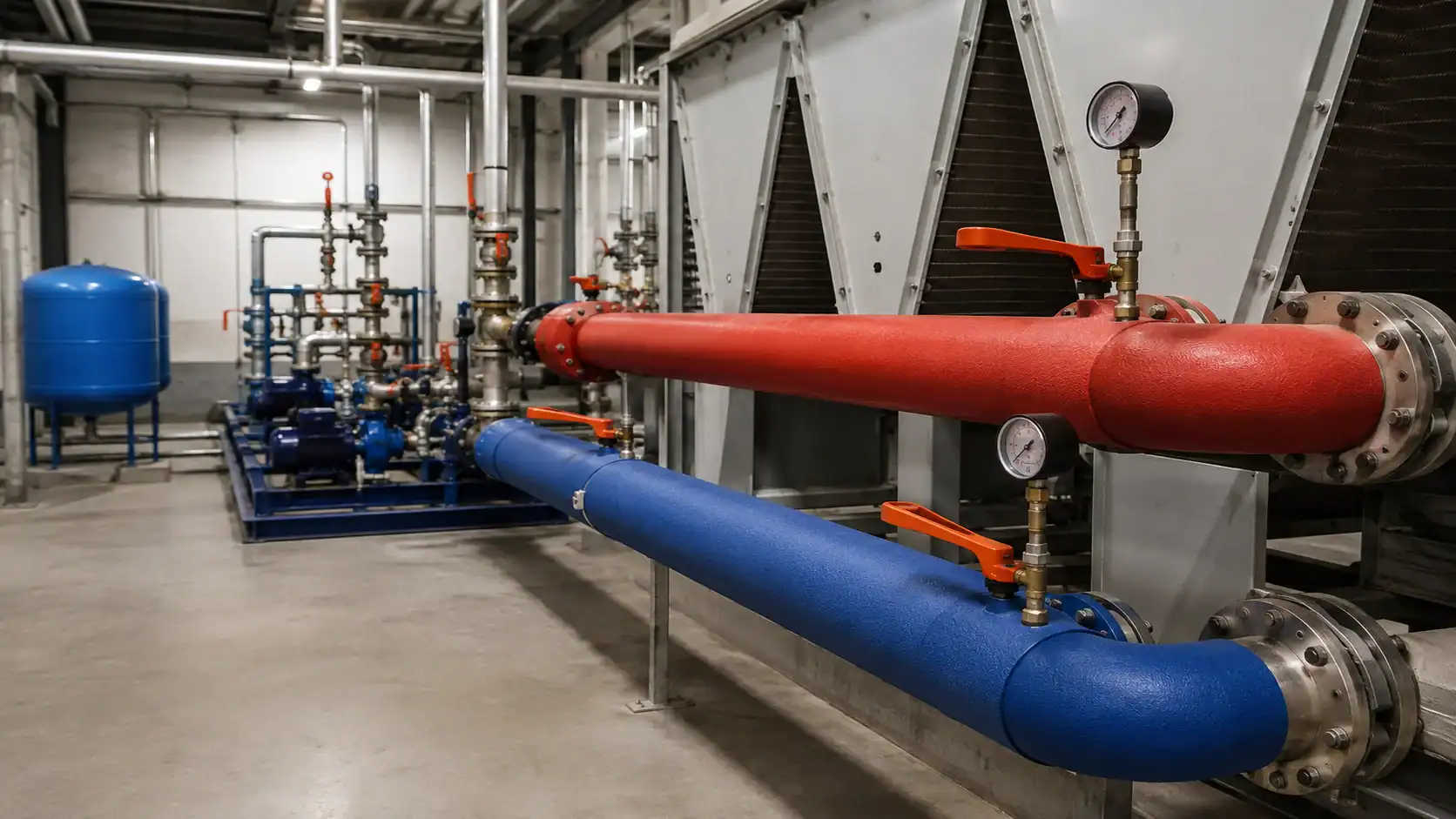
For glycol systems, check pump NPSH, fluid expansion, viscosity at the lowest expected temperature, and the compatibility of seals and elastomers. For water systems, define filtration and water chemistry so the tube-side fouling risk is known. The Domi engineering capabilities page is the right internal route for a drawing review when the dry-cooler coil must match a wider equipment package.
Dry cooler sizing inputs that belong in an RFQ
The heat balance begins with the process load. For a single-phase fluid loop, the first check is commonly expressed as:
Q = ṁ × cp × ΔT
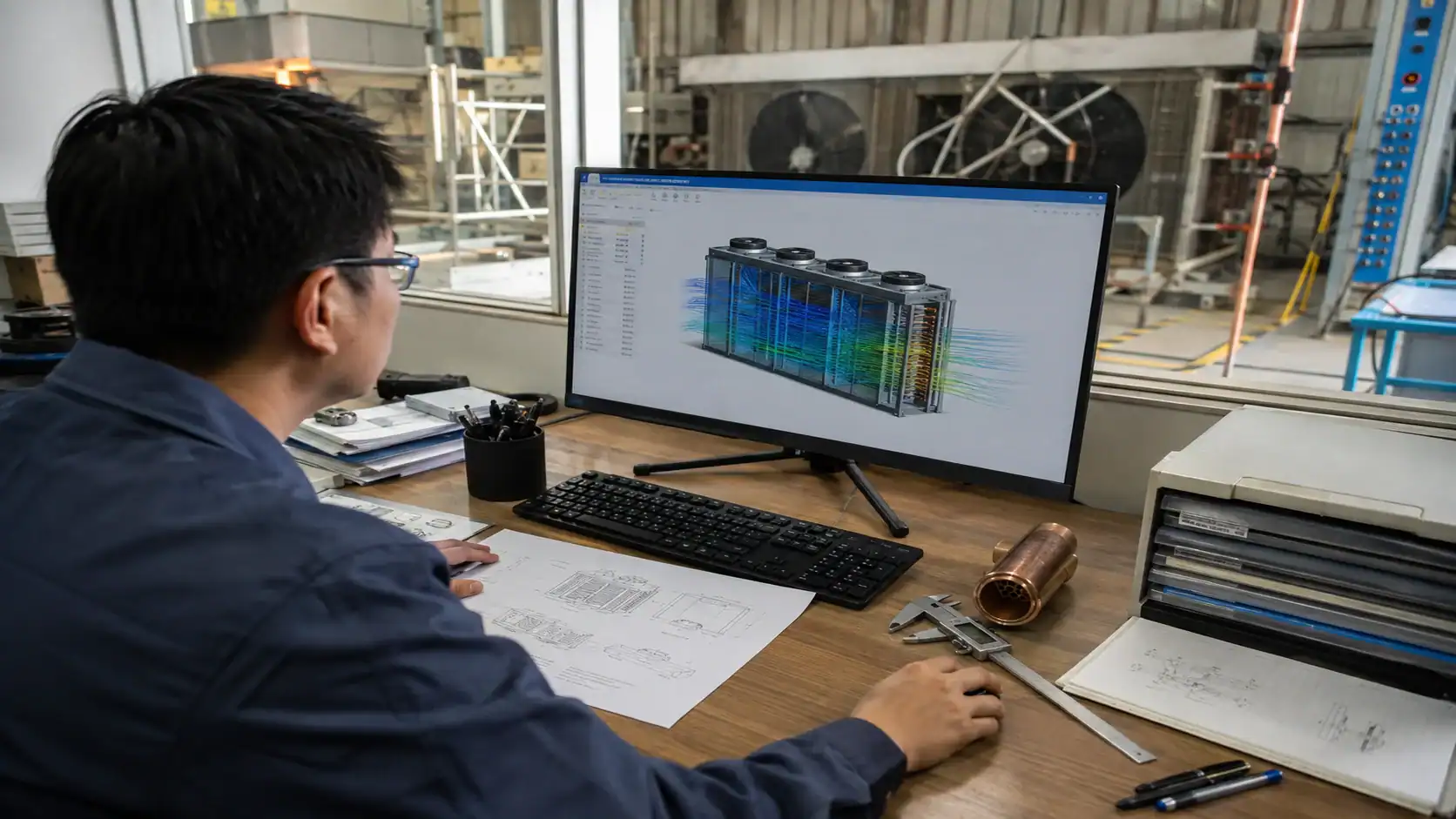
where Q is the heat to reject, ṁ is mass flow, cp is fluid heat capacity, and ΔT is the temperature drop across the cooler. This relationship is a starting point, not a complete selection. The coil and fan package must also be checked against outdoor air temperature, altitude, fouling, approach temperature, fluid-side pressure drop, fan power, and control turndown.
| RFQ input | Why the supplier needs it | What a usable response should show |
|---|---|---|
| Heat load or duty profile | Defines the total heat rejection and whether the load is steady, batch, or seasonal | Duty at design condition plus part-load points when fan staging matters |
| Entering and leaving fluid temperature | Sets the required fluid-side temperature difference and coil approach | Both temperatures, the design ambient, and the stated selection margin |
| Fluid type, concentration, and flow | Changes density, viscosity, heat capacity, pressure drop, and materials | Fluid property basis, flow units, and pressure-drop result |
| Outdoor design condition and altitude | Determines air density and the available air-to-fluid temperature difference | Dry-bulb basis, altitude, recirculation assumptions, and any adiabatic mode |
| Coil face, rows, fin pitch, and circuiting | Connects thermal performance to size, cleanability, and connection layout | Coil drawing, connection schedule, and service clearances |
| Fan, sound, and controls | Determines air volume, motor power, staging, and site acceptance | Fan curve or selection data, sound basis, speed range, and alarm points |
Ask the supplier to state the design ambient explicitly. A rating at a mild catalog condition can hide a capacity shortfall on the hottest day. Also request the duty at the minimum and maximum expected flow. A coil with acceptable full-load performance may have excessive pressure drop at the pump’s available head, while a large coil with very low flow can create poor distribution between circuits.
Ambient limits, free cooling, and climate risk
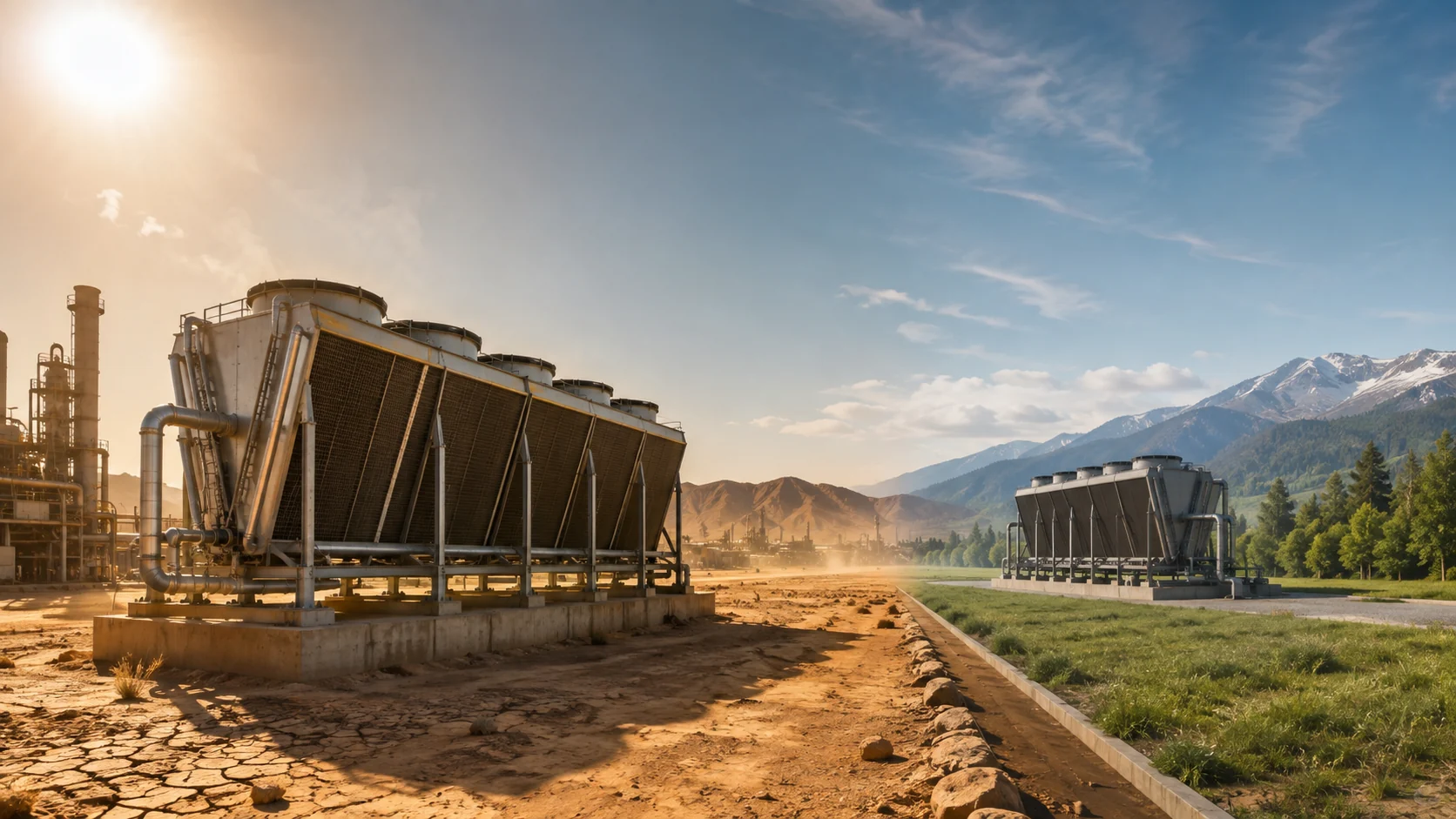
Dry cooling is weather-dependent. As outdoor dry-bulb temperature rises, the air-to-fluid temperature difference shrinks and the dry cooler must move more air or accept a warmer leaving fluid. Air density also falls with altitude, so a fan selection made at sea level cannot be copied to a high-elevation site without checking mass flow.
When the process setpoint allows it, the cooler can provide seasonal free cooling without running a mechanical chiller. The control sequence should define when the dry cooler is enabled, how the three-way valve or bypass is positioned, how fans stage, and what happens when the leaving temperature cannot be maintained. The EVAPCO dry-cooling overview is useful background on sensible heat rejection and related terminology, but the project still needs a site-specific selection sheet.
Check air recirculation around walls, parapets, adjacent units, and exhausts. A dry cooler can be correctly selected on paper and still underperform when warm discharge air is pulled back through the coil. Include the pad layout, prevailing wind, intake height, discharge direction, and service clearance in the equipment review. For rooftop installations, add structural loads, wind restraints, vibration isolation, and safe access to the acceptance checklist.
Fans, controls, and a serviceable operating sequence
Fans determine how much air crosses the coil and how much electrical power the cooler uses. Fixed-speed fans are simple but coarse. Staged fans, EC motors, or variable-frequency drives can follow load more closely, reduce cycling, and lower sound during light load. The choice should be tied to the process control strategy and the available electrical service.
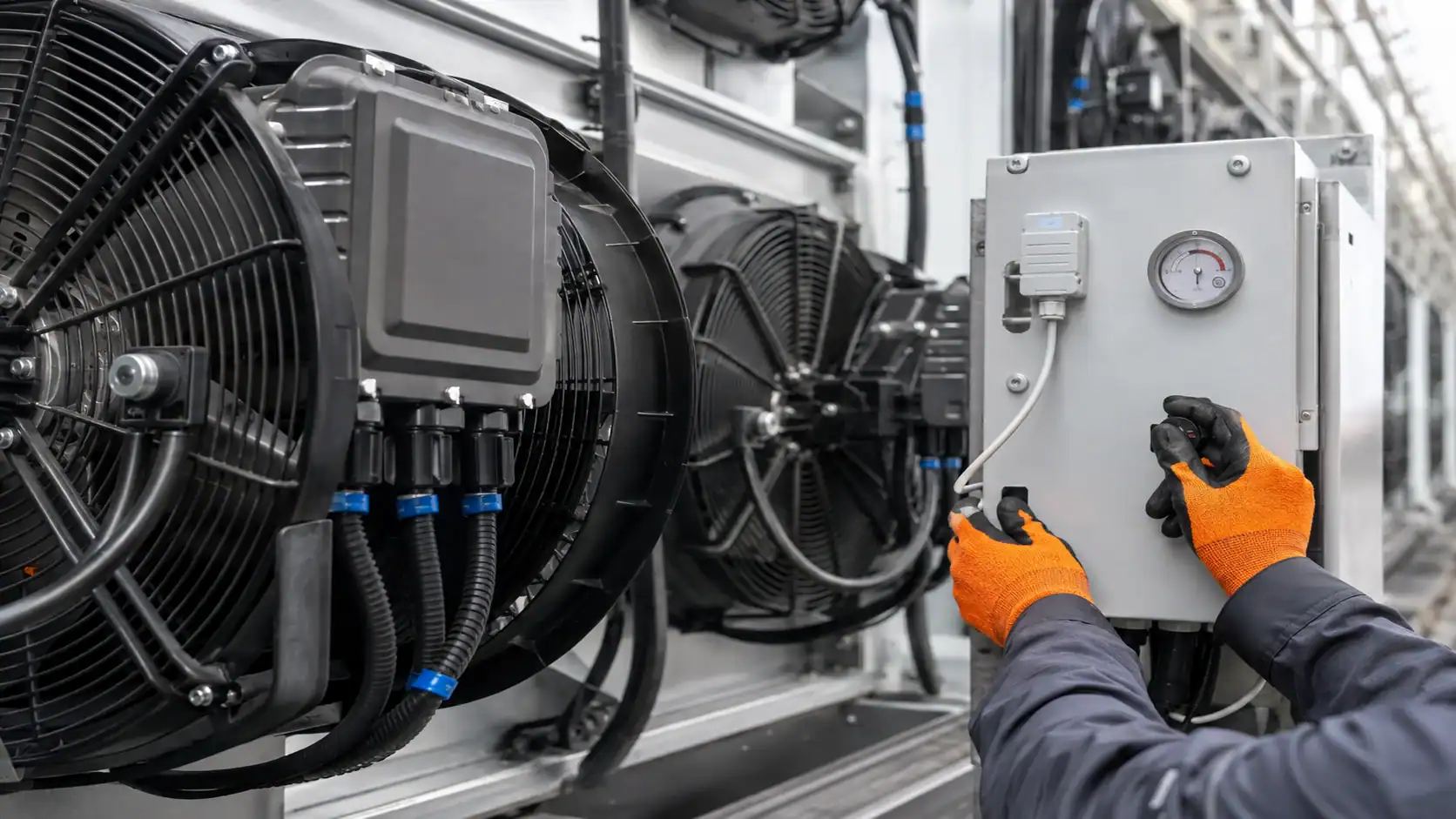
At minimum, document these points before approving controls:
- The sensor that represents the process requirement: leaving-fluid temperature, return temperature, or another defined control variable.
- The fan staging or speed curve, including minimum speed and the response to a fan failure.
- High-temperature, low-flow, freeze, and pump interlocks, with the safe state for each output.
- Differential-pressure or filter alarms where fouling can reduce airflow.
- Manual override, restart after power loss, alarm delay, and communications with the plant controller.
- A parameter backup and a clear method for recording final setpoints at commissioning.
The control panel does not replace a hydraulic review. A sensor placed in a stagnant bypass line can report a comfortable temperature while the process loop is overheating. Likewise, a fan alarm without a capacity fallback may leave the remaining fans overloaded. Tie each alarm to a measured condition and a defined operator action.
Corrosion, fouling, freezing, and maintenance
Coil protection should reflect the real environment. Coastal salt, fertilizer dust, food residue, chemical vapors, and wash-down chemicals can attack fins, headers, frames, and fasteners at different rates. Coating is not a universal answer; the coating type, pretreatment, edge coverage, repair method, and cleaning chemistry must be specified together.

Keep the air side clean without crushing the fins. Define a cleaning method, access side, isolation procedure, and inspection interval. On the fluid side, use the filtration and water or glycol treatment plan stated in the RFQ. If a tube-side leak would contaminate a sensitive process, add the required detection and isolation approach to the system design rather than relying on a generic warranty statement.
Freezing is a system risk as well as a coil risk. Outdoor water circuits may need drain-down, heat tracing, glycol, a recirculation loop, or a low-ambient control sequence. State the lowest fluid temperature, the outage scenario, and the restart condition. A supplier can verify tube pressure and materials, but the integrator must confirm the protection sequence for the whole loop.
When an adiabatic or hybrid dry cooler is justified
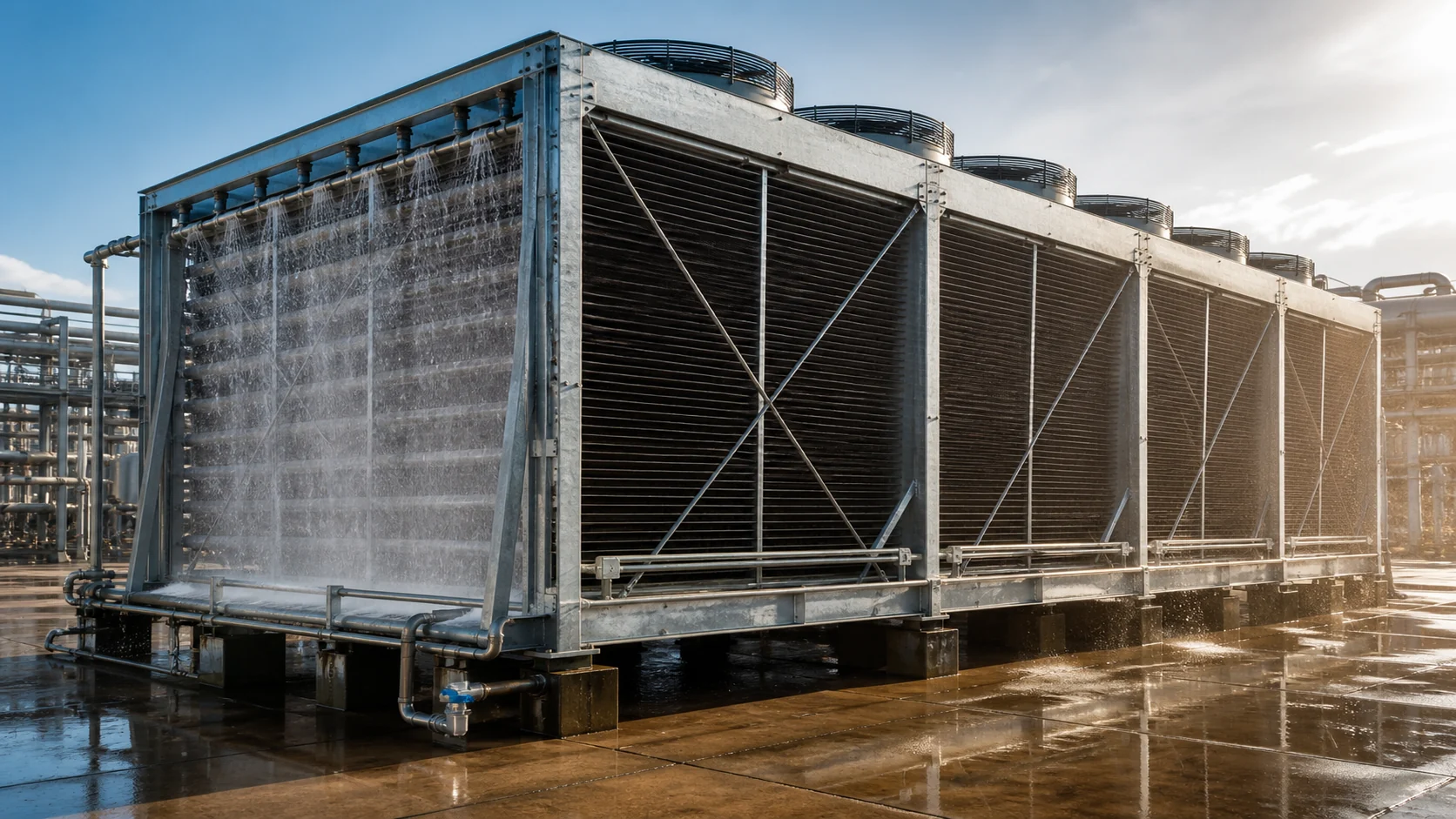
An adiabatic dry cooler adds a wetted pre-cooling step to improve hot-weather capacity. The spray section cools the entering air before it reaches the dry coil; it does not turn the unit into an open cooling tower. The benefit is a smaller or more stable approach during hot periods, while the trade-offs are water quality, nozzles, drift control, drains, freeze protection, and controls.
| Decision point | Fully dry cooler | Adiabatic or hybrid cooler |
|---|---|---|
| Water use | None during dry operation | Requires water during assisted operation; quantify seasonal use |
| Hot-weather capacity | Limited by outdoor dry-bulb and available coil area | Improved entering-air condition when the spray system is enabled |
| Maintenance | Coil cleaning, fans, filters, fluid loop | All dry-cooler tasks plus nozzles, water treatment, drains, and spray inspection |
| Controls | Fan staging, bypass, pump and temperature interlocks | Adds water enable, low-water, conductivity or quality checks, and wet/dry changeover |
| Best reason to choose | Water conservation and simple closed-loop service | Peak ambient support when a larger dry coil or chiller is impractical |
The ETL guidance treats dry and adiabatic coolers as different profiles. Ask for separate performance data for dry and assisted modes, the assumed water quality, and the transition logic. Do not accept a single “maximum capacity” value that does not say whether spray water is running.
Supplier evidence and the dry-cooler RFQ checklist
The fastest way to reduce selection risk is to give suppliers the same structured input and require the same evidence in return. A useful RFQ separates the complete cooler package from the coil component so that the buyer can see which party owns the fan, controls, frame, pump, and performance guarantee.
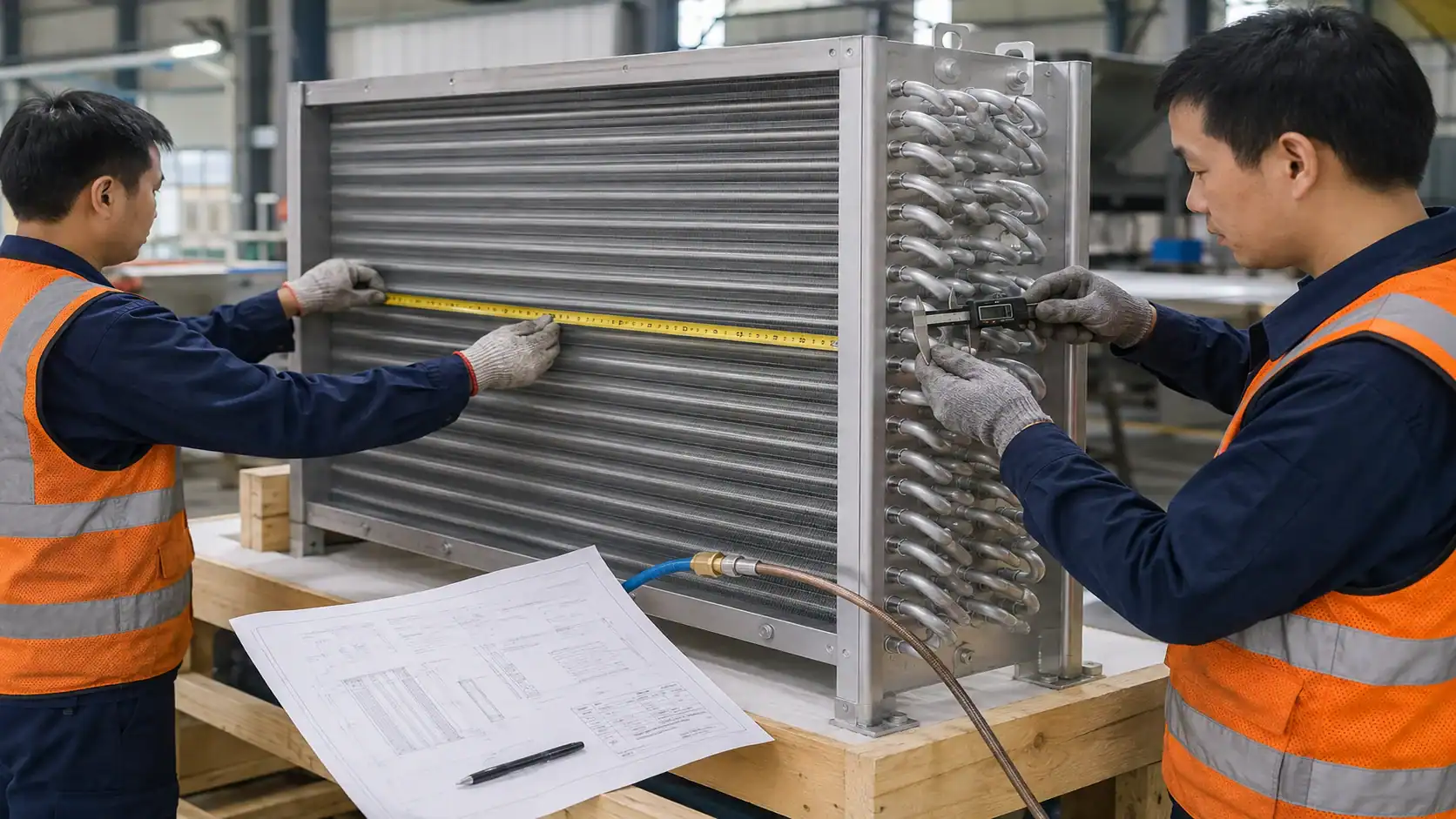
Request these items:
- A duty sheet showing heat load, fluid properties, flow, entering and leaving temperatures, ambient basis, altitude, and operating modes.
- A dimensioned coil and connection drawing, including tube and fin materials, circuiting, headers, drain and vent points, supports, and service clearances.
- Air-side and fluid-side pressure-drop results, fan selection data, sound basis, motor electrical data, and part-load control range.
- The pressure, temperature, leak-test, cleanliness, coating, and dimensional inspection records that apply to the supplied component.
- A packing and handling plan that protects fins, headers, connections, and lifting points during export and site installation.
- A commissioning checklist with sensor locations, setpoints, alarm limits, fan staging, and the acceptance measurements to be recorded.
At approval, tie four records together: the thermal selection sheet, the controlled drawing revision, the test and inspection record, and the packaging or installation checklist. Ask which duty and ambient were used, which drawing controls the connections, which lot or serial reference is covered by the tests, and how fins and headers will be protected in transit. Those answers prevent a catalog rating, an old drawing, or a damaged delivery from being mistaken for an acceptable component.
For a dry-cooler coil component, Domi custom coil fabrication can be used as the inquiry path. Domi’s approved scope is component-focused: the buyer should send the drawing or sample, fluid and pressure conditions, face dimensions, circuiting, connection details, and required documentation. The complete dry-cooler frame, fan package, pump, and controls remain part of the system integrator’s scope unless a separate package specification says otherwise.
A practical handoff from selection to production
Once the thermal selection is accepted, freeze the design inputs before asking for a production quote. Record the approved drawing revision, fluid and ambient basis, fan arrangement, connection orientation, inspection points, and packaging method. If the project uses a prototype, compare measured fit-up and pressure-drop results with the approved sheet before releasing recurring production.

For a replacement, include photographs of the existing coil, nameplate data, connection centerlines, mounting points, and any failed-part evidence. A sample without operating conditions can reproduce dimensions but not necessarily duty. Conversely, a duty sheet without a drawing can produce a coil that performs thermally but does not fit the cooler frame. The safest handoff contains both.
If you are comparing dry coolers for a new process line, send the load profile and site ambient first. If you are sourcing a custom coil, send the drawing or sample and ask for a feasibility review. Use the Domi testing lab page when test records or inspection documentation are part of supplier approval, and use the contact page for a quote request with the complete specification attached.
Frequently asked questions
What is a dry cooler used for?
A dry cooler removes sensible heat from a closed water, glycol, or other single-phase fluid loop. Common uses include process cooling, chiller heat rejection, data-center loops, food equipment, and seasonal free cooling where the required leaving-fluid temperature can remain above outdoor dry-bulb.
What is the difference between a dry cooler and a condenser?
A dry cooler cools a liquid by rejecting heat to air through a finned coil. A refrigeration condenser removes heat from hot refrigerant vapor and changes it to liquid. The hardware can look similar, but the fluid, pressure class, control sequence, and selection data are different. Do not substitute one coil design for the other without a pressure and duty review.
Do dry coolers use water?
Conventional dry operation does not evaporate water. An adiabatic or hybrid dry cooler can spray water onto or upstream of the air stream during hot conditions. The RFQ should state dry-mode and assisted-mode capacity separately, along with water quality, drain, and winterization requirements.
How do you size a dry cooler?
Start with heat load, fluid type and concentration, flow, entering and leaving fluid temperatures, design outdoor dry-bulb, altitude, allowable pressure drop, sound limit, and operating profile. Use Q = ṁ × cp × ΔT as the first heat-balance check, then require a supplier selection sheet that shows the coil, fans, controls, and part-load assumptions.
What are common dry-cooler problems?
Typical risks include warm-air recirculation, blocked fins, fan failure, incorrect fluid concentration, trapped air, tube-side fouling, corrosion, freezing, and a control sensor installed in the wrong part of the loop. A commissioning record should capture airflow, fluid temperatures, flow, pressure drop, fan staging, alarms, and the actual site ambient.
What should an OEM include in a dry-cooler RFQ?
Include the duty profile, fluid properties, temperatures, flow, ambient and altitude, coil dimensions, circuiting, connections, pressure class, materials, allowable pressure drop, fan and sound requirements, controls, inspection records, packaging, and the approved drawing revision. For a component quote, attach a drawing or sample and identify the required test and traceability documents.