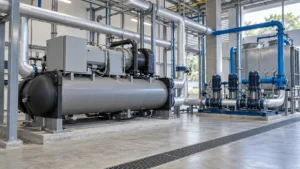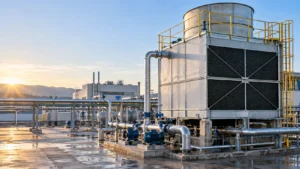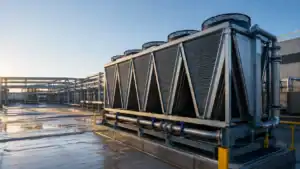

A water-cooled chiller removes heat from a chilled-water or water-glycol loop, then rejects that heat through a separate condenser-water loop, usually with a cooling tower. The right unit is the one that meets the real load at full and part load, fits the available water quality and footprint, and comes with rating, controls, heat-exchanger, and commissioning evidence that an engineer can check. This guide turns those decisions into a usable RFQ without treating a nameplate tonnage as a complete design.
What a water-cooled chiller actually does
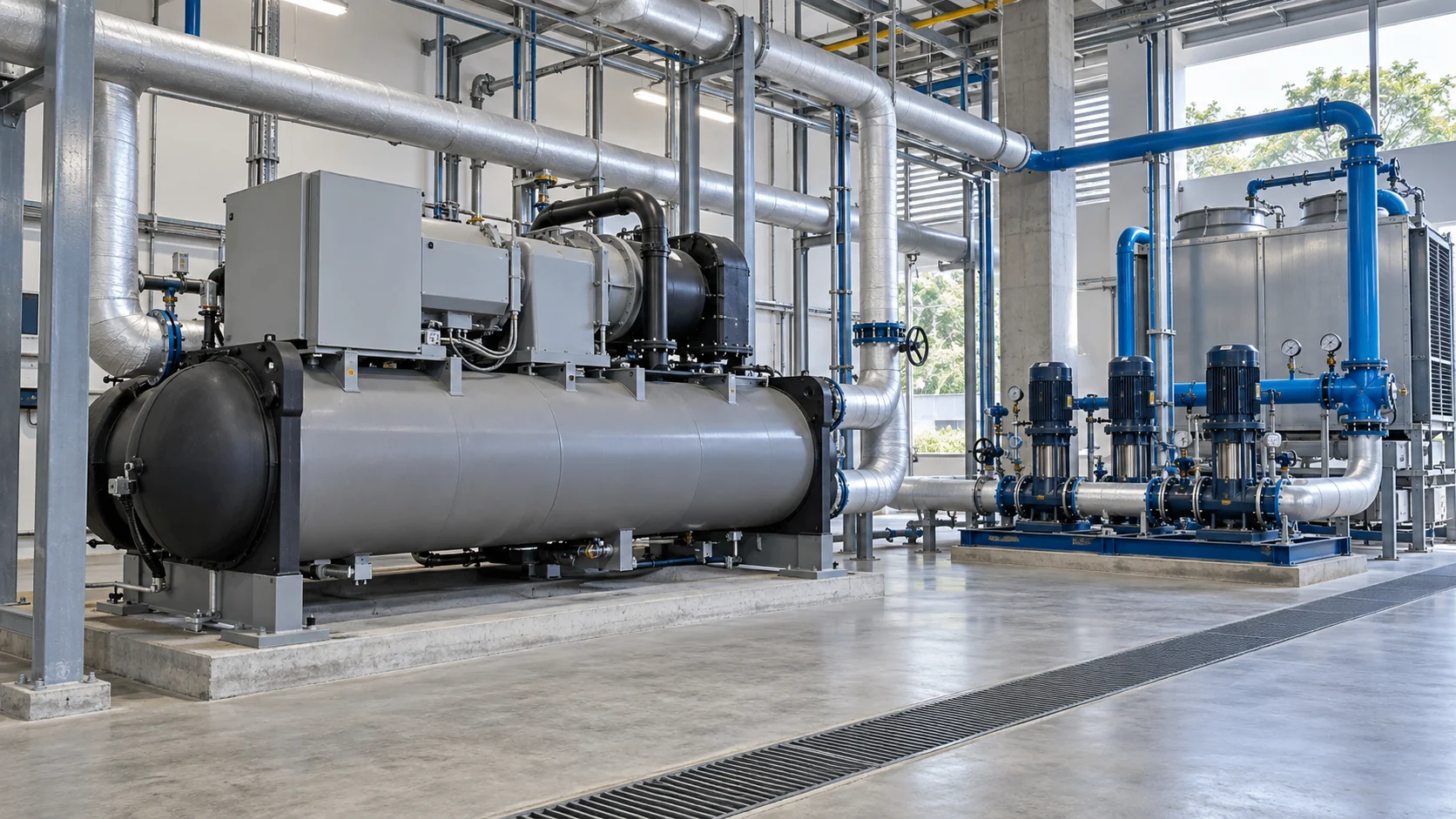
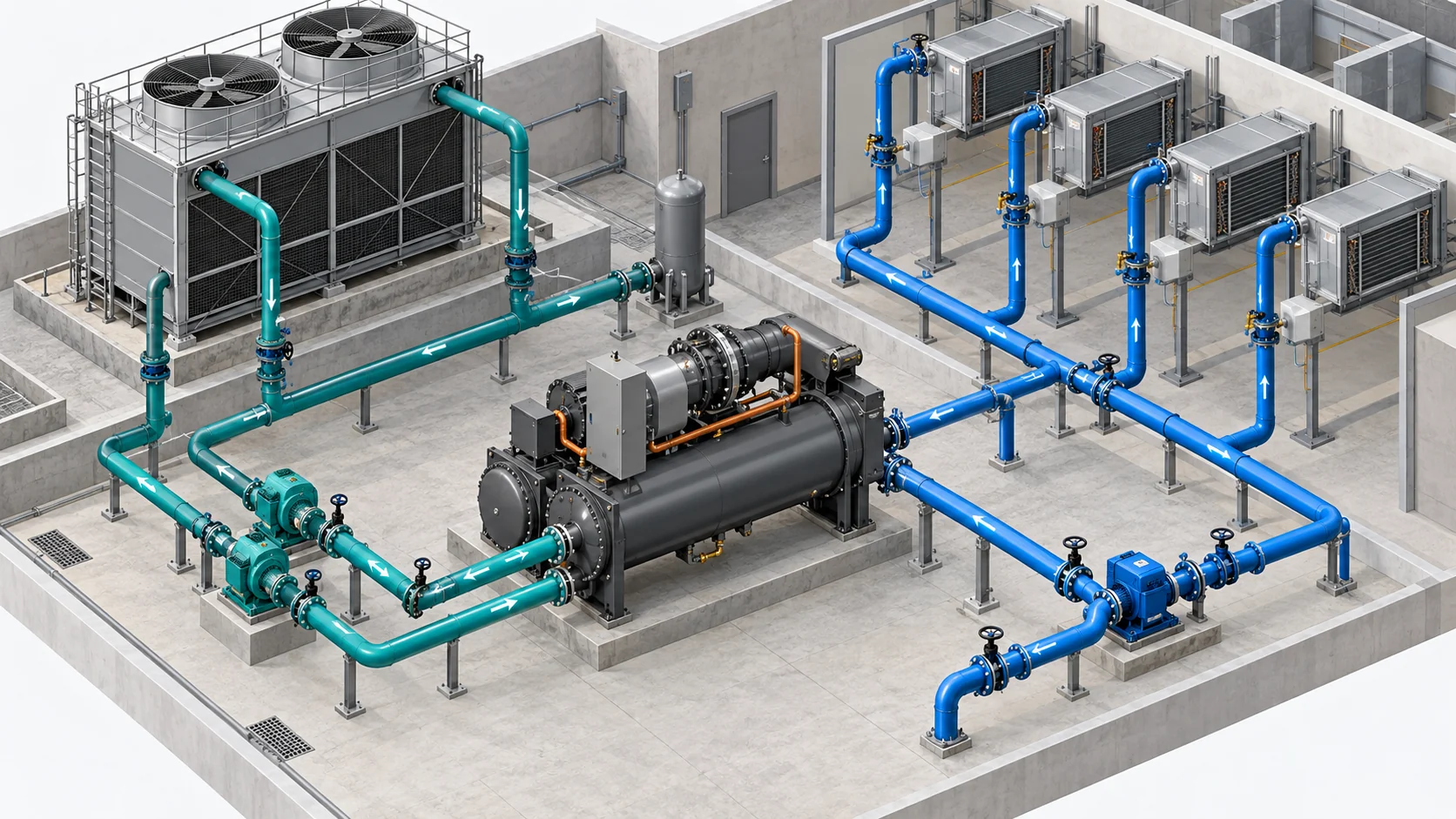
Inside the chiller, refrigerant absorbs heat in the evaporator, is compressed, and rejects heat in the condenser. The chilled-water loop carries useful cooling to air handlers, process heat exchangers, or other terminal equipment. The condenser-water loop carries rejected heat to a cooling tower or another heat-rejection device. The loops exchange heat through metal surfaces; the process water and refrigerant do not mix.
The ASHRAE chilled-water plant overview treats the chiller as one part of a plant that also includes pumps, piping, controls, heat exchangers, and commissioning. That systems view matters when a replacement chiller seems to fit the available footprint but its flow, pressure drop, or control sequence does not match the rest of the plant.
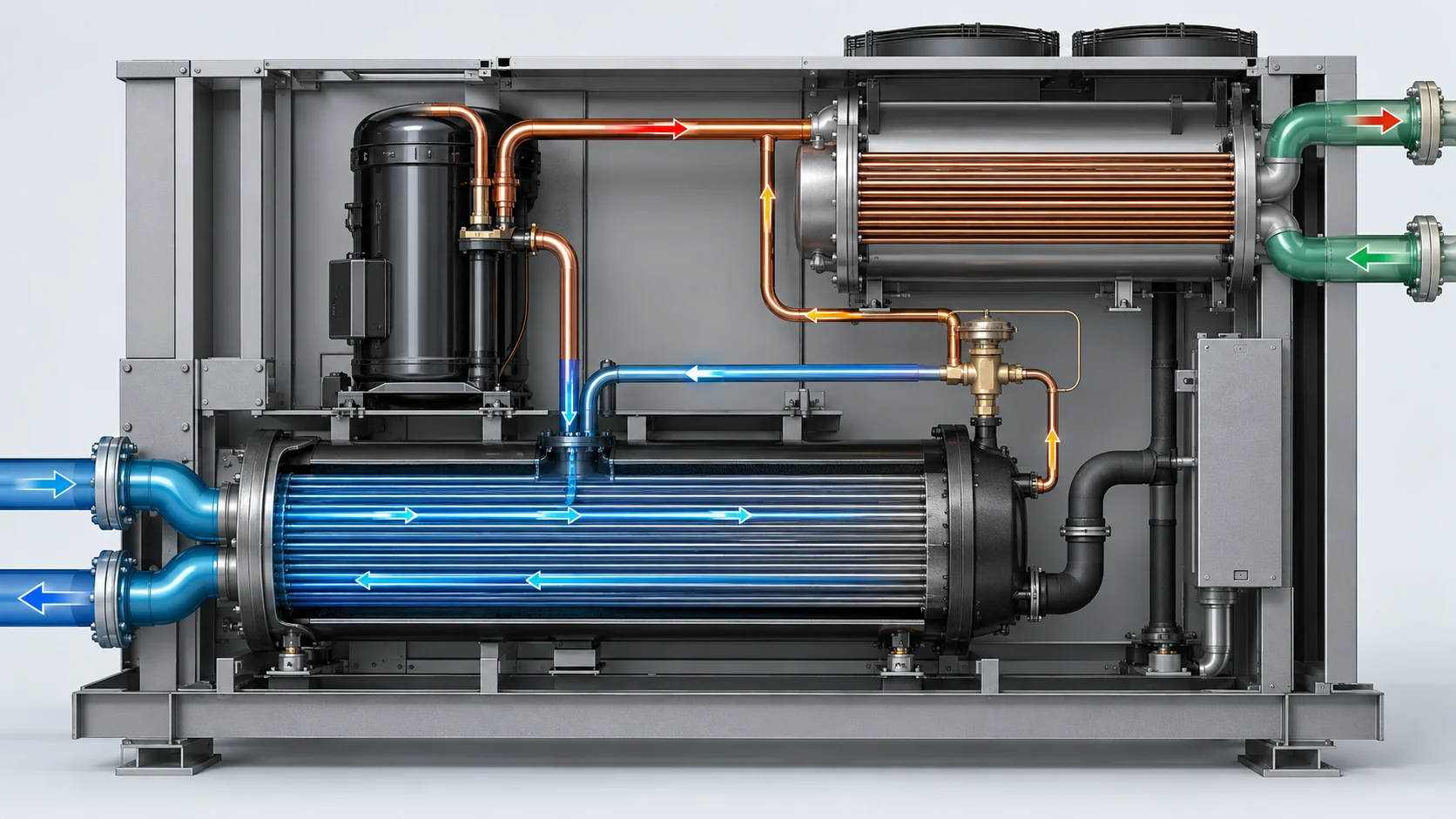
The phrase “water-cooled chiller” describes the heat-rejection method, not a single compressor technology or a guaranteed efficiency level. A screw chiller, centrifugal chiller, or compact scroll package can all use condenser water. Specify the duty and constraints first, then compare package types on the same rating basis.
Record the design point before comparing models
Start with the load profile rather than a preferred brand or nominal tonnage. A facility may have a high afternoon peak but spend most hours at 40% to 70% load. A process may need a tight leaving-water temperature even when the total load is modest. Both cases change the sensible choice of compressor, number of machines, controls, and heat-exchanger surface.
Use the following fields as a minimum data sheet. Values described as examples are screening points, not universal setpoints.
| Input to record | Why it changes selection | Evidence to request | Common mistake |
|---|---|---|---|
| Peak and hourly cooling load | Sets capacity, staging, and turndown requirement | Load calculation or measured trend with units and duration | Selecting from peak tons only |
| Chilled-water supply and return | Sets evaporator temperature difference and flow | Design temperatures, allowable reset range, glycol percentage | Quoting a leaving temperature without return temperature |
| Condenser-water supply and return | Sets condensing pressure, tower duty, and tube velocity | Entering water temperature, flow, fouling allowance, winter limit | Using outdoor dry bulb instead of the condenser-water condition |
| Flow, pressure drop, and connection geometry | Determines pump head, nozzle size, and installation fit | GPM or L/s, allowable pressure drop, flange standard, service clearances | Treating pipe size as proof of required flow |
The EPA WaterSense chilled-water guide illustrates a chilled-water supply around 38°F to 45°F with a 10°F to 20°F rise, and condenser water around 80°F to 85°F with a 10°F to 20°F rise. Those ranges help a buyer ask complete questions, but the project design, fluid, climate, and terminal equipment must set the final values.
Wet bulb, approach, and seasonality
Water-cooled equipment can benefit from a condenser-water temperature tied to outdoor wet-bulb conditions, especially when a cooling tower is available. The approach between tower leaving water and outdoor wet bulb, tower fan turndown, and winter freeze strategy all influence the condenser entering condition. Ask for performance at the design summer point and at the lowest controlled condenser-water temperature rather than one catalog row.
If the plant operates in a dry climate or faces water restrictions, compare the water and energy budgets together. A water-cooled chiller may reduce compressor power at favorable wet-bulb conditions, but it adds pumps, tower fans, treatment, blowdown, makeup water, and freeze protection. An air-cooled alternative may have a simpler installation even when its full-load efficiency is lower. The decision is a life-cycle comparison, not a universal ranking.
Match compressor technology to load and service reality
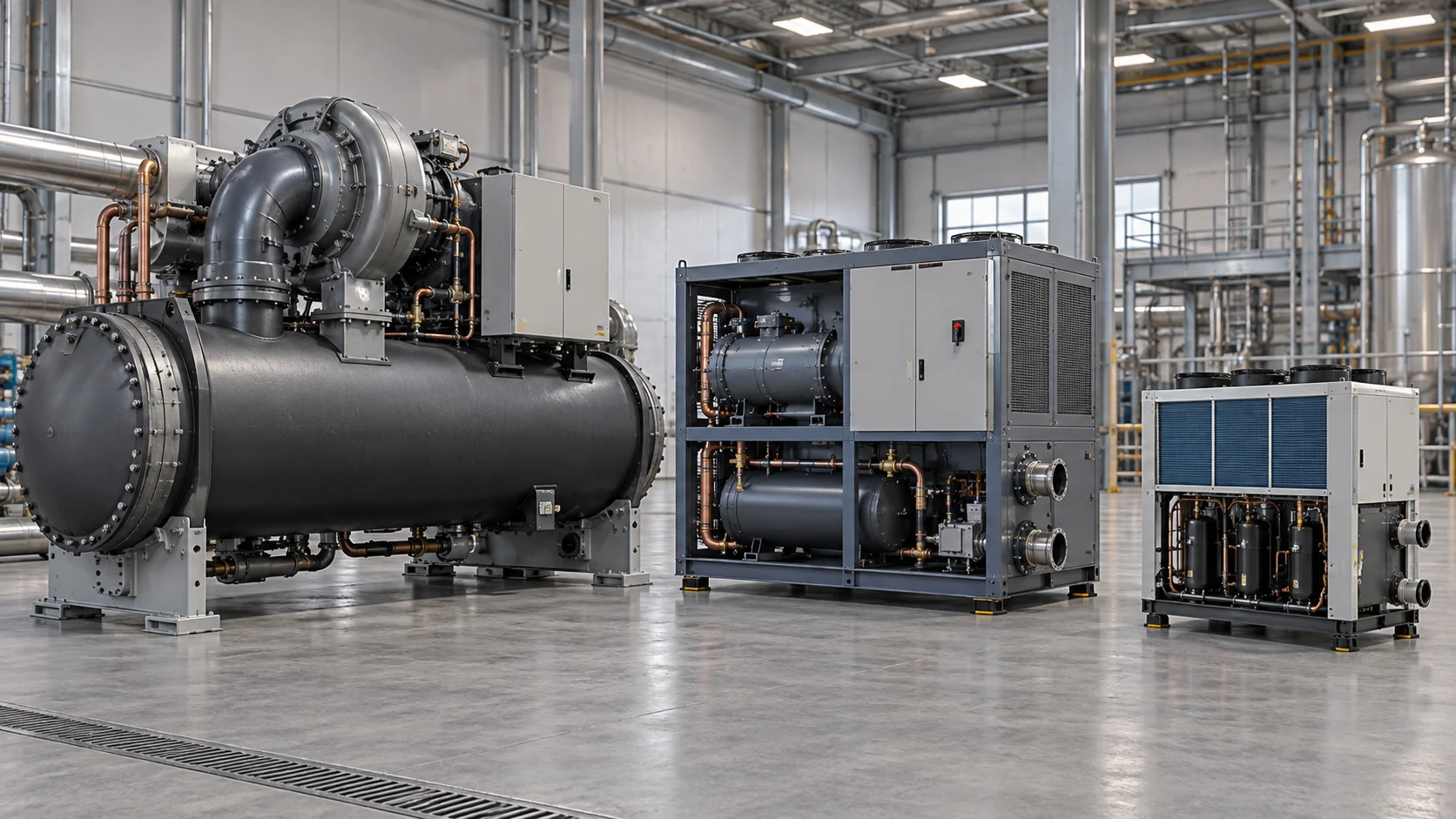
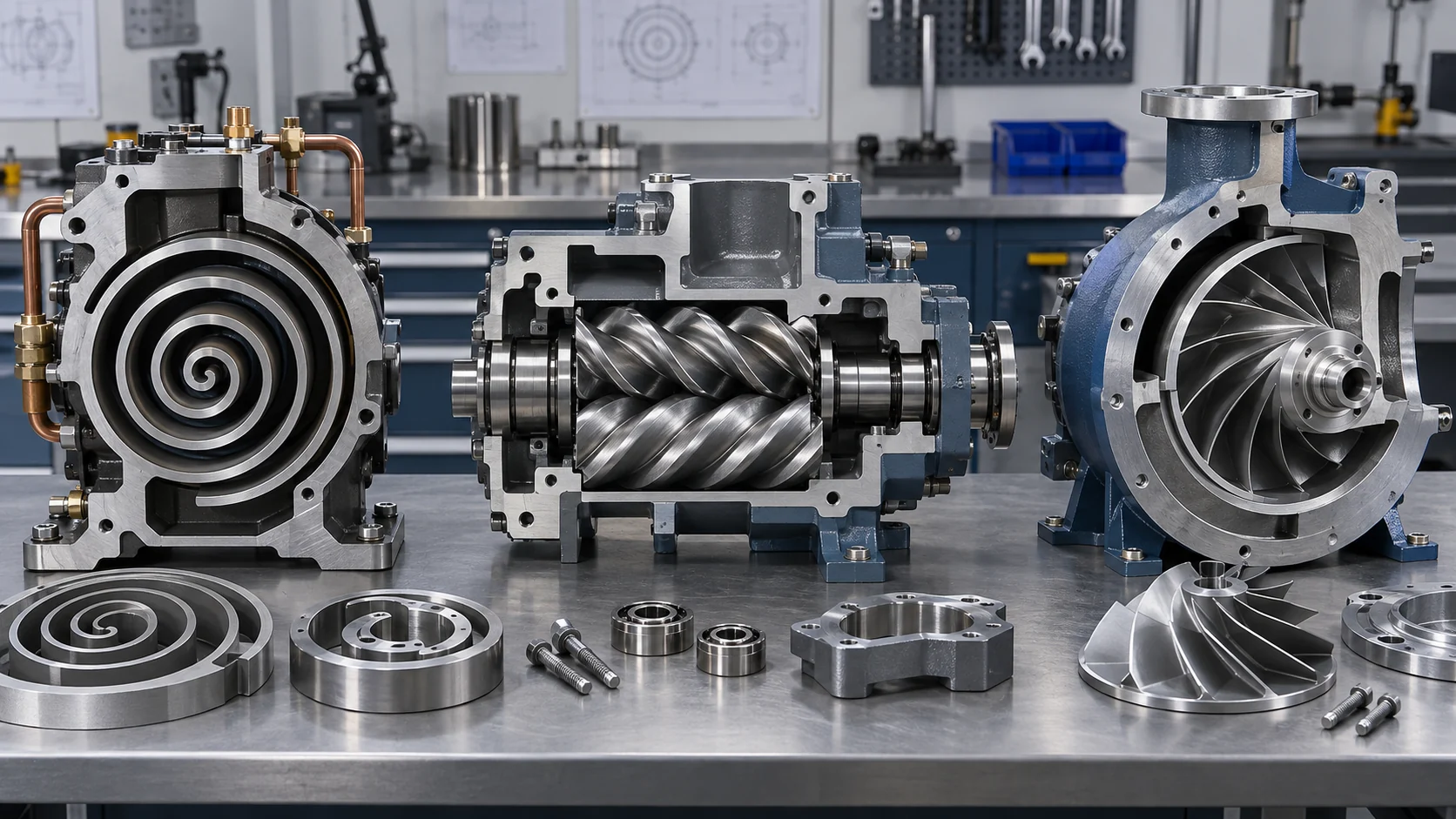
The compressor choice should follow capacity range, load shape, redundancy, sound, maintenance access, and refrigerant strategy.
| Package family | Where it can fit | What the buyer should compare | When to be cautious |
|---|---|---|---|
| Scroll | Smaller packaged duties and modular plants | Number of circuits, staging, minimum unloading, service parts | A single small package may have no useful redundancy |
| Screw | Medium to large process or building loads with steady operation | Slide-valve or variable-speed turndown, oil management, sound, part-load map | A large fixed-speed screw can spend too many hours off its best point |
| Centrifugal | Large central plants where efficient part-load operation and footprint matter | Surge control, inlet guide vanes or variable speed, minimum flow, tube access | Poor water-side control or low-load operation can reduce the expected benefit |
Do not compare compressor families using different entering-water conditions. Require the same chilled-water supply and return, condenser-water supply and flow, fouling assumptions, altitude, and electrical basis in each bid. If the project needs multiple machines, request a staging sequence and the performance of the plant at the most common load bands.
Ask how the controls protect the compressor when the condenser-water temperature falls quickly, when a pump starts late, or when a terminal valve closes. A chiller that looks efficient on a steady rating can still nuisance-trip if the minimum flow, oil return, or leaving-water reset logic is not coordinated with the plant controls.
Decide when water cooling earns its extra loop
The Trane air-versus-water comparison describes the practical trade-off: water-cooled chillers can support large capacities and lower condensing temperatures, while air-cooled systems avoid cooling towers, treatment, and condenser-water piping. Use that trade-off as a decision screen:
- Choose water cooling when the site can support a cooling tower or equivalent heat-rejection device, has a credible treatment program, and values plant efficiency or large capacity.
- Choose air cooling when water availability, winter operation, tower maintenance, plume control, or installation simplicity dominates the life-cycle calculation.
- Consider a hybrid arrangement when the load profile, climate, or water policy changes across the year and the controls can coordinate the modes.
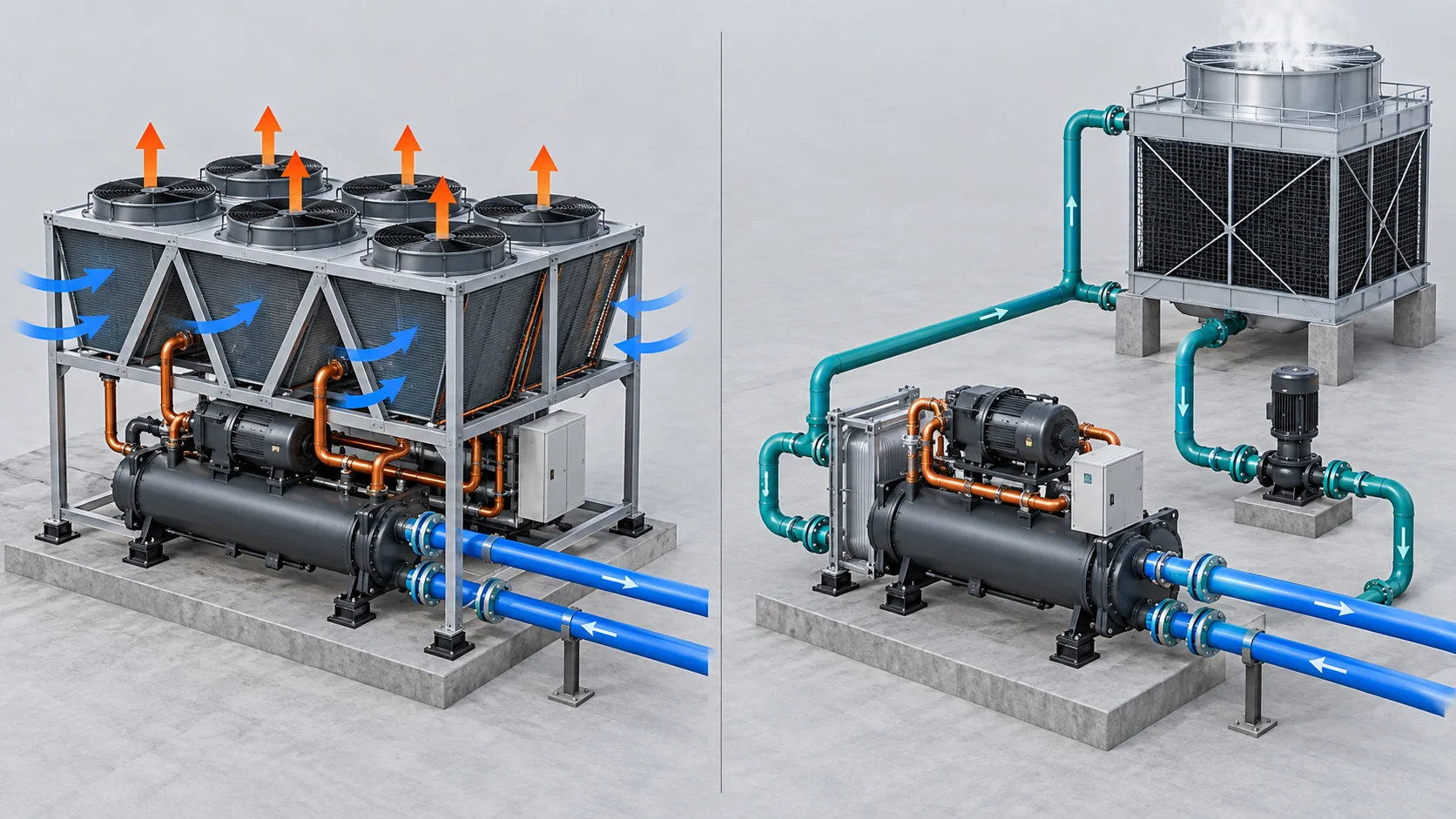
The answer can also vary within one site. A process loop with a stable load may justify a dedicated water-cooled machine, while comfort cooling in a lightly occupied building may favor a simpler air-cooled package. Make the comparison with annual load hours, utility rates, water and wastewater cost, treatment labor, maintenance access, and the cost of the tower, pumps, and controls included.
Protect the heat-exchanger interface
Water-side details often decide whether a chiller performs as quoted. Evaporator and condenser tubes need the correct material, velocity range, pressure rating, water chemistry, fouling allowance, and cleaning access. A coil or process heat exchanger connected to the chilled-water loop also needs a confirmed duty, connection orientation, flow, pressure drop, and control-valve strategy.
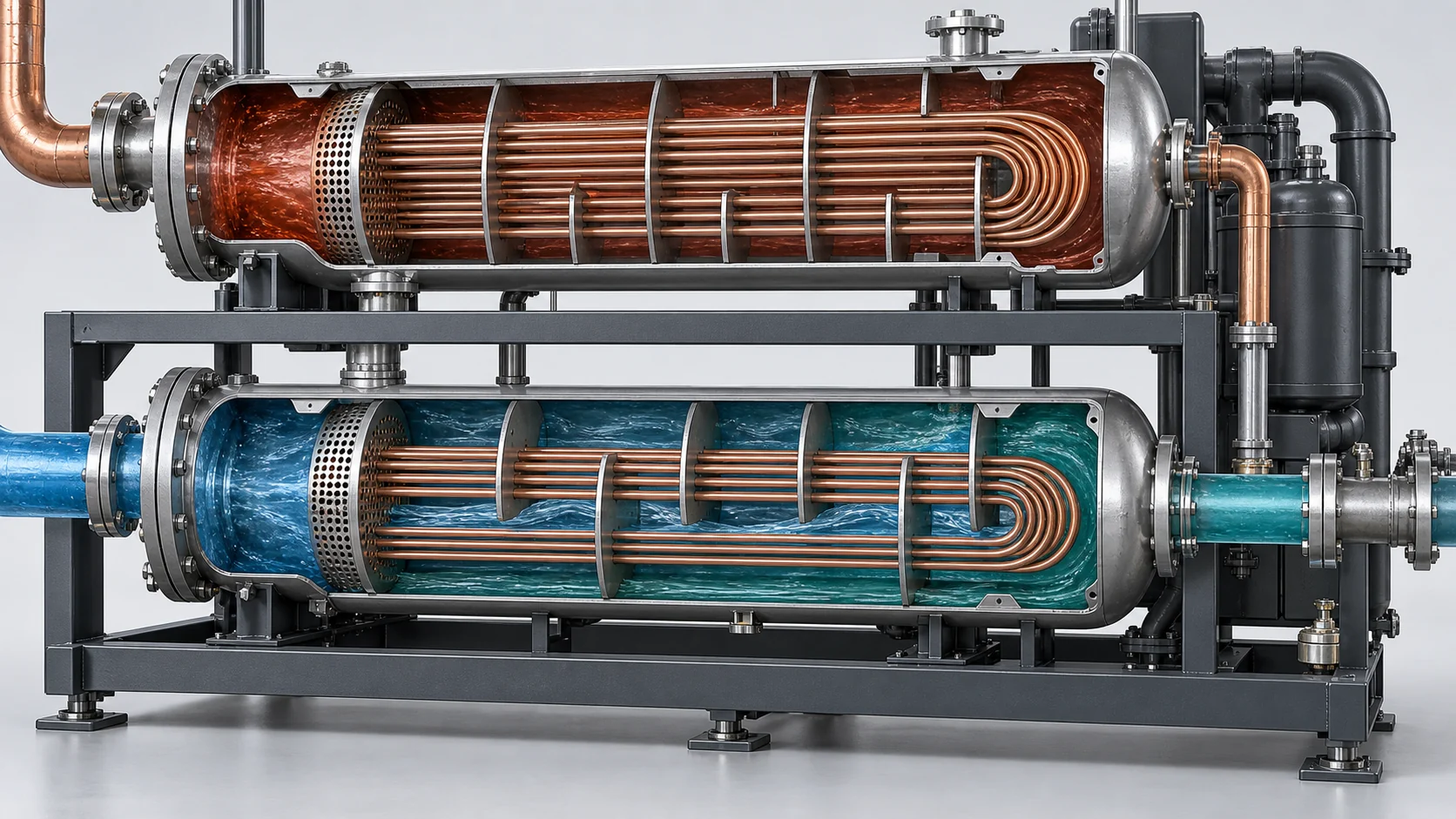
The AHRI 550/590-2023 standard defines rating and published-data requirements for vapor-compression water-chilling packages. Use the standard as a comparison anchor, then add the project-specific fields that a catalog rating cannot show:
- fluid type and glycol concentration;
- design flow, minimum flow, and allowable pressure drop;
- tube, header, gasket, and brazing materials;
- fouling factor and water-treatment boundary;
- flange standard, nozzle orientation, pull space, and lifting route;
- insulation, freeze protection, vents, drains, strainers, and service bypasses.
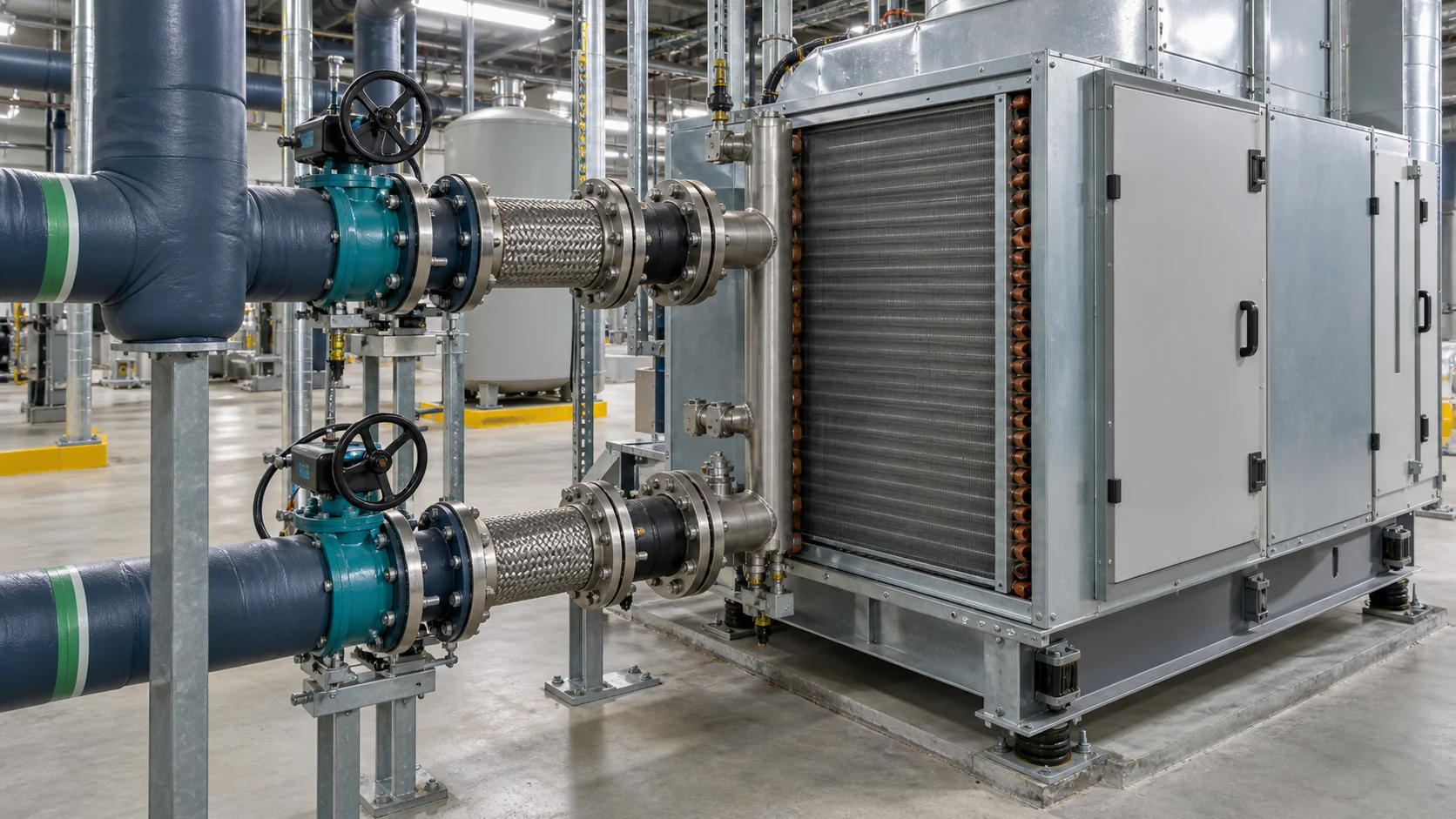
For a replacement, do not rely on a photograph or an old pipe tag. Compare the original drawing with a measured connection schedule. If a custom coil or heat exchanger is needed, Domi’s custom heat exchanger fabrication team can review drawings, materials, connections, and the heat-transfer duty. That is a component engineering path, not a claim that Domi supplies a complete chiller package.
Size the chiller from load, flow, and operating hours
For a first-pass water calculation, use:
Cooling load (Btu/h) ≈ 500 × flow (GPM) × water ΔT (°F)
Then divide by 12,000 to estimate refrigeration tons, or by 3,412 to estimate cooling kW. This approximation assumes water near standard density and heat capacity. Apply a correction for glycol, elevation, unusual fluid properties, or a process fluid that is not water. The chiller supplier should replace the screening result with a certified selection at the project conditions.
Example: 600 GPM with a 10°F water temperature rise gives about 3,000,000 Btu/h, or approximately 250 tons. That is a duty estimate, not a reason to order a 250-ton machine without checking standby capacity, design margin, part-load hours, pump head, and condenser-water conditions.

Use a staged selection workflow so that every assumption is visible.
| Step | Buyer action | Supplier response to request | Release check |
|---|---|---|---|
| 1. Define duty | Provide peak load, hourly profile, fluid, temperatures, and flow | Selection sheet with units, assumptions, and rated capacity | Load and flow are traceable to a drawing or measurement |
| 2. Screen architecture | Compare one machine, N+1, or parallel modules | Plant sequence, minimum load, and standby behavior | The common load band is inside the useful turndown range |
| 3. Check water side | Provide chemistry, fouling factor, pressure drop, and connection data | Tube materials, velocity, pressure rating, and cleaning method | Nozzle, flange, pump, and service clearances fit |
| 4. Validate economics | Add pumps, tower, treatment, controls, electricity, and water | Full-load and part-load data on a common rating basis | Life-cycle assumptions are documented, not implied |
Oversizing can leave a machine cycling or operating away from its efficient range. Undersizing can force a second machine to run continuously or leave the process without a recovery margin. If the load profile is uncertain, request a sensitivity selection for the design load, the typical load, and the future expansion case.
Check efficiency, controls, and water management together
The U.S. Department of Energy FEMP chiller guidance separates full-load and integrated part-load requirements and points buyers to AHRI 550/590 test procedures. Ask for both values, the test conditions, and the expected plant kW per ton at the load bands that matter. A single peak rating cannot predict annual energy use.
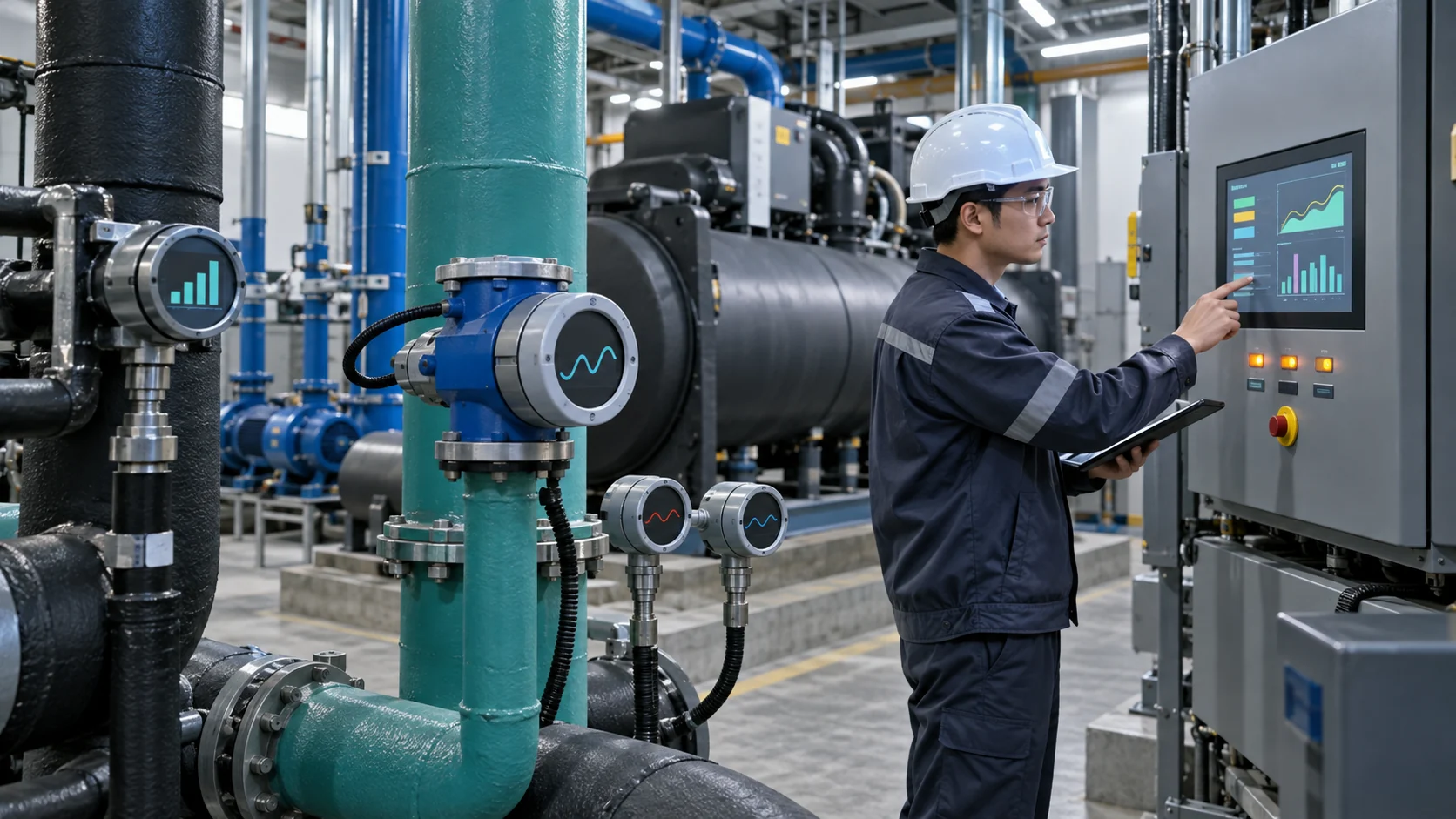
Controls should coordinate the chiller, condenser-water pumps, tower fans, chilled-water pumps, bypasses, and terminal valves. Verify sensor locations, reset limits, minimum flow, staging delays, alarm outputs, and the sequence used when a machine is isolated. If the plant uses variable-speed drives, request the control points and trend list that will prove the sequence after handover.
Treat condenser water as a design boundary
Condenser water is a design boundary, not a utility connection alone. Suspended solids, hardness, chlorides, biological growth, and concentration cycles affect tubes and tower equipment. The AHRI liquid-chiller guidance describes treatment, blowdown, and condenser-tube cleaning as part of water-cooled operation. Put the treatment limits, sampling frequency, filtration, chemical responsibility, and cleaning access in the RFQ.

The plant owner should also document who owns Legionella risk management, tower cleaning, chemical storage, and discharge compliance. A closed chilled-water loop does not remove the treatment responsibility from an open condenser-water loop. Conversely, a well-controlled water loop can protect the chiller and reduce avoidable energy loss from scale.
Require commissioning evidence beyond a start-up statement
Commissioning should show that the installed chiller meets the design intent under safe, repeatable conditions. The ASHRAE plant-design course outline includes functional testing, point-to-point checks, trend reviews, and procurement evidence for a reason: the chiller, pumps, valves, sensors, and terminal equipment behave as one system.

Request a signed record that identifies the instruments, calibration status, test conditions, and measured values. Keep the results for the design load and at least one representative part-load condition. If the test cannot reach design conditions on the day, record the limitation and define a repeat test rather than marking the package complete.
| Evidence item | What it should show | Why procurement needs it |
|---|---|---|
| Factory rating and selection sheet | Capacity, power, temperatures, flow, refrigerant, and rating basis | Makes bids comparable and exposes hidden assumptions |
| Pressure and leak records | Test method, hold time, instrument identification, and result | Protects the refrigerant and water circuits before shipment |
| Functional control test | Start, stop, staging, safeties, alarms, and minimum-flow response | Shows that the plant sequence is implementable |
| Site performance record | Flow, entering/leaving temperatures, power, ambient or condenser-water condition | Links installed performance to the design point |
| Maintenance handover | Tube access, filters, treatment limits, spare parts, and service clearances | Reduces avoidable fouling and unsafe service work |
Build an RFQ that a supplier can actually answer
Send one package of information instead of a single requested tonnage. Include the load profile, water temperatures, flow, fluid chemistry, ambient or wet-bulb design point, pressure drops, electrical service, sound limit, redundancy, footprint, lifting route, controls interface, and required documents. Add a marked-up connection drawing when the chiller will connect to a custom coil or process heat exchanger.

For a coil or heat-exchanger review, Domi’s engineering capabilities can be the next step. Provide the drawing revision, material, circuiting, header arrangement, duty, test pressure, and inspection requirement. Domi can review and fabricate component-level heat-transfer hardware; the complete water-cooled chiller, tower, pumps, and plant controls should be specified and supplied by the chiller OEM or system integrator.
Use the Domi testing lab link when the project needs a discussion about pressure, leak, dimensional, or heat-transfer checks. Ask which tests are included, which are witnessed, and which remain the integrator’s responsibility. That wording keeps the quote technically honest and makes later acceptance easier.
Frequently asked questions
How does a water-cooled chiller work?
A water-cooled chiller uses refrigerant to remove heat from a chilled-water or water-glycol loop. The refrigerant rejects that heat through a condenser to a separate condenser-water loop, which normally carries it to a cooling tower. Pumps, valves, controls, and heat exchangers are part of the plant selection even though they are outside the chiller shell.
What is the difference between a water-cooled and air-cooled chiller?
An air-cooled chiller rejects heat directly to outdoor air through fans. A water-cooled chiller rejects heat to condenser water and normally needs a tower, pumps, treatment, and freeze protection. Water cooling can support large capacities and lower condensing temperatures, while air cooling usually simplifies installation and avoids tower water management.
How do I calculate a preliminary water chiller size?
For water near standard properties, estimate Btu/h as 500 multiplied by GPM and the water temperature difference in °F. Divide by 12,000 for approximate tons. Confirm the result with the actual fluid, load profile, design temperatures, pressure drop, standby requirement, and a supplier selection at the rating conditions.
What efficiency data should a chiller supplier provide?
Request full-load and integrated part-load values on a common rating basis, plus entering and leaving water temperatures, flow, fouling assumptions, electrical input, and the control sequence used in the calculation. AHRI 550/590 and current project or procurement requirements should define the rating method. Do not compare a single peak number from different conditions.
What water-treatment information belongs in a water-cooled chiller RFQ?
State the condenser-water chemistry limits, filtration, treatment and blowdown responsibility, sampling schedule, biological-control plan, tube-cleaning method, and discharge constraints. Also state the chilled-loop fluid and glycol concentration. The chiller, tower, and treatment vendor must agree on the boundary so that scale and corrosion allowances are not left ambiguous.
Can Domi supply a complete water-cooled chiller package?
Domi’s documented scope is custom refrigeration and HVAC coils, heat-exchanger components, thermal engineering, prototyping, and testing review. Domi can review a coil or heat-exchanger interface for a chiller project. A complete water-cooled chiller, cooling tower, pumps, and plant controls should be sourced from the selected chiller OEM or system integrator.
Turn your load data into a reviewable RFQ
The fastest way to reduce selection risk is to send the load profile and water-side facts together: peak and typical duty, supply and return temperatures, flow, fluid chemistry, condenser-water condition, pressure drop, connection drawing, controls interface, and the evidence you need at release. If a custom coil or heat exchanger sits inside that boundary, send the drawing to Domi for a component review. The response can then address fit, materials, circuiting, testing, and the limits of the package instead of guessing from a nominal tonnage.