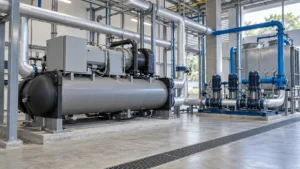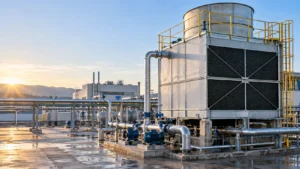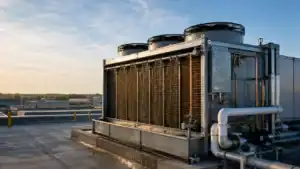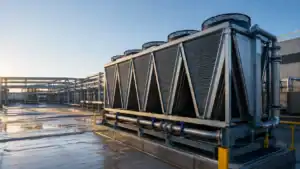

A cooling tower rejects heat from warm circulating water by bringing that water into contact with moving air. The right selection depends on the heat load, entering and leaving water temperatures, outdoor wet-bulb condition, water quality, circuit arrangement, airflow, noise limits, maintenance access, and the heat exchanger connected to the tower. This guide turns those inputs into a practical specification and RFQ that an equipment supplier can review.
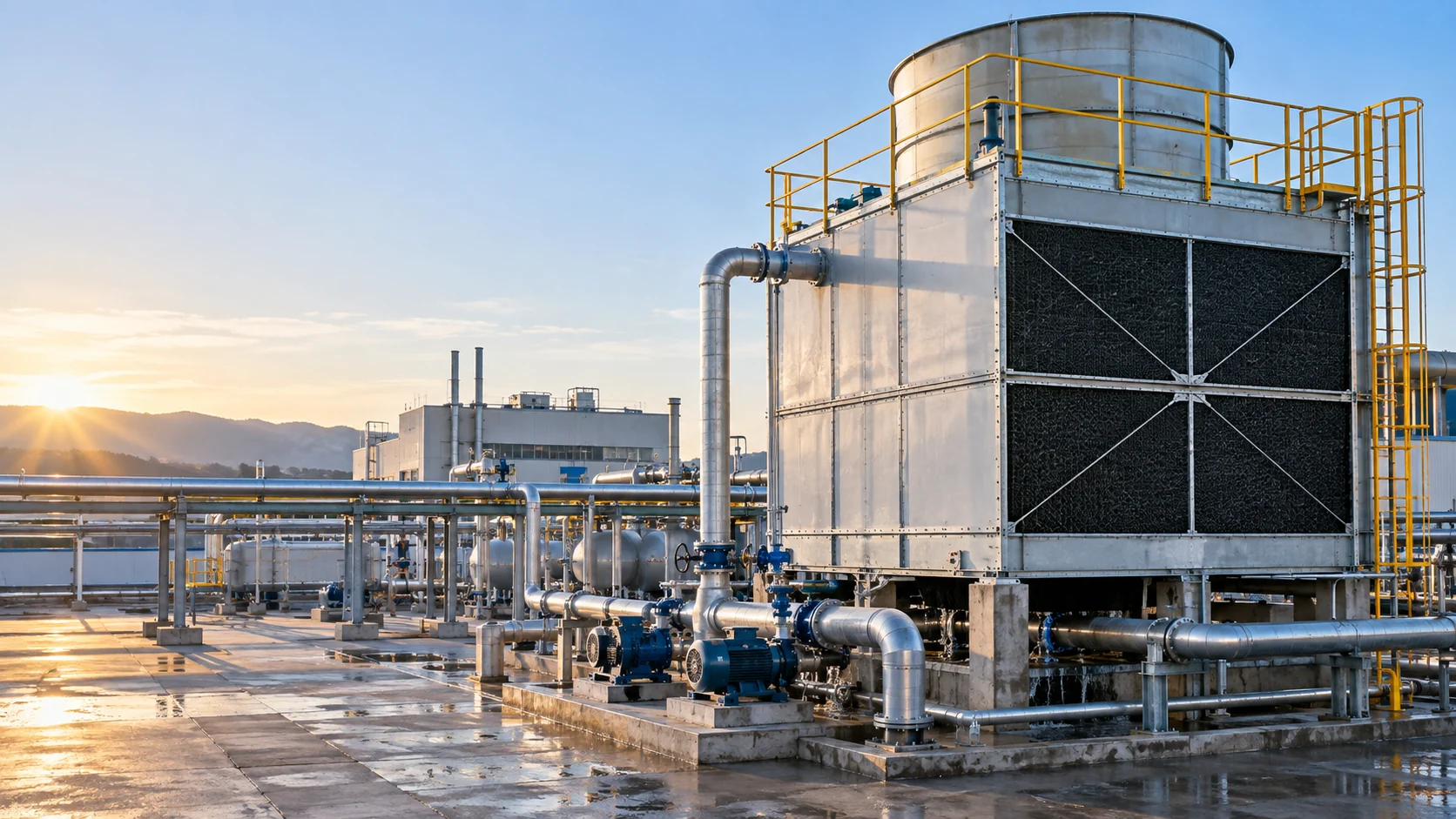
What a cooling tower actually does
In an open cooling tower, warm water is distributed over fill while air moves through the tower. A small portion of the water evaporates, carrying away heat from the remaining water. The cooled water collects in a basin and returns to a condenser, process heat exchanger, or other load. A closed-circuit tower uses the same evaporative air side, but the process fluid stays inside a coil, so the spray water and process fluid do not mix.
The ASHRAE cooling tower definition is a useful starting point because it describes the equipment as a heat-transfer device in which atmospheric air cools warm water, generally through direct contact and evaporation. That definition also explains why a tower is not simply a large fan. The water distribution, fill, drift control, basin, fan, heat exchanger, and treatment program all affect the delivered result.
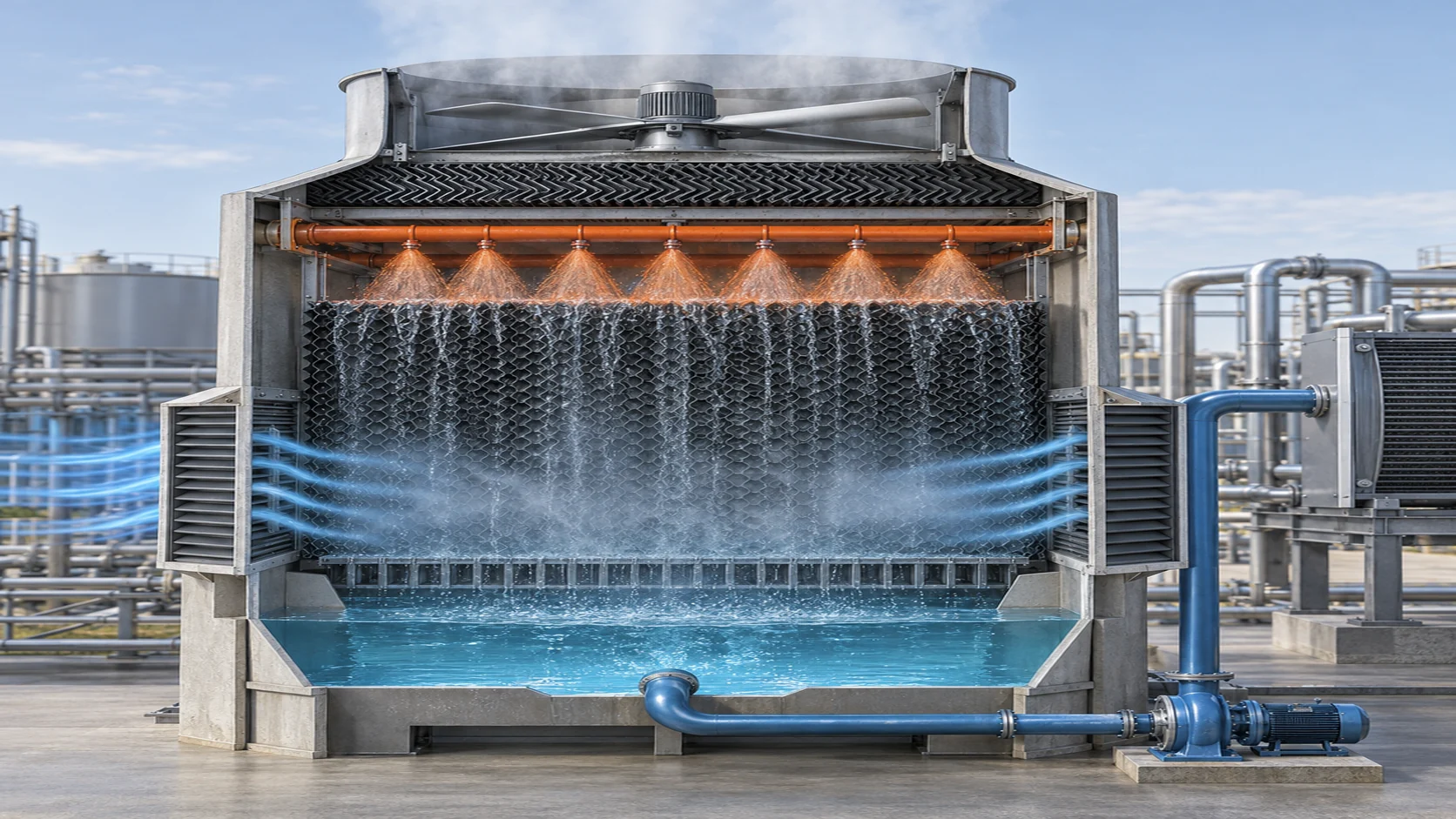
Three temperatures should be written down before any model is compared:
- Range is the entering water temperature minus the leaving water temperature. It describes how much the circulating water is cooled across the tower.
- Approach is the leaving water temperature minus the entering-air wet-bulb temperature. A smaller approach normally requires more heat-transfer surface, airflow, or both.
- Design wet bulb is the outdoor moisture condition used for the design point. Dry-bulb temperature alone cannot describe the evaporative potential of the air.
The design point is only one part of the duty. Ask the supplier to show turndown performance, fan control behavior, winter operation, and the water flow at the actual process load. A tower that meets a single nameplate condition may still be difficult to control when the connected refrigeration plant is lightly loaded.
Cooling tower types that change the selection
Tower terminology can feel crowded because classifications overlap. A unit can be factory-assembled, induced-draft, counterflow, and closed-circuit at the same time. The SPX classification guide separates construction, draft, airflow direction, and circuit arrangement so that each choice can be discussed independently.
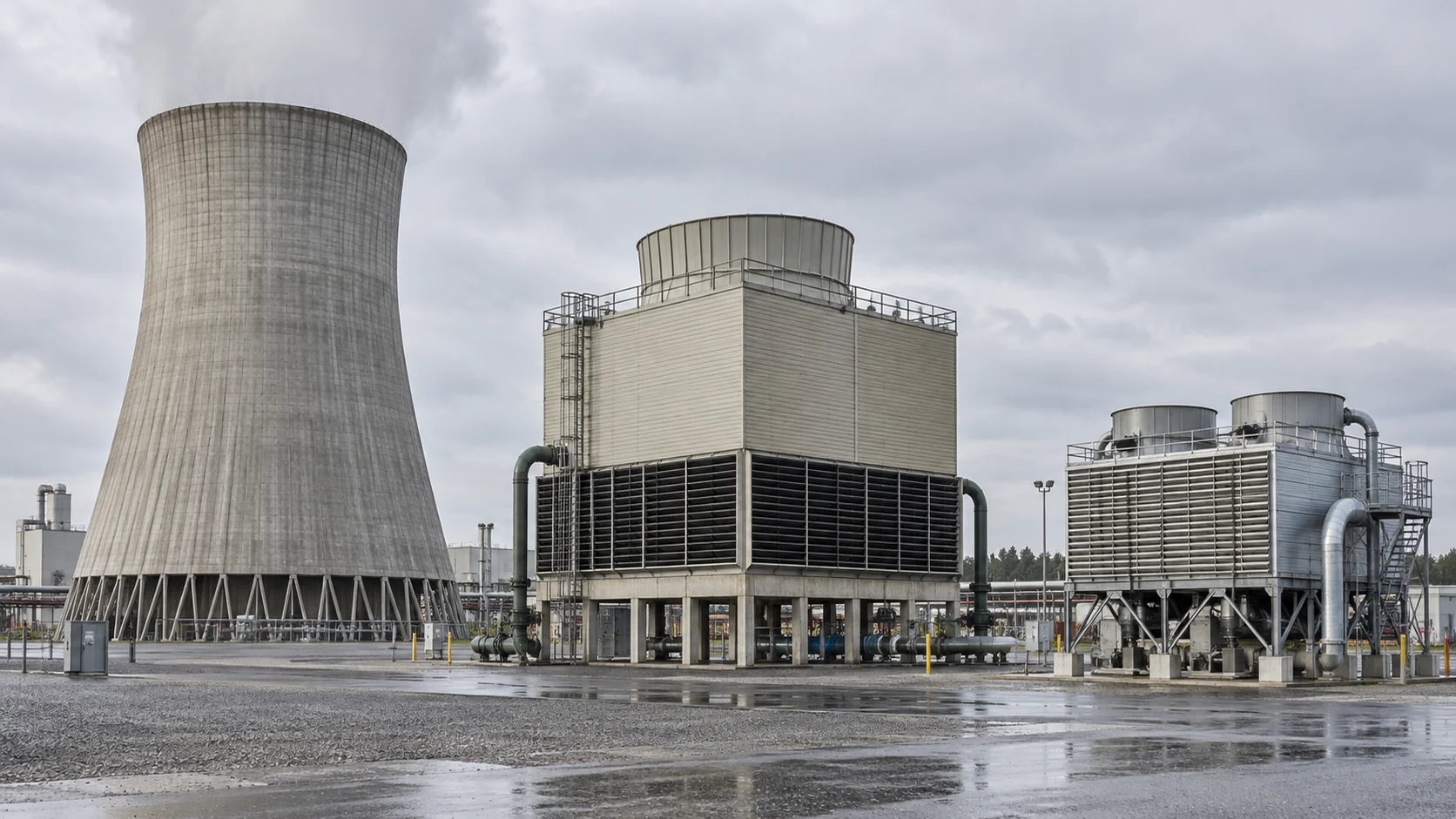
The table below is a first-pass screen, not a final equipment schedule.
| Selection axis | Common choices | What changes for the buyer | Questions to carry into the RFQ |
|---|---|---|---|
| Circuit | Open or closed | Whether process fluid contacts tower air and spray water; fouling and treatment boundary | What fluid is inside the tower coil, and what cleanliness level is required? |
| Draft | Natural, induced, or forced | Fan location, plume behavior, sound path, and service access | Where can the fan discharge or inlet be located, and what noise limit applies? |
| Air and water path | Crossflow or counterflow | Tower footprint, distribution arrangement, access to fill and nozzles | Is the available footprint fixed, and how will the distribution system be inspected? |
| Construction | Factory assembled or field erected | Shipping, lifting, site assembly, and future cell expansion | What are the transport limits, crane plan, and phased capacity requirements? |
Open and closed circuits
Open towers are often chosen when the circulating water can be treated as tower water and direct air contact is acceptable. They can offer a compact heat-rejection path, but the condenser or process loop then shares the tower water chemistry. Strainers, sidestream filtration, blowdown, and a defined cleaning interval become part of the heat-exchanger protection plan.
Closed-circuit towers keep process fluid in a sealed coil. Spray water flows around that coil and is recirculated in a separate basin. This arrangement can reduce process-side contamination and can be useful when the connected fluid is treated, glycol-based, or difficult to drain. The coil still needs a material, wall thickness, header, pressure, and cleaning specification that match the process.
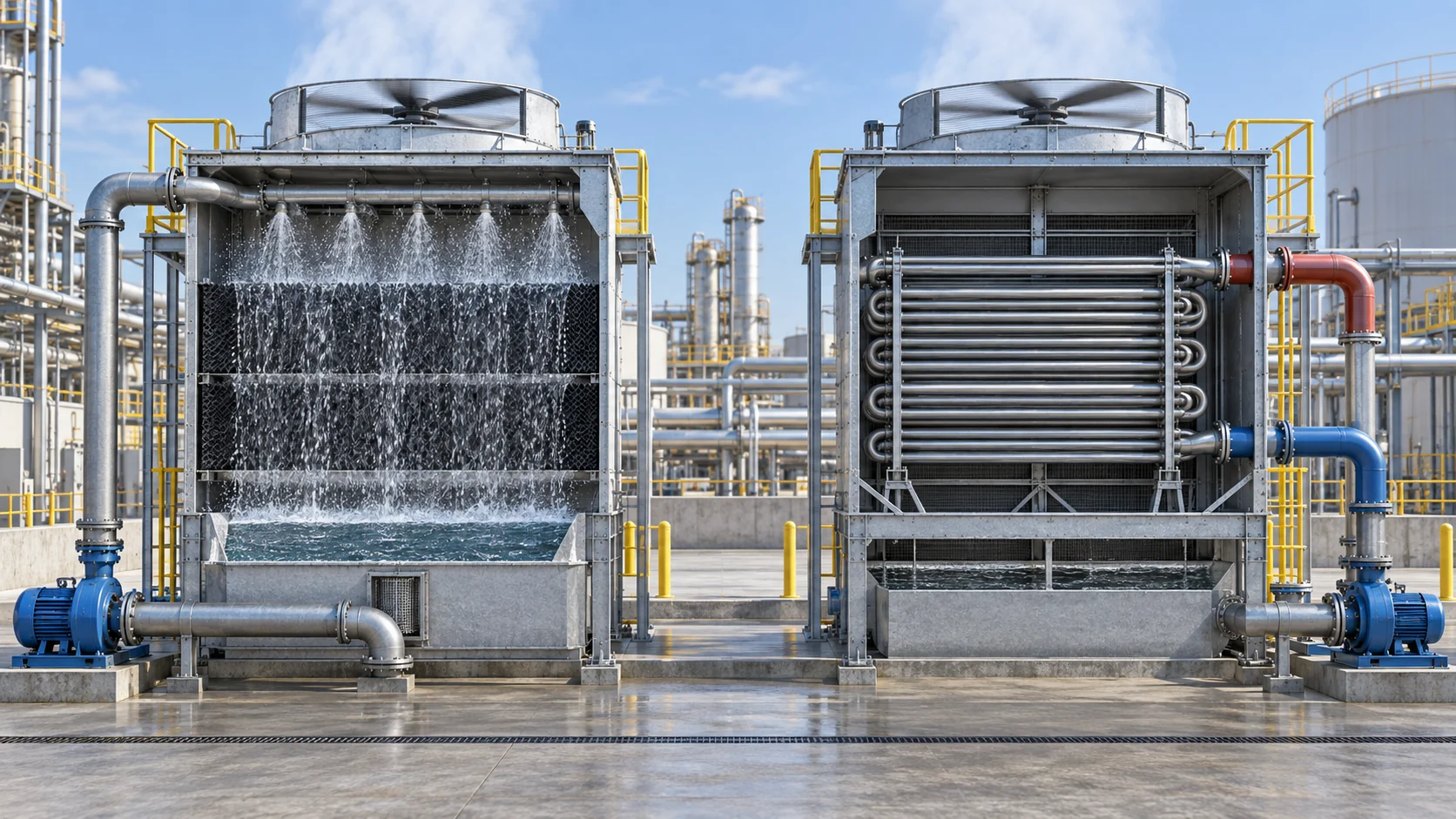
The words “closed circuit” do not remove the need for water treatment. The evaporative spray loop remains exposed to air, concentration cycles, biological growth, scale, and corrosion. Treat the spray side as a cooling-tower water system even when the process side is sealed.
Crossflow and counterflow
In a crossflow tower, air moves horizontally across water falling through fill. In a counterflow tower, air rises opposite the downward water path. The SPX airflow comparison shows why distribution, access, and tower geometry should be reviewed together rather than treated as a simple efficiency label.
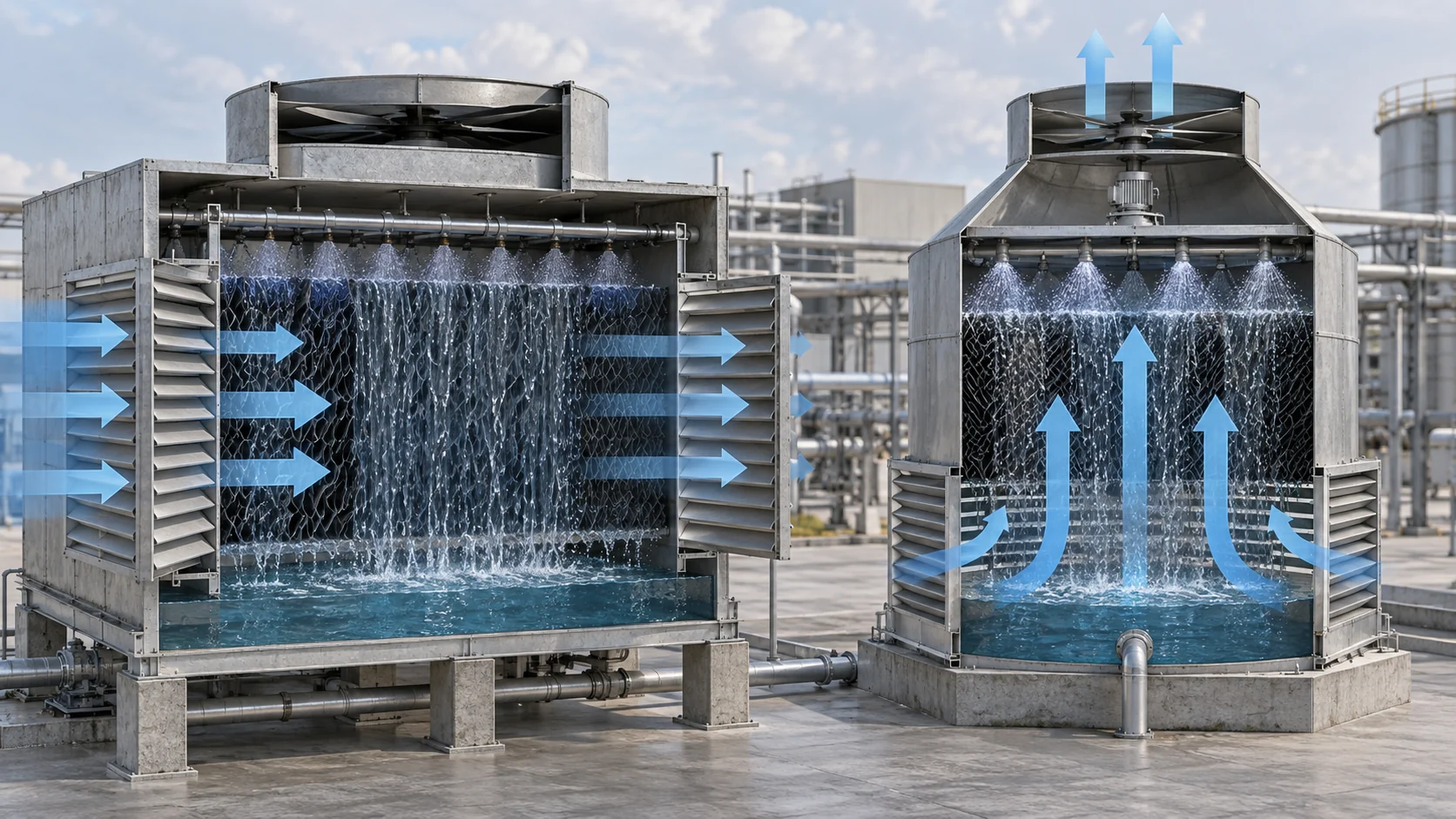
Crossflow layouts can provide convenient access to some distribution components and may suit a wider footprint. Counterflow layouts can make good use of vertical space and protect the water distribution system inside the casing, but maintenance access and nozzle inspection must be clearly defined. The best choice depends on the site, not on a universal ranking.
Natural, induced, and forced draft
Natural-draft towers use the stack effect of a tall shell to move air and are usually associated with very large heat-rejection duties. Induced-draft towers place the fan at the discharge, drawing air through the fill. Forced-draft towers place the fan at the inlet and push air into the tower. Fan location affects recirculation risk, plume direction, service clearance, sound propagation, and exposure of the fan to wet air.
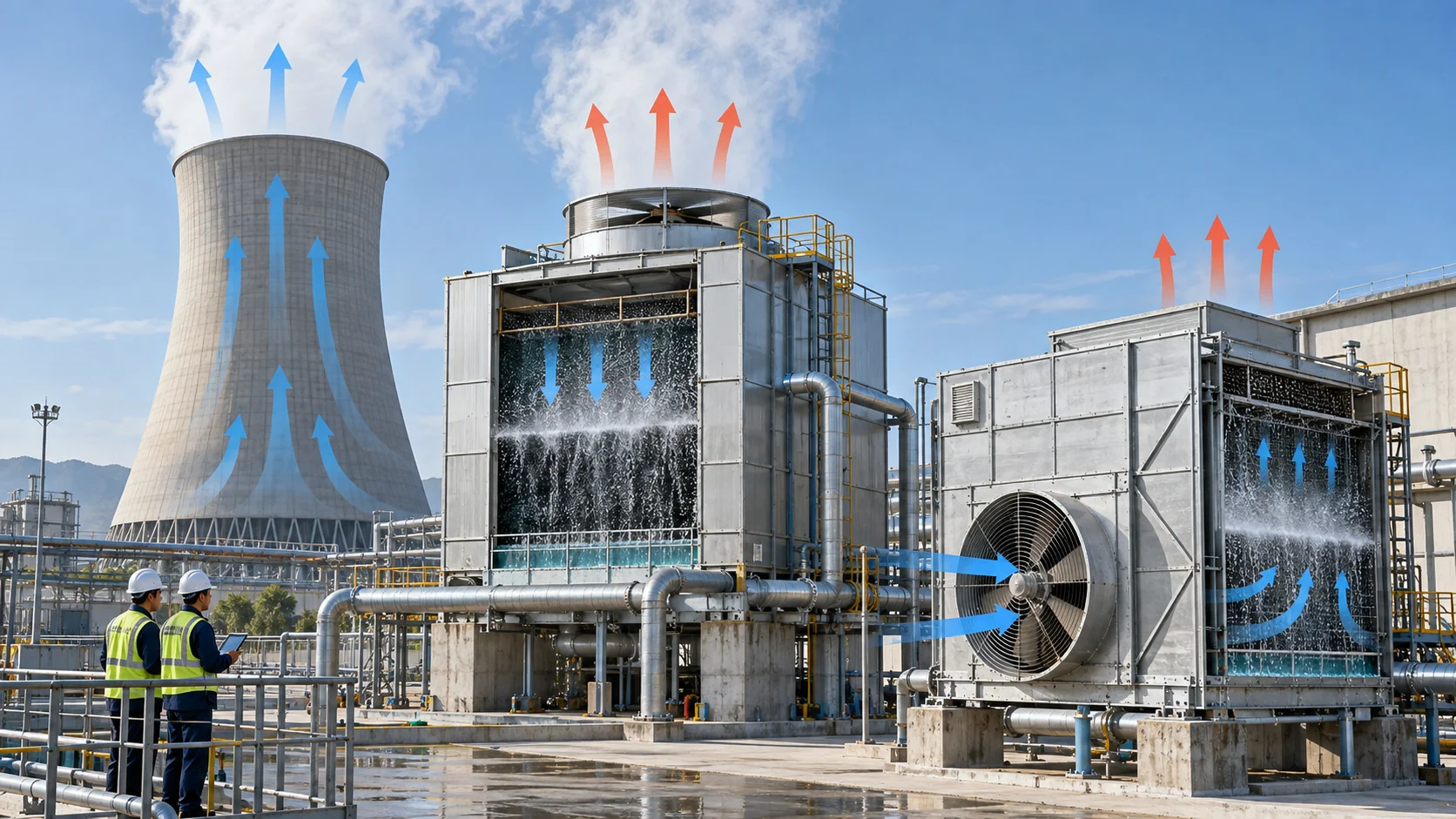
For packaged industrial projects, induced-draft mechanical towers are common because the fan and casing can be shipped as a repeatable cell. That does not make them an automatic fit. Confirm fan curve, motor service factor, vibration monitoring, access platform, winter control, and the distance to nearby air intakes.
Start with heat-rejection duty, not tower model names
The connected load determines the water flow and temperature range that the tower must support. For a refrigeration plant, the tower may reject compressor heat through a condenser loop. For a process plant, it may serve an oil cooler, jacketed vessel, hydraulic system, or a separate heat exchanger. Draw the boundary between tower water, process fluid, and refrigerant before asking for a quotation.
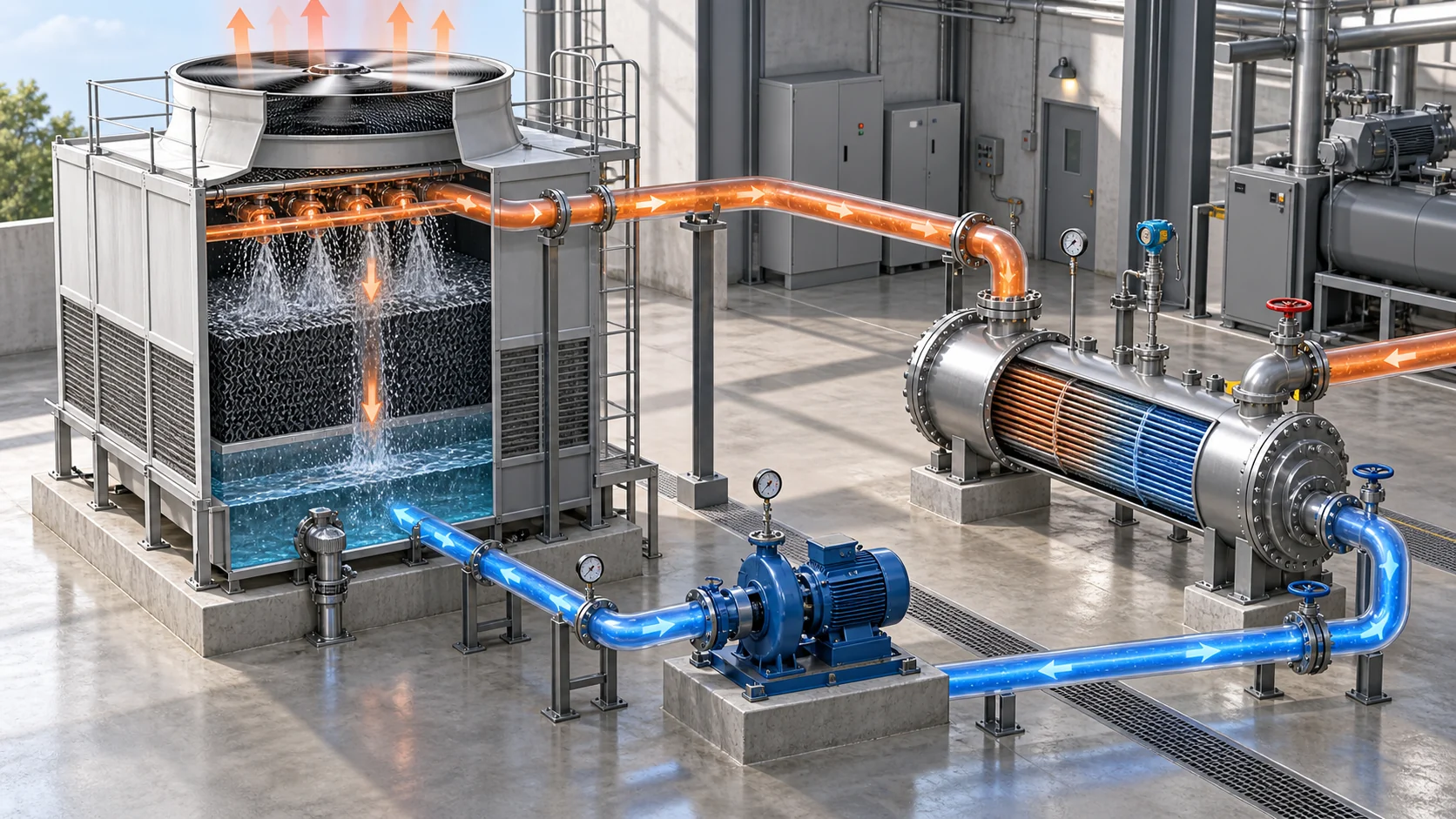
Give the supplier a design envelope rather than a single optimistic number. The following inputs are enough to start a meaningful selection review.
| Input | Minimum information to provide | Why it matters | Evidence to request back |
|---|---|---|---|
| Heat load | Normal, peak, and any rejected heat from auxiliaries | Sets tower duty and cell count | Duty at each operating case and stated margin |
| Water temperatures | Entering and leaving water at design and turndown | Defines range and control sequence | Selection sheet with range, approach, and flow |
| Weather | Design wet bulb, altitude, seasonal limits, and air contaminants | Determines evaporative capacity and material exposure | Design condition source and off-design notes |
| Flow and pressure | Minimum, normal, peak flow and available pump head | Protects distribution and heat-exchanger performance | Hydraulic loss, nozzle pressure, and pump interface |
| Site limits | Footprint, height, plume, sound, electrical supply, access | Removes options that cannot be installed or serviced | General arrangement, sound data, and service clearances |
Range and approach need a shared definition
Two suppliers may quote the same nominal tonnage with different range, approach, water flow, or wet-bulb assumptions. Put those terms on the first page of the RFQ and ask them to repeat the exact values on the selection sheet. If the plant has a fixed condenser leaving-water temperature, state whether the value is a design target or a maximum allowed value.
Avoid adding an unexplained safety factor to the tower and then accepting a lower operating temperature as proof of performance. Instead, show the expected peak load, the design wet bulb, and the desired control margin. This gives the project team a way to compare a larger cell, a variable-speed fan, and a parallel-cell arrangement on the same basis.
Connected heat exchangers and coils
The tower is only one side of the thermal boundary. An open tower may feed a plate-and-frame exchanger, shell-and-tube condenser, or an existing water loop. A closed-circuit tower contains a coil that must be checked for fluid compatibility, pressure drop, freeze protection, cleanability, and drainability.
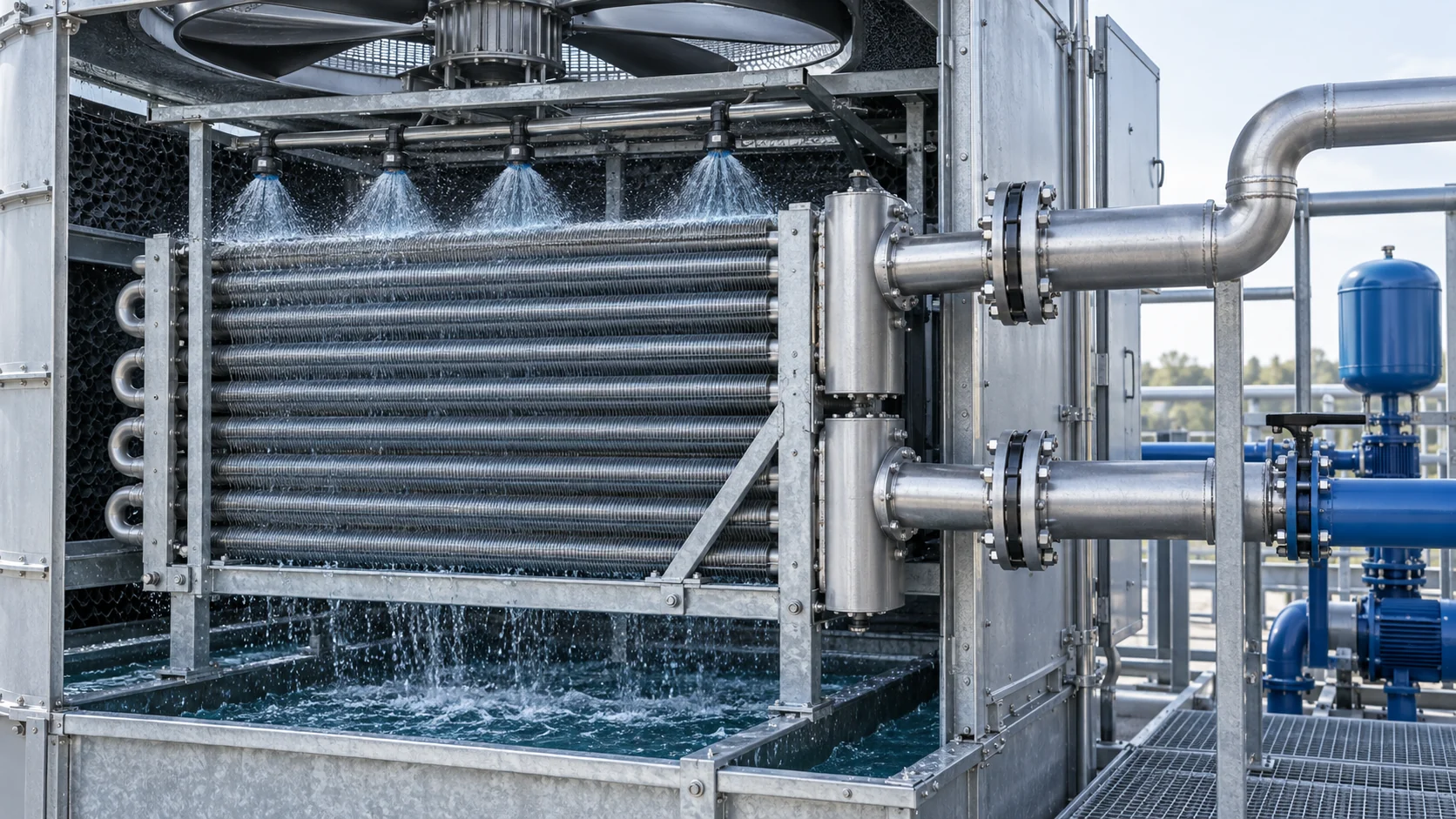
When a coil or header is part of the project, provide tube material, outside diameter, wall thickness, circuit count, connection size, design pressure, test pressure, fluid chemistry, and allowable pressure drop. A coil fabricator can then review heat-transfer surface, bend radius, header layout, brazed or welded joints, inspection points, and packaging. Domi’s custom coil fabrication and engineering capabilities pages describe that component-level review path. They should not be read as a claim that Domi supplies a complete cooling-tower package.
Sizing checks an engineer can reproduce
Tower selection software is useful, but the output should be understandable without proprietary screens. Ask for the heat balance, water flow, range, approach, wet-bulb condition, fan power, sound estimate, and the assumptions used for fouling or water quality.

Use this sequence during design review:
- Confirm the heat load at normal and peak conditions, including heat added by pumps or auxiliary equipment when relevant.
- Confirm the water flow and temperature range that the connected heat exchanger can actually deliver.
- Apply the site design wet bulb and altitude, then check the approach at the leaving-water target.
- Compare one-cell and multi-cell options so that maintenance can occur without losing the whole heat-rejection function.
- Check fan turndown, motor speed, minimum flow, basin level, and controls at low load.
- Check the effect of water treatment, fouling, drift eliminators, and fill condition on the stated rating.
The result should include a control narrative. It should explain when fans stage, how variable-speed drives respond, how makeup and blowdown are enabled, what happens on high basin conductivity, and how the tower is protected during a freeze event. A selection sheet without a control narrative leaves important operating risk to the installer.
Water treatment, drift, and Legionella controls
Evaporative equipment needs an operating water-management plan. As water evaporates, dissolved solids concentrate in the basin. Makeup water replaces evaporation and blowdown removes a controlled portion of concentrated water. EPA WaterSense guidance explains why cycles of concentration, conductivity, makeup, and blowdown should be considered together rather than adjusted independently.

The CDC cooling-tower module and OSHA guidance both emphasize that warm, aerosol-producing systems need documented cleaning, treatment, inspection, and operating controls. This article is not a site health plan. Use your facility’s water-management program, local requirements, and qualified specialists for risk assessment and response.
| Water-management item | What to define in the specification | Field evidence to keep |
|---|---|---|
| Chemistry limits | Conductivity or cycles target, pH, hardness, corrosion control, and biocide approach | Trend logs, laboratory results, and treatment adjustments |
| Makeup and blowdown | Valve sizes, meter or conductivity control, drain routing, and alarm points | Commissioning records and controller set points |
| Drift control | Drift eliminator type, access, inspection interval, and replacement method | Inspection checklist and replacement records |
| Cleaning | Basin, fill, nozzles, strainers, and dead-leg cleaning frequency | Dated cleaning record with responsible person |
| Freeze and idle periods | Drainage, heat trace, low-temperature sequence, and restart checks | Seasonal procedure and restart sign-off |
Do not accept “chemical treatment included” as a complete answer. Request the water analysis assumptions, dosing points, filtration arrangement, conductivity control logic, blowdown destination, and the person responsible for maintaining the program. Also ask how the tower is isolated during cleaning and how stagnant branches are avoided.
Fan energy, noise, and service access
Fan selection is a system decision. A larger fan at a lower speed may reduce sound but increase footprint. A variable-speed fan can track load and wet-bulb changes, but it needs a stable control signal, minimum speed limits, vibration protection, and a clear failure mode. Review motor efficiency, drive enclosure, harmonic requirements, belt or gearbox service, and access for lifting heavy components.
Noise should be checked at the nearest property line, occupied area, air intake, and operator position. A sound value without distance, octave-band information, or fan speed is difficult to use. Ask whether the sound estimate includes water impact, fan discharge, and multiple cells operating together.
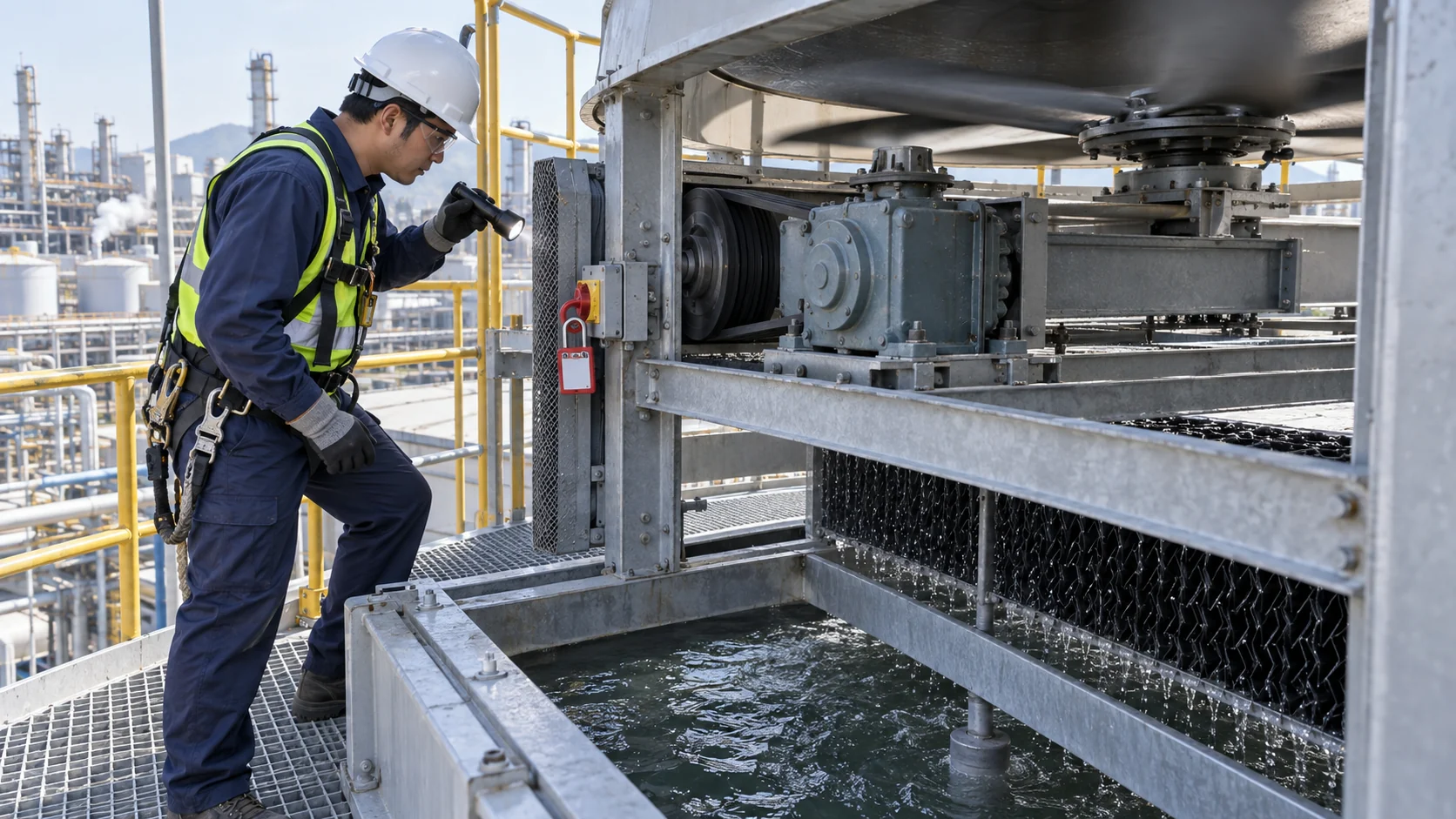
Service access is equally practical. Provide clearances for removing fill, drift eliminators, spray headers, fan blades, motors, gearboxes, strainers, and coil sections. Include safe platforms, guardrails, lockout points, drain connections, and lifting paths in the general arrangement. A compact footprint that cannot be cleaned safely is not a low-cost selection.
Performance validation and supplier evidence
Published ratings should be traceable to defined test conditions. CTI Thermal Certification provides a model-level program for verifying that certified cooling-tower models perform to their published ratings. For a project-specific acceptance test, ask which procedure will be used, who will witness it, and how deviations will be handled.
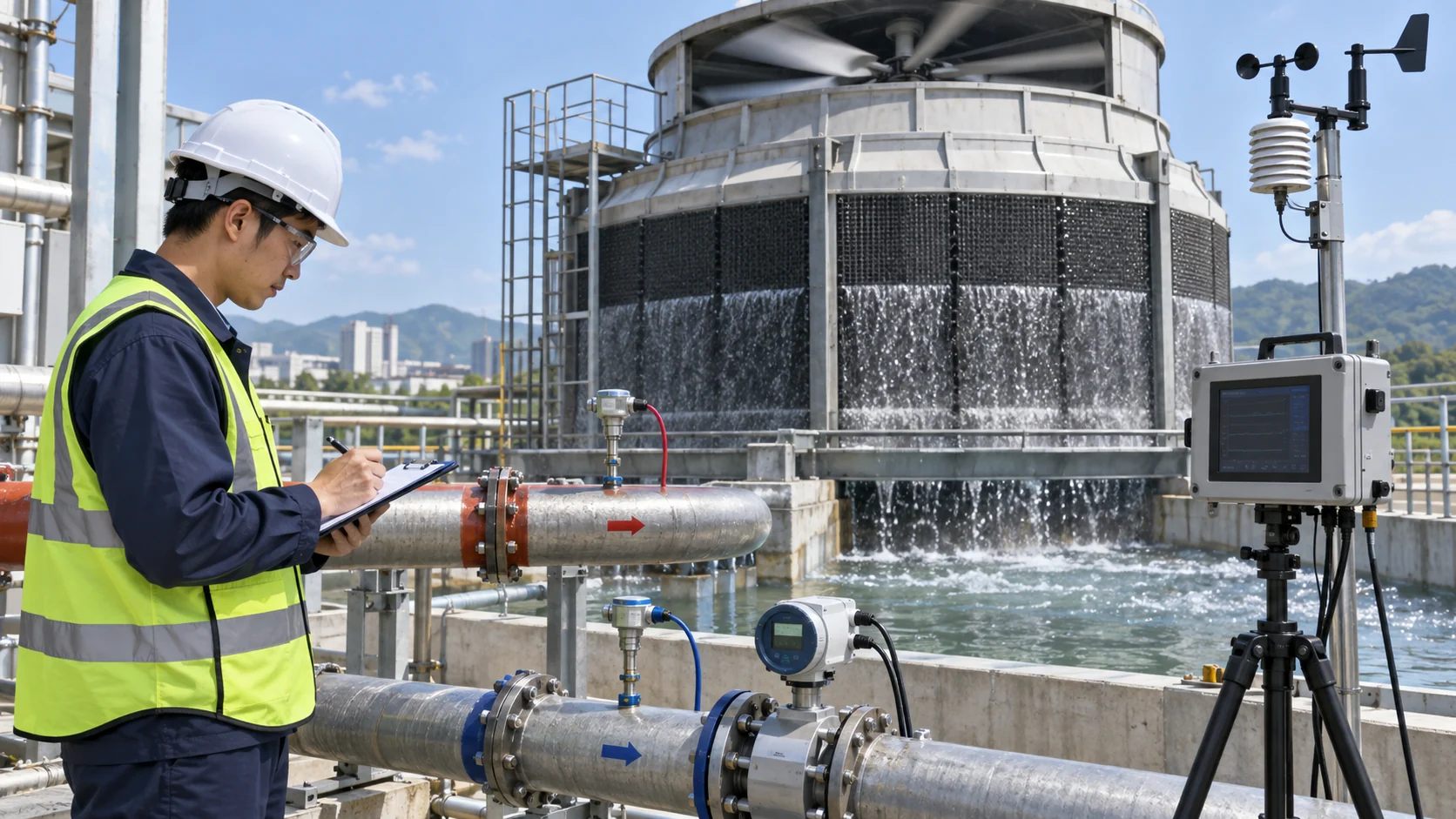
The CTI acceptance-test guidance highlights practical conditions such as clean water distribution, normal basin level, operating mechanical equipment, usable fill and drift eliminators, and measured water and temperature values. The supplier should state the test uncertainty, instrument calibration, stabilization time, and the method for calculating range and approach.
Ask for a selection printout, general arrangement, fan curve, pump interface, water-treatment assumptions, material schedule, sound data, and installation or commissioning requirements before purchase. If a certified model is proposed, request the certification scope and confirm that the exact model, fan arrangement, fill, and operating point are covered.
Build an RFQ that is easy to compare
An RFQ should make unknowns visible. Do not hide the important decisions in a drawing note or a generic “equal to” clause. The following evidence list keeps tower suppliers, heat-exchanger suppliers, and component fabricators aligned.
| RFQ evidence | Required detail | Review owner | Acceptance question |
|---|---|---|---|
| Thermal selection | Duty cases, range, approach, wet bulb, flow, altitude, and fouling assumptions | Process or HVAC engineer | Does the selection meet every stated operating case? |
| Mechanical package | Dimensions, weight, lifting points, access, drains, nozzles, and service clearances | Site and mechanical team | Can it be installed, cleaned, and removed safely? |
| Electrical and controls | Motor data, VFD limits, staging, alarms, conductivity input, and freeze sequence | Controls and electrical team | Can the plant control and protect the tower at full and low load? |
| Water program | Chemistry limits, filtration, makeup, blowdown, drift, cleaning, and restart | Water-treatment lead | Is the plan measurable and assigned to a responsible operator? |
| Quality and testing | Material certificates when required, dimensional checks, pressure tests, calibration, and witness plan | Quality and commissioning team | What evidence proves the delivered equipment matches the selection? |
| Packaging and logistics | Cell split, crate dimensions, corrosion protection, labels, and spare parts | Procurement and logistics | Can the package arrive without damage and be identified at site? |
Questions for a coil or heat-exchanger component supplier
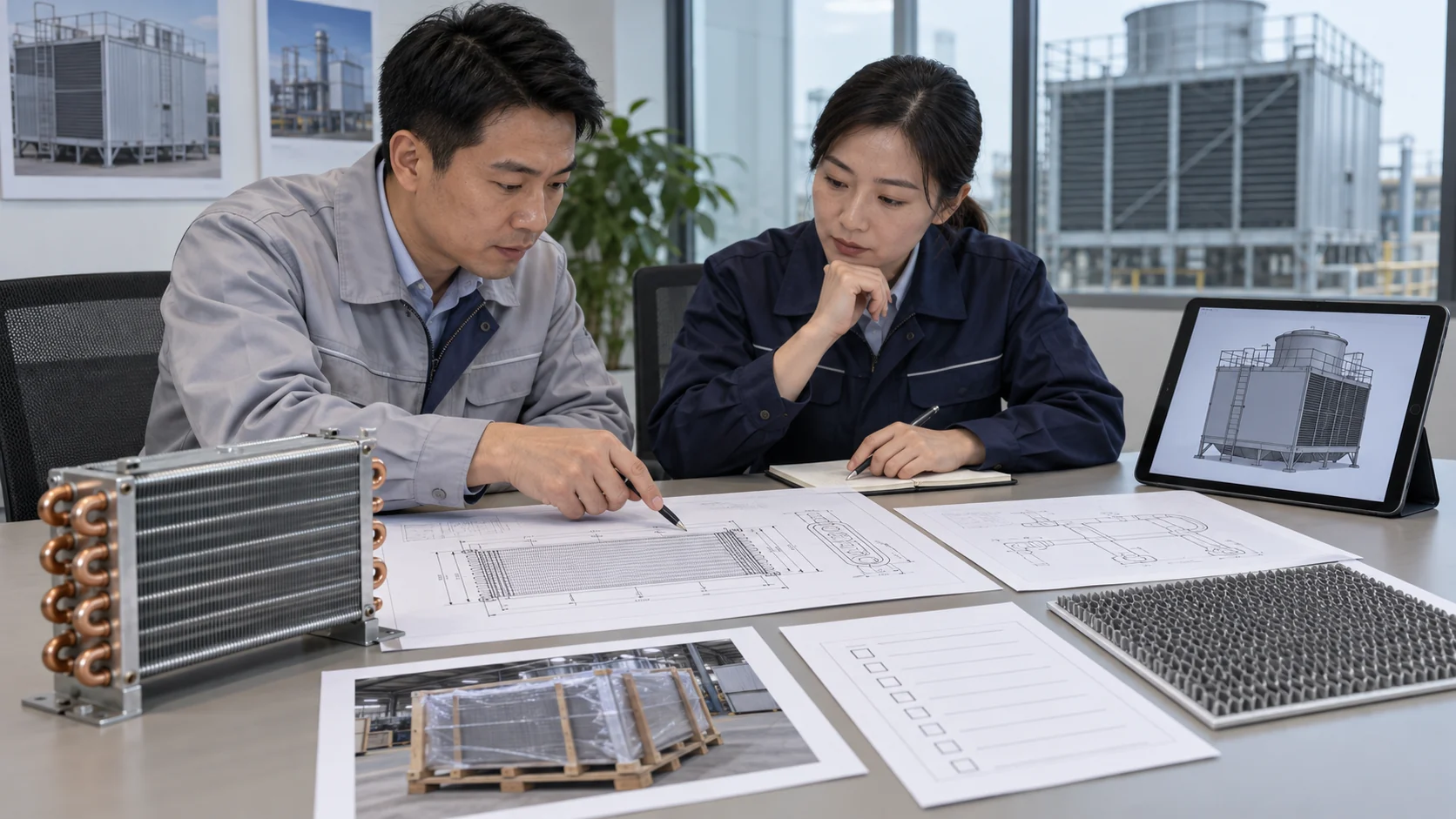
If the tower package includes a custom coil, send the component supplier a drawing rather than only a tonnage value. Include fluid, flow, entering and leaving temperatures, allowable pressure drop, design pressure, material preference, connection orientation, installation clearances, cleaning method, and inspection requirements. Add the required delivery format, packing restrictions, and whether a sample or first-article inspection is needed.
Domi can review those component inputs through engineering support, verify dimensions and pressure-test requirements through its testing lab, and route a quote request through the contact page. The appropriate request is for a coil, header, or heat-exchanger component review. A complete tower, fan, fill, basin, controls, and water-treatment package should be sourced and warranted by a qualified cooling-tower OEM or system integrator.
Frequently asked questions
What is a cooling tower?
A cooling tower is a heat-transfer device that removes heat from circulating water by moving air across or against the water. Evaporation carries heat away, and the cooled water returns to a condenser or process heat exchanger. The tower rating depends on heat load, flow, range, approach, wet-bulb condition, airflow, water distribution, and controls.
What is the difference between open- and closed-circuit cooling towers?
In an open tower, the circulating water is distributed directly into the air stream and collects in a basin. In a closed-circuit tower, the process fluid stays inside a coil while a separate spray-water loop evaporates around it. The closed arrangement can protect the process fluid from tower-water contamination, but its spray loop still requires treatment, cleaning, drift control, and freeze protection.
How do crossflow and counterflow towers differ?
Crossflow towers move air horizontally across falling water. Counterflow towers move air upward opposite the downward water path. The choice affects footprint, distribution hardware, access, fan arrangement, and service work. Compare the actual site layout and maintenance plan instead of assuming one airflow direction is always superior.
How do I size a cooling tower?
Start with normal and peak heat load, entering and leaving water temperatures, water flow, design wet bulb, altitude, and site restrictions. Then compare range, approach, fan power, sound, turndown, cell redundancy, and water-treatment assumptions. Ask the supplier for a selection sheet that repeats every design input and shows off-design operation.
What water-treatment evidence should a supplier provide?
Request the design water analysis, conductivity or cycles target, pH and hardness limits, filtration and blowdown arrangement, dosing points, drift-eliminator access, cleaning instructions, alarm set points, and restart procedure. The facility’s qualified water-management team should own the operating program and any Legionella risk controls; a tower quotation alone is not a health or compliance plan.
Can Domi supply a complete cooling tower?
Domi’s documented scope is custom coils and heat-exchanger components plus engineering and testing review. A complete cooling tower package, including tower casing, fan, fill, basin, controls, and water-treatment system, should be selected from a qualified tower OEM or system integrator. Send Domi a drawing and the component duty if you need a feasibility check for a coil or header inside a tower project.
Turn a cooling-tower concept into a reviewable RFQ
The fastest way to reduce rework is to define the heat-rejection boundary before comparing brands. Record the duty cases, wet bulb, range, approach, flow, circuit, fan arrangement, water program, service clearances, testing evidence, and component interfaces. Then ask each supplier to return the same set of values. If a coil or header is custom, route that drawing to a component specialist early so material, pressure, connection, and inspection decisions do not arrive after the tower has been purchased.