
Short answer: choose a commercial freezer from the product load, target room temperature, pull-down requirement, door openings, insulation, ambient condition, evaporator airflow, condenser duty, defrost method, controls, and service envelope. A freezer that looks large enough by cabinet volume can still miss temperature recovery if the evaporator, condensing unit, defrost schedule, or door sealing is wrong. For a dependable quote, send the complete duty and installation data together instead of requesting a price from dimensions alone.
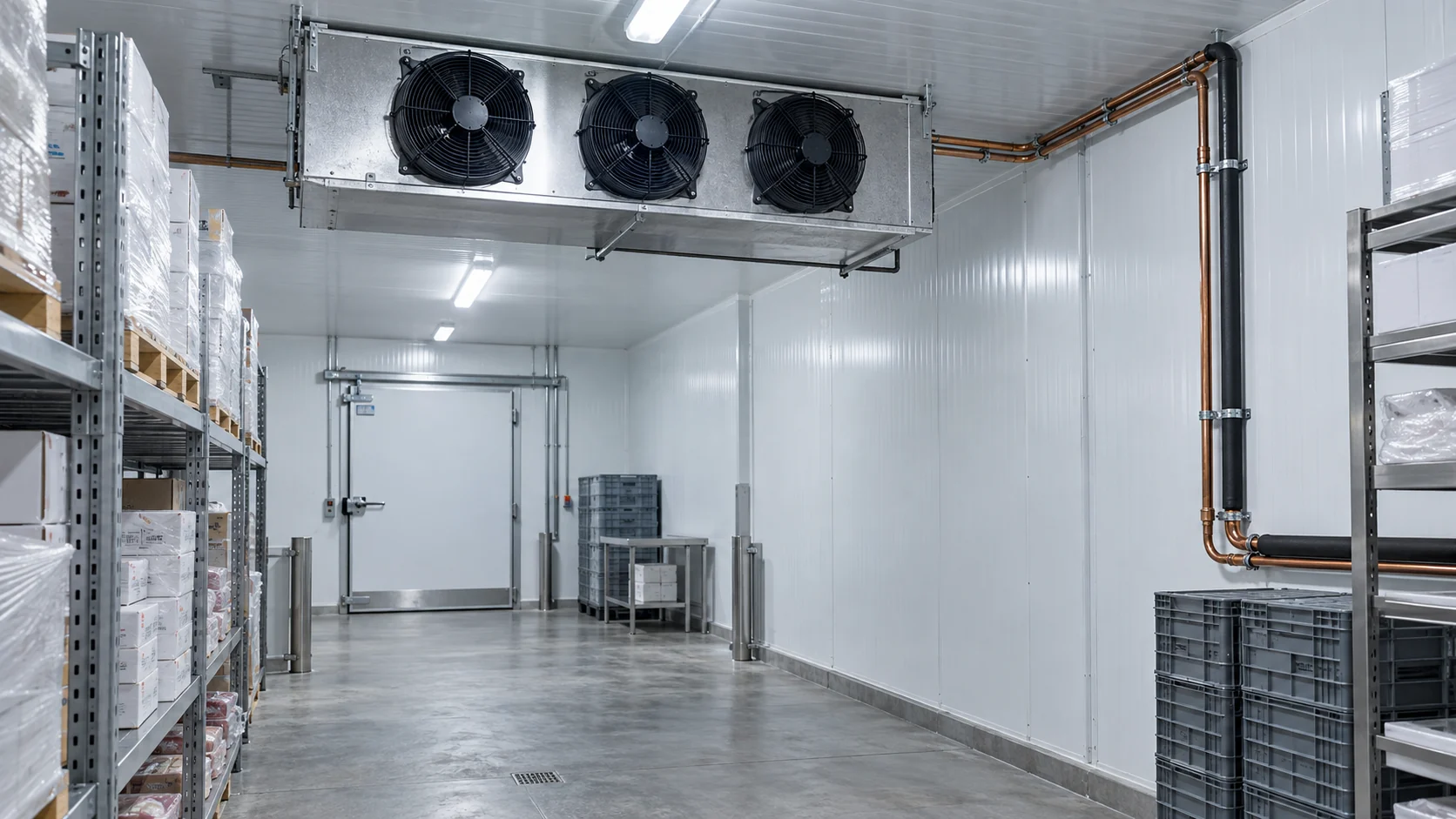
What a commercial freezer includes
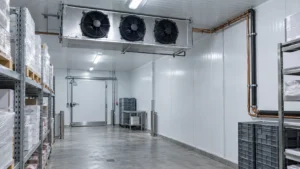
A commercial freezer is a temperature-controlled enclosure and refrigeration system designed for repeated loading, door activity, cleaning, and long operating hours. It may be a reach-in, roll-in, under-counter, merchandiser, walk-in room, blast-freezing space, or a process freezer. The cabinet, evaporator, condensing unit, expansion device, controls, drain, and electrical protection must be treated as one system.
The enclosure limits heat gain. The evaporator absorbs heat from the room. The compressor and condenser reject that heat to the surrounding air or water. The expansion device meters refrigerant into the evaporator, while the controller coordinates temperature, fan operation, defrost, alarms, and safety shutdowns. This system boundary is consistent with the component approach described in Danfoss cold-room system design guidance.
| System element | Main job | Buyer data to confirm | Common selection mistake |
|---|---|---|---|
| Insulated cabinet or room | Limits transmission and infiltration heat | Panel thickness, vapor barrier, floor, door type, gasket, washdown exposure | Choosing volume without checking joints, floor, or door cycle |
| Evaporator or unit cooler | Removes heat from freezer air | Capacity at the actual evaporating temperature, airflow, fin spacing, drain, defrost, fan power | Using a cooler coil or tight fins that ice over in low-temperature duty |
| Condensing unit | Compresses refrigerant and rejects heat | Refrigerant, load, condensing temperature, ambient, compressor envelope, service clearance | Rating at a mild ambient when the unit will operate on a hot roof |
| Expansion and liquid-line devices | Controls refrigerant feed and protects the compressor | TXV or EEV type, design load, superheat, filter drier, solenoid, piping length | Matching a valve by nominal tonnage without checking the evaporator duty |
| Controller and protection | Maintains temperature and manages defrost and alarms | Set point, differential, sensor locations, defrost termination, high/low pressure and door alarms | Treating controls as an afterthought after the hardware is ordered |

The ENERGY STAR commercial refrigerator and freezer guidance notes that commercial units are built for specific temperatures and frequent door openings. Its purchasing advice is useful for an equipment comparison, but certification, efficiency, and refrigerant suitability still need to be checked for the exact model and local requirements.
Begin with the freezer load and temperature
The first selection question is not “How many cubic feet?” It is “How much heat must the system remove, and how quickly must it recover?” Separate the steady storage load from the pull-down load. Product entering above the room set point can dominate the duty for hours, while a lightly loaded storage room may need much less capacity.
Document the room temperature, evaporating temperature or design TD, product temperature at loading, product mass per day, pull-down time, lighting, fan heat, people, equipment, wall and floor construction, door openings, strip curtains, and ambient temperature. Include the operating schedule and whether the freezer can use a night or low-traffic mode. A replacement project should add measured suction and discharge conditions, actual airflow, frost pattern, and the reason the original unit failed.
| Load input | What to record in an RFQ | Why it changes freezer selection |
|---|---|---|
| Room and product temperature | Room set point, acceptable swing, incoming product temperature, product mass per day | Sets refrigeration duty, pull-down time, and evaporating-temperature target |
| Enclosure and transmission | Internal dimensions, panel and floor construction, ambient, adjacent spaces, thermal bridges | Establishes heat gain through the envelope and floor |
| Door and infiltration | Door size, openings per hour, opening duration, traffic, strip curtain, gasket condition | Warm moist air adds sensible and latent load and drives frost |
| Internal heat | Lights, evaporator fans, people, forklifts, motors, heaters, drains | Adds heat that the refrigeration circuit must remove |
| Operating and recovery case | Hours of compressor operation, defrost periods, start-up, peak delivery, redundancy | Prevents an apparently adequate unit from missing recovery or safety margin |
Use a 24-hour load basis and state the intended compressor operating hours. Copeland’s condensing-unit selection explanation describes why the daily load, compressor runtime, and a reasonable design margin must be considered together. Do not copy a generic percentage into a quote without checking the actual product, door, ambient, and defrost conditions.
Match the evaporator, airflow, and condenser
Evaporator coil and fan selection
The evaporator must transfer the required heat while keeping air distribution, frost growth, noise, and service access within the project limits. Ask for capacity at the stated refrigerant and evaporating condition, air entering and leaving temperatures, face area, face velocity, airside pressure drop, fan power, circuiting, fin spacing, drain pan, and connection positions.
Low-temperature freezer rooms usually need more generous fin spacing than medium-temperature coolers because frost occupies the air passage. The correct spacing is a trade-off: wide spacing helps frost tolerance but may require more face area; tight spacing can make the coil compact but can lose airflow quickly. Keep products and pallets clear of the discharge path so the air can return to the coil without short-circuiting.
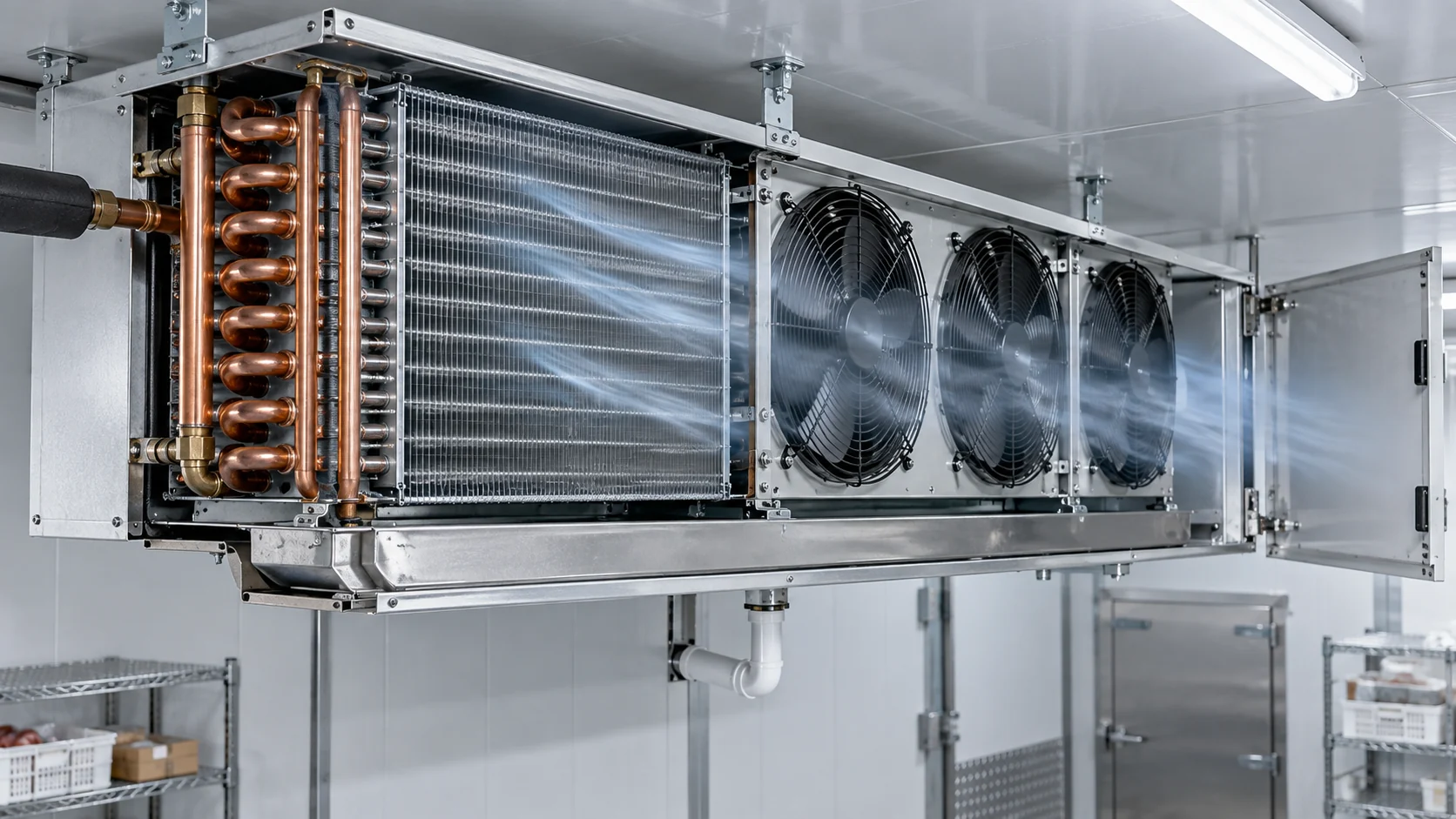
For a replacement or custom evaporator, compare the old coil’s face dimensions, header positions, circuiting, fan direction, drain outlet, heater location, and mounting points. Domi’s commercial cooling coil page and industrial refrigeration coil page provide routes for reviewing drawings, samples, duty conditions, refrigerants, pressure, dimensions, defrost, inspection, and packaging. Those pages are a starting point for project review, not a blanket rating for every freezer.
Condenser and heat rejection
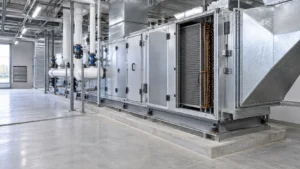
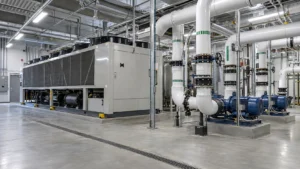
The condensing unit must reject the room load plus compressor and fan heat at the real ambient condition. State whether the condenser is air-cooled, evaporative, or water-cooled; give the installation altitude and ventilation; and identify a rooftop, machine-room, or outdoor exposure. A coil that performs at a standard rating point may not have enough capacity in a hot, dirty, or poorly ventilated location.
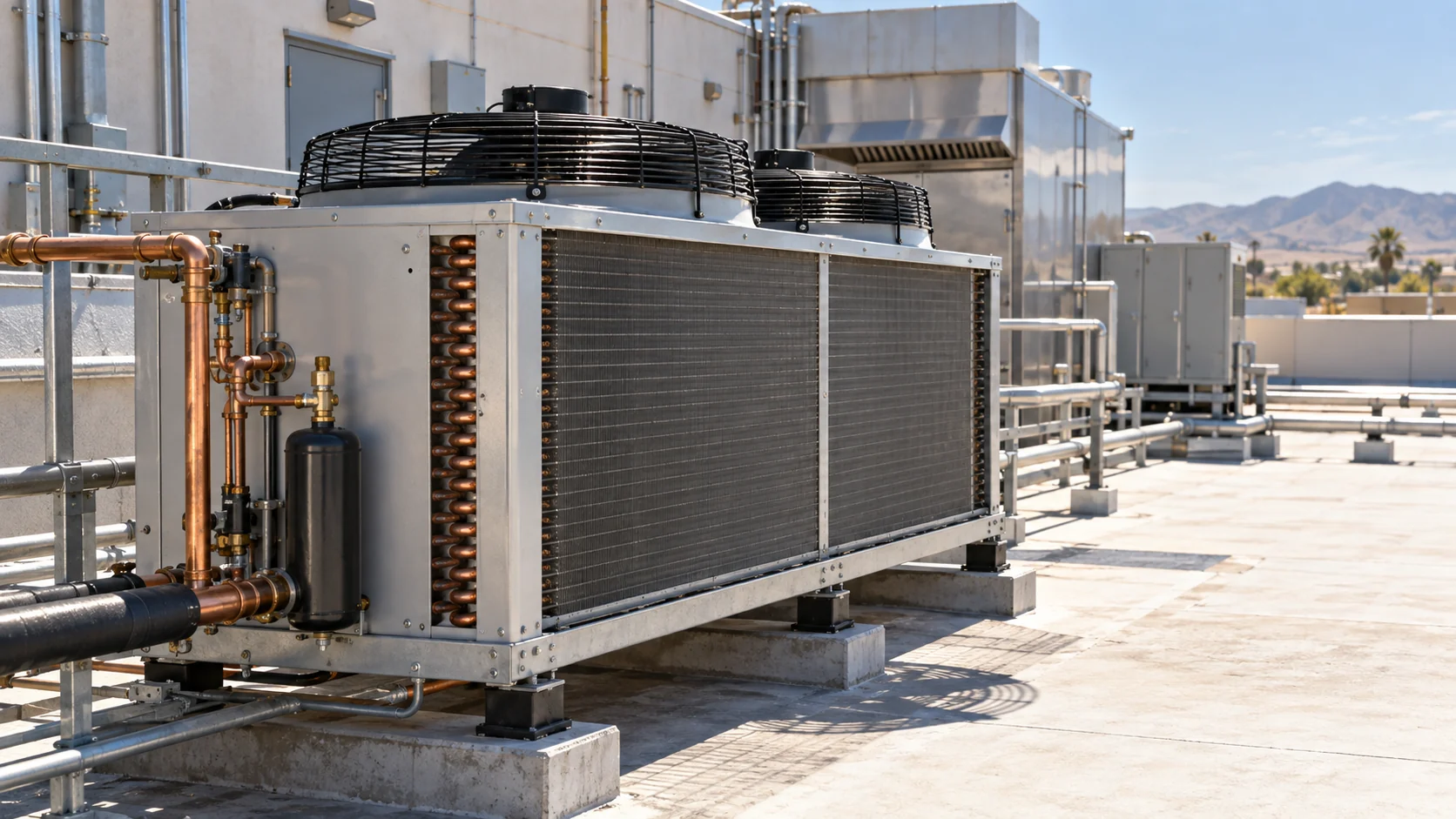
Check the compressor operating envelope, oil return, receiver and liquid-line arrangement, pressure controls, fan cycling, and service space. For natural refrigerants or higher-pressure systems, verify the pressure boundary, materials, valves, relief path, and local code with the responsible refrigeration engineer. A supplier should receive the refrigerant and design pressure before proposing a coil or condensing unit.
Evaporator, condenser, and defrost decision matrix
| Project condition | Evaporator and airflow direction | Condenser or heat-rejection check | Defrost and controls implication |
|---|---|---|---|
| Reach-in or roll-in freezer with frequent access | Compact coil with clear return path, fan delay, and a cleanable drain | Top or bottom compressor location, kitchen ambient, coil cleaning access | Door alarm, temperature recovery, scheduled or adaptive defrost |
| Walk-in storage with moderate traffic | Unit cooler selected from room load, fin spacing, fan throw, and aisle layout | Outdoor ambient, line length, winter head-pressure control | Electric or hot-gas strategy, termination sensor, drip time |
| High-traffic food processing room | Larger face area, corrosion-conscious construction, washdown and hygiene access | Condenser fouling, high ambient, redundancy, and rapid pull-down | Defrost interlocks, drain protection, alarms, and documented restart |
| Blast-freezing or process duty | High airflow and capacity at the specified product pull-down profile | Compressor envelope, suction return, heat rejection, and duty cycle | Defrost scheduled around production and verified for product protection |
Plan defrost, drains, doors, and insulation together
Freezer frost is a moisture and airflow problem as well as a refrigeration problem. Every door opening imports humid air; that moisture freezes on the cold coil and reduces the open area. A defrost method should remove the expected frost without overheating the room, damaging product, or sending water into an unheated drain.
Common approaches include off-cycle defrost for conditions where coil temperature stays above the frost range, electric defrost for many low-temperature unit coolers, and hot-gas or water/brine methods for suitable larger systems. The right method depends on refrigerant, coil construction, available utilities, product sensitivity, drain routing, controls, and local safety requirements. The Danfoss evaporator-control reference illustrates that cooling and defrost sequences, valves, sensors, and alarms must be coordinated.
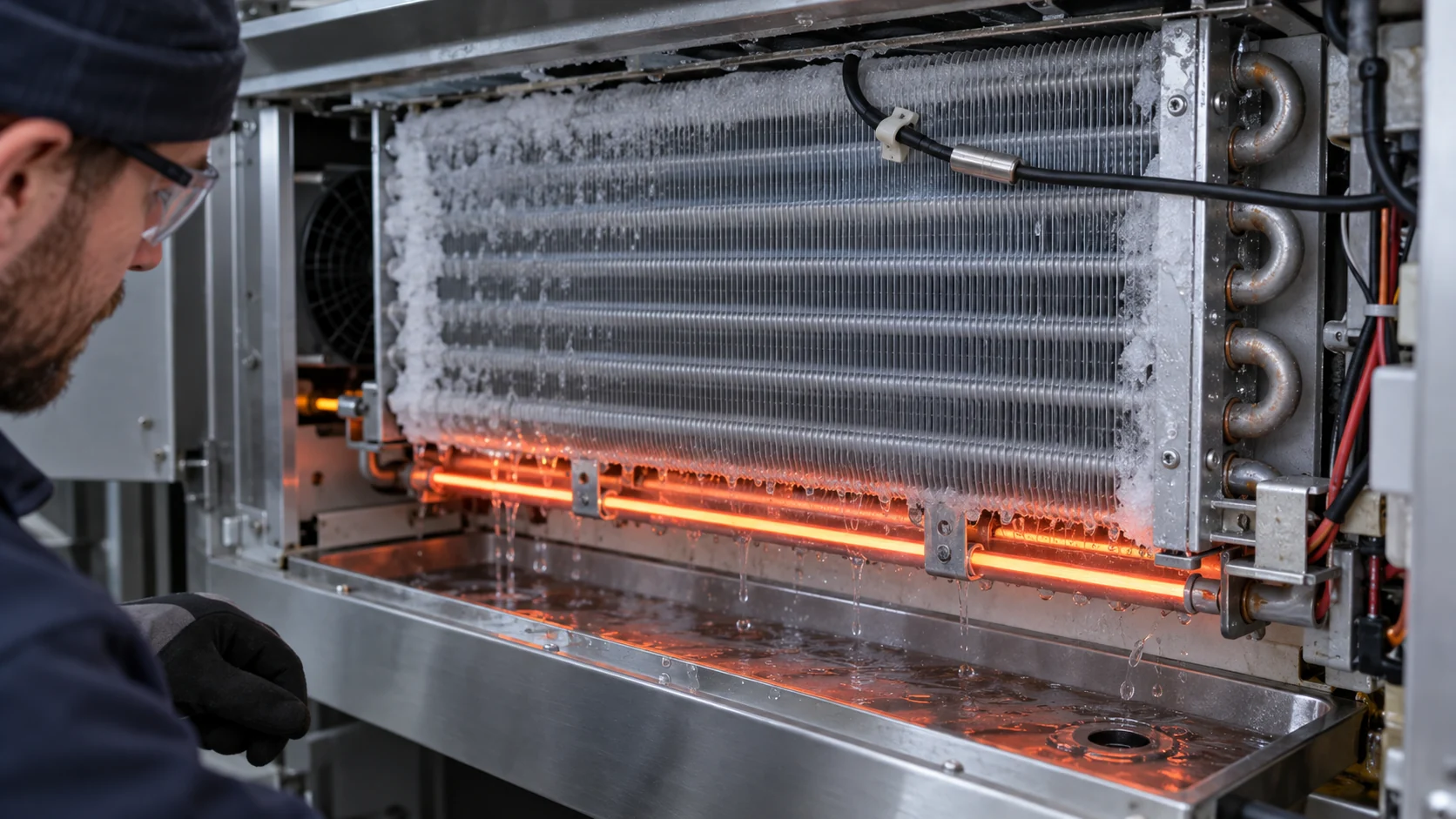
Specify defrost initiation, maximum duration, termination sensor, drip time, fan delay, compressor restart, and alarm behavior. A time-only schedule can over-defrost a lightly loaded room or under-defrost a busy room. If the coil is replaced, confirm heater wattage, heater position, drain-pan heat, sensor pocket, and controller outputs before reusing the old sequence.
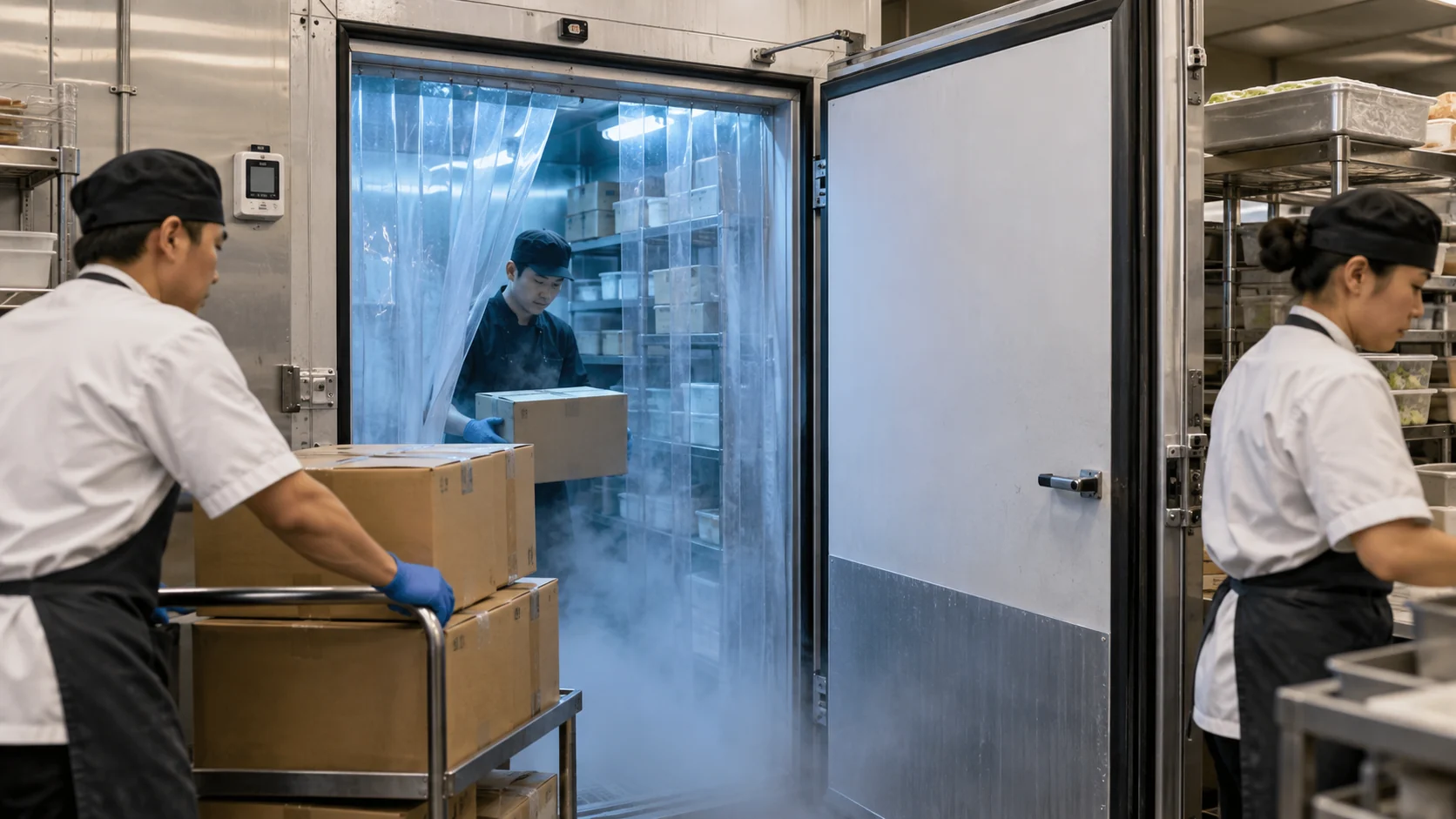
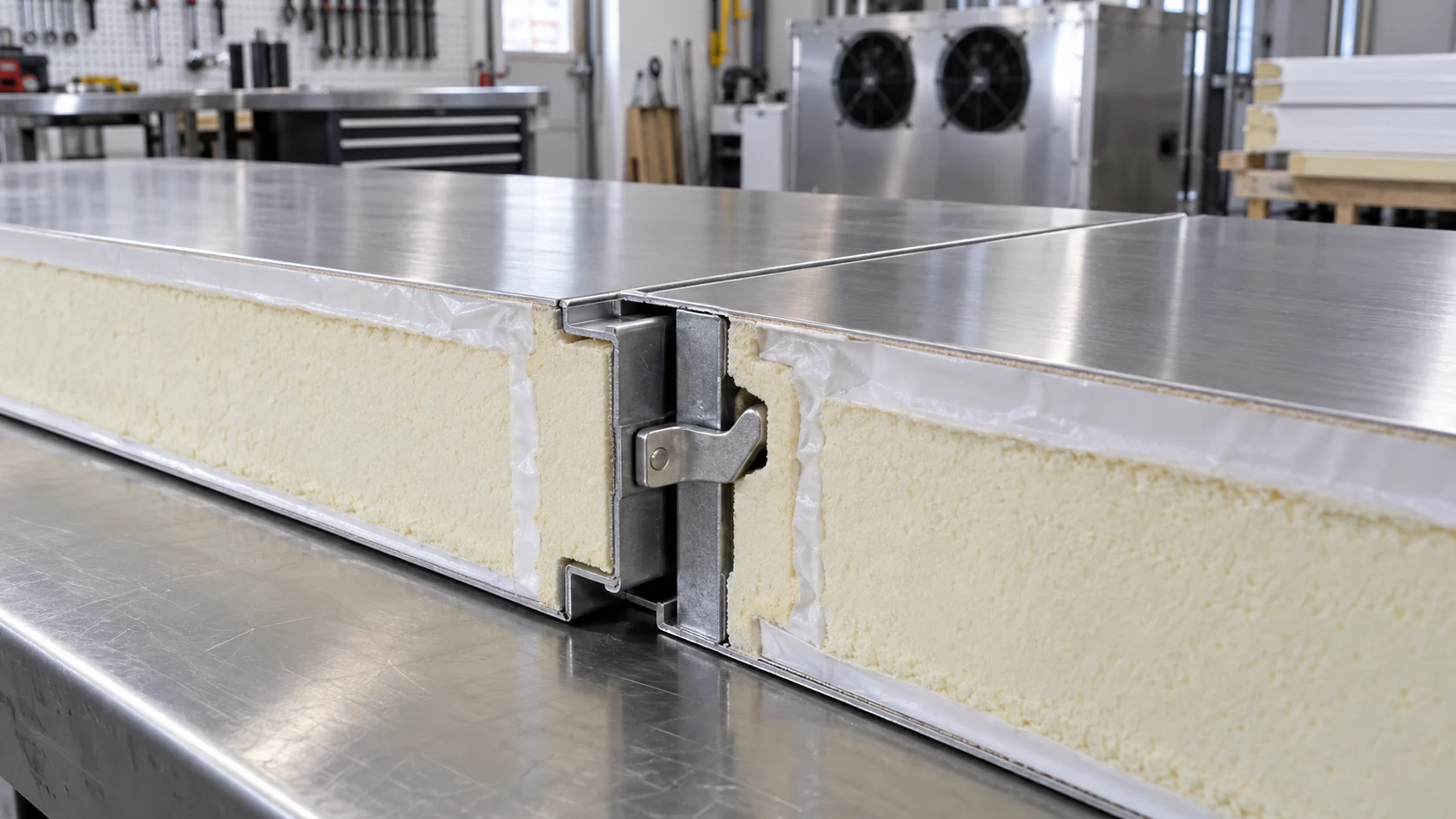
Doors and insulation often deliver a larger operational benefit than a small change in compressor size. Confirm panel joints, floor vapor barrier, threshold, door closer, latch, gasket, heater, strip curtain, and opening discipline. The DOE walk-in cooler and freezer page defines covered walk-in equipment and links the current U.S. standards context; compliance dates and state requirements should be confirmed for the project location.
Specify controls, sensors, and alarms
A commercial freezer controller should expose the information an operator needs to protect product and diagnose a fault. At minimum, define the room sensor, evaporator sensor, set point, differential, defrost schedule, termination, fan delay, compressor anti-short-cycle time, and alarm limits. Add door, high-temperature, high-pressure, low-pressure, fan-failure, condensate, smoke, and refrigerant-leak signals when the project risk requires them.
Sensor placement affects the value of the reading. A room sensor should represent product-zone air, not the discharge jet or an outside wall. A defrost sensor should be attached to the coil at the coldest or slowest-melting location identified by the design. Differential-pressure or airflow monitoring can alert maintenance before a frosted or dirty coil causes a product-temperature event.
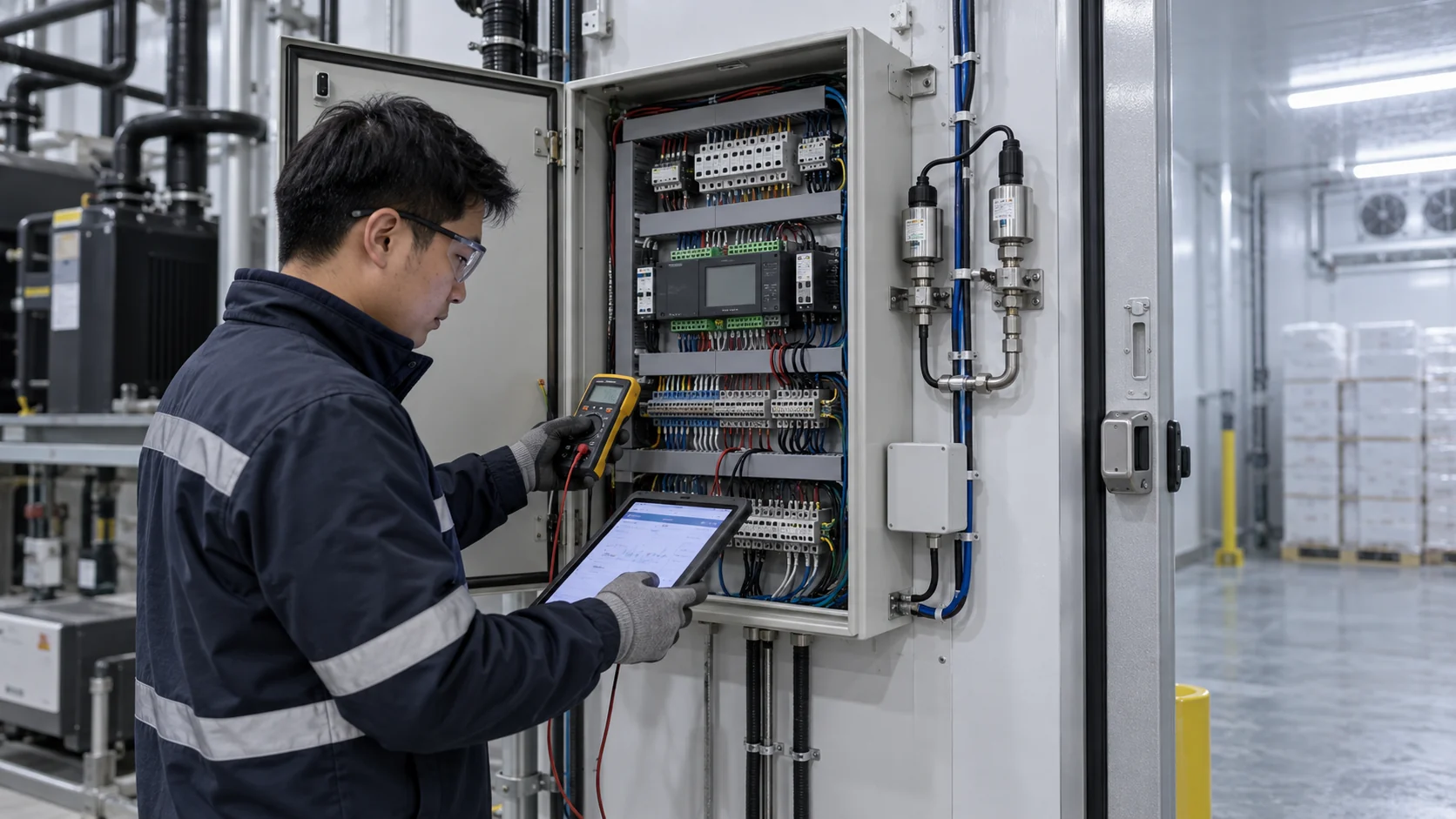
Coordinate the controller with the condensing unit, liquid-line solenoid, expansion device, evaporator fans, heaters, head-pressure control, and building-management system. If an electronic expansion valve or a natural refrigerant system is proposed, specify the communication protocol, fail-safe state, manual override, and commissioning responsibility. Keep the sequence of operation in the RFQ so every bidder prices the same control scope.
Match the freezer to the application
The same cabinet size can have very different refrigeration duty in a restaurant, grocery back room, bakery, meat plant, pharmaceutical store, or blast-freezing line. Product sensitivity, hygiene, traffic, humidity, pull-down speed, and monitoring obligations should shape the selection.

For a restaurant, prioritize recovery after frequent door openings, easy cleaning, door alarms, and service access. For a warehouse, prioritize uniform air coverage, pallet clearances, defrost drainage, and redundancy. For processing, add washdown-compatible materials, corrosion review, hygiene clearances, and a documented restart after defrost. For a blast-freezing process, send the product curve and loading sequence rather than using a storage-room rule of thumb.
Design maintenance into the freezer
Make service access a selection requirement. The technician needs a safe path to the evaporator fans, coil face, heaters, drain, sensors, filters, controller, compressor, condenser, and electrical protection. Provide coil pull space, fan replacement space, drain cleanouts, lifting points, and a way to isolate the circuit without unloading the entire room.
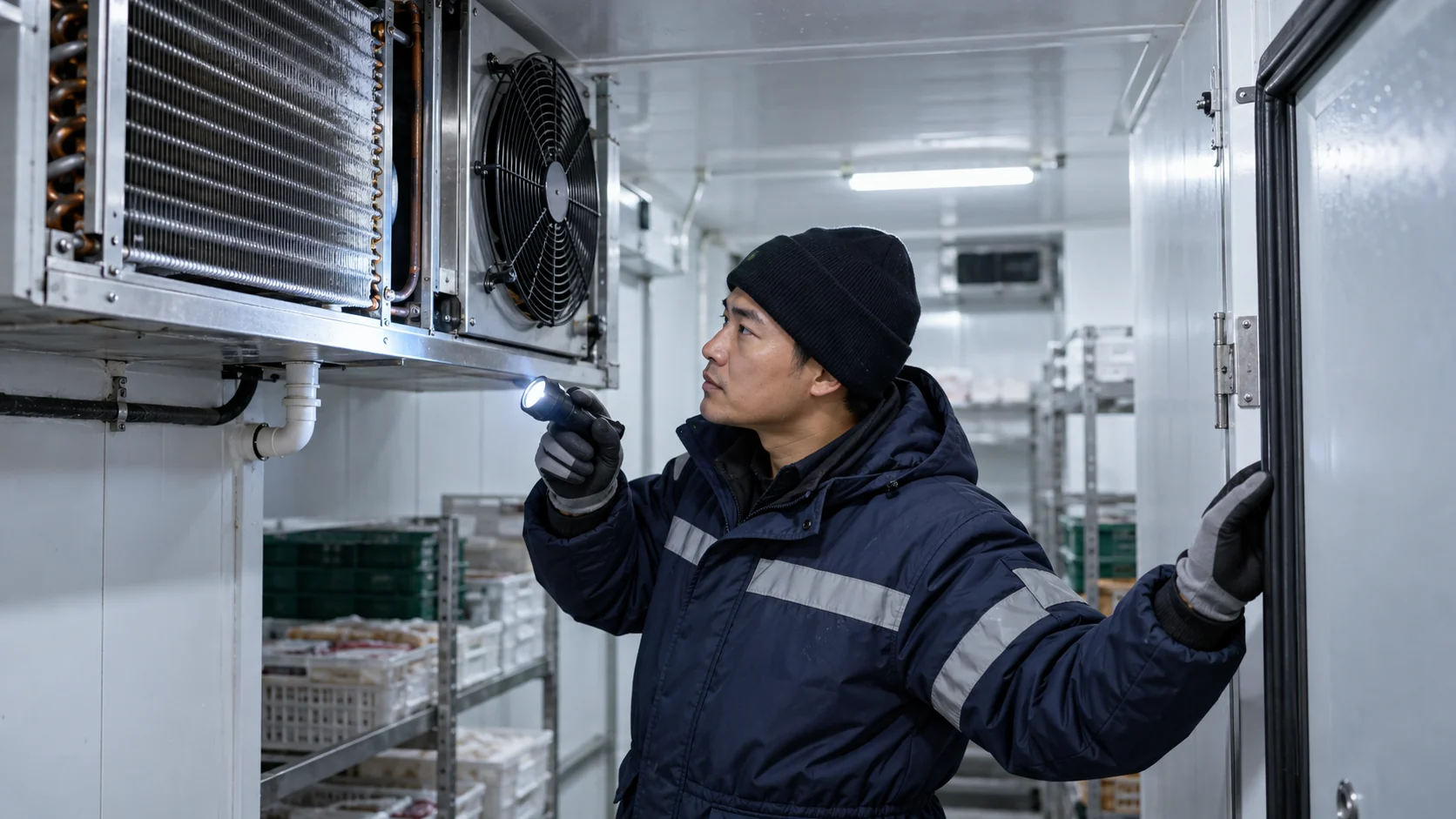
The maintenance plan should include coil and condenser cleaning, drain inspection, gasket checks, fan and heater checks, sensor verification, alarm testing, and temperature-record review. A recurring frost pattern is diagnostic evidence: frost only at the inlet can indicate feed or distribution issues, while a solid face can indicate infiltration, defrost failure, blocked airflow, or an undersized coil. Record the condition before changing set points or adding refrigerant.
Build a commercial freezer RFQ that can be quoted
Send one controlled data package to every supplier. Include a drawing or old sample photographs for replacement work, and identify which values are fixed, which are preferred, and which may be proposed. Domi’s custom coil fabrication service can review a drawing, sample, dimensions, refrigerant or working medium, design pressure, capacity, airflow, defrost, material, and installation constraint before a project-specific quotation.

| RFQ package item | Minimum information to provide | Review question before order |
|---|---|---|
| Application and load | Freezer type, room dimensions, product, product mass, entering temperature, pull-down, door cycle, ambient | Does the stated capacity cover steady load and recovery without an unsupported margin? |
| Refrigeration circuit | Refrigerant, evaporating and condensing conditions, design pressure, piping length, expansion device, compressor model if fixed | Are coil, valve, compressor, receiver, and pressure controls compatible? |
| Evaporator and condenser | Face dimensions, airflow, fan power, fin spacing, circuiting, headers, connections, condenser airflow and fouling exposure | Can the coil fit, drain, defrost, and be removed without cutting the cabinet? |
| Materials and environment | Tube and fin materials, coating, stainless requirements, washdown, corrosion, hygiene, insulation and floor details | Are dissimilar metals, condensate, cleaning chemicals, and vapor barriers addressed? |
| Controls and protection | Set point, differential, sensors, defrost sequence, fan delay, alarms, communications, electrical supply | Who supplies, programs, commissions, and documents the sequence? |
| Inspection and delivery | Leak or pressure test requirement, drawings, inspection records, packaging, pallet or crate limits, destination | Are the agreed tests, document set, lifting points, and transport protection in the quote? |
When to request a custom coil review
Use a custom review when the replacement must fit a non-standard opening, the original coil is no longer available, the refrigerant or pressure has changed, a new defrost method is needed, the fin spacing must be adapted to frost, or the site requires a specific material or connection position. A custom part is not automatically better; it is useful when the project data is complete enough to check fit, duty, circuiting, pressure boundary, service, and delivery risk.
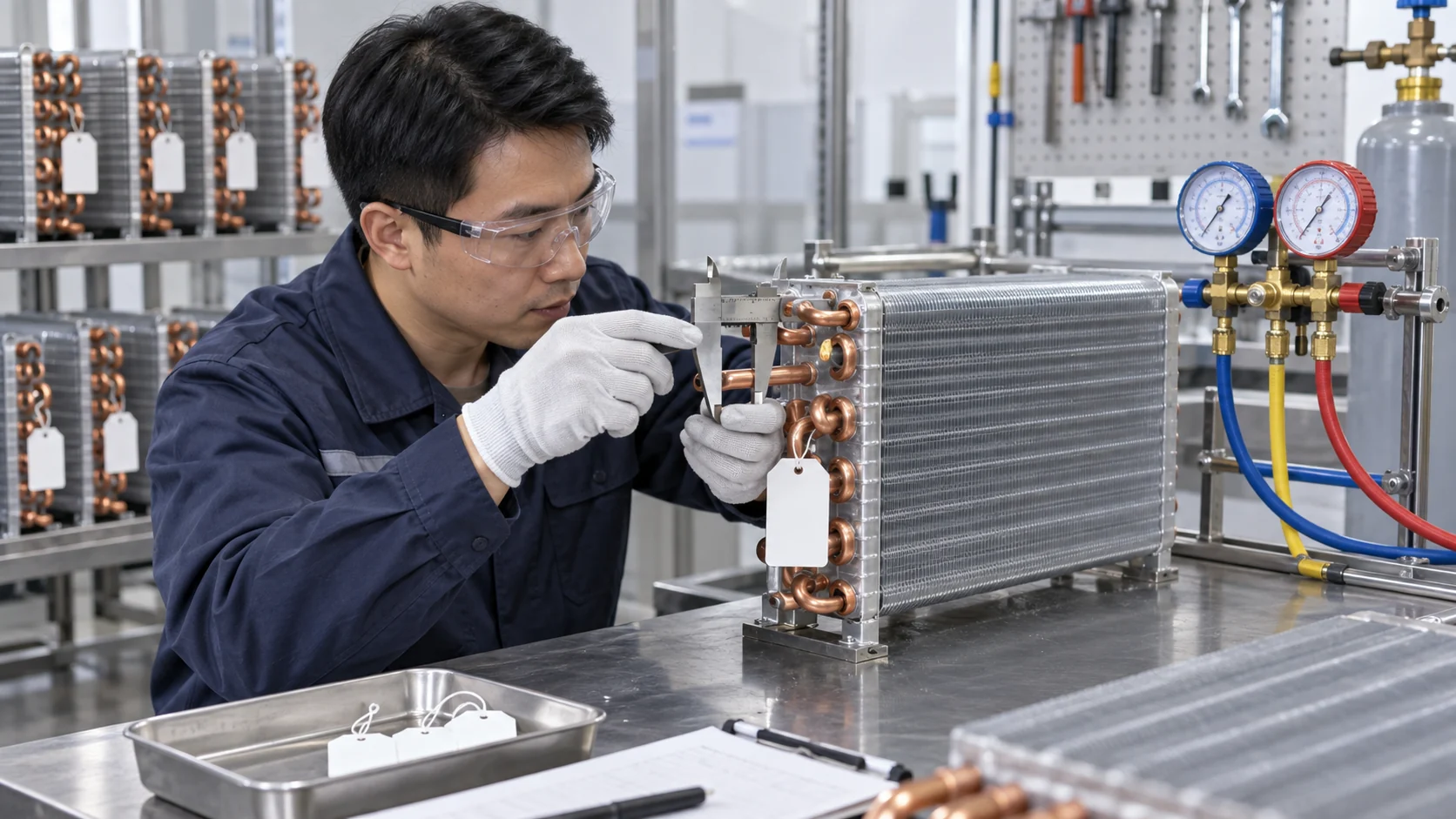
Ask for a selection sheet, drawing revision, material statement, inspection plan, and the test records required by the responsible engineer. Domi’s heat-exchanger testing laboratory and quality documents are useful internal links for organizing validation and traceability discussions. They should be read together with the project specification; a page description is not a substitute for a signed test or certification requirement.
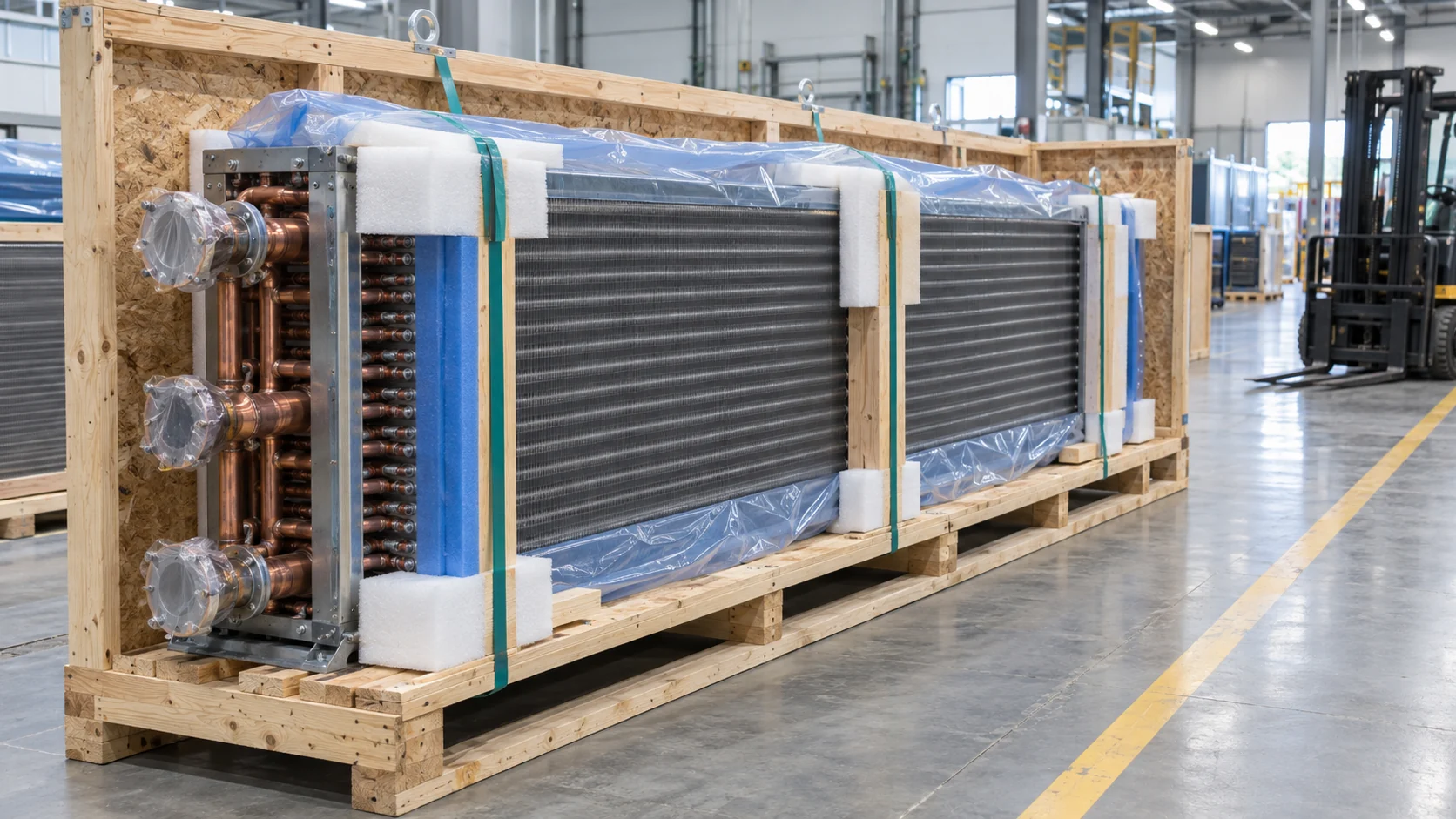
Large coils and freezer components also need a delivery plan. Protect fins, headers, connection stubs, sensors, and drain pans; state the maximum crate size and lifting method; and photograph the packed assembly before shipment. For a replacement, keep the old part, marked-up drawing, and installation photographs available until the new component has passed fit and leak checks.
If you have the duty schedule, freezer drawing, old coil photographs, or a target replacement date, contact Domi for a freezer coil review. The most useful first message includes the refrigerant or secondary fluid, target temperature, capacity, airflow, design pressure, dimensions, defrost method, material preference, quantity, destination, and documentation needs.
Related Articles
Frequently asked questions
What is the difference between a commercial freezer and a regular freezer?
A commercial freezer is designed for repeated door openings, higher loading, longer operating hours, cleanability, service access, and a defined temperature duty. A residential unit may be unsuitable when the application needs rapid recovery, a remote condensing unit, a walk-in enclosure, documented controls, or a replacement coil matched to an engineered system.
How do I choose a commercial freezer for a restaurant?
Start with the food load, target temperature, door frequency, available footprint, ambient kitchen condition, cleaning routine, and desired recovery time. Then match the evaporator airflow, condensing unit, defrost, door gasket, controller, alarms, and service clearances. Send those values to the supplier rather than selecting by storage volume alone.
What size evaporator coil does a commercial freezer need?
The coil needs enough rated capacity at the actual evaporating condition and airflow to remove the calculated load and recover after loading. Its face area, fin spacing, circuiting, fan power, pressure drop, drain, and defrost must also fit the room. A capacity number without entering air, leaving air, refrigerant, and airflow is not a complete selection.
Which defrost method is best for a low-temperature freezer?
There is no universal best method. Electric defrost is common for many low-temperature unit coolers; hot-gas or water/brine methods may suit larger systems with the required utilities and controls. Select from frost load, refrigerant, coil construction, drain design, product sensitivity, energy limits, and the required termination and fan-delay sequence.
Why does a commercial freezer evaporator ice up?
Frequent door openings, poor door sealing, blocked airflow, dirty fins, incorrect fan operation, inadequate defrost, low refrigerant feed, or a room load beyond the original design can all contribute. Record the frost pattern, room temperature, door activity, fan status, defrost termination, and pressures before changing the charge or set point.
What should I send with a commercial freezer RFQ?
Send the application, room and product temperatures, load and recovery case, door cycle, ambient, refrigerant, evaporating and condensing conditions, design pressure, evaporator and condenser dimensions, airflow, fin spacing, circuiting, defrost, controls, materials, inspection, packaging, quantity, destination, and drawing or sample photographs. Send the freezer coil schedule and drawing to Domi for a project-specific review.